Your ShelfYour Projects

Signs of the Times, Vol. 36, No. 44.

Christ and Eternal Life
Earlier text: The Religious Trend in Education

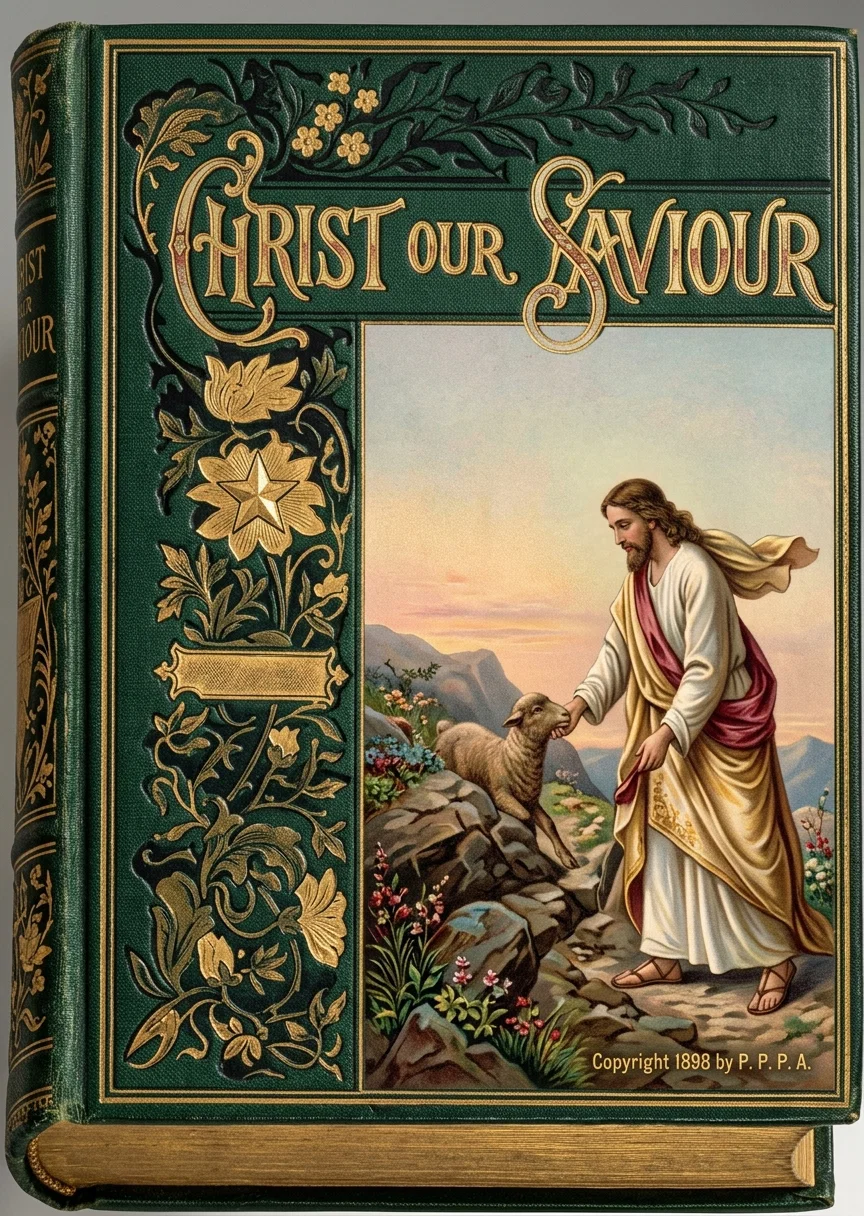
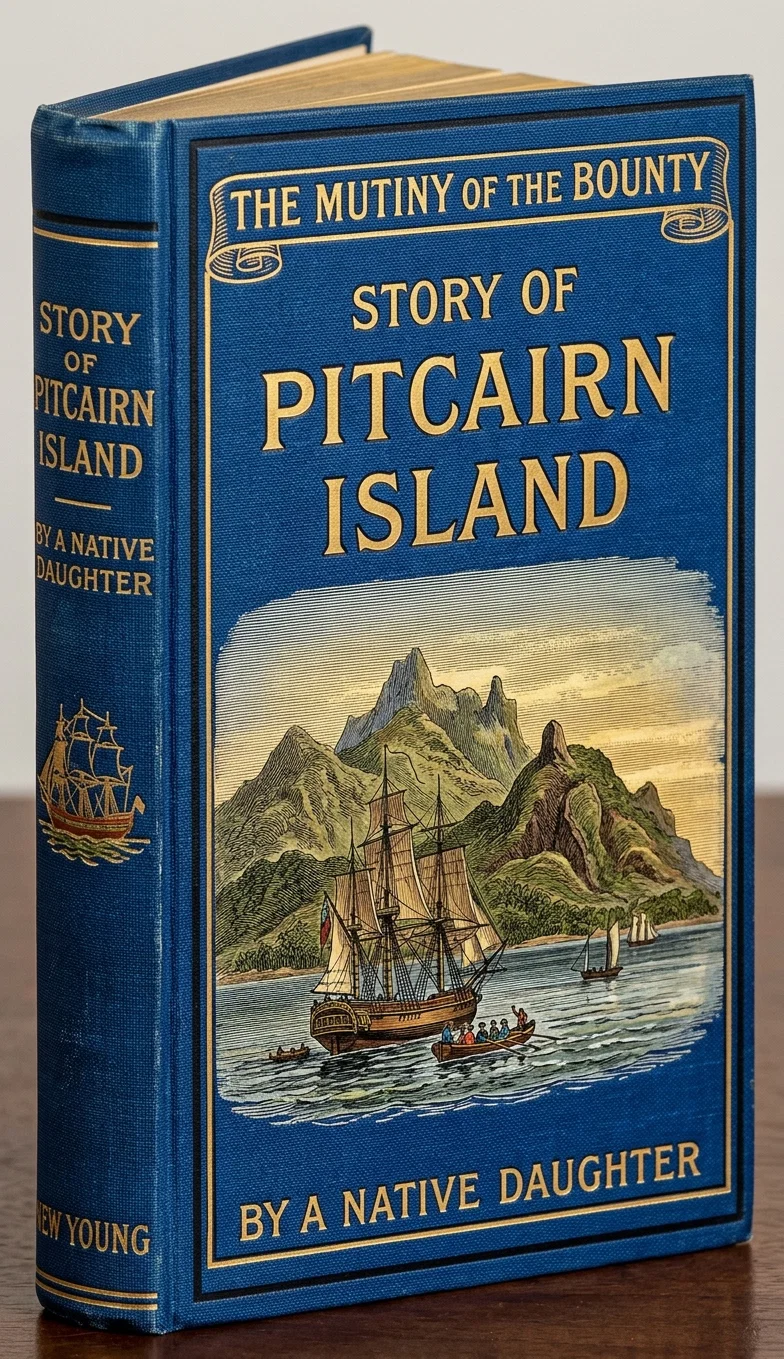
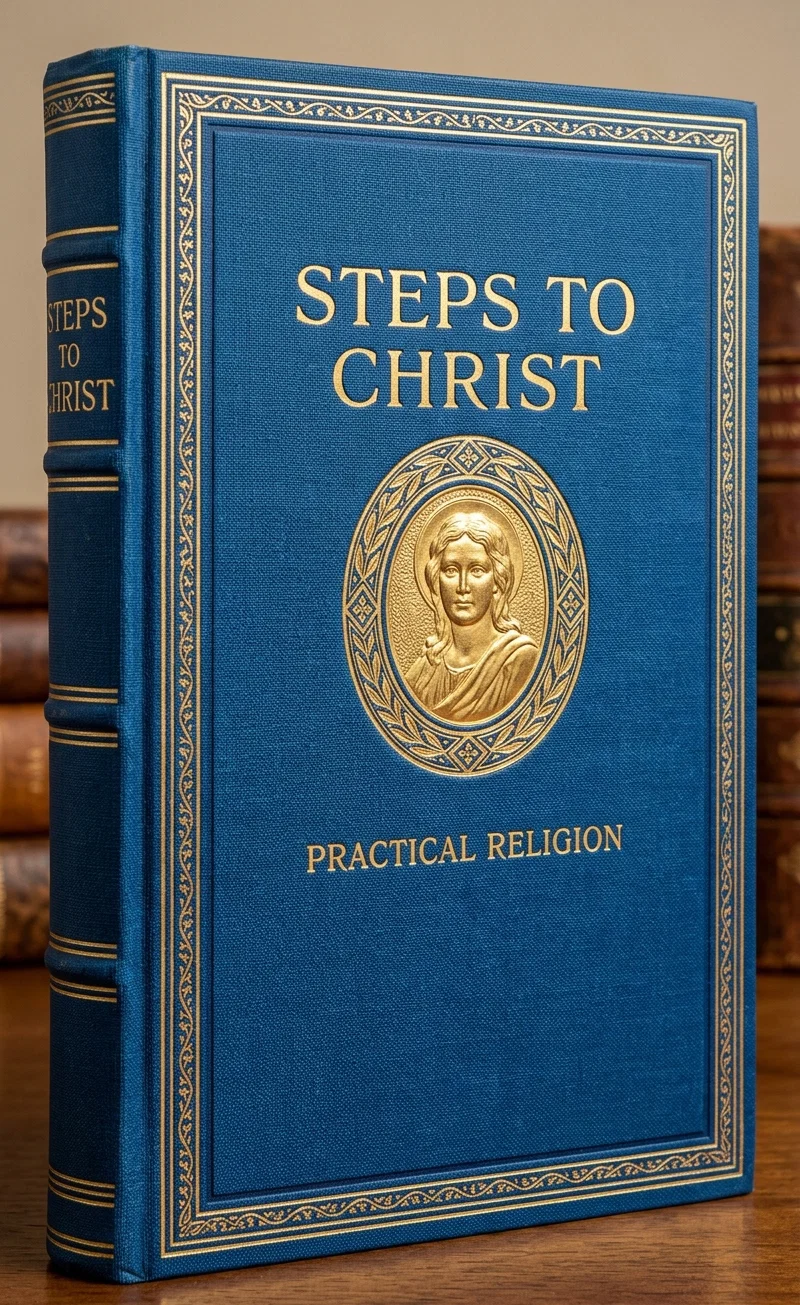
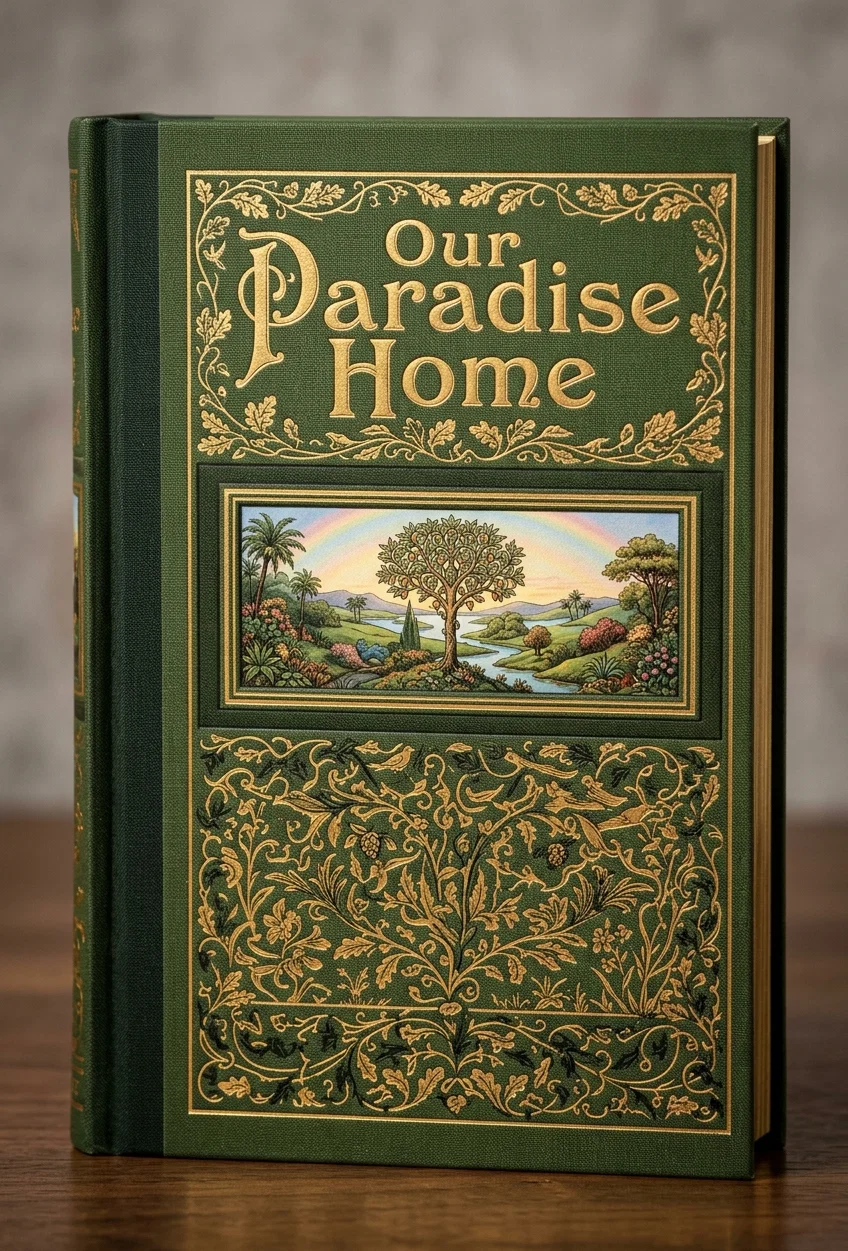
40 Per Cent Discount Offered to Agents on this Splendid Line of Beautiful Books

YOU can MAKE MONEY and do much good at the same time, without leaving your home town.
NO PREVIOUS TRAINING OR EXPENSIVE OUTFIT REQUIRED.
Your neighbors need these books in their homes, and will appreciate them highly. They are readily sold by old and young.
ALL YOU NEED TO DO is to send your name and address to your tract society, or the publishers, stating what books you wish to sell.
ENCLOSE THE RETAIL PRICE for sample copies of such books as you have selected.
FORTY PER CENT DISCOUNT WILL BE REFUNDED TO YOU ON YOUR FIRST REGULAR ORDER.
A booklet containing brief description and suggestive canvass for most of these books will be sent free on request.
Address your state tract society, or
Pacific Press Publishing Assn.
MOUNTAIN VIEW, CALIFORNIA
Portland, Ore. Regina, Sask., Canada Kansas City, Mo.
Prices in Canada 10 per cent higher on account of duty.
Board covers, 25 cts. Cloth covers, 50 "
Board covers, 50 cts. Fine cloth, 75 "
Cloth covers, $1.00
Cloth covers, $1.00
Board covers, 50 cts. Art edition, 75 "
Cloth covers, $1.00
Cloth covers, $1.00
Board covers, 35 cts. Cloth covers, 60 "
Cloth covers, 50 cts.
Cloth covers, 75 cts.
Paper covers, 30 cts. Cloth, plain, 60 " Cloth, gilt, $1.00
Cloth covers, 75 cts.
Board covers, 25 cts. Cloth covers, 50 " Presentation, gilt, 75 cts.

The Gospel That Saves

By way of illustrating the power of the Cross, we venture to reprint an oft-told story of the lamented Rev. Dr. Charles A. Berry’s experience (of Wolverhampton), as he told it to his friend Rev. J. H. Jowett, of Birmingham, England:
“One night there came to me a Lancashire girl, with her shawl over her head and with clogs on her feet.
“‘Are you the minister?’ she asked.
“‘Yes.’
“‘Then I want you to come and get my mother in.’
“Thinking it was some drunken brawl, I said:
“‘You must get a policeman.’
“‘O, no,’ said the girl; ‘my mother’s dying, and I want you to get her into salvation.’
“‘Where do you live?’
“‘I live so-and-so, a mile and a half from here.’
“‘Well,’ said I, ‘is there no minister nearer than I?’
“‘O, yes; but I want you, and you have got to come.’
“I was in my slippers, and I soliloquized and wondered what the people of the church would think if they saw their pastor walking late at night with a girl with a shawl over her head. I did all I could to get out of it, but it was of no use. That girl was determined, and I had to dress and go. I found the place was a house of ill-fame. In the lower rooms they were drinking and telling lewd stories, and up-stairs I found the poor woman dying. I sat down and talked about Jesus as the beautiful example and extolled Him as a leader and teacher; and she looked at me out of her eyes of death, and said:
“‘Mister, that’s no good for the likes o’ me. I don’t want an example—I’m a sinner.’
“‘Jowett, there I was face to face with a poor soul dying, and had nothing to tell her. I had no Gospel, and I thought of what my mother had taught me, and I told her the old story of God’s love in Christ’s dying for sinful men, whether I believed it or not.
“‘Now you are getting at it,’ said the woman. ‘That’s what I want. That’s the story for me.’ And so I got her in, and I got in myself.
“‘From that night,’ added Dr. Berry, ‘I have always had a full Gospel of salvation for lost sinners.’”
Can the new religion give us anything to take its place? — Missionary Review of the World.

Afraid to Trust Him

“Yes’m, she’s pretty well, mother is,” said the old man, pausing with his foot on the wagon-wheel to answer an inquiry concerning his wife; “pretty well, if only ’twa’n’t for worryin’ about the children. ’Lizabeth’s up to Conway this season, and mother’s all the time afraid she’ll be took sick away from home. Samuel’s got a good place at Tanfield, and he’s doin’ well, too; but his boardin’ place is across the river. Sometimes he goes by skiff, and mother, she can’t get over the feelin’ that he’s likely to be drowned. The two younger ones is home yet, but she says she’s anxious about the time John’ll be wantin’ to strike out hisself, and she’s always been afraid we’d never raise Car’line.
“No’m, there’s nothin’ special the matter with any of ’em now, and the truck has done fine this year. Mother hain’t had a touch of her rheumatism all summer, and she’d be pretty well off if ’twasn’t for worryin’. Christian? Bless you, yes, this forty year! She ain’t afraid but what the Lord will take care of her and all the rest of the world, but seems like she ain’t got faith yet to b’lieve He’s to be trusted with the children.”— The Wellspring.

Establishing the Health of the Child

IV. Clothing the Child

By Maria L. Edwards, M.D.
It is a source of much interest to inspect the baby wardrobes that have been prepared and are waiting the little ones’ arrival, because the most essential articles are often conspicuous for their absence, and the elaborately trimmed dresses and embroidered skirts that have consumed so much time and nervous energy, are displayed with such evident satisfaction.
The facts are that a child sleeps so much the first few months of its life that it has no time for dress parades. The essentials in the garments are that they be made of warm, light, and soft material, and in a simple and convenient way, with enough changes that the baby may always be sweet and clean.
The necessary articles of clothing are:— (1) The bandage made of outing flannel or cheese-cloth to hold the dressing for the cord in place, to be worn only a few days, or until such a time as the dressings are dispensed with. It is not essential that this be a wide, firm band and pinned as tightly as possible to hold the little one together, for he is securely built, and thus compressing the vital organs is positively injurious. (2) A warm knit abdominal binder, supported by shoulder pieces, that is clinging—but not tight—a good prevention for colic during the early months, as it keeps the abdomen warm. (3) Three or four dozen soft napkins. (4) Warm but soft vests or shirts. (5) Skirts that are attached to waists made of single thickness of goods and with armholes to support them in place without being tight. (6) Warm stockings. (7) Outing flannel or flannel slips, cambric skirts and cotton dresses when desired.
As the child grows older the same thought of warm, light, loose clothing should prevail, always allowing room for development of the little body and supporting everything securely from the shoulders.
The time of greatest danger comes to the girls when they reach puberty, for at this time a sudden change in the mode of living as well as dressing is often disastrous to health. The short, loose, supported skirts are exchanged for long, heavy ones, supported only by tight bands; the little loose supporting underwaists are replaced by the tight corset to give a figure; and the spring-heel shoes are exchanged for those with military or French heels, which just now are from three to four inches high.
At this period all the previous hygienic care of the girl may be made of no avail, and oftentimes the seeds of lifelong invalidism are sown.
See “Dressing for Health” for practical details on the dressing of girls and young women.

Little Feet

Two little feet so small that both may nestle In one caressing hand— Two tender feet upon the untried border Of life's mysterious land—
Dimpled and soft, and pink as peach-tree blossoms In April's fragrant days, How can they walk among the briery tangles Edging the world's rough ways?
These rose-white feet along the doubtful future Must bear a woman's load; Alas—since woman has the heaviest burden, And walks the hardest road.
Love, for a while, will make a path before them Dainty and smooth and fair— Will cull away the brambles, letting only The roses blossom there.
But when a mother's watchful eyes are shrouded Away from sight of men, And these dear feet are left without her guiding, Who shall direct them then?
How will they be allured, betrayed, deluded, Poor little untaught feet! Into what dreary mazes will they wander? What dangers will they meet?
Will they go stumbling blindly in the darkness Of Sorrow's tearful shades? Or find the upland slopes of Peace and Beauty, Whose sunlight never fades?
Will they go toiling up Ambition's summit, The common world above? Or in some nameless vale, securely sheltered, Walk side by side with Love?
Some feet there be which walk life's track unwounded, Which find but pleasant ways; Some hearts there be to which the world is only A round of happy days.
But they are few. Far more there are who wander Without a hope of friend— Who find their journey full of pains and losses, And long to reach the end.
How shall it be with her, the tender stranger, Fair-faced and gentle-eyed, Before whose unstained feet the world's rude highway Stretches so strange and wide?
Ah! who may read the future? For our darling We crave all blessings sweet, And pray that He who feeds the crying ravens Will guide the baby's feet. — Elizabeth Akers.

Cheerful Homes

A CHEERFUL, happy home is the greatest safeguard against temptations for the young. Parents should spare no pains to make home a cheerful spot. There should be pictures to adorn the walls, flowers to cultivate the finer susceptibilities, the choicest and most entertaining of books, and instructive newspapers and periodicals. These things, no doubt, cost money, but not a tithe the amount that one of the lesser vices even will cost —vices which are to be acquired away from home, but so seldom there. Then there should be social pleasures—a gathering of young and old around the hearthstone, a warm welcome of the neighbor who drops in to pass a pleasant hour. There should be music and reading. The tastes of all should be consulted, until each member of the family looks forward to the hour of reunion around that hearth as the brightest one in twenty-four. Wherever there is found a pleasant, cheerful, neat, attractive, inexpensive home, there you may be sure to find the abode of the domestic virtues; there will be no dissipated husbands, no discontented or discouraged wives, no “fast” sons or frivolous daughters.—The Southern Cross.

Failure That Can Not Defeat

FAILURE is a sickening thing, but we have no right to let it be a signal for giving up. The man who fails because of his failures, has surrendered in a fight that God meant to have him win. “There is no man who has won a perfect victory,” says Speer. “Men are not divided into two classes — the men who fail and the men who succeed. Every man is in the failing class. Men are simply divided into different groups according to the attitude they take toward their failures.” The men who fail and conquer are they who refuse to let their failures speak the last word. The men who fail and go to pieces are they who think that failure can not be overcome.
God is close to the man who has just failed. If ever Christ offers His human-divine sympathy, and fellowship, and forgiveness, and power to try again, it is at the moment when one has seemingly lost everything in defeat by sin. Then comes the real test of Christ’s power over sin, and the real test of the conquered sinner’s still confident faith in Christ. A lifetime of failures is not enough to get the better of one who still rises to his feet in the determination to keep on fighting. Such a fight can never meet with final defeat.—S. S. Times.

Common Sense in Agriculture

A young man in the shoe business was burned out in the fire at San Francisco. He owned a few acres of table grapes near Sanger, in the San Joaquin Valley. He decided to turn farmer, and went down and cultivated his grapes. The soil was good, the season a fair average, his vines were healthy, his neighbor had big crops. He had nothing. What did he do? He took the next train to Berkeley, and went to the “Cow College,” as they call the agricultural department of the State University. He laid the case before the viticultural expert and got it diagnosed and prescribed for. The diagnosis was that the blossoms probably needed to be fertilized from the pollen of other vines by artificial means. The prescription was a dozen hives of bees to be distributed through the vineyard. The next season he had a bumper crop. This small incident is significant because it is typical. The Californian takes his problem to experts and follows advice when he gets it. He has no bucolic contempt for theorists.—World’s Work.

IN THREE DAYS

Overland Limited

TAKES YOU
To Chicago
ACROSS GREAT SALT LAKE
AND
HIGH SIERRA BY DAYLIGHT
Luxurious High-class Equipment
Electric Lighted Throughout
Pullman Drawing-room
Stateroom
Vestibuled Sleeping Cars
Careful and Attentive Dining Service
Parlor Observation Car with Library and Cafe
Ladies’ Reading Room
Gentlemen’s Smoking Room
Daily News Bulletins
Latest Papers and Magazines
SOUTHERN PACIFIC

The Ten Commandments

We have a beautiful four-page folder, tastily printed in blue and gold on tinted cardboard, giving the Commandments as found in the Authorized Version. This attractive little folder makes a very desirable gift for birthday or Sabbath-school class. Price, post-paid, 5 cents. Address this office.

LIBERTY

THE OFFICIAL ORGAN OF THE RELIGIOUS LIBERTY BUREAU
AN illustrated, 48-page, quarterly magazine, published as an exponent and advocate of true religious liberty; defending Christianity and the rights of conscience; upholding the Bible as the infallible word of God; recognizing the church and state as ordained of Heaven for specific and distinct purposes, but vigorously protesting against the alliance of the church with the state in the attempt to advance religion and to promote the state.
Price 25 cents per year. Liberal terms to agents.
Address, LIBERTY, Takoma Park, D. C.

Colds

Colds.—By G. H. Heald, M.D. A treatise on the causes, prevention, and cure of colds. White leatherette binding. 58 pages, 25c. Address this office.

No Injustice in God.

One of the great charges which has been brought against the God of the Bible, is that it is cruelly unjust to punish men to all eternity for sins committed during a few years upon this earth; that to do this is utterly to repudiate the statement made over and over again in the Word, that men shall be punished according to the deeds done in the body. If it were true that man was doomed to such eternal misery, such a charge as that would certainly lie against God; but not so does God punish. He has told us that “the wages of sin is death;” that “sin, when it is finished, bringeth forth death.” That death is not therefore an arbitrary punishment of sin; it is the consequence which follows man’s transgression of the law of his life. In other words, he who has not used the gift of life aright, is deprived of that gift. No one can charge God with injustice in such a case. In His goodness He has bestowed upon man the highest blessing—life with its opportunities. For man to misuse that life, to pervert it, is to make it a curse to himself and to others. God in His wisdom so formed man that the very transgression of that law would result in non-existence. The sure fruitage follows its perversion, and that is death.

A Noted Statesman Assassinated.

Prince Ito, one of the leading Japanese statesmen, was assassinated at Harbin, Manchuria, October 26 by a Korean who said, “I came to Harbin for the sole purpose of assassinating Prince Ito to avenge my country.” The seeming reason for it was the strict regime which Ito carried out while in charge of Korea. One report states that he had caused to be executed the brother of the one who assassinated him. It is said that his death will have a great effect in moderating Japanese affairs in Manchuria.
Prince Ito of Japan
Prince Ito of Japan

The Signs and Its Future

Read the advertisement concerning the SIGNS and its future on page 2.
Continue reading: That Is Good.—