In the six preceding articles upon “The Turkish Revolution,” I have endeavored to make plain a few of the most salient historical facts connected with that extraordinary and world-starting movement.
In this paper, and in others which will follow, I desire to present some prophetic facts which link the Eastern question of to-day with Sacred Writ penned more than two thousand years ago. This exposition will show that the Eastern question and the Turkish revolution are vitally connected with the close of human probation and the end of the world.
It will be made plain that the Eastern question is one of God’s great signs that the consummation of earth’s history is at hand, and that the age of ages is about to be ushered in. At the present hour it is undoubtedly the most striking sign of all, the one which is engrossing the minds of kings, ministers of state, chancellors, and the general public more than all others combined.
In the minds of diplomats and statesmen it has come to be what the late Prince Hohenlohe of Prussia would term “the black point.” And by this he meant that it was the one dark question beyond which no way leading to light and peace could be discovered. And this great Prussian prince has not been the only statesman who has thus viewed the Eastern question.
For nearly two hundred years the cabinets of Europe have fully realized that when the question of the Turk comes up for final settlement, there is the greatest danger that all the world will become involved in a conflict more bloody and calamitous than any that has heretofore afflicted the children of men.
This is the one fell international war-cloud, of which it can be truly said that it has no silver lining. This is the one dark night on the ever-troubled seas of international affairs beyond which no statesman sees a dawning. Concerning most questions men feel that while darkness may enshroud their settlement, yet there is light beyond. Concerning this, few men venture an opinion save of the deepest gloom. Thus the settlement of the Turkish question has become one which the statesmen of Europe have dreaded to broach. But now to the Scripture:—
In Isa. 28:21, 22, it is written: “For the Lord shall rise up as in mount Perazim, he shall be wroth as in the valley of Gibeon, that he may do his work, his strange work; and bring to pass his act, his strange act. Now therefore be ye not mockers, lest your bands be made strong: for I have heard from the Lord God of hosts a consumption, even determined upon the whole earth.”
This is the only statement in the Bible attributing to God the doing of a work different from that which he habitually does. The character and ordinary manifestations of God were once proclaimed by the Lord himself to Moses: “And the Lord passed by before him, and proclaimed, The Lord, The Lord God, merciful and gracious, long-suffering, and abundant in goodness and truth, keeping mercy for thousands, forgiving iniquity and transgression and sin, and that will by no means clear the guilty; visiting the iniquity of the fathers upon the children, and upon the children’s children, unto the third and to the fourth generation.” Ex. 34:6, 7.
Then this is God’s character as ordinarily manifested. But when God rises up to do “his work, his strange work,” and “his act, his strange act,” we must perforce look for manifestations far different from those brought to view in the verses already quoted.
The fifteenth and sixteenth chapters of Revelation contain the story of this “strange work” and “this strange act.” In them the seven last plagues are enumerated and described.
The first of these chapters opens with the words: “And I saw another sign in heaven, great and marvelous, seven angels having the seven last plagues; for in them is filled up the wrath of God.” Rev. 15:1.
First, let it be noted that these plagues are a sign. A sign is something which notifies concerning the presence or advent of something else. This sign, as subsequent scriptures reveal, is one which gives warning that the coming of the Lord is right at hand.
Again: this verse reveals the fact that these plagues are the “last” plagues which God will ever visit upon the world. It is said that in them the wrath of God is “filled up,” i. e., completed, finished. In other words, these plagues are11the expression of the completed wrath of God. Elsewhere they are styled “the wine of the wrath of God, . . . without mixture,” in “the cup of his indignation.” They are, to borrow the language of the prophet Jeremiah, “the wine-cup of this fury.” They are said to be “full of the wrath of God.” See Rev. 14:10; Jer. 25:15; Rev. 15:7.
Since, therefore, these plagues are “full of the wrath of God,” and since that wrath is said to be “without mixture,” it is clear that there can not possibly be any mercy, forgiveness, probation, or salvation mixed with the wrath which they contain. Often in Scripture story, divine wrath commingled with mercy has been visited upon men. The chastisement was to lead men to repentance and salvation.
With the “seven last plagues” it is different. Since these plagues are “filled up” with “the wrath of God,” and are “full of the wrath of God,” it is clear that there is no mercy or salvation for any man after they begin to fall. All the dwellers upon earth who live during the time of these plagues must make sure of salvation before these plague angels start upon their mission.
This entire line of reasoning is made still more clear by the English rendering of the Syriac text: “And I saw another prodigy in heaven, great and wonderful, seven angels having seven plagues, the last in order, because with them the wrath of God is consummated.” See Syriac Peshitto Version, Murdock’s translation, Rev. 15:1.
The word translated plague means “wound” or “calamity.” The Greek word from which it is translated is derived from a word meaning to “pound” until the thing pounded is “flattened out.”
It is clear, therefore, from all the above, that these plagues are the judgments by means of which God pours his fury upon a world that has given itself over to atheism and anarchy, and refuses to be saved. They are “the last in order” because with them “the wrath of God is consummated.”
Other scriptures substantiate these. “The mystery of God” which is revealed through the gospel “is finished” before this day of “indignation,” “wrath,” and “fury” begins. Rev. 10:7. Again, it is written that when “the seven angels came out of the temple,” “the temple was filled with smoke from the glory of God, and from his power; and no man was able to enter into the temple, till the seven plagues of the seven angels were fulfilled.” Rev. 15:6, 8.
Now the only way that men are able “to enter into the temple” in heaven is through the mediation of our Lord and Saviour Jesus Christ, who pleads his righteousness in our behalf, in that most holy place. Heb. 8:1; 9:24. But when the angels start upon their mission with these seven final judgments, Christ himself leaves the heavenly sanctuary. There is, then, no more mediation. No man can enter the temple through Christ, because Christ is not there. The service ice in the temple of God comes to an end, and there is no service for the forgiveness of sins and the cleansing of iniquity while these plagues are being poured out.
Madison, Tenn.
An Opportunity
By C. P. Bollman
C. P. BOLLMAN
The approaching annual offering for the work among the colored people affords us another opportunity to give that branch of the Lord’s cause a much-needed impetus.
It is true that this work, like almost every other, is far behind what it ought to be; but it is also true that a fair beginning has been made. Not all has been done that ought to be done, but a good foundation has been laid for more aggressive work. Quite a force of colored laborers has been developed, and as a consequence the work is now in a position to advance much more rapidly than was possible even a few years ago. A larger proportion of money and effort given now can go directly to the firing line than formerly. This should be a source of thankfulness to every lover of present truth.
When the Oakwood Manual Training School at Huntsville was first established, almost everything was to be done. There were at that time very few colored Seventh-day Adventists prepared to labor successfully for their own people. Now, however, thanks to the work done at Oakwood and in the mission schools of the Southern Missionary Society, there are scores of colored believers actually in the field as ministers, teachers, nurses, Bible workers, and canvassers.
It is true that in some respects conditions are becoming more difficult than they were five or ten years ago, but now when white laborers are compelled to abandon any part of the field, we have colored laborers ready to take their places. This is due, in large measure, as already stated, to the good work done at Huntsville and in the mission schools.
In the past our work for the colored people has lacked that thorough organization, that homogeneity, necessary to bring the best results and to admit of the most economical effort. Now, however, with the organization of the North American Negro Department and with the coming in of the several union missions in the South, the whole work can be carried forward more intelligently, more economically, and we believe more successfully, than formerly.
There is another consideration also that should have weight with us at this time; namely, the fact that just now the sentiment of the better class of the Southern people is very favorable to intelligent, conscientious effort for the moral and industrial uplifting of the negro. In the past the South has been in a measure indifferent upon the question of negro education. Now, however, a large number of the people are becoming aroused to the fact that the stability of society depends not alone on the intelligence and morality of the white population, but in no small degree also on the intelligence and morality of the colored population. It is true there are some who demand that the negro be kept in ignorance, but thus far a better sentiment has prevailed. The tide will turn erelong, but meanwhile there is a grand opportunity to entrench the principles of present truth so thoroughly among the colored people that when the last white worker shall have been driven from this branch of the cause, the work will still go forward, carried by intelligent, consecrated negroes themselves who have been trained in our schools, and have gained an experience under the leadership of those whose opportunities have qualified them to instruct others.
That the Lord’s hand is in the plans that are now being laid for carrying forward this branch of his work is evident from the fact that the field is opening as never before. Brethren and sisters, there is surely “a sound of going in the tops of the mulberry trees,” and in many ways the Lord is bidding us go forward. Nor is the Lord asking us to do something that is beyond our ability to do. He has given the country at large good crops, and consequently better times. Thus the Lord is affording us another opportunity to do the work that must be done.
The work among the white people in this field is rapidly becoming self-supporting. But the work for the colored people must still have help. The colored believers are just as true and just as faithful as white believers, but they are too poor to do what must be done for their people. They are doing what they can, but the Lord calls upon the more highly favored race to share with them in bearing the burdens, that when the labor and heat of the day are past, we may share also in the glorious reward. Brethren and sisters, remember the offering for work among the colored people to be taken up in all our churches Sabbath, October 2.
Nashville, Tenn.
Martin Luther’s Little Robin
MARTIN LUTHER, in his autobiography, says: “I have one preacher that I love better than any other on earth: it is my little tame robin, which preaches daily. I put his crumbs upon my window-sill, especially at night. He hops onto the sill when he wants his supply, and takes as much as he desires to satisfy his needs. From thence he always hops to a little tree close by and lifts up his voice to God and sings his carol of praise and gratitude, tucks his little head under his wing, and goes fast to sleep, and leaves to-morrow to look after itself. He is the best preacher I have on earth.”
The Religion of Some People
“BOIL down the religion of some people, and you will find that it consists in going to church, and patting themselves on the head for going.”
C. L. BUTTERFIELD
By C. L. Butterfield
Korea
C. L. BUTTERFIELD
LAST evening we received the last number of the General Conference Bulletin. These papers have been a feast of good things to us. It was certainly a good Conference, and I believe that every one in attendance received great blessings. We have greatly rejoiced to see the good reports, and to learn of the harmony and oneness that existed in all the deliberations.
We are now anxiously waiting to hear what new workers we are to receive this year. We need workers who are consecrated, and are willing to do or be anything in order to save souls. We have a splendid field here in Korea. The longer I am with these people, the more I learn to love them. They are very poor, yet it is surprising how liberal they are, and how anxious to help in giving this message to others. If our people in all the world would give in proportion to what these people give, the Mission Board would not lack funds to carry on this work. To illustrate this more fully, I will give you a few items:—
The average wage paid in this part of Korea is from fifteen to twenty cents a day. That, however, is not for a ten-hour day, but from sunrise to sunset. About six weeks ago Miss Mimi Scharffenberg was given the Sabbath-school to look after. She visited one company where they had never taken up a collection. She told them that our schools were all beginning to give collections to missions the same as in all the world, and did what she could to encourage them to do the same. It was only four Sabbaths until the end of the quarter. When they sent in their report, it was accompanied with one yen, the collection for four weeks. The report said that there were thirteen members, and two of them were children. That would be an average of two sen, or one cent gold, for each member each Sabbath. That would be equal to at least ten cents gold for each member each Sabbath in America. This is not an exceptional case.
Last Sabbath we took up the mid-summer offering here at Soonan. It passed our expectations. All were surprised, when the amount was read, to learn that 83 yen, 50 sen, or $41.75, had been given. The collection was taken up at other places, but I do not yet know the result.
Yesterday our first colporteur, with the first box of literature, left our station. He had a supply of the following tracts for free distribution: “The True God and His Sabbath,” “The Sinner’s Need of Christ,” and “Jesus Is Soon Coming.” Our Sabbath-school Lesson Quarterly on the First Epistle of John, and a few Bibles and song-books, made up his stock of books. Until we get more literature, he will give most of his time to selling Bibles. He has been a Christian for about fourteen years, and for several years has been selling Bibles and other religious literature; so he is not a novice in the work. I think he will be a great help to us.
Several years ago Brother Kim, one of our native workers, was converted under this man’s labors. After Brother Kim accepted present truth, he began to labor for this man. He was much attached to his church, and did not think it was possible that they were in the wrong. But after carefully studying the matter he found that we were right, and began about six months ago to keep the Sabbath. He has a good understanding of our truth, and next Sabbath I expect to have the privilege of baptizing him, with others.
I sincerely hope that there will be sufficient of the three hundred thousand dollar fund raised so that we can get located at our permanent headquarters at Seoul this fall, get our printing house built, and procure a new press. A foot-press, which we can buy in Seoul for two hundred dollars, would supply our need. One man, with such a press, can do as much in one day as two men can do in three days with the pull-press that we now have.
What we do in Korea must be done quickly. We must not delay, or souls will be lost. Opposition is very strong in some places, but our literature breaks through the barriers, and tells the blessed story of a soon-coming Saviour, and invites all to be prepared to meet him in peace.
A few days ago one of our workers said that in the city where he is working, members of the other denominations had been forbidden to talk with us or to read our literature. But men come to his home in the night, and ask for tracts, which they conceal in their clothes when they go away. He tries to talk with each one, but he can not get a man to talk with him. After reading a tract, some come for more, and are then willing to talk. By this one can see something of our need of a press and printing house at an early date.
We are all well and enjoying much of God’s blessing in our work. It seems that every moment of our time is taken up from five in the morning until late at night, but we keep well. July 4 we hired horses to ride, and all went about seven miles up in the mountains to spend the day and read the Bulletin. We all enjoyed the change.
We are in a needy field, and we desire the prayers of our brethren and sisters for the success of the work. Soon the work will triumph, and the believers from every land be gathered home.
Soonan.
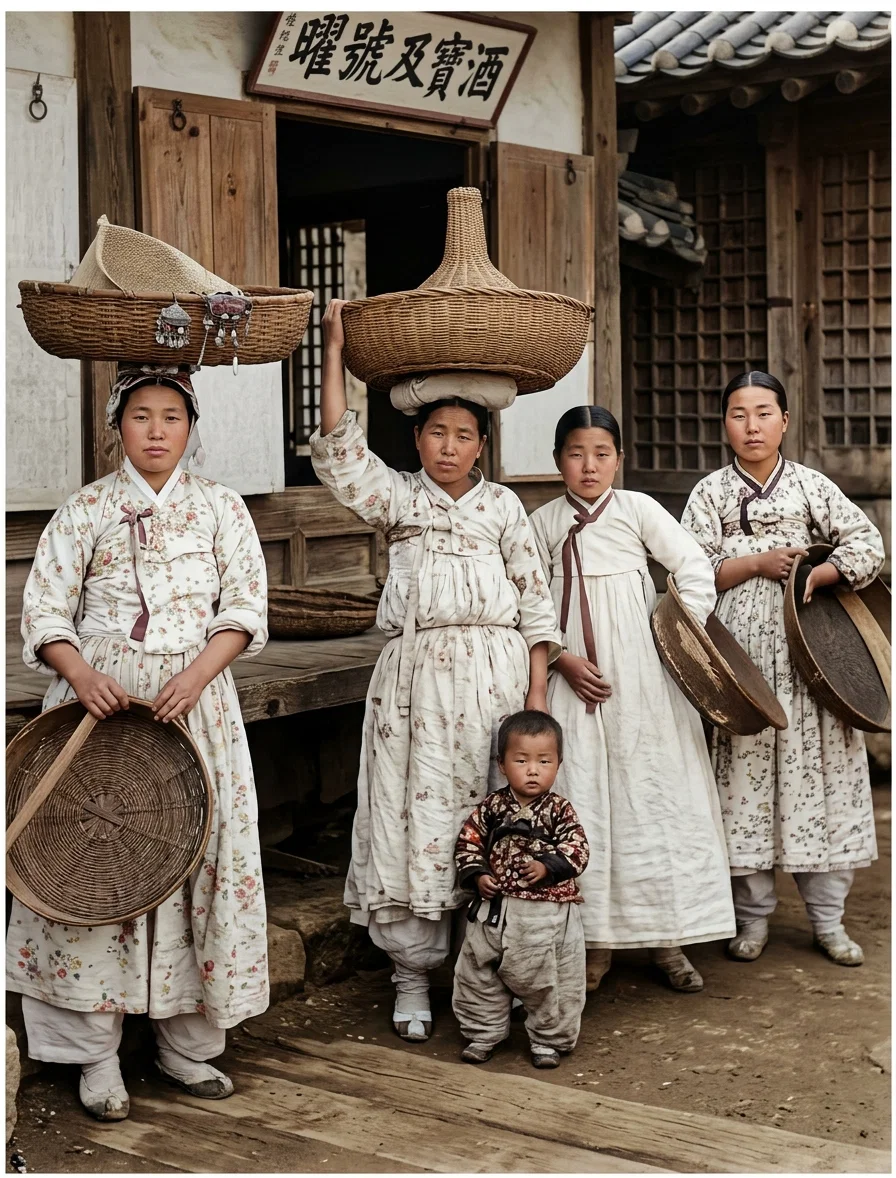
WOMEN OF KOREA
Medical Missionary Work in Korea
By Riley Russell, M. D.
RILEY RUSSELL, M. D.
KOREA is a very needy field, as it is one of the late countries to be opened to the gospel, and the people are low in all kinds of sin and degradation; but we rejoice in the fact that our God came to save sinners, and we can see the uplifting power exerted upon the lives of those who are accepting this last saving message to a perishing people.
I have fitted up a small room in one end of the schoolhouse, where I can see the sick; and last month I had four hundred twenty-three patients, and many outside calls, some of them from a distance of ten and twenty li. The sights13we see every day are almost beyond description. The people are absolutely ignorant in regard to caring for their bodies; and they are so very thankful for our services.
SCHOOLHOUSE, AND OFFICE OF DR. RUSSELL
Mrs. Russell often goes to visit the women and the sick babies; and when she is leaving, the mothers will bow almost to the floor, saying, “Ta ta ne cum up sim nida,” or we thank you exceedingly, very, very much.
We have a little printing-press in operation now, and I always try to get a tract into the hands of each patient, for I can not talk much yet. Last week one of my patients came back and said he wanted to be an sick el yesu sarum, or a Sabbath Jesus man.
The language is very hard, and it will be a long time before we can do much preaching. I can get along fairly well with the patients now, and next Sabbath I am thinking of trying my first Bible study alone, as my wife and I are going north about sixty li to visit a small company of believers.
Soonan.
C. H. PARKER
By C. H. PARKER
Fiji
C. H. PARKER
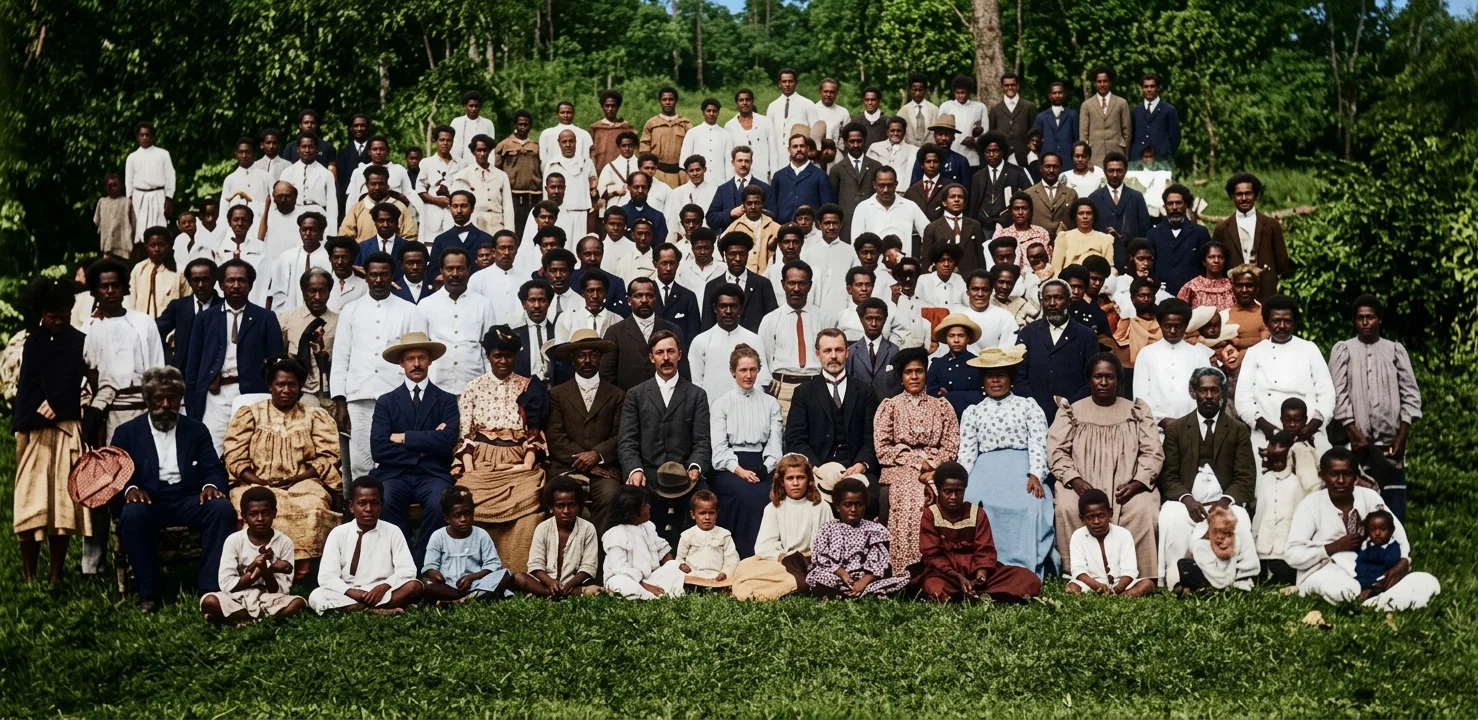
Our council for Fiji was held June 10. It was quite an inspiring time. The brethren, and some from other denominations, came from many of the islands of this group. There were about two hundred in attendance, fifty-seven of whom were delegates. The reports from the different districts were both good and encouraging. Sixty-four have accepted the message during the year. During this time six have died, and four have apostatized. Thus the increase for the year has been fifty-four. Forty-one have been baptized. All branches of the work have been strengthened.
Our Buresala school is being built up, and we are adding to its equipment as fast as circumstances will permit. At this meeting it was decided to build a boys' home, sixty by twenty-four feet, with an iron roof. For this purpose there was given in a very few minutes thirty pounds. I never saw such a willingness in giving. The people seemed to think that it was a great privilege to give. One man not of our faith arose and handed in four shillings, saying, as he did so, "I go where this goes."
The spiritual tone of the meeting was that excellent from first to last. Perfect harmony existed in all the deliberations, and greater intelligence was manifested than in any of our meetings previously. The Spirit of the Lord came down in copious showers, and there was great heart searching in the camp of God's people. The meeting adjourned, those present retiring to the water, where twelve precious souls were buried with their Lord in baptism.
All but a few of our brethren have now returned to their homes, and we again take up the duties of a new year, with the determination to plant the banner of the cross upon strongholds not yet entered. We know that God will not fail us, and the victory is sure.
Buresala, Levuka, Ovalau.
The Work in Denmark
By Guy Dail
GUY DAIL
A few days preceding the Danish Conference, there was a session of the Scandinavian Union Conference committee at Skodsborg, where valuable help and counsel were rendered to the work in connection with the Skodsborg Sanitarium and the Scandinavian Union Mission School. Elders O. A. Olsen and L. R. Conradi were present.
We were happy to see so many guests at the sanitarium. There were about one hundred seventy in the institution at the time of our visit, and the income of the sanitarium is larger than at any time in the past. Dr. J. C. Ottosen and his associates have their hands full in caring for the patients.
The new union school building is under roof, and its thirty-three rooms will be ready for occupancy this autumn. It will cost ninety-one thousand kroner to erect and furnish this building, and it will be about half paid for by money already raised for this purpose. The earnings of the building, and whatever may be gained by the school, either through the careful management of its finances or by donations and legacies, will be kept sacred to the educational work in Scandinavia. The Danish depository will be able to donate five thousand kroner toward the enterprise this year. The twenty-two thousand kroner that the Christiania House will return to the Hamburg House will be transferred to this school. Norway and Denmark will raise more means for the institution. America has already helped nobly toward this worthy and deserving branch of the third angel's message, for, after all, no investment pays better in accomplishing the work we have before us than the careful training of suitable young men and women as laborers together with God.
The school will begin the first of November, and last until next May. We were glad to learn that a large majority of the students who were enrolled here last year are actively engaged in some department of the cause. Quite a number of them are canvassing, with good success. We believe that ere long this school will make itself strongly felt in the Scandinavian field.
ATTENDANTS AT THE FIJIAN COUNCIL
From Skodsborg we went to Randers, where the thirtieth annual session of the Danish Conference was held, July 6-11. A workers' meeting preceded the opening of the business session of the conference. A cordial and brotherly spirit prevailed. Unity of action characterized the work of the conference. Much time and attention were given to a careful consideration of the Sabbath-school and young people's work. In some places there had gradually come in a spirit of indifference to the Sabbath-school's privileges and duties, for many found it more agreeable to be in one class embracing all the adults of the school than to have the school divided into smaller classes, where their lack of acquaintance with the lesson would be too readily detected. Friday forenoon the Scandinavian Union Mission School was under consideration, and in less than half an hour 3,838 kroner was raised in cash and pledges toward this institution, among the eighty-four delegates and the one hundred other brethren and sisters present.
It was a scene calculated to touch one's heart, as these people, many of whom are poor and simple of manner, put their shoulder to the wheel to help lift with all their might. The spirit of sacrifice manifested was a sure precursor of the revival service we were to have Sabbath forenoon, when over fifty came forward to ask for help and prayer, some of them making their first start in the service of God, and when the whole congregation arose, thus signifying their desire to rededicate their powers to his service. The Lord blessed the efforts of the local laborers of Denmark, and also of the visiting brethren — Elders Conradi14Olsen, and J. C. Raft, and Brethren Nels Andersson of Iceland, and Dr. F. W. Vasenius, who arrived here en route to the Abyssinian Mission, and will spend a few weeks in Scandinavia before leaving for Africa.
We were interested to learn that Brother Andersson, who went to Iceland to assist Brother David Ostlund in 1902, has been able to canvass the northern and western part of the island, having finished about half of that small, but wide-extended field. Our Icelandic paper has a subscription list of about three thousand now. When he first visited Standasysla, the people, who very seldom see a stranger, at first thought him to be a robber, and so were afraid of him. At that time he knew only a few words of their language, and yet because of his love for souls, he went forth, and God gave him wonderful success. There being no roads and no bridges, he had to wade or swim the streams. He was away from post-office communication for weeks, and his sample copy of the paper became very soiled and worn, but still he used it, and got subscriptions. He has agents in these country districts, who have clubs of ten or fifteen papers sent to them, and see to the distribution of the single copies and the collection and remittance of the funds. As he told us of the difficulties to be overcome (they did not seem to be very great to him), we thought of the many blessings that our workers in other lands enjoy when compared with those to be had in some of these out-of-the-way places, located, as one might say, almost beyond the boundaries of the world.
Brother C. C. Jensen was re-elected president of the Danish Conference. The tithe for 1908 amounted to $8,784, and the Sabbath-school weekly donations and the annual offerings to $1,680, against $8,122 tithe and $1,595 offerings in 1907. The sales of the depository last year came to $19,547, a gain of $5,884 over 1907. The outlook for the future of the work in Denmark is bright, and we believe God will continue to grant the work here his blessing in ever-increasing abundance.
Hamburg.
A Visit to Asheville, N. C.
By K. C. Russell
HAVING a little time to spare between the Cleveland, N. C., and Athens, Tenn., camp-meetings, we decided to spend some time in Asheville, N. C., it being necessary for us to pass through this city on the way to our Tennessee appointment. We reached there Sunday afternoon, August 22, and were met at the train by Elders W. A. Westworth and I. M. Martin. We were taken first to the beautiful parsonage and church edifice that has been donated to the Southeastern Union Conference. The location of this property is a most desirable one. The buildings are neat and substantial, with all the modern conveniences, and are surrounded by a respected and influential class of citizens. These buildings are certainly a most fitting memorial for the truth in this important center in the South.
Asheville is a city of twenty-five thousand inhabitants, with a most ideal climate, and is therefore a popular resort for tourists in both the summer and winter months. In the summer season it is visited by people from the South, and in the winter by those who live in the North. Hence, it is a place of continual life and activity.
There could be no more ideal place to erect another standard for the third angel's message than in this city. The truths for this time, if rightly presented and lived out in the lives of our people there, will exert a telling influence upon the tourists who visit this place from different parts of the United States.
At this writing, Elder Martin, assisted by Prof. A. W. Spaulding, Brother William Cluff and wife, and Sister Amelia Webster, are engaged in a successful series of tent-meetings. At present the meetings have been in progress for five weeks. We rejoice to say that at this early stage of the meetings twenty-one souls have taken their stand for the Sabbath, besides there are a number of other hopeful ones. Among those who have decided for the truth are several of the influential people of Asheville. During our brief and pleasant stay in this city, we had the privilege of speaking twice in the tent, besides visiting a number of those who have taken their stand to obey all of God's commandments. It is indeed a source of encouragement to meet people of moral worth and influence who are ready and willing to respond so quickly to the precious principles of the everlasting gospel. Two of those with whom we conversed, who have recently decided to obey the Lord, said that early in life they had queried why people observed the first day of the week instead of the seventh. It is evident that these persons, like many others who have embraced this truth, received their first impressions in early life, and thus were made more susceptible to the influences of the unpopular truth of the Sabbath in after-years. It should be remembered by our consecrated workers everywhere that there are still many such persons in cities besides Asheville, who are waiting for this message.
Elder Martin will continue his meetings in the church building after the weather becomes too cold to hold them in the tent. During our visit in Asheville, Elder Westworth and I had the pleasure of spending one night at the hospitable home of Prof. S. Brownsberger, who resides on his farm four miles from the city. It will be remembered that Professor Brownsberger was president of the Battle Creek College for a term of eight years, and later president of Healdsburg College for five years. Our work in Asheville needs the influence and help of this experienced worker and family in building up the work in this important city.
K. C. RUSSELL.
Southern Illinois Camp-Meeting
By G. B. Thompson
The annual camp-meeting and conference of the Southern Illinois Conference was held in Centralia, August 12-22. The camp was located on the Chautauqua grounds, some distance from the city, but reached by a good street-car line. On account of a union meeting in the city, held in a large tent by the various churches, the attendance was small. Some of those who attended the camp-meeting began the observance of the Sabbath.
The attendance of our own people was quite good, most of the churches being represented by delegates. An excellent spirit pervaded the meeting throughout. The utmost harmony and unity was manifested in all the business deliberations, and some of the business meetings were among the most spiritual held during the meeting. This is as it should be. The officers elected for the coming year were about the same as last year. Elder S. E. Wight was unanimously re-elected president.
Several revival services were held, and many renewed their consecration to God, and returned to their homes with new determination to be faithful. Some gave their hearts to God for the first time. Many testimonies of victory over besetting sins were heard. On Sabbath afternoon, in a stream near the camp, twenty-nine were buried with the Lord in the sacred rite of baptism.
There was a liberal response to the calls for financial aid in the various lines; over one thousand dollars was raised to buy tents, etc., which are needed to carry forward the work in the conference. Nearly eight hundred dollars was also given for foreign missions. A deep interest was shown in this part of the work. Elder A. G. Daniels was present for a few days early in the meeting. His presence and counsel were greatly appreciated, and his recital of the progress of the work in “the regions beyond” brought courage and good cheer to all. That which will help our work in foreign fields most of all, as well as in other departments of the work, is for each to realize the individual responsibility which rests upon him as a part of this great work to share the burden. When this responsibility is recognized, the work will move, not simply in southern Illinois, but throughout the world.15
It was my special pleasure to attend a part of this good camp-meeting. This was the field of my first labors in connection with the message. It was in Centralia, twenty-three years ago, that I preached my first sermon while tent master for Elders A. O. Tait and F. D. Starr. There are but few Sabbath-keepers here now, yet I met some who remember the truths which were preached at that time. I was glad to meet some whom I have not seen for about twenty years, still faithful in the message.
The reports rendered at the meeting of the various departments of the work showed progress. A number of faithful canvassers are in the field, and are having a successful experience in the sale of our books. The treasurer's report showed a substantial gain over the previous year.
Southern Illinois is a splendid field for labor. There is much virgin soil here for work. It is filled with many progressive people who can be reached with the message, and we feel sure that a strong, aggressive conference will be built up in this part of the State.
Nearly all who attended the meeting remained till the close, and returned to their homes encouraged to push the work, and share at last in the overcomer's reward.
Elder Allen Moon and other general laborers in the Lake Union Conference were present, and rendered valuable help in making the meeting a success.
G. B. Thompson.
Mission Prospects in Abyssinia and Persia
BROTHER L. R. CONRADI writes that our brethren at work on the borders of Abyssinia, in the Italian province of Eritrea, are constantly making inquiries as to the prospects for entering Abyssinia itself. He says: “I shall see what can be done with some of the Italian colonial authorities at Rome, toward securing the right to form a society to secure and hold property. We are also getting facts together about Persia, and launching the work there. The British Foreign Bible Society wrote me a very nice letter concerning the new translation of the Gospels [under Brother Kotz’s supervision at the Hamburg Publishing House] into the Chasu, and said they felt much in sympathy with the enterprise. They stated the conditions under which they could co-operate with us, and we will see what can be done.”