The Youth’s Instructor, Vol. 33, No. 37.

CARDIFF CASTLE

The Youth’s Instructor

Sep 30, 1885

S. D. A. Publishing Association · Battle Creek, Mich. · Sep 30, 1885

CARDIFF CASTLE.
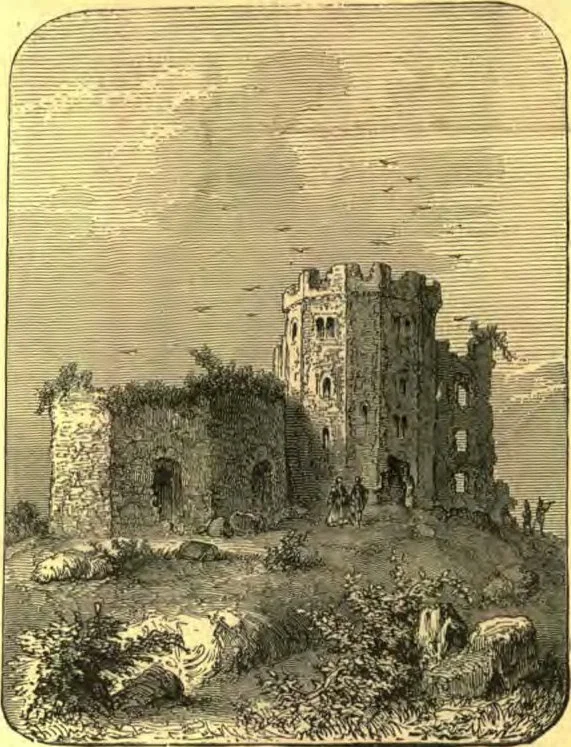
The traveler in foreign lands finds many things of deep historic interest,—places whose names have been made famous by the thrilling scenes that have occurred within them, but which have been sadly used by the hand of time, and now lie in ruins. Others, equally famous long years ago, are still teeming with busy inhabitants, eagerly employed in the various branches of industry. Everywhere are seen remarkable buildings which have withstood the assaults of storms and arms for centuries, and with whose histories are connected many remarkable and interesting events.
Cardiff (the “Caer,” or Castle on the Taff) is a municipal and parliamentary borough in the county of Glamorgan, one hundred and seventy miles from London. Its population, according to the census of 1871, was about 57,000. It is the chief emporium of the coal and iron trade of South Wales. In these products the neighboring hills are remarkably rich. Originally, its streets were narrow and dirty, but under the spirit of modern times, great improvements are seen in the wide thoroughfares and new houses in the new quarters of the town. Historically, Cardiff is well known. Many changes have occurred within it, but some of its most remarkable objects still remain. Among others is an ancient castle, as shown in the accompanying engraving. Many curious legends are connected with its history. From its position between the rivers Taff and Rhymney, and also between the mountains and the sea, it was marked out probably by the Romans, and also the Normans, as a fortified station.
In this castle, in the year 1108, Henry I., having taken prisoner his brother Robert, Duke of Normandy, imprisoned him for twenty-six years, until his death in 1134. Although kept a prisoner, it is probable that he was treated with kindness, and at times permitted to change his abode. Many fierce battles have thundered around its walls, where kings have been dethroned, and their crowns have fallen from their heads; and the changeful history of this famous old castle is full of the succession of ownerships, until the Lordship of Glamorgan passed, by marriage, to the Bute family, to whom Cardiff is mainly indebted for its prosperity. The area inclosed within the walls of this old castle was ten acres, and that within the moat surrounding it, thirteen acres.
This castle was once of enormous strength, and was so constructed as to resist the incursions of the Welsh. But under its later owners, extensive repairs and alterations are being made. Among other changes is a new clock tower which is said to be a “gorgeous example of thorough ornamentation.” On the side of the Taff, opposite to the castle grounds, are the beautiful Sophia Gardens, given to the town by the late marchioness of Bute.
There is a great deal of activity and public spirit in Cardiff. It is provided with excellent gas, water, and sanitary arrangements; also a public library, and an infirmary. Its exports are almost entirely iron and coal. Originally, coal was brought down from the mountains on the backs of mules. Iron was brought down in wagons of about two tons. These minerals were brought down mostly in the summer, and deposited on the docks, whence they were taken by ships to Bristol and other ports. From its coal-mines is dug the celebrated smokeless coal, which is used extensively in all the great navies of the world. Now there is a complete net-work of railways about the docks, giving direct and quick communication with every part of the kingdom. In the American war, cannon were made here, and deposited upon the primitive quay, which long retained the name of Cannon Wharf. Many millions of dollars have been invested in the construction of railways and docks, and in otherwise improving the harbor to accommodate the rapidly-growing commerce; and the scene upon its wharves is said to be very stirring.
There are several villages in the neighborhood of Cardiff, the most interesting of which is Llandaff, practically a portion of the city of Cardiff. Its remarkable cathedral, the seat of the earliest English bishopric, gives the tiniest city in Britain its title. For more than a hundred years the cathedral was left to neglect and decay. The aisles were roofless, grass grew in the nave, the ivy came through the windows, and storms were constantly laying it waste. At a great expense it was finally repaired, and an opening took place in 1869. The cathedral is nobly situated near the Taff, where it is broad and wooded, and almost entirely screened by the ridges.
J. W. B.

AN “INTENDER.”

I SHALL not pretend to tell how many figures there were across the slate. If you have ever puzzled over long examples, as Hervey was doing over one which had kept him busy, without result, for an hour, you may, perhaps, sympathize with him.
Hervey now frowned at the figures, over at the gold-fish in the globe, and up at the frescoed ceiling over his head. He gave a weary sigh, drew a long, idle, discontented breath. Then he started up and bent over the slate, and multiplied, and divided, and did all that the puzzling example required, until the last figure was down as it should be, and he leaned back with a gay little whistle, and a pleasant face.
Aunt Edith roused up from her nap, and looked to see what the boy was doing. Likely she was thinking to herself, “Whistling as usual, instead of working;” but she only closed her eyes again, and Hervey came and stood beside her, folding his arms in a resolute fashion, and looking—well, not exactly like the usual Hervey.
“Auntie,” he said, glancing rather at the floor than at Aunt Edith’s face, lighted up with a loving smile, which belonged to Aunt Edith herself, and nobody else, “Auntie, it is mean and miserable to be an intender.”
“A what, dear?” inquired Aunt Edith, not understanding.
“An intender.”
“And what is an intender?” inquired Aunt Edith again.
“An intender is somebody who means to do things, and does not do them.”
“What kind of things?”
“All kinds of right things.”
Poor Hervey! How sorry Aunt Edith was over him every day! He intended to be early at breakfast; he intended to say his verse before eating, punctually and promptly; he intended to be diligent at school, patient with his school-mates, observant of rules; he intended to be studious at study hour, obedient at all times. No one ever heard Hervey refuse to promise to do right, but—auntie could not help knowing that Hervey himself was an intender.
“To do is better than to intend to do, dear,” replied Aunt Edith, a little sadly.
“You do not say an intender is mean and horrid, because you know I am one.”
“You are young; you do seem likely to be an ‘intender,’ but I have faith in you to believe that you will be a doer.”
“What makes you think so, Aunt Edith? I disappoint you every day.”
“I think so because you are not happy as an intender, and because you cannot honorably serve our dear Father, and be anything else than a doer.”
“But, Aunt Edith, it is so hard to keep doing, and I don’t keep on.” Hervey half stamped his foot with the last words. He was so in earnest.
“No, you do not keep on.”
“Then what makes you think I ever will?”
“It is impossible to love our Father, and not do his will.”
“But—maybe I do not love him.” Hervey’s eyes were bent to the floor, and his lip quivered as he added: “How you believe in me!” straightening up again, and folding his arms tighter over his breast.
“Yes, I believe in you,” said Aunt Edith; “you will not continue to be an intender.”
“I have made you a great many promises; if I could think of them half the time, I would keep them. Do you think I ever will get to remember them better?”
“Oh, yes, I am very sure of it.”
“Do you know, Aunt Edith, I cannot see how you can be sure of anything about me, except that I am a miserable intender.”
Aunt Edith was looking on the floor; she did not raise her eyes; she seemed to be in deep thought.
“How do you think I will get out of it all?” inquired Hervey, still standing with his arms crossed, and a resolution showing in the whole boy, which Aunt Edith had prayed for every day, but had never seen before.
“Out of what, dear?” she inquired, with one of her loving smiles, which told, without words, how dear he was to her.
“Out of all the ‘intender’ business.”
“You will start by remembering one promise better; and after you have practiced on that awhile, you will remember another.”
“What else?”
“You will overcome one troublesome habit, and then you will overcome another, and so on until you get to be a doer.”
“I would like to be one all at once.”
“A tree never grew to be a tree in one night; an ‘intender’ never grew to be a doer in one day.”
“But I can try.”
“By all means try to do right every minute of every day, but do not be discouraged if you only get along slowly for awhile.”
“And you think I can be a ‘doer’?”
“I never said so.” Aunt Edith smiled at his puzzled face. “I said you would not continue to be an intender.”
“Tell me how to begin; how to start to get out of it all.”
“Are you ready to really begin?”
“I think so, Aunt Edith.”
“Hang your clothes in the closet when you retire presently, instead of casting them upon the floor, and arise in the morning at the first call; pour the water from your basin after bathing, and leave nothing about your room which you should put away.”
“But, Aunt Edith, that is such a funny place to begin; tell me some greater thing to do.”
“We will come to greater things after awhile. Starting the day correctly has a great influence upon our ways all day long. You will, at night, feel the benefit of having begun in this funny place.”
“But, Aunt Edith, tell me more things.”
“Keep to these things strictly and perfectly for one week, and then tell me if the very effort to try to do them has not helped you to overcome something else which you may think to be more important.”
“Then you will give me something else to try over?”
“Yes, if you wish, but the days themselves and your own conscience will soon show you something else to try over.”
“I never yet got much farther than the promise; but really, Aunt Edith, I always have meant it when I said it.”
“Yes, but you did not mean it earnestly enough.”
“I wish I could get made clear over again.”
“There is nothing to hinder your habits being made over again.”
“I mean they shall be, Aunt Edith.”
“Then begin with the little things, one at a time every day. After a little while, the right way will be the established habit, and it will be no more trouble to you than to do right, than it is now to do wrong.”
Hervey gave her a new, earnest, manly look, which she carried in her remembrance many days. It meant a promise unlike the usual promises which Hervey had given, and she knew that he would not continue an “intender,” because love to God and manly resolution are all that are required to make any boy a doer.—N. Y. Observer.

“EVEN THIS SHALL PASS AWAY.”

ONCE in Persia reigned a king Who upon his signet ring Graved a maxim true and wise, Which, if held before his eyes, Gave him counsel at a glance Fit for every change and chance. Solemn words, and these are they: “Even this shall pass away.”
Trains of camels through the sand Brought him gems from Samarcand; Fleets of galleys through the seas Brought him pearls to match with these; But he counted not his gain, Treasures of the mine or main: “What is wealth?” the king would say, “Even this shall pass away.”
In the revels of his court, At the zenith of the sport, When the palms of all his guests Burned with clapping at his jests, He, amid his figs and wine, Cried: “O loving friends of mine! Pleasure comes, but not to stay; Even this shall pass away.”
Fighting on a furious field, Once a javelin pierced his shield. Soldiers with a loud lament Bore him bleeding to his tent; Groaning from his tortured side, “Pain is hard to bear,” he cried, “But with patience, day by day— Even this shall pass away.”
Towering in the public square, Twenty cubits in the air, Rose his statue carved in stone. Then the king, disguised, unknown, Stood before his sculptured name, Musing meekly, “What is fame? Fame is but a slow decay— Even this shall pass away.”
Struck with palsy, sere and old, Waiting at the gates of gold, Said he, with his dying breath, “Life is done, but what is death?” Then in answer to the king Fell a sunbeam on his ring, Showing by a heavenly ray— “Even this shall pass away.”
—Anon.

HONOLULU

HONOLULU is situated on the south-western part of the island of Oahu, and is the capital city of the Hawaiian kingdom. Its population is variously estimated at from 12,000 to 20,000. Only about 1,500 of these are English speaking people, the others being largely made up of natives and Chinese, with a sprinkling from some of the European nations. As one approaches the city from the sea, he beholds a chain of hills stretching from north-west to south-east, and terminating at the water in the long point of land referred to in my last article. This is called Diamond Head. On the opposite side of the harbor is another promontory similar in character, which with the other hills, forms an almost semicircular line about the harbor and the city. A fertile plain of some ten miles in length, and from one to two miles in width, extends along the foot of the mountains; and on this plain is built the city of Honolulu.
The central portion of the town consists of regularly laid out streets, many of the houses standing in beautiful gardens, in which grow some of the richest tropical plants. But one singular feature of the place is, that most of the houses have been built without chimneys. Why this was done I am unable to say, unless it was because of the very even temperature of the climate, and that little or no fire is required at any season of the year. There is said to be scarcely a place on the globe where the temperature is so equable, or where the elements are kindlier mixed. While at the place, I was told by those who live there, that there is scarcely any difference between the climate of summer and that of winter. Being in the tropics, one would think that the heat there must be almost unbearable; but the place is situated where a sea-breeze is almost constantly felt, and I was assured that the climate is very agreeable the entire year.
For all this, it seems a strange place, and I do not think that I would like always to live there. It is true that one sees people of all nations on the streets; but still he is only in a little island world, and having no communication with the great world outside, except, perchance, by the steamers that occasionally visit the port. I fancy that those who live there are not yet well accustomed to such complete isolation; for when the firing of a gun announces the arrival of a steamship, hundreds of the inhabitants, of all classes, flock to the water to look at the vessel, and to hear the news.
The native Hawaiian is not, as a rule, very energetic, hence does not follow industrial pursuits from choice. A few men sell poi at some of the street corners, and a few women carry about flowers to sell. Occasionally a man may be seen carrying two bundles of fresh grass suspended from the two ends of a pole placed over his shoulder. Amusement seems to be their favorite occupation; but their native athletic games, such as jumping, throwing the javelin, foot races, etc., have been superseded by such amusements as kite-flying and playing at marbles; and some of them never get too old to play hop-scotch with as much zest as a school-boy.
Passing out of the city along Nuuanu Avenue, the road leads across a beautiful plain, very level and fertile. The roadway is, in places, planted with trees and dotted with houses and villas. A short distance back of the town, one enters the mouth of the Nuuanu Valley, which for some miles is an unbroken series of plantations. These are kept in a high state of cultivation, the ground being irrigated by the water from a river that rapidly winds its way down the valley. Above these are the hills, clothed with living green; and in some places, beautiful cascades leap down the mountain sides, and flow into the ocean.
When we arrived at Honolulu, the city was in mourning over the loss of their dowager queen, who was buried the day previous to our arrival. Queen Emma, as she was called, was said to be a very amiable lady, and was much beloved by all the islanders. With all her advantages, she was not exempt from the claims of death, any more than those in humbler stations. And thus it is with all earthly honors; they soon fade. How much better to seek “the kingdom of God and his righteousness,” and obtain honors from him that will remain with us forever.
J. O. CORLISS.

ENCOURAGING CHILDREN TO LIE.

The mind of a child is wonderfully credulous. He will believe almost everything you tell him, until he has been deceived a few times. If you have once given him a lie, you may afterward be ever so earnest in telling him the truth, yet he will receive your words with doubt.
Many encourage children to deceive, little thinking that they are sowing seed that may ripen into a criminal harvest. Many times this is done in a jocular way, and that is why the evil is so little realized. As an illustration, I will relate an incident that came under my observation. A short time since, a fire broke out on Wabash Avenue, in the city of Chicago, which bid fair to do much damage. Since the great Chicago fire in the fall of 1871, the people become much alarmed when a fire occurs that threatens to spread; so a large crowd had gathered around the burning building. The fire company turned on their hose, and were working to their utmost capacity to quench the flames. The newsboys were on the spot, passing to and fro through the crowd, and trying to dispose of their papers. Some of them have become well schooled in lying, in order to sell their papers. They often manufacture news that their papers do not contain. One little fellow who seemed to be an adept in the business, cried out, “Five o’clock Daily News, all about the Wabash fire!” He seized the opportune moment, and while the flames were still raging, had the account of it in his paper. The men patted him on the head, and a roar of laughter was heard above the crackling of the flames. This, of course, encouraged the lad to deceive.
If deception were only practiced where it could be as readily detected as it could in this case, there would not be so much harm done. But one step leads to another, and the boy who starts in the wrong way, knows not to what lengths it may lead him. Whether deception is instilled in the young mind in reality, or in sport, it has its baneful influence, and does its mischievous work.
Dear children, shun lying and deceit as you would a poisonous reptile. Even in your play, be honest and truthful. Do not, like the newsboy, tell a lie, even in sport. Such lies are called white lies, but they soon become black ones. If you cultivate the habit of telling the truth, then, when the temptation comes to tell a falsehood, you will be better able to resist it. E. HILLIARD.

THOSE TANGLES.

Oh, those tangles, don't they pull! Never mind; who cares? There are other tangles, boy, Worse than tangled hairs. Now, when I was young, you know, Grandma used to say, Life was like a youngster's head, Getting snarled each day.
I've grown old, and yet that truth To my mind still clings: For, indeed, this world's a place Full of tangled things— Tangled notions, tangled ways, Tangled habits, too— And what patience does it need To comb those tangles through!
Pull? Well, yes, and hurt as well; They set the world to crying; For Mother Nature's comb is fine, That fact there's no denying. But patience, little boy, you see, In time must smooth away The worst of tangles, whereso'er They cluster day by day.
So now my sermon's finished, and I've worked away so fast That here's this curly head of yours All smoothed and fine at last. And just remember there are things Far worse than tangled hairs; So when they pull, why, never mind, But bravely say, "Who cares?" —Christian Weekly.

TINY TRAVELERS.

Just at this season, you cannot take the shortest country walk without meeting many tiny travelers wandering about the world. These little wanderers, strange to say, contrive to get over miles of country, yet never pay a cent for fare. They are the countless seeds which are now journeying about, seeking a spot in which they can settle down and live; for each of these seeds is a baby plant, securely wrapped and sealed in a neat little case, and all prepared to start on a journey. One will find rest on a sunny roadside bank, another among the green shadows of the woods, and another on the banks of some frolicsome brook or quiet river.
Here, after a winter’s sleep below the surface of the soil, in darkness and cold, they will waken with the spring sunbeams, send out a crown of leaves above, and a bunch of little roots below, and begin housekeeping, each on its own account.
Some seeds are provided with gossamer wings, so that the least puff of air can lift them up and carry them away. The dandelion down is a close cluster of these tufted seeds; and when you find out what time it is by the dandelion clock, you are starting them all off to seek their fortunes. The seeds of the milk-weed and of the thistle also fly with silken plumes; but as the milk-weed seed is larger and heavier than the dandelion seed, the gossamer tuft is longer and thicker. Many kinds of flowers sow themselves in this way, and the little tufts of down, each buoying up a seed, float by on every autumn breeze.
Other seeds have a curious way of obliging people or animals to carry them from place to place. These are provided with little hooks, which lay hold of the wool of sheep, the hair of cows or dogs, or the clothes of boys and girls that happen to brush past them. They are the numberless “burrs” and “stickers” which just now oblige us to go through so much tiresome brushing and picking, after a woodland ramble or cut across lots. After being carried for awhile, they are brushed off by the grass or branches, and fall to the ground and take root, or they are picked off and thrown away when we return from our walk. Very unwillingly their carrying business is done, and deeply we grumble at them.
The balsam, or lady-slipper, has yet another plan for putting her children out into the world. If you try, no matter how gently, to touch a finger to the ripe seed pod, snap! it curls itself up, and the seeds are driven away on all sides by the shock. The Latin name for the balsam is Impatiens—impatient, because of the manner in which the seed-pod jerks itself away, as if provoked at being meddled with.
Some plants inclose their seeds in a sweet, fleshy covering, so that they are often carried long distances that this covering may be used for food. Can you guess which these are?—Almost all our fruits,—apple, pear, plum, peach, cherry, and quince. The peach-tree has been brought all the way from Persia, and the quince from the island of Cyprus. After the fruit is eaten, the seeds and stones are often kept for planting, or even if they are thrown away, they probably have the good fortune to get rooted somewhere.
Many of our commonest wild flowers, and singularly enough, some of our most troublesome weeds, have come from Europe. Now how have these weeds managed to find their way over here? No one would think of sowing their seeds, for they are the last things the farmer would wish to see in his fields. Perhaps they unfortunately got mixed with the garden seeds and grains which the first settlers brought over when they came to make homes for themselves on the wild American shores.
However these ill weeds managed to cross the Atlantic, here they are, and here, apparently, they intend to stay.
Nuts, which you know are also seeds, have been carried long distances by squirrels. Others have fallen into forest streams, floated down them to great rivers, and found their way at last to the sea, where the waves have washed them to other shores. The cocoa and the cashew nut, and the seeds of the mahogany-tree are known to have taken long voyages in this way. Seeds have been carried long inland journeys, or across the sea from island to island, by birds.
It is a curious truth that some plants, like some animals, seem to love to be near people, and are never to be found very far from human homes. Some of them we call “dooryard weeds,” and most ungratefully we treat these faithful followers, mangling them with the hoe, or digging them up entirely with spade or plough. They are the dock, plantain, rag-weed, nettle, and fat pusley, and we have a more graceful friend in the golden-rod, which is never to be found in the wild forest, but always in the neighborhood of human dwellings. When men make a patch of clearing in the heart of the unbroken woods, at first a hunter’s, miner’s, or logger’s camp, and afterward growing into a little town, how do the seeds of these dooryard plants find their way there through the forest? Soon the broad-leaved docks and the fat pusley, so different looking from the forest flowers, will have made themselves quite at home in the new settlement.
Surely, among the many wonders of plant life, one of the greatest wonders is the travels of the flowers.—The Pansy.

IMPORTANT BIBLE SUBJECTS.

LESSON 4.—THE FOUR KINGDOMS.

[NOTE TO THE STUDENT.—Do not consider the lesson learned until you can give at least the substance of every text, with the correct reference for each. The references in black letters indicate those texts that should be committed to memory. A little diligent application each day will enable you to do this.]
1. By what was Babylon to be succeeded? Dan. 2:39, first part.
2. During the reign of what king was the Babylonian, or Chaldean Empire overthrown? Dan. 5:30, 31.
3. By what power did Daniel say the empire was to be overthrown? Dan. 5:28.
4. When did this take place? (See note.)
5. Then what kingdom was symbolized by the silver of the image?
6. By what metal is the third kingdom represented? Dan. 2:39.
7. What was to be the extent of its rule?
8. Who was the first king of the second universal empire? Dan. 5:31.
9. Who succeeded to the throne at the death of Darius? Dan. 6:28. (See note.)
10. Was the Medo-Persian Empire universal? Ezra 1:2.
11. By what was the fourth kingdom represented? Dan. 2:40, first part.
12. What is said of its destructiveness? Verse 40, last part.
13. Of what were the feet and toes composed? Verse 41.
14. What would be the result of such a mixture? Verse 42.
15. Would the government so represented be a united government? Verse 43.
16. Who will set up the next kingdom? Verse 44, first part.
17. What will it do with the other kingdoms before mentioned? Verse 44, second clause.
18. How long will it continue? Verse 44, last part.

NOTES.

In B. C. 538 the conquest of the Babylonian Empire by the Medes and Persians was completed in the capture of the city of Babylon by Cyrus. See Dan. 5:28, 30, 31. This empire is represented by the silver of the image, as it followed Babylon, which was symbolized by the head of gold. History agrees with prophecy that Medo-Persia was the second great universal empire of the world.
At the taking of Babylon, B. C. 538, Cyrus, as an act of courtesy, had assigned the first place in the kingdom to his uncle, Darius. But two years afterward, B. C. 536, occurred the death of Darius; and in the same year also died Cambyses, king of Persia, Cyrus's father. By these events, Cyrus was left sole monarch of the empire.—Thoughts on Daniel and the Revelation.

LIFE'S CROWN

LIFE'S fadeless crown is twisted from the leaves Of little flowers of love that strew the lands Around us, ready to all ready hands To pluck and plait. And he who idly grieves That life is crownless, is a fool and blind. He who would bless his fellows must not ask Sublime occasions for that gentle task, Or trumpets boasting to the deafened wind. To fill with patience our allotted sphere, To rule the self within us, strong in faith, To answer smile with smile, and tear with tear, To perfect character and conquer death— This is to win what angels call renown, And bend round life's pale brows an amaranthine crown. —Wade Robinson.

THE HARVESTING OF SOULS.

There is no doubt that, in respect to conversions, the results are wholly inadequate to the agencies employed. Of course one soul is worth a world of material treasures; and to save one child pays for all the expenditure of time and strength. And yet, with such boundless power in God, such infinite wealth of promises challenging our faith, such power latent in every believing, praying soul, such a divine seed as the Word, and such a mellow soil as a child's heart, we cannot but feel that the harvest should be and may be a thousand fold what it has been, even in the most fruitful seasons.
There is a kind of teaching which directly tends to conversion, and there is another which has no such tendency. The seed of God is a precious husk, infolding a more precious kernel, and that kernel is Christ. Any teaching that brings Jesus, as a Saviour, into close contact with the mind, heart, conscience, and will, tends to convert. Nothing short of this suffices. A flood of light may be poured upon the history, geography, topography, biography, archaeology of a lesson; fascinating little talks, with beautiful illustrations and charming anecdotes, may occupy the time and the mind; the blackboard or the tablet may be skilfully and ingeniously used to charm and chain the eyes as well as the ears; and yet not one spiritual result be secured. In fact, some of the most successful teachers we have ever known have been persons of small brains, little knowledge, and absolutely no intellectual genius. But they have had evangelical insight; they have found Christ everywhere in the word, and have had a very remarkable power to get at that spiritual truth in a lesson that most moves and molds the life.
The prevailing atmosphere of the Sabbath-school is in not a few cases unspiritual, not to say light and trifling. The teacher is sometimes found occupying the time with amusing stories, or trivial treatment of the subject matter; superintendents will sometimes, in the platform review of the lesson, labor apparently rather to dissipate than to fasten impressions already made. “A light word is the devil’s keenest sword!” To excite laughter in the midst of a solemn talk about spiritual truth may effectually displace serious thoughts which it took a half-hour to awaken.
Larger results in conversion will never be reached until teachers go from the closet to the class, anointed from above for the work of teaching; until, with a power obtained from God, they go to the class to press home vital truth, as though they felt that the salvation of souls hung on the very balance; until the solemnity and awfulness of the responsibility of guiding the lost to the Saviour of sinners inspire earnestness and directness of appeal. —Rev. A. T. Pierson, in the Westminster Teacher.

TOBACCO AND POTATOES.

Most of our readers who have studied geography have heard of Sir Walter Raleigh, the English courtier and navigator, who, about three hundred years ago, came with vessels to America and explored the Pamlico and Albemarle Sounds, on the Atlantic Coast. The most the English gained by this expedition was the introduction into their country of tobacco and potatoes. Sir Walter had learned from the Indians the bad habit of smoking; and being himself a fashionable young man, fashionable young men in his own country eagerly adopted the injurious practice.
But an incident occurred at the time which ought to have shamed Sir Walter out of the disgraceful habit. A man who had just entered his service came into the room at the moment a thick cloud of smoke was issuing from Sir Walter’s mouth. Thinking his master was on fire, the servant quickly seized the water-pitcher, and emptied the contents upon Sir Walter’s head.
But the introduction of the potato into society will most interest you. Although Raleigh carried it in his vessels on his return to England, it was not a native of this country. It is thought that it was introduced into America by the Spaniards not long before Sir Walter’s arrival here. An exchange says:—
“Sir Walter presented Queen Elizabeth with the potato as a nourishing vegetable, fit to take the place of bread, which was often very scarce in England. The queen hastened to adopt it; and in order to bring it immediately into fashion, she had it served on her own table one day when she entertained the first nobles of the court and the French and Spanish ambassadors.
“All the guests liked it so well, and ate so much of it, that it made them sick; and at the end of the meal, in spite of etiquette, the queen remained alone at the table; and the ambassadors, returning to their own countries, spread the idea that the potato was almost a poison. It was thought to be fit only for the pigs; and during more than two hundred years, pigs alone profited by the discovery of Sir Walter Raleigh.”
“But there was a worthy man in France who was a great friend to all kitchen vegetables. He took the potato under his protection as the great queen of England had formerly done; but he took the precaution not to give it to his friends to eat before eating it himself. He discovered that it left in the mouth a sharp, disagreeable taste, although it did not deserve the frightful name of poison. He thought that by cultivating it with care in a certain manner the unpleasant taste would disappear. He succeeded in the experiment. Public opinion, however, continued obstinately opposed to the potato. In vain—thanks to its educator—had it become harmless, with an agreeable taste, mealy and good; whether it was baked in the ashes, boiled, mashed, fried, or stewed with butter, no one would taste it; and when our man boasted of the virtues of his protégé, they laughed in his face, or turned their backs on him.”
“Fortunately, King Louis XVI., who was also a worthy man, heard of this root. He ate and liked it; he adopted it in his turn; he wore in his buttonhole the blossoms of this misunderstood benefactress. Nobody dared to laugh in his face. A few persons ventured to eat it, then a few more. In order to force the Parisians to make its acquaintance, the plains of Grenelle and Sablons were planted with potatoes. They were exhibited in the shops, in the markets, and in the streets, and finally reached the kitchens; and when it became known by experience that, if there was a scarcity of wheat, the potato would, according to the prediction of Walter Raleigh, suffice to prevent a famine, it was proclaimed queen of vegetables, as the rose has been proclaimed queen of flowers.”
“France has erected a statue to this hero—this apostle to agriculture who did so much for the potato. His name was Parmentier.”

SEALING LETTERS.

When wafers were first introduced for sealing purposes, a ruler, having received a letter fastened with one, was very indignant. “What!” said he, “does he mean to insult me by sending me his spittle?” Different methods have been in use in sealing letters, and a Dutch journal gives some facts about them as follows:—
“For a long period ordinary beeswax was the only material employed. Toward the middle of the sixteenth century, this was replaced by sealing-wax, introduced from India. By degrees this came into general use.
“The oldest book in which there is mention of sealing-wax is a treatise of one Garsias de Orta on ‘Aromatics and Simples,’ published in 1563; and the first letter known to have been sealed with wax is said to have been written to Frederik Count Palatine, by a French gentleman, sent on a mission to the Court of Weimar.
“Wafers made their appearance somewhere about the same time. Adhesive envelopes were invented and first used in England in 1848. It seems very strange that so simple a device was not thought of before.
“By slow degrees the most conservative abandoned sealing-wax and wafers; but they were long retained in those strongholds of conservatism,—English government offices. Sealing-wax makers’ occupation is now nearly gone.”

STORIES OF THE BEARD.

It is interesting to read of the manners and customs of the people of other times. Probably our ways would be no less entertaining to another generation. Some quaint “customs of the beard” we have copied from a late paper. They are these:—
“To have a beard in the days of ancient civilization, was to give a man a title to some sort of respect. One of the Roman emperors once grew angry because a neighboring country sent to his court, as ambassador, a beardless youth. But the youth was witty as well as bold.
“‘Sire,’ he said, ‘I will go back to my people, and let them send you a goat.’
“Real gold thread was used to tie up the whiskers of the kings of Persia.
“An English ambassador to the Russian court, George Chillingworth by name, had a goatee five feet and two inches long. History tells us that this goatee was of a beautiful yellow, and that the Czar, Ivan the Terrible, used to like to smooth it, just as he would the soft fur of a pet bear’s back.
“It was at one time, not very long ago, thought to be a sin to shave. Many books were written about it, one of them being entitled, ‘Shaving, a Breach of the Sabbath, and a Hindrance of the Gospel.’
“In the time of Henry VIII., beards were taxed at so much for mustaches, so much for chin-whiskers, so much for goatees, and so much for the full beard.”
Continue reading: CORYLLIS GALGULUS