SOME years ago I visited Columbo, on the island of Ceylon, and in my sightseeing went into a Buddhist temple, having first obtained permission from the priests, and from the guard of British soldiers stationed outside to protect Europeans. A fanatical, fierce-looking priest, clothed in long yellow robes, led the way as guide, and a stalwart British soldier with loaded rifle and formidable bayonet followed behind, not for a moment losing sight of us.
We came to a large table covered with a cloth. In front of the altar stood a small image of Buddha. Great reverence was shown this hideous little image. Numerous worshipers passed by, each placing, as a sign of adoration, a lovely, sweet-smelling lotus flower on the table. Some brought armfuls of the flowers, others only a petal or two. But every one who passed was expected to bring a flower, or a part of a flower, and lay it on the table. The soldier reminded me that I “had better put my collection on the counter;” and as in those days I was an infidel, I complied, some cynical remark escaping my lips at the same time.
Often, in later years, have I thought of that occurrence, especially since, by the grace of God, I have become a Christian.
An important principle was involved in that apparently simple act. By placing a flower, or even part of a flower, on that table, I virtually worshiped that idol: Many a time since then have I found myself in a similar position,—not that I have been called on to bow down before a god made of marble, ivory, ebony, or gold; but often has occasion arisen to show my regard for idols of a different kind.
The idols that Christians must guard against worshiping are often hard to detect. They may be cunningly disguised. Often those who pass by do not perceive the monster at all, as, unsuspecting, they step to the table, and deposit their contributions. What a sad procession—some bringing armfuls, others less, each according to their devotion and their means, and not one in ten thousand seeing the real idol, Satan, and refusing to worship him!
In that heathen temple, some bowed before the table because they actually believed in the helpless little image. Some paid their tribute from habit, others from selfish motives, others from fear. Some worshiped because others did so; some because their relatives and friends were there; some from ignorance or carelessness; many gave no thought at all to the matter.
Brother, sister, have you ever seen such tables in your life? Are you, perhaps at this moment, standing in the crowd, waiting for your turn to come, that you may pay tribute to the idol of your heart? These altars are found everywhere. They may not be seen, the idols may be hidden, the whole atmosphere in the temple may be pervaded with a delusive and intoxicating perfume, very pleasing to the natural heart. Everything may be designed to deceive, fascinate, and bewitch the senses. The whole earth is full of these temples; in every country, every city, every village, every hamlet, they are found.
Self is the greatest idol. Did you ever see a temple erected to this god? Did you ever see people bow down at a table before him? Did you ever leave your tribute on his altar? Why should you despise the Buddhist in far-off India if you are engaged in similar worship? Ah, if we would be honest with ourselves, and call things by their right names!
There are many other idols,—money, perverted appetite, novel reading, amusements, jesting, joking, criticizing, fault-finding, etc. Are you standing near these tables?
Let us awaken out of the sleepy condition in which we find ourselves. Let us analyze our position, and pray that God will open our eyes so that we may perceive these hideous idols. Let us beseech God for discernment. We must wake up, and refuse to place even the smallest offering on the altars of sin, shunning the very appearance of evil. We must move from principle, regardless of the consequences. Ridicule, hatred, persecution—what do they matter? Let us be like Daniel, remembering that the same God who was with him is with us. He will do for us what he did for Daniel, if we will stand as bravely and as fearlessly for the right as did he. He will honor the true and loyal.
Cheerfulness in the Home
By Mrs. J. L. Jones
MRS. J. L. JONES
CHEERFULNESS is the disposition to be hopeful; it looks for the bright side when the outlook is dark. Gloom says, “Every rose has its thorn.” Cheerfulness says, “Every thorn has its rose.”
“There is a marvelous, life-giving power in cheerfulness. ‘A merry heart doeth good like a medicine.’ The relation that exists between the mind and the body is very intimate. When one is affected, the other sympathizes. The condition of the mind affects the health of the physical system. If the mind is free and happy, from a consciousness of right-doing and a sense of satisfaction in causing happiness to others, it creates a cheerfulness that will react on the whole system, causing a freer circulation of the blood and a toning up of the entire body.”
A San Francisco paper tells of a woman, the victim of crushing sorrow, and resulting despondency, indigestion, insomnia, and kindred ills, who determined to throw off the gloom that was making life so heavy a burden, and established a rule that she would laugh at least three times a day, whether occasion was presented or not. She trained herself to laugh heartily on the least provocation, and would retire to her room and make merry by herself. She was soon in excellent health and buoyant spirits, and her home became a sunny, cheerful abode.
In speaking of the matter to a friend, she said: “When I formed this apparently strange habit, I was weighed down with sorrow, and my rule simply lifted me out of it. I had suffered the most acute indigestion; for years I have not known what it is. Headaches were a daily dread; for over six years I have not had a single pain in the head. My home seems different to me, and I feel a thousand times more interest in its work. My husband is a changed man, and our children are always happy; altogether, my rule has proved an inspiration which has worked wonders.”
Worry kills more people than work, and an uneasy, discontented frame of mind is as rust that eats away the most delicate part of the machinery, making useless the whole. The strongest, brightest intellects may be ruined in a short time by grief and anxiety.
A lack of faith is shown by nursing one’s ills. Is not the admonition given, “Casting all your care upon him; for he careth for you”? Truly “he hath borne our griefs, and carried our sorrows.”
Over and again we are told by the Lord’s servant to cultivate cheerfulness. “The mother should cultivate a cheerful, contented, happy disposition. Every effort in this direction will be abundantly repaid in both the physical well-being and the moral character of her children. A cheerful spirit will promote the happiness of her family, and in a very great degree improve her own health.
“Let the husband aid his wife by his sympathy and unfailing affection. If he wishes to keep her fresh and gladsome, so that she will be as sunshine in the home, let him help her bear her burdens. His kindness and loving courtesy will be to her a precious encouragement, and the happiness he imparts will bring joy and peace to his own heart.
“The husband and father who is morose, selfish, and overbearing, is not only unhappy himself, but he casts gloom upon all the inmates of his home. He will reap the result in seeing his wife7dispirited and sickly, and his children marred with his own unlovely temper.
“If the mother is deprived of the care and comforts she should have, if she is allowed to exhaust her strength through overwork or through anxiety and gloom, her children will be robbed of the vital force and of the mental elasticity and cheerful buoyancy they should inherit. Far better will it be to make the mother’s life bright and cheerful, to shield her from want, wearing labor, and depressing care, and let the children inherit good constitutions, so that they may battle their way through life with their own energetic strength.”—Ministry of Healing.
“All may possess a cheerful countenance, a gentle voice, a courteous manner; and these are elements of power. Children are attracted by a sunny, cheerful demeanor. Show them kindness and courtesy, and they will manifest the same spirit toward you and toward one another.”—Christian Education, page 240.
“Let the evenings be spent as happily as possible. Let home be a place where happiness, cheerfulness, and courtesy exist. If parents are continually borrowing trouble, are irritable and fault-finding, the children partake of the same spirit of dissatisfaction and contention, and home is the most miserable place in the world. They find more pleasure among strangers, in reckless company, or on the street, than at home. All this might be avoided. Make your rooms as attractive as possible. Let the children find home the most attractive place on earth.”
“The inner side of every cloud
Is bright and shining;
I therefore turn my clouds about,
And always wear them inside out,
To show the lining.”
College View, Neb.
A Hunger for Bible Reading in France
A HUNGER for reading the Bible is manifesting itself in France in a remarkable way. A representative meeting was recently held in Paris, the chief aim of which is stated to be “back to the gospel,” by a return to the ancient custom of evening prayers and reading the Bible, reading the Word at school, presenting a Bible to newly married persons, and reading the Bible without a sermon at some public meetings. God’s Word is the bread of life. It alone is the great uplifter, leading to a better life.
Growing Old
A LITTLE more tired at the close of day,
A little less anxious to have our way,
A little less ready to scold and blame,
A little more care for a brother’s name;
And so we are nearing the journey’s end,
Where time and eternity meet and blend.
A little less care for bonds and gold,
A little more zest in the days of old,
A broader view and a saner mind,
And a little more love for all mankind,
A little more careful of what we say;
And so we are passing a-down the way.
A little more love for the friends of youth,
A little more zeal for established truth,
A little more charity in our views,
A little less thirst for the daily news;
And so we are folding our tents away,
And passing in silence at close of day.
A little more leisure to sit and dream,
A little more real the things unseen,
A little bit nearer those ahead,
With visions of those long loved and dead;
And so we are going where all must go,
The place that the living may never know.
A little more laughter, a little more tears,
And we shall have told our increasing years,—
The book be closed, and the prayers be said,
And we be a part of the countless dead.
Thrice happy then if some soul can say,
“I’m happy because he passed my way.”
— Selected.
Suggestions for the Sick-Room in Winter
IN a case of contagious disease it is well to hang a sheet wet with a disinfectant across the outer side of the sick-room doors; this serves to prevent, as far as possible, the spread of the germs into the household. For a similar reason, food brought into the sick-room, and not consumed by the patient, should be burned immediately. Many a new case of the disease has developed through carelessness in this particular; and patients convalescing from diphtheria or typhoid have been reinfected, and suffered dangerous relapse, from the same cause. This could not happen if knowledge were wider spread that food, milk, drinking water, etc., offer ready hospitality to bacteria of every sort, allowing them to breed and multiply upon their surface. Greater care should be exercised not alone in destroying every remnant of food carried from the sick-room, but also in thoroughly scalding every piece of glass, silver, or china used there, before allowing it to come in contact with the rest of the household supply.
When rain, snow, or a fierce wind forbids the usual opening of a window to admit fresh air, the following plan will be found feasible: Raise the lower sash to any desired height, and stretch a breadth of flannel, a little longer than the width of the window, across the open space, using thumb-tacks to fasten it to the window-frame and casement.
Where a sick-room is warmed by furnace or steam heat, a large sponge should hang directly in front of the register or radiator. Saturated with clean water three or four times every day, the evaporation will supply the moisture required to render healthful air that has been scorched or superheated. In this connection it is well to remember that a few drops of creosote, eucalyptus, or any resinous oil occasionally poured upon the wet sponge will afford great relief for the difficult breathing or the distressing cough accompanying a diseased or inflammatory condition of the respiratory organs.
There are various patented appliances for warming the freshly made bed, in order to take away its chill in cold weather. As effective as any of these is the simple plan of folding back the upper coverlets, and ironing the lower sheet back and forth several times with a hot iron. To keep the bed warm, no device is better than hot-water bottles.—Selected.
Concerning the Daughter
It would seem at first thought that there could be nowhere any lack of counsel for a mother in the training of her daughter, so many articles and books are proffering advice. Yet there is one element of a girl's instruction of which no books seem to treat, though it is of the utmost importance; that is, her social, her moral instruction. When we consider the difficulty and the extreme delicacy of the subject, we do not wonder that even those most free with advice are silent here. But it is a vital subject, which often the mother of the girl feels herself entirely unfit to meet.
Yet it is dangerous to let the girl go without any counsel in these matters. I doubt if there is one of us who has not had brought home in an appalling way the sad fact that some young women are not properly trained in this respect.
Many teachers who have had wide experience with girls of all classes think that much of the disaster comes to girls because each mother thinks that her daughter needs no direction. She watches and criticizes her neighbor's children, but is in ignorance what her own are doing. Consider, O mothers of maidens, whether it is not possible that your own daughter, like all other girls, may not be a little foolish.
Along this line a mother may make at least one suggestion, and she may take the word of a veteran chaperone that it is necessary. She can teach her daughter never to permit a boy or man to touch her familiarly. Without being a prude or unpopular, a girl can hinder anything of this sort. In my observations of girls in the varied amusements of many different places, I have seen the merry, popular girl who could discourage with one look any familiarity; a boy never so much as ventured to hold her hand a moment. Also I have seen the other type, whom some boy was always fondling under my very eyes. This simple instruction, “hands off,” every mother can give her daughter. It is needless to specify how much this means. It is evident that it will be sufficient to check all evil if the habit becomes second nature to the girl.
Probably it is as a question of “good form,” that it is wisest to criticize free manners. I am quite sure that it is most unfortunate to lead a girl to think evil of all the boys with whom she associates, to criticize every impulsive act. Impress upon her that to lay her hand upon her companion, or to permit him to show her any familiarity, is a sign of ill-breeding. A strong argument to impress the rightness of the rule is found by bidding the young woman observe that the girls whom she calls “common” and “horrid” have the free manners, while the woman who is her ideal—and every girl has one—maintains a proper dignity.—Good Housekeeping.
Two Ways — Which?
ONE evening, at a summer watering-place, the young people were dancing. One young girl, however, was not taking any part in the exercise.
“Does not your daughter dance?” asked a lady of this girl’s mother.
“No,” was the reply.
“Why, how will she get on in the world then?”
“I am not bringing her up for the world,” was the quiet answer.
That young girl is now a woman, and the influence of her consecrated life is felt in many of the Christian interests of a great city.
For what are you bringing up your daughters, dear mothers of other girls? What aim have you for them? Are you bringing them up for the Lord or for the world? What do you want to see them become? What are your dreams and ambitions for them? Do you want them to shine in society, to “marry well,” to live in wealth? Is that the vision that fills your soul when you think of them? Look on a little farther. Life is short. Suppose your dream is fulfilled—is it anything more than a dream? What lies beyond? The curtain is drawn, and there is the hushed chamber of death. What do you desire for your child then? The curtain is drawn again, and eternity opens. What would your fond affections choose for her then? It is better to think matters of this kind through to the end.—Selected.
True Politeness
TRUE politeness is perfect ease and freedom. It simply consists in treating others just as you love to be treated yourself.—Chesterfield.
Mission Opportunities in Japan
By W. D. Burden
Mito, Japan.—Wherever we go, we find the harvest ripe, waiting for the reapers. Only a few years ago this place was closed to Christianity; but we came here ten days ago to begin a tent-meeting, and from the very first we found interested persons. It is wonderful, the way the Lord is opening the doors for work. One young lady, whose parents are very bitter, was hungering for truth, and, though she did not dare to come into the tent, for fear of being seen, every night she stood outside just behind the stand, and listened to every word spoken. A little girl who comes to the children's meetings, said her parents were angry when they saw her praying, so every morning she goes out into the garden to pray. We asked her what she prayed for. She answered, that the Lord would help her to be a good girl, and help her parents to love God, too. Think of it, brethren! Such cases as these in the midst of heathen darkness! Yet we find them wherever we go. O, that we had workers to go to every one of the hundreds of cities of Japan, to tell the people the good news of salvation!
W. D. Burden.
Notes From Australia
By G. B. Thompson
G. B. THOMPSON
On August 12 I sailed from Vancouver, B. C., on the steamship “Makura,” for Australia, to attend some of the camp-meetings and also the session of the Australasian Union Conference, at Warburton, near Melbourne, in October.
August 19 we reached Honolulu, and found Elder C. D. M. Williams at the wharf awaiting my arrival. I greatly enjoyed the hospitality of the home of Brother and Sister Williams while ashore. We visited the interesting points in the city, and in the evening I spoke to the church. I was glad to see such a comfortable place for worship, and to meet quite a number who have accepted the truth. At 10 P. M. our ship weighed anchor, and the morning of August 29 found us at Suva, Fiji. Here I met Brother and Sister A. Stewart, Brother Butler, and some of our Fijian workers, who were awaiting my arrival. I was glad to meet them, and spend some time talking over the needs of the work, and its progress among the Fijian people. I was sorry not to meet Pastor B. J. Cady, but he was on another island, and could not get to Suva.
The Lord has greatly blessed the work in the Fiji Islands, and several hundred are keeping the Sabbath. The work is still being pushed, and others are being gathered out by the truth. Thousands of Indians are being brought to the islands to labor in the manufacture of sugar and in other industries; and Mohammedanism, a peril worse than heathenism, seriously threatens this people. We feel sure that now is the time to push with vigor the work among the people of Fiji.
Sabbath morning, September 3, we reached the wharf at Pinkenba, the Brisbane harbor for large ocean liners. Pastor T. H. Craddock met me here, and took me to the church, where our people were assembled for worship. I had the privilege of speaking to our young people, and also at the regular Sabbath service. In the evening the boat left for Sydney.
The morning of September 5, shortly after six o’clock, as the sun was rising, we sailed down through the beautiful harbor to Sydney, and at seven o’clock the great heart of our ship was at rest, and the voyage across the Pacific was ended. Here I was cordially welcomed by Pastor E. H. Gates and Brother G. S. Fisher, the manager of the cafe in the city. It was a matter of comment among some of the passengers that I had friends to meet me at every stopping-place. I felt glad that the truth has so spread throughout the world, that at every important port where vessels stop, there are those who are keeping the Sabbath, and looking for the return of our blessed Saviour.
The few days at my disposal before the beginning of the New South Wales camp-meeting, I spent at the Wahroonga Sanitarium and the Avondale School for Christian Workers. Both these institutions are doing excellent work. A prolonged coal strike greatly affected the business at the sanitarium, and the number of patients was for a time somewhat reduced; but the prospect is favorable for the future.
I much enjoyed the privilege of visiting the Avondale school. Here in a retired place in the woods, by faith, earnest prayer, consecration, hard work, and following the light which the Lord sent, a strong school has been established, and workers are being trained to be sent to all points of the Australasian field, and to other fields as well. As I looked over the farm, the buildings, and the many industries, some more or less perfected, I was deeply impressed with the struggles and perseverance which have been necessary to get all these things arranged, and in working order, and at the same time to stand almost entirely free from debt. The blessing of this school to this field, and to the work in general, is beyond any human estimate. The labor and sacrifice expended will be rewarded with eternal dividends in the kingdom of God. Nowhere have I seen a more promising looking company of students than I found here, and all seem to be preparing for a place somewhere in the work. The missionary spirit in the school is strong. A spirit of unity and co-operation prevails between the faculty and the students. Prof. B. F. Machlan, who stands at the head of the school, enjoys the respect of all the students, and has the confidence of the Australasian Union Conference. He is happy in his work, and enjoys his association with the workers in this field. The enrolment the past year was about one hundred ninety, and the prospects for the coming year are quite encouraging. The school will close October 4 for the annual vacation.
I was much interested in the printing work done at this school. So far as I know, printing is carried forward here in more languages than anywhere else in the denomination, outside of Hamburg, Germany. Literature for the various foreign languages of the Australasian Union Conference is printed here.9
A health food factory is also doing good work, and it has been necessary, in order to keep up with the demand, to put in more machinery to increase the output. While at Avondale, I spoke a number of times to the students concerning our work, and held some special meetings with them. There was a deep interest, and a hearty response to the presence of the Lord with us. There are more than fifty millions of people in the Australasian Union, and doubtless the great work of giving them the message will be carried forward from this place. No mistake was made in building up a strong center in this field.
I feel sure that the time to push the work vigorously in Australia is now. The country is prosperous and peaceful, and the way is open for aggressive efforts. A great work has already been done. Splendid institutions have been planted, thousands of our books have been sold, millions of pages of papers and tracts have been scattered throughout the field, and a strong body of believers has been developed. As the truth goes forth, watered by the Holy Spirit, many more will join the force already in the field, and help carry forward the work throughout this great union conference.
Words of Cheer
By L. Zecchetto
ITALY.—The work here, in spite of all difficulties, is progressing. While Italy is the home of the Papacy, there is no other country in the world where the third angel’s message can be presented with more liberty. We thank God for this liberty, which we look upon as a precious token of his love and grace to us who are entrusted with his work. The message ought to go swiftly in this land.
L. ZECCHETTO.
W. R. SMITH
By W. R. Smith
EAST KOREA.—All are well and of good courage on the east coast of Korea. To-night I take the boat for a place two hundred miles north, to answer a call from two Koreans who studied the truth here, and who, since returning to their homes, have aroused an interest among their neighbors. All the time we have excellent opportunities for work. We could wish for better ways of travel, more literature, and more help; but we know that the Lord of the harvest will supply all our needs.
W. R. SMITH
U. AUGSBOURGER
By U. Augsbourger
ALGERIA.— One great division of the city of Algiers is given over to the Arabs, the disciples of Mohammed, while the rest of the city is inhabited by Jews and Europeans. All live far from God, in sin, error, and indifference. In the presence of the immensity of the task before us, we recognize each day more and more our unfitness and incapacity. We would cry out to you most earnestly, Come over to this land, and help us. All the members of the group of believers in Algeria are of good courage. Pray daily for us, that, like Nehemiah and his people, we may rise up in this place, and build the house of the Lord.
U. AUGSBOURGER
The Korean General Meeting
By Irwin H. Evans
I. H. EVANS
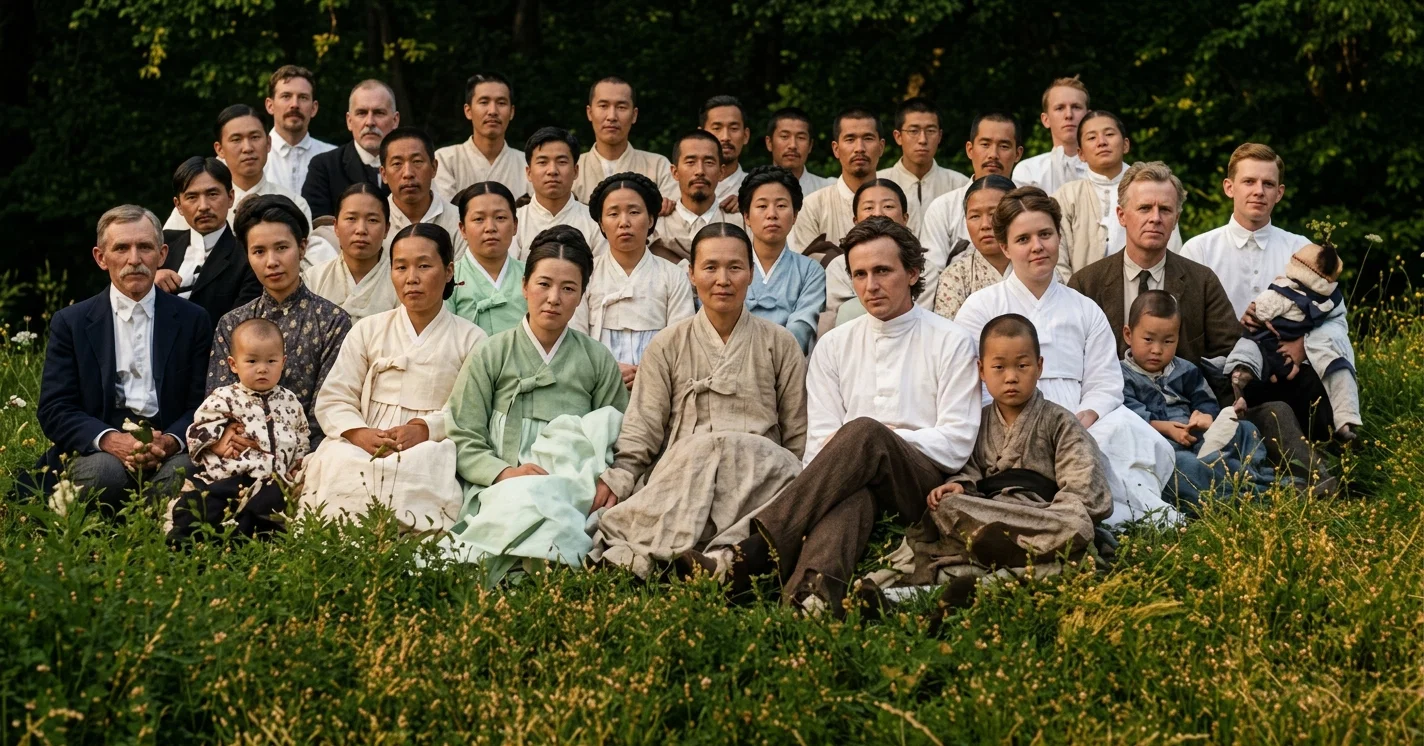
In company with Brother F. W. Field, of Japan, it was my privilege to attend the meeting of the Korean workers, which was held in Seoul, August 5-13. This was the largest and most generally attended meeting that we have yet held in Korea. All the native workers, and all the foreign workers but two, were present during the entire meeting.
SEOUL PRINTING EQUIPMENT
The last Sabbath was a good day for all. At the close of the forenoon service every person in the congregation reconsecrated himself to the Lord. At the close of the afternoon service, just at sunset, Dr. Riley Russell was ordained to the work of the gospel ministry. We believe Dr. Russell has proved himself to be a real soul-winner; and it seemed necessary, in organizing our work for the future, to place heavy responsibilities upon him; therefore the brethren were united in recommending his ordination.
Korea has never had a periodical to circulate among its believers. Two years ago it was recommended that a paper be published; but conditions had not seemed to warrant the undertaking until the present time. As soon as possible, an eight-page paper will be published, which, it is hoped, will prove a great blessing to our work in this field.
WORKERS, BOTH NATIVE AND FOREIGN, IN ATTENDANCE AT THE KOREAN GENERAL MEETING
Miss Mimi Scharffenberg was appointed editor, with Elder C. L. Butterfield as assistant editor. A special will be published just before the Korean new year, and it is hoped that the believers will give it a large circulation.
Our denominational literature in the Korean language is limited, and it seemed imperative that something be done to increase the amount of reading-matter on the message. Accordingly, studies on Daniel and the Revelation will be issued during the coming year, and printed in pamphlet form. It will not be profitable to publish a verse-by-verse study of these important books at the present time; but an outline of Daniel 2, 7, 8, 9, and 11 will be brought out, special emphasis being given to points that bear on the second coming of the Lord. It was also recommended that studies from Revelation be published covering the seven seals, the seven trumpets, also chapters twelve, thirteen, fourteen, fifteen, twenty, and twenty-one. Our Korean brethren greatly desired a verse-by-verse study of these books, but it was not thought wise to undertake so great a task at the present time. Several small tracts will also be published as soon as possible.
Colporteurs are to be selected, trained, and sent out to sell these publications to the people. It will probably be necessary to support these agents, in part, until they obtain experience, when it is hoped that most of them will be nearly, if not entirely, self-supporting.
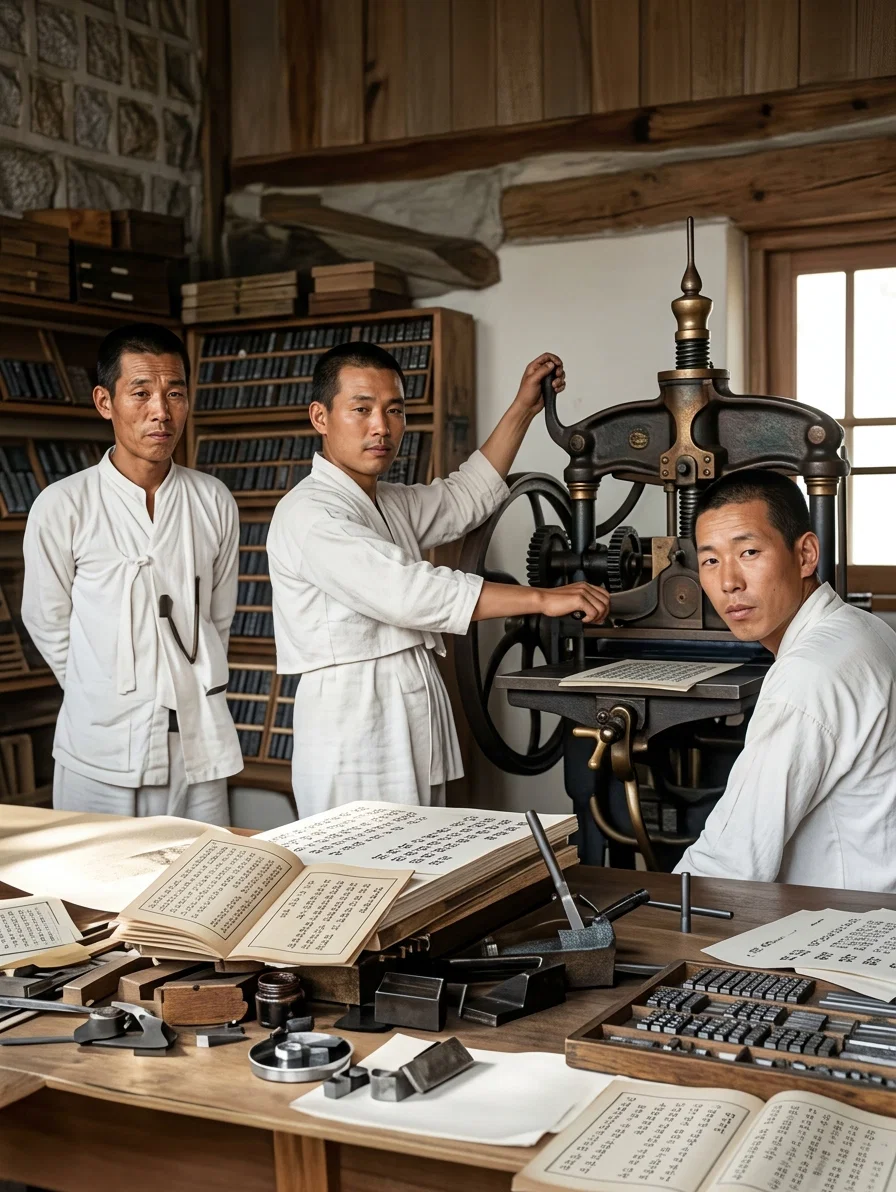
Something must be done soon to provide a better equipment for the Korean printing-plant. At the present time it is compressed in a room eight by twelve feet. The press is an old-fashioned George Washington proof-press; and the cutting and trimming are done by hand with a knife. Truly, it seems a great pity to see men compelled to work with such inadequate facilities, while in many places there is an abundance of equipment, much of which is used but occasionally. These men have to work from twelve to fourteen hours a day, in order to get the matter printed, and then they are unable to supply anything like the demand. It is evident that until we can have a properly equipped printing plant, the work will be greatly retarded.
A portion of the $300,000 Fund was appropriated to Korea; and as soon as it can receive a remittance on its appropriation, some of these distressing conditions will be remedied.
At this meeting, the Korean field was divided into four parts, and a man was appointed to have charge of each division. Elder W. R. Smith was assigned to the work on the east coast, with the exception of the southern part; Brother R. C. Wangerin was appointed director of the southern part; C. L. Butterfield will supervise the work in the central part of the state; and Dr. Russell will have charge of the work in the northwestern portion. Native workers, Bible women, colporteurs, and licensed preachers will assist in the various divisions as fast as they are developed. Elder Butterfield will have the general supervision of the field. Two Korean brethren were placed on the advisory committee, and it is hoped they will be of service as counselors.
Dr. Russell will have charge of the school during the coming year, thus giving Brother Howard Lee an opportunity for a more thorough study of the language than would be possible if he were to take charge of the school this year.
BOYS’ DORMITORY, SOONAN
We see no reason why there should not be a large ingathering of souls in Korea during the next few years. The foreign workers have done well in mastering the language, and some can both speak and write it with a fair degree of proficiency. The school will soon have students who are qualified to work as evangelists, Bible teachers, and colporteurs. With a continuation of the Lord’s blessing, and more of the pentecostal power, great things can be done in Korea.
Editorial
By Editor
As the week-of-prayer season approaches, the thoughts of workers in far lands turn toward the praying ones at home. Words of cheer and courage come to us.
Egypt.—We send greetings from the land of the Pharaohs. Our field is hard; but God is with us. His power, we know, is as great to-day as when he brought Israel out of Egypt. Now that the Lord has set his hand again the second time to gather the remnant of his people, he promises to bring out those also that are in Egypt. Isa. 11:11. Our needs are great. We have only one worker to every three million population. What are we among so many? Leading Arabic papers are just now stirring up people against missionaries. Now is the time to make every effort to reach Mohammedans. Remember the work in Egypt in your prayers and in your offerings. George Krough, Abd-Elshaheed.
Society Islands, South Pacific.—We have access to the many islands about us through trading-schooners. The printed page is our greatest weapon, and we thank God for this means of conveying the message to the perishing in these islets of the deep. Now there is such a scarcity of workers that I am unable to push out into new territory. But we are hoping for additional help after our Australasian Union Conference. F. E. Lyndon.
Catholic Austria.—Austria’s three hundred believers send greetings to those of like precious faith. These greetings come to you in five different languages. Last year we had seventy-seven additions, while in the last six months we have baptized seventy-six. Double results are reached only by double efforts. In one city the authorities have stopped our Sabbath meetings; but the twenty believers are of good courage, and are praying for those who are in greater difficulties than they themselves. Our Lord is greater than all the difficulties. He is opening doors daily in places where we could not enter before. We are one with the Lord’s people everywhere, and are following him. John Wolfgarten.
Uganda.—We send greetings from British East Africa. Less than four years have passed since we found this place lying in heathen darkness, the people never having had a word spoken to them about the gospel. We found them without one word of their own language reduced to writing. Now several have expressed a desire to become Christians, and have given up the old ways and customs; and many can read and write in their own language. Our hopes for the future are bright; and we trust that when Jesus comes, we shall have some to present as brands plucked from the burning. Our faith in this message is strong, and we hope to triumph with it. A. A. Carscallen.