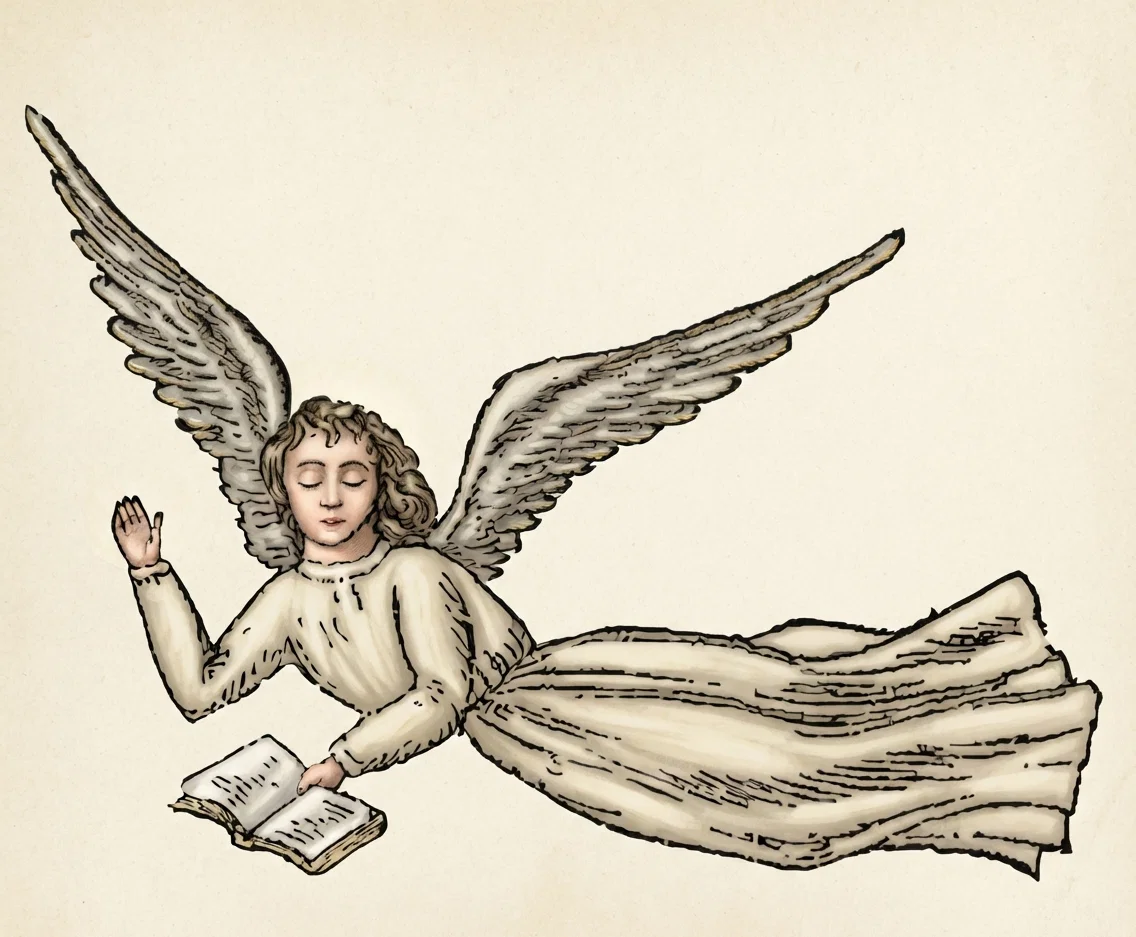
We talk of the first, second and third angels' messages, and are accused of being limited and fanciful in our views of Scripture. But we wish to ask plainly every person who respects the sacred text, if there are not three angels spoken of in Rev. xiv. in consecutive order, the last called the third, by which the other two are recognized as the first and second? 2. Have they not each a special message to proclaim? 3. Is it not therefore eminently proper and scriptural to speak of the first angel's message, the second angel's message, and the third angel's message? All must admit that it is. Let no fault, then, be found with our phraseology of these messages, while we proceed to offer a few reasons for our application of them.
Like most other agents introduced in the book of Revelation, we believe these angels to be symbolic. That they are not literal angels is certain from the fact that they are commissioned to preach the everlasting gospel, and associate truths. But in the proclamation of the gospel literal angels are not employed. This work is committed unto men [Matt. xxviii, 19; Mark xvi, 15; 2 Cor. iv, 1-7; v, 18]; and we therefore conclude that they symbolize classes of religious teachers, with special and important truths.
We now inquire after the time of these proclamations, to which, however, but a brief space can be allotted in this sheet. Of the scene immediately following the third angel's message there can be no doubt. The one like unto the Son of man [verse 14] seated on a white cloud, is evidently a symbol of the Lord Jesus coming in the clouds of heaven. These messages therefore go forth previous to the coming of Christ, and extend to that event. We are therefore warranted to look for the third message, at least, immediately preceding the coming of the Son of man. The other messages go forth before this; but how long before? Not long ages, as some contend, from the fact the messages are connected together in unbroken succession; and from the fact also, that the first of these proclamations is, "The hour of his judgment is come," bringing in view a scene closely connected with the second advent. Such a proclamation as this was not made by the apostles. Paul reasoned of a judgment to come [Acts xxiv, 25], not of one immediately impending. They declared moreover that the day of the Lord was not, in their day, at hand. 2 Thess. ii, 2. Martin Luther and the other reformers did not give this message; for he placed the judgment in the future from his day about 300 years. In short, no movement can be found in the past history of the church to answer to this message except the great movement on the second advent question, which has taken place within the memory of this generation. For a full discussion of these subjects the reader is referred to a pamphlet entitled, "The Three Messages of Rev. xiv," published at this Office. The following series of illustrations will present to the mind of the reader, at a glance, the order of these events and the application of them which will be found abundantly sustained, in the work above mentioned:
"And I saw another angel fly in the midst of heaven, saying with a loud voice, Fear God, and give glory to him; for the hour of his judgment is come." Verses 6, 7.
Fulfilled in the special proclamation of the everlasting gospel, based on the prophecies and termination of the prophetic periods between the years 1837 and 1844.
FIRST MESSAGE.
"And there followed another angel, saying, Babylon is fallen, is fallen." Verse 8.
Fulfilled from the spring to the fall of 1844.
Babylon—(mixture, confusion), a lifeless and divided Christianity. Its fall—a moral one, caused by the rejection of the first message or proclamation of the advent.
SECOND MESSAGE.
"And the third angel followed them, saying with a loud voice, If any man worship the beast, and his image, and receive his mark," &c. Vs. 9-12.
This message is now going forth. The proclamation is based upon the closing sanctuary work upon which our High Priest entered at the close of the 2300 days in 1844.
THIRD MESSAGE.
"The temple of God was opened in heaven," says the apostle [Rev. xi, 19], and there was seen in his temple the ark of his testament. The ark was a portion of the furniture of the sanctuary, and was a depository of the tables of the testimony, or ten commandments. Ex. xxv, 21; xxxi, 18. And hence the declaration, "Here are they that keep the commandments of God, and the faith of Jesus." The faith of Jesus, of course, includes everything contained in the New Testament. The commandments of God must therefore be something separate and distinct from this, and can only refer to the ten which he spoke with an audible voice from the summit of Sinai.
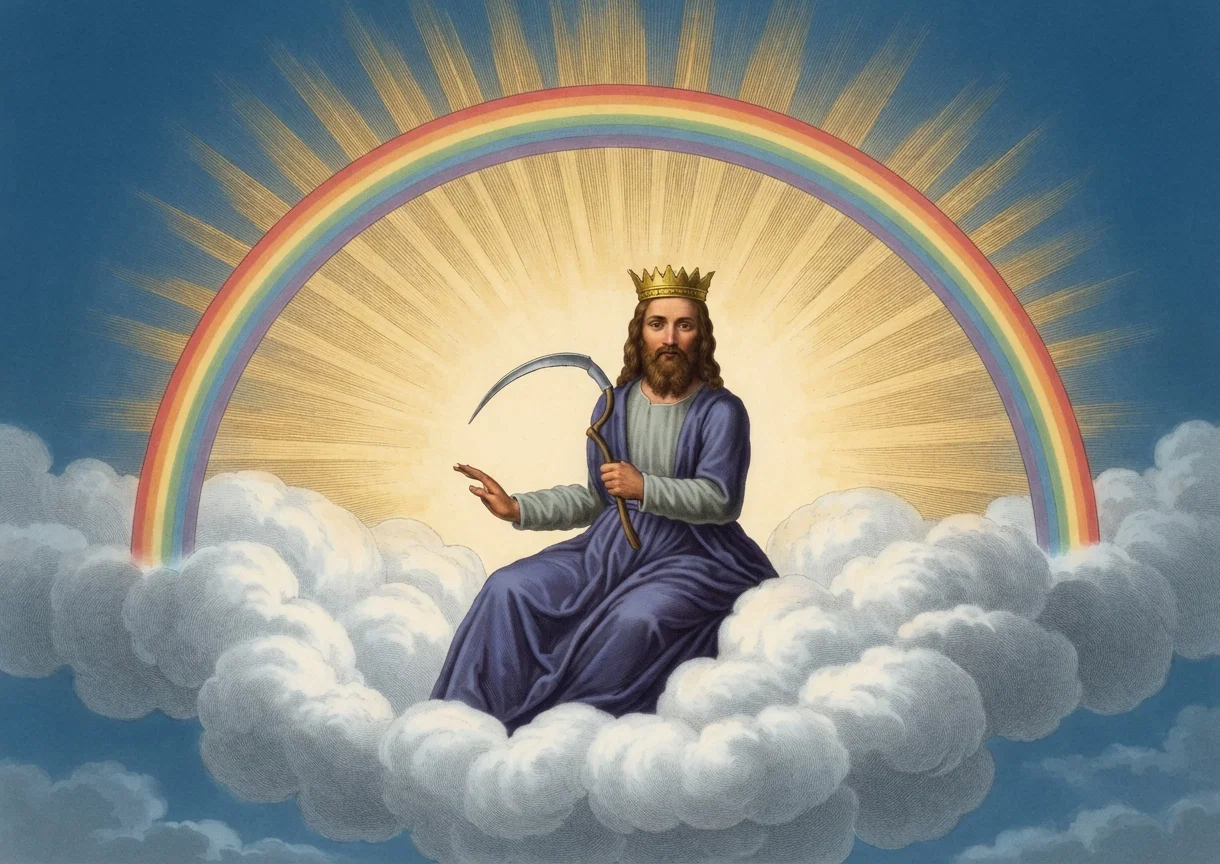
The next event in this line of prophecy is "a white cloud, and upon the cloud one like unto the Son of man, having on his head a golden crown, and in his hand a sharp sickle." Verses 14.
We have here a symbol of the Son of man coming in the clouds of heaven, in fulfillment of the promise made by the angels to the men of Galilee when they said, "This same Jesus which is taken up from you into heaven, shall so come in like manner as ye have seen him go into heaven." Acts i, 11.
A TEMPORAL MILLENNIUM.
By this expression is understood a thousand years to precede the coming of Christ, in which all the world will be converted, and a season of uninterrupted peace, happiness and prosperity attend the Church. But such a view, though it has extensively obtained, so far from being taught in the Scriptures of truth, is positively contradicted by their most pointed testimony. The word of God being sole umpire on this question, we shall do little else than let it speak for itself.
1. Matt. vii, 13, 14. "Enter ye in at the strait gate; for wide is the gate and broad is the way that leadeth to destruction, and many there be which go in thereat; because strait is the gate and narrow is the way which leadeth unto life, and few there be that find it.
In this scripture we have a description of the world's condition as it is at present, and as it ever has been from the beginning. Not without the most positive evidence, therefore, have we a right to say that this scripture will ever be reversed, and the time come when broad will be the way which leadeth unto life, and all the world will go in thereat, and narrow the way that leadeth unto destruction, and none can find it.
2. The people of God are forewarned that in the world they shall be hated and have tribulation. Jno. xv, 19, xvi, 33; 1 Tim. iii, 12; 1 John iii, 13. And these declarations are unlimited, applying to saints so long as they shall be found in this world.
3. If it shall ever be the case before the Lord comes, that the world becomes all converted, and Christianity universal, a painful period of apostasy will surely succeed this time of religious triumph; for we are told that in the last days (and there can be no days later than the last—they must include the days just before the coming of the Son of man) perilous times shall come. Men shall be lovers of their own selves, covetous, boasters, proud, and wicked in fifteen other dark particulars of the catalogue of sin, yet having a form of godliness. 2 Tim. iii, 1-5. Yes, the professed church itself will become thus hopelessly corrupt in the last days. But can such a scene ever succeed a temporal millennium? Will the saints enjoy their thousand years of happiness only to look forward to the dark hour when they should fall from their steadfastness, and be led captive by Satan at his will? Impossible! No; that can never be; but when once the reign of peace and righteousness shall be inaugurated, it will be that it may abide forever. Dan. vii, 18; Rev. xxi 1-5, and many other passages.
4. The "man of sin," acknowledged by all Protestants to be the papacy, is to be consumed only by the Spirit of Christ's mouth, and destroyed by the brightness of his coming. 2 Thess. ii, 8. That this coming of Christ is his personal coming in the clouds of heaven, is evident from the former epistle, and the first verse of this chapter. The papacy is not therefore to be overpowered and melted away by the power and spirit of the gospel, but is to be violently consumed and destroyed by the personal appearance of the Saviour. This may be further learned from other scriptures where the same power, its continuance and destiny, is brought to view. Dan. vii, 11; Rev. xix, 20. There is therefore no chance for a temporal millennium, while the mystery of iniquity, the mother of harlots, is seated upon her seven hills, and corrupting the earth with her abominations. And the indubitable fact that this power is to continue till the personal appearance of the Son of man, is enough to sweep the popular idea into eternal oblivion.
But will not the Father give the Son the heathen for his inheritance, and the uttermost parts of the earth for a possession, to be converted and saved? Ps. ii, 8. Not to be converted and saved, but, as the very next verse informs us, to be broken with a rod of iron, and dashed in pieces like a potter's vessel. This power Christ also grants to his people, according to Rev. ii, 26, 27. "As the vessels of a potter shall they be broken to shivers." That this is a manifestation of wrath and not of mercy is sufficiently evident from the language itself.
Matt. xiii, 24-30, 36-43. We here have the significant parable of the tares of the field. In the interpretation of the parable, the good seed are declared to be the children of the kingdom, and the tares the children of the wicked one. Let this one point then be particularly noticed. These wheat and tares, the righteous and the wicked, are to grow together till the harvest [verse 30]; and the harvest is the end of the world.
1. Is it reasonable to suppose that God created man an immortal being, and yet never once in his holy word informed us of the fact?
2. Is it reasonable to suppose that if man naturally possessed immortality, God's word would recommend us to seek for it, as it does in Rom. ii, 7?
3. Is it reasonable to suppose, that if men were naturally immortal, God's word would so plainly assure us that "God ONLY hath immortality?" 1 Tim. vi, 16.
4. Is it not far more reasonable to believe that immortality is the GIFT of God through Jesus Christ our Lord? Rom. vi. 23.
5. Is it reasonable to suppose that words, when found in the Bible, must have a meaning attached to them, which no man in his senses would ever think of attaching to them, in any other book? For instance, the words Life and Death, when found in the Bible, must (as theologians tell us) mean happiness and misery; but, if found in any other book in the world would simply mean, "Existence" and "Cessation of Existence."
6. Is it reasonable to suppose that in all the vast multitude of passages in which Christ promised Life, Eternal Life, to his followers he did not literally mean what he said? This he could not if all men have immortal life by nature. In that case the wicked will live through eternity as well as the righteous.
7. Is it reasonable to suppose, in all the vast multitude of passages in which Death is threatened as the punishment of the sinner that loss of happiness is all that is meant? An unhappy man is as truly alive as the most happy being in existence; and if he be immortal by nature, will continue alive through all eternity. In no plain, common sense language can any immortal being be said to suffer Death.
8. Is it reasonable to suppose that infinite wisdom would invariably use language which was only calculated to mislead mankind? or which none but Doctors of Divinity could unravel? Would God speak in riddles to men in the great matters which concern their salvation?
9. Is it not more reasonable, and more in accordance with the wisdom and love of God to suppose that he would give his creatures such a revelation, as plain common-sense people could easily understand? He has done so:—if men would but use their reason in reading the Bible as they would do in reading any other book.
10. Is it reasonable to believe, that men go to heaven or hell immediately at death, and then hundreds or thousands of years afterward are taken out to be judged, and to see which they deserve to be sent to? Should we deem it right to send a man to the State's prison for ten years, and then bring him out for trial to see if he deserved such a punishment? And "shall not the Judge of all the earth do right?"
11. Is it reasonable that such prominence should be given in scripture to the doctrine of the resurrection from the dead, if that event only means a "re-union" of a lump of clay, with the conscious thinking and real man—the soul; and which is said by theologians to be as capable of happiness or misery without the body as with it?
12. Is it reasonable to talk about a "death that never dies," when there is not a word in scripture to sanction such a contradictory phrase? Would it not be equally reasonable to speak of the reward of the righteous as a "life that never lives?" Is there not as much common sense in the one as in the other?
13. Is it reasonable to be so constantly, both in sermons and prayers, talking about "immortal souls," "never dying souls," "deathless spirits," and such like expressions when there is not, from Genesis to Revelation one single passage to warrant the use of such language?
14. Is it reasonable to say, that "eternal death," and "eternal torment, are synonymous expressions," (as theologians tell us)—for how then can it be said in Rev. xxi, 4, "There shall be no more death?"
15. Is it reasonable to believe that a hell of fiery torment, and ceaseless misery is to exist forever, when God says, [Rev. xxi, 5], "Behold I make all things new?"
16. Is it reasonable to believe in the eternal torment of the wicked when more than two hundred passages of scripture plainly affirm that they shall "die," be "consumed," "devoured," "destroyed," burnt up," "be as though they had not been," &c.
17. Is it reasonable to believe that the righteous in their glorified state, can be indifferent to and unaffected by, the endless sufferings of countless millions of their fellow beings; among whom would probably be found parents, children, husbands, wives, &c.? Is it possible that they will be destitute or deprived of qualities which are considered most lovely and Godlike in this life; viz., piety, sympathy, compassion, commiseration for others' woes &c.? Will insensibility to woes of the wretched ever become a virtue? Will that which is a vice in this life become a grace in the glorious future life? Is the standard of virtue thus variable, that what is vicious here, is to be gracious hereafter?
18. Is it reasonable to believe that a God of infinite rectitude will punish with eternal torment the heathen who have never heard of Christ, and who therefore could not reject him? Is it possible that God can cast into one indiscriminate mass of fiery torment, the least wicked among the heathen, together with the most guilty in this Christian land? for such must be the case if their souls are immortal, and if their torment is to be eternal. There can be no degrees in that which is infinite. Is it not far more reasonable to believe the Apostle's words literally, "For as many as have sinned without law shall also perish without law?" Rom. ii, 12.
19. Is it reasonable to believe that God is such a vindictive being, that his justice cannot be satisfied with the death of the offender?7but that he must be constantly pouring floods of fiery wrath upon the wretched being through the ever rolling cycles of eternity?
I might multiply questions of this kind, but I forbear.
Men of reason and common sense, give your serious attention to these points. Read your Bibles again. Read carefully—Read prayerfully. See if these things be true or not. Dare to think for yourselves. If other men should attempt to dictate a political creed for you, would you not indignantly spurn their interference? Do the same in religious matters. Dare to be independent. Do not trust to commentaries. Do not build your faith on "bodies of divinity." Do not surrender your right of private judgment to any class of men. Go at once to the fountain head of truth. "The words of the Lord are tried words." "The law of the Lord is perfect." This cannot be said of the writings or opinions of any man, or number of men, however wise or holy they may be. To err is human. God and his truth alone are infallible. Show yourselves true Protestants, and cast away the "traditions of men." You have the Bible. The wisest and holiest of the "fathers" had no more. Your ministers have nothing else to guide them—at least they ought not. "The Bible, and the Bible alone, is the book for Protestants." Go then to your Bibles, and see if the God-dishonering doctrines to which I have directed your attention are found there or not. Excuse me if I tell you, that, however full of these doctrines human books and human sermons may be, God’s Bible does not contain them.
Rather believe that man is mortal and condemned to die, but Christ is "come that men may have life, and that they may have it more abundantly." John x, 10.
"The wages of sin is death but the gift of God is eternal life through Jesus Christ our Lord." Rom. vi, 23.
"He that believeth on the Son hath everlasting life; and he that believeth not the Son shall not see life; but the wrath of God abideth on him." John iii, 36.
"And I give unto them eternal life; and they shall never perish, neither shall any pluck them out of my hand." John x, 28.
"He that hath the Son hath life; and he that hath not the Son of God hath not life." I John v, 12.
"Marvel not at this: for the hour is coming, in the which all that are in their graves shall hear his voice and come forth; they that have done good, unto the resurrection of life; and they that have done evil, unto the resurrection of damnation." John v, 28, 29.
"And have hope toward God, which they themselves also allow, that there shall be a resurrection of the dead both of the just and unjust." Acts xxiv, 15.
"The Lord knoweth how—to reserve the unjust unto the day of judgment to be punished." 1 Pet. ii, 9.
"And they were judged every man according to their work. And death and hell were cast into the lake of fire—this is the second death." Rev. xx, 13, 14.
At Christ's second coming the sinners then living will be destroyed. "And then shall that wicked be revealed, whom the Lord shall consume with the spirit of his mouth, and shall destroy with the brightness of his coming." 2 Thess. ii, 7, 8; i, 7-10; Matt. xiii, 24-30, 37-43; iii, 12; Luke xvii, 26-30.
The dead in Christ will be raised, and the living saints will be changed at his coming. "Behold, I show you a mystery; we shall not all sleep, but we shall all be changed, in a moment, in the twinkling of an eye, at the last trump; for the trumpet shall sound, and the dead shall be raised incorruptible, and we shall be changed." 1 Cor. xv, 51, 52; 1 Thess. iv, 16, 17; 1 John iii, 2.
The immortal saints will then ascend up to heaven with their Lord, to the Father's house, or New Jerusalem. "Let not your heart be troubled, ye believe in God, believe also in me. In my Father's house are many mansions: if it were not so, I would have told you, I go to prepare a place for you. And if I go and prepare a place for you, I will come again, and receive you unto myself; that where I am, there ye may be also." John xiv, 1-3; vii, 33; xiii, 33, 36; 1 Pet. i, 3-5.
1. WHO is immortal? Ans. “The King eternal, immortal, invisible, the only wise God.” 1 Tim. i, 17.
2. Are not all men possessed of immortality? Ans. “The blessed and only Potentate, the King of kings and Lord of lords: who only hath immortality.” 1 Tim. vi, 16.
3. Are not all men created immortal? Ans. God “only hath immortality.” 1 Tim. vi, 16.
4. Is there any way by which men may obtain immortality? Ans. “To us are given exceeding great and precious promises, that by these ye might be partakers of the divine nature, having escaped the corruption that is in the world through lust.” 2 Pet. i, 4.
5. Is this immortality revealed by Plato, or Socrates, or by “familiar” rapping “spirits,” or in nature—, or is it through Jesus Christ and his gospel? Ans. “By the appearing of our Saviour Jesus Christ, who hath abolished death, and hath brought life and immortality to light through the gospel.” 2 Tim. i, 10.
6. Who has power to bestow immortality upon man? Ans. “The gift of God is eternal life through Jesus Christ our Lord.” Rom. vi, 23.
7. Will God give this gift to all persons whatever their works may be? Ans. God “will render to every man according to his deeds.” Rom. ii, 6.
8. What will be the portion of those who are contentious and obey not the truth? Ans. “Indignation and wrath, tribulation and anguish upon every soul of man that doeth evil.” Rom. ii, 8, 9.
9. To whom will God impart immortality? Ans. “To them who by patient continuance in well-doing, seek for glory, and honor, and immortality.” Rom. ii, 7.
10. What shall be their reward? Ans. “Eternal life.” Rom. ii, 7.
11. Upon what conditions may we obtain this blessing? Ans. “Fight the good fight of faith, lay hold on eternal life.” 1 Tim. vi, 12.
12. When do men obtain immortality? Is it at death, or at the resurrection? Ans. “The dead shall be raised incorruptible.” 1 Cor. xv, 52.
13. How shall those who are not dead become incorruptible? Ans. “We shall be changed.” 1 Cor. xv, 52.
14. When will this change take place? Ans. “At the last trump.” 1 Cor. xv, 52.
15. How suddenly will the change occur? Ans. “In a moment, in the twinkling of an eye, at the last trump; for the trumpet shall sound, and the dead shall be raised incorruptible and we shall be changed.” 1 Cor. xv, 52.
16. Will this change be a change of the internal, or the external and physical or corruptible man? Ans. “This corruptible must put on incorruption.” 1 Cor. xv, 53.
17. What then becomes immortal? Ans. “This mortal must put on immortality.” 1 Cor. xv, 53.
18. What Scripture will be fulfilled when this corruptible shall have put on incorruption, and this mortal shall have put on immortality? Ans. “Then shall be brought to pass the saying that is written, Death is swallowed up in victory.” 1 Cor. xv, 56; Isa. xxv, 8.
19. Who will be raised from the dead? Ans. “All that are in the graves shall hear his voice, and shall come forth.” John v, 28, 29.
20. Will the unburied arise? Ans. “The sea gave up the dead which were in it; and death and hell (the grave) delivered up the dead which were in them.” Rev. xx, 13.
21. Will different classes of characters arise in the resurrection? Ans. “There shall be a resurrection of the dead, both of the just and unjust.” Acts xxiv, 15.
22. For what purpose will the good be raised? Ans. “They that have done good unto the resurrection of life.” John v, 29.
23. To what will others be raised? Ans. “They that have done evil, unto the resurrection of damnation.” John v, 29.
24. Will a man’s destiny at last be in accordance with his previous life? Ans. “Whatsoever a man soweth, that shall he also reap.” Gal. vi, 7.
25. What will be the portion of the ungodly? Ans. “He that soweth to his flesh, shall of the flesh reap corruption.” Gal. vi, 8.
26. What the reward of the saint? Ans. “He that soweth to the Spirit, shall of the Spirit, reap life everlasting.” Gal. vi, 8.
27. Where now is the Christian’s life? Ans. “Your life is hid with Christ in God.” Col. iii, 3.
28. How then should we live? Ans. “Let us not be weary in well-doing; for in due season we shall reap if we faint not.” Gal. vi, 9.
29. What will be the fate of those who by sowing to the flesh reap corruption? Ans. “These, as natural brute beasts, made to be taken and destroyed, . . . shall utterly perish in their own corruption.” 2 Pet. ii, 12.
30. Is it possible for man to be utterly destroyed? Ans. “Fear him which is able to destroy both soul and body in hell.” Matt. x, 28.
31. What is the wages of sin? Ans. “The wages of sin is death.” Rom. vi, 23.
32. Is this death merely a bodily death? Ans. “The soul that, sinneth, it shall die.” Eze. xviii, 4.
33. If the wicked turn away from his wickedness and do right, what then? Ans. “He shall save his soul alive.” Eze. xviii, 27.
34. “When a righteous man turneth away from his righteousness, and committeth iniquities and dieth in them,” what shall be his fate? Ans. “For his iniquity that he hath done, shall he die.” Eze. xviii, 26.
35. As he first dies in his iniquity, and then dies for his iniquity, what must this last death be called? Ans. “The second death.” Rev. xxi, 8.
36. What is the result attained by the man who converteth a sinner from the error of his ways? Ans. “He shall save a soul from death, and shall hide a multitude of sins.” Jas. v, 20.
37. What has God placed before us to excite us to action? Ans. “I call heaven and earth to record this day against you, that I have set before you life and death, blessing and cursing: therefore choose life, that both thou and thy seed may live.” Deut. xxx, 19.
38. How does God manifest his love to men? Ans. “God so loved the world that he gave his only begotten Son, that whosoever believeth in him should not perish, but have everlasting life.” John iii, 16.
39. What is our Saviour’s complaint concerning mankind? Ans. “And ye will not come to me, that ye might have life.” Jno. v, 40.
40. What is the command of God to all? Ans. “Cast away from you all your transgressions, . . . for I have no pleasure in the death of him that dieth, saith the Lord God: wherefore turn yourselves and live ye.” Eze. xviii, 31, 32.