A Tale of Two Fishermen, and of a Third — the World's Greatest Fisher
By
B. M. GRANDY
Our early riser was already landing the speckled beauties.
YIELDING to the inviting lure of the distant hills, two friends had deserted their places of business in the marts of the sweltering city. They were journeying toward the spreading pines on the banks of a beautiful mountain stream.
Rushing and tumbling through the rock-ribbed cañon that rose darkly on each side for hundreds of feet, the swirling stream dashed tumultuously toward the thirsty plains below and on to the distant sea. The sparkling, dancing riffles, the dark, bubbling pools, and the swirling eddies, afforded an ideal home for the gamy mountain trout.
Under the Starlit Canvas
With glad anticipation of the sport and labor of the morrow, our two friends encamped on the bank of the stream. Supper over, the blankets were soon spread upon the leafy turf. The sweet smelling tufts of fir formed a promising shelter. The towering, silent, gray peaks stood sentinel in the same place they had stood since they were brought forth.
The strange, whispering sounds of the mountains, and the melodious song of the dashing river, served to bring sweet peace and repose to our two friends, who were soon lost in dreamless slumber. With the starlit canvas of heaven stretching over the scene, the camp of the weary travelers was one of peaceful repose.
ANOTHER day had come and gone. Evening tide, and tired, footsore, and hungry, our fishermen were again in camp, one with a well filled basket of shimmering rainbow trout, the other with only a paltry half dozen as his day's catch. "Fisherman's luck," you say. Well, that is what he said, too; but after all, what is fisherman's luck? A brief review of the events of the day may help us to decide.
In the early morning, the sun was just peeping through the narrow gorge, its warm rays spreading over the meadow near where our friends were camped. The grasshoppers were beginning to stretch their cramped legs and try their wings, when Fisherman No. 1 was out with his bait can. Sluggish with the dews of night, the grasshoppers fell an easy prey to the alert sportsman, who soon had his bait box well filled with juicy bait for the wary trout. Returning to the camp, he found his companion just arousing. Together they prepared the morning meal, which was eaten with the relish usual only to one enjoying a camp-fire breakfast after a long sojourn in town.
Landing the Speckled Beauties
Breakfast over, a few seconds were spent in washing the dishes, and as many minutes in preparing and testing the fishing tackle, and Fisherman No. 1 was ready for the day's sport. His friend had to spend some time in catching grasshoppers. By this time, the warm rays of the sun had warmed Mr. Hopper sufficiently that his capture was anything but easy. An hour passed, and still an insufficient supply of bait had been secured; but our friend decided to wait no longer. Hurrying to the stream, he saw his companion disappearing around a jagged rock far up the stream.
Our early riser was already landing the speckled beauties. From rock to rock he leaped. Scaling the almost perpendicular rocks that towered on either side, or else venturing waist deep in the icy stream, he forged continually forward. Whipping the shimmering riffles, he occasionally snared a playing trout. Lingering for a few moments at the pools and the eddies, and letting the leaden sinker draw the baited hook far down into the deep waters, he would play out the line as needed, and — zip! A thrilling twang of silken line, a graceful bend of the pole, and a "big one" was gasping for breath in the basket.
Thus the day wore on. The basket filled slowly but surely; and when the time came for the return to camp, fisherman's luck had rewarded our fisherman with a well filled basket.
Bewailing His Hard Luck
But how had our other friend spent his day? Late to reach the water's edge, and with insufficient bait, he found that the fish were not biting very well that day. He decided that it was not of much use to fish; but since he had come that far, he would try his luck for a while anyway. An occasional nibble kept his courage from entirely dying. His carelessly baited hook, slow to attract the attention of the wary denizens of the mountain stream, was often swept clean of bait by the dashing waters.
His bait can was soon empty, and he was forced to retrace his steps to the meadow, and spend another hour in capturing the elusive hopper, made even more active by the rays of the noonday sun.
Thus the day wore on. His fishing day was mostly spent in catching bait, going to and fro, and bewailing his hard luck. At setting sun, the weary fisherman wended his way toward the distant camp. "Fisherman's luck" had been against him that day. It is plain to be seen, in this case at least, that fisherman's luck is made of about the same material that comprises other kinds of luck; namely, careful preparation, diligent application, continual activity, a goodly supply of optimism, determination, and hard work.
FISHERS of men, mayhap there is a lesson for you. Jesus, you remember, found two brothers casting their net into the sea. "And He saith unto them, Follow Me, and I will make you fishers of men." It is something to be a fisher of men; but it is something infinitely more to be a successful fisher of men. By following Him, we may be the latter.
In the early morning of life, He was filling His can with bait. From His gentle mother, He learned lessons of obedience and submission. The lesson of meekness and humility, she had learned in the school of experience. This she imparted to her Son.
Fishing in Humanity's Stream
At Joseph's bench, He learned the lessons of diligence, application, and precision. In the school of nature, His heavenly Father's great school, with grades from the simplest kindergarten to sciences yet untouched by mortal man, He stored His receptive mind with the great truths to be used in His short day of fishing in the stream of humanity.
The word of the Father, imparted through patriarchs and prophets, was His daily study; daily converse with Him in prayer, His chiefest delight.
At the early age of twelve, we find Him testing His "tackle" as He meets the wise men of Israel and causes them to marvel.
The interval of preparation is soon passed. The Fisherman of Galilee stands on the edge of the changing stream of the human race, His preparation complete, ready to cast the gospel line. Not once did He falter in His appointed work.
Landed in the Gospel Net
Skimming the shining riffles on the gay stream of humanity at Cana, His bait attracts the hungry souls. With unerring accuracy, the well baited hook shot forth as He lingered for the cooling drink at the well of Samaria, and a soul is landed in the gospel net.
Standing calmly by the eddy of many nations, He casts the hook, baited with the beatitudes, and multitudes are caught.
In the busy market street, He tarries for a moment; and Matthew and Zacchaeus, men of the business world, erstwhile greedy for gold, are gathered into the gospel net.
Beneath the frowning shadows of the temple, in the deep and dark pools of Pharisaical pride and arrogance, He falters not to cast the line. Nicodemus and Joseph of Arimathea witness that the cast was not in vain.
With indefatigable zeal and indomitable courage, the stalwart Fisherman of Galilee presses on up the stream, toward the end of the journey.
Eleventh-Hour Fishing
The day is closing. The Fisherman, worn and weary with His day's work, hangs on the cruel cross. The cry of "It is finished" is soon to pierce the sultry air, when again the line is gently lowered, baited with the words, "Father, forgive them; for they know not what they do." The dying thief, yielding to the eleventh-hour invitation, is snatched from perdition, and cries out, "Lord, remember me." The heart of the centurion, hardened by bloody campaigning, is broken; and in awe-stricken whisper he breathes, "Truly this was the Son of God."5
"Fisherman's Luck"
(Continued from page 4)
Surely the Master's was a day well spent in fishing for men.
"Follow Me." Peter, John, James, and Paul respond to the invitation; and at the set of sun, they lay at the Master's feet well filled baskets, the evidence that "fisherman's luck" has been with them.
"Follow Me." Wycliffe, Huss, Jerome, Luther, Calvin, Wesley, heed the call. The work done by these stalwart reformers witnesses as to what kind of "fisherman's luck" was theirs.
"Follow Me." The cry is echoing in every land to-day. Thousands of men and women are going forth to spend their little day in fishing for men.
The luck of Fisherman No. 2 may be the fate of some, but not of those who fully heed the call of "Follow Me." That path will lead over rugged mountain passes, up the turbulent stream of humanity, but it will lead to success.
"Fisherman's luck" will bring to the faithful follower of the great Fisher of men a rich reward. The time for the final coming to camp is near at hand. May it then appear that you have not spent life's fishing day in vain.
Reforming the Irreformable
By Percy T. Magan
*For a hundred years, the angel of mercy hovered over a rebellious church. Then the decree of the eternal sounded forth — "Forsake her."
PERCY T. MAGAN
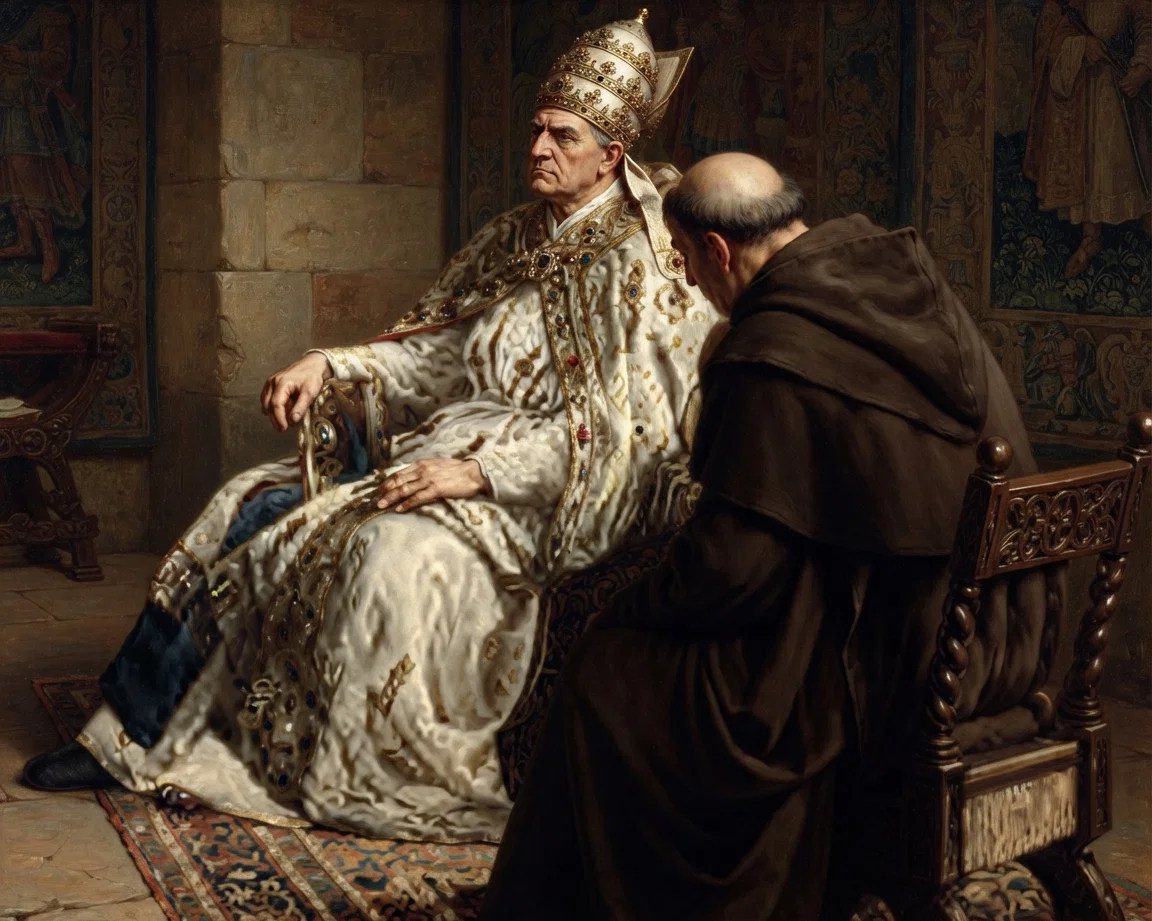
THERE were many boy babies born into the world on July 6, 1369; but the name of none other of them has been so indelibly engraved upon the tablets of time as that of John Huss. He studied philosophy and theology at the University of Prague, which at that period enjoyed a reputation equal to that of Oxford or Paris.
In the same year that Huss began to lecture, a young knight of Bohemia, Jerome of Prague, returned from Oxford to his native land. He was a zealous follower of Wycliffe, and did his uttermost "to circulate his writings throughout the whole country and among all classes of people."
John Huss spoke out boldly against worldly dominion by the church. He said:
"It is neither permissible nor advantageous for a pope, or for any bishop or clerk whatsoever, to fight for worldly dominion or worldly wealth. This may be understood from the example of Christ, whose vicar the pope is; for Christ did not fight, nor did He command His disciples to fight, but forbade them. The pope ought not to contend for secular things. The safer way is to contend spiritually, not with the secular sword, but with prayer to Almighty God."
Purifying the Church
The year 1414 was the year of the Council of Constance. The work of John Huss had not been without effect, for the great object of the council was publicly declared to be "the reformation of the church in its head and members." The reformer had many friends as well as many enemies. "A great longing for the reformation of the church had already spread wide among the German people; and this inclined many to look with favor on a man who had distinguished himself by his zeal against the corruption of the spiritual orders, and for the purification of the church."
But in the end, the Council of Constance found John Huss guilty of heresy. He was called upon to recant, which, in a most touching defense, he refused to do.
He was condemned to death. When the fire was kindled, Huss began to sing in a strong, clear voice, "Jesus, Son of the living God, have mercy upon me." And with these precious words upon his lips, his life went out in a death dear to the Lord of heaven.
In 1416, his faithful friend Jerome met a similar death on the same spot. He went readily and willingly to the stake, fearing not the fire nor its tortures.
Rejected the Call
The "space" which had been given "that woman Jezebel" "to repent" was now drawing near to a close, and the word of Holy Writ was about fulfilled — "and she repented not." The next great scene was the great Reformation of the sixteenth century, when Luther and his colaborers sounded aloud the call, "Come out of her, My people."
Faithful indeed had God been to His word. By the learned Wycliffe and by Militz; by the pious Matthias of Janow and the noble Conrad of Waldhausen; by the godly Huss and the talented Jerome, God had called and called and called again upon that wandering church to forsake her devious ways and evil paths and come to Him. To the Church of Rome, even as to the great Jewish church of old, out of her own communion the Almighty had sent prophets and wise men and scribes; but of these, as before, some they had killed, and some they had stoned, and all they had persecuted from city to city.
The Fiat of Rejection
And it must ever be remembered that these great spirits were, to the day of their death, members of the communion of the Church of Rome. They were not men from outside her fold, seeking to come in to reform the abuses that had grown up there. For the most part, they were ordained ministers who regularly preached from her pulpits and cared for the sheep and lambs of her flock. It was by the lives and the lips of her own sons that God would have saved her. Yea, and for a hundred years after the martyrs Huss and Jerome had consecrated their lives in death to the church of whose communion they were, God still lingered. His angel of mercy still hovered over the rebellious people. But instead of repenting, the men who had charge of her affairs ran the church deeper and still deeper into evil ways.
The church would not reform. God would have healed Babylon, but she would not be healed; and now the word sounded forth from above, through all the world — "Forsake her."
His Message — "Forsake Her"
It was in the dawn of the sixteenth century. John Wycliffe had prophesied, long years before, that the time would come when from among the monks — whom he termed the "taproot of the papacy" — there would come forth "some brothers whom God may vouchsafe to teach, who will be devoutly converted to the primitive religion of Christ, and, abandoning their false interpretations of genuine Christianity, after having demanded or acquired of themselves permission from antichrist, will freely return to the original religion of Christ, and they will build up the church like Paul." (Neander, "History of the Christian Religion and Church," volume 5, under "Wycliffe," last paragraph but one.)
Martin Luther was that monk. From out the Augustine order he came. His work was not to call the church to repentance. Never in the forceful manner of his predecessors did he do this. On the contrary, his message was — "Forsake her." He called upon men to reform, and preach the everlasting gospel of justification by faith. He directed his preaching to individuals as such. He preached to them, and called upon them to leave the communion of Rome and receive justification through faith.
In 1520, Luther published his famous "Babylonish Captivity of the Church," in which he said:
"Whether I will or not, I daily become more learned, spurred on as I am by so many celebrated masters. Two years ago, I attacked indulgences; but with so much fear and indecision, that I am now ashamed of it. But, after all, the mode of the attack is not to be wondered at, for I had nobody who would help me to roll a stone. . . . I denied that the papacy is of God, but I granted that it had the authority of man. Now, after reading all the subtleties by which these sparks prop up their idol, I know that the papacy is only the kingdom of Babylon and the tyranny of the great hunter Nimrod. I therefore beg all my friends and all booksellers to burn the books which I wrote on this subject, and to substitute for them the single proposition: 'The papacy is a general chase, by command of the Roman pontiff, for the purpose of running down and destroying souls.'" — D'Aubigné, "History of the Reformation of the Sixteenth Century," volume 2, book 6, chapter 6, paragraph 5.
This is perhaps the most scathing denunciation Luther ever made of the papacy; and the words, "I know that the papacy is only the kingdom of Babylon and the tyranny of the great hunter Nimrod," speak volumes. Differently stated, Luther saw in the papacy a satanic scheme for the setting up of one universal church in the place of one universal empire, and for the sole purpose of annihilating the truth of God in the earth. And that hellish idea, born of the devil, Luther, by the grace of God, was determined to bring to naught.
Unsparingly Condemned Her
During the Diet of Augsburg, Luther wrote to Melanchthon: "There can be no concord between Christ and Belial. As far as concerns me, I will not yield a hair's breadth."
Thus did Luther take a position of "no compromise" with the papacy. He, after a brief period when the light of the gospel first came to him, did not try to heal her. He condemned her openly and unsparingly. He called men to come out of her. Everywhere he preached to the people to forsake her. Her space for repentance had come and gone. She had not repented, and now the hour of her judgment was commencing.
A man had arisen who clearly saw that the one universal church idea was only the scheme of Nimrod at Babel over again. The power of the universal Church of Rome was now to be broken; and in the place of the universal Church of Rome, there were to be the churches of the Reformation.
(Continued on page 8)
Reforming the Irreformable678(Continued from page 5)
And when, in later years, Rome's temporal power was taken away — when kings and princes, by this means, forced upon her a period of sackcloth and ashes — she once more, in a way, had a chance to repent; but instead of doing this, she has steadily sought, by every means at her command, to regain her old-time prestige and power. She is to-day laboring untiringly and unceasingly to win back for herself that place of dominion and power which was once hers. Times of great strife and commotion have often proved favorable to the designs and aspirations of the Church of Rome. This she thoroughly understands; and that is why the supreme pontiff and the Curia Romana are working so zealously during the days of the present war; — the greatest "Pentecost of calamity" that has befallen the world since the days of the Flood.
That she will succeed in her designs, the Scriptures clearly indicate. But her success will spell her ruin; therefore the decree goes forth to all her sons and daughters, "Come out of her, My people, that ye be not partakers of her sins, and that ye receive not of her plagues."
Spontaneous Generation
By G. F. Wolfkill
in the
Bible Laboratory
The Findings of Pasteur Applied to the Spiritual Realm
By G. F. WOLFKILL
FOR many years, it was generally accepted by the scientific world that life was spontaneously generated. The idea was held as an undeniable fact, that living matter is constantly formed in obedience to the same laws that govern the simpler chemical combinations. About the middle of the nineteenth century, numerous scientists performed many experiments to prove this theory.
Not all scientists, however, were willing to accept this theory; and in 1860, Pasteur performed his epoch-making experiments which proved conclusively that the hypothesis of spontaneous generation could not be substantiated. The experiments of Pasteur, and of other scientists, who took the precautions to insure absolute sterility in their work, have practically closed the question. So far as science can settle anything, the question is settled. The attempt to obtain the living from the dead has failed. All now recognize that life can come only from the touch of life. Huxley announced that the doctrine of life only from life was “victorious along the whole line.” Tyndall, though confessing that he wished the evidence were the other way, said, “I affirm that no shred of trustworthy experimental testimony exists to prove that life in our day has ever appeared independently of antecedent life.”
Only from Preëxisting Life
A similar controversy has been and is still waged in the religious world. One side takes the stand that the spiritual life of man can come only from preëxisting life. The other contends that it can spontaneously generate itself. The latter class affirm that man may become gradually better and better until finally he reaches the spiritual life. This life is not a life from above, but is the normal and appropriate development of the natural man. The first class hold that the spiritual man is no mere development of the natural man, but he is a new creature, born from above.
This doctrine of the spontaneous generation of the spiritual life is one of the greatest obstacles the Christian church has had to meet. In a thousand modern pulpits, it is still preached that natural man, by his own endeavors, can attain to the spiritual life.
The acceptance of this doctrine caused the fall of our first parents; for what did they do but try to gain for themselves eternal life and a likeness to God by their own endeavor? Upon this spurious doctrine, every form of false worship and religion has been founded; and it is not to be wondered at that in these last days, the enemy of all righteousness should try to deceive the human race with the same subtle temptation. The modern religionist would have it that his spiritual life can be “born of the flesh” instead of being “born of the Spirit.”
Let us turn again to the natural world, and place before our imagination the two great kingdoms of nature, the organic and the inorganic. What do we mean by saying there is no spontaneous generation of life? — We mean that the passage from the mineral (inorganic) world to the plant or animal (organic) world is hermetically sealed on the mineral side. No inorganic material has ever yet by itself become organic. No change of environment, no chemistry, no electricity, no evolution, nor any known force, can endow one single atom of the mineral world with the attributes of life. Only by some living form reaching down into the dead, cold world can dead atoms be gifted with the properties of life. Without the touch of the living from above, they remain in the dead, inorganic world forever.
Just as the dead soil must remain soil until the plant from above, by the power given it from its Creator, reaches down and brings it up and gives it life; and as the plant remains in the plant world until the animal that is above reaches down and brings it up, transforming it into animal life,—so must the natural man remain forever in the natural world unless some power from the spiritual world above reaches down and lifts him up. The soil cannot of itself become plant life. The plant of itself cannot become animal life. Neither can the natural man, left to himself, become a spiritual man. He must be “born again”—“born from above.”
What, then, is the distinction between a natural man and a spiritual man, a Christian and a non-Christian? — It is the same as that between the organic and the inorganic, the living and the dead, the crystal and the organism, the stone and the plant. There are some very beautiful objects in the inorganic world, such as the onyx and the diamond; but no matter how beautiful, unless vitalized with life from above, they will always remain in the inorganic world. Just so there may be some apparently beautiful non-Christian lives; but they will always remain in the natural world unless they permit themselves to become vitalized with that life which is from above.
“Except ye eat of the flesh of the Son of man, and drink His blood, ye have no life in you. Whoso eateth My flesh, and drinketh My blood, hath eternal life; and I will raise him up at the last day. For My flesh is meat indeed, and My blood is drink indeed. He that eateth My flesh, and drinketh My blood, dwelleth in Me, and I in him.” John 6: 53-56.
Encouragement
By Ellen G. White
and
Warning
By the lateEllen G. White
OH, let us contemplate the amazing sacrifice that has been made for us! Let us try to appreciate the labor and energy that Heaven is expending to reclaim the lost, and bring them back to the Father’s house. Motives stronger, and agencies more powerful, could never be brought into operation; the exceeding rewards for right-doing, the enjoyment of heaven, the society of the angels, the communion and love of God and His Son, the elevation and extension of all our powers throughout eternal ages,—are these not mighty incentives and encouragements to urge us to give the heart’s loving sacrifice to our Creator and Redeemer?
And, on the other hand, the judgments of God pronounced against sin, the inevitable retribution, the degradation of our character, and the final destruction, are presented in God’s word to warn us against the service of Satan.
Blessings Amid Hardships and Trials
"THE obstacles, provocations, and hardships that we meet, may prove to us not a curse, but the greatest blessings of our lives; for the grandest characters are built amid hardships and trials."