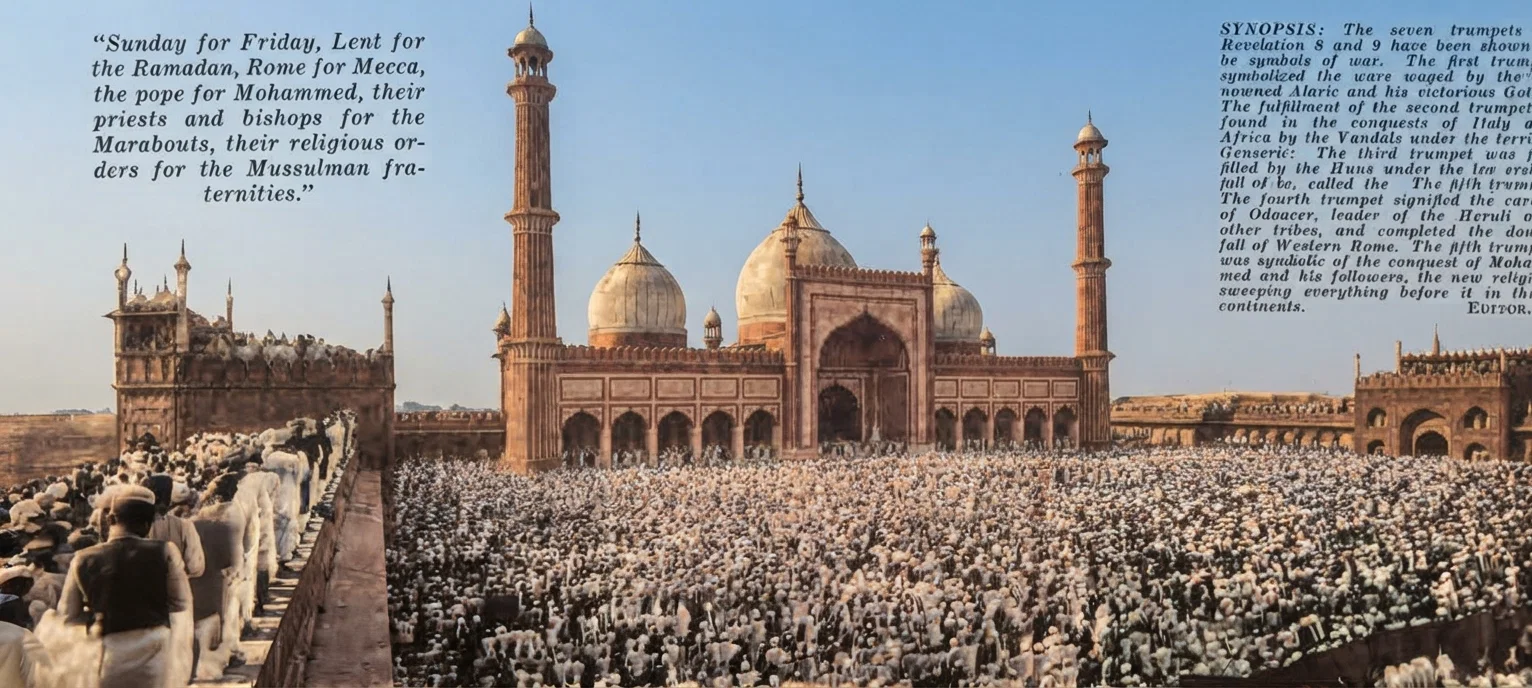
THE fifth trumpet had come—the Mohammedan conquests foretold in prophecy. "And it was said unto them that they should not hurt the grass of the earth, neither any green thing, neither any tree, but only such men as have not the seal of God on their foreheads." Rev. 9: 4.
This prediction was literally fulfilled by the humane recommendation of Abu Bekr to his troops. Gathering the army around him in a circle, he said: "Warriors of Islam, stop a while and listen carefully to the precepts I am about to issue for times of war. Be brave. Be loyal. Use neither stratagem nor perfidy with your enemies. Let not your victory be stained with the blood of the aged, of women and children. Destroy no palm trees, do not burn harvests, cut down no fruit trees [italics ours], kill no cattle, only such as you need to eat."
The next order mentioned in the prophecy is also contained in Abu Bekr's instructions: "As you go on, you will find some religious persons who live retired in monasteries and propose to serve God in that way; let them alone, and neither kill them nor destroy their monasteries. And you will find another sort of people that belong to the synagogue of Satan, who have shaven crowns; be sure that you cleave their skulls, and give them no quarter till they either turn Mohammedans or pay tribute."
Severe on Idolaters
"He excepted," says the historian Lamartine, "from the protection thrown around the weak and the Christian hermits, only those who influenced the people against the doctrine of God's unity." The Koran was lenient to all except idolaters. The second surate (chapter), verse 59, says: "Certainly those who believe, and those who follow the Jews' religion, Christians, and Sabæans, that is, whoever believes in God and in a Judgment to come, and shall have done good, all those will be rewarded. They will be exempt from fear and torment." (Italics ours.)
The prophecy, however, does not say that these instructions would be followed to the very letter, but only that "it was said unto them." Led by fanaticism, greed, and human passions, it was only natural for the Arabs to plunder and exterminate; and this they often did.
"And it was given them that they should not kill them, but that they should be tormented five months: and their torment was as the torment of a scorpion, when it striketh a man." Verse 5.
A Merciless Dilemma
A scorpion's sting is very distressing, and sometimes mortal. This represents the condition of the Christian nations conquered by the dreadful Mussulman invaders. Mohammed's testament said: "Those nations which shall embrace our faith shall unite with you; they will enjoy the same advantages, and be subjected to the same duties. Let those who desire to keep their own belief become your subjects and pay you a tribute, and let them receive your protection in exchange. But fight even unto extermination those who shall refuse to accept Islam or the condition of tributaries." This tribute amounted to one fifth of the annual income from the land.
How painful it must have been for the Christian populations of the seventh and the eighth century to face this merciless dilemma—either give up their faith and become Mohammedans, or else lose a double tithe from the annual revenue! Here are the very words in which their fate was proposed to them: "If you refuse, I will send against you men who like death more than you like pork, and I will leave you no peace until, with God's help, I have defeated your armies and reduced your children to slavery."
Exchanged Sunday for Friday
This bitter sarcasm would have been resented by any but the weak-kneed, degenerate Christians of those days, of whom a historian says that "at the very first summons, the Christians welcomed the Mussulmans as liberators, and hastened to embrace the new religion, and to smother their own quarrels in a common apostasy." (La Jonquiere, page 98.) Thousands, perhaps millions, of nominal Christians bowed the knee before the god of Mohammed, destroyed their images, gave up their saints, and swore off on wine and pork. But this welcome to their new masters must have been more outward than real, more forced than willing; and to most of them, the following words of the prophecy must have applied:
"And in those days men shall seek death, and shall in no wise find it; and they shall desire to die, and death fleeth from them." Verse 6.
Too lukewarm to die for their faith, and too greedy to yield one fifth of their revenue for the privilege of retaining their religion, they soon decided to exchange their crosses for the crescent, their churches for the mosques, Sunday for Friday, Lent for the Ramadan, Rome for Mecca, the pope for Mohammed, their priests and bishops for the Marabouts, their religious orders for the Mussulman fraternities. Yet the change was galling, and almost unbearable, because there was no way out except at a sacrifice which they were unwilling to pay.
The result of the Mussulman invasion is an appalling revelation as to the low condition of the Christianity of that age. The historian states an almost incredible fact when he says, "In vain do we look, from that time onward, for the orthodox church in Syria, in Cilicia, in Phœnicia, in Palestine, in Mesopotamia, in Egypt, in Libya." (Chastel, volume 3, pages 16, 17.)
Venerable Symbol of Manhood
From this point, the prophecy deals almost exclusively (verses 7-10) with a minute and graphic description of the warriors that galloped under the banners of the caliphs.
"And the shapes [or likeness] of the locusts were like unto horses prepared for war; and upon their heads as it were crowns like unto gold, and their faces were as men's faces." Verse 7.
The Saracens fought almost wholly on horseback. It is a well-known fact that the Arabian horse takes the lead of the world, while the Arabs' skill in horsemanship is proverbial. Speaking of the invasion of Europe by the Saracens, Count A. De Gurowski, in "Russia as It Is," says: "All of them appeared, or entered Europe, on horseback, ravaging and pillaging, and producing hussars, or spahis [cavalry armed with sabers]; and on horseback, they successively disappear from the European arena." (Page 276.)
"The turbans of the Saracens," says Keith, "like unto a coronet, were their ornament and their boast. To assume the turban is, proverbially, to turn Mussulman." The expression "men's faces" is a clear reference to the dignified appearance and grave demeanor of the Arab, whose "only gesture is that of stroking his beard, the venerable symbol of manhood." (Idem.)8
"And they had hair as the hair of women, and their teeth were as the teeth of lions." Verse 8.
The Bedouins wore long hair and a long beard, according to ancient historians, like Pliny and Jerome; while the "pure whiteness of their teeth" suggests to Chateaubriand the comparison with those of wild beasts.
"And they had breastplates, as it were breastplates of iron; and the sound of their wings was as the sound of chariots, of many horses rushing to war." Verse 9.
The breastplate was in use among the Arabs as early as the days of Mohammed. He himself had seven of them for his personal use. Says Keith, quoted by U. Smith: "Their military force was chiefly formed of cavalry and archers. With a touch of the hand, the Arab horses darted away with the swiftness of the wind! . . . Their conquests were marvelous both in rapidity and extent, and their attack was instantaneous."
"And they have tails like unto scorpions, and stings; and in their tails is their power to hurt men five months." Verse 10.
"The prophet that teacheth lies, he is the tail!" (Isa. 9: 15); while the sting, as we have seen, is his false teaching (or sin, 1 Cor. 15: 56), enforced on cowardly Christians who had to submit to an abhorred religion for want of moral courage to retain their own.
150 Years of Torment
"They have over them as king the angel of the abyss: his name in Hebrew is Abaddon, and in the Greek tongue he hath the name Apollyon." Verse 11.
These two words, which mean destroyer, designate the "messenger" or "angel" of this new and false religion which emerges from the wild Arabian solitudes — from the abyss, or deep. (Gen. 1: 2.) Here the founder of Islam, called a star in verse 1, receives his true name: he is a destroyer as well as a false prophet, a political conqueror as well as the founder of a foul religion.
Like every other prophetic period in the Bible, this one of the five months must be interpreted according to the Bible rule of a "day for a year." Ezek. 4: 6. And as the Bible month has thirty days (compare Rev. 12: 6 with Rev. 13: 5), five months are one hundred fifty prophetic days, or literal years. (Compare the one hundred fifty days of Gen. 7: 24 with Gen. 7: 11 and Gen. 8: 3, 4.) Thus a definite period of one hundred fifty years was given during which to "torment" Christian nations.
Shamed "Christian" Europe
"The first woe [fifth trumpet] is past: behold, there come yet two woes hereafter," the sixth and the seventh trumpet. Verse 12.
The Mohammedans ceased to be, in God’s hands, a "torment" to the world. But they did not cease to be an example that might well have shamed Christian lands, along the lines of education and what we call civilization. At a time when so-called Christian Europe was groping in dense ignorance, when its princes hardly knew how to read and write, the caliphs, says Gibbon, "diffused the tastes and rewards of science from Samarkand and Bokhara to Fez and Cordova."
Their college in Bagdad had six thousand students, while the city of Cordova had two hundred thousand houses, six hundred mosques, and nine hundred public baths. There were in the Andalusian kingdom seventeen universities and seventy libraries. One of these contained six hundred thousand volumes, forty-four of which comprised the catalogue. A private physician, being called to the court by a caliph, refused this honorable position, saying that the carriage of his books would require four hundred camels.
At the same time, the Arabian courts and palaces offered scenes of luxury and magnificence that dazzle the imagination. "The age of Arabian learning," says Gibbon, "continued about five hundred years, . . . and was coeval with the darkest and most slothful period of European annals."
The Seven Trumpets of Revelation
By Editor
SYNOPSIS: The seven trumpets of Revelation 8 and 9 have been shown to be symbols of war. The first trumpet symbolized the wars waged by the renowned Alaric and his victorious Goths. The fulfillment of the second trumpet is found in the conquests of Italy and Africa by the Vandals under the terrible Genseric. The third trumpet was fulfilled by the Huns under the leadership of Attila, called the "scourge of God." The fourth trumpet signified the career of Odoacer, leader of the Heruli and other tribes, and completed the downfall of Western Rome. The fifth trumpet was symbolic of the conquest of Mohammed and his followers, the new religion sweeping everything before it in three continents.
EDITOR.
VEILED NO MORE
By Worthie Harris Holden
WORTHIE HARRIS HOLDEN
SWIFT the radiant dawn is breaking,
When the ransomed will acclaim
Glory, honor, and salvation
Through their great Redeemer’s name.
As the dewdrop orb of morning
Flashes back the sun’s bright gaze,
So may every mortal earth life
Mirror glory, for His praise.
Cross of self-denial and service,
Emblem of our Christ adored —
Never would we cease confessing
All the peace its joys afford.
But the beauty and the splendor,
Passing all the dreams of night,
Will be myriad redeemed ones
Beaming with God’s holy light.
Veiled no more by earthly temples,
Tarnished ne’er by sin or dross,
Shine we through the endless ages,
With the radiance of the cross.
Higher than the highest heaven,
To the depths of deepest sea,
Broad as east and west are spanning,—
Cross of love’s infinity.
Human Sacrifices in the Twentieth Century
By IDA A. GREEN
By IDA A. GREEN
NINETEEN hundred years ago, the Master of life taught His disciples, saying: "It must needs be that offenses come; but woe to that man by whom the offense cometh!" "Whoso shall offend one of these little ones which believe in Me, it were better for him that a millstone were hanged about his neck, and that he were drowned in the depth of the sea." Matt. 18: 7, 6.
Vance Thompson, in his wonderful book called "Drink and Be Sober," shows us that the first offense from the use of alcoholic liquor is its effect in dulling the highest powers of the brain. The different cells of the brain have their different duties; and it is the function of the highest powers of the brain to decide what is right and what is wrong, and to make the decisions as to right conduct. "Alcohol first attacks — first, mark you, and not last — the highest power of man, his moral nature. Always the moral paralysis is the first physiological effect of alcohol on the brain."
Blunts Sense of Propriety
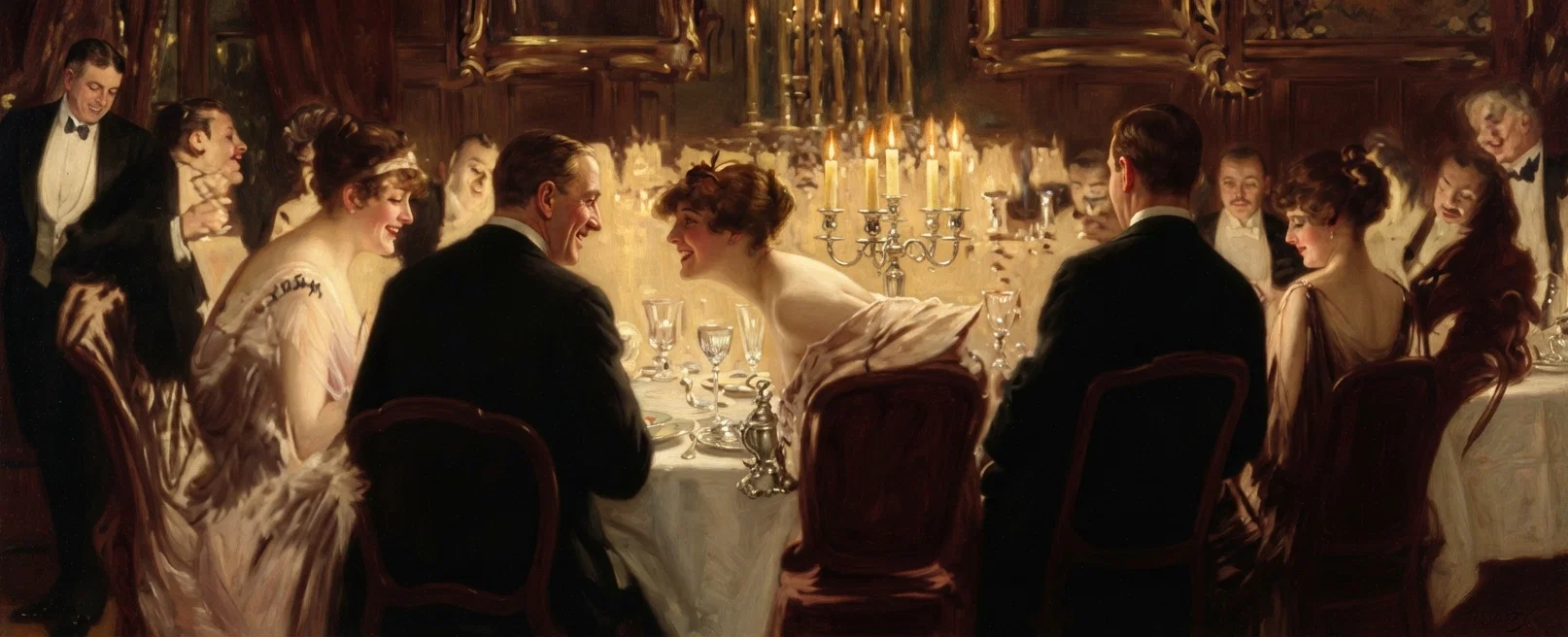
Illustrations of this technical fact are well known: the refined, scholarly gentleman losing his sense of propriety at the dinner table, and telling coarse stories, under the influence of wine; the kind-hearted father striking his little child, while under the influence of drink; the young girl losing her modesty, after her first drink of wine.
We know, too, that this first offense of alcohol on the highest powers of the brain is caused not only by the stronger drinks, but that even one glass of wine loosens a man's tongue and takes away the girl's modesty. Wine or beer in small quantities may not cause a man to stumble physically, or to lose his self-control; but his moral nature is weakened, and his highest power of control partly paralyzed, through their use.
Unsteadies the Sharpshooter's Hand
The second offense of alcohol is against that word which the business world of to-day is spelling in large capitals — EFFICIENCY. Everywhere, to-day, big business is striving for efficiency. Everywhere, the inefficient man is losing his job. Everywhere, the boys and the girls are taught the power of efficiency.
In Europe, the scientists, through their laboratories, have discovered the offenses of the use of alcohol against efficiency. They have sent out their sharpshooters, who, when they have had only a few drinks of wine or beer, have hit the bull's-eye three times out of thirty; when they were not allowed to drink wine or beer, twenty-three times out of thirty. The scientists have given sixty-two mile walking tests where the first four winners were total abstainers. In every sort of work, the average increase of efficiency when the workmen were not allowed a drink, was found to be about thirteen per cent.
We in America have our experiments in the practical laboratory of life. Our railroads have found, on investigating terrible accidents, that the engineer who missed catching the signal, though not drunk, had too frequently had one or two drinks. With the increased use of the automobile has come an increased knowledge of the danger of the driver who is not a total abstainer.
Forty Titanics a Year
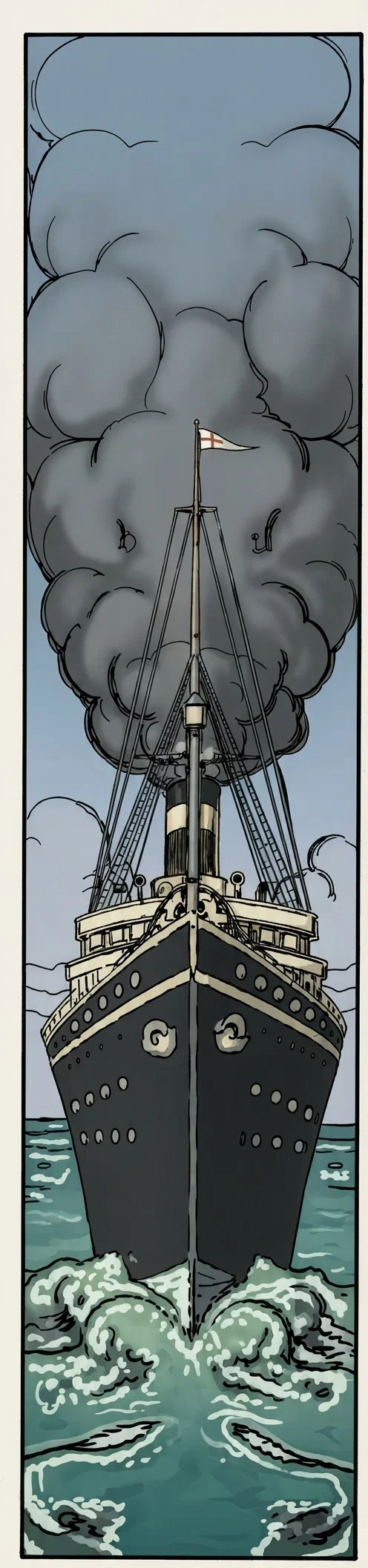
The offense of the use of alcohol against life itself is almost unbelievable. When the Titanic went down, and 1,503 persons were lost, a wave of horror swept over the land; yet every nine days, an equal number of deaths are caused in the United States by alcoholic drinks.
Years ago, a Quaker applying for a life insurance in England was told that because he was a total abstainer, he must be charged ten per cent more than the ordinary moderate drinker, the life insurance company feeling sure that any one who did not take a drink of liquor once in a while could not live as long as those who enjoyed "God's good gifts." This Quaker lived to be eighty-two years old; and since his day, the life insurance companies have kept accurate statistics of their beneficiaries. Now this strange policy has been completely reversed.
These statistics show that the average drinker loses about thirteen years of his life by his devotion to alcoholic drinks, and that the man who does not drink stands three times the chance of living, from thirty-five to forty-four, that the man does who drinks even a little.
Strikes Hardest at the Cradle
Far worse, perhaps, than the offense of alcohol in its effect upon the maturer mind, is the fact that it cuts life off at its very source, and strikes hardest at the children in the cradle. An investigation made in Sweden of 3,000 families, in which there were 17,000 children, shows the following facts: In the families where the parents were total abstainers, thirteen per cent of the children died in infancy; in the families where the parents were moderate drinkers, twenty-three per cent; and in the families of hard drinkers, thirty-three per cent died — practically one child in every three sacrificed to drink.
But the offense against the child's life is not the worst offense of alcohol against children. A physician in Berne, Switzerland, made a study of ten temperate families and ten intemperate families during a period covering fifteen years. During the fifteen years, in the temperate families, there were born sixty-one children; in the intemperate families, fifty-seven children.
At the end of fifteen years, of the sixty-one children born in the temperate families, there were fifty normal children; in the intemperate families, at the end of fifteen years, there were only ten normal children. Worse than death, in the intemperate families, there were six idiots and five epileptics. In the temperate families, there was neither an idiot nor an epileptic.
'Something the Matter'
When I was working with the Associated Charities in Washington, D. C., an incident occurred that shows the practical working out of these scientific investigations made in Europe. One morning, my telephone rang, and I was asked by a friend who was working with the Public Hospital, if I could provide clothing for a young girl who had been taken to the hospital with such a loathsome disease that her clothing had been burned. A sister of this poor young girl was sent to me for the clothing. We went upstairs to the attic where was stored clothing that had been sent to us for use among the poor.
I did not ask the pathetic looking little sister who had come to take the girl home to the country, any questions as to why her sister was in this condition, or why she could not afford to buy the clothes. But after a while, as we were picking out the different articles — a pair of shoes the right size, the underclothing, a suit, and all that was needed — she burst into tears, and cried aloud, saying: "Oh, I can't bear it! I can't stand it!"
"What is the matter, dear? What is it?" I asked.
"Oh, my sister isn't in her right mind," she replied, "or she wouldn't do this way. She has never been right. My father is a drunkard; my oldest brother has tuberculosis; my sister is feeble-minded. There is something the matter with us all."
I shall never forget her pitiful cries, and they ring in my ears still — the cries of all these children who are denied the right to be strong and well born, with whom there is "something the matter," because the saloons must make money, and their fathers are drunkards.
The offense of alcohol against the brain in breaking it completely is well known. Dr. Kirby, an expert from Bellevue Hospital, studying the condition of our insane asylums,10has been quoted as saying that alcoholism and venereal disease are the greatest known causes of insanity.
We have, in the state of —, five insane asylums, and one more in process of erection. The head of one of these insane asylums estimates that eighty-five per cent of the people in his institution are there because of alcoholic drinks. A moderate estimate would put the cause of sixty per cent of our insanity down to the credit of alcoholism, combined with its kindred vices.
When we think of the offense of alcohol against the community, it is absolutely incredible that we should tolerate the use of alcoholic drinks at all. In Massachusetts, in 1913, an investigation showed that sixty-three per cent of all arrests in the state were caused by drunkenness.
In Ingleside jail, last year, there were one thousand men and one hundred fifty women sent from San Francisco for drunkenness. The sentences averaged seventy days in length. It seems impossible that any sane community would pay for officers of the law, for courts of justice, for jails, for food, and for care for one thousand men and one hundred fifty women, without any effort to cut off the cause of all this expense and crime.
An Inappropriate Celebration
During the celebration of Christmas, 1915, the use of alcoholic drinks resulted in 77 murders, including 3 small children; 18 suicides; 155 wounded; 31 dead by accident or exposure; 19 wounded by accident; 3 cases of rape, including 2 children; 18 child victims of drink; and 288 miscellaneous casualties.
Those of us who are citizens of the United States, and who can vote for or against the sale of alcoholic drinks, are responsible for these offenses. How are we to meet our responsibility? — By voting for prohibition ourselves, and by working with all our power to persuade others to do the same.
Alcohol’s Deadly Toll
"When the Titanic went down, 1,503 people were lost. . . . Yet every nine days, an equal number of deaths are caused in the United States by alcoholic drinks."
SEEKS ARBITERSHIP OF WORLD
We should never lose sight of the fact that the Master has uttered some very clear prophecies in regard to what the church will do in a strong political way just at the close of time. One wing of this church power is designated in the Apocalypse as the "beast," and another is termed an "image to the beast." The two join in producing a world despotism that will be the worst, the most tyrannical, that has ever appeared in all the history of mankind. The one encouraging feature is that it will be of short duration. Every student of the Bible should carefully study the prophecies which foretell this great religious, tyrannical combine. They should also be careful observers of the events of the day that are marking the fulfillment of the prophecies so clearly given. Every few days — and this is especially true since the11European war started — we see dispatches telling of the activities of the papal power. It is seeking to become the arbiter of the world's destiny. A recent dispatch tells of "a movement in favor of reëstablishment of the temporal power of the pope." This movement, so the dispatch states, was inaugurated by Roman Catholic newspapers of Germany, "with the idea of drawing the Vatican wholly away from Italian influence." The "deadly wound" of the papacy, mentioned in the thirteenth chapter of Revelation, according to that prophecy, is to be healed. All the world is to "wonder after the beast." This great power is to become, in the broadest sense, a world power. It will promise great things. But no person, be he Catholic or Protestant, can afford to be deceived.
EDITORIAL
By Editor
For many years, Seventh-day Adventists have taught that Turkey will eventually come to its end as a nation. Hundreds and thousands of sermons have been preached by their ministers, telling the world this truth from the prophecies. More than once there have been world movements that seemed on the verge of bringing about the fulfillment of the prediction. Though as yet the day of destiny has not dawned, it grows momentarily nearer. Into ever narrowing areas, the Turkish nation has been crowded; and recent years have been ominous regarding the soon-coming hour of ruin and downfall.
To Our Readers
By Editor
All reasonable effort will be made to preserve accuracy of statement, and to verify all authorities quoted.
Scripture quotations, when not from the Authorized Version, are taken from the American Standard Revised, unless otherwise stated.
Persons receiving copies of this paper without ordering them are not indebted to this office. Such papers are paid for by others.
Manuscripts should be addressed to the editor. Address all business and make all money orders, etc., payable to the SIGNS OF THE TIMES, Mountain View, California.
Two or more copies to one person, six months, each $0.60.
Two or more copies to separate addresses, six months, each $0.65.
Expiration: The wrapper bears date of last issue due on your subscription. Unless renewed in advance, paper stops with expiration date.
Change of address: Kindly give both old and new address.
JAMES COCHRAN, Circulation Manager.
ON EUROPE'S CHECKER-BOARD
Particularly during the seventies, this subject was clearly presented by the veteran editor of the Review and Herald, author of "Thoughts on Daniel and the Revelation, or the Response of History to the Voice of Prophecy." Clearly he showed, by fact and comment, that Turkey would eventually be driven out of Europe; that afterward the nation would withdraw from Mesopotamia; that the seat of empire would be at last located at Jerusalem, and here the end would come.
In the same connection, he pointed out the age-long ambition of Russia as shown in the will of Peter the Great, and later in every political and military move of that nation upon the checkerboard of Europe. To-day there is needed the same clear note of warning regarding the fulfillment of prophecy. To-day, a thousand times more than then, the omens multiply, showing that soon, none know how soon, the events long expected will be realized. As surely as the allies win the present war — and who can see any other ending for the struggle now? — the Turk will be driven out of Europe.
TO SHIFT HER THRONE TO PALESTINE
In the North American Review for August, in an editorial, speaking of the failure of Turkey to carry the Mohammedan world with her into the war on the side of Germany, Mr. Harvey says: "Whatever may be the political fate of the Turkish Empire, it may be regarded as certain that its spiritual hegemony of the Mohammedan world is gone forever. The first clash between the Christian powers of Europe and the Mohammedans of Asia arose over the control by the latter of Jerusalem and the other holy places of Christendom; though that was before the rise of the Ottoman tribe, and it was with the Seljuks that the Crusaders battled. It is an interesting coincidence that this latest clash involves the control of the holy places of the Mohammedans, and that it is likely to result in a permanent transfer of that control from the hands of the Turks to the hands of the Arabs. 'It is kismet,' and it is peculiarly fitting that it should be so. For while the doctrine of kismet is characteristic of the entire Mohammedan faith, it is the Ottoman Turks alone who have exaggerated it into an excuse for political inefficiency and decadence. Islam will doubtless continue to exist, but the Ottoman sultan will not be its caliph. It will not be surprising to see the seat of supreme authority shifted from the shore of the Bosporus to the shore of the Red Sea, and to see the birthplace of Mohammedanism become once more its capital."
THREATENING DOOM FOR TURKEY
Thus the editor of the North American Review sees the move from Constantinople to Asia brought about by a change within the empire itself. No doubt this influence will help in changing the capital. But there looms a more threatening danger to the Turk; and that, once realized against him, will send him bag
Russia’s Aims in Constantinople
and baggage out of Europe. That menace lies in the attitude, aims, and plans of Russia. Paul Milyukov, leader of the Constitutional Democratic Party in the Russian Duma, tells us what these are. He is one of the most prominent of Russians, professor of history in the University of Moscow. He has become a recognized authority on all Balkan questions. He has more than once refused the portfolio of a cabinet minister, and it is believed in Europe that he is in line for the premiership in the next Russian government. He took part in the conference of the allies in London last June. Fresh from his conference with Viscount Grey, he makes the following statements as outlined in the Independent for September 25:
"We are to have Constantinople. Nothing else is possible. A formal agreement has been reached. Whatever may be the outcome of the war, the future of Turkey must be definitely settled. Russia must have the straits, both sides of the straits, and therefore Constantinople itself. The straits cannot be internationalized. Neither can we consider an international administration of Constantinople. European Turkey ends. The Turkish Empire remains as an Asiatic power. There will be no conflict with Great Britain over this settlement. Russia and Great Britain are in complete accord."
Jerusalem and Prophecy
By L. A. R.
Should, therefore, the allies win the war, this is what it seems has been formally agreed regarding Constantinople. It is to pass from the Turk to Russia. Further Mr. Milyukov says, "Palestine must come under some form of international government." But here we come within the direct purview of the prophecy. Over Jerusalem there is to be a struggle, so the prophecy declares. At the holy city, the Turk is to make his last stand, and come to an end, none helping him. Dan. 11: 45. It appears to many that sometime after this war, therefore, Jerusalem will "come under some form of international government;" and when it does, the ancient but holy city will be found "a burdensome stone" to the nations. "All that burden themselves with it shall be sore wounded." Why this is so is quite a story apart, and must be left for some future study. Zech. 12: 3. L. A. R.
The Political Christ
THE activities, in political ways, of the various religious bodies of the world will be an interesting thing to follow. The federation spirit, in both Protestant and Catholic bodies, has taken strong possession of them. They are saying a great deal about the power of their numbers, what they can do by sheer force of their political influence. The political Christ is an impostor. We may always know that the church, acting in a political way, is in a field that was never marked out by the Master Himself.
The Growth of Great Wealth
By Editor
The New York World of September 30, 1916, says editorially: "When a really serious effort was made in 1855 to list the rich men of New York City, just twenty-seven millionaires were revealed. And William B. Astor led the line with $6,000,000. P. T. Barnum was credited with $800,000. August Belmont, with $250,000, was far below the million-dollar class. Cornelius Vanderbilt had $1,500,000; Alexander T. Stewart, $2,000,000. Of the 12,000 millionaires listed in the United States in 1914, just less than sixty years later, 2,000 were credited to New York. And to-day we have news of the beginning, in this city, of the billionaire class, John D. Rockefeller being the first of the order. Mr. Rockefeller, an amazing example of how wealth accumulates, represents in his single person more than twenty times the combined riches of the millionaires of 1855."
AMASSING COLOSSAL FORTUNES
By Editor
The "billionaire class" is now beginning. One speaking with divine foresight has given us the following picture of the last days: "Go to now, ye rich men, weep and howl for your miseries that shall come upon you. Your riches are corrupted, and your garments are moth-eaten. Your gold and silver is cankered; and the rust of them shall be a witness against you, and shall eat your flesh as it were fire. Ye have heaped treasure together for the last days." James 5: 1-3. That the foregoing editorial is approximately correct we have no doubt. Beyond question, we have reached that period when men are heaping up treasures. There has been no similar period in the world's history in this respect. We behold before us a striking sign of the end of the world; for it was in the last days especially that we were to witness the piling up of colossal fortunes. The vast fortunes accumulated in such rapid succession, and in such an amazingly short period of time, tell us that the last days are here.
IN THE GRIP OF UTTER DESPAIR
By G. B. T.
It is no place here to build and hoard up wealth. We read that "they shall go into the holes of the rocks, and into the caves of the earth, for fear of the Lord, and for the glory of His majesty, when He ariseth to shake terribly the earth. In that day a man shall cast his idols of silver, and his idols of gold, which they made each one for himself to worship, to the moles and to the bats; to go into the clefts of the rocks, and into the tops of the ragged rocks, for fear of the Lord, and for the glory of His majesty, when He ariseth to shake terribly the earth." Isa. 2: 19-21. That which God has intrusted to us, we have the opportunity to-day to invest in souls, in doing good, in spreading abroad the kingdom of heaven. Soon it will be too late, and in utter despair we will cast our means to the moles and the bats — creatures of darkness — and in terror hide among rocks, from the face of Jesus. To-day Christ is in the heavenly sanctuary as a priest, interceding for man, and offers forgiveness of sin to all who will come to Him for pardon. Soon He will lay down the censer, and ride forth as a conqueror, followed by all the armies that are in heaven. Then it will be too late to invest in heavenly treasure. To-day is indeed the day of salvation.