The Youth’s Instructor, Vol. XLIX, No. 40

REAPING

The Youth’s Instructor

Oct 10, 1901

Review and Herald Publishing Company · Battle Creek, Mich. · Oct 10, 1901

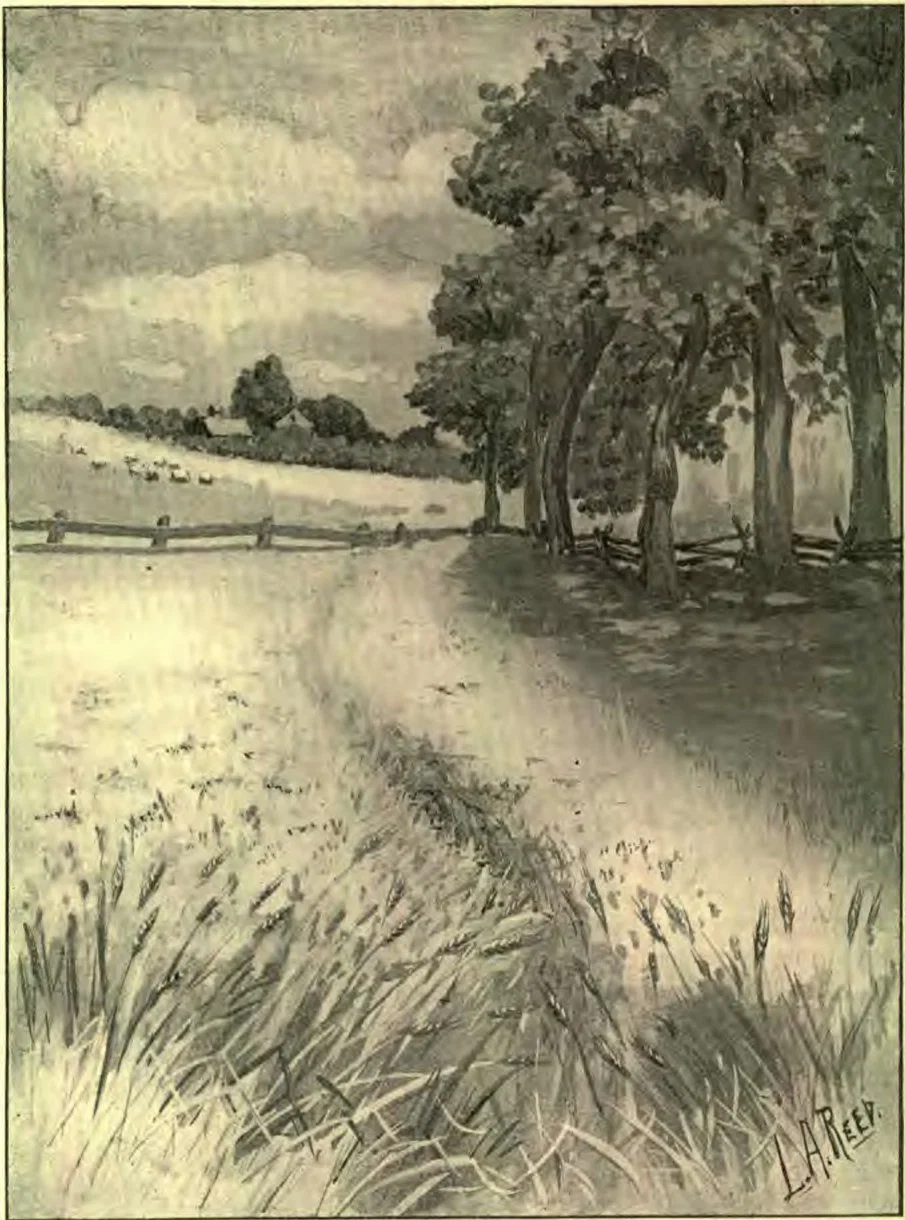
REAPING

To all sowing there is a certain definite reaping. This is but another phrasing of the great principle of cause and effect. It is but an expression of the one eternal law of continuity.
No one thing or event stands out by itself. No one thing can come into being of itself, neither can it sustain itself alone; and further, it must in turn impress other things. Call to mind anything you please,—you will find it but a link in one or many chains. Link by link you can follow the chain back far into the distant past.
I see a mullein, perhaps, growing by the roadside. I know that it did not come there of itself. It grows there because, some time before, a seed fell in that spot,—a seed from some other mullein that grew and thrived as it now grows. And that other mullein came from still another mullein plant, that grew in days still earlier. Thus we may trace it back, but always there is something before it until we come to the great cause of all earthly things, the creation of the world.
In a similar manner what I do to-day is not to be set aside as a thing which has nothing to do with the events of the past. For every event of your life or mine, there is a good and sufficient cause,—a cause that is sometimes made up of many factors, all born of the days now gone. What happens now is but the result of yesterday and the days before; it is the harvest of the past sowing.
But you may think that, if this is so, we are held in the grim embrace of fate, and that we are thus to-day only the creatures of those circumstances that have bound us about. But remember, what I am to-day is my harvest from the sowing of the past; and as I sowed then to produce this, so I may sow now to produce a better.
In a moment I may will a decision that shall change events and modify all results, but even so, in the new result will still be seen some impress from the things of the past. When the tribe of Levi sinned against God, he declared that they should have no inheritance in Israel. Nothing they might ever do could reverse that decree. They should have no inheritance in Israel. This was their harvest for their evil sowing. But later, by steadfast loyalty in the midst of universal apostasy, they sowed for another harvest. God still said, “They shall have no inheritance in Israel,” but he now also said, “I am their inheritance.” Though they were forever shut out of the first, they were now most gloriously ushered into the second and better. They were to become the priests of God. They were in an especial manner to be representatives. The sowing of the good seed could not reverse the decree, but it could lead to something better and higher than anything they had known or hoped for before.
You and I can not get away from the results of our past lives, but by the proper sowing we can change and modify results; and this is far better than to obliterate the past.

WHAT SHALL THE HARVEST BE?

And then the harvest. It depends for quality and quantity on a number of things. First of all, the harvest in quantity and quality depends upon the essential nature of the seed itself. Some seeds, under like good conditions, will yield far more heavily than others. For instance, wheat may yield a crop of twenty bushels to the acre in Illinois, but corn under no better conditions will yield perhaps fifty or sixty bushels an acre. But the wheat makes up in quality what it lacks in bulk, and each is profitable in the markets when the price is normal. The Canada thistle will produce a larger crop than will some less harmful plants.
But there is always more than we plant. Plant a handful, reap a sackful. Sow to the wind, reap the whirlwind. The wicked are forever being surprised because so much comes of what they do. They can not think that what they did, that little act, could possibly produce all the evil that has come. It seems all out of proportion that the momentary act of a mad assassin should produce a crop that would cause the whole world to stand aghast. But it is always so. A few words may ruin a whole church, and throw souls into a hopeless condition. You never know, when you sow evil seed, what harvest it will produce.
‘And so, too, the righteous are forever being surprised that the little good they do should so prosper and gladden all within the radius of its influence. A single seed may produce all the wheat in all the fields of the world, if given time and the right conditions. It was one mad act in Eden that brought the harvest of seven thousand years of sin and pain; and it is the one act of Another in another garden that will yet bring the brighter, better harvest that will save the world.

POWER OF CONDITIONS

Secondly, conditions are a potent factor in determining the size of the harvest. For instance, the germs of disease are so small that it requires a powerful microscope to reveal them. And yet from any one of these germs, if all the circumstances were favorable, within five days the product, or harvest, might fill all the seas of the globe! But the conditions are not favorable, else all the waters of the earth would soon be reeking with the terrible germs of typhoid fever or something worse.
There are two mullein plants growing in our country, but they do not look very much alike. Yet the seeds are so similar that I doubt if any one can tell them apart. The common mullein produces many times more seeds than the moth-mullein. You will find several hundred seeds in each nutlet of the common mullein, with several hundred nutlets in a single plant. To know the number of seeds, you must multiply hundreds by hundreds, which gives ten thousands as the number on a single plant. But these seeds are destroyed by the hundreds and the thousands; many are eaten by grubs, which live in the nutlets, and comparatively few come to maturity. But all of those of the moth-mullein ripen unmolested. There are fewer seeds to begin with, but it fares as well in the end.
How often it is so in life. Some seem to have better promise of a magnificent harvest. There are glorious possibilities, but there are the moth and the rust and the canker, the blasting and the mildew; and lo! the glorious promise fades into night. Others did not promise so well, but they have sowed rightly, and their harvest is greater, not because of a better beginning; but because there has been no loss. The sowing was wiser, the seed was better chosen, the soil was more carefully tended, and the harvest was all carefully treasured.

SOIL FOR THE SEED

And then, last of all, the harvest depends so much upon the soil. How plainly this is brought out in the parable of the sower. Some seed fell by the wayside, and the fowls came and devoured it—the seed found no soil. Some fell upon stony places, sprang up, and then withered away, because it had no soil. Some fell among thorns, and was choked, for the thorns refused it soil. But some fell into good ground, and bore an abundant harvest.
The seed of this parable represents the word of God, and the soil it seeks is your heart and mind. If that seed can not get into some human heart, it positively can not grow. And this is but saying that God can not work in the world unless he can find those who will act as his agents. When you and I refuse to do his will, we cut off the hands by which he would work in the world, we cut off the feet by which he would carry his messages to the burdened hearts of men.
What a wonderful privilege to be used of God! What an awful thing to shut him out of the world! Either is ours to do. It will be as we choose.
And all the time God is at work casting the seed. He is the Master Sower. He tells us to sow, but already he has set us the example. And like the patient husbandman or farmer, he waits for the early and the latter rain, which will ripen the wheat. All through the years he has cast the seed. True, some has fallen by the wayside; some has dropped on the flinty ground; some has been choked by the thorns and briers; but some, thank God, has fallen in good soil, and in the great harvest day we shall find God’s granaries all filled to overflowing. For though he will burn the chaff with unquenchable fire, he will gather all the wheat in his garner. L. A. REED.
READY FOR THE 'REAPER

THE HARVEST INGATHERING

At a time when my mind was deeply exercised over the statement that “too little attention was being paid to our children and youth,” an article appeared in the Signs of the Times descriptive of the Feast of Tabernacles, from the pen of Mrs. E. G. White. In it occurred the following paragraph: “From far and near the people came, bringing in their hand a token of rejoicing. Old and young, rich and poor, all brought some gift as a tribute of thanksgiving to Him who had crowned the year with his goodness, and made his paths drop fatness. Everything that could please the eye, and give expression to the universal joy, was brought from the woods; the city bore the appearance of a beautiful forest.”
As, in imagination, I lived with the people of that long-ago time, and witnessed the rapture of those children as they wandered through the woods in search of something “pleasing to the eye,” afterward bringing it in their little hands as a “token of rejoicing” to add to the “universal joy” of the occasion, my heart longed to have the scene re-enacted in this time. Taking my Bible, I began searching for the meaning of this feast, and turning to Neh. 8: 15, 16, I learned that after the captivity of the children of Israel they were told to “go forth unto the mount, and fetch olive branches, and pine branches, and myrtle branches, and palm branches, and branches of thick trees to make booths, as it is written. So the people went forth, and brought them, and made themselves booths, every one upon the roof of his house, and in their courts, and in the courts of the house of God,” etc. Reasoning that if it was pleasing to the Lord then to have his people bring boughs into the “courts of the house of God,”—the place where the people worshiped,—it would not be displeasing to him today to decorate the place of worship with some of his beautiful handiwork; and wishing to be sure such a move would meet the approval of Heaven, we searched everything we could find on the subject. You can faintly imagine our joy when, on pages 540–546 of “Patriarchs and Prophets,” our eyes rested on the following words: “Well would it be for the people of God at the present time to have a Feast of Tabernacles,—a joyous commemoration of the blessings of God to them.” A little farther down the page we read: “The Feast of Tabernacles was not only commemorative but typical. It not only pointed back to the wilderness sojourn, but, as the feast of harvest, it celebrated the ingathering of the fruits of the earth, and pointed forward to the great day of final ingathering, when the Lord of the harvest shall send forth his reapers to gather the tares together in bundles for the fire, and to gather the wheat into his garner.”
Since a type is never done away until it meets its antitype, we were fully satisfied that a service of this nature would be pleasing to the Lord in this time; so according to the best light we had, we moved forward, and for the past three years such a service has been held in the little church at Sheridan, Ill., with excellent results.
The foregoing quotations are sufficient reasons for the holding of the Harvest Ingathering exercises. A few suggestions as to the nature of the services may not be out of place. Turning to page 541 of “Patriarchs and Prophets,” we read: “As the children of Israel celebrated the deliverance that God had wrought for their fathers, and his miraculous preservation of them during their journeyings from Egypt, so should we gratefully call to mind the various ways he has devised for bringing us out from the world and from the darkness of error into the precious light of his grace and truth.” From this we learn that the rehearsal of how we were brought to the light of truth is an appropriate part of the service,—not long, dry speeches, but fresh, rich experiences.
On pages 448 and 449 of “Desire of Ages” we are told that the most impressive part of the ceremony at the Feast of Tabernacles was the one performed by the priests with the two flagons, one of water and one of wine, which pointed back to the smitten rock as typical of Christ. So may we illustrate spiritual truths by the beautiful things from nature which have been brought for decorations. In fact, the larger portion of the time should be occupied in this way.
Since the whole service points forward to the harvest of the earth, or great ingathering of souls, this should be considered in the program.
Another thing to be emphasized is the fact that “young and old, rich and poor, each brought a gift as a tribute of thanksgiving.” If a harvest of these gifts is desired, let it be remembered that there can be no harvest without a seedtime. Those who have charge of the Sabbath-schools should see to it that plans are laid whereby the children may earn something for offerings, and also gather grains and grasses for decorations, thus turning their attention to nature. From time to time call attention to the needs of different branches of the work, and then let each one be free to work for, and give to, the cause nearest his heart, and you will be surprised how many different branches will be remembered.
The great reason why the occasion was one of rejoicing was that it occurred just five days after the day of atonement “when the assurance had been given the people that their iniquities should be remembered no more.” No wonder they rejoiced! At peace with God, the occasion could not but be one of great joy.
Let nothing of the common enter into the services; let it not partake of the nature of a literary entertainment or social gathering. Such a course would make it a curse instead of a blessing. May the Spirit of God guide all who engage in the Harvest Ingathering service this fall.
IDA B. HIBBERN.

Harvest Ingathering in the Cities

There is no reason why the Harvest Ingathering service may not be as successfully carried out in the cities as in country places. The adage, “Where there's a will, there's a way,” applies as well to this subject as to any other. True, we do not have access to the abundance of nature's products that those have who live in the country; but there are to be found in every city some things that may be gathered from time to time for the purpose; also ways and means can be devised for collecting, from the suburbs, things that can not be obtained in the densely populated districts.
Those who have never interested themselves in the work would be surprised at the amount and variety of collections of grasses, wild oats and wheat, millet, etc., that may be found growing along the streets and back of the parks in the large cities. It is refreshing indeed to the tired bodies and souls returning from hard labor, to tarry by the wayside to gather these things of nature, and to study their varieties and beauties. I write from experience. The past summer my companion and I have gathered no fewer than eighteen different kinds of grasses in the city of Chicago, besides those named above; and what has been done here can surely be done in any city of its size.
We have also, during our week's vacation in the country, and while at camp-meeting, gathered wheat, oats, corn, cat-tail flags, and broom-corn to be used in decorating the house of worship.
Ways may also be devised for city children to earn their own money for offerings. The Lord has said: “If they were encouraged to do so, the children would earn means to devote to benevolent purposes, and to the advancement of the cause of God; and their interest would be increased by the fact that they had invested something in these enterprises. . . . Through their diligence and self-denial they would gain a valuable experience, which would help them in making a success of this life as well as in securing the life to come.” This is applicable to all children, wherever they may be found.
The children of two Chicago schools have earned this summer, for one enterprise alone, nearly twenty dollars, besides much more they have given in Sabbath-school offerings, and laid aside till the day for offerings.
One Sabbath-school superintendent rented some vacant lots remarkably cheap, and by helping the children plant and cultivate a garden, successfully encouraged them to earn money for missionary purposes. He has also demonstrated that a missionary garden can be raised in Chicago. Others have sold our religious papers, especially the Life Boat, and books, lamp-mats, bottles, rubber, iron, and zinc, and in various ways of their own devising have earned missionary money. A great blessing to them has been the result. We sincerely desire that others may be induced to share with us these blessings, that God alone may be glorified, and that finally we may all together unite in praising him for the ingathering harvest of the earth, and enjoy the beauties of the new earth, world without end. Anna Hibben.

THE VINE

THE SUPPORT OF THE VINE
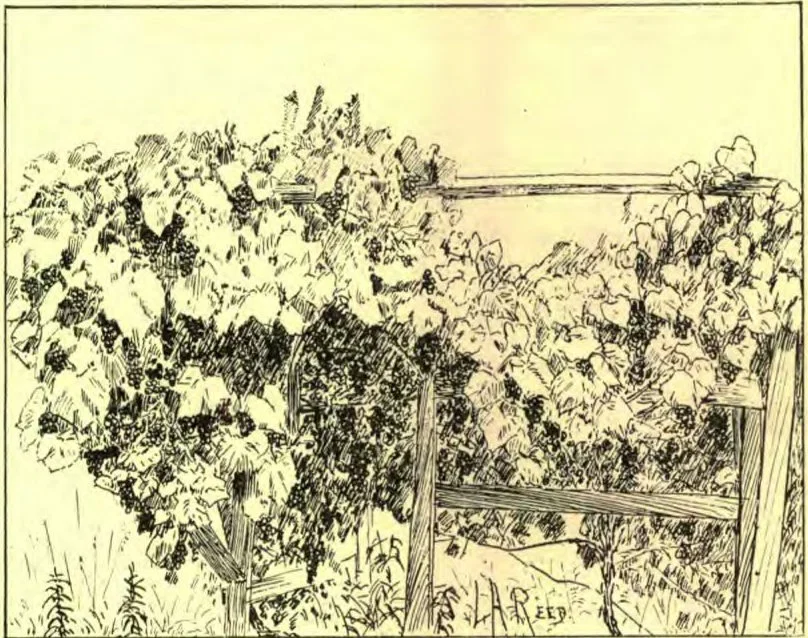
THERE is perhaps no other object in nature that can teach us so many deep spiritual lessons as the vine. To make a proper study of it, one should go to the arbor with his Bible open at the fifteenth chapter of John. Then with the symbol which God himself gave, and with the divine commentary which Christ has uttered, he will find much that is helpful and blessed.
“I am the true vine,” says Christ, “and my Father is the husbandman;” “ye are the branches.” Here is at once a picture of the relations which exist between all the ones concerned. We in Christ, and both Christ and we in the tender care of the owner and dresser of the vineyard.
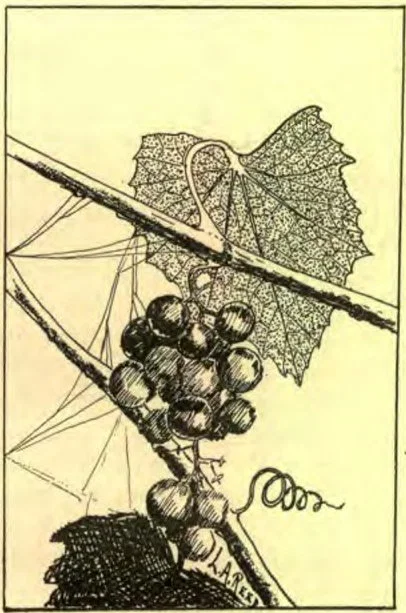
“My Father is the husbandman.” Many plants do not need the care that the vine requires. It has no sturdy trunk; it climbs by tendrils, and the husbandman must provide the trellis or the stakes that are to support it. The vine can not do this, but when once the support has been provided, it can take hold with its tendrils, and is thus secure. And, of course, the vine always takes hold; but we,—how often we fail to use the support that God provides, thereby failing to ascend, and becoming weakened and liable to die! But the husbandman lifts the vine up to the support, and leaves it there a day or two until it may have time to grasp and hold itself. So the Father is patient with us. Like a shepherd who carries the lamb in his bosom, he lifts us over the difficult places. He gives us time to grow and take hold.
“MUCH FRUIT”
“MUCH FRUIT”
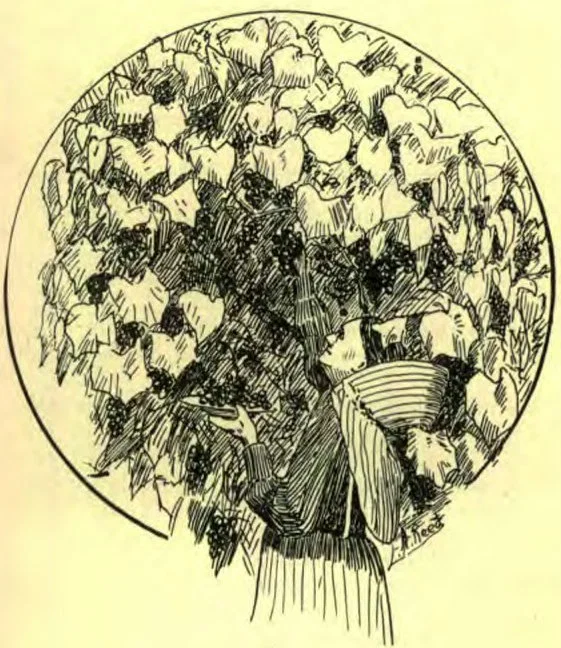
Probably no other plant is so capable of response to the hand of the intelligent gardener as the vine. It must be cultivated if it is to be of any value. The oak needs no care; it grows in stately grandeur, and bears its fruit. But the vine must be pruned and trained and cleansed, and then it will grow and bear abundant fruit. It is capable of great things when directed by the dresser; it is an utter failure without proper care. Is not this a faithful picture of human lives? Under the direction of God, there is no limit to our growth and progress; without it, we are absolute failures.
But we do not raise the vine merely for its shade. It is the fruit that makes it so desirable.
For this the keeper prunes, and trains, and guards the vine so faithfully. So with us. The one object of our having a place in God’s garden is that we may yield him an increase of fruit; for “herein,” said Jesus, “is my Father glorified.”
But to bear fruit the branch must be united to the vine. So, says Christ, abide in me; “for without me ye can do nothing.” More than that, if we do not abide in him, we wither, and are cast forth, and are gathered as fuel to be burned.
But, mind you, the vine does not bear fruit save through the branches. Examine the vine; you will find it so. And similarly, Christ can bear no fruit in his life, save as he bears it through human instrumentalities. It is a marvelous thing that God thus leaves himself utterly dependent for results upon the work of human hearts and hands.
The branches are much like the vine; they are formed upon the same pattern. Thus, too, we are to be in the likeness and image of Christ.
If the branch fails to bear fruit, the keeper purges it. But in doing this he chooses always those branches that are united to the vine. It is useless to cultivate a dead branch, a branch that has been separated from the main trunk. And yet we hear much about cultivation, or “culture,” these days. Let me tell you that culture will amount to little to us unless we remain united to Christ. Cultivation of the branch, to be of any avail, must be while the branch is alive, and can thus respond to the efforts put forth in its behalf. The dead branch makes no response. We may cleanse it, prune it, tie it to the trellis, ever so carefully. It may look better for a little time; but sooner or later it will perish. Let us be sure we do not cultivate a dead branch.
And the proof that we are in Christ is that we shall respond to the cultivation. And this union is shown at last in all its fullness when the branch puts forth its ripened purple fruit. So if we are united to Christ, there will be seen a steady progress, and, sooner or later, a certain wonderful yield of the fruit of the True Vine. Gal. 5: 22, 23.
“If ye abide in me,” says Christ, “and my words abide in you, ye shall ask what ye will, and it shall be done unto you.” L. A. REED.

THE QUESTION

I

THE question is not whether you believe that sin hath torment in his train. The devils believe, and — tremble.
The question is whether you live as if aware that the wages of sin is death, that the wicked will be eternally lost, and that the blood of Jesus Christ alone, God's Son, cleanseth from all sin.

II

THE question is not whether you believe that we shall all stand before the judgment-seat of Christ. The devils believe, and — tremble.
The question is whether you live as if every thoughtless deed of your hand, every idle word of your mouth, every unloving glance of your eye, every evil thought of your heart, shall be made manifest in the great and dreadful day of the Lord.

III

THE question is not whether you believe that the Holy Writ is the word of God. The devils believe, and — tremble.
The question is whether you live as if you did use it for a lamp unto your feet, and a light unto your path.

IV

THE question is not whether you believe that Jesus Christ is the Son of God. The devils believe, and — tremble.
The question is whether you live as if his word was surer unto you than the word of the mightiest prince of earth, as if his promises were more trustworthy to you than the promises of the richest banker on earth.

V

THE question is not whether you believe that the Lord Jesus Christ will come again — sometime. The devils believe, and — tremble.
The question is whether you live as if you believe his coming to be — as it indeed is — “near, even at the doors.”—Selected.

ONE HUNDRED PER CENT

“I should like to be rich,” said young Tom, with a sigh; “There are so many things I am aching to buy! O would I had money, and would it were lent To good, steady payers at fifteen per cent!”
Now it chanced that a wise man, in passing, had heard Tom’s sighs and repining, each covetous word; So he took the young fellow astride of his knee, And taught him to grow just as rich as could be.
And this way ’twas done: Every once in a while Tom would lend to some neighbor—a sunshiny smile; And every time for the smile he had lent Tom got two in return. That’s one hundred per cent.
Bright greetings, warm kisses, kind deeds on the sly, All bring him an interest equally high. And before many days, I am bold to declare, You will find that young Tom is a true millionaire.
— Selected.

Reaping in Due Time If We Faint Not

“IN due time we shall reap if we faint not.”

WHAT OUR YOUNG PEOPLE ARE DOING

It is very encouraging to read the letters that are received concerning the Young People's work. In many places the members are not only few in numbers, but widely scattered; yet such are not behind those more favorably situated in their interest in this work. We shall be glad if the following extracts from some of these letters encourage you to write concerning what is being done in your own church or company. Address all such reports to the Secretary of the Sabbath-school Department, Mrs. L. Flora Plummer, 705 Northwestern Building, Minneapolis, Minn.:—
The secretary of the Young People's company at Arcadia, Neb., writes as follows: “I will write you in regard to the Young People's work here. We have organized a little company of thirteen members, with a president, a secretary, and a vigilance committee. We have been holding meetings ever since last winter, and have been using the lessons in the INSTRUCTOR since they began. The whole church is interested, and some of the young people attend regularly. We hope that through this effort more will turn to the Lord, who so richly blesses us in all our efforts.”
The corresponding secretary of the Oklahoma Conference, speaking of the Young People's work in Oklahoma City, says: “We hold our Young People's meetings regularly on Sabbath afternoon—hold them one hour. After the usual opening exercises, we take up the study of the regular lesson, under the direction of the leader. So far we have no committees. We are doing some work, part of it being to supply the reading racks in the depots. Those who attend are much interested, and we hope for a better attendance shortly. We feel confident that this work will move forward successfully.”
From Duenweg, Mo., the following encouraging report, written by Brother I. W. Lewis, has been received: “We are holding Young People's meetings at our church every Sabbath morning, using the Bible studies published in the INSTRUCTOR. Our number consists of about twenty young people, seven or eight of these being children between the ages of six and twelve years. As only about six of us belong to the church, it is hardly necessary to appoint committees, and so far we have appointed no officers but a leader. We are especially interested in missionary work. One of our number, a young man who has only recently accepted our faith, is canvassing in Joplin; another, a young lady, is selling the Signs of the Times; and I myself am distributing and loaning books, tracts, and papers in connection with doing chores on the farm and studying preparatory to entering school. Considering our numbers, we are getting along nicely. Our church officers are interested in our work, and are doing all they can for us.”

WHO IS MY NEIGHBOR?

(October 13-20)
TEXTS showing who may be regarded as neighbors—
The poor. Prov. 14: 20.
The rich. Luke 14: 12.
Those who serve. Jer. 22: 13.
Jesus our example in neighborly ministry. Luke 19: 10.
Established the principle by bringing salvation to—
The poor, the broken-hearted, the sick, and the imprisoned. Luke 4: 18.
Aliens and strangers. Eph. 2: 12, 13.
Enemies. Rom. 5: 10.
By the parable of the Good Samaritan, which plainly shows—
That any to whom we may show kindness is our neighbor. Luke 10: 37.
Our duty to minister to our neighbors. Id.; see also Notes 1, 2.
This ministry will—
Relieve physical pain and need. V. 34.
Soothe heart hunger and loneliness. Note 3.
Bring life to the soul. Note 6.
It will require our—
Time and money and goods. Vs. 34, 35.
Personal attention, loving care, and the “tongue of the learned.” Notes 4, 5; Isa. 50: 4.

SUGGESTIONS

In connection with this study, read the article by Prof. W. W. Prescott in the Review of October 8.
In studying this subject, notice that, in the case of the man mentioned in the parable, it was not a certain Jew, nor a certain Roman, nor a certain Samaritan, but a “certain man,” whom Jesus mentioned, thus showing that no question of creed or color or nationality or condition is to be for a moment considered in determining who is our neighbor.
Notice also that the man who showed himself a neighbor to him who fell among thieves—
Regarded him with compassion—not a mere sentimental pity.
His sympathies were stirred to the point of action. He did not stop with words.
He delayed his journey in order to care for the wounded stranger.
He ministered to him in the office of a servant.
Stayed with him through the night, and made provision for his care till he should recover.
It is of no use simply to see our duty. The priest, serving in holy office, and the Levite, also connected with the temple service, both saw the wounded man; but they both passed by on the other side. The blessing is given to those who, seeing their duty, make haste to perform it.

NOTES FOR STUDY IN CONNECTION WITH THE TOPIC

1. “Our neighbor is every person who needs our help. Our neighbor is every soul who is wounded and bruised by the adversary. Our neighbor is every one who is the property of God.”—Desire of Ages, page 503.
2. “The man who was wounded and robbed represents those who are subjects of our interest, sympathy, and charity. If we neglect the cases of the needy and the unfortunate, that are brought under our notice, no matter who they may be, we have no assurance of eternal life, for we do not answer the claims that God has upon us.”—Testimonies for the Church, Vol. III, page 524.
3. “All around you there are those who have soul hunger, and who long for love expressed in words and deeds. Friendly sympathy and real feelings of tender interest for others would bring to your souls blessings that you have never yet experienced, and would bring you into close relation to our Redeemer, whose advent to the world was for the purpose of doing good, and whose life we are to copy.”—Id., page 527.
4. “We shall find the footprints of Jesus by the sick bed, by the side of suffering humanity, in the hovels of the poverty stricken and distressed. We may walk in his footsteps, comforting the suffering, speaking words of hope and comfort to the desponding. Doing as Jesus did when he was upon earth, we shall walk in his blessed steps.”—Review and Herald, 1896, No. 23.
5. “When the sick and wretched applied to the Saviour for help, he first relieved the poor, suffering body before he attempted to administer to the darkened mind. When the present misery of the supplicant was removed, his thoughts could better be directed into the channels of light and truth.”—Signs of the Times, 1889, No. 2.
6. “The power of the Lord is magnified when the human heart is tender and sensitive to another’s woe, and pitiful for his suffering. Angels of God are ready to co-operate with human instrumentalities in ministering to souls. When the Holy Spirit works upon the hearts and minds, we shall not shun duty and responsibility, and pass by on the other side, leaving the wounded, helpless soul to its misery.”—From “Testimonies for the Church,” Vol. VI.
Continue reading: ARE YOU LOOKING OUT FOR NUMBER ONE?