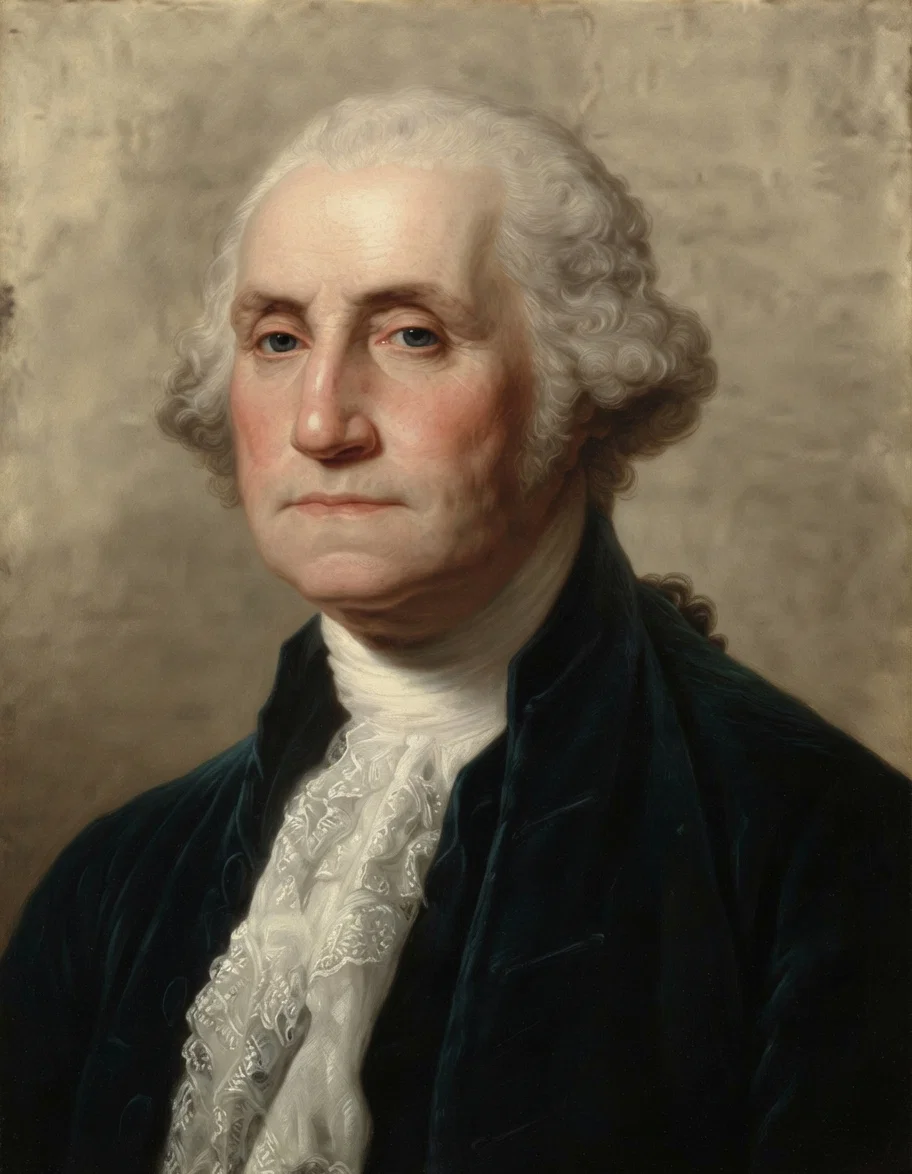
In his "Farewell Address," dated September 19, 1796, Washington expressed the hope that the principles upon which the Government of the United States is founded might be so developed and maintained here as to result in their adoption by every other nation on the earth. Under the choicest tokens of Heaven, and the gracious "auspices of liberty," he said he hoped that the happiness of the people of these States might be made complete, "by so careful a preservation and so prudent a use of this blessing as will acquire to them the glory of recommending it to the applause, the affection, and adoption of every nation which is yet a stranger to it." Until changed by an authentic act of the whole people, the Constitution, he said, is "sacredly obligatory upon all;" and in the interests of the preservation of the Government and a happy State, he gave the following warning:
Toward the preservation of your Government and the permanency of your present happy State, it is requisite not only that you steadily discountenance irregular oppositions to its acknowledged authority, but also that you resist with care the spirit of innovation upon its principles, however specious the pretexts.
Attempted Change
Three years after writing this address Washington died; and only twelve years after his death, began what may be considered the first open and concerted manifestation of the "spirit of innovation" upon the principles of this Government. In 1811, or just one hundred years ago this year, the first attempt was made to induce the national Government to commit itself to religious legislation through the enactment of a Sunday law regarding the postal service. The effort, however, failed, and was not taken up again until after the close of the war of 1812-14, when another attempt was made, but with like results.
The Famous Mail Reports
In 1828 another movement, with more thoro organization and more formidable proportions, was set on foot to accomplish this purpose. Through the plans and activities of "a most respectable committee, composed of gentlemen of different religious denominations," the religious element throughout the country, it seems, was aroused to demand such legislation, and to attempt to secure it by flooding Congress with petitions. From twenty different States, petitions aggregating 467 in number, and representing 420 different cities, towns, and localities throughout the country, rolled in upon the national legislature. It was these petitions, and others following a little later, which called forth those famous and masterly "Sunday Mail Reports" of 1829 and 1830, presented by Col. Richard M. Johnson, and adopted by Congress. By these masterly, superb, and unanswerable reports, this spirit of innovation upon the principles of this Government received such a setback that it did not manifest itself again to any appreciable extent for many long years.
The National Reform Movement
In 1863, during the Civil War, representatives of eleven different denominations met in Ohio, and laid the foundation for a national organization, the chief object of which is to secure such an amendment to the national Constitution as will make this a truly "Christian nation." This organization, known as the National Reform Association, has been steadily growing and persistently disseminating its teachings and anti-American principles; but it has not as yet, during the forty-eight years of its existence, accomplished its object.
With the introduction of the famous Blair National Sunday Rest Bill into Congress in 1888, began another era in the history of this spirit of innovation upon the principles of this Government, against which Washington gave warning. Since the introduction of this bill, over seventy like measures have been introduced in Congress. Nearly sixty of these have been direct demands for Sunday legislation, and forty of the sixty have been measures calling for a Sunday law for the District of Columbia. The latest and most prominent bill of this latter class is what is known as the Johnston Sunday Bill. Senator Johnston, its author, or at least its champion and sponsor, introduced this measure in the two preceding Congresses; but in both of these it failed of passage, tho it twice passed the Senate. On April 6, 1911, he introduced it again into the last Congress, and he has been working assiduously ever since to secure its passage.
Inasmuch as this bill has been kept so prominently before Congress and the people of the whole country, and will in all probability come up at the next session, we purpose to examine it, and to present some reasons why we are opposed to its passage. The bill and some comments on it will appear in our next article.
Not an Optimistic View
By Editor
THE World’s Work is putting forth splendid, strong effort to help its readers and to help the country. It made certain inquiries of representative men a few months ago regarding conditions in the world, and the remedies for these conditions. It asked several questions to this effect:
First, what effect did the congressional investigations into corporations and their business have on the business and financial outlook and situation?
What effect tariff discussions are having.
What effect the Supreme Court decisions on the oil and tobacco cases, and the effect on business of the anti-trust law.
Is credit too much concentrated in the great financial centers, to the detriment of legitimate business men and business uses?
But the greatest and strongest question of all was: “What would you suggest as the best help now toward permanent, stable, and good business conditions? What constructive policy, or plan?”
There were various opinions and questions. Men were found on all sides of these questions; but the editor tells us that “the deepest impression left on the mind, after reading in detail these hundred or more letters, many of them written at considerable length and with great earnestness, is the profound distrust that they express of men in public life.” “Jaw-smiths,” “demagogs,” “disturbers,” “miserable office-seekers,” “fools in Congress,” “self-seeking men,” “men of no business experience,”—such terms of reproach recur again and again. This distrust is profound. So far as these letters reveal the mind of the business world, it is disgusted with the lawmakers, and some are disgusted even with the judges, and some also, the editor tells us, express similar distrust of the newspapers.
There are not partisan replies. It is difficult for any letter to show to what party a man belongs. But almost none of them offer any adequate remedy, or any constructive policy for the future. Yet in all these letters there is little of discouragement. But business conditions are not satisfactory. The journal itself feels that there should be legislation which would help business, and that this is needed in the matter of monetary reform more than anywhere else. One paragraph speaks volumes: It says:
“The business world of the United States is utterly discouraged. Not only is it beset by all the difficulties inherent in business pursuits; it is wholly without what the coastwise mariner calls ‘sailing lights.’ Worse even than that, it is trying to navigate in a legal fog, and in addition, instead of having the aid and comfort of an efficient banking and currency system, it has to get along as best it may with the crudest monetary contrivance now existent among civilized nations.”
These are strong words; but will they, can they, be corrected by any political party which may be formed? We have nothing to advocate politically. We know of no human remedy which will meet all these ills and all this distress. We know the great fact that our Lord tells us that just such conditions as these will prevail before His second coming. There will be “distress of nations, with perplexity.” There is distress in some nations, a tremendous amount of it; there is perplexity, and that is universal. The divine Word tells us that when this and other things which are equally prevalent are seen, then is Christ’s coming near—the setting up of that kingdom which shall know none of the inequalities that ever exist here, but in which peace and justice shall reign forever. We entreat our readers to seek God’s remedy. It is personal, individual, applicable, potent, and if fully received and applied, everlasting.
Growing Worse.
Says an editorial in the Christian Statesman for November: "More than forty years ago, at one of the earliest National Reform meetings, Dr. J. H. McIlvaine, professor of political science at Princeton, declared in his own most impressive style, 'I will not cease while I live to warn my countrymen that no nation and no government can long exist amid such general political corruption as now prevails.' However serious at that time were the conditions of which he spoke, they have grown far more serious since."
Encouraging Commercial Outlook
The "Wall Street Journal," through its leading financial correspondent, states that reports from various parts of the country when taken together show a "decided increase in the volume of business," and for the present the commercial and financial outlook is encouraging.
Rescued from the Shoals of Sin
The steamer Washington which dragged anchors with a disabled engine for over thirty hours on Peacock Spit, off the Oregon coast, with a cargo of lumber and fifty persons on board, was bravely rescued by the tug Tatoosh, November 14, when certain destruction seemed to await her. It was a great and wonderful surprise to the people on the disabled vessel as well as to those on shore, and the captain of the Tatoosh was cheered again and again.
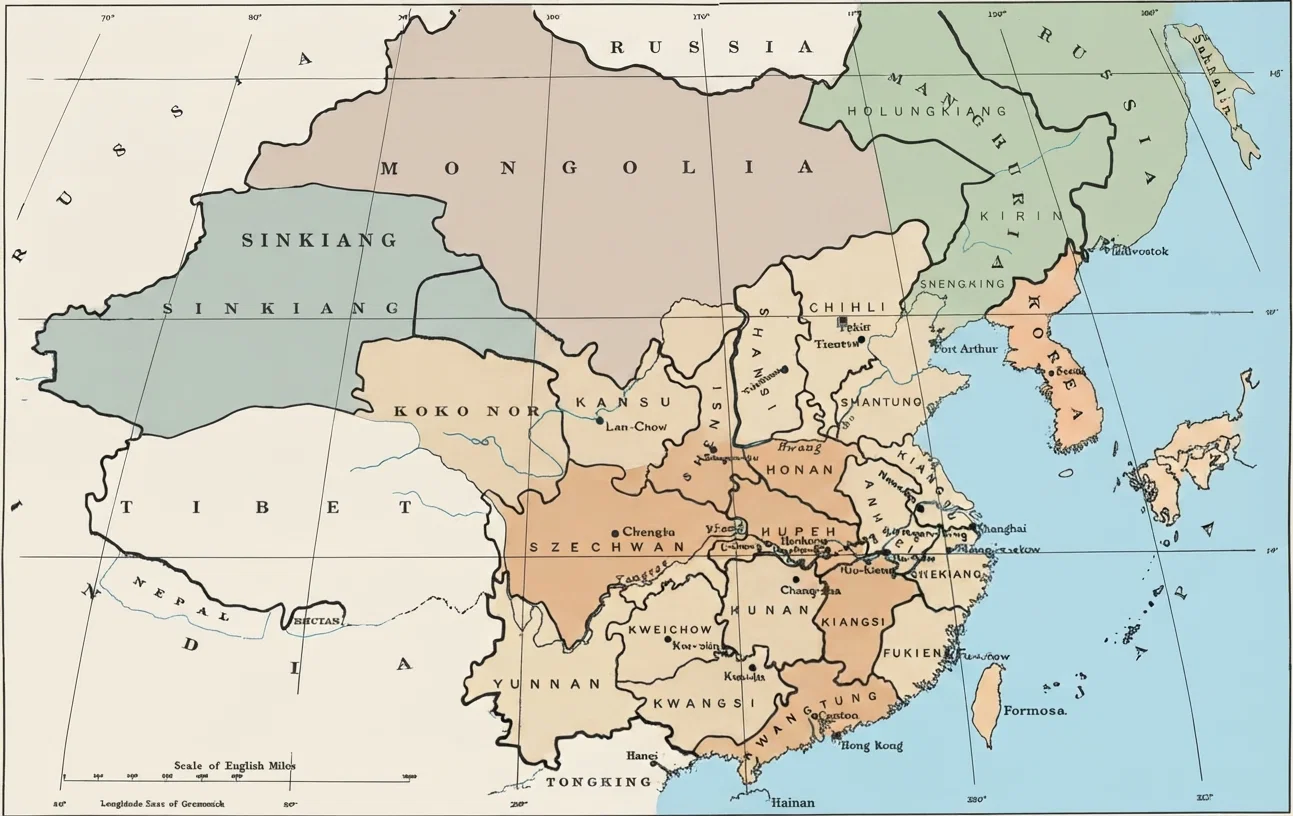
A map of China, showing the various provinces and many of the leading cities and centers of revolution. The Yang-tse River divides China into two parts, north and south. It was in the vicinity of Hankow, in the province of Hupeh, in the center of the great Yang-tse Valley, that the revolution first assumed formidable proportions. Pekin, it will be seen, is in the far north; Canton, another large city, 1,200 miles directly south.
Even so, only more mighty and effective is our Lord, who is able to save every soul stranded on the shoals of sin.
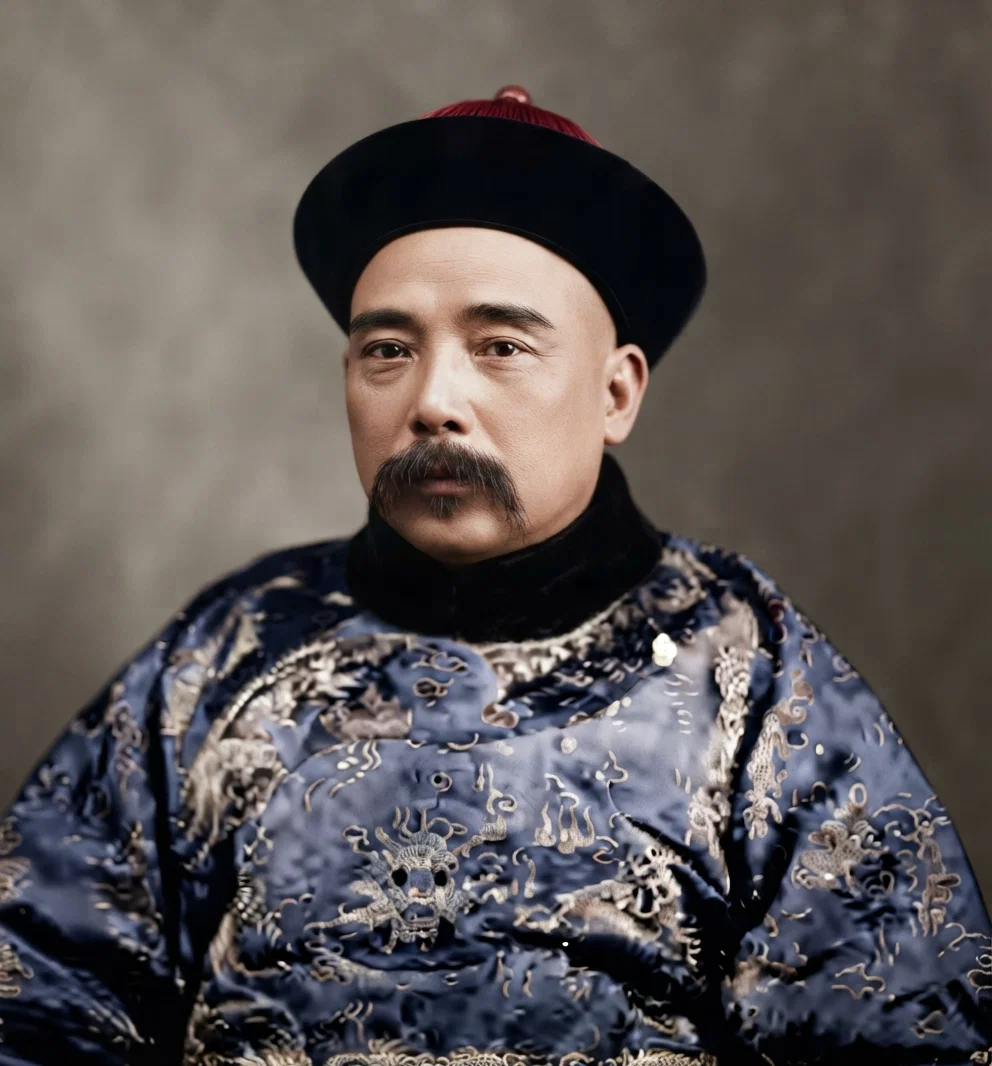
General YUAN SHI KAI, commander of the new imperial Chinese army, who was recalled from banishment, and who is largely responsible for concessions made by the government to the revolutionists. Great pressure is now made upon him to become premier of China, but he has not yet accepted.
From the latest photograph of the five-year-old baby emperor, PU-YI, of China, whose dynasty seems irretrievably doomed
The Chinese Revolution
By Editor
HIGH authorities in the Chinese revolutionary government, such as Wu Ting Fang, who was at one time Chinese minister to the United States, affirm that the only hope of permanent peace in China is a properly organized republic. It is claimed that the repeated massacres of the imperialists and their continued failure to keep their promises have aroused such a feeling that the only thing that will be accepted will be their complete overthrow.
It is stated that ten provinces have already severed themselves from the throne of the Manchus, and that with but very little effort. This shows that the sentiment of revolt was deep-seated, and that it will be a practical impossibility for the throne to win back these rebels to its tyrannizing and brutally incompetent rule. Thirteen vessels of the imperial fleet went over to the revolutionists on the morning of November 14, and this is another one of the evidences that show how rapidly and strongly the revolution is spreading.
Yuan Shi Kai is looked upon by the imperialists as their last hope, and he is making strong efforts to save the throne. It looks now as if he were trying to bring in complications that will lead the foreign powers to intervene. The November Boxer indemnity has not been paid, and the December indemnity will soon be defaulted. This is causing some uneasiness among the powers; and it is believed that if the imperialists should succeed in recovering the five provinces immediately surrounding the capital, they would still not be able to reorganize their financial administration until other debts will be in arrears. These and other considerations are already causing the powers interested to discuss the idea of intervention.
China is certainly in the midst of a mighty and a phenomenal struggle, and it is impossible to predict what will take place within her borders during the next two or three weeks. But whatever may be the outcome, we believe that when the difficulty is settled China will be freer and more open to the advancements of civilization than ever before. If the Manchus succeed in holding the throne, they will certainly have to be more liberal and free in their administration of government.
Soil Toxins and Plant Growth
Through scientific research, men are coming to believe that it is not the existence of plant food in soils that makes them grow sterile, or unfertile, but that it is toxin, or plant poison, present in the soils, and that the use of manure, or fertilizers, is not so much to supply nutrients for the plants as it is to throw out of action some of the poisons. Fineness of the soil is a very important consideration also. Sour soils, it is thought, may be due to toxin substances. The investigations that are going on have certainly upset some of the old theories, but we are not given a new one yet that is satisfactory.
The Roman Catholic Church and the Law
PROTESTANTS and others who are loath to admit that there is no command in the Bible for observing Sunday, will be forcibly reminded by a recent motu proprio, or encyclical, of Pope Pius X, that the pope and the Catholic Church are the only authority for Sunday observance. This encyclical bears date of July 2, and is printed in full in the Rome, a semi-official Catholic paper published in the city whose name it bears. The new law provides for the Catholics of the world eight "days of obligation," when all who recognize the Roman see as the head of the church must cease from labor and hear mass. These days are in addition to Sunday, which the encyclical especially provides shall remain a day of rest and the hearing of mass. It is as follows:
DE DIEBUS FESTIS
PIUS PP. X.
"Motu Proprio"
The Roman Pontiffs, supreme custodians and moderators of ecclesiastical discipline, have always been accustomed to benignantly relax the laws of the Sacred Canons as often as the good of the Christian people counselled it. We also, as We have before now considered it wise that other matters should be changed, on account of the changed conditions of the times and of civil society, so likewise at the present time We think it Our duty, considering the special circumstances of Our age, to introduce some opportune modifications in the Ecclesiastical Law as to the observance of Feast days of precept. For men to-day traverse with marvellous rapidity the greatest distances by land and sea, and through wider facilities for travelling find readier access to those nations where the number of Feast days of precept is less. Also increased commerce and the additional demands of business seem to suffer loss from the delays caused by frequent Feast days. Finally the daily increasing cost of the necessaries of life makes it additionally desirable that the servile work of those who gain their living by the day may not be too often interrupted.
For such reasons repeated petitions, particularly in these later times, have been made to the Holy See that the number of Feast days of precept be diminished.
Having all these things present in Our mind, it has seemed to Us, who have at heart the well-being of the Christian people, a counsel in the highest degree opportune to diminish the number of Feast days declared by the Church to be of precept.
Wherefore by Motu Proprio and after mature deliberation, having heard the counsel of Our Venerable Brothers the Cardinals of Holy Roman Church who are charged with the codification of Ecclesiastical law, we prescribe with regard to Feast days as follows:
I. The ecclesiastical precept of hearing Holy Mass and of abstaining from servile work remains in force only for the following days: All and every Sunday, the Feast of the Nativity, of the Circumcision, of the Epiphany and of the Ascension of Our Lord Jesus Christ; of the Immaculate Conception and of the Assumption of Blessed Mary Mother of God; of the Holy Apostles Peter and Paul; and finally of All Saints. [Boldface ours throughout.]
II. The Feasts of Saint Joseph, Spouse of the Blessed Virgin Mary, and of the Nativity of Saint John Baptist, both with Octave, shall be celebrated as in their proper place; the first, on the Sunday following the nineteenth day of March, the Feast remaining fixed on the nineteenth day of March if that day falls on a Sunday; the other on the Sunday preceding the Feast of the Holy Apostles Peter and Paul. The Feast, too, of Corpus Christi, equally with privileged Octave, shall be celebrated, as in its proper place, on the Sunday after the Most Holy Trinity, the Feast of the Sacred Heart of Jesus remaining attached to the Friday within the Octave.
III. To the ecclesiastical precept spoken of above the Feasts of Patrons shall not be subject. Ordinaries, however, may transfer the solemn celebration of them to the Sunday immediately following.
IV. If in any place any one of the Feasts indicated has been legitimately abolished or transferred, let nothing be done without consultation with the Apostolic See. But if in any nation or region the Bishops deem it right to preserve any one of the Feasts abrogated, let them refer it to the Holy See.
V. If, however, with any one of the Feasts which We wish preserved there should coincide a day consecrated to abstinence or fasting, We grant the same dispensation also for Feasts of Patrons abolished by this law of Ours, should it happen that they be celebrated solemnly and with a large attendance of the people.
In giving this new proof of Apostolic solicitude We nourish the certain hope that all the faithful, even on these days which we now remove from the number of those of strict precept, will no less than before show testimony of their piety towards God and of their veneration for the Saints, and that on the other Feasts which are preserved by the Church they will care with greater diligence than before for the observance of the precept.
All things whatsoever even such as require special mention to the contrary notwithstanding.
Given at Rome at Saint Peter's on the second day of July, 1911, in the eighth year of our Pontificate.
PIUS PP. X.
NOTE.—This translation of the papal decree was published in "Rome," a weekly paper published at Rome, Italy, issue of July 15, 1911.
Catholics of the United States now observe six "days of obligation" every year in addition to Sundays. The two new ones imposed by Pope Pius X are the feast of St. Peter and St. Paul, and the feast of Epiphany. In some European countries loyal Catholics have been required to observe as many as twenty-five days a year in addition to every first day, which means, of course, one day every two weeks. Working people have found this burdensome. The pope declares it to be his object to ease the burden, as he says repeated petitions that he do so have been made to him.
This is a step on the part of the pope toward the unification of Catholic law for the world. He says he has taken it after mature deliberation, and after having consulted with the cardinals charged with the codification of ecclesiastical law.
Truly, it is difficult for man to improve upon God's law, which requires that he rest only upon the seventh day of the week, Saturday. This day God set apart in Eden as the Sabbath for man; and God's law, never having been changed or abrogated, still requires men to keep it sacred.
The new ecclesiastical law becomes operative in America by being transmitted by the pope to Archbishop Falconio, the apostolic delegate at Washington, D. C. He in turn communicates it to the archbishops of the country, they send it to the bishops, the bishops to the priests, and the priests announce it from the pulpits.
The phrase providing that the precept of "abstaining from servile work" remains in force only for the days named by the pope, not only commands the observance of the feast-days, but teaches that God's holy law, commanding the observance of the Sabbath, need not be obeyed. Not only this, but in placing upon men the obligation to keep Sunday and the other feast-days, the Papacy requires that they abstain only from "servile work," while God's law requires that on His Sabbath men cease from all their work, whether of hand or mind.
This latest law of the pope is another evidence, added to that already at hand, that the Catholic system, with the Roman see at its head, has thought "to change times and laws," as the prophet Daniel was shown in vision 2,500 years ago it would do. Dan. 7:25.
Jehovah's Sabbath Law, as Written on Two Stone Tablets at Sinai, After Having Been Given to Man in Eden
Remember the Sabbath day, to keep it holy. Six days shalt thou labor, and do all thy work; but the seventh day is a Sabbath unto Jehovah thy God: in it thou shalt not do any work, thou, nor thy son, nor thy daughter, thy man servant, nor thy maid servant, nor thy cattle, nor thy stranger that is within thy gates: for in six days Jehovah made heaven and earth, the sea, and all that in them is, and rested the seventh day: . . . wherefore Jehovah blessed the Sabbath day, and hallowed it. Ex. 20:8-11, A.R.V.
The Apostle Paul's Comment upon the Law
Do we then make void the law through faith? God forbid: yea, we establish the law. Rom. 3:31.
Christ's Comment on the Law
Think not that I am come to destroy the law, or the prophets: I am not come to destroy, but to fulfil. Matt. 5:17.
Verily, verily, I say unto you, He that entereth not by the door into the sheepfold, but climbeth up some other way, the same is a thief and a robber. . . . I am the door: by Me if any man enter in, he shall be saved, and shall go in and out, and find pasture. John 10:1, 9.
Latest Encyclic of Pope Pius X, Commanding the World to Rest on Sundays, and on Eight Feast-Days a Year. This Encyclic Bears Date of July 2, 1911.
The ecclesiastical precept of hearing Holy Mass and of abstaining from servile work remains in force only for the following days:
All and every Sunday, the Feast of the Nativity, of the Circumcision, of the Epiphany and of the Ascension of Our Lord Jesus Christ; of the Immaculate Conception and of the Assumption of Blessed Mary Mother of God; of the Holy Apostles Peter and Paul; and finally of All Saints.
The Feasts of Saint Joseph, Spouse of the Blessed Virgin Mary, and of the Nativity of Saint John Baptist, both with Octave, shall be celebrated as in their proper place; the first, on the Sunday following the nineteenth day of March, the Feast remaining fixed on the nineteenth day of March if that day falls on a Sunday; the other on the Sunday preceding the Feast of the Holy Apostles Peter and Paul; and then at the Corpus Christi, equally with privileged Octave, shall be celebrated as in its proper place, on the Sunday after the Most Holy Trinity, the Feast of the Sacred Heart of Jesus remaining attached to the Friday within the Octave.
FRANCISCO.
The Vatican maintains a small army of several hundred men, and they have been armed with the oldest type of guns, Cardinal Merry Del Val denominating them "flintlocks" and "halberds of the time of Michelangelo." A despatch says that "a large consignment of rifles, automatic pistols, and ammunition of the modern type has just reached the Vatican after some trouble at the frontier." These modern implements, according to the cardinal secretary of State, are to replace the obsolete guns with which the Swiss gendarmes have hitherto been armed. How will those professing the name of Christ harmonize such actions with the following Scripture verses, from the writings of one of the greatest of the apostles of Christ?—"For though we walk in the flesh, we do not war after the flesh: (for the weapons of our warfare are not carnal, but mighty through God in the pulling down of strongholds.)" 2 Cor. 10:3, 4. And again the words of the Master?—"Put up again thy sword into his place: for all they that take the sword shall perish with the sword." Matt. 26:52.
The Lack of Justice
JUSTICE ALBERT G. BURNETT of the Appellate Court of California recently made an address before the California Bar Association in which he delivered the following sentences:
"There is something radically wrong with our administration of the law when it takes several months to impanel a jury." "The amount of time we consume in the actual trial of cases, especially criminal cases, is really scandalous."
The foregoing sentences are but the voicing of what many eminent jurists as well as a host of others are saying everywhere. The lack of justice through the influence of money and political wire-pulling is seen and deplored on all sides. In connection with these facts and utterances consider the following words of one of the worthy ancients:
We roar all like bears, and mourn sore like doves: we look for judgment, but there is none; for salvation, but it is far off from us. For our transgressions are multiplied before Thee, and our sins testify against us: for our transgressions are with us; and as for our iniquities, we know them; in transgressing and lying against the Lord, and departing away from our God, speaking oppression and revolt, conceiving and uttering from the heart words of falsehood. And judgment is turned away backward, and justice standeth afar off: for truth is fallen in the street, and equity can not enter. Yea, truth faileth; and he that departeth from evil maketh himself a prey: and the Lord saw it, and it displeased Him that there was no judgment. And He saw that there was no man, and wondered that there was no intercessor: therefore His arm brought salvation unto Him: and His righteousness, it sustained Him. For He put on righteousness as a breastplate, and an helmet of salvation upon His head; and He put on the garments of vengeance for clothing, and was clad with zeal as a cloak. According to their deeds, accordingly He will repay, fury to His adversaries, recompense to His enemies; to the islands He will repay recompense. So shall they fear the name of the Lord from the west, and His glory from the rising of the sun. When the enemy shall come in like a flood, the Spirit of the Lord shall lift up a standard against him. Isa. 59:11-19.
It will be observed that the foregoing scripture applies at a time when there is a general lack of justice. "Truth is fallen in the street, and equity can not enter." The Lord sees it, "and it displeased Him that there was no judgment." He wonders that there is no intercessor to take the part of the ones who are oppressed, or to plead for justice to be meted out to those who are trailing equity in the dust of the street. Then the Lord arises in His strength to execute the justice that men have refused.
The Lord, on more than one occasion, has meted out justice in the form of righteous destructive judgments, and the times in which we live are calling for Him to act again. Sneer at this if you must; but watch the course of events, and think.
Papal Appointments and Prophecy
Archbishop Farley of New York, and Monsignor Falconio, sailed from New York City for Rome on November 14 to receive from the pope their commissions as cardinals. Mr. Farley is said to be taking with him one of the finest cardinal's rings in the world. It is a present from one of his intimate friends. The blue sapphire is always used for the ring of a cardinal, altho his robes are red. Mr. Farley will return a cardinal to this country, but Falconio will remain in Italy. Monsignor Canali, under-secretary of State at the Vatican, has been appointed to succeed Monsignor Falconio as apostolic delegate to the United States. Items of this sort, showing as they do the activities of the Papacy, are of particular interest to all those who are studying the prophecies that show that the Papacy is to be fully restored as a great oppressive world power in the days that lie just before us.
HOME AND FIRESIDE
By Clara Edna Rosencrans
Wash-Day
It was wash-day at the "Home." Or rather it was a succession of wash-days; for when our family is very large we divide our washing, doing the white clothes on one day and the colored ones the next.
All day, since early morning, the boiler had steamed on the stove. The soiled clothes lay in windrows on the laundry floor, while the big basket slowly filled with those that had been cleansed, as the boys turned the washer and wrung them out.
My back began to ache, as I leaned over the tub scrubbing the dirty little petticoats and overalls; for we had had a wet spell, and our little folks show a remarkable fondness for sitting down in mud puddles and generally demoralizing their wardrobes.
And as I worked, I began as usual to moralize on the spiritual significance of wash-day.
These precious children—how we love them! and yet what a care they are! How often, when they have been bathed, and dressed throughout in pure white garments, they come to me with dirty hands and faces, the immaculate little garments soiled and stained, and say with bitter tears, "I got my clean clothes all dirty"! Over and over the tiny rosy faces and hands must be washed, over and over the dresses must go through the cleansing process.
And I thought, How like the work of our High Priest in the heavenly sanctuary! Our Lord gives us, when we come to Him, cleansing from sin, and a robe of spotless purity. He tells us, just as we tell the children, not to go near the miry spots, which will defile our white garments, and take away that personal purity without which no man shall see God.
And we say "Yes," just as the children do; "I'll keep clean. I got dirty before, but I'll be more careful this time."
And we think about it all the time for a while. "The Lord Jesus has given me a clean dress," we keep repeating, "and I must keep out of the dirt."
But again, like the children, we forget! A little way beyond us lies a path where flowers bloom, and where light and shadow alternate in pleasing contrast. It is beautiful there, and we long to pluck the bright flowers, and to breathe their rich perfume.
But between us and the beautiful vision lies a slimy pool. Its dark, fetid waters exhale a foul odor; but we do not even see it, so intent are we upon the flowers, so fair is that pathway that lies beyond.
And like the children, we rush forward to gain the prize, when, alas! before we are aware, our feet sink in the mire, and it is only by painful effort that we drag ourselves out, to find that the purity and whiteness of our robes is gone. And we have to return to our sin-bearing, sin-pardoning Saviour, with bitter tears of repentance, and a knowledge of our own unworthiness, our weakness and failure, that we never had before.
Then we say: "Lord, I didn't mean to get dirty. I was reaching for the flowers, and didn't see the mud."
And as He lifts us and wipes our falling tears, His kind voice trembles as it murmurs: "Ah, child, you do not realize what it cost Me to wash your clothes. But come and get clean ones, and be more careful next time." Then He takes away our filthy garments, and gives us change of raiment, and we come forth from the presence-chamber of this Mighty One dressed in a robe of spotless purity, clothed, too, with an experience that will go far toward helping us not to fall again.
We often wonder why our Lord lets us fall. I wonder would we ever know our own inability to stand alone, if we did not fall.
What a world of hard work it would save us, if, having washed our clothes, they would stay clean! What a world of sorrow it would save our Lord, if, having washed us, we would sin no more! And as each soiled and discolored piece of clothing that is thrown into the closet adds to the labor of wash-day, and takes a longer time to finish, so each sin laid at Jesus' feet will delay yet longer that glorious consummation which has been the hope of the ages.
If our sins keep on piling up, how can the sanctuary ever be cleansed? If the washing kept on coming, when would it ever be done?
Brethren and sisters, we must put away from us this constant sinning and repenting. We must find a consecration that lasts. That reminds me of a conversation I once held with a good old minister, now fallen asleep. He was talking to me about personal holiness. "But, Brother W——," I said, "how am I going to get a consecration that lasts? I give myself to the Lord, and lay all on the altar, and I leave it there for a week or a month. Then I go back and take the gift away."
"O, my!" he said. "You must leave it there. You haven't made a full surrender, my sister. The altar sanctifies the gift. After you place it on the altar, it is yours no longer. You must pile yourself and all you have on the altar—and leave it there."
The homely phraseology of my good old friend stuck in my mind.
We give ourselves to the Lord, but we don't "pile everything on the altar." We go to Jesus for cleansing; but we keep back some little thing which we think too small or insignificant to be given into His hands, and so we lose the blessing.
O, we must be pure, clean and white in our inmost thought, if we would see God. No superficial cleansing, to be done over and over every week, like the family washing, will answer; for the account may be closed up at any time, and our hearts be left attainted and uncleansed.
Sad would it be for us if our gentle, long-suffering Master should come to the end of that wondrous patience which has been the marvel of men and angels, and should proclaim, "He that is filthy, let him be filthy still."
O, can we afford to risk the inevitable doom?