PERHAPS you would like to go with me on a trip to our outschools on the Chiromo plains, which I visited after a phenomenal rainstorm. Accompanied by five carriers, we leave the mission. We ride on donkeys to the top of Mtumbulendi, and on foot descend its two thousand feet to the plain, from which an eight-mile walk brings us to the rest house at Masenjere at about five o'clock in the afternoon. The road is very heavy with mud and tall grass. We see that the Masenjere stream has uprooted a huge fig tree, and has destroyed part of the native gardens.
Some natives from Chiromo have arrived before us, so we have to share with them the only reed hut left. None of us sleep much, for the mosquitoes are terrible. All night long the boys are slapping themselves, or occasionally one rubs his legs to drive off the bloodthirsty insects.
We are up early next morning, and push our way through tall grass or wade through mud another eight miles to the Muona school. Although the school is standing and can boast of being on the only dry spot, it is plainly to be seen that the insignificant Thangadzi stream has been swollen to an angry torrent, sweeping corn gardens out of existence and destroying long rows of bananas and plantains, which before lined the high banks. Part of the stream left the course just above the Chiromo road, and took a short cut to the lower plain through native gardens. On a small island recently formed, we find Lemons (teacher) and his family, with a big mtondo tree at hand in which they could have climbed had the water risen much higher. It is impossible for us to go straight across the plain, there being from two to sixteen feet of water on the path: so we must go around to Chikhonji, on the Ruo River, and then follow the railway to Chiromo, thence across the Shire by canoe to the Chisi school. At Chikhonji we tie together a number of reeds to measure the height of débris in a tree, and find it thirty-two feet above the ordinary high-water mark.
Some three miles of railway embankment above Chiromo and several miles below, have suffered severely. In some places quite large streams are rushing through to the lower plains, leaving the railway track hanging like suspension bridges.
At Chiromo a number of trees have been uprooted, several Indian stores ruined, and a government official's boat swamped in the main street. Several inches of water invaded the customs offices, which were supposed to be above flood level. Chiromo must be unhealthful just now, with quantities of decaying débris and mud everywhere.
The Chisi school was leveled, and several loads of corn for the teachers were destroyed. Wilson (teacher) and his family took refuge in a tree until taken off by a canoe. The headman and his elders have since rebuilt the school, and a goodly number are attending again. The river has deposited over a foot of mud on the island near the school.
The next morning we go downstream to see how Josiah (teacher) has fared at the Pokera school, and Lamuel (teacher) at Kadamera village. Lamuel's school has a coating of mud to remind one of the flood. Josiah has lost a promising crop of corn, but has a good school, thirty pupils attending on an average. The return journey of seven miles by canoe takes us several hours, owing to the strong current still running.
Next morning we take to the canoe again to reach Harrison's school, at Dambanye. For nearly five hours we punt or paddle through flooded gardens or villages. In some cases the people have returned, and by making hammocks to sleep in are trying to take up the thread of life again with water more than ankle deep running through the village.
Arriving at Dambanye, we find the teacher safe, and settle down to enjoy a needed rest till Sunday morning. Here the water came just up to the school, leaving most of the village dry, but spoiled almost all the gardens. The school is in a flourishing condition. Early Sabbath morning a goodly number gather to hear the word, and then the boys go to other villages to tell the glad tidings.
In the daytime one is struck with the thousands of different-colored dragon flies that flit to and fro in the hot sun. As the sun sets, something more than imagination is struck by the innumerable proboscides that attack one from all quarters; even the net does not keep all the mosquitoes out. At night, with the help of the boys and torches of grass, I kill all that are in the net, but in the morning I find a few fat ones that had evidently regaled themselves during the night.
Saturday night, after more than an hour's attempt to sleep, sounds come from the middle of the village that remind us of the “Punch and Judy show” of childhood days, but with some deep-toned string instrument accompaniment. We listen for a long time to these amusing sounds, which produce roars of laughter from the crowd gathered to enjoy the fun. When I can make myself heard, I call to the boys to know what it is. The culprit is the very tall old man who greeted me so effusively when I arrived in the village. At my request to know how he did it, Fambi sits down on the court near my bed and honors me with two selections. The first represents chickens in the village, the second is descriptive of war with the Portuguese, being quite an able imitation of the whistle of bullets and the buzz of small cannon shells. He uses the ngoli, which is an instrument of one string, the body a gourd with a bent stick passed through it, to which the string is fastened. It is played with a bow strung with a strip of palm leaf. The nembe is a piece of reed about a foot long, with a mouthpiece cut out of the center, and each end covered with a spider web that resembles parchment. A bunch of feathers tied loosely on each end, and a string to hold the instrument close to the mouth, completes the outfit with which Fambi delights the villagers wherever he deigns to stay.
Sunday we put our loads into the dugout, clamber in ourselves, and start across the country, where, the last time I visited these schools, I saw herds of buffalo and water buck, reedbuck, and a tiger cat.
We stop at Muona for the boys to get food. I improve the time by exhorting the headmen to send their children to school to learn. We are all glad to climb the hills again to get out of reach of the swamp mosquitoes, and to get where cool breezes temper “Old Sol's” rays.
Tanganyika Plateau
THE readers of the REVIEW will be interested to know how Brother and Sister Joel Rogers are getting along up on the Tanganyika Plateau, where they recently pioneered to establish a mission. In a letter to W. B. White, Sister Rogers gives their recent experiences:—
“It is a far way back to the day when I saw you at Malamulo Mission. How little we thought what was coming! Doubtless had we had the least sign of what was before us, I should not have left for the north. Perhaps it is just as well we did not know, and this is just what the Lord wanted me to do. But we have been hindered in every move since the war began, and have risen up or sat down just according to the dictates of the boma [the native governor]. The very least a civilian can do is to keep out from under foot of the harassed officials. In the meantime we are doing our best on the language, which may prove a blessing to us later on.
“We are living in a wattle-and-daub hut, built round, with dirt floors and thatch roof, and are thankful for a place of shelter during this waiting time. The roof leaked like a sieve, and it was a daily struggle to cover with canvas the few garments and books we have. The boma lady needed some dresses made, and I was glad to assist her, as she has no idea about sewing; so she was here and saw our struggle to keep from being flooded out.12Her kindly offices resulted in the boma himself sending down a lot of grass and some government laborers to thatch the roof. Now we have only the calico windows to take care of in time of rain. When they are shut, it comes through only moderately, and we can control it, but the room is so dark that we can see only the indistinct outline of objects. “Ever since coming here I have been preparing our food on a sheet of iron laid on bricks, and swallowing smoke enough in the operation to make me as brown inside as it has made me outside. All solid foods like bread have to be baked in a three-legged pot, with most deplorable results a good part of the time. Food is very expensive, oatmeal being two shillings and sixpence a pound, and sugar a shilling.
Medem Photo Service
“O, I shall be so glad when this pressure lets up and our mission site is definitely allotted to us, and our real mission work begins! It is so hard just to wait. As our temporary quarters are in the station of another society, of course we can carry on neither a school nor village work, but can do some hospital work. We have planted gardens at every possible spot where ground is available, and hope to get food from them in time.
“Fifteen hundred troops are being withdrawn from Abercorn, en route for the Kongo. They are Belgian troops who were sent through here for Aberdeen weeks ago. We do not know why they are returning, but we are hoping and hoping that danger of further outbreak is past.”
Fled Kurd Massacres
[The following article, published in the Washington Post of April 4, will be read with interest in connection with the letter from Brother Oster.—Ed.]
Fled Kurd Massacres
Mrs. F. W. Oster Tells of Escape in Letter to Rutland, Vt.
Village of Miandoab Sacked
Missionary Family of Seventh-Day Adventists Reaches Tabriz, After Witnessing Horrors — Children Thrown Into Icy Rivers and Women Barbarously Treated — Refugees Barefooted in Snow.
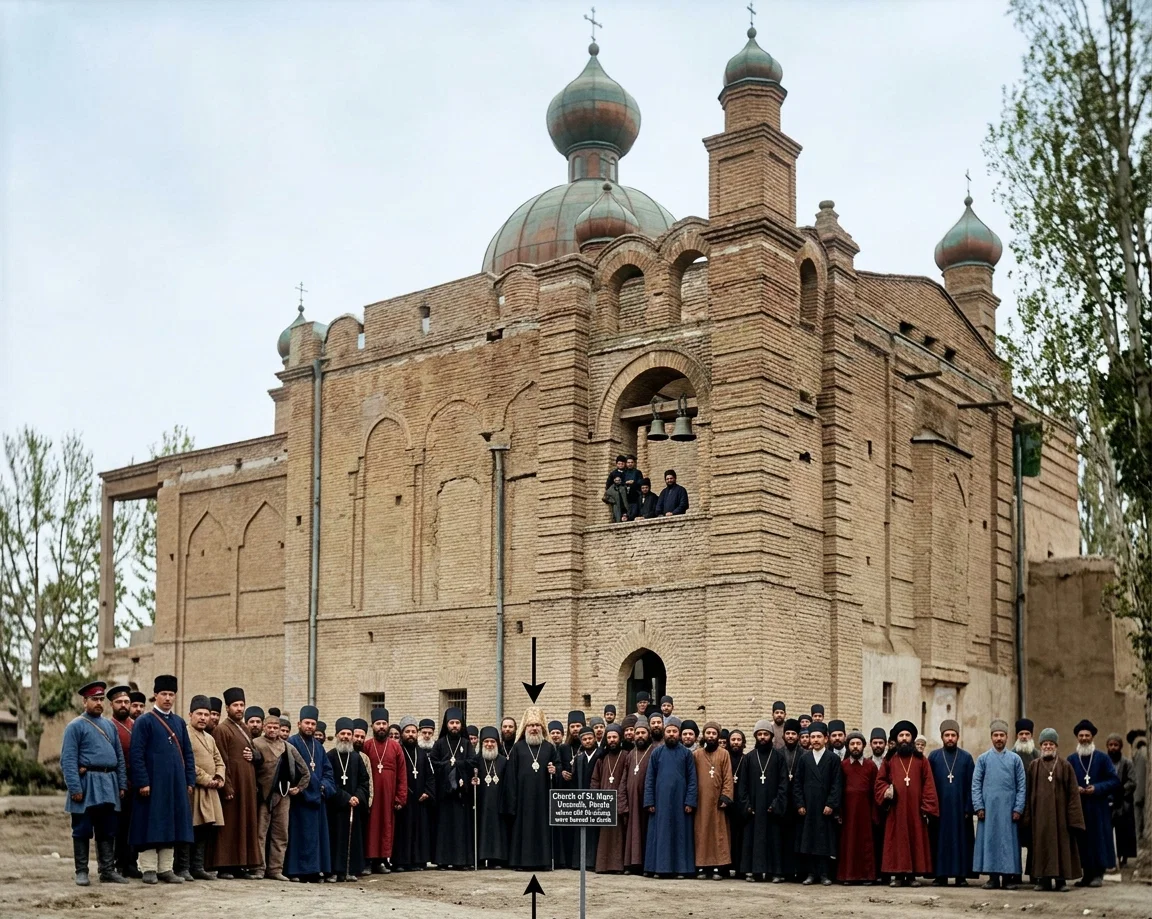
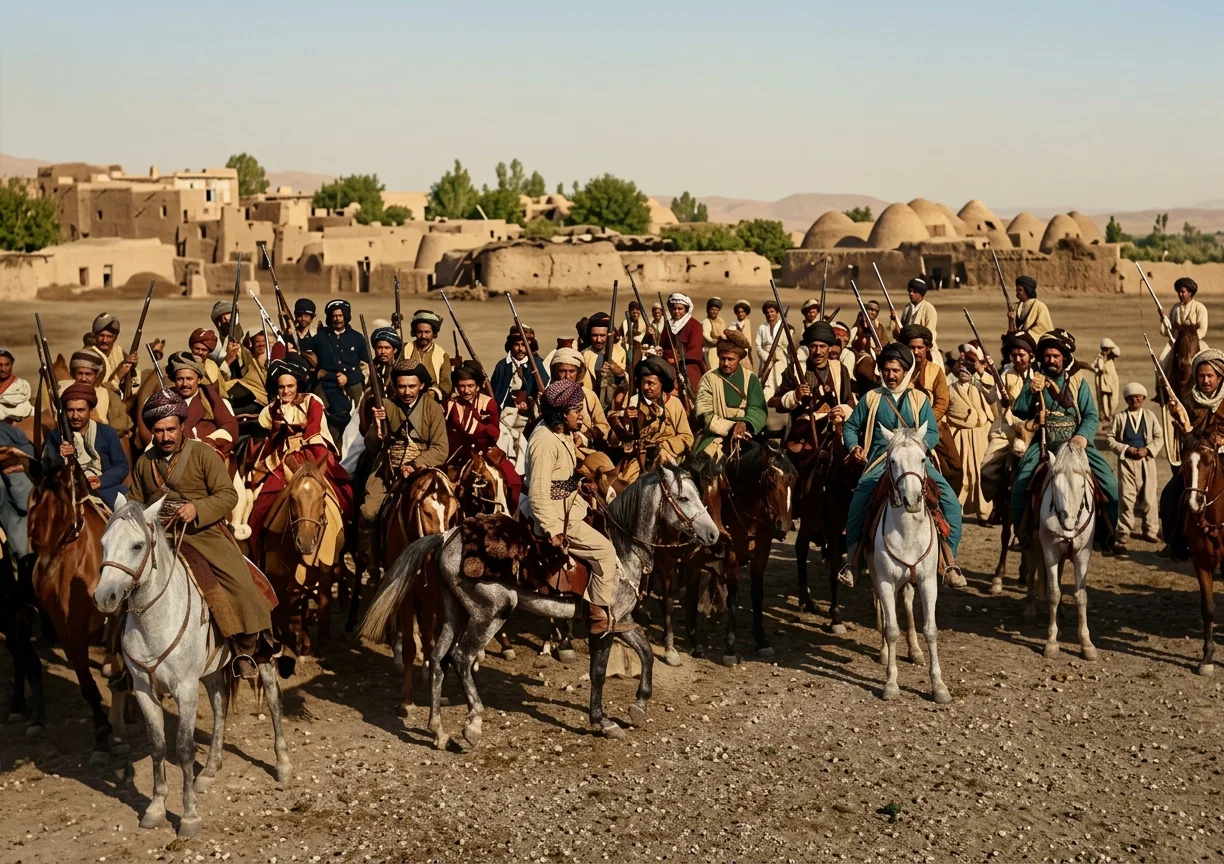
RUTLAND, VT., APRIL 3.—The flight of a missionary family from attacks of the Kurds in the district of Azerbaijan, Persia, and some of the fighting between Russians and the native tribes in that country are described in a letter just received here from Mrs. Florence White Oster, wife of a Seventh-day Adventist missionary.
How Miandoab Was Sacked
Mrs. Oster, writing from Tabriz, tells of the sacking and burning of the village of Miandoab by the Kurds, and of her subsequent flight with her husband and their child from Maragha when the tribesmen threatened that place.
“Children were thrown into icy rivers and women were treated dreadfully during the sacking of Miandoab,” according to the letter, which continues:—
“We left Maragha by night with the Russian army of 8,000 men retreating from Miandoab. I rode the horse with our four-weeks-old baby while Mr. Oster led him. That first night and day I kept the saddle for fourteen hours without a rest.”
Fear Vengeance of Kurds
“We fell off the horse once right in a small stream,” says Mrs. Oster. “A soldier helped us a bit. He thought baby was a bundle of something we did not wish, so he threw her over to one side of the road. She was not injured. Baby seemed to enjoy the ride, and did not care how much she was jolted.
“Just six miles from here, 800 Kurds were killed, 500 taken prisoners, and about 500 escaped. The ground was strewn with their bodies. Because of their defeat we fear they will take vengeance on Maragha. As yet the Russians are not strongly enough reenforced to go down to that place.
“We have seen much real suffering. Hundreds of refugees are fleeing through the snow, barefooted. Many are dying from starvation. We are kindly cared for here by the Presbyterian missionaries from America. We are not yet out of danger, for the Turks are stronger near13the boundary, and with the Kurds to help, we surely have something to fear. ‘About 10,000 Russians are here, but we do not know when they will be called away.’”
Medem Photo Service
Recent Experiences in Persia
By F. F. OSTER
F. F. OSTER
Soon after the war broke out, I visited Urumiah, going by horse through Kurdistan. All along the way I preached the message. In Soujbulak I had the privilege of presenting the Eastern Question to the missionaries there. In Urumiah also, the Presbyterian missionaries gave me an evening to present the Eastern Question. They gave good attention. I found Brother Sperling [music director in Russian army] and Sister Sperling, who were baptized at the first of the year, of good courage, and making good progress in spiritual growth. They gave tithes of all their substance, and without my saying a word about our financial condition or about our being cut off from the treasury, gave a good sum in advance tithes.
A few days afterwards it was reported that all the Russian soldiers were to leave Persia, and Sister Sperling was ordered to leave for Russia at once. Even the Russian consul was preparing to leave for Tabriz. All their freight and baggage had been sent on ahead. Brother Sperling at once went to the Russian bank to withdraw all his money, several hundred dollars. It was none too early, for within an hour the bank was closed. War with Turkey seemed imminent. Every one feared a Kurdish raid. Stores were closed. Merchants hid their goods or stored them away, and many families fled to Tabriz and Russia. I took Sister Sperling and the children to Djulfa, on the Russian border, as Brother Sperling was obliged to remain in Urumiah. When I reached Tabriz, I found it quiet.
January 5 I managed to buy a horse, so fled by night with Mrs. Oster and baby (four weeks old) from Maragha to Tabriz. Kurds plundered Miandoab and Urumiah, killing many Christians and Moslems. They are coming here in a day or two. Sister Staubert and we are staying at the American mission, where we are being provided for. All is well. We left everything we have in Maragha. The Kurds entered there the next day.
Boast Not Thyself of Tomorrow
“BOAST not thyself of tomorrow; for thou knowest not what a day may bring forth.”
Islam
By P. H. Briggs
P. H. BRIGGS
According to Moslem tradition and belief, in the mysterious and isolated city of Mecca, Arabia, in April of A. D. 567 there was born to Hashim a son. Hashim was of the illustrious tribe of Koreish, the great benefactor of Mecca and the guardian of the Kaaba, which latter was an honor not conferred except upon those belonging to the most distinguished tribes and families. Abdul-Muttalib succeeded to these honors. He had many children, and Abdallah was the youngest and most beloved. He was remarkable for personal beauty, and possessed the secret of winning human friendship. He married Amina, of the tribe of Koreish, and on the night of the wedding, we are told, two hundred maidens died of broken hearts.
Mohammed was the only son born to these aristocratic parents, and his father died a few months after, leaving only five camels, a few sheep, and a slave. Legends of the followers of Mohammed illustrate their reverence for him by their assertions that on the moment of his coming into the world, he raised his eyes toward heaven and exclaimed, “God is great! There is no god but God, and I am his prophet.”
After his father’s death, his mother gave him into the care of a shepherdess, who nursed him in the mountains for two years, at the end of which time she returned him because he frequently had epileptic fits. His mother died when he was six years old, and his grandfather adopted him. On Abdul-Muttalib’s death, an uncle, Abu Talib, took the lad, brought him up, and remained his closest companion and protector throughout his life. Even in his youth he carried religious contemplation to an extreme, and it is believed that his epilepsy had much to do with this morbid tendency of his character. When he was twenty-five years old, he was employed by a rich widow, Kadija, also of the tribe of Koreish. He displayed such good judgment and business qualities in caring for her caravans and commercial interests, that, in spite of the fact that she was already twice widowed, she married him. They lived in faithful and happy wedlock until her death.
With this marriage, Mohammed acquired great wealth, which afforded him leisure to indulge the original bias of his mind; his old habits of contemplation were revived, and he spent much time in religious speculation. The desire to abolish idols and substitute a new religion grew upon him until it took his whole attention. It seemed to him that there was great need of a religion which would embody the faith of their forefathers with the simple doctrine of the unity of the Deity. Something had to be done; the time was ripe, and Mohammed stepped into the breach, launching the faith which is generally called by Christians after his name, but by all its followers, the faith of Islam.
When we consider that he believed that the religion of Adam had been repeatedly debased, and almost forgotten at times, but that a succession of prophets was destined to come into the world to restore it from time to time, and bring men’s minds back to God, we can scarcely doubt that he was honest in his convictions and in his purpose when he first undertook the reformation of the world, which he really began at the age of forty years. There is a possibility that his original honesty of purpose may have been lost, however, during the latter periods of his life.
The first convert to Mohammed’s new faith was his wife,—Kadija,—to whom he told the particulars of an interview which he claimed to have had with an angel. As was his custom, he was passing the month of Ramadan in the cave of Mt. Hara, after fasting, prayer, and meditation, when the angel Gabriel appeared to him, displaying a silken cloth on which were written the decrees of God as afterwards promulgated in the Koran. For some time Mohammed confined his revelations to the members of his own family and to his near relatives, but few of whom accepted his works as divine; and those who accepted were laughed at and persecuted until it became necessary for them to hold their meetings in a secret cave near Mecca. Even here they were discovered and attacked by a rabble. At the end of four years his converts numbered only forty.
With the beginning of his public ministry began his serious troubles, as well as his decided victories. After being driven to Medina for his safety, Mohammed gained such popularity that an army enlisted beneath his banners for the purpose of bringing into line all infidels and unbelievers, were it necessary. A long list of religious wars followed, through which, for the most part, the faith of Islam proved itself victorious.
Perhaps the most important event of his life was the promulgation of the “Valedictory Pilgrimage,” which was his last to the city of Mecca. It has been estimated that a throng of 150,000 persons accompanied him there. He preached to them from Mt. Ararat, exhorting them to piety and righteousness. On his return to Medina he shortly fell sick, and declined rapidly until his death. The mosque in which he was buried is today the object of adoration of over 175,000,000 persons. Within five years after Mohammed’s death, his successors had taken his banners across Asia to the Hellespont, and across Africa to Gibraltar.
The religion of Islam is contained in the Koran, the contents of which may be classified under three headings—precepts, history, and admonitions. The history is in a great degree copied from the Hebrew Scriptures. The precepts and admonitions are exhortations to accept the faith of Mohammed, holding out as a reward a heaven filled with every sensual delight. The faith gives God every attribute that Christianity gives, but does not accept Christ as being other than Mohammed was—a prophet from God to man to awaken new ideals of life. The idea that the world is redeemed by Christ’s righteousness, is entirely lost to Mohammedans. Their religion controls Turkey, Syria, Palestine, Arabia, Persia, Asia Minor, Afghanistan, Baluchistan, Turkestan, and the Malay Peninsula. India has more than 57,000,000 Moslems, and China has about 25,000,000.
Ruled over by darkness and superstition, led astray by the deceptions of the great deceiver, this great throng are wandering on toward eternity, without the finger of prophecy to direct, and without the blood of Christ to redeem.
MRS. VINA SHERWOOD-ADAMS
By MRS. VINA SHERWOOD-ADAMS
Our Little Table, and How It Solves Some Home Problems—No. 8
MRS. VINA SHERWOOD-ADAMS
WE have been working on our sewing course now for nearly a year, and plan to complete it by spring. The dollies are not the only means used to foster interest. When the hemming stitches were mastered, we hemmed sheets for doll beds. Later we made the pillow cases. Quilts, which gave much practice in the running stitch, have just been pieced for each bed, and “tying-off day,” when we used pretty pink yarn, was quite a happy feature of our work. The two little beds standing side by side, waiting for the promised dolls, are quite a stimulant to faithful endeavor. (Our beds are homemade, in mission style, but doll beds of all sizes may be purchased.)
About Christmas time a set of new dishes appeared. This called for a neatly hemmed tablecloth and napkins for our little table, and what a grand dinner party is planned when the dollies really arrive! After the dishes grandma’s birthday soon followed, and some kitchen holders, reviewing some stitches and giving added practice in the buttonhole stitch, were made and sent to her with loving thoughts. Handkerchiefs have been hemmed, not mentioning the numerous rips that have been repaired in clothes that will tear, and buttons sewed on that will persist in coming off so frequently.
During the summer vacation we sew two hours a week, but during the school year, to avoid eyestrain, only one hour a week, on the day there is no school. I often try to do some sewing during this same period. The spirit of the work is catching. Even baby has his strip of cloth and sews industriously with a thread fastened to a pinhead.
“Well,” you say, “it must have taken a great deal of your time and attention to teach them.” True, it has; but the satisfaction of knowing that they will not be handicapped as I sometimes have been for lack of experience in sewing, is worth the effort. But more than this, they are already beginning to relieve my sewing basket of some of its contents; and from making doll clothes it will be an easy step for them to cut and fit garments for themselves.
On each birthday the girls learn how to perform some new housekeeping task. One year it was a cake that was made; another year a rice pudding. They already know how to do much of the common cooking. But next year one will make an apron, and the other a simple dress. Lest you gain the impression that all the children look forward to on their birthdays is an extra piece of “work” (though this to them is an anticipated feature, and you know anticipation is a15great stimulus), I will state that they have their little birthday surprises. Sometimes it is a marsh mallow roast in company with little friends, or a trolley ride, gifts, etc. We all have to meet enough bitterness along life’s way, and we need one of these toothsome treats occasionally to help brighten the road.
By alternating lessons on the various subjects, having some come but twice a week, others but twice a month,—“here a little, there a little,”—there is time for common outdoor romping and play, without which no child may have robust health. Let some of the time which children spend aimlessly wandering about the streets or in playing some indoor game in which winning is the chief aim, be profitably employed in learning some of these practical lessons.
Small boys of eight years and under usually enjoy sewing as well as girls. A little boy cousin joined our class, learning such first principles as would be needed by a boy. But of course a boy would not be interested in getting ready for a new doll; so he took a “short-cut,” learning how to sew up a rip in his coat, how to repair a buttonhole, sew on a coat button, patch his trousers. He was interested in learning how to sew a new cover on his ball, and would not object to making some kitchen holders for grandma, or a boy’s work apron, such as carpenters wear, for himself.
I suspect there are many little girls and boys whose mothers are teaching them to sew, but I also fear there are others who feel that their hours are too fully occupied, or for some other reason are allowing their girls to reach womanhood without this necessary training. Each in her lot must do the best she can, ever keeping on the lookout for wiser use of her time, often reviewing her tasks to see if her interests are too deeply “absorbed in the things that perish with the using.” Indeed, the responsibility of child training combined with household duties does sometimes look like a titanic task. Sometimes we become a little blue, and riotous thoughts chase through our minds, and we are tempted to believe that no one appreciates our efforts. A copy of the sweet, comforting words which hang on our kitchen wall may bring sunny skies again:—
“The mother’s work often seems to her an unimportant service. It is a work that is rarely appreciated. Others know little of her many cares and burdens. Her days are occupied with a round of little duties, all calling for patient effort, for self-control, for tact, wisdom, and self-sacrificing love; yet she cannot boast of what she has done as any great achievement. She has only kept things in the home running smoothly; often weary and perplexed, she has tried to speak kindly to the children, to keep them busy and happy, and to guide the little feet in the right path. She feels that she has accomplished nothing. But it is not so. Heavenly angels watch the care-worn mother, noting the burdens she carries day by day. Her name may not have been heard in the world, but it is written in the Lamb’s book of life.
“There is a God above, and the light and glory from his throne rest upon the faithful mother as she tries to educate her children to resist the influence of evil. No other work can equal hers in importance. She has not, like the artist, to paint a form of beauty upon canvas, nor, like the sculptor, to chisel it from marble. She has not, like the author, to embody a noble thought in words of power, nor, like the musician, to express a beautiful sentiment in melody. It is hers, with the help of God, to develop in a human soul the likeness of the divine.”—“Ministry of Healing,” pages 377, 378.
Battle Creek, Mich.
Training My Boys
By Jane Calhoun
NEITHER of the other boys had such fights with their tempers as was waged by the youngest. At first I punished him severely when he gave way to fits of rage, but I soon learned that this did no good. Unlike Richard, who was heartbroken at the stroke of a whip, because of the pain it gave him to be thus punished by one whom he adored as he did his mother, Jimmie hardened under physical chastisement. After I was persuaded of this, I changed my tactics completely.
In his calm moments I talked with him of his fault, pointed out to him to what terrible results it might lead, and encouraged him to fight his temper as he would a present and active enemy. When one of his fits of rage came upon him, I quietly went out of the room, shut the door, and left him to battle it out by himself. All improvement I commended warmly, and after a failure I tried to build up for success next time. By the time he was ten years old, his passionate outbreaks were practically things of the past, but they had taught him that his temper was something to be constantly watched and guarded, and that he could allow it no liberties.—Jane Calhoun, in Harper's Bazar.
Practical Problems of Home Makers
By MRS. C. C. LEWIS
MRS. C. C. LEWIS
A BUSY mother asks the following practical question:— “I recall the fact that my mother taught me to iron in play; but what should you do with a child that soon discovered the fact that what she learns to do in play she soon has to do as work,—the more she learns the more she has to do,—and objects to learning anything more?”
I am very much interested in your question, and though I may not be able to give a satisfactory answer, I can perhaps make some suggestions. In first place, one can very easily give a little child too much to do. You perhaps have heard the story of the farmer who wondered why John wanted to leave the farm and go to the city, and yet he laid out enough work for John to do after supper to employ a man for half a day. Now a little child wearies quickly of any line of work; but if the spirit of play can be introduced and maintained to a certain extent, it will serve greatly to lighten labor. Most children like to help others, and if you can lead your child to see that when she wipes the spoons she is helping mamma, so that mamma can help her, it may make the work more interesting.
Then, too, we are sometimes inclined to keep children too long at the same kind of work. You know a little child cannot think connectedly nor apply itself connectedly for any length of time, so I would suggest that you shorten the time of labor, and make the duties as interesting and attractive as possible.
Again: show her that all must work. Papa works; mamma works; brother works; the birds work for their food; the cat has to hunt mice for her living; everybody and everything must work. She would not want to be a drone in this busy hive. It would be very unfortunate indeed if the child should get a dislike for labor, and I should be on the lookout for various devices by which to make her duties attractive and interesting.
'Long Comes 'Liza With the Broom
JUST as soon's I get to playin'
Noah's ark or train of cars
Out there in a nice warm kitchen,
Trouble's in for me—my stars!
'Long comes 'Liza with the broom:
“Look out, now, I've lots to do;
Clear your duds out of my way—
Can't be bothered here by you!”
Then I think I'll try the stoop,
So I move as meek's a lamb;
Get to playin' nice as ever—
Out comes 'Liza's broom, ker-slam:
“Come, now, boy; you're in my way!”
Out she flies. “I've got to sweep!”
My Noah's ark, my cars, and me
All go tumbling in a heap.
“Want to sweep me off the earth!”
That's how I talk back to her;
But it's not a mite of good.
'Liza comes with such a whir,
Sweepin' dust right in my face,
That I have to cut and run,
Glad to hurry from a place
Where there's not a bit of fun!
When I have a little boy,
He shall play just where he likes,
Litterin' up the kitchen floor
All he wants to, makin' kites,
Pastin' scrapbooks, playin' cars—
Jolliest boy in all the town,
There won't be no 'Liza then
Ordering my boy aroun'!
— St. Nicholas.
Home Life
By Mrs. C. C. Lewis; Miss Lora E. Clement
Conducted by Mrs. C. C. Lewis, Takoma Park, Washington, D. C.
Assisted by Miss Lora E. Clement
Through the columns of this department, hints will be given on all matters pertaining to the home life. Short articles and letters are solicited from home makers, telling of their everyday experiences,—their joys and sorrows, their failures and successes.
A Question of Clothes
WHY do a few people of one’s acquaintance seem always well dressed—not extravagantly, but attractively dressed? There is but one answer. It is the manners that they wear. These unwoven garments are always pleasing. No one disputes this explanation. It is truer than the sunrise itself, which discovers our attire. For gracious manners may be revealed in the darkest midnight.
Observe how quickly a voice which charms you in conversation will make you unconscious of the speaker’s clothes or appearance. Clear utterance, distinct enunciation, fit words borne on the modulations of a fine voice,—these get hold of you instantly and overmaster your very eyes. You surrender yourself wholly to listening and replying.
“Dressed in a fine voice” may seem a novel thing in fashion talk. Milliners, modistes, and tailors do not furnish this garment. It never appears as an item in a big bill. And, when you come to think of it, it is rare among a whole roomful at a social function. You will find only one here and there wearing the excellent voice, and clothing his thought in the right words.
Genuine human interest, the something in the eyes which invites confidence, a truthful look in the countenance, whether in trivial or serious conversation, irradiates a plain face with a light which never for thousands of years, even once shone in a diamond. What memories we all carry of beautiful, truthful eyes adorning the whole person, though the individual’s clothes were plain and poor!
Such adornments are not sold in Vanity Fair. They are given away only to the soul aware of its own sincerity.
These are but hints at a study of manners—that best of good dressing which we are all conscious of, yet which eludes all descriptive analysis. Really it is the mind within our bodies that gets dressed first. The back does not know its own coat. We dress to please our own minds and the minds of others. We think out what we shall wear. The mind asks, “What will become of me?” And shall not the mind ask its conscious self, “What is beautiful in me?” Indeed it does, and it has been the question of the ages.
Minds, wearing courage like a spiritual garment, have adorned the rough clothing of the life-saving crew. No king’s ermine like that! Gracious, unselfish, heroic souls have made the Red Cross uniforms on a battle field more resplendent than the dazzling trappings of any proud drawing-room. The homespun cloth of the colonial days set a fashion of grace that yet lasts; for those who wore it were women of mind and heart. To many of us the very thought of fashion in connection with mother’s dress seems almost profane. Dress? She could not dress otherwise than as an angel.
It is often said that the world of today is “dress mad,” and thinks of nothing but dress. But it is not so. The world of today remembers, O, so intensely, eagerly, lovingly remembers the world of yesterday! . . .
And with every vision there is scarcely a thought of fashion. It is faces that we recall, faces and character. What minds and hearts those were! What gentle manners made them lovely! And we forget every ill-mannered thing. Truly good manners are immortal robes. They are the fashion of the eternities.—Selected.
Examples of Bringing a Child Under Control
By A Mother
I SPENT the greater part of one day in trying to get my older boy, then nearly two years old, to shut the pantry door. He knew perfectly well how to do it, but determined not to. I was just as determined that he should. By five o’clock in the afternoon he was just as willing to shut it as I could ask him to be.
Another time I worked for two hours to get him to give me a sharp steel fork which he knew I didn’t want him to have. Finally he gave it into my hands with a smile, and I knew I had won. I have had similar experiences with the other boy, and have found in every case that the result paid for the effort put forth.
FROM A MOTHER.
Making Swatters
By MRS. D. A. FITCH
MRS. D. A. FITCH
Often pieces of wire netting may be obtained from the hardware store free of charge. These may be reduced to the desired size and shape, the edges turned hem fashion, flattened, and bound preferably with rather thick cloth, and suitable handles attached. In this way one may save a nickel or a dime to put in the missionary collection. It is a good plan to make a swatter for each room, for flies, like dust, penetrate to every room of the house.
Glendale, Cal.
Ministering Angels
MINISTERING angels will cooperate with us, bringing light and grace, and courage and gladness.—“Testimonies for the Church,” Vol. VI, page 130.