Demoniac Furies Hover over the Nations — So-Called Christians Try to Harmonize It with Christ — The Keen Rebuke of a French Skeptic
By JEAN VUILLEUMIER
UNDER the caption “Above the Fray,” Romain Rolland, a French writer of note, writes in the Journal de Genève of September 22 an article of which a bishop would not need to be ashamed, and which is evidence enough that there is more true Christianity, although unconsciously so, than is generally supposed, in the souls of some so-called liberal thinkers.
THE SACRILEGIOUS MELEE
M. Rolland’s article was written in order to relieve his own conscience and the conscience of thousands, in all lands, who can not or dare not speak. His subject is the “European war, this sacrilegious melee, offering us the spectacle of a demented Europe, tearing itself to pieces with its own hands, like Hercules.” He says:
“And thus the three greatest nations of the West, the guardians of civilization, are madly bent on their own ruin, and are calling to their help the Cossacks, the Turks, the Japanese, the Cingalese, the Sudanese, the Moroccans, the Egyptians, the Sikhs, and the Cipayes, the barbarians of the pole and those of the equator, the souls and skins of all colors! . . .
“Let us dare to speak the truth . . . to religious or lay leaders, to churches, to thinkers, to socialist demagogues. . . . This intellectual upper crust, these churches, these labor parties, are not responsible for the war. Very well! But what have they done to prevent it? What are they doing to minimize it? They are fanning the conflagration. Every one is pouring some oil on the fire.
DEMONIAC IRONY HOVERS ABOVE IT
“The most striking feature in this monstrous epic, the unprecedented fact, is the unanimity in favor of war in each and every country at war. There is a sort of contagion of murderous fury which creeps over the whole body of the earth. No one has escaped this epidemic. Not one thinker has succeeded in keeping his thought free and above the reach of this scourge. It seems as if some demoniac irony were hovering over this melee of nations, which, however it turns out, will leave Europe mutilated.”
UNWITTINGLY NOTES ITS FULFILMENT
M. Rolland is not the first observer who unwittingly points to the fulfilment of John’s vision in which he sees “spirits of demons, working signs; which go forth unto the kings of the whole world, to gather them together unto the war of the great day of God, the Almighty.” Rev. 16: 14, A. R. V.
INTERIOR OF THE BIG KRUPP GUN WORKS, ESSEN, GERMANY
SOCIALISM AND CHRISTENDOM
And now the writer turns his merciless logic upon socialism and Christianity (he means what is called Christendom), the two great advocates of peace:
“The two moral powers of which this war has especially discovered the weakness are Christianity and socialism. These two rival apostles of lay or religious internationalism have suddenly appeared to us as the most ardent nationalists. Herve [the noted French socialist who has recently become a member of the cabinet] wants to die for the flag of Austerlitz. The purest representatives of the pure doctrine, the German socialists, vote in the Reichstag for the war appropriations. . . . It was thought for a while — and it would have been to the honor of their cause — that two or three of them had preferred being shot by the military authorities for refusing to bear arms against their brothers across the frontier. But they have protested with indignation against the supposition. All are marching, weapon on the shoulder. . . . These men, who lack the courage to die for their faith, have the courage to die for the faith of others.
“As to the representatives of the Prince of peace, priests, pastors, bishops, it is by the thousand that they are going to the fray in order to practise, rifle in hand, the divine precepts, ‘Thou shalt not kill,’ and ‘Love one another.’ . . . So strong is the cyclone which sweeps them all! ‘So weak are the men it meets on its way — and I like the rest.’”
SOME PREACHERS ADMIT IT
This criticism on Christendom by the pen of an unbeliever has been practically accepted by some preachers, such as the Rev. Herbert Symonds, an Anglican minister of Montreal, who recently said:
“Christianity [he means nominal Christendom] has up to the present completely failed to influence the relations between nation and nation. While the principle of self-sacrifice between man and man has produced the most splendid type of individual, the idea of self-sacrifice as between nation and nation has scarcely dawned upon the horizon of our national life. . . . The combatants represent every form of Christianity — Greek Catholic, Roman Catholic, Anglican, and Protestant. It is therefore impossible to lay the blame on any one form of Christianity.726
AN EPOCH OF SHAM AND HYPOCRISY
And as no one form can throw the stone at another, all the forms are ashamed to see and to be forced to uphold such a barbarous war at a time when they were all crying, “Peace and safety.” “The church has good reason to be ashamed,” said a Montreal editor recently in his morning editorial; and he further added: “The social excesses of modern times could not spread as they have spread, were the powers of all the churches exerted with that sincerity which invites the all-powerful forces of the Almighty. . . . If this were not an epoch of sham and hypocrisy, the fact that nations are making use of their tools of destruction would not cause so loud an outcry of astonishment and horror. Every sane man knows that the nations of Europe were for many years preparing for war. It was part of the prevailing hypocrisy to treat this preparation for war with comparative indifference.”
TOO WEAK OR TOO BLIND
Too weak or too blind to condemn the preparations for war, now that the war has come the churches seek to justify it! This is the case with most of the pastors of the Protestant and Catholic churches in Canada. Before a large representative audience, the Anglican bishop of Montreal said: “We are indeed standing to-day for righteousness as a nation. We are fighting in a righteous cause, and we must pursue the cause we have taken, as righteous and Christian men. Christ suffered because He set His face towards righteousness, and we are suffering to-day for a similar reason.” Other ministers have stated that war develops the spirit of sacrifice, which is a leading Christian principle. To this amazing distortion of the gospel of Christ, let the French infidel answer in his frank, sad, almost sorrowful voice:
MUST THEY ALSO SACRIFICE OTHERS?
“You, Christians, in order to get some comfort for betraying the orders of your Master, you claim that war exalts the virtue of sacrifice. . . . But is there no better use for the self-denial of a nation than the ruin of the other nations? And can Christians practise self-sacrifice only by sacrificing others with them? I know full well, poor souls, that many of you are far more ready to give your blood than to spill the blood of others. . . . But O, how weak, after all! Candidly admit, then, that while you do not tremble before the bullets and the shrapnels, you do tremble before public opinion devoted to the bloody idol, higher than the tabernacle of Jesus—the jealous pride of nationality. Christians of to-day, you would not have been able to refuse to sacrifice before the gods of imperial Rome.”
Christians of peaceful America, where do we stand?
One Month of It in West Virginia
A DESPATCH from Wheeling, West Virginia, says: “Just one month from the date prohibition became effective in this state, the city workhouse was empty. Five prisoners were released, and guards and cooks have been released until the monthly pay-roll has been decreased from $484 to $74. On July 1, when prohibition became effective, there were 100 prisoners in the workhouse.”
The JEWISH CHURCH and the BIBLE
By LEE S. WHEELER
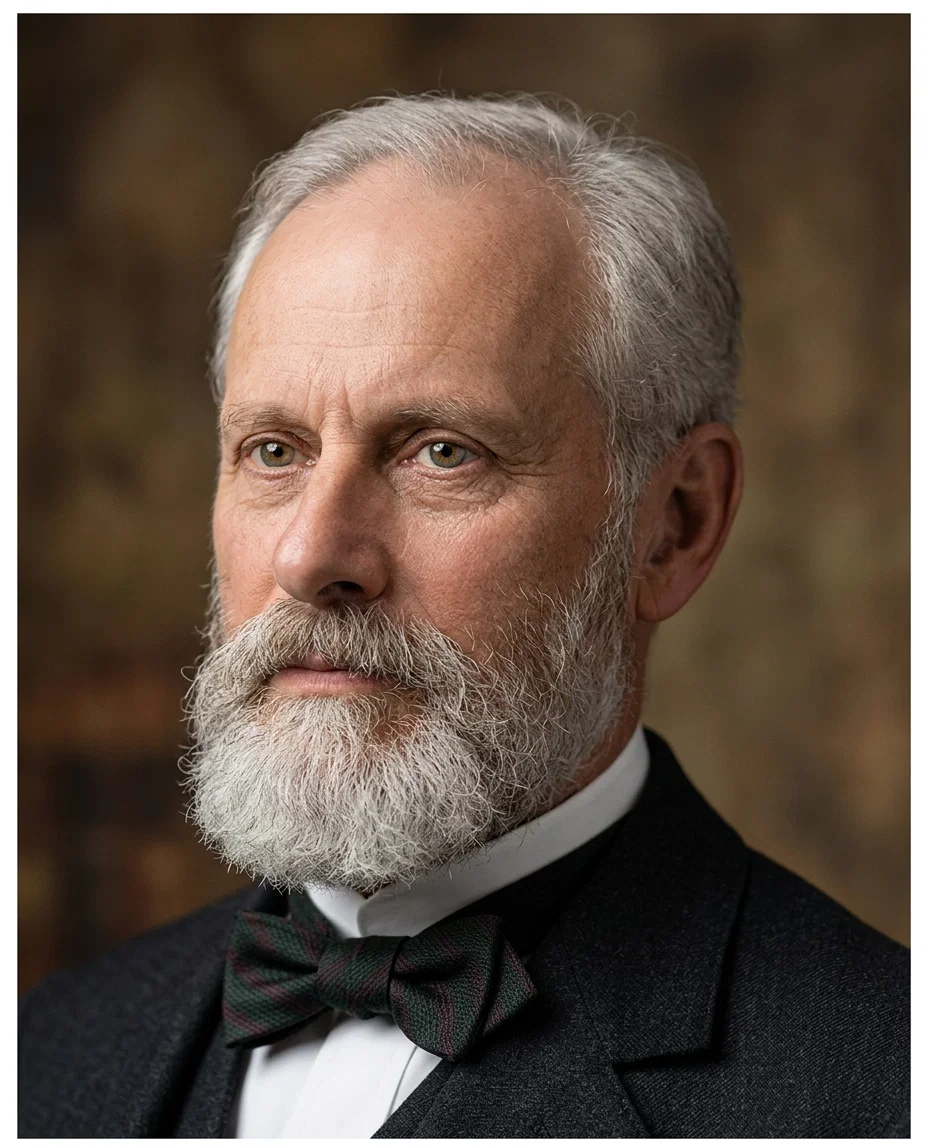
DR. KAUFMAN KOHLER
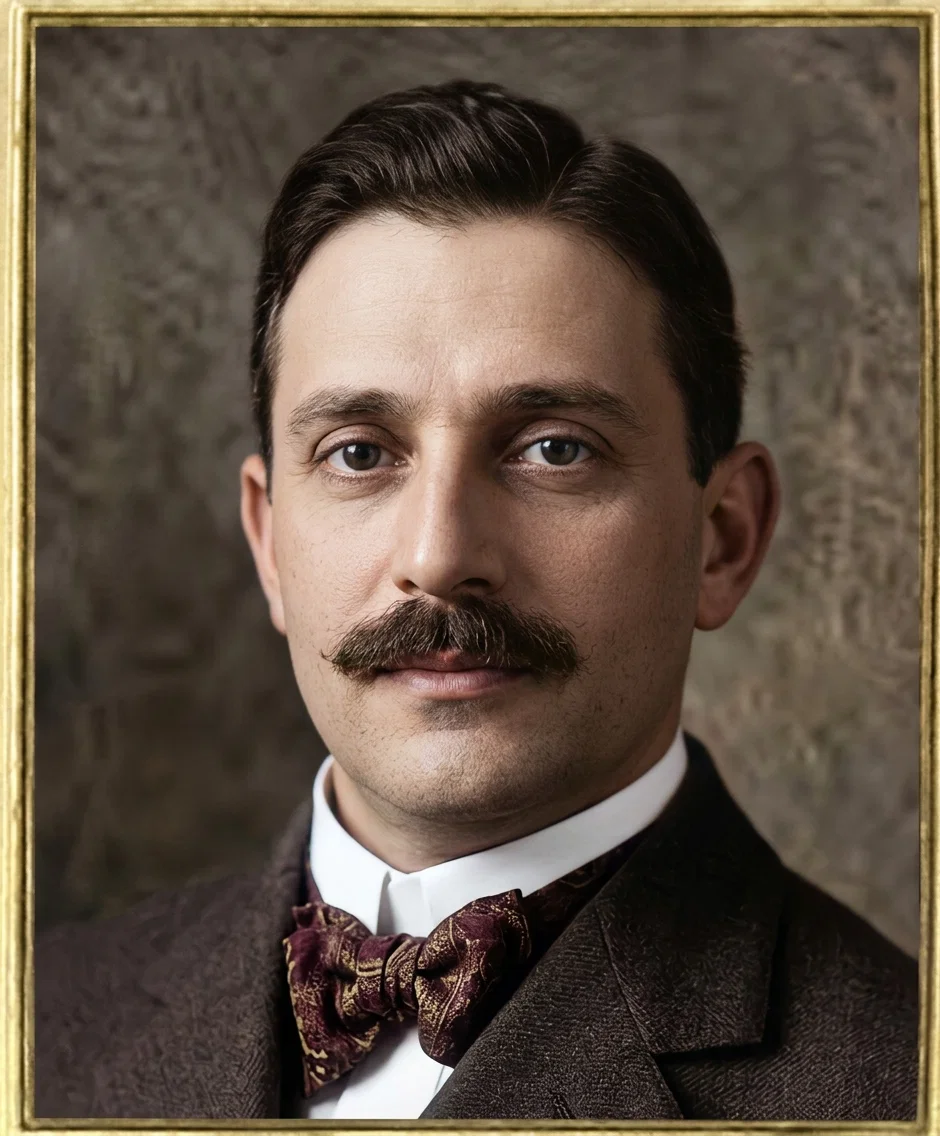
RABBI LEO M. FRANKLIN
Interesting Meeting of Rabbis in Detroit—“Higher Criticism” Prominent in Their Teaching—Adopting Sunday Services—Completed a New Translation of the Bible
By LEE S. WHEELER
The following very interesting article was sent us in July, but we have given space to so many important articles on the prophecies relating to war and the war spirit in these days that we have allowed this matter to go over till the present. The report is of such a character that its value is not lessened by this delay. It is significant that modern Jewish leaders are giving themselves to “higher criticism” and thereby placing the Old Testament Scriptures on the level of the writings of modern men. In view of this, it is not surprising that there should be a strong tendency in favor of observing Sunday.EDITOR.
The Central Conference of American Rabbis, which met in Detroit, Michigan, June 30-36, celebrated the twenty-fifth anniversary of the organization, it having been founded in 1889, by the late Isaac M. Wise, of Cincinnati, one of the most eminent of modern rabbis, distinguished for his ability as an organizer and leader. The movement had for its purpose the reformation of Jewish religious thought and life, the creation of new spiritual and social ideals, and the unification of Hebrew communities in America under the guidance of liberal influences.
The Central Conference as a body is dominated by the democratic spirit of the age; and while its fellowship is open to radical and conservative alike, the smallest minority rights are apparently most kindly and generously respected. Yet the passing of a quarter of a century free from the restraints of orthodox tradition has strangely changed its semblance, so that the personality of the typical rabbi was conspicuously missing from the form of the recent convention.
EXALTED TO THE RANKS OF THE PROPHETS
While retaining a racial interest in Hebrew ideals and the law, reformed Judaism claims the right “to reinterpret and to make new application of the law to the changed conditions of Israel’s life in America.” The Old Testament is no longer looked upon as the word of the Lord, but as showing the development of religious thought of the nation; and “illustrious spiritual teachers of modern times” are accorded a place in the honored ranks of the prophets “under the inspiration of Israel’s historic past.”
Rabbi Moses J. Gries, of Cleveland, Ohio, who was reelected to the presidency of the conference, referred, in his official address, to the persecution of the Jews in Russia, and to the appeal sent to the czar in their behalf by the Christian denominations of America. He said: “We welcome this evidence of the growing spirit of human brotherhood, and of the strong sense of justice and humanity. Let us as Americans never cease to protest against any encroachment upon or violation of the principle of human liberty.”
TEMPLE BETH EL, DETROIT, MICHIGAN, WHERE THE JEWISH CONVENTION WAS HELD
RELIGION IN PUBLIC SCHOOLS
Much attention was given by the conference to the matter of religious education. Rabbi Judah L. Magnes gave an address upon the work of the Bureau of Education of the New York “Community,” to meet the needs of the vast and congested Hebrew population in that greatest Jewish city of the world. Correspondence schools, Chautauquas, teachers’ institutes, etc., were discussed with much earnestness. The statements of Dr. Henry E. Cope, secretary of the religious Education Association, against the attempts to introduce the Bible and religious teaching into the public schools, were loudly applauded and it was evident that he voiced the feelings of the conference in the forceful expression of his views. He said:
“We should all stand unalterably opposed to the attempts that are being made to have the reading of the Bible in the public schools. It is said that we can all agree on certain fundamental principles which should be taught there. Perhaps that is true, but anything that all can agree upon would be so thin that nobody could stand on it. It would be a state creed in any case, and that we certainly do not want.
“When schools adopt the Bible, they adopt a creed of public schools; and a creed of public schools would be a creed of the state. When you try to teach a creed of the state to all its children, that creed becomes nothing more than an empty shell. Let the parents teach their children. Those who would have their children taught religion in the school are shirking the duty they should perform themselves. When you throw up the task of teaching religion to your own children, you throw up the children.”
REGARDING THE OBSERVANCE OF SUNDAY
The position which Jewish organizations should take toward the observance of Sunday was one of the most warmly discussed questions. Of late years, Sunday morning services have been introduced by the rabbis of various reform synagogues, and the custom has led to a difference of opinion which found strong expression at this convention.
In the ritual of the synagogues, this service heretofore has been published as “a week-day service”; but in reporting to the conference on “revision of the morning service,” Rabbi Joseph Rauch, of Louisville, said that “the conference should be brave enough to call it a Sunday service, and not masquerade under another name.”
This proposition, however, met with manifest opposition from many of the rabbis, who regard the movement as a revolutionary innovation. Rabbi Max Heller, of New Orleans, said that his congregation would never have a Sunday service while he continued as rabbi, although he did not oppose the publication of a book for those who wished Sunday services. He advocated, however, that it should be called a Sunday service book, in order that it might not be misunderstood.
OPPOSED TO SUNDAY FOR THE JEWS
Many delegates were on their feet at the same time to express their views upon the subject, some for and some against the change. Rabbi Charles S. Levi, of Milwaukee, was emphatically opposed to the change. “Can this conference afford,” he asked, “to have it go out in the world that we have adopted Sunday instead of Saturday as the Sabbath day? Judaism is broad enough to permit daily services, and why not call them week-day services?”
One rabbi said he was not opposed to the change for those who wished to hold Sunday services. “I want to be generous to my Christian friends,” he said, sarcastically; then seriously he said that to call the book a Sunday service book would be an extremely dangerous implication. “I am opposed728to the Christian Sunday being forced upon Jews,” he added.
Another resolution referred to the annual municipal Christmas celebrations as distinctively sectarian, and the conference put itself on record as opposed to such observances.
COOPERATION WITH SABBATARIANS
A noteworthy action of the conference was its decision to cooperate with Sabbatarian organizations to safeguard the religious rights of others.
The committee said further that “if a Jew observes the Saturday Sabbath strictly, he should not be forced to observe the Sunday Sabbath,” and recommended “that the conference cooperate in securing legislation to that effect in all states.”
Sunday laws have everywhere proved a menace to the oppressed Jew; and under the American flag, even exemption clauses, which are seldom more than a sop at the best, have always been an ineffectual substitute for religious freedom.
TRANSLATION OF THE BIBLE COMPLETED
The conference announced that the translation of the Jewish Bible into English, upon which the Jewish board of book editors has been engaged for five years, has been completed, and will soon be published to the world. The purpose has been, it is said, “to translate into English not only the letter, but also the spirit, the character, and the genius of the traditional and historic Bible of the synagogue.” The publication of this version is hailed with much rejoicing among the Reform Jews as a monument of American Jewish scholarship; and in recognition of the services rendered to Judaism by the completion of the work, the president of the conference, at the time of formal celebration, telegraphed this message to the Jewish Publication Society: “History will record with honor the unselfish labor and the scholarly service of our Bible editors and translators. May the Bible, through the new translation, become again the Book of the people for the people of the Book.”
AMERICA PREFERRED TO PALESTINE
It was significant that although a Zionist convention was in progress at Rochester, New York, and another at Leipsic, Germany, at the same time that the Conference of American Rabbis was in session here, little or no notice was taken of the matter. Social service, industrial relations, religious education, marriage, arbitration, church and state, and even eugenics, received consideration from the conference, while the fatherland of Palestine cut no figure in the program of the American rabbis, aside from some favorable mention in an illustrated lecture upon “Field and Mountain in the Holy Land,” and an endorsement by the conference of the use of the Hebrew language in the educational institutions of Palestine. It was evident that America, with its great commercial and industrial opportunities, rather than the country of Judea, is the Promised Land upon which the modern Jew has his eye.
In conversation with one of the prominent rabbis upon this subject, I learned that they have little interest in Zionism further than to give the scheme some moral and financial assistance for the relief of the unsettled and persecuted members of their race in Russia and some other European countries, since it offers a near-by refuge for the families of such, where, amid the associations of cherished religious surroundings, they feel at rest and at home.
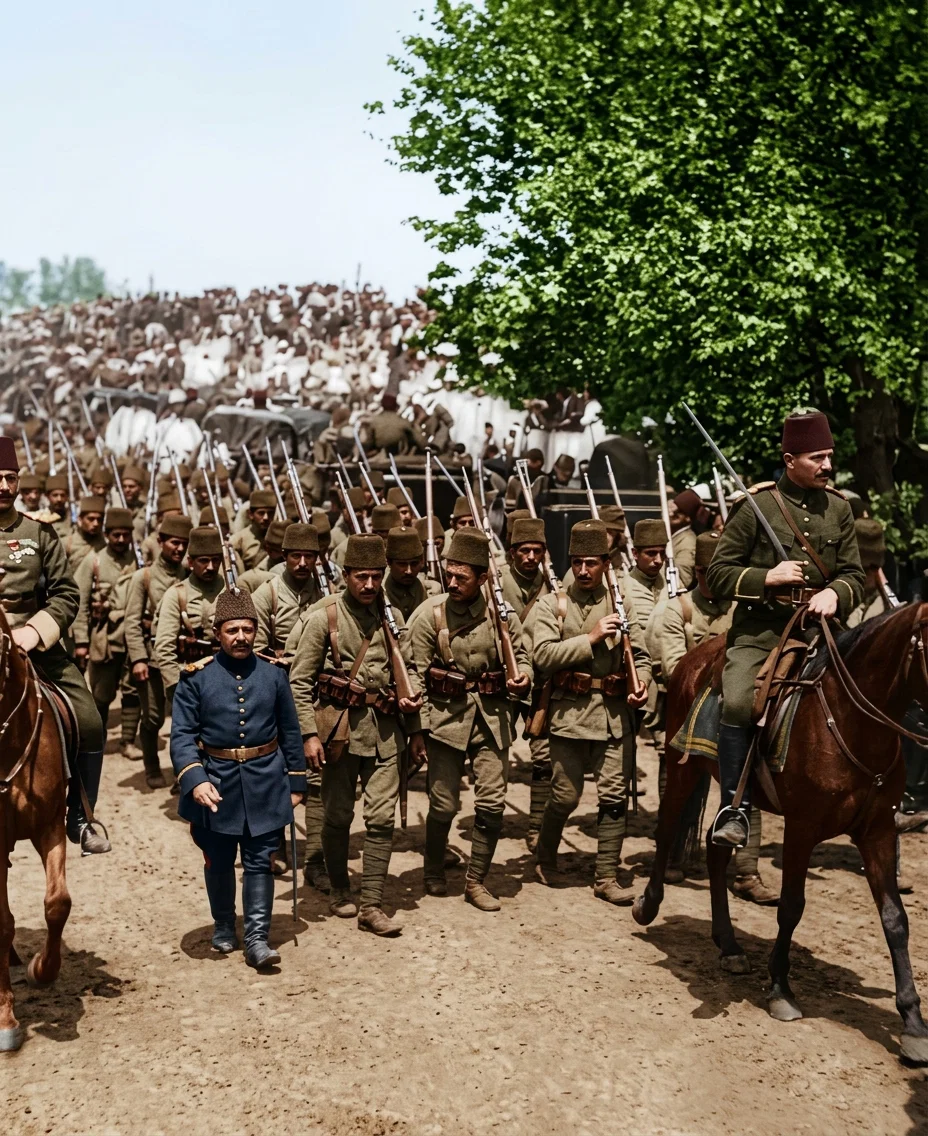
TURKISH INFANTRY, ONE MILLION OF WHOM ARE ENTERING THE OLD WORLD WAR
Three Special Prayers of Christ
By E. HILLIARD
AMONG the many petitions that our Saviour offered, there are three that should especially cheer the heart of every child of God. One prayer was answered immediately, one in a few days, and one remains yet unanswered.
His submissive prayer offered in Gethsemane, under the weight of the world’s sin, “Not My will, but Thine, be done,” was answered immediately. His mental agony was intense; but the more He suffered, the more fervently He prayed. In response to His prayer, “there appeared an angel unto Him from heaven, strengthening Him.”
When the pressure became so great that the blood began to press through the pores of His face, the record says, “Being in agony He prayed more earnestly.” What a lesson for us, when our trials seem too heavy for our frail natures to bear, to pray more ardently! Like Jacob of old, we should declare, with penitent hearts, “I will not let Thee go, except Thou bless me.” Such prayers and such perseverance will be recognized by Heaven and immediately answered.
His prayer on the cross, “Father, forgive them; for they know not what they do,” was answered in about fifty days. On the day of Pentecost, Peter, in his discourse to the multitude, exclaimed, “God hath made that same Jesus, whom ye have crucified, both Lord and Christ. Now when they heard this, they were pricked in their heart, and said unto Peter and to the rest of the apostles, Men and brethren, what shall we do?” Acts 2: 36, 37.
“Repent,” said Peter, “and be baptized every one of you in the name of Jesus Christ for the remission of sins, and ye shall receive the gift of the Holy Ghost. . . . Then they that gladly received his word were baptized,” and in one day three thousand were added to the church. Verses 38, 41.
What a cross for them to acknowledge their guilt, and be baptized in the name of the One they had helped to put to death as an impostor! How improbable it must have seemed to the disciples standing by the cross, that the Master’s prayer for the forgiveness of His slayers would ever be answered! After our Saviour’s resurrection and ascension, He presented to His Father the hands they had pierced, and pleaded for their forgiveness. The Spirit descended, their hearts were touched, they repented, and were freely pardoned. That prayer, offered in the agonies of death, so expressive of the Saviour’s love, was answered at the opportune moment.
Again: In the model prayer that Christ taught His disciples is the expression: “Thy kingdom come. Thy will be done in earth, as it is in heaven.” Nearly two thousand years have passed, and still this part of the prayer remains unanswered. The will of God is fully done in heaven. There all love, worship, and obey our heavenly Father. Not so on earth. Here men profane and disobey. But the time is coming when our earth will be purified by fire (2 Peter 3:9-12), and renewed by creative power. Then it will become the abode of none but the righteous.
E. HILLIARD.
A WORD TO OUR READERS
By Editor
We send no papers from this office to individuals without pay in advance. When persons receive copies without ordering them, they are sent by other parties, and we can give no information in regard to them. Persons thus receiving copies of the SIGNS are not indebted to the office, and will not be called upon to pay for them. Please read the papers you may receive, and hand them to your friends to read.
DATE OF EXPIRATION
The SIGNS wrapper bears date of last issue due on your subscription. Unless renewed in advance, paper stops with expiration date.
If herewith is an order-blank, you will know you have overlooked sending renewal. You will not wish to miss a single issue. Back numbers often can not be furnished.
SCRIPTURE QUOTATIONS
Our authority for the doctrines we teach is the Bible. Quotations are usually from the King James Version or the American Standard Revised.
THE EUROPEAN WAR AND OLD GRUDGES
By R. C. P.
Greed for Territorial Advantages in the Balkans at the Bottom of It — Another Outbreak, in Reality, of the Eastern Question
DURING the past fifteen years, we have heard much of Hague peace congresses, international arbitration, and the disarmament of nations. There has been much discussion of the question of “Christian nations” and our “Christian age.” Yet fourteen million men are marshaled on the fields of slaughter to-day as a sacrifice to the “Moloch of militarism” and the “alliance system,” because on June 28, Austria’s prince, heir to the Austrian throne, Archduke Francis Ferdinand, and his wife, were assassinated in the Austrian province of Bosnia by a Servian fanatic.
Then in an incredibly short time Germany and Austria-Hungary found themselves arrayed against Great Britain, France, Russia, Japan, Belgium, and Servia, with other neutral powers preparing to defend their neutrality if invaded. Germany has succeeded in drawing Turkey into the melee, and other nations seem about to declare war.
So rapid a mobilization of vast armies, and such a desperate rush of immense forces into war, is unprecedented in the history of the world.
HISTORIC CAUSES OF THE WAR
Diplomacy demands justification for the acts of governments. History records cold facts that have influenced governmental relations. While the diplomatic reasons that the various powers have so urgently presented to the public give pretexts, they present no valid reasons for plunging so many nations into deadly combat.
There are historical considerations that have affected the relations of European nations for a century, that have influenced their policies. Russia has not been satisfied with the interference of other powers in the settlement of the affairs between Russia and Turkey in the war of 1877, in which Russia was victorious. It was Austria that took the initiative in calling the Berlin congress of 1878, which gave a decision more favorable to Austrian than to Russian interests. Russia and Turkey had agreed upon terms of settlement more favorable to Russian interests, but this agreement was set aside by the congress.
One of the articles of the 1878 agreement turned Bosnia and Herzegovina over to Austria to be managed by her temporarily as a trustee, not as an owner. Their blood, language, and sympathies ally them closely with Servia. That country looked to a future union with Bosnia for an outlet on the Adriatic; but after Russia’s defeat in the war with Japan, which for the time lessened her prestige in Europe, and after the Young Turk party had claimed to reform its government, they were prepared to ask for the return of Bosnia to Turkey. But in October, 1908, the powers that had engaged in the Berlin treaty were informed that Austria had decided to annex Bosnia and Herzegovina as a part of the Austro-Hungarian empire.
This move on the part of Austria greatly embittered the Servians. The Balkan States of Bulgaria, Servia, Greece, and Montenegro joined forces to drive the Turks out of Europe. After they had subdued Turkey, and were in the act of dividing their spoils of territory, Austria again interfered, and through a mediation council of the powers, succeeded in depriving Servia of Albania on the Adriatic, which had been assigned to her in the settlement by the Balkan States. The second Balkan war followed, in which the smaller states opened hostilities upon Bulgaria, because of her claims to territory that was considered by the other states as belonging to them. In this engagement, Servia gained much toward the south, but she was still shut off from her coveted seaport territory.
A REVIVAL OF THE EASTERN QUESTION
The settlement by the powers of the Balkan territory question was never acceptable to Servia, and Russia sympathized with Servia in the loss of this outlet to the sea. Germany was a supporter of Austria’s interests. The present outbreak is therefore plainly the result of the dissatisfaction over the settlement of the Turko-Balkan war territorial boundaries. It is thus primarily the renewal of the old issue of attempting to show bitterness against Austria’s interference with territorial plans for seacoast boundaries. It is a revival of the Eastern question.
Russia, being on friendly terms with Servia, would naturally profit by such seaport territory in the hands of Servia.
France has never forgiven Germany for taking Alsace-Lorraine as an indemnity after the late Franco-German war. While that territory had been previously German, and had been taken from the Germans by the French, it had been so long occupied by the latter that many French people had become the inhabitants of the territory. Naturally they resented being under German rule; hence it was an opportune moment for France to make an effort to recover those provinces.
Great Britain has sought to hold the naval supremacy among the nations. She has considered Germany her only serious European rival as a military, naval, and commercial power. She has not been slow to seize the opportunity to aid in a war that offers so much allied strength in breaking the military power of Germany.
Japan is displeased that Germany has secured a naval and military base at Kiau-Chau, so near to her military station at Port Arthur, and also with the part that Germany played in thwarting her designs in Manchuria.
WAS IT NECESSARY?
Such are the cold historic facts involved in opening with such hot haste the great gateways of international strife. From these struggling nations there are swept into untimely graves scholars, scientists, poets, inventors, business and laboring men. Its youth, whose vigor is the asset of the nation for the future, together with its Christians, who are the best safeguard for peace, are sacrificed.
The scene is appalling. Was all this sacrifice of human lives to the “Moloch of war” a necessary compensation for the murder of an Austrian prince and his wife by a Servian miscreant? Who is now fighting on the basis of this issue? History’s verdict is that the diplomatic reasons were but a small part of the issues that have swept almost the whole of Europe into the maelstrom of war. R. C. P.
NEW TESTAMENT COMMANDMENT FOR KEEPING THE SABBATH
By G. B. T.
THOSE who keep Sunday, a day for which there is no Scriptural warrant, sometimes, in the dilemma in which they find themselves, ask, “Where is there a command in the New Testament for keeping the Sabbath?”
While such a command is quite unnecessary, so long as there is no command abrogating the precept which commands its observance, there is, however, an abundance of evidence showing that the seventh-day Sabbath is enjoined in the New Testament as well as in the Old Testament.
Speaking to His disciples concerning the destruction of Jerusalem, and giving them instruction what to do in that awful time, Jesus said, among other things, “Pray ye that your flight be not in the winter, neither on the Sabbath day.” Matt. 24:20.730
The destruction of Jerusalem, of which the Saviour was here speaking, took place in A. D. 70. The words of the Saviour show conclusively that He recognized the seventh-day Sabbath in existence as late as A. D. 70, and that they were to pray that their flight from the city and from Judea might not take place on this holy day. The Sabbath was not, therefore, abrogated at the cross.
Nothing more positive in reference to the perpetuity of the Sabbath, and our duty to observe it, even in the most troublous times, could be given. And surely if the seventh-day Sabbath was binding in A. D. 70, it is equally so at this time, for no power has arisen since Christ to change the laws and ordinances of God. In fact, no power has arisen wicked enough to claim to do so except one, which is noted in the Scriptures of truth as the “man of sin,” and “drunken with the blood of the saints, and with the blood of the martyrs of Jesus.” The Sabbath of Jehovah still stands, and in keeping it there is a great reward.
G. B. T.