YES, it is old, old advice, but it is advice that needs to be given to girls with more and more insistence at the present time, when the tendency seems to be for women to shirk the "quiet crafts."
Learn to sew; learn to sew quickly and beautifully; learn how to cut out clothes; learn how to put them together in the nicest way; learn some of the general principles of millinery. Regularly learn, and if you can not get the instruction at home, take lessons. And why? Not by any means to make yourselves drudges, but to save yourselves time, days and days of discouragement and unhappiness, should it ever be necessary for you to make your own clothes or help in making them, and to save yourselves from being misjudged. (This rather enigmatical close to my sentence I will explain later on.)
The tendency seems to be growing to call a girl of twenty or even twenty-five a clever girl because she can put a silk waist together passably well. As for a skirt—"Well, Isabel is really remarkable; do you know, she has made a skirt, and it really looks pretty well!"
It is not an unfrequent sight nowadays to see a girl laboriously sewing the wrong way, while an anxious mother regards her offspring with anxiety and just a mere bit of contempt. The mother appreciates that her daughter has more "advantages" educationally than she had in that simple age now past, and hesitates to insist, against a so ready resistance, that perhaps in some respects her ways as a young girl were best. Adele, Alice, and May know Latin and Greek, German and French; they can play and sing as Mary, Elizabeth, and Amanda never could, but how the hands of the last go up in horror as they see the first clotting hems with knots like little upturned radishes, taking hours to do some gathering because they do not know how to hold their needles, holding their work in the wrong way, proceeding in the wrong direction! Ah, that is where Amanda is glad she belonged to the simpler times, and she whispers to Elizabeth:—
"After all, it is our gifts that make peaceful homes. No home can be as happy as it should be without a deft woman to manage it. Why are Adele, Alice, and May so foolish? Why don't they cultivate deftness in handiwork; for they are so clever they must see it is of great importance?"
It is of prime importance. Don't be blind, girls. Can't you see that study, heights of thinking, art, true pleasure, can not exist where the foundation of "just living" is not secure? Never mind whether you think it should be different or not. Do you know of a single instance where it would not be better for a woman to be skilled in the quiet household arts that are expected of her and always will be as long as normal society lasts?
Strawberry Canyon and Grizzly Peak, Near Oakland, Cal.
What is the use of saying, "We shall never have to sew"? Every woman, with the rarest exceptions, has had to sew the minute it has been necessary for her personally to economize. When it comes to saying, "If I get a hat, I can not do this thing I long to do, or should do," eight women out of ten will say, "I'll trim my own hat."
No, women can not get away from the possibility of having to sew.
At the beginning of my article I said something that may have sounded enigmatical—namely, in suggesting that you learn to sew to save yourselves from being misjudged. By that I meant that you do not want people to think that you are not thoroughly womanly; and they will think so if you disdain woman's special work.
It is hard to forgive the "new woman" for her attempts to rob life of poetry. And it is robbing life of poetry to resist what I have called the "quiet crafts."
Let us consider the simplest home. It is that for which the man lovingly works, providing food and clothing for his family, and in which the woman lovingly adds ingenious comforts, prepares the food, and fashions the clothing. You can not get away from this picture, can you? And why should you? It is the essence of poetry. Now this does not mean that when the husband gains enough to give his wife more freedom from care she should continue laboring as hard as when she had little. Then it is right that she should, to a reasonable extent, employ people to do the labor for her, and so she becomes the head of a number who are paid to serve. Naturally her children will have more advantages of a certain kind than she had. This is the way the development continues—until reverses come to the family.
Now the point I wish to make is this: women and men should always be capable of living in the simplest way. Whether they have to or not, they should be able to live so, for it is then really that man as a rule is the best man, and woman the best woman.
It matters not how much you study, how "advanced" you are, if you will first remember to be womanly. Knowing how to sew is indicative of womanliness; not knowing how to sew does rob a woman of something. We can not have as much confidence in her. We think of her as a bit maimed, a bit dependent on other women. But every woman should be able to live independently of other women, if necessary, else she is no home-maker.
Be noble women, and then add every accomplishment. Become as "advanced" as you will, provided you are constantly giving proofs positive of possessing the deftness of the lovely pioneer woman.—Alice Field, in the Examiner.
THE INFLUENCE OF DIET ON MEN AND NATIONS.
By G. T. Wilson
DIET has its moral as well as its physical effects on us, and so in our home life we are greatly influenced by what we eat and drink. This question of eating and drinking is therefore of great importance to the Christian. “The kingdom of God is not meat and drink; but righteousness, and peace, and joy in the Holy Ghost.” Rom. 14:17. Our Saviour said we were not to say, “What shall we eat? or, What shall we drink? or, Where-withal shall we be clothed? . . . But seek ye first the kingdom of God, and His righteousness; and all these things shall be added unto you.” Matt. 6:31-33.
Again, “Whether therefore ye eat, or drink, or whatsoever ye do, do all to the glory of13God.” 1 Cor. 10:31. And in the ladder to Christian sanctification, mentioned in 2 Peter 1:4-8, the next step from temperance is patience, and the next step upward is godliness. So the only way to be patient is to be temperate in all things; and we can not be godly unless we are patient.
Thus diet affects a man’s Christian character. We do not look for a drunkard to be a patient man, but it has occurred to me that if men, women, or children put into their stomachs pepper, mustard, strong vinegar, and other condiments, with large quantities of meat and other stimulating foods, which tend to irritate the delicate nerves of the digestive organs, they will manifest a tendency to get angry at trifling things, and make themselves and those around them unhappy. In harmony with this I have heard mothers say, “Meat makes my children very irritable and cross, and I find I can manage them better when they do not have it.” Said a mother to me not long ago, “Since my children have given up meat, they are much sweeter-tempered.” I was pleased to find the other day the following extract, bearing on this subject:—
Ill-temper a Symptom of Excessive Meat-eating.
One deplorable result of excessive meat-eating in England is the ill-temper which is a chronic moral complaint among us. In no country, I believe, is home rendered so unhappy and life made so miserable by the ill-temper of those who are obliged to live together as in England. To everybody who reads these lines, examples will occur of homes which are rendered quite unnecessarily unhappy, when they might be happy, by the moroseness and rudeness of the head of the family, by the peevishness of the wife, or by the quarreling of the younger members. If we compare domestic life and manners in England with those in other countries where meat does not form such an integral article of diet, a notable improvement will be remarked. . . . In fish-eating Japan, harsh words are unknown, and an exquisite politeness to one another prevails even among the children who play together in the streets. In Japan I never heard rude, angry words spoken by any but Englishmen. I am strongly of the opinion that the ill-temper of the English is caused in a great measure by a too abundant meat dietary, combined with a too sedentary life. The half-oxidized products of albumen form urates and uric acid, and these, circulating in the blood, produce both mental and moral disturbances.—Mrs. Ernest Hart, in “Diet in Sickness and Health,” pp. 56, 57, pub. London, 1895.
G. T. WILSON.
BAD PRAYERS.
By Hartford Times
I do not like to hear him pray
On bended knees about an hour,
For grace to spend aright the day,
Who knows his neighbor has no flour.
I'd rather see him go to mill
And buy the luckless brother bread,
And see his children eat their fill,
And laugh beneath their humble shed.
I do not like to hear him pray,
"Let blessings on the widow be,"
Who never seeks her home to say,
"If want o'ertakes you, come to me."
I hate the prayer so loud and long
That's offered for the orphans' weal,
By him who sees him crushed by wrong,
And only with his lips doth feel.
I do not like to hear her pray,
With jeweled ear and silken dress,
Whose washerwoman toils all day,
And then is asked to work for less.
Such pious sinners I despise;
With folded hands and face demure,
They lift their "angel eyes,"
And steal the earnings of the poor.
I do not like such soulless prayers;
If wrong, I hope to be forgiven.
No angel wing them upward bears;
They're lost a million miles from heaven.
—Hartford Times.
SET THE CLOCK RIGHT.
A STORY is told of a colored man who came to a watchmaker and gave him the two hands of a clock, saying:—
“I want yer to fix up dese han’s. Dey jess doan keep no mo’ keree’ time for mo’ den six munfs.”
“Where is the clock?” answered the watchmaker.
“Out at de house on Injun Creek.”
“But I must have the clock.”
“Didn’t I tell yer dar’s nuffin de matter wid de clock ’ceptin’ de hands? and I done brought ’em to you. You ’ess want de clock so you kin tinker wid it and charge me a big price. Gimme back dem han’s.”
And, so saying, he went off to find some reasonable watchmaker.
Foolish as he was, his action was very like that of those who try to regulate their conduct without being made right on the inside. They go wrong, but refuse to believe that the trouble is with their hearts. They are sure that it is not the clock but the hands that are out of order. They know no more of the need of a change in their spiritual condition than the poor negro did of the works of his clock. They are unwilling to give themselves over into the hands of the great Artificer, who will set their works right, so that they may keep time with the great clock of the universe, and no longer attempt to set themselves according to the incorrect time of the world. And their reason for not putting themselves into the hand of the Lord is very similar to the reason the colored man gave: they are afraid the price will be too great. They say, “We only wish to avoid this or that bad habit.” But the great Clockmaker says: “I can not regulate the hands unless I have the clock. I must have the clock.”—Selected.
COFFEE.
By Dr. Pussykynd
DEAR MR. LOW: Not Mr. Lowe, but you who are living on a low plane, physically and mentally. I was going to add, morally and spiritually, but we will leave that out of the question for the present, knowing that if we get the body and mind right, the moral and spiritual will come right by the trend of a healthy mind.
A healthy person living normally and working up to his full power, will naturally grow tired as the day goes by, and soon after nightfall will grow sleepy. Now the proper thing to do is to go to bed, and seek "nature’s sweet restorer, blessed sleep."
"God bless the man who first invented sleep!" exclaims Sancho Panza. This blessing must stay with the wise and kind Giver of all good. Everything He gives is good.
Our heavenly Father knew His business when He made sleep for man; and why should we interfere with God’s wise arrangement? But under the stimulus of a cup of coffee (or tea) a person who would naturally go to sleep at eight or nine o’clock in the evening, will read or work on and on until ten or twelve, or later, thus wearing out the machinery of the body that ought, hours perhaps before, to have been laid up for repairs.
This is only part of the damage this stimulant will do. The morning cup of coffee will so stimulate that the man will do in one day what he ought to do in two. I do not think it will be as good work; but it will do the work of wearing the body twice as much. Now I ask you candidly, How long can such a thing go on before it does irreparable damage? The end can only be physical and mental breakdown, sickness, and nervous prostration.
There is no strength imparted to the body by coffee. It is only good food that can nourish and build up the tissues of the body. There is stimulus enough in pure foods and water to energize all the activities of the body and mind, and they will do it in a healthful, normal way. Huxley says the horse is the most economical machine ever made, showing more energy for the amount of fuel consumed than any other. Man might be a better machine, if he would live rationally.
Coffee and tea, like spirits, have no food value, therefore can give no real strength. "It makes me strong," you say. Do not be too sure of that. Give a few drinks of whisky to a man who can easily lift three hundred pounds, and he feels strong. He thinks he can lift a ton; but test him upon lifting a machine. He can probably lift only two hundred fifty pounds. Wait until the whisky "dies in him," and that "all-gone feeling" comes on, and test him again. "I can not lift," he says, "I feel as weak as water;" but he is surprised to find that he can lift, as much nearly as he ever could.
Do not trust to this feeling of strength. It is only weakness; for coffee, like whisky, is a stimulant. Nor must you feel alarmed about that "all-gone feeling." It is nature’s work in the building-up process. The extent of the feeling is a measure of the harm your stimulant has been doing you. It is nature’s cry for rest and repair. Heed it. Seek the true remedy. Live rationally. Work up to your full capacity; but when nature gives you the signal to rest, do so. Lie down to pleasant dreams, and on rising your going forth will be like that of the sun, "rejoicing as a strong man to run a race." Very kindly, DR. PUSSYKYND.
INSOMNIA.
By William Henry Riley
INSOMNIA is usually accompanied by other manifestations of morbid conditions, prominent among which may be mentioned nerve weakness and nerve irritability. It is a disorder quite as difficult to manage, and quite as trying to the physician, as any with which the general practitioner has to deal; and, judging from the number of hypnotics and sleep-producing remedies that are constantly brought to his notice in the weekly advertising sheets of the medical journals, his task in this direction is not at all diminishing, even if he have the aid of the manufacturing chemist and the pharmacist. The large number of these sleep-producing drugs that are offered to the public (and they are rapidly and constantly increasing in number) also suggests the importance of a knowledge of how to preserve normal sleep, and of how to relieve sleeplessness, if possible, by the use of more simple and less harmful remedies.—W. H. Riley, M.D.
WHY SHE DID NOT CRY.
An emotional preacher observed one Sunday that the whole of his congregation, with the exception of one little girl, who sat quite alone, was in tears.
He thereupon directed all his power toward the child, drawing such touching pictures that the rest of the congregation grew more and more overcome, sobbing and crying; but the child still stared at him dry-eyed, and at length he was obliged to give it up and end the sermon.
Meeting the child outside, he upbraided her for her hard-heartedness, and asked her why she did not weep.
"It is not that I am hard-hearted," the child responded, "but I belong to another church."
—Selected.
A NEW ARISTOCRACY.
By John Harvey Kellogg
BOTH rich and poor need to be trained to the point of recognizing the body as the noblest and most precious of man’s possessions, and worthy of the highest respect and the most conscientious care. Society needs to organize and recognize a new aristocracy,—an aristocracy of health, the membership in which shall be open to the poor as well as to the rich, the only necessary qualifications being sound physical health and correct habits of life. An aristocracy of wealth has no just foundation. It is indeed an artificial and illegitimate classification. An aristocracy of health would be truly a royal fraternity, one characterized not by blue blood, but by red blood.—J. H. Kellogg, M.D., in Good Health, April.
A Hybrid Plant
“A Frenchman, by process of grafting, has obtained a hybrid plant which produces tubers underground and tomatoes above. Such very intense cultivation seems to savor somewhat of the odious ‘sweating system.’ It points, however, to the possibility of largely increasing our food supply from the land already under cultivation by means of similar productive hybrids.”
NEWS AND NOTES
By Editor
International.—Members of the War Office of Germany and Austria are experimenting with liquid air as an explosive. The tests were conducted in a stone quarry, and the results are said to have been much beyond the expectations of the officials, the liquid air developing a wonderful explosive force.... England is sending a large force to South Africa in expectation of trouble with the Transvaal Republic. Her force of 3,200 in Cape Town has been increased to 9,000.... Another party of Germans has been attacked by Chinese in the vicinity of I-Chau-Fu. Some of the Germans were wounded, and quite a number of the Chinese were killed. Several of the foreign powers are said to be contemplating aggressive moves on account of the defiant attitude of the Chinese.... No agreement has yet been reached between the United States and Canada over the temporary boundary proposed along Southeastern Alaska, and the delay in this matter, it is feared, will result in serious boundary troubles between Americans and Canadians.... There is little prospect of any definite developments for good out of the peace conference at The Hague in May. One of the chief causes for doubt in the matter is the appointment of certain members who are not in favor of peace.
Signor Marconi's system of wireless telegraphy has been successfully tested in telegraphing from the shore to a moving war ship in the English Channel. The feat marks also his first successful attempt to concentrate messages at one point, to the exclusion of all others.... The non-conformist churches of England have declared a boycott on the London papers which have recently begun to issue Sunday editions. The church-members are urged not only not to buy the newspapers and other publications of the Sunday publishing firms, but also to influence tradesmen not to advertise with the firms which issue Sunday editions.... Two remarkable statues have just been found in Egypt by M. Georges Legrain, the noted French Egyptologist. One of these is a statue of the god Ammon in pure alabaster, and stands eighteen feet high, made from one solid block of that stone. The second is a statue of the father of King Usurtasen, and was set up in the days of Abraham.
.... A despatch from Bolivia states that the rebellion has ceased, and quiet once more reigns in that little republic.
The Philippines.—A despatch from Washington states that 14,000 regulars are to be sent to the islands as soon as transportation can be procured for them. It is also reported that the volunteer regiments are to be returned to the United States as fast as regulars are sent to the islands to take their places, the volunteers returning in the order in which they were sent.... A skirmish occurred on April 20 between a small force of Americans and a body of Filipinos. The latter lost twelve killed.... General Lawton took the field again on April 22, to join General MacArthur and General Hale in an attack upon the new headquarters of the Filipino army.... On April 23 an engagement took place between the opposing forces, in which seven Americans were killed and over forty wounded. The colonel and a first lieutenant of the First Nebraska regiment were among the killed. A decisive engagement is expected at Calumpit, where an attempt will be made to flank Aguinaldo's forces. An engagement occurred near Calumpit on April 25, in which the Filipinos lost fifty killed. Only one American was killed.... The attempt of the Spaniards in Manila to effect an exchange of prisoners with the Filipinos has ended in failure, the latter refusing to allow the Spaniards to enter their lines for the purpose of negotiations. Fifteen hundred Filipinos had been turned over to the Spanish general at Manila by General Otis for the purpose of securing the release of the Spaniards held by the Filipinos.
Casualties and Calamities.—Forty thousand miners, bricklayers, and masons are on strike in Belgium, and disturbances are feared.... The bubonic plague is making fearful ravages in the island of Formosa. The natives will not allow those stricken with the disease to be taken to the hospitals operated by the Japanese when possible to prevent it, and many of the victims flee to the hills and woods as soon as stricken.... A boat-load of sixteen men from the wrecked steamer General Whitney capsized near Cape Canavarie, Florida, on April 22, and all were lost. Nineteen others from the ship were rescued.... Five persons lost their lives by an explosion in the coal mine at Madrid, Colorado, on April 21....
Fourteen men were killed in an explosion on the railroad near Bilbao, Spain, on April 20.... In the great hurricane which swept the coast of Queensland, Australia, in March, 400 persons lost their lives, and 86 vessels were wrecked. In the recent fire which occurred on the island of Guadalupe, in the Lesser Antilles, 30 persons lost their lives; 400 houses were consumed; 2,000 persons were rendered homeless. The loss will approximate $1,000,000.
New Trusts.—An international copper trust is reported to have been formed, including a capital of over $100,000,000. The organization, together with one now in process of formation, which will have an aggregate capital of $1,000,000,000, proposes to regulate the price of copper throughout the entire world.... The American Railways Company was incorporated in New Jersey on April 19. Its purpose is to consolidate the electric railways of Pennsylvania, and its capitalization is $25,000,000. Ten other trust companies were incorporated in that State on the same day, with capital stock ranging from $100,000 to $10,000,000.... A gigantic trust is in process of formation in Chicago, the purpose of which is to combine all manufactures of farming machinery in the United States, curtail all surplus of production, and maintain the present high prices of farming machinery. All the great manufacturers of implements used in farming are involved in the trust, the proposed capitalization of which is $50,000,000.
Porto Rico.—Two commissioners appointed by the people of Porto Rico called upon President McKinley on April 19, to make known to the President the wishes of the Porto Ricans in regard to their future government. They desire a civil administration instead of the present military one; a reduction in the army to a number adequate for garrisoning the various posts; that the people be granted the privileges and immunities of citizens of the United States; that they be given a territorial form of government; and that a census of the people be taken. The President has indicated that the government of the island may be conducted on the lines of the government of the District of Columbia.
Domestic.—Successful experiments in wireless telegraphy were conducted by J. J. Green, of Chicago, on April 23. Messages were exchanged between the station and a moving tug on the lake.... Many thousands of acres of land along the Missouri River were flooded by the recent rise. No casualties are reported, but a large amount of stock was lost in the flood.... On April 24 the New York State Assembly passed the Senate Anti-trust Bill by a vote of 105 to 2. The purpose of the bill is to prevent monopolies in articles or commodities of common use, and to prohibit restraints of trade.
You Have Been Wanting A College Education
By Editor
Do You Want One Still? Then Read Our Offer
We will give you a free scholarship of one year, including board, room, and tuition, in any one of the following colleges or academies:—
Union College, Lincoln, NebraskaWalla Walla College, College Place, Wash.Healdsburg College, Healdsburg, Cal.South Lancaster Academy, S. Lancaster, Mass.Mt. Vernon Academy, Mt. Vernon, OhioKeene Industrial Academy, Keene, TexasSouthern Industrial School, Graysville, Tenn.
Upon the condition that you secure for us a certain number of yearly subscriptions for THE SIGNS OF THE TIMES, at one dollar ($1.00) each.
The number of subscriptions required to entitle you to a scholarship in Union College, Healdsburg College, Walla Walla College, South Lancaster Academy, Mt. Vernon Academy, and Keene Industrial Academy, is 140. One hundred subscriptions will entitle you to a scholarship in the Southern Industrial School, at Graysville, Tennessee. These subscriptions must be accompanied by the cash, $1.00 for each subscription, and must be sent to us direct.
If you are interested in securing an education without financial expense to yourself, write us for particulars and instructions. We are making you an offer of great intrinsic value,—an offer whose acceptance will mean much in your future usefulness, whatever your field of labor. Send for catalogues to the schools named above, and write us at once in order that you may begin work without delay.
Address,
SIGNS OF THE TIMES,
Subscription Dept. Oakland, Cal.
Is the title of a small circular which will be SENT FREE to those applying for it at once. It includes a number of valuable books, sets of books, pamphlets, etc., at a price that place them within the reach of all.
A new tract in the Apples of Gold Library. Order A. G. L. No. 20. Price, 50 cents per 100 or one cent each in small quantities. Address, PACIFIC PRESS PUBLISHING CO., Oakland, Cal.; Kansas City, Mo.; or New York City, N. Y.
WONDROUS LOVE
By Editor
This beautiful piece of music which first appeared in the Centennial Number of this paper is now published in sheet form. An attractive cover has been added, and the price placed at twenty-five cents post-paid.
PACIFIC PRESS PUBLISHING CO. OAKLAND, CAL.
Battle Creek Bakery Company
Established 1881.
MANUFACTURERS OF HEALTH FOOD CRACKERS, BISCUITS, AND CEREOLA
STRICTLY HIGH GRADE GOODS AT REASONABLE VALUE
Below is our Confidential Circular of Facts and Prices
READ EVERYBODY
You do read the daily news, and you do know from facts and statements there presented, the urgent necessity of Food Reform. Do you know that the crackers commonly sold for butter crackers are such in name only, they are lard shortened? Do you wish healthful crackers and biscuits that are both highly palatable and nutritious, and are received everywhere with favor and commendation? Do you wish a food supplied your tables the year round, made only of first-class material, and guaranteed to contain neither lard, cotton-seed compounds, imitation or inferior grades of butter? Do you wish a pure food cracker in the composition of which the products of slaughtered animals form no part? Do you want the best health food crackers and biscuits the market affords? Do you want a food that is prepared from a variety of the choicest cereals, thoroughly cooked and ready for immediate use? (Ce-re-o-la.) Is it a satisfaction to know that you can obtain foods that have not been aerated with the fumes of liquor and the smoke of tobacco? Do you know that the Battle Creek Bakery Co. is prepared to furnish you just the class of goods above described? Do you want graham flour that is made from the cream of wheat, and not a compound of bran and middlings? Do you want deliverance from all that troubles you in making good graham bread? Our Perfection Graham Flour is your remedy. It is a perfect flour.
Per lb.
Ce-re-o-la
in bulk $ .08
Ce-re-o-la
in packages .10
Gem "Oatmeal Biscuit"
.10
Lemon Biscuit
.10
Graham Biscuit
.10
Fruit Biscuit
.15
Whole Wheat Crackers
.08
"A" Graham Crackers
.08
"B" Graham Crackers
.08
New Era Butter Crackers
.08
Per bbl.
Perfection Graham Flour
$4.50
Per lb.
Perfection Graham Flour in less quantities
$ .03
Ce-re-o-la is ready for immediate use by the addition of milk and cream or fruit juice, or may be eaten dry. It is a food for all, both great and small, sick and well. New Era Butter Crackers are especially suitable for soups, etc. "A" Graham and Whole Wheat are slightly sweetened, "B" Graham and Whole Wheat are unsweetened.
In ordering please remember that the freight on 100 lbs. costs no more than on any number of pounds less than 100.
Save your money by ordering 100 lbs. or more. We offer a discount of 10 per cent. from the above prices on all orders of 100 lbs. or more. This does not apply to Perfection Graham Flour.
A sample box of the various Crackers, Biscuits, and Cereals will be sent prepaid by mail or express on receipt of 35c.
In making your selections be careful to state the number of pounds of each you wish sent, and enclose amount of purchase with order. Our Institution is well known to the publishers of this journal, and no doubt this will be a sufficient guarantee to the public of good faith on our part to do precisely what we have here agreed to do. To those who wish other references, we refer you to the City Bank of Battle Creek, Mich.
Bills payable and address all communications to
BATTLE CREEK BAKERY
COMPANY
Battle Creek, Mich.
WONDERS OF THE 19th CENTURY
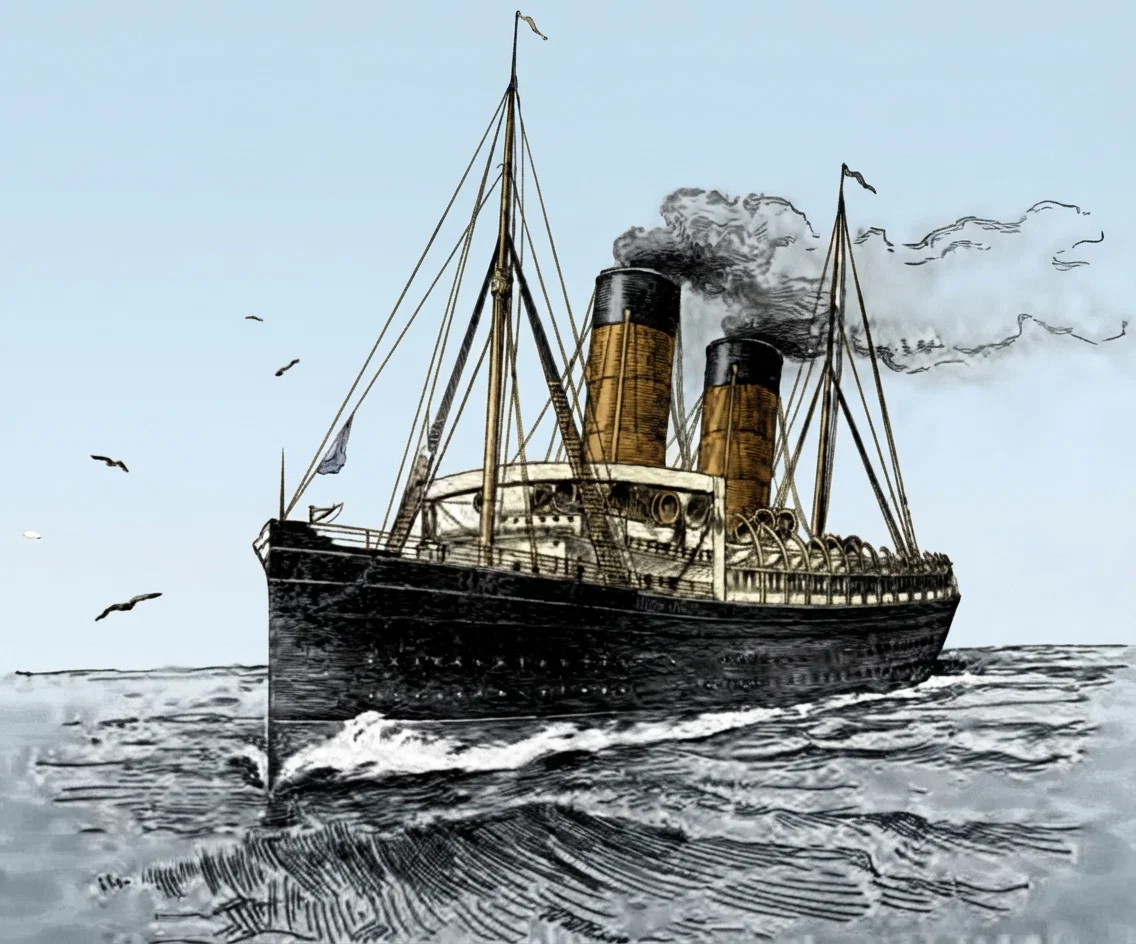
The "Lucania" crossing the Atlantic in 5 days, 7 hours and 23 minutes
Pacific Press Publishing Co.
The Scripture on which this tract is based is, "This gospel of the kingdom shall be preached in all the world . . . and then shall the end come."
Just how the wonderful inventions of recent years tend to fulfil this prophecy is clearly shown.
The inventions which have revolutionized travel are dwelt upon at length, and made to speak in no uncertain tones concerning the times in which we live.
This tract is well calculated to appeal to thinking people, and to convince them that the end of all things is at hand.
***
It contains 32 pages, 15 illustrations, and sells for $2.00 per 100.
OAKLAND, CALIFORNIA
39 BOND STREET, NEW YORK CITY
18 WEST FIFTH STREET, KANSAS CITY, MO.
Instructions for Ordering.
By Editor
1. REMIT by P. O. Money Order, Express Order, or Bank Draft on New York, Chicago, or San Francisco.
2. If paper money or silver is sent, register the letter.
3. Orders and Drafts should be made payable to the PACIFIC PRESS PUBLISHING CO., or to SIGNS OF THE TIMES.
Postage-stamps.—Please do not send postage-stamps, as they are liable to stick together, and are useless in this condition.
Foreign Money.—Do not send any.
Receipt.—No formal receipt is sent unless by special request. The address label on your paper will indicate the time to which your subscription is paid. In case of non-receipt of papers, or any other irregularity, please notify us immediately.
Expiration of Subscription.—All papers are discontinued at the expiration of the time paid for. Notification will be sent several weeks before date of expiration, thus enabling you to renew in ample time to secure unbroken files. Please be prompt, as we can not always furnish back numbers.
Change of Address.—When ordering change of address, please give both the old and the new address.
Important.—Use a separate sheet for SIGNS orders, separate for other papers, separate for books, for tracts, etc., and if you address the editor, use a separate sheet. All can be sent in one envelope, and the money all sent in one order, but write each kind of business on a separate sheet. In this way each order can be handed to the proper clerk and filled at once.