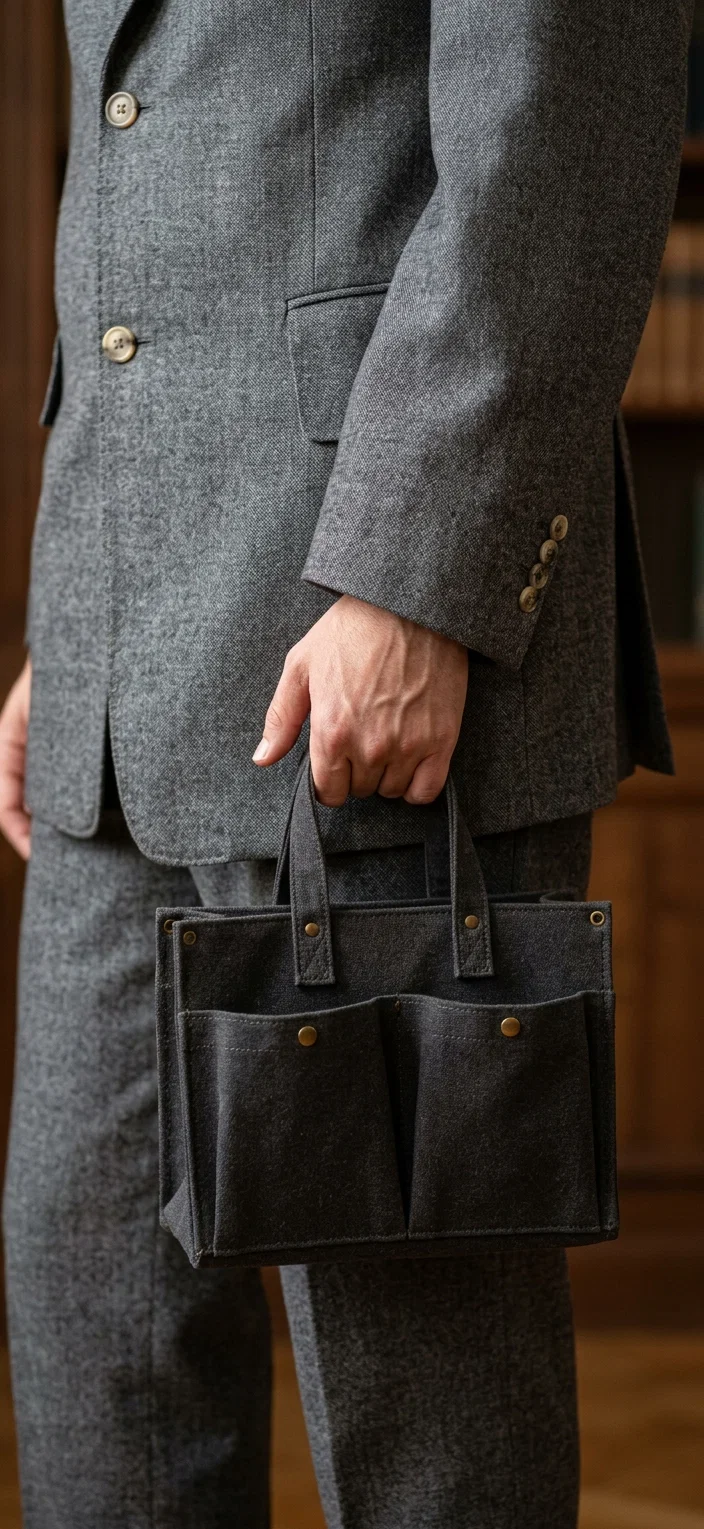
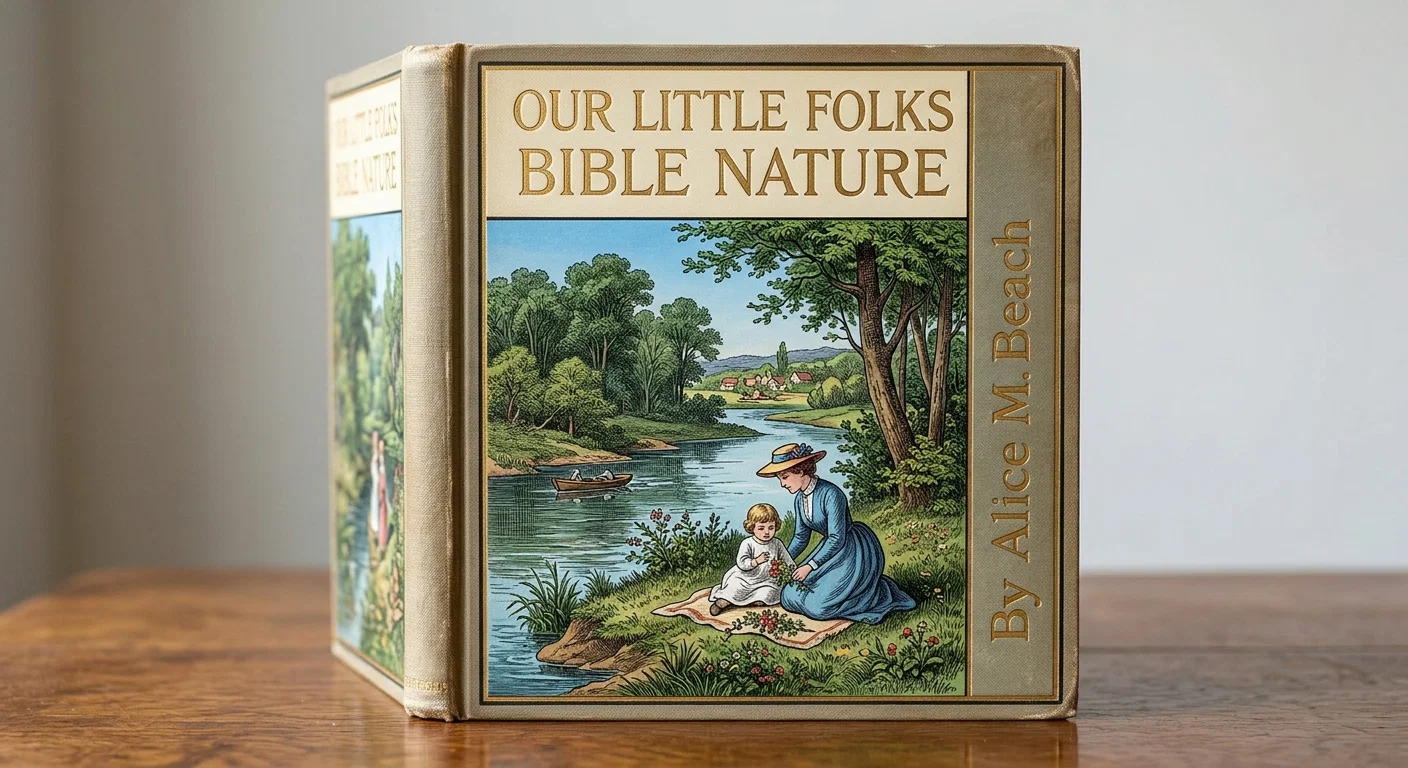
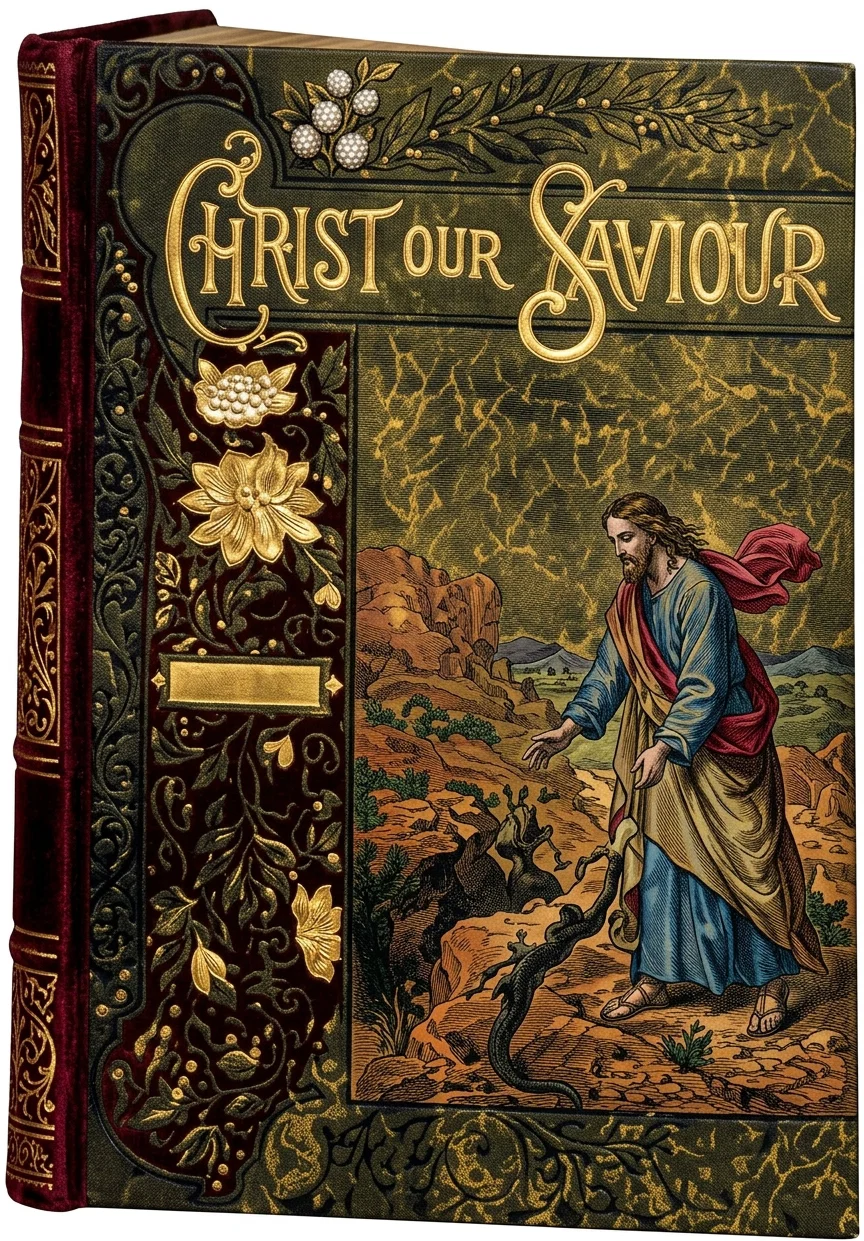
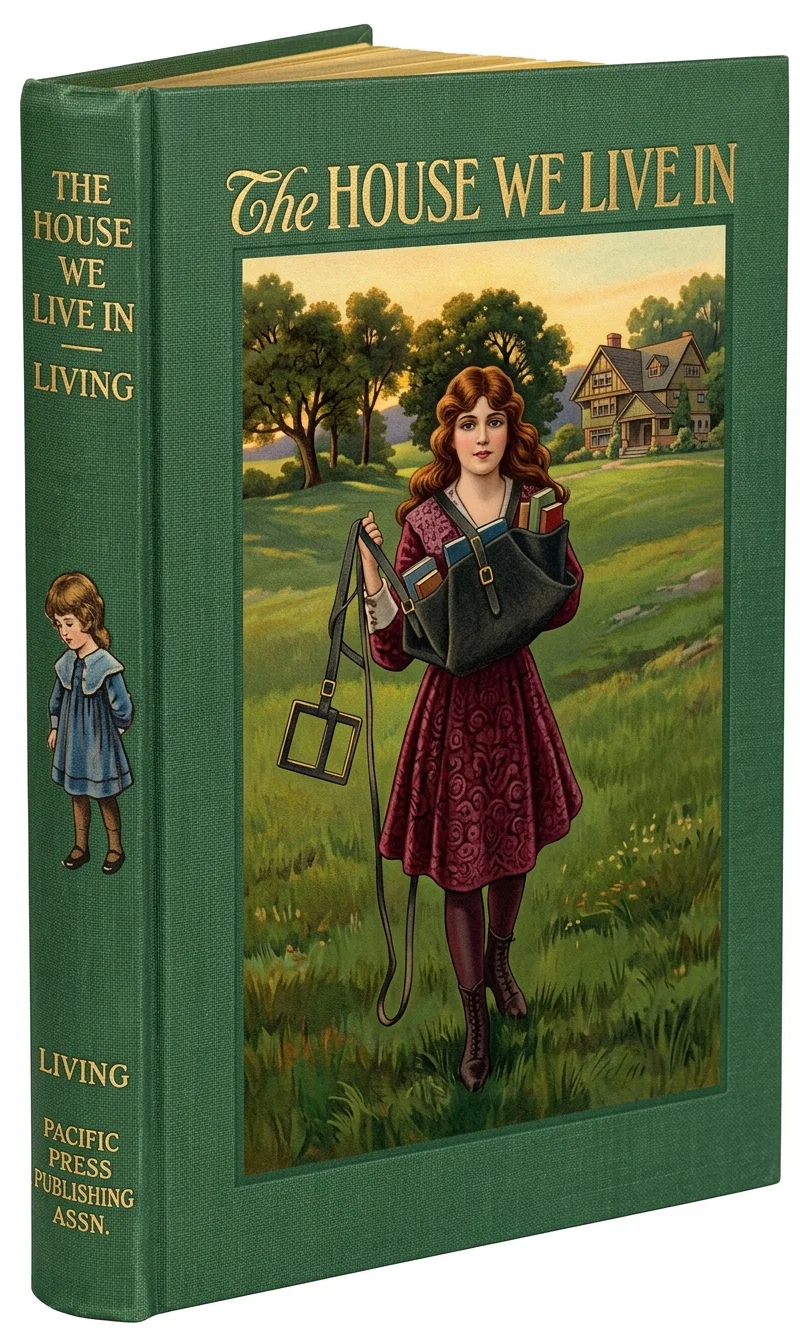
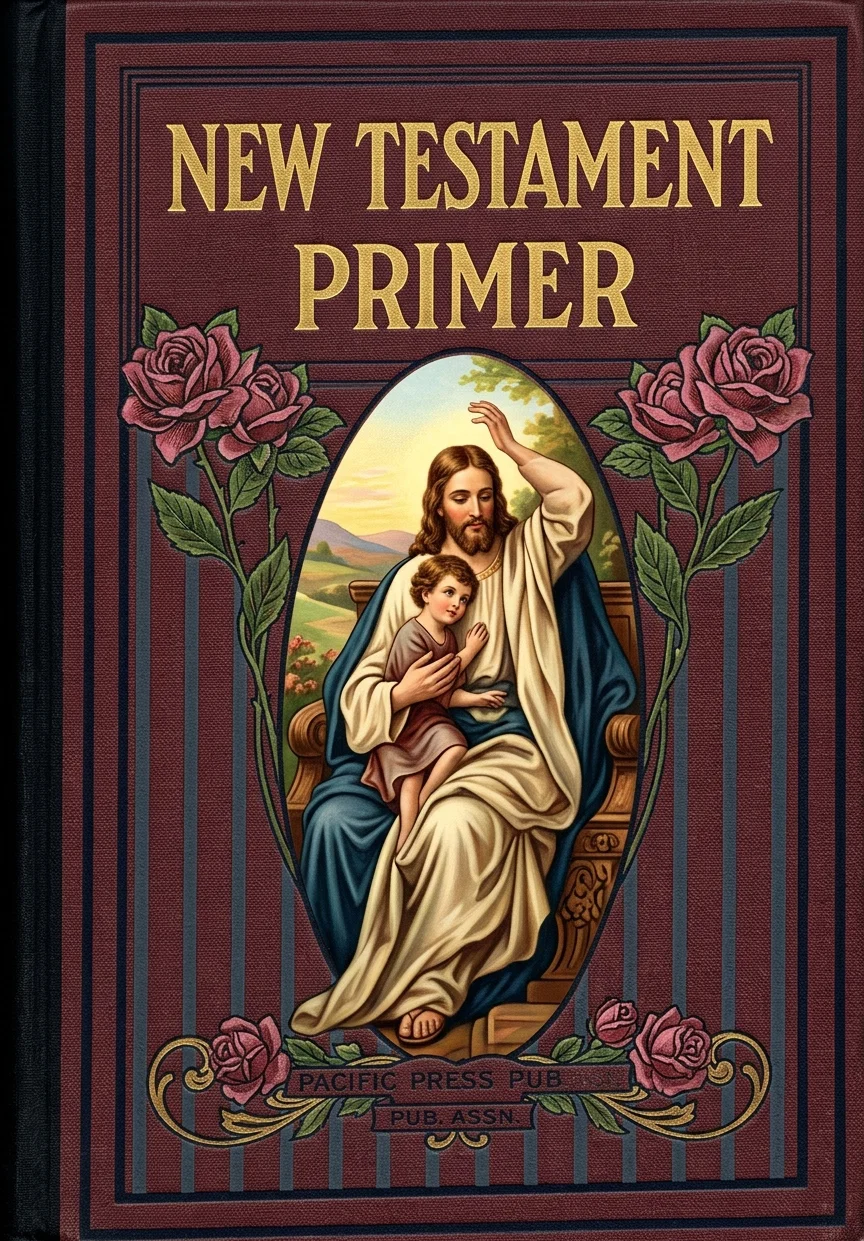
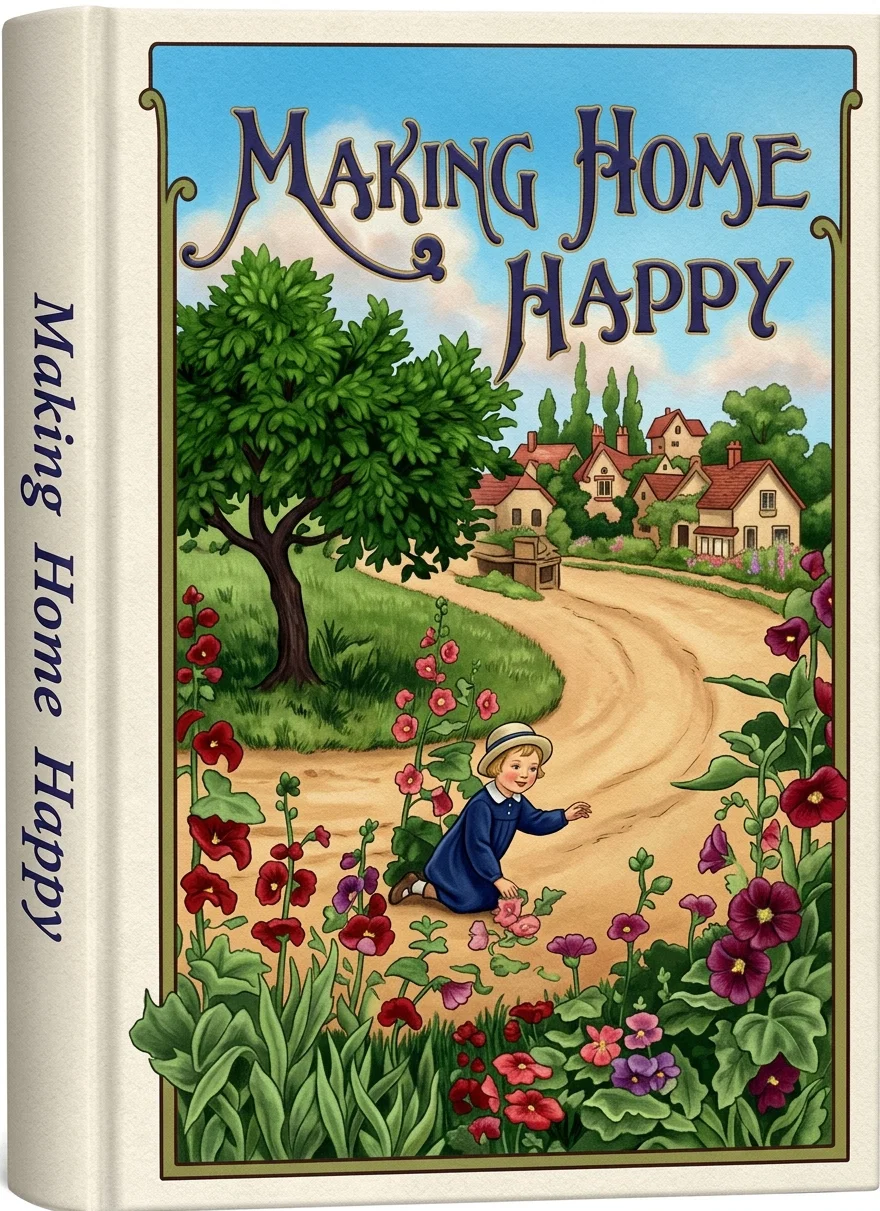
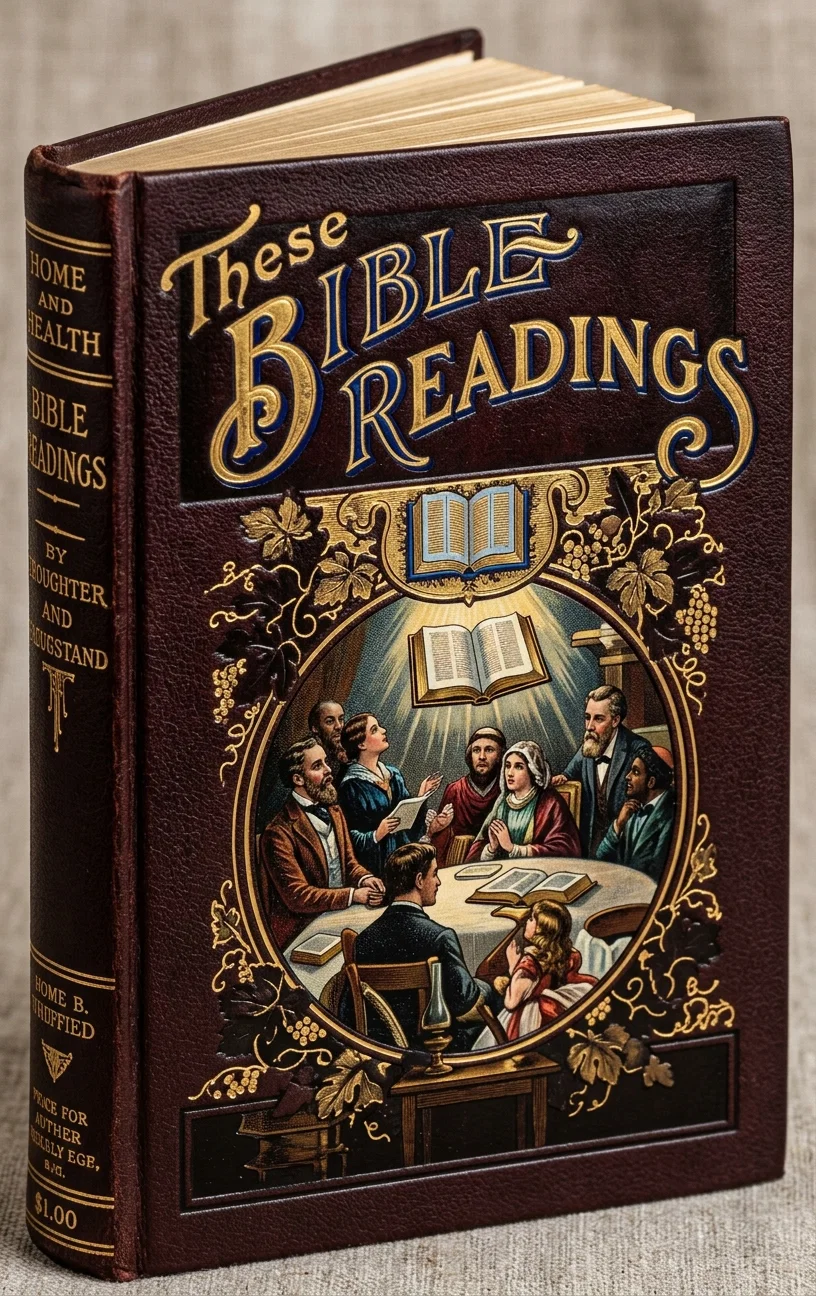
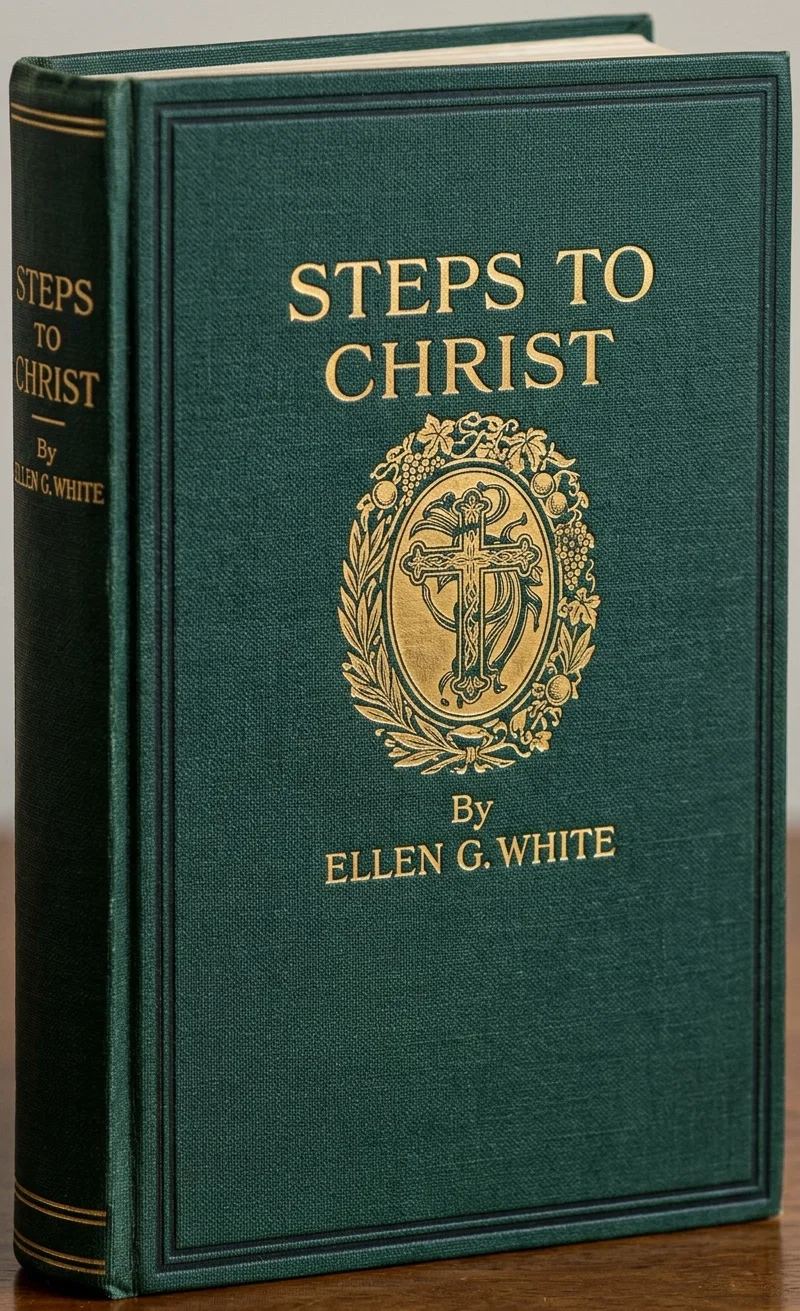
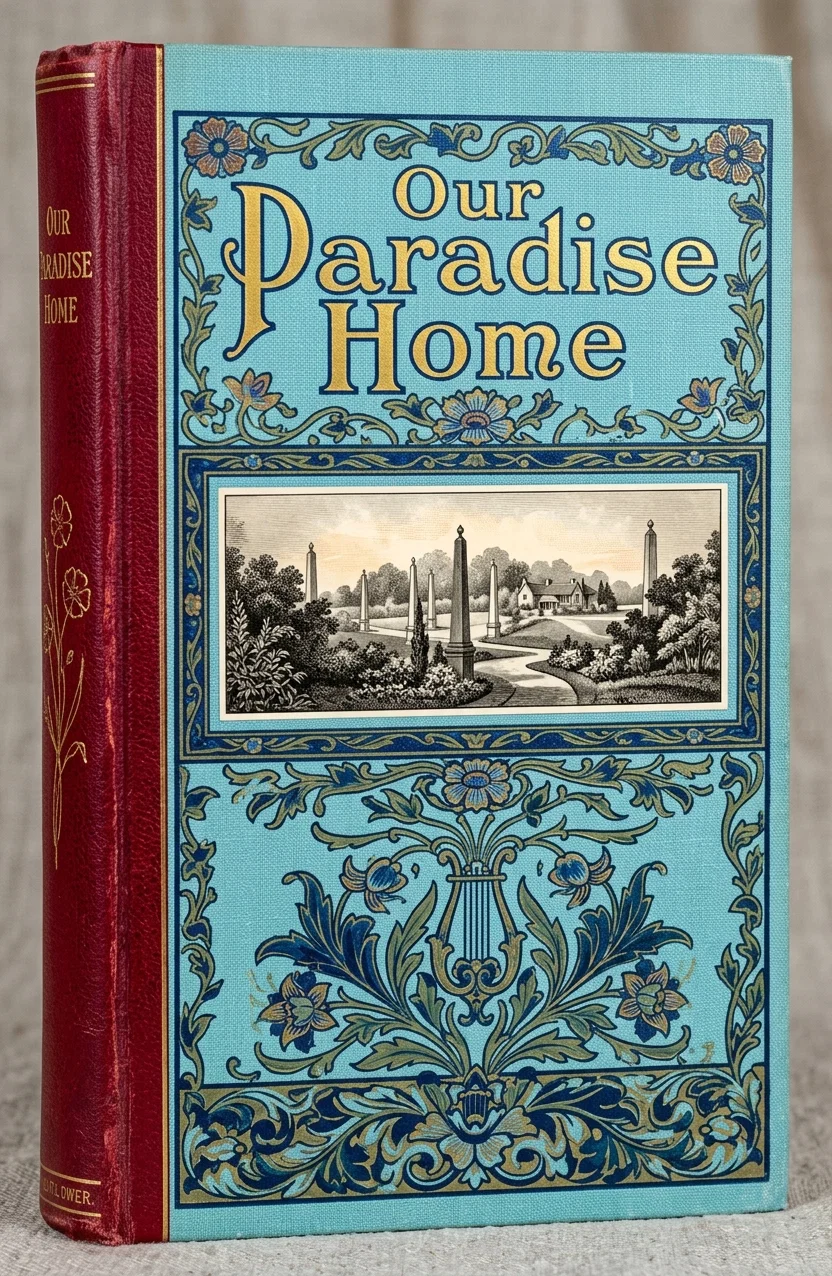
Large enough to hold four of the books here shown. This Carrier is made of heavy felt, has four pockets, into which the books easily slip, folds up, and may be carried like a kodak, as is shown in the accompanying photograph.
But this Carrier is a convenience, not a necessity, in selling these attractive volumes. The principal thing is to carry them to the people, and this you can do in a shopping bag, a neat basket, or in a specially prepared inside pocket.
To get started, send your name and address to your tract society or the publishers, stating what books you wish to sell.
Enclose the retail price for sample copies of the books you have selected.
Forty per cent discount, less the postage, will be refunded to you on your first regular order.
A booklet containing brief description and suggestive canvass for most of these books will be sent free on request.
Address your state tract society, or
Pacific Press Publishing Assn.
MOUNTAIN VIEW, CALIFORNIA
Portland, Ore. Regina, Sask., Canada Kansas City, Mo.
Prices in Canada 10 per cent higher on account of duty.
Board covers, 25 cts.
Cloth covers, 50 "
Board covers, 50 cts.
Fine cloth, 75 "
Cloth covers, $1.00
Cloth covers, $1.00
Board covers, 50 cts.
Art edition, 5 "
Cloth covers, $1.00
Board covers, $1.00
Board covers, 35 cts.
Cloth covers, 60 "
Cloth covers, 50 cts.
Cloth covers, 75 cts.
Cloth covers, 75 cts.
Paper covers, 30 cts.
Cloth, plain, 60 "
Cloth, gilt, $1.00
Cloth covers, 75 cts.
Board covers, 25 cts.
Cloth covers, 50 "
Presentation, gilt, 75 cts.
Establishing the Health of the Child
By Maria L. Edwards
By Maria L. Edwards, M.D.
V. Air and Exercise
This phase of the subject may sound a little strange when applied to babies; but fresh air and exercise are as essential to them as to older people. A baby needs to be kept warm, but it also needs fresh air. The out-of-door life should be introduced to the child as early as possible. It may be kept warm by wool wraps, a kind of Eskimo hood, and a hot water-bottle, and then allowed to remain out most of the time.
One babe in Chicago I recall, not yet six months old, whose parents were both physicians. One of those December days when the air is filled with light snow, I observed the baby buggy on the walk in front of the building, right in the snow. I stepped nearer and saw the happiest baby face — wide awake — apparently enjoying the snow as much as other people. He was well wrapped, and perfectly comfortable and happy, too. He spent almost the entire winter out-of-doors. And, by the way, he loved his cold morning bath so much that he would call for that before he could talk.
Exercise in children is one of the manifestations of health and growth. They begin very early to keep the arms and legs in vigorous motion, and this opportunity to squirm and kick should not be interfered with by unnecessarily long and heavy clothing.
As they grow older they seem to be little machines of perpetual motion. That is right and normal, altho the life of many a child is made miserable by expressions of this style: “Now, Johnnie, do go away and sit down and keep still. You are always wiggling!” These growing muscles must be exercised; and if the parents will plan to turn that energy into useful, helpful channels, and allow it to be vented out-of-doors whenever possible, the child will be happier and the mother less nervous.
Add to all this a jealous, persistent care that the body maintains an erect position, with the chest forward and hips well back, and the effort will be rewarded with a child of good physique as well as good health.
In closing, let us enumerate briefly the thoughts presented in this series of articles.
1. A child deserves to be well born, with a strong and clean ancestry.
2. Begin as soon as it is born to plan for the little helpless, dependent creature a life of vigor and usefulness.
3. That plan must include a careful; simple, regular diet; quiet and rest for the sensitive, developing nervous system; regular use of water both internally and externally for the benefit of the elimination organs, chief of which are the skin, kidneys, and bowels; warm, loose, comfortable clothing, that will admit of growth and free movements; fresh air nights as well as days; and exercise in proportion to the development of muscles.
With this carefulness, we have the Scriptural assurance that if we “train up a child in the way he should go: . . . when he is old, he will not depart from it.” I believe that promise. Don’t you?
A Parent’s Plea
MY LITTLE boy is eight years old.
He goes to school each day.
He doesn’t mind the tasks they set—
They seem to him but play.
He heads his class at raffia work,
And also takes the lead
At making dinky paper boats—
But I wish that he could read.
They teach him physiology,
And, O, it chills our hearts
To hear our prattling innocent
Mix up his inward parts.
He babbles of mythology,
And names the stars by night—
Of course he’s very up to date,
But I wish that he could write.
They teach him things botanical,
They teach him how to draw,
He babbles of geology
And gravitation’s law;
And the discoveries of science
With him are quite a fad.
They tell me he’s a clever boy,
But I wish that he could add.
— Life.
Social Order of the Garden Hoe
THREE years ago one man in Kansas City, a man who had in his soul the love of growing things and the desire to dig in the soil, transformed an unsightly back yard into a flower and vegetable garden. Since the cultivation of the soil, especially by amateurs, begets a social desire for conversation, this gardener enticed his neighbors one by one into his back yard and showed his growing wonders. Occasionally a dish of fresh lettuce or a basket of string-beans was passed over the fence to a neighbor’s kitchen; and bunches of old-fashioned flowers now and then gladdened an old lady who had remembrances of the unconventional gardens of her earlier years.
It was natural that the man’s neighbor on either side should catch his enthusiasm. He was consulted and willingly explained that beans grew on vines and required supports; that potatoes should be planted in rows; and that it was not necessary to use a whole potato for each plant; and so on. The result was that these three neighbors (and their families) became so intimate over their back yards that it was decided to pull down the dividing fences and to make the three gardens one.
This contagion spread from lot to lot until every back yard in the block was in cultivation, and the fences had all disappeared. Everybody knew what everybody else was planting, even down to the varieties of each vegetable, and a spirited rivalry sprang up. The man who produced ninety quarts of strawberries from a plot of ground twelve by thirty-five feet, was so lifted with pride that he told the reporters, and received honorable mention in the Kansas City “Star.” Another was raised from obscurity by his marvelous beans.
“We run the place as one big family,” explained the man who started it. “The unkindest thing we ever do to one another is to send a neighbor a dish of truck finer than he has raised in his own garden.”
From this man’s experiment have already sprung two results of infinitely more worth than all the vegetables that have been raised. Every man in the block has a new object in life — one that makes him hurry home as soon as business hours are over; he wants the fun of digging in his garden. The second result affects the whole block and sweetens the atmosphere of the neighborhood; there is a community of interest that brings neighbors into close relationships. This certainly is worth while.—September “World’s Work.”
Impurity in Schools
By F. B. Meyer
By Rev. F. B. Meyer
On board an Atlantic liner I once had the opportunity of a considerable amount of conference with a Roman Catholic priest, who was deeply interested in the cause of education, and had heard the confessions of thousands of boys and youths. He gave it as his opinion that nine out of ten were more or less addicted to impurity.
The president of the Royal College of Surgeons, in a lecture delivered in 1885, which was finally accepted by a committee of public schoolmasters, and published by the White Cross League, computed that eighty per cent of boys at boarding-schools were tainted with impure practices. The White Cross secretary, says Miss Ellice Hopkins, to whom I am deeply indebted for this and other suggestions, states that the lecturer was asked whether he could not modify the statement; but after consultation with other medical authorities, he said that if he altered it at all he must make it still more positive. In a letter from Sir William Gowers we have this terrible sentence: “You are quite right about the subject; I should say eighty per cent—higher in private schools.” Dr. Dukes, the head physician to one of our largest public schools, says that the reason of this wide-spread evil is that in the immense majority of cases a boy leaves his home without one word of warning from his parents, that he will meet with bad boys who will tell him that everybody does as they do, and thus he falls into evil ways from his innocence and ignorance alone.
May not a boy go further, and argue that since his father must have known that such things would be suggested to him, but did not warn him that they were wrong, he must have expected that he would fall in with the general custom which he would find in vogue? Surely, the boy will say to himself, if my father took so much care to warn me against lying, swearing, drink, and debt, but said nothing to me about these things, it must be because he knew that I should of course do as the rest. This, at least, we agree with Dr. Dukes in thinking, would be a very fair inference.
How far all this may be true of girls, I am not of course able to say; but I have been told that the days have greatly altered for the worse. Cheap and bad novels have wrought sad havoc in myriads of young lives, polluting and vitiating their hearts, their imaginations, and their physical organization. In other cases, sheer ignorance of the most elementary facts has laid young girls open to nameless temptations. They have been entrapped and ruined through their absolute want of understanding; for “surely in vain is the net spread in the sight of any bird.”—National Purity Association.
Hasn't Time
“MAMA,” asked little three-year-old Freddie, “are we going to heaven some day?”
“Yes, dear; I hope so,” was the reply.
“I wish papa could go, too,” continued the little fellow.
“Well, and don’t you think he will?” asked his mother.
“O, no,” replied Freddie, “he could not leave his business.”
The Bible
“Most wondrous Book! bright candle of the Lord, Marked with the seal of high divinity From first to very last. This lamp from off the everlasting throne Mercy took down, and through the night of time Has shed its fulsome light on man, Beseeching him, with tears and earnest sighs, To read, believe, and live.”
Let Us Help You
By Editor
Get started in clean, good-paying, interesting work of an educational and elevating character. This is just what hundreds of persons have found selling the SIGNS MONTHLY to be.
Hundreds more who believe the message it contains are needed to help circulate it. Will you not join us this month in the circulation of a liberal quantity? You will receive a blessing in it.
An agent says: “I never enjoyed any work better than I do selling the SIGNS. I sell to a class of busy people who would never take time to read a large book.”
Twenty-five copies cost $1.00; they sell for $2.50. 100 cost $4.00. You sell them for $10.00.
“The Signs Worker,” published monthly, and other helps, furnished free.
The December, or “Christmas Number,” as we call it, is now ready for delivery. Articles appropriate to the Yule-tide are among the features.
Nine pages of significant Current Topics are followed by a refreshing spiritual contribution by Mrs. E. G. White.
Short descriptive paragraphs of the contents are insufficient to properly describe this number, so we will tell of only a few things. One of them is a 4-page article on “Struggle for Religious Liberty in the Western World,” in which the author quotes extensively from interesting Spanish and Mexican history. Another is the “Day and Purpose of the Sabbath;” another, “World Building.” The last pages are strengthened by a splendid presentation of “Divine Healing.”
DEPARTMENTS TO BE FOUND IN EVERY NUMBER:
Current Topics — Doctrinal Articles — Religious Liberty — Temperance — Home and Health
DECEMBER ISSUE FREE To all subscribers sending a yearly subscription at once and the regular price of $1.00. This inducement to those also who send two subscriptions and $1.75.
Address your Tract Society, or Signs of the Times, Mountain View, Cal.
IN THREE DAYS
Overland Limited
TAKES YOU
To Chicago
ACROSS GREAT SALT LAKE AND HIGH SIERRA BY DAYLIGHT
Luxurious High-class Equipment
Electric Lighted Throughout
Pullman Drawing-room
Stateroom
Vestibuled Sleeping Cars
Careful and Attentive Dining Service
Parlor Observation Car with Library and Cafe
Ladies’ Reading Room
Gentlemen’s Smoking Room
Daily News Bulletins
Latest Papers and Magazines
SOUTHERN PACIFIC
For Sale
One well-built, new house on one-acre lot. Five rooms, bath room, wardrobes, screened-in back porch. One large floored shed, wood-shed, chicken house. Many choice young bearing fruit trees on the place. Abundance of strawberries, raspberries, and other small fruit. Near Pacific Press and S. D. A. church school. Address G. W. Erfurth, Mountain View, Cal.
LIBERTY
THE OFFICIAL ORGAN OF
THE RELIGIOUS LIBERTY BUREAU
An illustrated, 48-page, quarterly magazine, published as an exponent and advocate of true religious liberty; defending Christianity and the rights of conscience; upholding the Bible as the infallible word of God; recognizing the church and state as ordained of Heaven for specific and distinct purposes, but vigorously protesting against the alliance of the church with the state in the attempt to advance religion and to promote the state.
Price 25 cents per year. Liberal terms to agents.
Address, LIBERTY, Takoma Park, D. C.
Life and Health
A PRACTICAL health journal, published with a view of meeting hygienic needs in every home; teaching how to care for the health and how to preserve life; prescribing simple home treatments to assist nature in throwing off diseases rather than adding more poison by using drugs or unnatural stimulants as remedies; teaching how to avoid disease as far as possible, how to manage in the home when sickness does come, and how to combat the disease by simple remedies which nature provides.