1 Kings 12:13
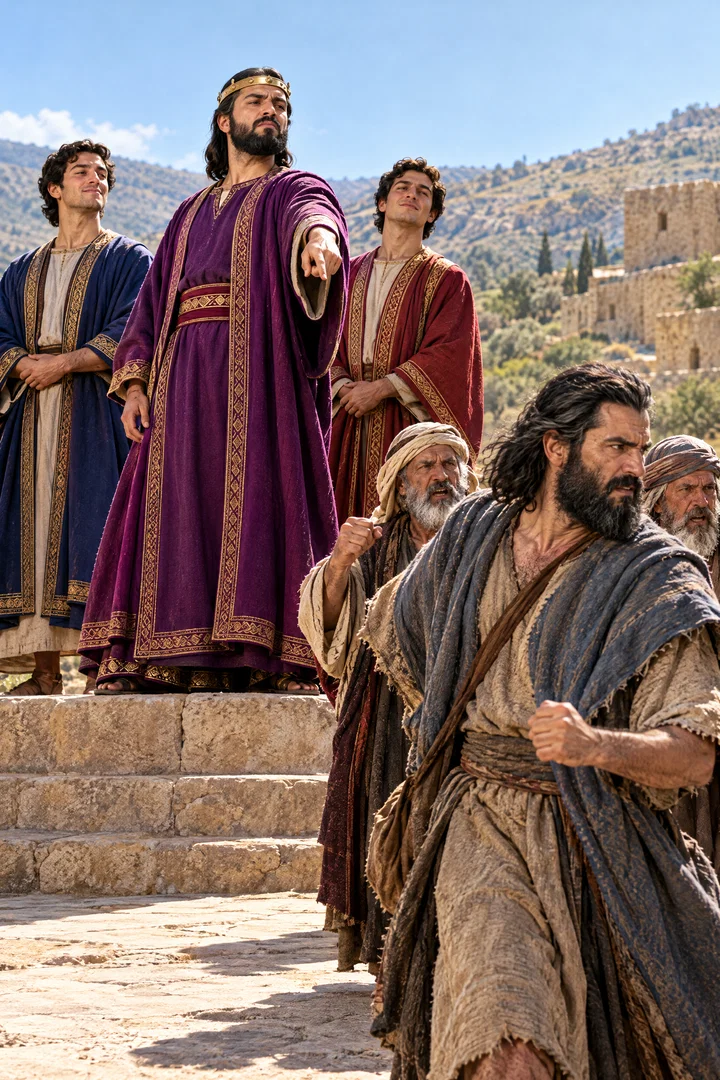
And the king answered the people roughly, and forsook the old men’s counsel that they gave him;
Translations
American King James Version, King James Version, KJV Cambridge Paragraph Bible
And the king answered the people roughly, and forsook the old men’s counsel that they gave him;
And the king answered the people roughly, and forsook the old men's counsel that they gave him;
And the king answered the people roughly, and forsook the counsel of the old men which they had given him;
And the king answered the people roughly, and forsook the counsel of the old men which they had given him,
And the king answereth the people sharply, and forsaketh the counsel of the elders which they counselled him,
And the king answered the people roughly, and forsook the advice of the old men which they had given him;
And the king answered the people, harshly,—and declined the counsel of the elders wherewith they had counselled him;
Berean Standard Bible, Majority Standard Bible
And the king answered the people harshly. He rejected the advice of the elders
The king answered the people roughly, and abandoned the counsel of the old men which they had given him,
And the king gave them a rough answer, giving no attention to the suggestion of the old men;
And the king answered the people sharpely, and left the old mens counsell that they gaue him,
Douay-Rheims (Challoner revision)
And the king answered the people roughly, leaving the counsel of the old men, which they had given him,
Pictures
Cross-references
- 1 Kings 11:29-39
And it came to pass at that time when Jeroboam went out of Jerusalem, that the prophet Ahijah the Shilonite found him in the way; and he had clad himself with a new garment; and they two were alone in the field:
Ahijah foretold the kingdom’s division and Jeroboam’s rule, fulfilled after Rehoboam refused the people.
- 2 Chronicles 10:13
And the king answered them roughly; and king Rehoboam forsook the counsel of the old men,
Rehoboam answers the people harshly and rejects the elders’ counsel.
- 1 Kings 12:28-30
Whereupon the king took counsel, and made two calves of gold, and said unto them, It is too much for you to go up to Jerusalem: behold thy gods, O Israel, which brought thee up out of the land of Egypt.
Jeroboam’s revolt leads him to set up golden calves for worship.
- 1 Kings 11:11-13
Wherefore the LORD said unto Solomon, Forasmuch as this is done of thee, and thou hast not kept my covenant and my statutes, which I have commanded thee, I will surely rend the kingdom from thee, and will give it to thy servant.
The division of the kingdom was foretold during Solomon’s reign and followed Rehoboam’s harsh answer.
- 1 Kings 12:9
And he said unto them, What counsel give ye that we may answer this people, who have spoken to me, saying, Make the yoke which thy father did put upon us lighter?
Rehoboam seeks counsel on how to answer the people.
- 1 Kings 12:3-5
That they sent and called him. And Jeroboam and all the congregation of Israel came, and spake unto Rehoboam, saying,
The people request relief from their heavy yoke, and Rehoboam tells them to return after three days.
- 1 Kings 11:34-39
Howbeit I will not take the whole kingdom out of his hand: but I will make him prince all the days of his life for David my servant’s sake, whom I chose, because he kept my commandments and my statutes:
kingdom taken from Solomon's son
- 1 Kings 12:17
But as for the children of Israel which dwelt in the cities of Judah, Rehoboam reigned over them.
Rehoboam's reign is limited to Judah after the revolt.
Commentary
Each commentary is drawn from primary sources: the writings of Ellen G. White and Adventist pioneers and periodicals. Each commentary is separate. Its own words are not a quotation; follow the references to read the source passages.
Ellen G. White
3 sources
On the third day, when Jeroboam and all the people came back to Rehoboam, this verse describes how the king responded to them.RH Jul 3, 1913 He forsook the older men's counsel to treat the people kindly and answer them with good, gentle words.RH Jul 3, 1913PK 89.1–90.1RH Jul 10, 1913 Following the young men's counsel instead, he answered the people roughly, declaring that his father had made their yoke heavy and he would add to it, that his father had chastised them with whips but he would chastise them with scorpions, making the heavy burden his father had imposed even heavier and punishing them even more severely.RH Jul 3, 1913PK 89.1–90.1RH Jul 10, 1913 Pride in his authority led him to prefer the younger advisers' stern policy.PK 89.1–90.1
Pride and refusal to make reforms led him to continue the oppressive policies of Solomon's reign.RH Jul 10, 1913 His refusal to listen to the people was from the Lord to carry out what the Lord had said through Ahijah the Shilonite to Jeroboam the son of Nebat, as had been foretold.RH Jul 3, 1913RH Jul 10, 1913 The harsh answer led all Israel to renounce any portion in David and any inheritance in the son of Jesse, depart to their tents, and divide into the kingdom of Judah and the northern kingdom of Israel, leaving Rehoboam to reign only over those who dwelt in the cities of Judah.RH Jul 3, 1913PK 89.1–90.1RH Jul 10, 1913
Sources
Pioneers and periodicals
21 sources
At Shechem on the third day after Solomon's death Jeroboam and all the people came back to Rehoboam with their petition to lighten the heavy yoke of taxes and forced labor.RH Jul 3, 1913ST Jun 22, 1904ST Jun 22, 1904 The old men who had stood before his father counseled him to be kind, speak good words and grant their request, but the young men of his own set counseled him not to yield, and he forsook the old men's counsel and answered roughly that his father made the yoke heavy and he would add to it, chastising with scorpions instead of whips.RH Jul 3, 1913ST Jun 22, 1904ST Dec 7, 1882 His harsh and arrogant refusal provoked revolt and permanently divided the kingdom, with ten tribes departing to Jeroboam and leaving Rehoboam to reign only over Judah and Benjamin.RH Jul 3, 1913ST Dec 7, 1882 His refusal was from the Lord to establish the word spoken by Ahijah the Shilonite to Jeroboam, carrying out God's judgment on Solomon for loving foreign wives, following Ashtoreth and Milcom, and building high places to Chemosh, Molech and other gods.RH Jul 3, 1913ST Jun 25, 1885ST Jun 22, 1904ST Jun 22, 1904 The division stands as the fruit of backsliding and of proud, stubborn leadership, for by rejecting wise counsel and increasing burdens instead of easing them he lost ten of the twelve tribes.RH Jul 10, 1913ST Apr 28, 1909ST May 20, 1913ST Dec 1, 1914RH Apr 23, 1908
Rehoboam's Harsh Answer
On the third day after Solomon's death, at the national assembly at Shechem, Jeroboam and all the people came back to Rehoboam.RH Jul 3, 1913ST Jun 22, 1904ST Jun 22, 1904ST Sep 8, 1898 They came as a delegation of the northern tribes headed by Jeroboam.ST Jun 22, 1904ST Sep 8, 1898 The meeting at Shechem was the occasion when the ten tribes revolted from Rehoboam.ST Sep 8, 1898
The old men who had stood before his father advised him to grant the people's petition to lighten the heavy yoke of taxes and imposed labor exacted by Solomon.ST Jun 22, 1904ST Jun 22, 1904 Their counsel was to be kind to the people and speak good words to them.RH Jul 3, 1913
The young men of his own set, young and inexperienced advisers, advised him not to yield to the demand.ST Jun 22, 1904 He forsook the old men's counsel that they gave him and followed the young men's counsel instead.RH Jul 3, 1913ST Jun 22, 1904ST Jun 22, 1904ST Jul 23, 1885ST Jun 22, 1904 He refused to hearken to the people's reasonable complaints about oppression and heavy taxation.ST Dec 7, 1882 He answered Jeroboam and all the people roughly, harshly, rashly and with arrogant harshness.RH Jul 3, 1913ST Jun 22, 1904ST Dec 7, 1882ST Jun 22, 1904ST Jul 23, 1885 His answer was that his father had made their yoke heavy and he would add to it, that his father had chastised them with whips but he would chastise them with scorpions.RH Jul 3, 1913ST Jun 22, 1904 Rather than easing burdens he threatened to increase them.ST Dec 7, 1882ST Jul 23, 1885
That rough answer provoked the ten tribes to revolt and brought the permanent division of the kingdom into two kingdoms.ST Dec 7, 1882ST Jul 23, 1885 All Israel renounced portion in David and inheritance in the son of Jesse and departed to their tents.RH Jul 3, 1913 The ten tribes separated from Judah and Benjamin under Jeroboam.RH May 1, 1879 Rehoboam was left to reign only over the children of Israel who dwelt in the cities of Judah, with only two tribes submitting to him rather than all Israel as under Solomon.RH Jul 3, 1913 The division is reckoned as two and a half tribes in Judah and ten tribes in Israel.ST May 20, 1913 Jeroboam, a strong young man and an energetic and ambitious agitator who might otherwise have been content to fill some important office under Rehoboam, induced Israel to revolt and became the first king of the separate, turbulent kingdom of the ten tribes.ST May 20, 1913
The division brought war and strife between the two divisions from that time on.ST May 20, 1913 His stubborn refusal of wise counsel and loss of the ten tribes also cost Rehoboam much of his wealth to the king of Egypt. The account belongs to the history of the kings of Judah and Israel, a period spanning about eighty years from the revolt to Jehoshaphat's death.RH May 25, 1916 The resulting northern kingdom had a 215-year period of probation before its final rejection.ST Dec 7, 1904
Judgment and Warning
Rehoboam's refusal to listen to the people was from the Lord, which Jehovah Himself brought about to perform and establish the word the Lord had spoken by Ahijah the Shilonite to Jeroboam the son of Nebat.RH Jul 3, 1913ST Jun 25, 1885ST Jun 22, 1904 In this the verse carries out God's judgment upon Solomon, a division the Lord had foreseen and foretold already in Solomon's day.ST Jun 25, 1885ST Jun 22, 1904ST Sep 7, 1904 On the third day, when Jeroboam and all the people came back, the king forsook the old men's counsel to be kind and speak good words and answered roughly after the counsel of the young men, and that harsh refusal hastened the rending of the kingdom.RH Jul 3, 1913ST Jun 22, 1904ST Sep 7, 1904
That judgment came because Solomon forsook wisdom for folly, loving many foreign women of the Moabites, Ammonites, Edomites, Zidonians and Hittites, going after Ashtoreth and Milcom, and building high places for Chemosh, Molech and the gods of his wives.ST Jun 25, 1885 Therefore the Lord stirred up adversaries against him all his days and declared He would surely rend the kingdom from him and give it to his servant, leaving one tribe to his son for David's sake and for Jerusalem's sake.ST Jun 25, 1885 His rough answer at Shechem thus carried out the Lord's declared purpose to rend ten tribes from the house of Solomon because of idolatry and give them to Jeroboam.ST Jun 25, 1885ST Jun 22, 1904
Solomon's luxury and lust and his mistake in multiplying wives to himself and turning his heart away from God left a weak and vacillating son to reign.ST May 20, 1913 The division came because of transgression and stands as an object-lesson of the fruits of backsliding and sin.ST Apr 28, 1909ST Apr 23, 1912 It would not have taken place had Solomon used his God-given wisdom for God throughout his reign.
Rehoboam was weak, foolish, unsteady, unsettled, stubborn, imprudent, pampered, degenerate and deplorable, and his weak, unsteady and deplorable reign after Solomon's death was marked by pride, harshness and refusal to make reforms, continuing the oppressive policies of Solomon's reign.RH Jul 10, 1913ST Apr 28, 1909ST Apr 23, 1912 His stubborn, imprudent and rash response took a large part of the kingdom from him and made the division after Solomon's death a major event of his reign.ST Apr 26, 1910ST Jul 30, 1885ST Sep 7, 1904 His rough answer illustrates that pride goeth before destruction and a haughty spirit before a fall, and shows how unfaithful leaders can lead the people into failure.ST Apr 26, 1910ST Jun 22, 1904
By rejecting the old men's wise counsel and choosing to follow the advice of younger, inexperienced advisers instead, his harsh and arbitrary rule brought disaster.RH Jul 10, 1913ST Dec 1, 1914RH Apr 23, 1908 His pride and refusal to make reforms led him to increase burdens instead of easing them, and this choice lost ten of Israel's twelve tribes, so that only two tribes submitted to him rather than all Israel as under Solomon.RH Jul 10, 1913ST Dec 1, 1914RH Apr 23, 1908 After the division, Jeroboam feared the people would return their allegiance to the house of David if they worshiped at Jerusalem, so he made golden calves and directed Israel to worship before them.RH Aug 1, 1871 That image worship was a violation of the second commandment, in which Jeroboam intended the calves to represent the true God, not to replace Him with another god.RH Aug 1, 1871
Sources