1 Kings 2:3
And keep the charge of the LORD thy God, to walk in his ways, to keep his statutes, and his commandments, and his judgments, and his testimonies, as it is written in the law of Moses, that thou mayest prosper in all that thou doest, and whithersoever thou turnest thyself:
Translations
And keep the charge of the LORD your God, to walk in his ways, to keep his statutes, and his commandments, and his judgments, and his testimonies, as it is written in the law of Moses, that you may prosper in all that you do, and wherever you turn yourself:
And keep the charge of the LORD thy God, to walk in his ways, to keep his statutes, and his commandments, and his judgments, and his testimonies, as it is written in the law of Moses, that thou mayest prosper in all that thou doest, and whithersoever thou turnest thyself:
and keep the charge of the Lord thy God, to walk in his ways, to keep his statutes, and his commandments, and his judgments, and his testimonies, as it is written in the law of Moses, that thou mayest prosper in all that thou doest, and whithersoever thou turnest thyself:
And keep the charge of the LORD thy God, to walk in his ways, to keep his statutes, and his commandments, and his judgments, and his testimonies, as it is written in the law of Moses, that thou mayest prosper in all that thou doest, and whithersoever thou turnest thyself.
and keep the charge of the LORD thy God, to walk in his ways, to keep his statutes, and his commandments, and his judgments, and his testimonies, according to that which is written in the law of Moses, that thou mayest prosper in all that thou doest, and whithersoever thou turnest thyself:
and keep the charge of Jehovah thy God, to walk in his ways, to keep his statutes, and his commandments, and his ordinances, and his testimonies, according to that which is written in the law of Moses, that thou mayest prosper in all that thou doest, and whithersoever thou turnest thyself;
and kept the charge of Jehovah thy God, to walk in His ways, to keep His statutes, His commands, and His judgments, and His testimonies, as it is written in the law of Moses, so that thou dost wisely all that thou dost, and whithersoever thou turnest,
and keep the charge of Jehovah thy God, to walk in his ways, to keep his statutes, and his commandments, and his ordinances, and his testimonies, as it is written in the law of Moses, that thou mayest prosper in all that thou doest and whithersoever thou turnest thyself;
and keep the observances of Yahweh thy God, by walking in his ways, by keeping his statutes, his commandments, and his regulations and his testimonies, as written in the law of Moses,—to the end thou mayest prosper in all that thou doest, and whithersoever thou turnest thyself;
And keep the charge of the LORD your God to walk in His ways and to keep His statutes, commandments, ordinances, and decrees, as is written in the Law of Moses, so that you may prosper in all you do and wherever you turn,
And keep the charge of the LORD your God to walk in His ways and to keep His statutes, commandments, ordinances, and decrees, as written in the Law of Moses, so that you may prosper in all you do and wherever you turn,
and keep the instruction of the LORD your God, to walk in his ways, to keep his statutes, his commandments, his ordinances, and his testimonies, according to that which is written in the law of Moses, that you may prosper in all that you do and wherever you turn yourself.
And keep the orders of the Lord your God, walking in his ways, keeping his laws and his orders and his rules and his words, as they are recorded in the law of Moses; so that you may do well in all you do and wherever you go,
And take heede to the charge of the Lord thy God, to walke in his wayes, and keepe his statutes, and his commandements, and his iudgements, and his testimonies, as it is written in the Law of Moses, that thou mayest prosper in all that thou doest, and in euery thing whereunto thou turnest thee,
Douay-Rheims (Challoner revision)
And keep the charge of the Lord thy God, to walk in his ways, and observe his ceremonies, and his precepts, and judgments, and testimonies, as it is written in the law of Moses: that thou mayest understand all thou dost, and whithersoever thou shalt turn thyself:
Pictures
Cross-references 20 of 33
- Deuteronomy 30:16
In that I command thee this day to love the LORD thy God, to walk in his ways, and to keep his commandments and his statutes and his judgments, that thou mayest live and multiply: and the LORD thy God shall bless thee in the land whither thou goest to possess it.
Cited as another passage naming God's commandments.
- Deuteronomy 17:19-20
And it shall be with him, and he shall read therein all the days of his life: that he may learn to fear the LORD his God, to keep all the words of this law and these statutes, to do them:
Israel’s king was to keep and obey God’s law.
- 1 Kings 8:58
That he may incline our hearts unto him, to walk in all his ways, and to keep his commandments, and his statutes, and his judgments, which he commanded our fathers.
Listed with 1 Kings 2:3 as referring to God's commandments.
- Deuteronomy 7:11
Thou shalt therefore keep the commandments, and the statutes, and the judgments, which I command thee this day, to do them.
Cited with 1 Kings 2:3 as a passage about God's commandments.
- Deuteronomy 11:1
Therefore thou shalt love the LORD thy God, and keep his charge, and his statutes, and his judgments, and his commandments, alway.
Cited alongside 1 Kings 2:3 among references to God's commandments.
- 1 Kings 3:14
And if thou wilt walk in my ways, to keep my statutes and my commandments, as thy father David did walk, then I will lengthen thy days.
God makes Solomon’s blessings conditional on walking in his ways and keeping his commandments.
- Leviticus 25:18
Wherefore ye shall do my statutes, and keep my judgments, and do them; and ye shall dwell in the land in safety.
Both command keeping God’s judgments and statutes.
- Deuteronomy 8:11
Beware that thou forget not the LORD thy God, in not keeping his commandments, and his judgments, and his statutes, which I command thee this day:
Cited in support of the distinction between God's commandments and ceremonial ordinances.
- 1 Chronicles 28:7-8
Moreover I will establish his kingdom for ever, if he be constant to do my commandments and my judgments, as at this day.
Solomon’s kingdom and blessing depend on keeping God’s commandments.
- 2 Chronicles 6:16
Now therefore, O LORD God of Israel, keep with thy servant David my father that which thou hast promised him, saying, There shall not fail thee a man in my sight to sit upon the throne of Israel; yet so that thy children take heed to their way to walk in my law, as thou hast walked before me.
The promise of an enduring Davidic throne is tied to his descendants walking faithfully.
- Daniel 9:11
Yea, all Israel have transgressed thy law, even by departing, that they might not obey thy voice; therefore the curse is poured upon us, and the oath that is written in the law of Moses the servant of God, because we have sinned against him.
Names the law of Moses in a later biblical book.
- 2 Kings 23:25
And like unto him was there no king before him, that turned to the LORD with all his heart, and with all his soul, and with all his might, according to all the law of Moses; neither after him arose there any like him.
Refers to the law of Moses.
- Psalms 111:7
The works of his hands are verity and judgment; all his commandments are sure.
Cited as another use of “judgments” in connection with God’s law.
- 1 Chronicles 28:9
And thou, Solomon my son, know thou the God of thy father, and serve him with a perfect heart and with a willing mind: for the LORD searcheth all hearts, and understandeth all the imaginations of the thoughts: if thou seek him, he will be found of thee; but if thou forsake him, he will cast thee off for ever.
David charges Solomon to know and serve God faithfully.
- Joshua 8:31
As Moses the servant of the LORD commanded the children of Israel, as it is written in the book of the law of Moses, an altar of whole stones, over which no man hath lift up any iron: and they offered thereon burnt offerings unto the LORD, and sacrificed peace offerings.
Refers to the law of Moses as an earlier written book.
- Luke 24:44
And he said unto them, These are the words which I spake unto you, while I was yet with you, that all things must be fulfilled, which were written in the law of Moses, and in the prophets, and in the psalms, concerning me.
The New Testament confirms the earlier writings of Moses.
- 1 Kings 9:4-7
And if thou wilt walk before me, as David thy father walked, in integrity of heart, and in uprightness, to do according to all that I have commanded thee, and wilt keep my statutes and my judgments:
The Lord promises blessing for obedience and warns that turning from his commandments brings judgment.
- 2 Chronicles 34:14
And when they brought out the money that was brought into the house of the LORD, Hilkiah the priest found a book of the law of the LORD given by Moses.
Reports the discovery of the book of the law.
- Matthew 5:17-19
Think not that I am come to destroy the law, or the prophets: I am not come to destroy, but to fulfil.
Jesus affirms the enduring importance of God’s commandments and the law.
- Deuteronomy 5:31
But as for thee, stand thou here by me, and I will speak unto thee all the commandments, and the statutes, and the judgments, which thou shalt teach them, that they may do them in the land which I give them to possess it.
Cited alongside 1 Kings 2:3 as referring to God's commandments.
Commentary
Each commentary is drawn from primary sources: the writings of Ellen G. White and Adventist pioneers and periodicals. Each commentary is separate. Its own words are not a quotation; follow the references to read the source passages.
Ellen G. White
11 sources
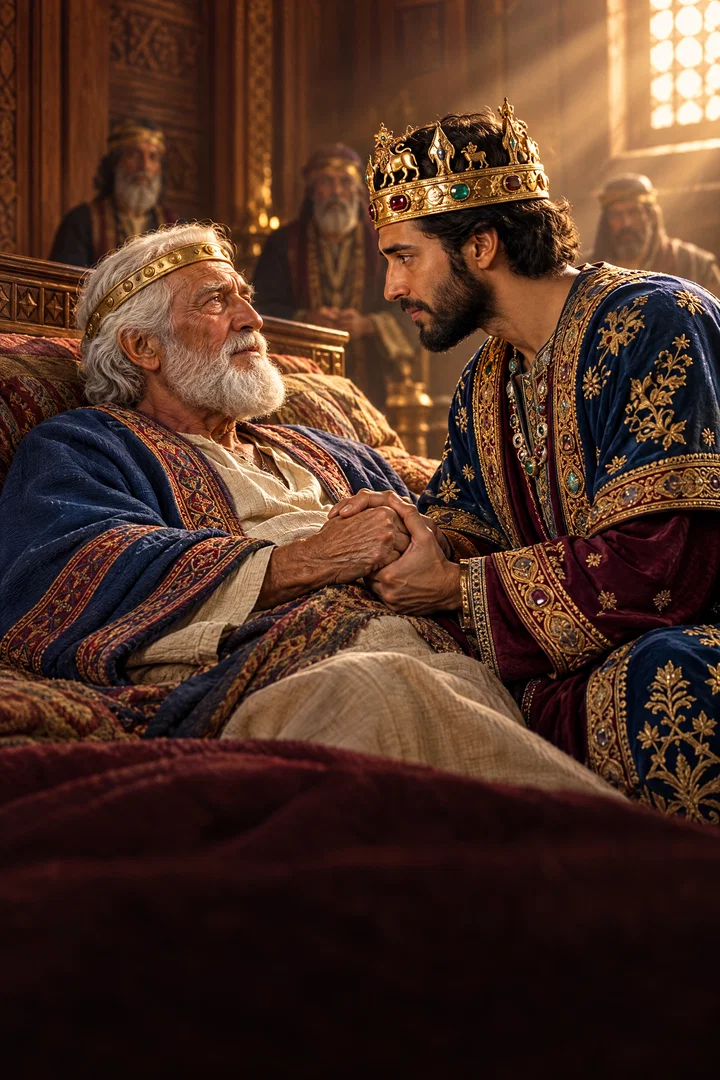
This is David's dying and final charge to Solomon as the incoming king.Lt 49, 1887, par. 4SG4 96.1–2 He was to be strong and show himself a man, with courage and integrity in carrying out his responsibilities.ST Nov 26, 1896Lt 49, 1887, par. 4 Part of that charge was to govern wisely and to settle the affairs of the kingdom before David's death.SG4 96.1–2
Keeping the charge of the Lord meant walking in His ways and keeping His statutes and His commandments and His judgments and His testimonies, as written in the law of Moses.ST Nov 26, 1896RH Aug 17, 1905Ms 154, 1902, par. 23–24Ms 81, 1900, par. 1–4Ms 163, 1902, par. 15–17 The same obedience was to mark Solomon as a faithful, godly man in his rule.ST Nov 26, 1896Lt 49, 1887, par. 4 Faithful obedience was the condition for prospering in all that he did and whithersoever he turned himself, in his actions, paths, and undertakings.ST Nov 26, 1896Ms 154, 1902, par. 23–24Ms 81, 1900, par. 1–4Ms 163, 1902, par. 15–17Lt 49, 1887, par. 4 That prosperity depended on faithfully keeping God's charge.RH Aug 17, 1905Ms 81, 1900, par. 1–4
The charge connected obedience with the continuance of God's promise concerning David's descendants on Israel's throne.ST Nov 26, 1896RH Aug 17, 1905 They would remain on the throne of Israel if they walked before God in truth with all their heart and soul, truthfully and wholeheartedly.Ms 154, 1902, par. 23–24PP 753.2 The prosperity, success, and standing of Israel among the nations depended greatly on the king's fidelity to God.RH Aug 17, 1905Ms 163, 1902, par. 15–17PP 753.2 In practical terms, Solomon would prosper in building the temple if he followed God's commands, and God's promise of wisdom to him was conditional on walking in righteousness and truth.Ms 81, 1900, par. 30–33
The charge remains binding on those who bear responsibility in God's work and on people in positions of trust today.Ms 163, 1902, par. 15–17Ms 81, 1900, par. 15 As Solomon was tested, so God's people are tested during their time of probation.Ms 81, 1900, par. 15 It applies personally as a call to take God's instruction to heart and to put away and reject wrongdoing.Lt 49, 1887, par. 45T 509.1 In that personal obedience, honest confession of sin is honorable rather than disgraceful.5T 509.1
Sources
Pioneers and periodicals
18 sources
David gave this charge to Solomon as Solomon succeeded him as king, calling him to keep the Lord's charge by walking in His ways and keeping His statutes, commandments, judgments, and testimonies as written in the law of Moses.ST Dec 9, 1897ST Sep 17, 1896 Obedience was the duty and prosperity in all he did and wherever he turned was its stated result, so that Solomon's success in his undertakings as king depended on faithfully keeping God's charge with courage and integrity as a godly man.ST Nov 26, 1896RH Aug 17, 1905ST Dec 9, 1897 Faithfulness to that way with all the heart and soul was the condition for the Lord to continue His promise concerning David's descendants on Israel's throne, and Israel's success and standing among the nations with blessing for family and kingdom depended on such fidelity to God.ST Nov 26, 1896RH Aug 17, 1905RH Jun 23, 1853 Statutes, commandments, judgments, and testimonies mean substantially the same thing, and the judgments are God's requirements and what He has determined to be inherently and essentially right, kept by obeying His law and doing His will.RH Jun 4, 1901RH Oct 24, 1885 To take its words as a pledge to keep all God's commandments, statutes, and laws brings accountability in the Judgment day whose extent only the most holy One knows.ST Aug 5, 1886
Words and Historical Setting
The verse is the charge David gives to Solomon as Solomon succeeds him as king, to keep the charge of the Lord and to walk in His ways.ST Sep 17, 1896 It was given at the end of David's life as his testimony, and though he had committed grievous sins he repented and God restored him to the throne, where he remained until his death with his testimony established even on his deathbed.RH Apr 26, 1906 It was part of David's measures for securing Solomon's throne, which Solomon carried out after David's death.ST Dec 9, 1897
It stands at the close of the clear narrative running from 2 Samuel 8 through 1 Kings 2, which tells of the war that continued between Israel and Judah after Saul died, when the friends of Saul followed the way of the world around them by continuing a dead king's son on the throne.ST Apr 19, 1910 That narrative ends with David triumphing and becoming the beloved king over all the tribes of Israel, showing that God Himself selects the rulers of His people.ST Apr 19, 1910 It belongs to the account of Solomon's reign over the undivided kingdom.RH May 11, 1916
Statutes, commandments, judgments, and testimonies mean substantially the same thing, though each has a shade of distinction.RH Jun 4, 1901 Judgments refers especially to what God has determined to be inherently and essentially right, for things are not good merely because God commands them or evil merely because He forbids them, but He commands what is good and forbids what is evil.RH Jun 4, 1901 Judgments appear alongside God's commandments and statutes as part of the Lord's charge to be kept by walking in His ways, the judgments being God's requirements, and keeping them means obeying His law and doing His will.RH Oct 24, 1885 It is a later biblical reference to the law of Moses as a book written before the time of the books that refer to it.ST May 13, 1897
Obedience and Promised Blessing
The duty laid down is to keep the charge of the Lord by walking in His ways and keeping His statutes and commandments and judgments and testimonies as written in the law of Moses, and the stated result is to prosper in all that is done and wherever one turns.ST Dec 9, 1897 It was a charge to govern as a faithful, godly man, calling for courage and integrity in carrying out the responsibilities of kingship.ST Nov 26, 1896RH Aug 17, 1905 Prosperity in undertakings was made to depend on faithfully keeping that charge.ST Nov 26, 1896RH Aug 17, 1905
Faithfulness to these duties was the condition for the Lord to continue His promise concerning the descendants of David upon the throne of Israel.ST Nov 26, 1896RH Aug 17, 1905 That continuance depended on his children keeping that way faithfully with all their heart and with all their soul.ST Nov 26, 1896RH Jun 23, 1853 The success of Israel and its standing among the nations depended on fidelity to God.RH Aug 17, 1905 Obedience carried a blessing for the family and for the kingdom.RH Aug 17, 1905RH Jun 23, 1853
The statutes, commandments, judgments, and testimonies named to be kept mean substantially the same thing, though each has its shade of distinction, with judgments denoting especially what God has determined to be inherently and essentially right, since things are not good merely because He commands them nor evil merely because He forbids them, but He commands what is good and forbids what is evil.RH Jun 4, 1901 Keeping all the things so named leads to acceptance by the Lord.RH Jun 4, 1901
Prophecy Doctrine and Accountability
The verse belongs to the account of the final troubles in David's household, in which Adonijah's attempt to seize the throne brought about his own overthrow and death and fulfilled Nathan's warning that the sword would never depart from David's house.RH Jul 27, 1869 It is part of the history to be read in connection with David's great transgression and the judgments that followed it, which fulfilled Nathan's denunciation.RH Oct 12, 1869 Its requirements belong to the Mosaic law, and its commandments are not limited to the Ten Commandments.RH Feb 18, 1873 The commandments and statutes given through Moses are treated there as parts of one law, rather than as separate moral and ceremonial laws.RH May 6, 1873
Those who distinguished the laws understood the verse to call the enduring moral law the commandments of God, distinct from the temporary ceremonial ordinances, supporting the identification of that law with the Ten Commandments.RH Feb 1851 Its words provide a pledge to keep all God's commandments, statutes, and laws.ST Aug 5, 1886 Saying those words brings accountability in the Judgment day whose extent only the most holy One knows, and those who make the pledge need to be led into the truth before it is too late.ST Aug 5, 1886
Sources