Translations
American King James Version, King James Version, KJV Cambridge Paragraph Bible, Revised Version
And this woman’s child died in the night; because she overlaid it.
And this woman's child died in the night; because she overlaid it.
And this woman’s child died in the night, because she lay upon it.
And the son of this woman dieth at night, because she hath lain upon it,
And this woman's child died in the night; because she had lain upon it.
And this woman’s son died in the night,—because she overlaid it.
Berean Standard Bible, Majority Standard Bible
During the night this woman’s son died because she rolled over on him.
This woman’s child died in the night, because she lay on it.
In the night, this woman, sleeping on her child, was the cause of its death.
And this womans sonne died in the night: for she ouerlay him.
Douay-Rheims (Challoner revision)
And this woman’s child died in the night: for in her sleep she overlaid him.
Pictures
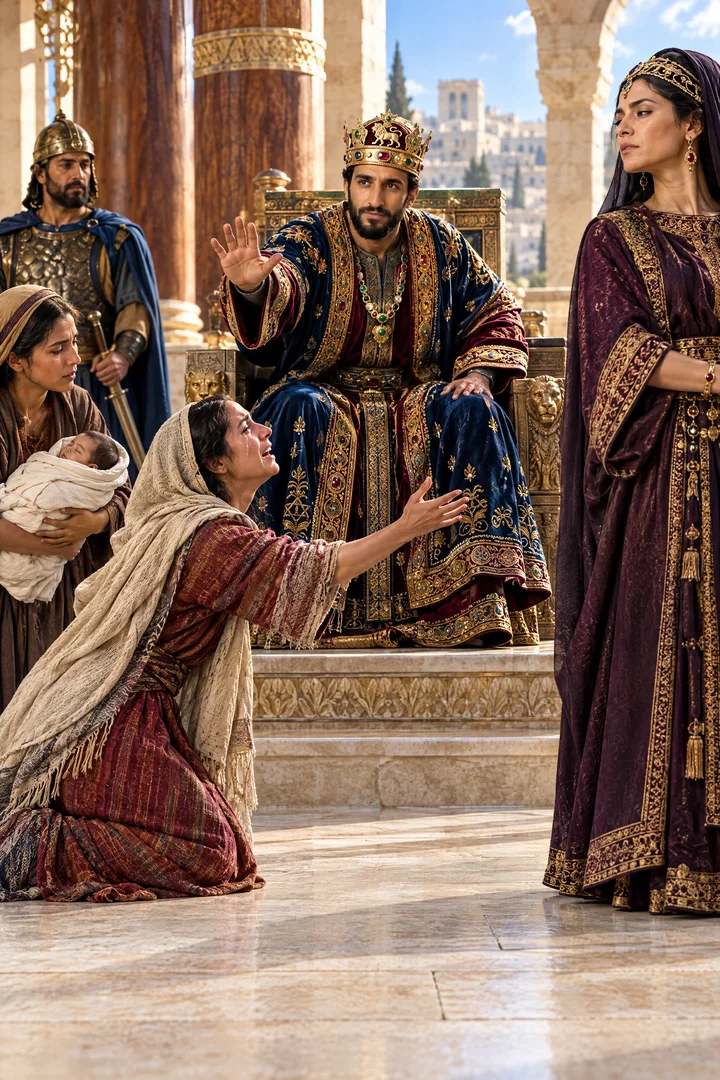
Cross-references
- 1 Kings 3:1-15
And Solomon made affinity with Pharaoh king of Egypt, and took Pharaoh’s daughter, and brought her into the city of David, until he had made an end of building his own house, and the house of the LORD, and the wall of Jerusalem round about.
Solomon’s request for wisdom precedes his decision in the case.
Commentary
Each commentary is drawn from primary sources: the writings of Ellen G. White and Adventist pioneers and periodicals. Each commentary is separate. Its own words are not a quotation; follow the references to read the source passages.
Ellen G. White
2 sources
This verse belongs to the account of Solomon's early wisdom and sympathy.PK 57.2RH Dec 21, 1905
After one woman's child died in the night because she accidentally lay upon it, the dispute that came before him concerned the surviving babe.RH Dec 21, 1905
By his judgment Solomon restored the helpless baby to its unfortunate mother.PK 57.2RH Dec 21, 1905
That restoration displayed both his care for a helpless child and his ability to judge the women's case.RH Dec 21, 1905
Sources
Pioneers and periodicals
9 sources
This verse falls within the history of Solomon's reign, during the period when Israel was an undivided kingdom.ST Dec 9, 1897 It is part of the account in 1 Kings 3:16-28 of two women who both claimed the same living child after one child had died, which belongs with the accounts of Solomon's peaceful reign, dominion, provision, riches, and breadth of wisdom.ST Oct 1, 1896 It records one woman's allegation in the dispute brought before Solomon over the identity of the living child's mother, claiming that the other woman's child died in the night because she accidentally lay on it while sleeping and then exchanged the dead child for the living one.ST Jan 6, 1888
The verse states that one woman's child died during the night because she accidentally lay on it, and that the mother did not notice the death until morning.RH Dec 21, 1905RH Feb 7, 1865 The decision between the two women manifests the wisdom given to Solomon in answer to his prayer, showing a king using shrewd judgment to resolve a difficult appeal for justice.ST Nov 5, 1885ST Oct 1, 1896 Solomon's judgment restored the surviving babe to its mother, showing his early wisdom and sympathy in his care for a helpless child and his ability to judge the women's case.RH Dec 21, 1905 The case left Solomon uncertain about whom the living child belonged to and which woman was its rightful mother, though the Lord knows those who are his.RH Nov 4, 1858
The dead child and the living child illustrate the ceremonial law as dead and the moral law as living, and the king's proposed test by the sword illustrates truth and justice exposing whether people would preserve the moral law whole or divide it.RH Jun 9, 1853 The real mother's plea for the contested child's life illustrates that a truly repentant sinner does not seek to abolish God's law, but values and upholds it.RH Apr 16, 1867 The verse illustrates how death can come quietly and unnoticed.RH Feb 7, 1865
Sources