1 Samuel 1:14
And Eli said unto her, How long wilt thou be drunken? put away thy wine from thee.
Translations
And Eli said to her, How long will you be drunken? put away your wine from you.
King James Version, KJV Cambridge Paragraph Bible, Revised Version, American Standard Version
And Eli said unto her, How long wilt thou be drunken? put away thy wine from thee.
Webster Bible, Darby Translation
And Eli said to her, How long wilt thou be drunken? put away thy wine from thee.
And Eli saith unto her, 'Until when are thou drunken? turn aside thy wine from thee.'
And Eli said unto her, How long, wilt thou be, drunken? Put away thy wine from thee.
Berean Standard Bible, Majority Standard Bible
and said to her, “ How long will you be drunk? Put away your wine!”
Eli said to her, “ How long will you be drunk? Get rid of your wine!”
And Eli said to her, How long are you going to be the worse for drink? Put away the effects of your wine from you.
And Eli sayde vnto her, Howe long wilt thou be drunken? Put away thy drunkennesse from thee.
Douay-Rheims (Challoner revision)
And said to her: How long wilt thou, be drunk? digest a little the wine, of which thou hast taken too much.
Pictures
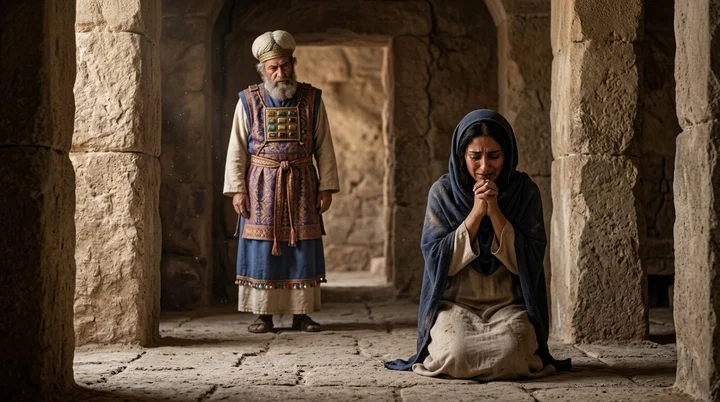
Cross-references
- 1 Samuel 2:1-11
And Hannah prayed, and said, My heart rejoiceth in the LORD, mine horn is exalted in the LORD: my mouth is enlarged over mine enemies; because I rejoice in thy salvation.
Hannah’s later prayer follows the plea Eli mistook for drunkenness.
- 1 Samuel 2:29
Wherefore kick ye at my sacrifice and at mine offering, which I have commanded in my habitation; and honourest thy sons above me, to make yourselves fat with the chiefest of all the offerings of Israel my people?
Eli is rebuked for honoring his sons above God.
- 1 Samuel 2:12-25
Now the sons of Eli were sons of Belial; they knew not the LORD.
The passage portrays the corrupt atmosphere of Eli’s house and its effect on his sons.
Commentary
Each commentary is drawn from primary sources: the writings of Ellen G. White and Adventist pioneers and periodicals. Each commentary is separate. Its own words are not a quotation; follow the references to read the source passages.
Ellen G. White
6 sources
Eli watched Hannah as she prayed without sound, her lips moving while her heart was full of deep grief and distress, and he took her anguished, silent pleading for drunkenness.PP 569.3–4PP 570.1–3ST Oct 27, 1881ST Nov 24, 1881 He sternly and unjustly rebuked her, telling her to put away her wine.PP 569.3–4PP 570.1–3ST Oct 27, 1881ST Nov 24, 1881 His suspicion shows how common drunkenness and irreverent behavior had become, even at religious festivals, so that he could suppose a worshipper at prayer was drunk.PP 569.3–4PP 570.1–3 It likewise shows how widespread intemperance had grown among the people, even among women.ST Oct 27, 1881
In the larger account Hannah stands as the faithful one while Eli fails in his duties as both father and priest, a contrast set forth without explaining his accusation that she was drunk.ST Nov 10, 1881 His readiness to censure her earnest prayer stands in contrast to his excuses for the sins of his own sons.ST Nov 24, 1881 Her part in the account exemplifies patient, prayerful, persevering faithfulness of the kind needed in the church, in the Sabbath school, and in society.TSSW 109.4–5
Sources
Pioneers and periodicals
21 sources
At Shiloh Eli as high priest saw Hannah praying silently in deep distress with moving lips and wrongly charged her with drunkenness, telling her to put away her wine.ST Oct 27, 1881ST Apr 8, 1913RH Apr 5, 1860ST Sep 29, 1898RH Dec 14, 1911 His hasty censure of her without evidence contrasts with his failure to faithfully reprove his own sons in their sins as both father and priest.ST Nov 10, 1881ST Nov 24, 1881 Hannah was in fact pouring out earnest, agonizing prayer with deep feeling, weeping and tears as she waited upon God.ST Feb 14, 1884RH Jan 12, 1860RH Jul 21, 1863 God hears the heart even when its prayer is not spoken aloud, and He answered her prayer for a son with the birth of Samuel, turning her fretting distress into perfect trust.ST Apr 8, 1913RH Sep 11, 1913RH Aug 31, 1869RH Jun 24, 1915ST Sep 5, 1900 Her example shows that a simple person may approach God in prayer without special status, eloquence, or merit and receive help, and that a mother who teaches obedience from very early life prepares her child to hear and heed the voice of the Lord.RH Feb 27, 1908RH Jul 30, 1857
Setting and Rebuke
The verse occurs in the story of Samuel's birth, when Eli mistakes Hannah's prayer for drunkenness and tells her to put away her wine.ST Apr 8, 1913RH Dec 14, 1911 The chapter tells how Samuel was asked of God and how Hannah's prayer was answered.ST Apr 8, 1913 It belongs to the period between the judges and the kings, when Israel lacked faithfulness to God and people did what seemed right to them. It stands in the first chapters of 1 Samuel that record a noted apostasy of Israel in the days of Samuel, a backsliding from which Israel was restored through Samuel's ministrations as prophet.
Eli spoke these words at Shiloh, where he served as high priest and where the young Samuel served in the tabernacle.ST Sep 29, 1898 He saw Hannah's lips move as she prayed silently in deep distress and decided she was drunk, reproving her without evidence and mistaking earnest, silent prayer for wine.ST Oct 27, 1881ST Apr 8, 1913RH Apr 5, 1860RH Jul 21, 1863 Her prayer was silent and earnest, with deep feeling and weeping and tears as she waited upon God.RH Jul 21, 1863 His readiness to censure her unjustly contrasts with his excuses for his sons' sins, for he reproved Hannah while his own sons who brought down the curse were left unreproved.ST Nov 24, 1881
The rebuke reflects how common intemperance had become among Israel's people, even among women.ST Oct 27, 1881 The surrounding passage in 1 Samuel 1:8-17 shows fasting as abstinence from food, at least from pleasant food, joined with mourning or humiliation and prayer.ST Apr 15, 1880RH Jul 4, 1871 The account contrasts faithful Hannah with Eli failing in his duties as both father and priest, and it offers no explanation for his accusation that she was drunk.ST Nov 10, 1881
Prayer Heard and Answered
Hannah prayed at the tabernacle gate for a son with silent, earnest, agonizing prayer, her lips moving while no voice was heard, waiting upon God in deep distress with deep feeling and weeping and tears.ST Feb 14, 1884RH Jan 12, 1860RH Jul 21, 1863 Eli mistook that silent earnestness for drunkenness and rebuked her as if she had been drinking.RH Jul 21, 1863 Her moving lips, deep feeling, and tears as she waited upon God show how earnest inward prayer may be mistaken outwardly yet still be true prayer.ST Feb 14, 1884RH Jan 12, 1860RH Jul 21, 1863
God hears the heart even when its prayer is not spoken aloud, while words without the heart are not heard by him.RH Jun 24, 1915 In the account of 1 Samuel 1:10-18 Hannah stopped fretting and left her distress in the Lord's hands, and he changed her fret into perfect trust, worked for her, and granted the desire of her soul.RH Sep 11, 1913 Her prayer was answered with the birth of Samuel, who was asked of God, showing the power of prayer to bring the answer asked for.ST Apr 8, 1913RH Aug 31, 1869RH Aug 1, 1871 Prayer in her case reached the heart of the Infinite, and God answered with wonders recorded in the Old Testament, obtaining from God what was asked.ST Sep 5, 1900STRH Aug 1, 1871 The birth of the prophet Samuel in answer to earnest prayer in 1 Samuel 1:10-20 stands as an example of prayer followed by an answer.ST Apr 8, 1913ST Sep 5, 1900RH Dec 18, 1913
A simple person may approach God in prayer and receive help without special status, eloquence, or merit, as Hannah's example shows.RH Jul 30, 1857 She loved God's name and stands among those to whom God showed love and mercy by answering prayer and saving from danger, the same relation to God that David longed and prayed to have. Her reproof for supposed drunkenness because her lips moved was misdirected. Her story with her child Samuel shows a mother teaching obedience from very early life, so that Samuel when still a child could stand by his master at the first call and have the Lord speak to him.RH Feb 27, 1908 Those taught obedience when young are much more likely to hear and heed the voice of the Lord than those not thus taught, and parents have the duty to expect obedience, with commanding obedience belonging to the mother's work even when it is sometimes easier for the father.RH Feb 27, 1908
Sources