1 Samuel 12:18
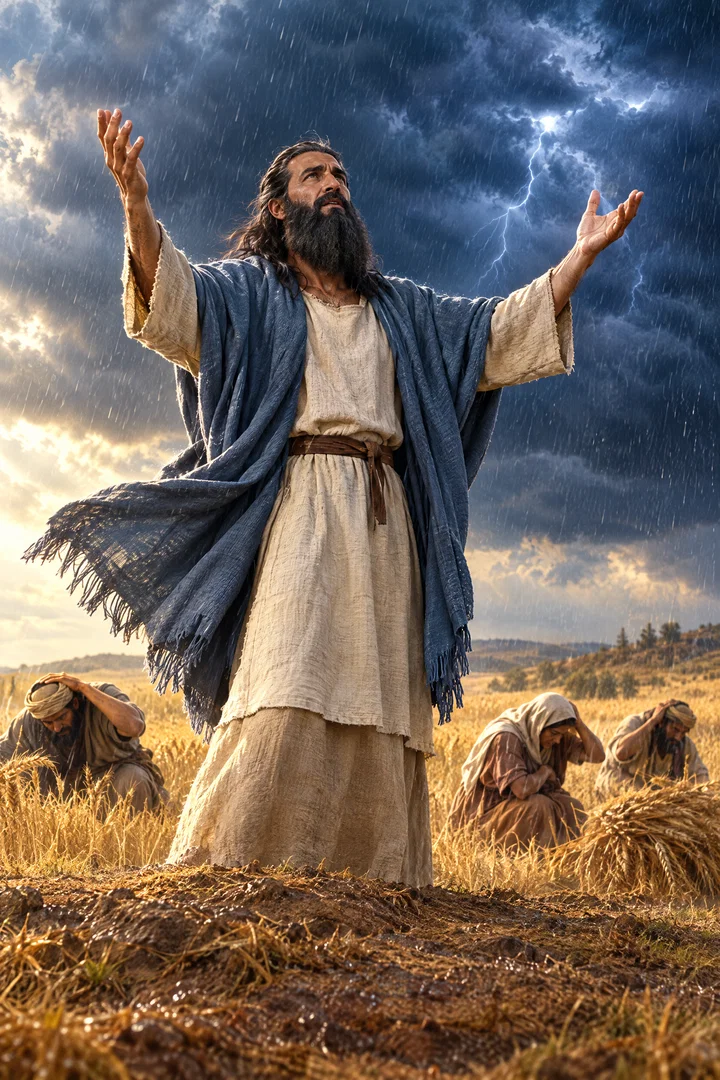
So Samuel called unto the LORD; and the LORD sent thunder and rain that day: and all the people greatly feared the LORD and Samuel.
Translations
American King James Version, Webster Bible
So Samuel called to the LORD; and the LORD sent thunder and rain that day: and all the people greatly feared the LORD and Samuel.
King James Version, Revised Version
So Samuel called unto the LORD; and the LORD sent thunder and rain that day: and all the people greatly feared the LORD and Samuel.
So Samuel called unto the Lord; and the Lord sent thunder and rain that day: and all the people greatly feared the Lord and Samuel.
So Samuel called unto Jehovah; and Jehovah sent thunder and rain that day: and all the people greatly feared Jehovah and Samuel.
And Samuel calleth unto Jehovah, and Jehovah giveth voices and rain, on that day, and all the people greatly fear Jehovah and Samuel;
And Samuel called to Jehovah; and Jehovah sent thunder and rain that day. And all the people greatly feared Jehovah and Samuel.
So Samuel cried unto Yahweh, and Yahweh gave forth thunderings and rain, on that day,—and all the people greatly feared Yahweh, and Samuel.
Berean Standard Bible, Majority Standard Bible
So Samuel called to the LORD, and on that day the LORD sent thunder and rain.As a result, all the people greatly feared the LORD and Samuel.
So Samuel called to the LORD, and the LORD sent thunder and rain that day. Then all the people greatly feared the LORD and Samuel.
So Samuel made prayer to the Lord; and the Lord sent thunder and rain that day: and all the people were in fear of the Lord and of Samuel.
Then Samuel called vnto the Lord, and the Lord sent thunder and raine the same day: and all the people feared the Lord and Samuel exceedingly.
Douay-Rheims (Challoner revision)
And Samuel cried unto the Lord, and the Lord sent thunder and rain that day.
Pictures
Cross-references
- 1 Samuel 8:5-7
And said unto him, Behold, thou art old, and thy sons walk not in thy ways: now make us a king to judge us like all the nations.
Israel’s demand for a king is treated as rejecting God’s rule.
- 1 Samuel 12:23
Moreover as for me, God forbid that I should sin against the LORD in ceasing to pray for you: but I will teach you the good and the right way:
Samuel regards ceasing to pray for Israel as sin.
Commentary
Each commentary is drawn from primary sources: the writings of Ellen G. White and Adventist pioneers and periodicals. Each commentary is separate. Its own words are not a quotation; follow the references to read the source passages.
Ellen G. White
9 sources
The setting is Gilgal, where Samuel gave his parting words as ruler of Israel after the people had welcomed Saul as king.ST Jul 27, 1882 The thunder and rain fell on wheat-harvest day, in May and June when weather in the East was normally dry, so such weather was unexpected.Lt 16, 1897, par. 19–241SP 355.1–2PP 615.1SG4 67.3ST Jul 27, 1882 Samuel called unto the Lord in prayer, and the Lord answered that same day by sending thunder and rain.Lt 16, 1897, par. 19–241SP 355.1–2PP 604.2 It was a sudden, violent storm sent in response to his prayer.PP 615.1SG4 67.3ST Jul 27, 1882
The storm was a sign from God of His displeasure, showing that Israel's demand for a king was a great sin that added to their sins.Lt 16, 1897, par. 19–241SP 355.1–2PP 615.1SG4 67.3ST Jul 27, 1882 It showed that in demanding a king they rejected God's rule and authority over them and His power over them.Lt 16, 1897, par. 19–24PP 604.2SG4 67.3 It confirmed Samuel's warning and showed that God had honored the man the people had rejected.ST Jul 27, 1882 All the people were terrified and greatly feared the Lord and Samuel.Lt 16, 1897, par. 19–241SP 355.1–2PP 615.1SG4 67.3ST Jul 27, 1882
They acknowledged and confessed that asking for a king had added to their sins, and asked Samuel to pray for them.Lt 16, 1897, par. 19–241SP 355.1–2PP 615.1SG4 67.3ST Jul 27, 1882 Israel had wanted a human ruler instead of being satisfied with God as their ruler, and although they could have withdrawn their demand, pride kept them from doing so.EDFCP 23.1Lt 38, 1890, par. 7–8 Rejecting Samuel's leadership was in fact dishonoring and rejecting the Lord who had ruled them, not merely rejecting Samuel.EDFCP 23.1Lt 38, 1890, par. 7–8
Sources
Pioneers and periodicals
9 sources
The setting is Gilgal, where Samuel spoke his parting words as ruler after the people had welcomed Saul as king.ST Jul 27, 1882 It was his address at Saul's inauguration, reflecting his faithful service as judge.ST Oct 17, 1895 It belongs to the period when Israel asked for a king and turned from relying on God as its King.ST Mar 31, 1909
It was Samuel's protest against Israel's rejection of the old order and choice of a king, and his demonstration that Israel had rejected God's rule by asking for a king.ST Sep 4, 1893 The Lord regarded the demand for a king as a rejection of Himself, not merely of Samuel His appointed minister.ST Oct 10, 1895 The chapter closes with earnest exhortation to cleave to Jehovah and fear Him only.
The thunder and rain was a striking miracle because it came in harvest time, even in the wheat harvest when such weather was unexpected.ST Jul 27, 1882RH Jun 16, 1868 In Palestine harvest is summer, a season of dry weather without a shower and almost without a cloud, just as the rainy season is almost uninterrupted rain.RH Jun 16, 1868 Coming out of its season made the sign more powerful and unexpected.ST Jul 27, 1882RH Jun 16, 1868ST Aug 5, 1889
Samuel called on and asked the Lord to send the sign, and the Lord sent it that day.ST Jul 27, 1882ST Sep 4, 1893 The storm confirmed his warning and showed the Lord's displeasure at the demand for a king and that God regarded the choice as rejection of His rule.ST Jul 27, 1882ST Sep 4, 1893ST Oct 10, 1895 Yet He showed mercy and watch-care for His people by guarding them from unrighteous rule with instruction.RH Mar 23, 1916ST Sep 4, 1893 It shows the certainty of God's watch-care for His people.RH Mar 23, 1916
On that day all the people were terrified and greatly feared the Lord and Samuel.ST Jul 27, 1882RH Jun 16, 1868ST Sep 4, 1893ST Oct 10, 1895 They recognized that God had honored the man they had rejected.ST Jul 27, 1882 They recognized their sin, confessed it, acknowledged it, and asked Samuel to pray for them.ST Jul 27, 1882ST Aug 5, 1889 The frightening storm made Israel recognize its sin and fear the Lord.
It reveals Samuel as a faithful intercessor who, though he reproved the people for rejecting the Lord, answered their plea with tenderness and continued to pray and plead for them.ST Aug 5, 1889 It teaches that danger can awaken people to their sins and their duty to God.
Sources