1 Samuel 13:12
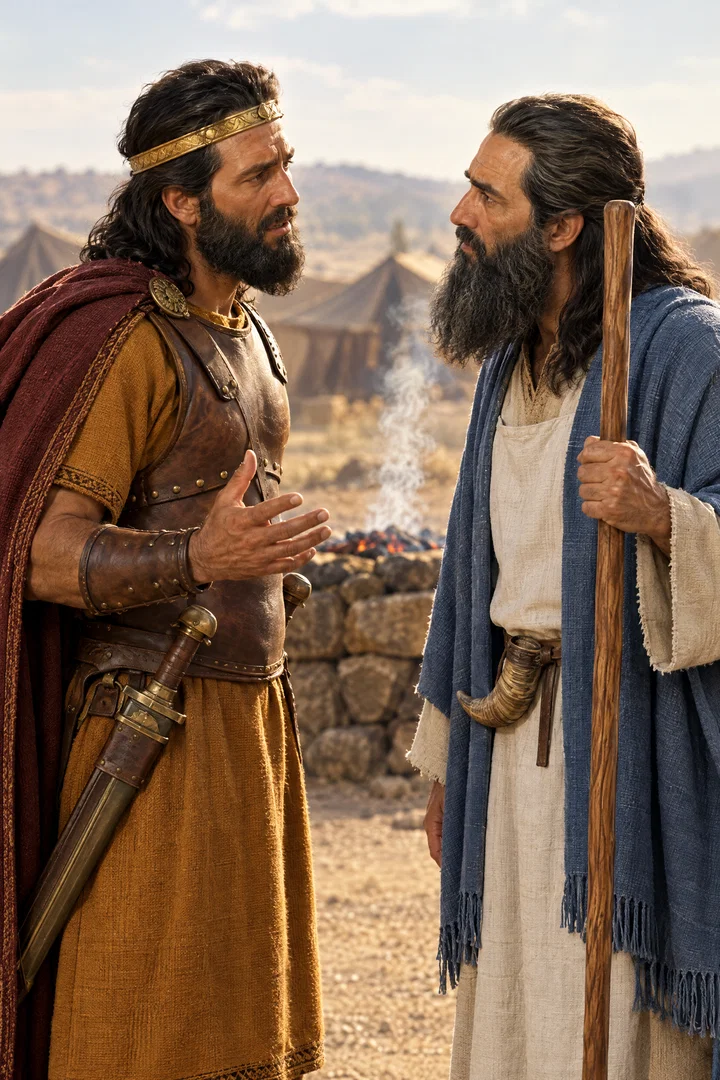
Therefore said I, The Philistines will come down now upon me to Gilgal, and I have not made supplication unto the LORD: I forced myself therefore, and offered a burnt offering.
Translations
Therefore said I, The Philistines will come down now on me to Gilgal, and I have not made supplication to the LORD: I forced myself therefore, and offered a burnt offering.
Therefore said I, The Philistines will come down now upon me to Gilgal, and I have not made supplication unto the LORD: I forced myself therefore, and offered a burnt offering.
therefore said I, The Philistines will come down now upon me to Gilgal, and I have not made supplication unto the Lord: I forced myself therefore, and offered a burnt offering.
Therefore said I, the Philistines will now come down upon me to Gilgal, and I have not made supplication to the LORD; I forced myself therefore, and offered a burnt-offering.
therefore said I, Now will the Philistines come down upon me to Gilgal, and I have not entreated the favour of the LORD: I forced myself therefore, and offered the burnt offering.
therefore said I, Now will the Philistines come down upon me to Gilgal, and I have not entreated the favor of Jehovah: I forced myself therefore, and offered the burnt-offering.
and I say, Now do the Philistines come down unto me to Gilgal, and the face of Jehovah I have not appeased; and I force myself, and cause the burnt-offering to ascend.'
I said, The Philistines will come down now upon me to Gilgal, and I have not made supplication to Jehovah; and I forced myself, and offered up the burnt-offering.
therefore I said—Now, will the Philistines come down against me, at Gilgal, but, the face of Yahweh, have I not appeased: So I forced myself, and offered up the ascending-sacrifice.
Berean Standard Bible, Majority Standard Bible
I thought, ‘ Now the Philistines will descend upon me at Gilgal, and I have not sought the favor of the LORD.’ So I felt compelled to offer the burnt offering.”
therefore I said, ‘ Now the Philistines will come down on me to Gilgal, and I haven’t entreated the favor of the LORD.’ I forced myself therefore, and offered the burnt offering.”
I said, Now the Philistines will come down on me at Gilgal, and I have made no prayer for help to the Lord: and so, forcing myself to do it, I made a burned offering.
Therefore said I, The Philistims will come downe nowe vpon me to Gilgal, and I haue not made supplication vnto the Lord. I was bolde therefore and offred a burnt offring.
Douay-Rheims (Challoner revision)
I said: Now will the Philistines come down upon me to Galgal, and I have not appeased the face of the Lord. Forced by necessity, I offered the holocaust.
Pictures
Cross-references
- 1 Samuel 10:8
And thou shalt go down before me to Gilgal; and, behold, I will come down unto thee, to offer burnt offerings, and to sacrifice sacrifices of peace offerings: seven days shalt thou tarry, till I come to thee, and shew thee what thou shalt do.
Samuel instructed Saul to wait at Gilgal until he came to offer sacrifices.
- 1 Samuel 15:22-23
And Samuel said, Hath the LORD as great delight in burnt offerings and sacrifices, as in obeying the voice of the LORD? Behold, to obey is better than sacrifice, and to hearken than the fat of rams.
Samuel teaches that obedience matters more than sacrifice and condemns Saul’s rebellion.
- 1 Samuel 13:5-8
And the Philistines gathered themselves together to fight with Israel, thirty thousand chariots, and six thousand horsemen, and people as the sand which is on the sea shore in multitude: and they came up, and pitched in Michmash, eastward from Beth-aven.
The Philistine force explains the danger that tested Saul’s patience.
- 1 Samuel 11:1-11
Then Nahash the Ammonite came up, and encamped against Jabesh-gilead: and all the men of Jabesh said unto Nahash, Make a covenant with us, and we will serve thee.
Saul’s victory at Jabesh-gilead preceded his presumption at Gilgal.
- Hebrews 10:5-10
Wherefore when he cometh into the world, he saith, Sacrifice and offering thou wouldest not, but a body hast thou prepared me:
The sacrifices pointed forward to Christ’s sinless offering.
Commentary
Each commentary is drawn from primary sources: the writings of Ellen G. White and Adventist pioneers and periodicals. Each commentary is separate. Its own words are not a quotation; follow the references to read the source passages.
Ellen G. White
16 sources
At Gilgal Saul waited for Samuel through the appointed seven days while the Philistines were massed at Michmash and his own men were hiding and scattering from him.Lt 16, 1897, par. 25–34 He claimed he acted because he feared attack before he had sought the Lord, because his soldiers were deserting, and because Samuel delayed to the last moment, saying he forced himself to offer the burnt offering.Lt 16, 1897, par. 25–34PP 618.2–621.2ST Aug 10, 1882PP 617.2–3 That plea does not excuse him, for he could have bowed his heart in humble prayer without sacrifice, and instead he impatiently judged by outward appearances and let fear govern him rather than trusting God and waiting.Lt 16, 1897, par. 25–349MR 341.2–342.2PP 618.2–621.2PP 617.2–3SG4 68.1–69.2 In presumption he seized the sacred office of priesthood never given to a king, dishonoring God and His express command by treating a solemn act pointing to Christ's sacrifice without reverence.Lt 16, 1897, par. 25–34ST Aug 10, 1882PP 617.2–3SG4 68.1–69.2 His disobedience proved him unfit to rule and cost him an established kingdom, warning all not to make duties for themselves from their own schemes but to wait patiently on the Lord for instruction.Lt 16, 1897, par. 25–349MR 341.2–342.2SG4 68.1–69.2Lt 12a, 1888, par. 12–13Lt 27, 1892, par. 5–9
Saul's Situation and Plea
At Gilgal Saul waited for Samuel within the appointed seven days while the Philistines were massed at Michmash and the Israelites were hiding and scattering away from him.Lt 16, 1897, par. 25–34 Samuel's holding back to the last moments of that time was God's design to reveal Saul's heart and show what he would do in an emergency.Lt 16, 1897, par. 25–34 Saul's stated reasons for acting were fear that the Philistines would come down upon him at Gilgal before he had sought the Lord, the desertion of his soldiers, and Samuel's delay in coming.PP 618.2–621.2ST Aug 10, 1882PP 617.2–3SG4 68.1–69.2PP 618.1 He treated the urgent threat and his failure yet to seek God as grounds to perform the offering himself instead of obeying the instruction to wait for Samuel.ST Aug 10, 1882PP 617.2–3PP 618.1PP 633.1
His plea that he forced himself to offer the burnt offering does not excuse his disobedience, for he acted presumptuously instead of waiting for God's appointed servant and obeying God's command.PP 618.2–621.2SG4 68.1–69.2PP 618.1 His fear and distress did not justify presumptuously performing sacred work assigned to those appointed for it and treating God's ordinances without proper reverence.SG4 68.1–69.2 The sacrifices were a solemn act of seeking God that required repentance, and he should have prepared the people to seek Him with repentant hearts rather than letting danger and the people's fear govern him.PP 617.2–3 The offering pointed forward to Christ's sinless sacrifice, so to handle it irreverently risked teaching the people to think lightly of that sacred work.SG4 68.1–69.2
He need not have offered sacrifice at all to seek God, for he could have bowed his heart in humble prayer without sacrifice, since God accepts even the silent petitions of a burdened heart.Lt 16, 1897, par. 25–34
Presumption, Loss, and Warning
Instead of trusting God and waiting, Saul fixed his eyes on discouraging outward appearances, grew impatient, passionate, fearful and unbelieving, and let the danger and the fear of the people govern him rather than strengthening their trust in God and preparing them to seek Him with repentant hearts.Lt 16, 1897, par. 25–349MR 341.2–342.2PP 617.2–3PP 618.1PP 633.1 He fretted over the delay, decided to move independently, and rushed into action because God's plan had not yet unfolded as he expected.9MR 341.2–342.2PP 627.1Lt 27, 1892, par. 5–9 His failure to wait patiently dishonored God's service and revealed unbelief and failure to trust God's word and command.PP 617.2–3PP 618.1PP 627.1
He forced himself to take the sacred office of priesthood which as king God had never given him, feeling it made no difference who approached God and in what way and reasoning that as king he was equal to any office.Lt 16, 1897, par. 25–34Lt 27, 1892, par. 5–9 His act was presumption, sacrilege, and disobedience to God's express command, treating God's ordinances without proper reverence and dishonoring God and His ordinances.ST Aug 10, 1882SG4 68.1–69.2PP 618.1PP 633.1Lt 12a, 1888, par. 12–13 Though tall, well proportioned and prepossessing in appearance, he was inexperienced and unfitted in experience and character for the work as king.Lt 10, 1897, par. 10–1219MR 21.3–22.2 Yet the Lord had changed his heart by His Spirit, made him a converted man with a visibly changed spirit, set him right in the work, and given him influence on condition that he cultivate humility and the fear of God, trust God, learn His will, and not exalt himself.Lt 10, 1897, par. 10–1219MR 21.3–22.2
He trusted his own strength and energy and presumptuously followed his own judgment in pride and self-confidence.Lt 16, 1897, par. 25–34PP 633.1Lt 10, 1897, par. 10–12 By performing a public religious service in direct opposition to God's command his piety was not genuine, for he mingled the sacred with the common, failed to prepare the people to seek God with repentant hearts, set a ruinous example for Israel, weakened his position, and placed himself beyond the help God was willing to give.Lt 16, 1897, par. 25–34PP 617.2–3PP 633.1Lt 12a, 1888, par. 12–13PP 634.1 Instead of admitting his error, accepting reproof, and confessing when Samuel rebuked and confronted him, he defended himself, blamed the prophet, and stubbornly justified himself.ST Aug 10, 1882PP 633.1PP 624.3–625.2 Accepting reproof and confessing could have guarded him against repeating the sin.PP 633.1
His failure proved he could not be trusted to obey orders from heaven and was unfit to rule, so his kingdom would not be established forever or continue.Lt 16, 1897, par. 25–34SG4 68.1–69.2Lt 12a, 1888, par. 12–13 His sin cost him the honor of leading Israel's armies against the Philistines, for Israel's deliverance was to magnify God alone and not give reason to credit their own righteousness, valor, or wisdom.SG4 68.1–69.2Lt 12a, 1888, par. 12–131SP 358.2–359.2 His failure at Gilgal was a test of faith that was not beyond remedy, and he was given another opportunity to learn unquestioning faith and obedience.PP 627.1 The verse teaches the danger of impatience when God's plan has not yet unfolded and the need to constantly look to the Lord for instruction, wait patiently on Him, and learn what He wants instead of making duties for oneself and acting from one's own schemes, plans and contrivances.9MR 341.2–342.2Lt 27, 1892, par. 5–9
His course warns inexperienced men entering the ministry not to be chosen for appearance nor set apart unprepared without close seeking of the Lord to know His will, but to receive the Word of the Lord from old faithful standard-bearers and do God's will so they will not fail as Saul did.Lt 10, 1897, par. 10–1219MR 21.3–22.2
Sources
Pioneers and periodicals
13 sources
Saul offered the burnt offering at Gilgal himself though he was told to wait for Samuel and was not authorized to perform the priestly rite, saying he feared the Philistines would attack before he had sought the Lord and his men would desert, so he forced himself to sacrifice.ST Aug 10, 1882ST Mar 3, 1914ST Aug 12, 1889ST Jul 8, 1889 It was his first great test after he was chosen king, and he failed it.ST Oct 31, 1895 The act was rash, impatient, presumptuous sacrilege from a proud, self-sufficient heart, and neither danger nor eagerness to show devotion could excuse disobedience to God's express command.ST Mar 3, 1914ST Jul 9, 1912 Through Samuel the Lord declared that his kingdom would not continue, leading to the rejection of his house and the anointing of David, though those who held it teach that he himself was still given further trial to retrieve his character.ST Aug 12, 1889ST Mar 31, 1909ST Oct 31, 1895ST Oct 22, 1902 His refusal to repent cut him off from God's favor and began his apostasy, warning that God requires exact obedience rather than worship done in man's own way, since disobedience in little things leads to greater disobedience and acting alone instead of waiting for God's time brings only trouble and shame.ST Mar 3, 1914ST Feb 17, 1914RH Aug 22, 1865
Saul's Unauthorized Sacrifice
The verse belongs to the beginning of Saul's reign after his choosing as king, within the larger story told in 1 Samuel 7-18 of the choosing of Saul, the death of Samuel, the waning of the house of Saul, and the calling of David.ST Mar 31, 1909ST Apr 15, 1913 It records Saul's rashness and weakness as part of the course that led to the rejection of Saul and his family and the anointing of David.ST Mar 31, 1909 It was his first great test after he was chosen king, and he failed it.ST Oct 31, 1895
Saul had been told to wait for Samuel and was not authorized to perform priestly rites, but he took the priest's role and offered at Gilgal the burnt offering that Samuel had been appointed to offer.ST Aug 10, 1882ST Mar 3, 1914ST Jul 8, 1889 He acted impatiently and presumptuously rather than trusting God's direction.ST Mar 3, 1914 His action came from a backslidden heart marked by pride and self-sufficiency, and was presumption and sacrilege.ST Aug 10, 1882ST Jul 8, 1889
Saul explained that he acted from fear that the Philistines would come down upon him to Gilgal before he had sought the Lord, so he offered the burnt offering himself.ST Aug 10, 1882ST Aug 17, 1882ST Mar 3, 1914ST Aug 12, 1889 He said he forced or compelled himself to do it.ST Aug 17, 1882ST Jul 17, 1884 He defended the unlawful sacrifice as a practical necessity, fearing also under pressure from the Philistines that his soldiers would desert.ST Jul 17, 1884 His excuse exposed presumption and self-will disguised as religious concern.ST Jul 17, 1884
He reasoned that sacrifice is always good and that Samuel's presence made no special difference, so he chose to obey just a little differently where he saw no harm while feeling satisfied with his offerings, prayers and psalms.ST Oct 22, 1902 That self-willed worship God counts as foolishness and breaking His commandment, and disobedience in little things leads to disobedience in great things.ST Oct 22, 1902 To obey exactly what God says is what God requires for salvation, not religious deeds done in man's own way.ST Oct 22, 1902
Disobedience and Its Warning
Saul's offering was rash and weak, impatient and presumptuous, a self-willed sacrilege from a backslidden heart marked by pride and self-sufficiency and contrary to God's law and command.ST Aug 10, 1882ST Mar 3, 1914ST Jul 9, 1912ST Mar 31, 1909 His wish to demonstrate devotion did not excuse disobedience, his eagerness to perform a religious act did not make it acceptable, and the danger of the Philistine threat did not justify breaking what he had been told to do.ST Mar 3, 1914ST Jul 9, 1912ST Jul 17, 1884 What he presented as forced necessity was presumption and self-will disguised as religious concern.ST Mar 3, 1914ST Jul 17, 1884
When Samuel rebuked him he did not admit his error but defended himself, blamed the prophet, and stubbornly defended what he had done rather than repent.ST Aug 10, 1882ST Aug 17, 1882ST Feb 17, 1914 Through Samuel the Lord declared that his rule and kingdom would not continue.ST Aug 12, 1889ST Oct 22, 1902 That sentence meant the rejection of Saul and his family, the waning of his house, and the anointing of David.ST Aug 12, 1889ST Mar 31, 1909 His self-willed worship was counted as foolishness and as breaking the commandment of the Lord.ST Oct 22, 1902
That failure did not then cut off Saul himself, for he was given further trial and opportunity to retrieve his individual character.ST Oct 31, 1895 But his refusal to repent cut him off from God's favor and help.ST Feb 17, 1914 His unlawful sacrifice at Gilgal was the first step toward his apostasy and self-destruction, showing the danger of disregarding God's authority, since one who begins to trifle with God's law cannot know how far that disobedience will lead.ST Feb 17, 1914RH Aug 22, 1865
His case warns that rise to kingship and the honor of exaltation do not keep one faithful when adversity tests faith.ST Mar 3, 1914 Impatience to solve a problem by sinful means only brings further trouble, and acting alone instead of waiting for God's time brings defeat and shame.ST Mar 3, 1914ST Feb 17, 1914 Disobedience in little things leads to disobedience in great things, for God requires exact obedience to what He says for salvation, not religious deeds done in man's own way while feeling satisfied with offerings, prayers and psalms.ST Feb 17, 1914ST Oct 22, 1902
Sources