1 Samuel 14:9
If they say thus unto us, Tarry until we come to you; then we will stand still in our place, and will not go up unto them.
Translations
American King James Version, Webster Bible
If they say thus to us, Tarry until we come to you; then we will stand still in our place, and will not go up to them.
King James Version, KJV Cambridge Paragraph Bible, Revised Version, American Standard Version
If they say thus unto us, Tarry until we come to you; then we will stand still in our place, and will not go up unto them.
if thus they say unto us, 'Stand still till we have come unto you,' then we have stood in our place, and do not go up unto them;
If they say thus to us, Stand still until we come to you, then we will stay in our place, and will not go up to them.
If, thus, they say unto us, Keep quiet until we get to you, then will we stand still where we are, and will not go up unto them;
Berean Standard Bible, Majority Standard Bible
If they say, ‘ Wait until we come to you,’ then we will stay where we are and will not go up to them.
If they say this to us, ‘ Wait until we come to you!’ then we will stand still in our place and will not go up to them.
If they say to us, Keep quiet where you are till we come to you; then we will keep our places and not go up to them.
If they say on this wise to vs, Tarie vntill we come to you, then we will stand still in our place, and not goe vp to them.
Douay-Rheims (Challoner revision)
If they shall speak thus to us: Stay till we come to you: let us stand still in our place, and not go up to them.
Pictures
Cross-references
- 1 Samuel 14:13-14
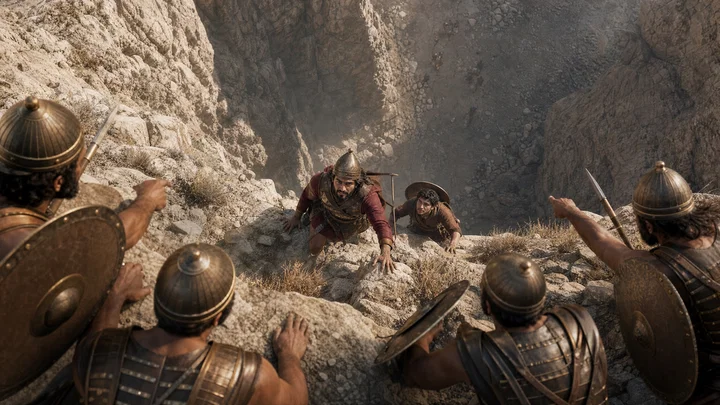
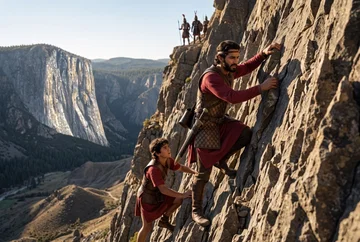
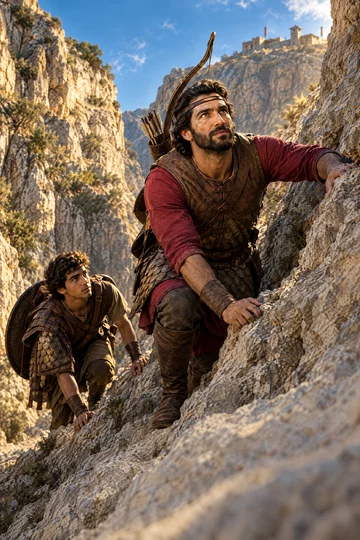
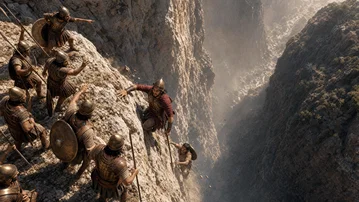
And Jonathan climbed up upon his hands and upon his feet, and his armourbearer after him: and they fell before Jonathan; and his armourbearer slew after him.
Jonathan and his armor-bearer attack, and the Philistines are struck down.
- 1 Samuel 14:15
And there was trembling in the host, in the field, and among all the people: the garrison, and the spoilers, they also trembled, and the earth quaked: so it was a very great trembling.
describes fear and earthquake following Jonathan's advance
Commentary
Each commentary is drawn from primary sources: the writings of Ellen G. White and Adventist pioneers and periodicals. Each commentary is separate. Its own words are not a quotation; follow the references to read the source passages.
Ellen G. White
5 sources
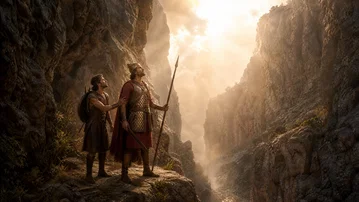
Jonathan, who feared the Lord, and his armor-bearer, a man of faith and prayer, acted on a divine impulse and withdrew secretly from the Israelite camp so they would not be opposed.PP 623.1–2 God moved the two men to go because Saul had forfeited the honor of commanding Israel by his presumptuous offering, so that His own name would be magnified and Israel would not credit victory to their own righteousness, valor, or wisdom.SG4 70.1–71.1 They went down into the gorge between Geba and Michmash, under the shadow of cliffs and ridges toward the Philistine fortress, where the enemy taunted them as Hebrews coming out of holes and threatened them with punishment.PP 623.1–2 The verse records the negative half of the sign they set to learn whether God would prosper a secret attack: if the Philistines told them to wait where they were, they would stand still in their place and not climb up to them.Lt 16, 1897, par. 37–48PP 623.1–2ST Aug 10, 1882
The opposite response, a challenge to come up, was the agreed evidence that the Lord would work for them, so they took it as the token of success and made their way by a secret, difficult path to a cliff deemed inaccessible and weakly guarded to begin Israel's deliverance.PP 623.1–2 The plan was not presumptuous or dependent on their own strength; after earnest prayer they sought God's counsel and left the outcome in His hands, then moved forward fearlessly trusting in Him alone.Lt 16, 1897, par. 37–48PP 623.1–21SP 358.2–359.2SG4 70.1–71.1ST Aug 10, 1882 Their plan expressed faith that God was able to work for them and to save and deliver Israel by few as well as by many.1SP 358.2–359.2SG4 70.1–71.1ST Aug 10, 1882 Through these two men God subdued the Philistines and delivered Israel for His own name's glory.1SP 358.2–359.2SG4 70.1–71.1 God sent angels to protect and shield Jonathan and his armor-bearer from death and to fight by Jonathan's side, so that fear seized the Philistine host, the earth trembled, and the Philistines turned and slaughtered one another.SG4 70.1–71.1
Sources
Pioneers and periodicals
17 sources
The sign meant that if the Philistines told them to wait for them to come down, Jonathan and his armor-bearer would stay where they were and would not climb up to attack.ST Aug 10, 1882ST Mar 12, 1885 It was given before the daring climb between the rocks at Michmash where Jonathan began the deliverance of Israel from the Philistines.ST Sep 20, 1883RH Dec 30, 1915ST Nov 17, 1909ST Oct 27, 1898 Two men trusting God faced a much stronger enemy, and God gave Israel victory and another deliverance through them.RH Dec 30, 1915RH Dec 29, 1904RH Mar 6, 1900 Their triumph came through prayer and faith that God could save by few as well as by many, so that success did not depend on earthly might.ST Aug 10, 1882ST Jul 21, 1909ST Oct 4, 1910ST Nov 8, 1910 God still looks for one or two Spirit-filled men anchored to Christ to do bold personal work for souls, for the greater work now is not literal fighting but overcoming wrong habits and indifference with His help.RH Dec 29, 1904ST Mar 12, 1885RH Nov 12, 1901RH Nov 12, 1901RH Mar 6, 1900
Historical Setting and Meaning
The verse stands in the history of Israel from Eli to the old age of David recorded in Samuel, at the beginning of Saul's reign marked by Saul's rashness and weakness.ST Mar 31, 1909 It belongs to the account of Jonathan's deliverance of Israel and Saul's rash decree that nearly cost Jonathan his life.ST Sep 20, 1883 It belongs to the attack on the Philistines at Michmash, a noted victory gained from Gibeah of Benjamin within an hour's walk of Jerusalem.RH Dec 30, 1915ST Oct 27, 1898 It is part of Jonathan and his armor-bearer's difficult and hazardous climb between two rocks to confront the Philistines, in which two men trusting God faced a much stronger enemy and God gave Israel victory.RH Dec 30, 1915ST Nov 17, 1909
The verse states one half of the sign by which Jonathan and his armor-bearer would decide whether to proceed: if the Philistines told them to wait until they came to them, they would stand still in their place and not climb up to them.ST Aug 10, 1882 Their plan was made with prayer and faith that God could deliver Israel through a few people.ST Aug 10, 1882 It belongs to Jonathan's courageous exploit with his armor-bearer, in which they climbed toward the Philistines and helped put them to rout, presented as an example of bold action.ST Mar 12, 1885
Faith, Victory, and Application
The episode is of young Jonathan with one helper going up against the Philistines at Michmash, two men trusting God while facing a much stronger enemy, and God giving Israel victory and another deliverance through them.RH Dec 30, 1915RH Dec 29, 1904RH Mar 6, 1900 Their plan to take the enemy's response as a sign for whether to proceed was made with prayer and with faith that God could deliver Israel through a few people.ST Aug 10, 1882 Jonathan's triumph and the triumphs of Israel under his leadership came through that faith in the power of God, which stands central to the victory and marks him as the man of valor.ST Oct 4, 1910ST Nov 8, 1910ST Jun 2, 1909ST Apr 14, 1909
The account shows that God brings victory through the weak, so that success does not depend on earthly might or on whether the opposing forces are many or few, when two men put a trained army to flight.ST Jul 21, 1909 Two men aided by God's Spirit could rout the enemy, while Israel's unconsecrated and fearful army could accomplish nothing.RH Dec 20, 1870 The exploit is an example of enthusiasm for God's cause and of bold action in climbing toward the Philistines to put them to rout.RH Dec 29, 1904ST Mar 12, 1885 It is a beautiful example showing that a man's heart may be full of the tenderest love and yet have sufficient moral courage to do personal work for others.RH Nov 12, 1901
Their difficult climb between two rocks to confront the Philistines was a hazardous passage that led to victory, and it illustrates the narrow, thorny way to heaven in which hardship and struggle in this life lead to triumph and glory.ST Nov 17, 1909 That literal fighting of the Philistines is not the work now required, for a greater work is required instead, to fight with God's help against wrong habits that put millions on beds of illness and against prevailing indifference to God's physical and spiritual claims upon humanity.RH Nov 12, 1901 God can rescue through one or two Spirit-filled men who are anchored to Christ, purged from sin, and represent truth by being it and not only advocating it, and He is now looking for such men to do personal work for souls.RH Mar 6, 1900
Sources