1 Samuel 15:27
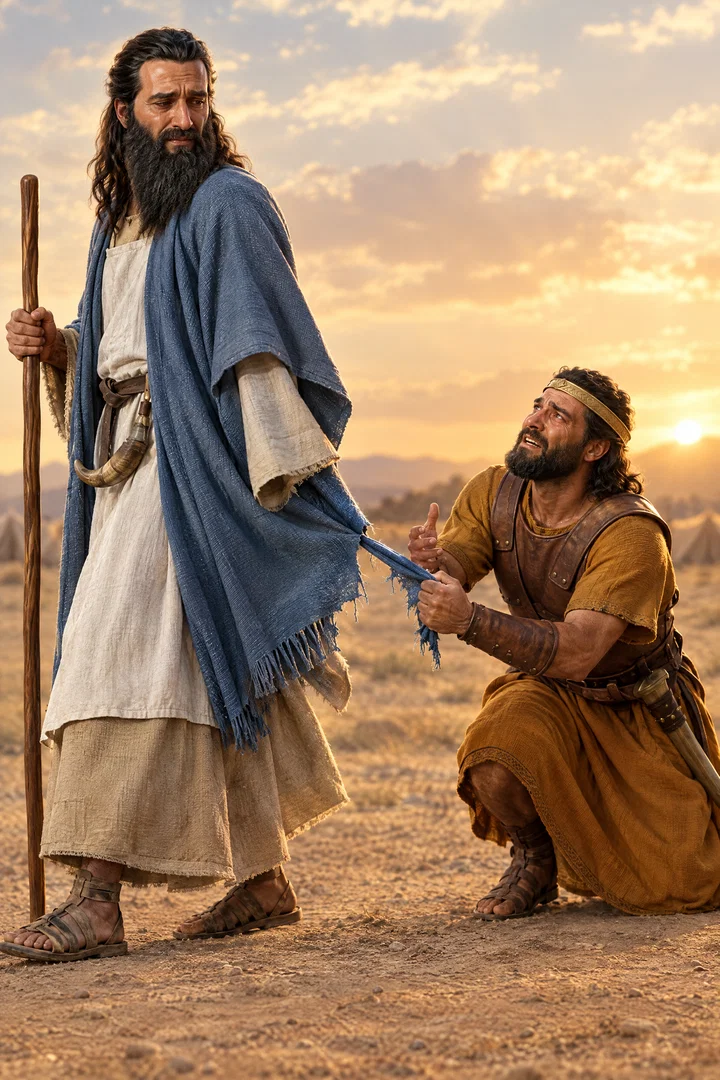
And as Samuel turned about to go away, he laid hold upon the skirt of his mantle, and it rent.
Translations
And as Samuel turned about to go away, he laid hold on the skirt of his mantle, and it rent.
King James Version, KJV Cambridge Paragraph Bible
And as Samuel turned about to go away, he laid hold upon the skirt of his mantle, and it rent.
And as Samuel turned about to depart, he laid hold upon the skirt of his mantle, and it rent.
And as Samuel turned about to go away, he laid hold upon the skirt of his robe, and it rent.
And as Samuel turned about to go away, Saul laid hold upon the skirt of his robe, and it rent.
And Samuel turneth round to go, and he layeth hold on the skirt of his upper robe — and it is rent!
And as Samuel turned to go away, [ Saul] laid hold upon the skirt of his mantle, and it rent.
And, when Samuel turned about to go away, then laid he hold of the skirt of his robe, and it was rent.
Berean Standard Bible, Majority Standard Bible
As Samuel turned to go, Saul grabbed the hem of his robe, and it tore.
As Samuel turned around to go away, Saul grabbed the skirt of his robe, and it tore.
And when Samuel was turning round to go away, Saul took the skirt of his robe in his hand, and the cloth came away.
And as Samuel turned himselfe to goe away, he caught the lappe of his coate, and it rent.
Douay-Rheims (Challoner revision)
And Samuel turned about to go away: but he laid hold upon the skirt of his mantle, and it rent.
Pictures

Cross-references
- 1 Samuel 15:23
For rebellion is as the sin of witchcraft, and stubbornness is as iniquity and idolatry. Because thou hast rejected the word of the LORD, he hath also rejected thee from being king.
Saul’s rebellion and rejection of the Lord’s word lead to his rejection as king.
- 1 Samuel 15:3
Now go and smite Amalek, and utterly destroy all that they have, and spare them not; but slay both man and woman, infant and suckling, ox and sheep, camel and ass.
Samuel’s command to destroy Amalek was the command Saul disobeyed.
- 1 Samuel 15:9
But Saul and the people spared Agag, and the best of the sheep, and of the oxen, and of the fatlings, and the lambs, and all that was good, and would not utterly destroy them: but every thing that was vile and refuse, that they destroyed utterly.
Saul spared Agag and the best livestock instead of obeying fully.
- 1 Samuel 16:1-13
And the LORD said unto Samuel, How long wilt thou mourn for Saul, seeing I have rejected him from reigning over Israel? fill thine horn with oil, and go, I will send thee to Jesse the Beth-lehemite: for I have provided me a king among his sons.
rejection leads to David's anointing
- 1 Samuel 28:6-7
And when Saul enquired of the LORD, the LORD answered him not, neither by dreams, nor by Urim, nor by prophets.
Saul’s rejection leads him to seek a medium when the Lord does not answer him.
- 1 Samuel 13:14
But now thy kingdom shall not continue: the LORD hath sought him a man after his own heart, and the LORD hath commanded him to be captain over his people, because thou hast not kept that which the LORD commanded thee.
God’s choice of a successor is linked to Saul’s forfeited throne.
- 2 Samuel 1:11
Then David took hold on his clothes, and rent them; and likewise all the men that were with him:
Listed as another use of the same Hebrew verb.
- 1 Samuel 28:14
And he said unto her, What form is he of? And she said, An old man cometh up; and he is covered with a mantle. And Saul perceived that it was Samuel, and he stooped with his face to the ground, and bowed himself.
Samuel is identified by the mantle worn by the old man at Endor.
- 1 Kings 1:50
And Adonijah feared because of Solomon, and arose, and went, and caught hold on the horns of the altar.
Listed as another use of the same Hebrew verb.
- Genesis 19:16
And while he lingered, the men laid hold upon his hand, and upon the hand of his wife, and upon the hand of his two daughters; the LORD being merciful unto him: and they brought him forth, and set him without the city.
Listed as another use of the same Hebrew verb.
- 1 Samuel 15:17
And Samuel said, When thou wast little in thine own sight, wast thou not made the head of the tribes of Israel, and the LORD anointed thee king over Israel?
Saul’s earlier humility is contrasted with his later disobedience.
- Exodus 4:4
And the LORD said unto Moses, Put forth thine hand, and take it by the tail. And he put forth his hand, and caught it, and it became a rod in his hand:
Listed as another use of the same Hebrew verb.
Commentary
Each commentary is drawn from primary sources: the writings of Ellen G. White and Adventist pioneers and periodicals. Each commentary is separate. Its own words are not a quotation; follow the references to read the source passages.
Ellen G. White
6 sources
The verse belongs to the account of the command to destroy the Amalekites, whose attack on Israel and continued wickedness had brought a sentence of judgment long deferred.PP 627.3 It records Saul's second transgression, which showed that he was unfit to rule and had forfeited his right to the kingdom.Lt 12a, 1888, par. 12–13 His disregard of God's express command was presumption and set a ruinous example for Israel.Lt 12a, 1888, par. 12–13
In this account Saul denied his wrongdoing until the facts left him unable to deny it, yet he made no confession of sin and considered himself misused and ill-treated.Lt 28a, 1893, par. 1–3 As Samuel turned to leave, Saul in fear grasped his mantle to keep him from going, and the mantle tore in his hands.PP 631.4–632.1 The torn mantle was a sign of divine judgment that the kingdom was torn from Saul and given to a neighbor who was better than he.PP 631.4–632.1
Saul knew the Lord had rejected him and repeatedly foretold that he would be dethroned and that his descendants would lose the throne because of his sins.SG4 78.2 Saul's persistence in his own way after rejecting reproof makes him an example of those who resist counsel and correction and thereby lose honor and finally their souls.Lt 13, 1892, par. 8–10
Sources
Pioneers and periodicals
30 sources
When Samuel turned to leave after refusing to worship with Saul, Saul seized the skirt of his mantle to hold him back and it tore in his hands.RH Oct 8, 1861RH Aug 17, 1876ST Jun 13, 1906 The tearing was a sign that God had that day rent the kingdom of Israel from Saul for sparing Agag and the best of the flocks when commanded to utterly destroy Amalek and all they possessed, and had given it to a neighbor better than he.ST Aug 31, 1882RH Dec 9, 1915RH Oct 8, 1861RH Oct 25, 1864RH Oct 8, 1861 Because Saul first rejected the word of the Lord, the Lord rejected him from being king, and the Strength of Israel would not lie nor repent to reverse it.ST Aug 31, 1882RH Dec 9, 1915ST Feb 19, 1885ST Mar 14, 1906 The chapter teaches that to obey is better than sacrifice and to hearken than the fat of rams, for God requires literal obedience and no disobedience can be excused as honoring Him, while rebellion is as witchcraft and stubbornness as iniquity and idolatry.RH Dec 9, 1915ST Jun 25, 1885ST Jul 13, 1904 Saul's confession showed only worldly sorrow from fear of loss and shame, blaming the people and seeking public honor rather than renouncing self and hating sin, and his proud, self-willed course stands as a warning that clinging to idols risks losing the kingdom.RH Dec 9, 1915RH Oct 8, 1861ST Nov 21, 1892ST Jul 17, 1884
Disobedience and Torn Mantle
The verse belongs to Saul's war with Amalek, in which God commanded the utter destruction of the Amalekites and all they possessed with man and beast spared nothing.RH Dec 9, 1915RH Oct 25, 1864 That destruction was just punishment for their treacherous cruelty in ambushing Israel at Rephidim after Egypt and smiting the faint and weary hindmost.STST Apr 23, 1902 They were wholly given over to evil and a curse to the nations they contacted, and death stopped their sinning and kept them from corrupting others.ST Sparing them alive could bring only corruption and evil through their power and purpose to corrupt others, so death was the greatest blessing that could come to them.ST
Saul disobeyed by sparing Agag the king alive and the best sheep, oxen, fatlings, lambs and all that was good, destroying only what was vile and refuse.RH Dec 9, 1915RH Oct 8, 1861ST Jun 1, 1915 He excused it as sparing to sacrifice to the Lord, making excuses and proposing religious use for some of what he had kept.RH Dec 9, 1915ST Dec 30, 1903RH Oct 8, 1861 He both diminished from the word by not utterly destroying all and added to it by proposing a great sacrifice.RH Oct 25, 1864ST Jul 29, 1889ST Jun 1, 1915 The offering added insult because those animals had been dedicated to the gods of Amalek rather than animals dedicated to God.ST Jun 1, 1915
As Samuel turns to leave after refusing to return with Saul to worship, Saul in an agony of fear lays hold on the skirt of Samuel's mantle to hold him back, and the garment tears in his hands.ST Aug 31, 1882RH Oct 8, 1861ST Mar 14, 1906 The grasping was with strength in the sense of the Hebrew chah-zaq meaning to hold fast.RH Aug 17, 1876 Samuel had courageously confronted the king over his disobedience rather than rejoicing as a politician displaced by him.ST Jun 13, 1906ST Mar 14, 1906 He grieved over the downfall to see the once humble young man he had anointed, whom God had blessed and honored, recklessly throwing away his own and his family's prospects after the people had demanded a king in rejection of God's government through him.ST Jun 13, 1906
The mantle was Samuel's familiar garment worn while alive.RH Oct 1, 1872 Its torn edge connects the figure seen at Endor with Samuel.RH Oct 1, 1872
Kingdom Torn and Given
The rent in the garment was a sign that the Lord had rent the kingdom of Israel from Saul that day and given it to a neighbor better than he, taking the kingdom away and putting another man in his place.ST Aug 31, 1882RH Oct 8, 1861RH Oct 8, 1861ST Feb 25, 1897ST Mar 14, 1906 As Samuel turned to leave, Saul laid hold on him and the skirt tore, and Samuel used the torn cloth to declare the loss of the kingdom.ST Aug 31, 1882RH Oct 8, 1861ST Mar 14, 1906 Royal dignity and power could not excuse the disobedience that brought this taking away.ST Feb 25, 1897 Those who continue clinging to their idols risk losing the kingdom in the same way.RH Oct 8, 1861
The judgment would not be reversed, for the Strength of Israel will not lie nor repent as a man does.ST Aug 31, 1882ST Mar 14, 1906 That solemn assurance rebuked Saul's pride in glorying in his own exploits as though he himself were the deliverer, instead of God as the strength of Israel.ST Aug 31, 1882 Because Saul first rejected the word of the Lord, the Lord rejected him from being king.RH Dec 9, 1915ST Dec 11, 1884ST Jul 13, 1904ST Sep 15, 1898 He was left to himself, and by this presumption the Spirit of God left him.RH Dec 9, 1915ST Feb 19, 1885 His stubborn disobedience became a decisive test affecting his throne and his family's future, beginning in rashness and weakness at the start of his reign and moving toward ruin while he lived on unhappy.RH Dec 9, 1915ST Feb 19, 1885ST Mar 31, 1909
He was proud and self-willed, counting his royal dignity greater than prophetic authority and presuming that God should accept the terms he chose.ST Feb 19, 1885 His refusal to submit to God's direction grieved away the Spirit and turned what could have been an honorable rule into a disgraceful and ruinous career.RH Dec 9, 1915ST Feb 19, 1885 He lived on unhappy until he ended his life by his own hand, dying apart from God a lost man.RH Dec 9, 1915 His rebellion was the cause of the Lord's rejection.ST Jul 13, 1904ST Sep 15, 1898
That rejection opened the way for the anointing of David the son of Jesse as king, after Saul's selfishness, obstinacy and express disobedience in executing just wrath upon the Amalekites who were a curse to the nations they contacted.ST Mar 31, 1909 After Saul turned from following God to choose his own will, Samuel went to Bethlehem to anoint David as Saul's successor.ST Mar 31, 1909ST Feb 17, 1904 While Saul was moving toward ruin, David was being prepared to take his place, showing that God prepares for the needs of His work.RH Nov 17, 1874 God indicated through Samuel that David was chosen to succeed him, and David trusted that choice as prophecy to be fulfilled in God's time rather than killing Saul when he had the opportunity.ST Jan 17, 1906
Saul had destroyed the Amalekites and brought Agag their king alive to Gilgal, where Samuel slew him.ST Apr 23, 1902 That destruction was punishment for the original treacherous cruelty of the Amalekites in ambushing Israel at Rephidim after Egypt and smiting the faint and weary hindmost.ST Apr 23, 1902 Haman the Agagite was a direct descendant of that Agag, and Mordecai was a Benjamite of the very tribe of Saul, so Haman's scheme to destroy all the Jews because one Jew would not bow to him was vengeance for Saul's destruction of Amalek and a continuation of native Amalekite treachery and cruelty.ST Apr 23, 1902
Obedience, Sorrow, and Warning
The chapter teaches that God requires literal obedience to his commands, for to obey is better than sacrifice and to hearken than the fat of rams.RH Dec 9, 1915ST Jun 25, 1885ST Jul 13, 1904ST Apr 15, 1913ST Dec 30, 1903 None may presume to improve on what God has commanded or to obey their own idea of its spirit instead of its plain letter, since the spirit of obedience consists in actual observance of the letter.ST Jun 25, 1885ST Jul 29, 1889 Disobedience cannot be excused as an attempt to honor God, because that sets human judgment above God.RH Dec 9, 1915ST Jun 25, 1885ST Jul 29, 1889 Rebellion is as the sin of witchcraft, and stubbornness is as iniquity and idolatry.RH Dec 9, 1915ST Apr 15, 1913
What looks like small disobedience is not small with God, and refusing to amend when shown to be wrong puts one on the downward path to destruction.RH Oct 25, 1864ST Dec 30, 1903 God is as particular in the nineteenth century that his written word be obeyed as he was about prescribed worship fifteen hundred years before Christ.RH Oct 25, 1864 It is not safe to go beyond or fall short of perfect obedience to his revealed will, to add thereto or take therefrom, or to trample his holy law under foot while light is shining and his people are preparing to meet the King.RH Oct 25, 1864 The same rule applies to the Sabbath command, which set apart and hallowed the seventh day itself to commemorate creation as a constant reminder that its Creator is the true God, so obedience means observing the seventh day itself and not a rival institution, and changing it is not a small thing to be excused.ST Dec 30, 1903ST Jul 29, 1889
Saul's response shows worldly sorrow that works death and not life and salvation, arising from loss and suffering rather than bringing a transformed life.ST Mar 3, 1881RH Jun 5, 1900 Though he acknowledged disobedience he excused it by blaming the people, and his confession did not renounce self.ST Nov 21, 1892RH Jun 18, 1867 His sorrow did not come from seeing sin as wrong and hating and loathing it for what it is, but from seeing sin as producing loss, the forfeiture of his kingly character and good name before the world, and his remorse began with exposure.ST Mar 3, 1881RH Jun 5, 1900 The act of laying hold on the mantle was driven not by sorrow for sin but by fear of its penalty, in an agony of fear to hold Samuel back from leaving after Samuel refused to return with him to worship.ST Aug 31, 1882 Even after confessing he sought public standing, asking Samuel to honor him before the elders and to worship with him, treating worship as a matter of policy for standing rather than a sign of a changed course.ST Nov 21, 1892ST Jul 17, 1884ST Mar 3, 1881 Those who have done wrong in this way try to hide it and defend themselves instead of submitting to God, and are called to examine their own conduct and duties.RH Jun 18, 1867
Saul is portrayed as proud and self-willed, counting his royal dignity greater than prophetic authority and presuming God should accept the terms he chose.ST Feb 19, 1885ST Feb 25, 1897 Pride led to downfall, and royal dignity and power could not excuse disobedience.ST Feb 19, 1885ST Feb 25, 1897 By presumption and refusal to submit the Spirit of God left him, grieving away the Spirit and turning what could have been an honorable rule into a disgraceful and ruinous career, in which he lived on unhappy until he ended his life by his own hand, dying apart from God a lost man.RH Dec 9, 1915ST Feb 19, 1885 His history shows that what appears good outwardly can become a curse, and that prosperity and exaltation do not necessarily strengthen faith. The chapter gives a striking and awful lesson about disobedience, meant to warn all of God's children that those who continue clinging to their idols risk losing the kingdom.RH Oct 8, 1861ST Apr 15, 1913 Rejecting truth can leave an enlightened and favored ruler to himself until he regards serious sin such as seeking forbidden spiritualism as right.RH Dec 9, 1915ST Apr 15, 1913
Sources