1 Samuel 21:7
Now a certain man of the servants of Saul was there that day, detained before the LORD; and his name was Doeg, an Edomite, the chiefest of the herdmen that belonged to Saul.
Translations
Now a certain man of the servants of Saul was there that day, detained before the LORD; and his name was Doeg, an Edomite, the most chief of the herdsmen that belonged to Saul.
Now a certain man of the servants of Saul was there that day, detained before the LORD; and his name was Doeg, an Edomite, the chiefest of the herdmen that belonged to Saul.
Now a certain man of the servants of Saul was there that day, detained before the Lord; and his name was Doeg, an Edomite, the chiefest of the herdmen that belonged to Saul.
Now a certain man of the servants of Saul was there that day, detained before the LORD; and his name was Doeg, an Edomite, the chief of the herdmen that belonged to Saul.
Now a certain man of the servants of Saul was there that day, detained before the LORD; and his name was Doeg the Edomite, the chiefest of the herdmen that belonged to Saul.
Now a certain man of the servants of Saul was there that day, detained before Jehovah; and his name was Doeg the Edomite, the chiefest of the herdsmen that belonged to Saul.
And there [is] a man of the servants of Saul on that day detained before Jehovah, and his name [is] Doeg the Edomite, chief of the shepherds whom Saul hath.
( Now a certain man of the servants of Saul was there that day, detained before Jehovah; and his name was Doeg, the Edomite, chief of the shepherds that [ belonged] to Saul.)
Now, in that very place, was a man of the servants of Saul, on that day, detained before Yahweh, whose name, was Doeg the Edomite,—chief of the shepherds that belonged unto Saul.
Berean Standard Bible, Majority Standard Bible
Now one of Saul’s servants was there that day, detained before the LORD. And his name was Doeg the Edomite, the chief shepherd for Saul.
Now a certain man of the servants of Saul was there that day, detained before the LORD; and his name was Doeg the Edomite, the best of the herdsmen who belonged to Saul.
Now a certain man of the servants of Saul was there that day, kept back before the Lord; his name was Doeg, an Edomite, the strongest of Saul's runners.
(And there was the same day one of the seruants of Saul abiding before the Lord, named Doeg the Edomite, the chiefest of Sauls heardmen)
Douay-Rheims (Challoner revision)
Now a certain man of the servants of Saul was there that day, within the tabernacle of the Lord: and his name was Doeg, an Edomite, the chiefest of Saul’s herdsmen.
Pictures
Cross-references
- Matthew 12:3-4
But he said unto them, Have ye not read what David did, when he was an hungred, and they that were with him;
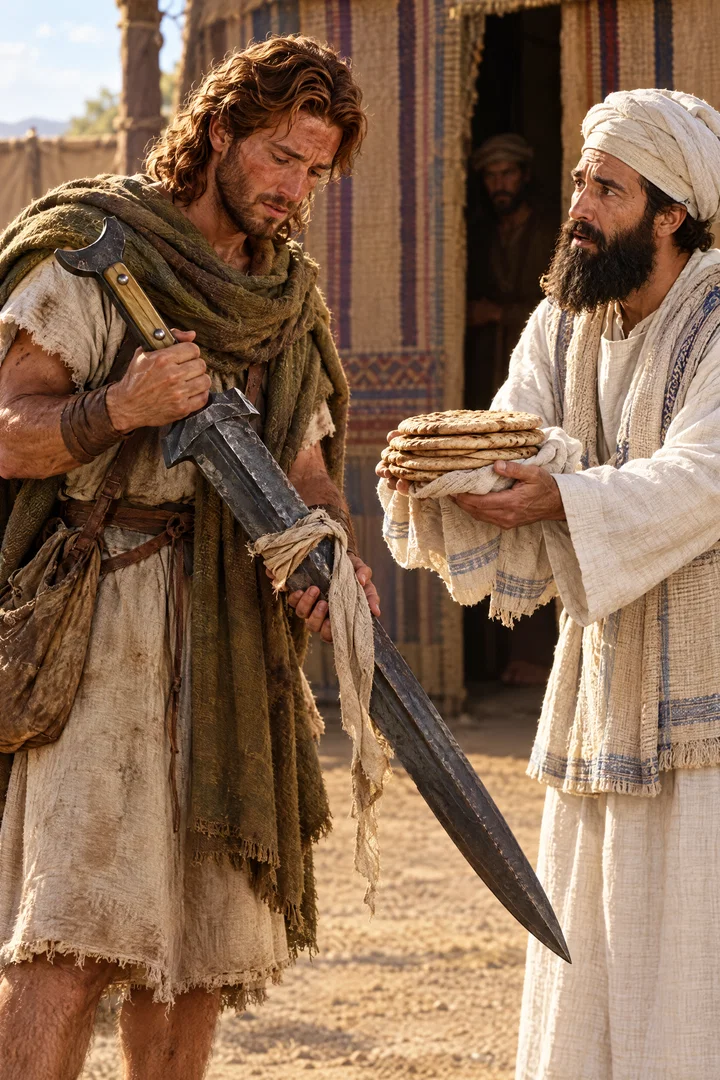
David received the showbread at Nob’s sanctuary.
- 1 Samuel 22:9-19
Then answered Doeg the Edomite, which was set over the servants of Saul, and said, I saw the son of Jesse coming to Nob, to Ahimelech the son of Ahitub.
Records Saul’s destruction of Nob after David received help there.
- Mark 2:26
How he went into the house of God in the days of Abiathar the high priest, and did eat the shewbread, which is not lawful to eat but for the priests, and gave also to them which were with him?
Both recount David receiving the sacred bread.
Commentary
Each commentary is drawn from primary sources: the writings of Ellen G. White and Adventist pioneers and periodicals. Each commentary is separate. Its own words are not a quotation; follow the references to read the source passages.
Ellen G. White
1 source
Doeg was an Edomite in the service of Saul, holding the office of chief over Saul's herdsmen.PP 655.3–656.1 He was present at Nob on the day David came there seeking refuge from Saul.PP 655.3–656.1 While there David received bread from Ahimelech and was given the sword of Goliath.PP 655.3–656.1 Doeg had professed the Hebrew faith and was then at the place of worship paying his vows.PP 655.3–656.1 His witnessing of David's visit created a new danger for David, and because of it David was led to seek another place of refuge.PP 655.3–656.1
Sources
Pioneers and periodicals
10 sources
The tabernacle and its service with its remaining sacred vessels stood at Nob in Saul's time, after the ark had been taken from the tabernacle at Shiloh and never returned there, about seventy-nine years after the ark was captured, in an interim period between its removal from Shiloh and its final location in Judah.RH Mar 3, 1910RH Aug 28, 1856RH Jan 6, 1853 Nob was the city of the priests in the tribe of Benjamin, two miles north of Jerusalem, lying about a mile on the way from Anathoth toward Jerusalem and only a little more than a mile from Gibeah where Saul lived after he was anointed king.RH Mar 3, 1910ST Oct 27, 1898 Gibeah means high, standing 2,690 feet above the sea, about 200 feet higher than Jerusalem, and commanding a view over the country even beyond the Dead Sea far into the mountains of Moab.ST Oct 27, 1898 David came there as a fugitive from Saul at nearby Gibeah, where Ahimelech the priest gave him consecrated bread that was only for the priests to eat, and where he took away the sword of Goliath that had been kept behind the ephod, nevermore to be traced in the sacred record.RH Mar 3, 1910ST Oct 27, 1898
Doeg, an Edomite and Saul's chief herdsman, was there that day at the place of worship, detained before the Lord.ST Aug 31, 1888ST Sep 20, 1883RH Jan 21, 1862 He had professed the Hebrew faith and was paying his vows there, and David recognized him as someone who knew that Saul intended to kill him and feared that Doeg might attack him before he could escape.ST Aug 31, 1888 The statement that he was detained before the Lord that day may indicate that David's visit and the giving of the shewbread took place on the Sabbath.RH Jan 21, 1862 His presence provides the setting for the later destruction of Nob by Saul, which followed the help David received there.ST Sep 20, 1883
The verse belongs to the account of David's deceit toward Ahimelech, and the fact that Scripture records the act without condemning it does not approve or excuse it, since Scripture elsewhere gives principles by which such conduct is condemned and shows its sinfulness through its consequences.RH Oct 29, 1861 It belongs to the account in 1 Samuel 20 to 22 and the closing chapters of 1 Samuel that tell the story of Saul's jealousy and his effort to slay David and show the bitter fruit of jealousy.RH Mar 23, 1916ST Apr 7, 1909 Those chapters also contain the covenant between David and Jonathan with Jonathan's noble, unselfish generosity, show the contrast between the jealous Saul and his noble son, and show David's hope and trust in God and his utter refusal to take vengeance into his own hands upon the enemy who was pursuing him.ST Apr 7, 1909
Sources