Matthew 12:3
But he said unto them, Have ye not read what David did, when he was an hungred, and they that were with him;
Translations
But he said to them, Have you not read what David did, when he was an hungered, and they that were with him;
King James Version, Revised Version
But he said unto them, Have ye not read what David did, when he was an hungred, and they that were with him;
But he said unto them, Have ye not read what David did, when he was a hungred, and they that were with him;
But he said to them, Have ye not read what David did when he was hungry, and they that were with him;
But he said unto them, Have ye not read what David did, when he was hungry, and they that were with him;
And he said to them, 'Did ye not read what David did, when he was hungry, himself and those with him —
But he said to them, Have ye not read what David did when he was hungry, and they that were with him?
And he said unto them, have ye never read what, David, did, when he hungered, and they who were with him? how
Berean Standard Bible, Majority Standard Bible
Jesus replied, “ Have you not read what David did when he and his companions were hungry?
But he said to them, “Haven’ t you read what David did when he was hungry, and those who were with him:
But he said to them, Have you no knowledge of what David did when he had need of food, and those who were with him?
But he said vnto them, Haue ye not read what Dauid did when he was an hungred, and they that were with him?
Douay-Rheims (Challoner revision)
But he said to them: Have you not read what David did when he was hungry, and they that were with him:
Pictures
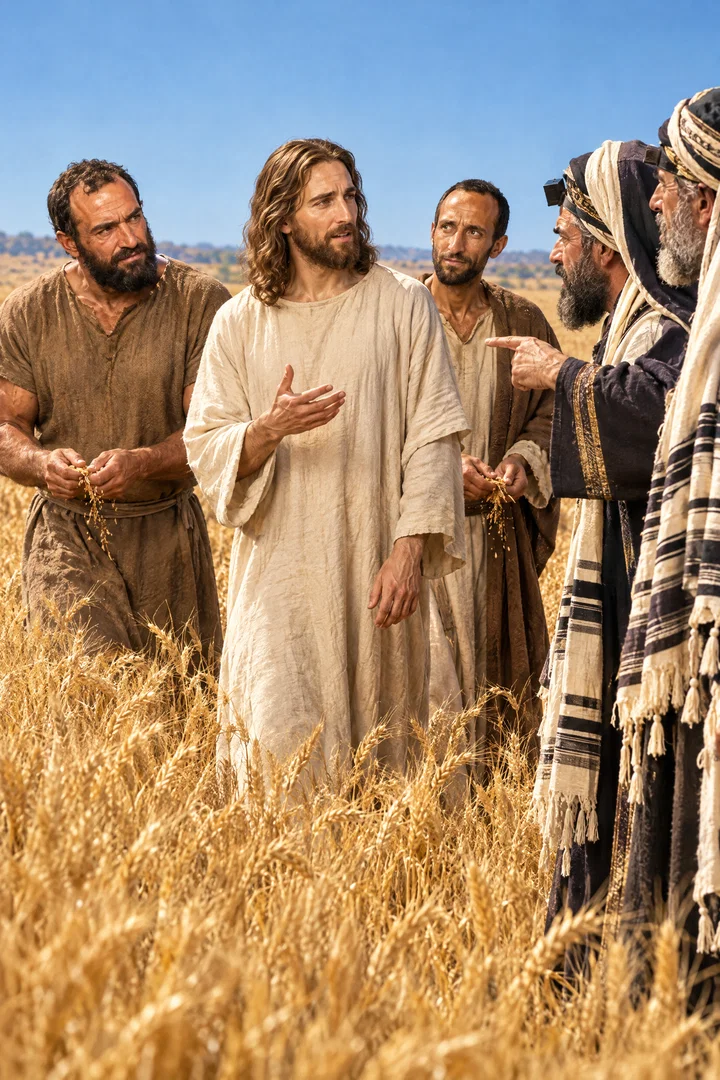
Cross-references 20 of 23
- 1 Samuel 21:1-6
Then came David to Nob to Ahimelech the priest: and Ahimelech was afraid at the meeting of David, and said unto him, Why art thou alone, and no man with thee?
David and his hungry companions receive and eat the showbread.
- Mark 2:25-26
And he said unto them, Have ye never read what David did, when he had need, and was an hungred, he, and they that were with him?
Jesus answers the objection by recalling David’s hunger and the food given to his companions.
- Luke 6:1-5
And it came to pass on the second sabbath after the first, that he went through the corn fields; and his disciples plucked the ears of corn, and did eat, rubbing them in their hands.
Jesus answers the Sabbath accusation by recalling David eating the holy bread.
- Matthew 12:8
For the Son of man is Lord even of the sabbath day.
Christ applies the example to the Sabbath and declares himself its Lord.
- Exodus 20:8-11
Remember the sabbath day, to keep it holy.
Jesus’ teaching explains how to observe the Sabbath commandment.
- Leviticus 24:8-9
Every sabbath he shall set it in order before the LORD continually, being taken from the children of Israel by an everlasting covenant.
The bread was reserved for the priests, though David ate it when hungry.
- Hosea 6:6
For I desired mercy, and not sacrifice; and the knowledge of God more than burnt offerings.
Mercy rather than sacrifice explains why the disciples are guiltless.
- Matthew 12:7
But if ye had known what this meaneth, I will have mercy, and not sacrifice, ye would not have condemned the guiltless.
Mercy over sacrifice corrects the Pharisees’ judgment of the guiltless in the Sabbath dispute.
- Mark 2:28
Therefore the Son of man is Lord also of the sabbath.
Identifies the Son of man as Lord of the Sabbath.
- Deuteronomy 23:25
When thou comest into the standing corn of thy neighbour, then thou mayest pluck the ears with thine hand; but thou shalt not move a sickle unto thy neighbour’s standing corn.
Permits hungry travelers to pluck a neighbor’s grain by hand; the Sabbath question was separate.
- Matthew 12:11-12
And he said unto them, What man shall there be among you, that shall have one sheep, and if it fall into a pit on the sabbath day, will he not lay hold on it, and lift it out?
Jesus teaches that relieving need and doing good is lawful on the Sabbath.
- Mark 3:1-6
And he entered again into the synagogue; and there was a man there which had a withered hand.
Both recount Jesus’ Sabbath healing and the controversy over doing good on the Sabbath.
- Luke 13:15-16
The Lord then answered him, and said, Thou hypocrite, doth not each one of you on the sabbath loose his ox or his ass from the stall, and lead him away to watering?
Jesus defends Sabbath healing by appealing to mercy and necessary care.
- 1 Chronicles 9:32
And other of their brethren, of the sons of the Kohathites, were over the shewbread, to prepare it every sabbath.
The Levites prepared the showbread each Sabbath.
- Luke 6:1
And it came to pass on the second sabbath after the first, that he went through the corn fields; and his disciples plucked the ears of corn, and did eat, rubbing them in their hands.
The disciples pluck and eat grain on the Sabbath.
- Mark 2:23
And it came to pass, that he went through the corn fields on the sabbath day; and his disciples began, as they went, to pluck the ears of corn.
Jesus’ disciples pluck grain in the Sabbath controversy.
- Luke 6:6-9
And it came to pass also on another sabbath, that he entered into the synagogue and taught: and there was a man whose right hand was withered.
Both affirm necessity and mercy as exceptions to Sabbath restrictions.
- Luke 14:3-5
And Jesus answering spake unto the lawyers and Pharisees, saying, Is it lawful to heal on the sabbath day?
Both texts show that necessity and mercy are exceptions to Sabbath restrictions.
- Matthew 19:4
And he answered and said unto them, Have ye not read, that he which made them at the beginning made them male and female,
Jesus appeals to what they had read.
- Matthew 5:17-18
Think not that I am come to destroy the law, or the prophets: I am not come to destroy, but to fulfil.
Christ’s defense is consistent with His declaration that He did not come to destroy the law.
Commentary
Each commentary is drawn from primary sources: the writings of Ellen G. White and Adventist pioneers and periodicals. Each commentary is separate. Its own words are not a quotation; follow the references to read the source passages.
Ellen G. White
17 sources
Jesus answered the Pharisees who accused His hungry disciples of breaking the Sabbath for plucking heads of wheat and eating the kernels by pointing to David when he was hungry entering the house of God and eating the shewbread lawful only for priests.Ms 31a, 1898, par. 1–3ST Jul 29, 1897PK 183.1HSFM 165.2PP 531.1–2
He defended His disciples with divine authority and declared them guiltless, because gathering and eating to satisfy hunger was in harmony with the Sabbath commandment and not a violation of it.ST Jul 29, 1897ST Sep 16, 1913RH May 28, 1901
Pressing human need is met above the letter of the rule, so mercy takes precedence over ceremonial restriction and relieving the suffering of man or beast on the Sabbath is lawful.Ms 31a, 1898, par. 1–3ST Jan 16, 1896
He violated no commandment of the Decalogue and was without fault, while His accusers acted from ignorance of the Scriptures and the true principles of the law, rejecting human rules that misrepresented God even as they accused the Maker and Lord of the Sabbath of breaking it.STMW6 43.2PK 183.1ST Jan 16, 189618MR 155.1–3Ms 43b, 1891, par. 1
He answered by directing people to what Scripture says rather than to human authority, showing Scripture is the living Word and a sure guide for truth and work.Lt 48, 1899, par. 40–41
Context and Sabbath Vindication
The question was put to the accusers after they had followed to hinder healing of the sick and preaching to the poor, bringing a charge of Sabbath-breaking against hungry disciples who had plucked heads of wheat, rubbed out the kernels in their hands, and eaten them.Ms 31a, 1898, par. 1–3 The answer pointed to what David did when he was hungry with his men, entering the house of God and eating the shewbread that was lawful only for the priests.Ms 31a, 1898, par. 1–3ST Jul 29, 1897PK 183.19MR 242.1RH May 28, 1901 That precedent of David and his hungry companions was applied to the disciples plucking grain in the field, to prove them guiltless.Ms 31a, 1898, par. 1–3ST Jul 29, 18979MR 242.1
The setting is hunger, and a hungry person passing through was permitted to take and eat food from another person's field, so the disciples' action in passing through the field accorded with that law.HSFM 165.2PP 531.1–2 The saying belongs to the account of going through the cornfield plucking ears of grain.14MR 335.1–3Lt 13, 1876, par. 1–3 That account is discussed together with the healing of the withered hand.14MR 335.1–3 It also belongs to Sabbath travels in which teaching was given outdoors by the lakeside, showing Sabbath instruction did not have to take place within enclosed walls.Ms 3, 1879, par. 4–5
The charge that gathering and rubbing grain to satisfy hunger broke the Sabbath was denied, and those who so acted were declared guiltless.ST Jul 29, 1897ST Sep 16, 1913Ms 43b, 1891, par. 9 Gathering and eating to satisfy hunger was in harmony with the Sabbath commandment, not a violation of it.ST Jul 29, 1897ST Sep 16, 1913RH May 28, 1901 The defense was made with divine authority, establishing the innocence of the disciples.Ms 43b, 1891, par. 9
Sabbath Principle and Scripture
Pressing human need is met above the letter of the rule, for the appeal to David when he was hungry with his men entering the house of God and eating the shewbread lawful only for priests proves the hungry disciples guiltless.Ms 31a, 1898, par. 1–3ST Jan 16, 1896 Human need and mercy take precedence over ceremonial restriction, so relieving the suffering of man or beast on the Sabbath is lawful and in harmony with God's commandment.Ms 31a, 1898, par. 1–3ST Jan 16, 1896 No commandment of the Decalogue was violated, and Christ was without fault.ST Jan 16, 1896 His accusers acted from ignorance of the Scriptures and of the true import and principles of the law He Himself had given in the pillar of cloud, and had they known what I will have mercy, and not sacrifice means, they would not have condemned the guiltless.ST Jan 16, 1896 So groundless was the charge that false witnesses had to be hired to condemn Him.ST Jan 16, 1896
In this Sabbath controversy human rules that misrepresented God were rejected, and the Sabbath was kept according to God's law despite hostility.PK 183.1 The dispute accused the One who made the Sabbath and is its Lord of breaking it.STMW6 43.218MR 155.1–3Ms 43b, 1891, par. 1 That human judgment could condemn even the greatest Teacher despite clear evidence He was sent by God reveals blindness to the Sabbath's purpose and object.STMW6 43.218MR 155.1–3Ms 43b, 1891, par. 1
Questions were answered by directing people to what Scripture says rather than by relying on human authority or merely giving His own answer.Lt 48, 1899, par. 40–41 Scripture is the living Word and a sure guide for understanding truth and carrying out the work God gives.Lt 48, 1899, par. 40–41 As in His temptation, its testimony drives Satan back and protects the soul that relies on it.Lt 48, 1899, par. 40–41
Sources
Pioneers and periodicals
95 sources
Christ answered the charge that His hungry disciples broke the Sabbath by plucking grain with David's example when he and his men were hungry.ST Feb 10, 1904ST Feb 17, 1898ST Oct 8, 1894 David fleeing from Saul entered the house of God at Nob and received the consecrated showbread from the priest because there was no other bread, though it was ordinarily lawful only for priests to eat.ST Jan 31, 1911RH Aug 15, 1854RH Jun 10, 1852ST Mar 30, 1888RH Feb 3, 1852 His urgent need excused what would otherwise have been wrong, and the disciples were far less blameworthy for simply eating standing corn to relieve hunger.RH Nov 12, 1872ST Feb 10, 1904ST Apr 14, 1881 Their eating was an act of mercy and necessity that did not violate the Sabbath law, for the Sabbath was made to be a blessing and not a burden.ST Jan 31, 1911RH Mar 1, 1864RH Jul 18, 1912RH Jan 8, 1857 As Lord of the seventh-day Sabbath Christ restored its true observance to mercy and doing good, leaving the institution standing and binding with no change of day.ST Jan 31, 1911RH Aug 15, 1854ST Jul 8, 1897RH Feb 4, 1862ST Mar 11, 1889
Setting of Grainfield Encounter
The question answers the charge that the hungry disciples did what was not lawful on the Sabbath by plucking and eating grain as they walked through the field, asking whether the accusers had read what David did when he and his companions were hungry.ST Feb 10, 1904ST Feb 17, 1898ST Oct 8, 1894ST Feb 17, 1898RH Apr 21, 1863 The example of David and his hungry companions is offered as the precedent that explains the answer to the objection against Sabbath conduct.ST Oct 8, 1894ST Nov 26, 1894RH Apr 21, 1863 The complaint arose because the disciples were hungry and picked and ate grain while walking through the field on the Sabbath.ST Feb 17, 1898ST Nov 26, 1894
They plucked ripening barley ears and rubbed them in their hands while walking a lawful Sabbath distance of less than three-quarters of a mile through fields near Capernaum in Galilee on the Sabbath after the second day of Passover in Nisan, the month of earing when the first sheaf was offered.ST Apr 14, 1881 Plucking ears or grapes to satisfy hunger was free to all by law and Eastern custom and blameless on other days, but hunger pressed because no fast could be broken till after the morning synagogue service nor supper taken till after the evening service.ST Apr 14, 1881 Watching Pharisee spies charged two Sabbath offenses because plucking counted as reaping and rubbing counted as grinding or threshing and as preparing food that was required to be prepared Friday before sunset, a breaking of the Sabbath rather than suffering hunger a few hours that they held worthy of stoning.ST Apr 14, 1881 The grain was in the milky stage when ripening, sweet and juicy with sugar instead of starch and very easily digested.RH Jun 26, 1900 Their critics treated rubbing grain in the hands as threshing and reaping on the sacred day, in conflict with added rabbinical traditions rather than a violation of the Sabbath purpose, and the incident was regarded by the Jews as a borderline act.ST Mar 21, 1878ST Feb 2, 1915
The eating of corn stands in immediate connection with the healing of the man with a withered hand, the two following one right after the other as they went from the cornfield direct to the synagogue.ST Nov 11, 1897 Their traveling was not a breach of the law, for they went to the synagogue in obedience to have a holy convocation to hear the reading of the law.RH Aug 27, 1857 Both events are explained by the truths that it is lawful to do well on the Sabbath days and the Sabbath was made for man.ST Nov 11, 1897 The same account shows the Jews offended and watching Christ to see whether He would heal on the Sabbath so they might have whereof to accuse Him.ST Apr 9, 1894
The reply belongs to Christ's teaching on the true nature of the sacred day and exposes the inconsistency and hostility behind the complaints.RH Nov 4, 1858 It places the hunger of David and the men with him alongside healing on the Sabbath to expose hypocrisy and false estimate of the Sabbath.RH Sep 19, 1854 The accusation that His work caused Sabbath-breaking was a false charge against Christ and His work.ST Jun 26, 1901 Faithful Sabbath keeping according to God's word can still be denounced as Sabbath breaking by popular and arrogant religious bodies easily offended in propriety and sentiment while watching to accuse.ST Apr 9, 1894ST Mar 12, 1894
David and Companions Precedent
David, while fleeing for his life from Saul and hungry with his men, entered the house of God and received the consecrated showbread from the priest because there was no other bread there.RH Jun 10, 1852ST Mar 30, 1888RH Feb 3, 1852 The event took place at Nob, where the sacred tabernacle and its vessels remained during Saul's reign.RH Aug 28, 1856RH Jan 6, 1853 The bread was given by Ahimelech, who had no ordinary bread because the priests ate the holy bread on the Sabbath.ST Nov 19, 1912
The showbread was ordinarily lawful only for priests to eat.ST Jan 31, 1911RH Aug 15, 1854RH Feb 4, 1862RH Apr 5, 1860ST Feb 10, 1904 It was replaced every Sabbath with fresh bread while the priests ate the bread removed from the table.ST Nov 19, 1912 The episode probably occurred on the Sabbath when the old showbread was removed and replaced, making David's need and the priest's provision a fitting parallel to the disciples' hunger.RH Jan 21, 1862RH Apr 7, 1863ST Apr 14, 1881 David entered the tabernacle and ate the showbread on the seventh day.RH May 17, 1906
David set aside even strict temple regulations to meet urgent hunger.ST Apr 14, 1881 His act is treated as a breach of a positive law excused by need, and enforcing a law's letter when doing so defeats its purpose would not be obedience.RH Nov 12, 1872ST Feb 10, 1904 If David did right in his necessity in eating what the ceremonial law reserved to priests, the disciples are far less blameworthy for simply eating standing corn to relieve hunger, having violated not even a precept of the ceremonial law.RH Aug 15, 1854RH Jun 10, 1852 Under other circumstances without such need David's act would have been wrong, and his exceptional necessity does not justify ordinary departures for personal convenience or interest.RH Jun 10, 1852RH Apr 25, 1871 God did not condemn David because He understood the circumstances.ST Jan 16, 1896
The law did not forbid hungry people from taking food already at hand on the Sabbath, though it did forbid reaping and gathering food into a barn. One reading links Jesus' act of plucking grain and giving it to His disciples with the presentation of the firstfruits, taking it as a sign that Christ had ended the Jewish priesthood and appointed His disciples as priests.RH Sep 30, 1858 Against that reading, the verse does not say that Jesus plucked the grain or that He did so to abolish the Jewish priesthood and transfer it to His disciples.RH Oct 21, 1858
Mercy and Need Lawful
The disciples stand declared guiltless because eating to relieve hunger was an act of mercy and did not violate the Sabbath law.RH Mar 1, 1864RH Jul 18, 1912RH Aug 27, 1914ST Apr 19, 1883RH May 5, 1874 Their traveling and eating was not needless transgression but what was lawful to do, consistent with the Sabbath's design and not a careless or irreverent violation.RH Mar 1, 1864RH Jul 18, 1912RH Jan 8, 1857RH May 5, 1874 Their immediate hunger made the act one of necessity, not presumptuous violation, and human need matters when applying Sabbath rules.RH Jan 8, 1857RH Aug 27, 1914 The example of David and his hungry companions supports a merciful, reasonable understanding of the Sabbath law and the disciples' innocence.RH Mar 1, 1864RH Jan 8, 1857 Sabbath observance does not forbid acts of necessity or mercy, and is not to be burdened by senseless traditions that oppose the joyful service intended.RH Aug 27, 1914ST Apr 19, 1883
The Sabbath law permits works of necessity and mercy and forbids all other labor.ST Nov 18, 1889ST Satisfying hunger, relieving suffering, saving life, and doing good are lawful on the Sabbath and do not lessen its sanctity or remove its special observance.ST Mar 16, 1904ST Jan 25, 1910RH Jan 21, 1915 Feeding a hungry person is necessity, not ordinary work, and no exact line can be drawn for every situation.ST Mar 16, 1904ST Christ taught the true spirit of Sabbath observance through deeds of mercy and relief for the sick and suffering.RH Jan 21, 1915 David's hunger and the hunger of his companions are relevant to understanding the Sabbath law as Jesus interpreted it.ST Nov 18, 1889ST
The Sabbath was made to be a blessing and not a burden, a day of blessing and joy and gladness and worship and refreshing rather than mourning and fasting and outward physical rest.ST Jan 31, 1911 Christ by precept and example labored to rid its observance of burdensome Jewish traditions, restore it to its original simplicity and intended place as a sacred day of joy and delight, and show by His own example how it should be observed.ST Mar 10, 1898ST Aug 6, 1912ST Mar 11, 1889 Condemning the guiltless for meeting hunger violates mercy, and the Sabbath must not be distorted into oppressive rules that disregard human need.ST Jan 31, 1911 The Sabbath was not meant to deny people necessary care or make the day a burden, but must be kept according to God's commandment, not restrictive human traditions.ST Aug 6, 1912 Jesus rebuked slavish Sabbath-keeping while freeing the day from errors and human traditions without altering it or transferring it to another day.ST Mar 10, 1898
Human need and mercy stand above added ceremonial restriction under the authority of Christ as Maker and Lord of the Sabbath.ST Jan 31, 1911RH Feb 4, 1862 It is lawful to do well on the Sabbath, and mercy and not sacrifice belongs to the weightier matters of judgment, mercy and faith.ST Jan 31, 1911RH Jun 10, 1852ST May 17, 1910 God's service and the work of human redemption are consistent with the Sabbath law, which is meant to bring people into communion with God, not to burden them with rites that defeat its purpose.RH Jun 10, 1852RH Jan 28, 1873 Satisfying hunger in need is an act of mercy according to the law and therefore no violation of the command not to do work on the seventh day.RH Jun 10, 1852ST Jun 20, 1911 The Sabbath is to be devoted to mercy and benevolent deeds, with works of necessity in harmony with its law, and duty requires both the smallest things and the weightier matters with all else following in harmony with those great principles.RH Jan 28, 1873ST Jun 20, 1911ST May 17, 1910
Sabbath Restored Not Abolished
The reply about what David did when hungry with his companions shows the hungry disciples who plucked enough grain to eat were guiltless, because meeting urgent hunger is an act of mercy belonging to the weightier matters of judgment, mercy and faith and contains nothing contrary to any requirement of God.RH Aug 15, 1854ST Jul 8, 1897RH Jun 10, 1852 David while fleeing for his life received the consecrated showbread because there was no other bread there, and though that bread was reserved for priests his need justified the eating without faulting the law itself; in the same way the disciples' eating did not mean the Sabbath command had been repealed or altered, and taking meals on the Sabbath while keeping the day holy remains allowable.RH Aug 15, 1854RH Jun 10, 1852RH Feb 3, 1852 Their act, like David's and like the required labor of the priests who serve in the temple on the Sabbath and are blameless, was under the circumstances not contrary to the law of God which forbids doing thy work on the seventh day.RH Jun 10, 1852RH Feb 3, 1852RH Feb 3, 1852 The chapter's example cannot justify any amount of Sabbath labor or willful violation of the fourth commandment, for under other circumstances without such need David's act would have been wrong.RH Jun 10, 1852RH Feb 3, 1852RH Feb 3, 1852 Therefore the defense gives no ground for saying Christ made any change in the Sabbath, relaxed, superseded or abolished it, but leaves the institution standing with the Sabbath law still binding in the gospel age under divine law identifying the seventh day as God's Sabbath.ST Jul 8, 1897RH Jun 10, 1852RH Jul 25, 1912
Jesus and His disciples did only what was lawful according to the law, and their traveling and eating was not needless transgression, for they went to the synagogue in obedience to have a holy convocation to hear the reading of the law.RH Aug 27, 1857RH Aug 27, 1857 He kept His Father's commandments during the time the Sabbath stood in full force until the crucifixion, abating not one jot or tittle and demanding a righteousness exceeding that of the scribes and Pharisees, keeping the seventh day as one of God's commandments spiritual, just and good rather than after an outward form for human honor.RH Aug 27, 1857 His works in the Sabbath controversy were in harmony with God's law and not a transgression of it, and His appeal to Scripture instead of claiming a change of day proves no change was made, since a change would have been His best justification and would itself have been evidence enough to condemn Him to death as one who defiles the Sabbath.RH May 28, 1901RH Jan 21, 1858 To say He and the disciples broke the law without necessity and deserved the fate of the stoned Sabbath-breaker makes God's ways unequal, for the required labor of the priests did not relax the claims of the law or make the Sabbath less sacred, and a breach would be unlawful and contradict that He kept His Father's commandments.RH Aug 27, 1857 Breaking God's law would be sin, and if He had sinned His sacrifice could not be the sinless sacrifice that saves from the law's sentence; He violated no commandment of the Decalogue and was without fault, so His accusers had to hire false witnesses to condemn Him, and because He did not break the law He remains the pattern to follow.ST Jan 16, 1896RH Aug 27, 1857
The dispute is the first plain New Testament dispute over Sabbath observance, where the point at issue is neither the sacredness nor the perpetuity of the Sabbath but the manner in which it should be observed.RH Apr 21, 1868 Joined to the priests who labor in the temple on the Sabbath and are blameless, and to the demand for mercy and not sacrifice, the precedent of David eating the showbread when hungry proves the disciples guiltless and grounds the declaration that the Son of man is Lord even of the Sabbath day, meaning as ruler with authority and jurisdiction to determine how the Sabbath is to be kept, whose decision is final and without appeal.ST Jan 31, 1911RH Feb 4, 1862RH Apr 21, 1868 As one greater than the temple and Lord even of the Sabbath day, Maker and Author and Creator who was with the Father when the Sabbath was made, He is fully competent to decide, removing Jewish traditions and restoring the Sabbath to its proper place as a blessing for humanity on which it is lawful to do good and do well.ST Jan 31, 1911RH Feb 4, 1862ST Mar 11, 1889 He corrected human traditions that bound observance with severe restrictions and outward physical rest, teaching that its observance includes thoughtful love and permits work required by necessity or mercy and that the Sabbath is to be devoted to mercy and benevolent deeds.ST Jan 31, 1911ST Mar 11, 1889ST Jul 21, 1898 He freed the Sabbath from many of its rituals, yet never by word or deed or influence took away from its holiness and sacredness as a day belonging to the Lord and to be spent toward God, and the required priestly labor did not relax the claims of the law.RH Aug 27, 1857ST Jul 29, 1897
The grainfield eating with its defense and the healing that follows show the last apostasy of the Jewish church in rejecting and crucifying Christ and the calling out of the remnant by a message of reform in Christ Jesus.ST Jan 30, 1896 This answers to the last apostasy in the Christian era when Christ is persecuted again in His followers.ST Jan 30, 1896 Then likewise a remnant is called out to keep all the commandments of God by faith in Christ Jesus and bear the Creator's authority in His Sabbath.ST Jan 30, 1896
Seventh Day Affirmed
The day at issue when the disciples were charged with unlawful conduct for plucking grain was the seventh day, and the reply about lordship of the Sabbath therefore concerns the seventh-day Sabbath and not the first day of the week.ST Apr 11, 1900ST Apr 15, 1886 The meal eaten in the field was a Sabbath meal on the genuine seventh day, the day before Sunday.RH May 17, 1906RH May 17, 1906 Both David's entering the house of God to eat the showbread when he and his companions were hungry and the later dispute over the disciples belong to seventh-day history, with no teaching about Sunday or instruction for observing another day.RH May 17, 1906RH May 17, 1906
The controversy turned on whether the Sabbath had been broken and on the manner of its observance under human tradition, not on which day should be kept, and no new day was introduced.ST Jun 6, 1878ST Oct 17, 1900ST Nov 21, 1895 The charge was repelled with unanswerable force while the authority of holy time itself was left unimpeached, so the answer gives no scriptural authority for Sunday observance.ST Jun 6, 1878ST Nov 21, 1895 The Jews met in the account kept the Sabbath strictly yet were never corrected for observing the wrong day. The challenge to the religious view of the Sabbath then is the view that modern Sunday advocates are said to seek to restore and apply to Sunday.RH Jul 24, 1913
Christ kept the Sabbath of the Lord, the seventh day of the week, by His own example and enjoined its proper observance on others by precept, with no suggestion of a change in the day after His death.RH May 20, 1909RH Apr 10, 1916ST Oct 13, 1898 It was His customary day of public worship, affirmed as the Sabbath of the fourth commandment.RH Apr 10, 1916ST Oct 13, 1898 Doing good on the Sabbath days does not lessen the sanctity of the day nor remove its special observance, and He still recognized it and enjoined it on His disciples by warning them to pray that their flight from Jerusalem would not be on the Sabbath day.ST Mar 16, 1904 As Lord of the Sabbath He had no intention of abolishing His memorial of creation and of redemption.ST Mar 16, 1904
Any loss of the reckoning of the day during the Levitical dispensation was set right by the Lord of the Sabbath, so the Sabbath He recognized remained the original seventh day.ST Mar 25, 1889
Scripture Authority Applied
The question Have ye not read turns the dispute to the written Scriptures about David rather than to tradition, making the Word the authority for Sabbath conduct.RH Jan 11, 1915RH Feb 4, 1862 Jesus does not rest the case on independent judgment but on scriptural precedent, and the case of David is peculiarly fitting.RH Jan 11, 1915RH Feb 4, 1862 Christ and His followers were guided by Scripture while the objections rested on the Mishna and corruptions of Scripture.RH Jan 11, 1915RH Feb 11, 1858 His appeal to Scripture instead of claiming a change of day proves no change was made, for a change would have been His best justification, and had He changed the Sabbath that fact would have been evidence enough to condemn Him to death as one who defiles the Sabbath.RH Jan 21, 1858 He is fully competent to decide because He was with the Father when the Sabbath was made, and as Lord of the Sabbath He has authority to judge the matter.RH Nov 15, 1906RH Feb 4, 1862
David, fleeing for his life and hungry with those with him, entered the house of God and ate the showbread that belonged only to the priests, and if he did right in his necessity in eating what the ceremonial law reserved to priests, the disciples are far less blameworthy for simply eating standing corn on the Sabbath to relieve hunger, having violated not even a precept of the ceremonial law.RH Nov 15, 1906RH Feb 11, 1858RH Feb 4, 1862 The defense sets truth against tradition, not spirit against letter, showing the disciples broke only Jewish tradition and not God's Sabbath law.ST May 17, 1910ST Mar 21, 1878ST Mar 3, 1890 Their plucking conflicted with added rabbinical rules that treated rubbing grain as threshing and demanded absolute quiescence, and Jesus vindicated the Sabbath from such Pharisaic austerity and superstition.ST Apr 2, 1894ST Mar 21, 1878ST Mar 3, 1890 He kept the day holy for God's service and deeds of mercy and interpreted the law in perfect harmony with its weightier matters of judgment and mercy and faith.RH Nov 15, 1906ST May 17, 1910
Taking meals and obtaining necessary food on the Sabbath to satisfy hunger is allowable while keeping the day holy, like eating one's own dinner, and David's eating of the consecrated bread in extreme need justified meeting urgent hunger without repealing or altering the Sabbath command.RH Aug 15, 1854ST Jul 1, 1908ST Sep 19, 1911 The meal of the disciples was a Sabbath meal on the genuine seventh day, the day before Sunday, not a Sunday dinner twisted to make the first day sacred.ST Sep 19, 1911ST Jul 23, 1912 Lawful Sabbath work includes pulling a sheep from a pit, loosing an ox to lead it to water, loosing the bound, building a fire and cooking to feed the hungry, and doing what is necessary to relieve suffering and save life, because the Sabbath was made for man.ST Apr 10, 1893 Building a fire remains as sinful now as for Israel in the wilderness when it is unnecessary.ST Apr 10, 1893
Works of mercy and necessity, such as relieving the distressed and ministering to the physical wants of ourselves and our animals, are strictly in accordance with the Sabbath law.RH Jan 17, 1871 Using an animal to bring people to worship serves God's glory rather than personal profit when the animal is properly fed, cared for, and rested.ST Sep 7, 1904 Urgent works such as relieving sickness or arranging burial may be done, while ordinary work for gain profanes the day.RH Sep 4, 1860ST Feb 2, 1915 Ordinary use of an item for Sabbath work should not be enabled by lending it.RH Sep 4, 1860
Avoidable need may result from failing to prepare beforehand, and work that could have been done beforehand is questioned.RH Jul 29, 1862 Questions about how much work is necessary must be settled by conscience before God.RH Mar 11, 1873 Such exceptions require someone to decide what counts as necessary, a difficulty that weighs against making rest-day observance a matter of legislation.ST Aug 12, 1889RH Mar 11, 1873
God did not condemn David though the bread was lawful for priests alone to eat, because He understood the circumstances, which warns against judging others without knowing their circumstances and motives.RH Sep 30, 1915 The Pharisees condemned what God does not condemn simply because the disciples did not keep the Sabbath according to rigid, straight-jacketed ideas.ST Sep 22, 1909ST Nov 21, 1895 Condemning conscientious seventh-day keepers for quiet Sunday work repeats that same spirit, for keeping Saturday holy fulfills the law of God and of man even while working on Sunday.ST Sep 22, 1909ST Nov 21, 1895 Popular and arrogant religious bodies are easily offended in propriety and religious sentiment, and the same religious offense and watching to accuse that watched Christ to see whether He would heal on the Sabbath lies behind Sunday laws, which have a purely religious basis and when logically followed inevitably lead to persecution in which people of conviction will be the persecuted.ST Apr 9, 1894ST Nov 21, 1895
Sources