Mark 2:26
How he went into the house of God in the days of Abiathar the high priest, and did eat the shewbread, which is not lawful to eat but for the priests, and gave also to them which were with him?
Translations
How he went into the house of God in the days of Abiathar the high priest, and did eat the show bread, which is not lawful to eat but for the priests, and gave also to them which were with him?
King James Version, KJV Cambridge Paragraph Bible
How he went into the house of God in the days of Abiathar the high priest, and did eat the shewbread, which is not lawful to eat but for the priests, and gave also to them which were with him?
How he went into the house of God, in the days of Abiathar the high priest, and ate the show-bread, which it is not lawful to eat, but for the priests, and gave also to them who were with him?
How he entered into the house of God when Abiathar was high priest, and did eat the shewbread, which it is not lawful to eat save for the priests, and gave also to them that were with him?
How he entered into the house of God when Abiathar was high priest, and ate the showbread, which it is not lawful to eat save for the priests, and gave also to them that were with him?
how he went into the house of God, (at 'Abiathar the chief priest,') and the loaves of the presentation did eat, which it is not lawful to eat, except to the priests, and he gave also to those who were with him?'
how he entered into the house of God, in [ the section of] Abiathar [ the] high priest, and ate the shew-bread, which it is not lawful unless for the priests to eat, and gave even to those that were with him?
[how] he entered into the house of God, while Abiathar was High-priest, and, the presence-bread, did eat,—which it is not allowed to eat, save unto the priests,—and gave, unto them also who were with him?
Berean Standard Bible, Majority Standard Bible
During the high priesthood of Abiathar, he entered the house of God and ate the consecrated bread, which was lawful only for the priests. And he gave some to his companions as well.”
How he entered into God’s house at the time of Abiathar the high priest, and ate the show bread, which is not lawful to eat except for the priests, and gave also to those who were with him?”
How he went into the house of God when Abiathar was high priest, and took for food the holy bread, which only the priests may take, and gave it to those who were with him?
Howe he went into the house of God, in the daies of Abiathar the hie Priest, and did eat the shewe bread, which were not lawfull to eate, but for the Priests, and gaue also to them which were with him?
Douay-Rheims (Challoner revision)
How he went into the house of God, under Abiathar the high priest, and did eat the loaves of proposition, which was not lawful to eat but for the priests, and gave to them who were with him?
Pictures
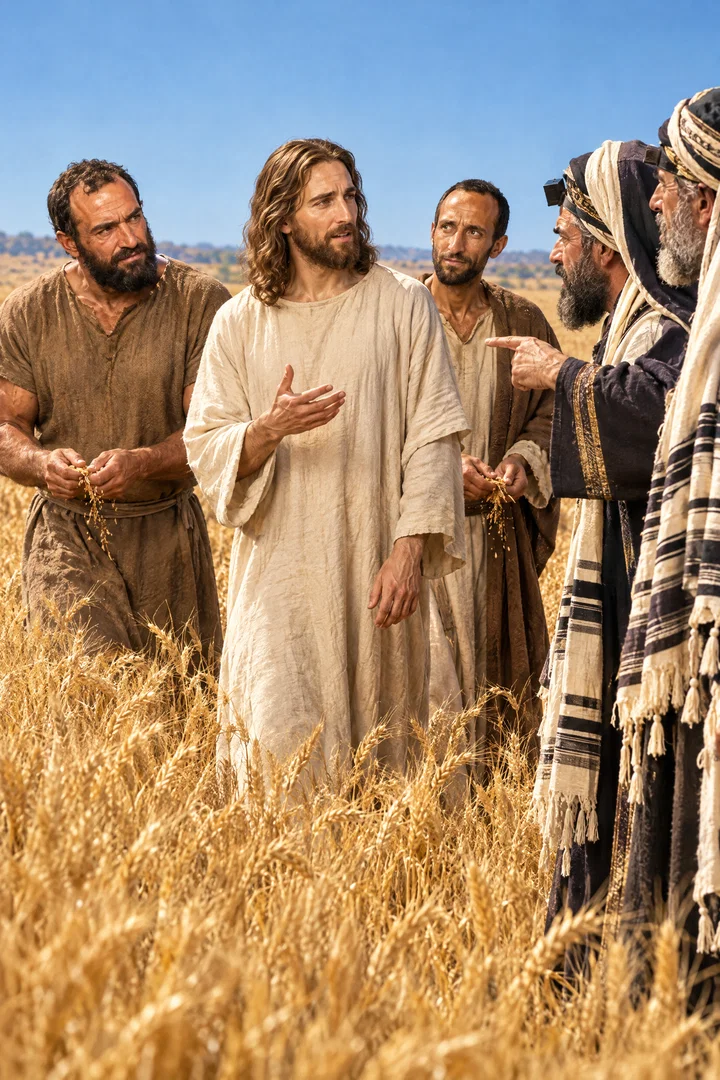
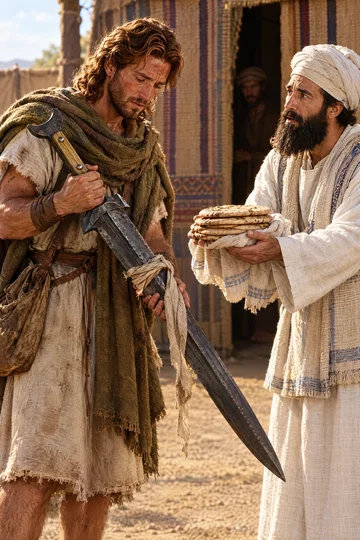
Cross-references
- Matthew 12:3-5
But he said unto them, Have ye not read what David did, when he was an hungred, and they that were with him;
Jesus uses David’s shewbread and the priests’ temple service to justify the disciples’ Sabbath act.
- 1 Samuel 21:6
So the priest gave him hallowed bread: for there was no bread there but the shewbread, that was taken from before the LORD, to put hot bread in the day when it was taken away.
David receives and eats the consecrated shewbread when hungry.
- Luke 6:1-5
And it came to pass on the second sabbath after the first, that he went through the corn fields; and his disciples plucked the ears of corn, and did eat, rubbing them in their hands.
Jesus cites David’s example to defend his disciples’ Sabbath actions.
- Matthew 12:7
But if ye had known what this meaneth, I will have mercy, and not sacrifice, ye would not have condemned the guiltless.
Mercy explains why Jesus’ disciples are guiltless and should not be condemned.
- Matthew 12:3-4
But he said unto them, Have ye not read what David did, when he was an hungred, and they that were with him;
It recounts David eating the consecrated bread in the house of God.
- Hosea 6:6
For I desired mercy, and not sacrifice; and the knowledge of God more than burnt offerings.
God prefers mercy over sacrifice.
- Matthew 12:10
And, behold, there was a man which had his hand withered. And they asked him, saying, Is it lawful to heal on the sabbath days? that they might accuse him.
Jesus affirms that doing good on the Sabbath is lawful.
- Leviticus 24:9
And it shall be Aaron’s and his sons’; and they shall eat it in the holy place: for it is most holy unto him of the offerings of the LORD made by fire by a perpetual statute.
The loaves were reserved for Aaron and his sons to eat in the holy place.
- 1 Chronicles 9:32
And other of their brethren, of the sons of the Kohathites, were over the shewbread, to prepare it every sabbath.
The shewbread was prepared every Sabbath.
- Matthew 12:12
How much then is a man better than a sheep? Wherefore it is lawful to do well on the sabbath days.
Jesus teaches that doing good on the Sabbath is lawful.
- Mark 3:1-7
And he entered again into the synagogue; and there was a man there which had a withered hand.
same lesson on true use of Sabbath
Commentary
Each commentary is drawn from primary sources: the writings of Ellen G. White and Adventist pioneers and periodicals. Each commentary is separate. Its own words are not a quotation; follow the references to read the source passages.
Ellen G. White
8 sources
The verse tells how David, when he had need and was hungry with the men accompanying him, went into the house of God in the days of Abiathar the high priest, ate the shewbread which is not lawful to eat but for the priests, and gave also to those who were with him.2SP 195.2–197.14RED 48.2–49.1 On the occasion when Jesus cited this, He and His disciples were passing through a grain field on the Sabbath, where the disciples plucked heads of grain, rubbed them in their hands, and ate the kernels.2SP 195.2–197.1PP 531.1–2HSFM 165.2ST Sep 16, 1913Ms 43b, 1891, par. 9 They did this from hunger after long labor in teaching and healing, to sustain bodily strength for the service of God.2SP 195.2–197.14RED 48.2–49.1 Their act was in keeping with God's provision that a hungry person is permitted to enter a neighbor's field and eat to satisfy hunger.PP 531.1–2HSFM 165.2
Excessive hunger and need excused David for violating even the holiness of the sanctuary and made his eating guiltless.2SP 195.2–197.14RED 48.2–49.1 Jesus used David's precedent to answer and repel the charge of Sabbath-breaking, denied the charge, and established that the disciples were guiltless, innocent, excusable, right and lawful, because what they did was in harmony with the Sabbath commandment.2SP 195.2–197.14RED 48.2–49.1ST Sep 16, 1913Ms 43b, 1891, par. 9 The service of God comes first, so it is right to satisfy fatigue and hunger and the wants of humanity even on the Sabbath, and God's service and human needs are not opposed.2SP 195.2–197.14RED 48.2–49.1 The Sabbath was made for man to give him rest and peace and to remind him of the work of his Creator, and was not given to interfere with the needs of his being, to bring pain and discomfort instead of blessing, or to be a grievous burden.2SP 195.2–197.14RED 48.2–49.1
The verse belongs to an account in which rulers, scribes and Pharisees watched to accuse Jesus and charged Him and His disciples with transgressing and breaking the Sabbath.STMW6 43.2ST Sep 16, 1913Ms 43b, 1891, par. 1Ms 43b, 1891, par. 9 Their accusation was foolish and blind, as if they had put out their eyes, because they accused the One who made the Sabbath and is its Lord of breaking it.STMW6 43.2Ms 43b, 1891, par. 1 The same blindness and loss of bearings happens when people want to carry God's work in America in their own way.Ms 43b, 1891, par. 1 In defending the disciples, Christ with a dignity He alone possesses cast over them the shield of His own prerogatives as God in the flesh in whom dwells all the fullness of the Godhead bodily, to whom all things are delivered of the Father and who as Son of man has life in Himself and authority to execute judgment.Ms 43b, 1891, par. 9
Sources
Pioneers and periodicals
46 sources
When David was fleeing from Saul and hungry with his companions, he entered the house of God at Nob and ate the holy bread reserved by law for the priests and shared it with those with him.ST Oct 22, 1894ST Nov 11, 1897RH Feb 4, 1862RH Jan 21, 1862RH Jan 6, 1853 Jesus recalled that act to answer the Pharisees when they charged his hungry disciples with Sabbath-breaking for plucking and rubbing ears of grain as they walked through the field.ST Oct 22, 1894ST Apr 14, 1881RH Apr 21, 1863ST Sep 19, 1911ST Oct 19, 1882 Pressing human need made David guiltless in setting aside the ceremonial restriction, showing that meeting a real bodily need is mercy and not unlawful.ST Apr 14, 1881ST Oct 22, 1894RH Sep 2, 1851ST Oct 22, 1894ST Apr 14, 1881 As Lord of the Sabbath Jesus declared the disciples guiltless, for they had broken only Pharisaic tradition and not God's Sabbath law.ST Apr 14, 1881RH Feb 4, 1862RH Nov 1850ST May 17, 1910ST Jan 30, 1879 The Sabbath was made at creation for humanity as a blessing of rest and not a grievous burden, and Christ upheld and freed it rather than changing or abolishing it.ST Apr 14, 1881ST Oct 22, 1894ST Nov 11, 1897RH Oct 24, 1871RH Oct 14, 1873
David's Act Recalled
When David was hungry as he fled from Saul, he went into the house of God in the days of Abiathar the high priest, ate the consecrated bread that was reserved by law for the priests alone, and gave it also to his hungry companions who were with him.ST Apr 14, 1881ST Oct 22, 1894ST Nov 11, 1897RH Feb 4, 1862RH Apr 5, 1860 The example was given to answer the Pharisees' objection to what the disciples did on the Sabbath, showing that meeting human need does not condemn the guiltless through rigid rules.ST Oct 22, 1894ST Nov 11, 1897 Jesus used this precedent to show that the disciples' eating of grain as they passed through the fields on the Sabbath did not make them guilty of breaking the Sabbath.RH Feb 4, 1862 While famished, David ate without condemnation what ordinarily only priests could eat, which teaches that meeting human need is permissible even when the act would not be lawful in ordinary circumstances.RH Apr 5, 1860 Because they needed food, David and his men ate the sanctuary bread although it was ordinarily reserved for priests, and God did not rebuke David for this, since their need took precedence over the ceremonial rule.ST Apr 14, 1881ST Oct 22, 1894
Excessive hunger excused David for violating even the holiness of the sanctuary and made his act guiltless.ST Apr 14, 1881 This shows that God's laws are not meant to destroy people, and that mercy matters more than sacrifice.ST Oct 22, 1894 The service of God is first of all, so satisfying human wants when fatigue and hunger attend that work is right even upon the Sabbath day.ST Apr 14, 1881 The disciples' simple act of plucking grain and eating it on the Sabbath to sustain bodily strength for use in God's service was therefore much more excusable and right and lawful.ST Apr 14, 1881 It distinguishes merciful use of the Sabbath from superstitious abuse of it.RH Apr 5, 1860 The holy Sabbath institution was made for man to give him rest and peace and remind him of the work of his Creator, not to interfere with the needs of his being by bringing pain and discomfort instead of blessing as a grievous burden.ST Apr 14, 1881
The house of God where David obtained the shewbread was the tabernacle at Nob in Saul's time, where the other sacred vessels remained after the ark had been taken from the tabernacle at Shiloh.RH Jan 6, 1853 The bread David received had been removed from before the Lord and replaced with fresh bread.RH Jan 21, 1862 The twelve loaves were replaced weekly, which supports the timing as likely on the Sabbath when the weekly replacement took place.RH Jan 21, 1862 Jesus cited David's eating as the first case answering the Pharisees' challenge to the disciples' conduct, and Mark notes that it happened in the days of Abiathar the high priest.ST Oct 22, 1894RH Apr 21, 1863
David was esteemed as a model of piety, yet when he and his men were hungry he broke the rules and violated the sanctity of the holy place to eat.ST Apr 14, 1881 A Sabbath setting for David's act would make the comparison doubly appropriate, but it is not essential to the argument.ST Apr 14, 1881 What is established by David's example is the principle that the pressure of hunger vindicates setting aside for the time even the strictest temple regulations.ST Apr 14, 1881 As Lord of the Sabbath, One above all question and above all law, Jesus acquits the disciples from blame by appealing to the very statutes they are accused of violating.ST Apr 14, 1881
Disciples' Sabbath Dispute
The disciples were hungry while traveling through a field on the Sabbath, and to satisfy hunger and get their own meal they plucked ears of standing grain, rubbed them in their hands, and ate.ST Apr 14, 1881ST Sep 19, 1911ST Oct 19, 1882 Their act was getting food while on the way, and as a work of necessity it was not sin on the Sabbath.ST Sep 19, 1911ST Oct 19, 1882 The Pharisees accused Jesus and His disciples of breaking the Sabbath because they plucked and ate grain while passing through the field.
The setting was a Sabbath just after the return from Jerusalem to Galilee after the second day of the Passover feast.ST Apr 14, 1881 It was a lawful Sabbath walk of less than three-quarters of a mile through ripening barley fields near a town such as Capernaum in Nisan, the month of earing when the first early sheaf was offered on the second day of the Passover.ST Apr 14, 1881 The disciples were hungry because no Jew broke fast till after the morning synagogue service.ST Apr 14, 1881 What they did was free by law and custom on other days.ST Apr 14, 1881
Plucking was charged as a kind of reaping and rubbing as a kind of grinding or threshing and preparation of food.ST Apr 14, 1881ST Mar 4, 1889 Such preparation was required by tradition to be done before sunset Friday.ST Apr 14, 1881 Under Pharisaic tradition rubbing out the kernels was treated as forbidden threshing, and the act was charged as Sabbath-breaking held worthy of stoning.ST Apr 14, 1881ST Mar 4, 1889 The Sabbath law itself did not forbid such an act, and meeting hunger is not a desecration of the Sabbath.ST Mar 4, 1889
The dispute concerned the seventh day, not the first day of the week.ST Apr 15, 1886ST Jul 23, 1912 The accusation of Sabbath-breaking and Jesus’ reply belong to the seventh-day Sabbath, and the account in Mark 2:23-28 is the parallel to Matthew 12:1-13 about Jesus and the Sabbath.ST Feb 17, 1898ST Apr 15, 1886 The day was the seventh day, before the first day of the week, and its sacredness was not transferred to Sunday by human agreement, but God’s blessing and sanctification remained on the seventh day.ST Jul 23, 1912
The accusers were Pharisees and fanatical rabbis who sought to condemn Christ because of it.ST Oct 19, 1882 They accused Jesus and His disciples of unlawful conduct and disputed whether Sabbath observance should follow God’s requirements or Pharisaic rules. They were governed by the Mishna and corruptions of Scripture rather than the Bible, while Christ and His followers were guided by the Bible.RH Feb 11, 1858 Christ’s Sabbath teaching and practice exposed their mistaken ideas, and this became a ground of opposition to Him, with repeated condemnation also for His healing on the Sabbath.ST Oct 19, 1882
Mercy Over Ritual Rule
David and his men ate the consecrated bread of the sanctuary, though it was ordinarily reserved for the priests alone, because they needed food.ST Oct 22, 1894ST Oct 22, 1894 Their need outweighed the ceremonial restriction for the time, and God did not rebuke David for meeting it.ST Oct 22, 1894ST Oct 22, 1894 Excessive hunger and pressure of need excused him and made his act guiltless even in violating the holiness of the sanctuary.ST Apr 14, 1881RH Sep 2, 1851ST Apr 14, 1881 What is established is the principle that hunger vindicates setting aside even the strictest temple regulations for the time.RH Sep 2, 1851ST Apr 14, 1881
Meeting a real bodily need in this way is an act of mercy, not unlawful Sabbath-breaking.RH Apr 5, 1860RH Sep 2, 1851 Doing such work without need would have been needless labor and unlawful, and this distinguishes merciful use of the Sabbath from superstitious abuse of it.RH Apr 5, 1860RH Sep 2, 1851 The service of God is first of all, so satisfying the wants of humanity when fatigue and hunger attend that work is right even upon the Sabbath day.ST Apr 14, 1881 The simple act of the disciples in plucking grain and eating it on the Sabbath to sustain bodily strength for use in God's service was therefore much more excusable and right and lawful.ST Apr 14, 1881
God's laws are not meant to destroy people, and human need takes precedence over religious traditions imposed on the Sabbath.ST Oct 22, 1894ST Oct 22, 1894 Mercy matters more than sacrifice, and rigid rules must not be used to condemn the guiltless.ST Nov 11, 1897ST Oct 22, 1894 The holy Sabbath institution was made for man to give him rest and peace and to remind him of the work of his Creator, not to interfere with the needs of his being by bringing pain and discomfort instead of blessing as a grievous burden.ST Apr 14, 1881ST Mar 12, 1894 The Sabbath does not forbid necessary acts, and work of necessity such as relieving hunger and doing good can be in harmony with the Sabbath law.ST Jun 20, 1911ST Mar 28, 1878 This allowance does not cancel the Sabbath's sanctity or its binding force, for it remains a day of rest made for humanity's physical, intellectual, and moral good.ST Mar 28, 1878
Sabbath Upheld Not Changed
Jesus defended the disciples and declared them guiltless because what they did in plucking grain to satisfy hunger was lawful and in perfect harmony with the Sabbath commandment.RH Feb 4, 1862RH Nov 1850ST May 17, 1910ST Jun 6, 1878RH May 13, 1875 They broke only Jewish tradition and human punctilios, not God's Sabbath law, for their work was a matter of urgent necessity in getting their own meal while traveling, and the charge that it was unlawful was false.RH Feb 4, 1862ST May 17, 1910ST Sep 19, 1911ST Jun 6, 1878RH May 13, 1875 The contrast is truth against tradition, not spirit against letter, since that which is lawful is in harmony with law and Jesus never broke the Sabbath law but interpreted it and did only what is lawful, including doing good on the Sabbath.RH Nov 1850ST May 17, 1910 As Lord of the Sabbath, One above all question and above all law, He asserted the perfect right to interpret the meaning of the Sabbath law and acquitted the disciples from blame by appealing to the very statutes they were accused of violating.ST Apr 14, 1881ST Jan 30, 1879 That lordship shows it is right to satisfy hunger and to heal the sick on the Sabbath, while refusing to follow traditional punctilios that set aside judgment and mercy and faith and turn the Sabbath against love to neighbor and human good.ST Apr 14, 1881ST May 17, 1910ST Jan 30, 1879
Christ taught the true use of the Sabbath, freed it from added human traditions, reiterated the duty of obedience, and upheld it with beneficent actions.ST Apr 14, 1881RH Nov 14, 1871RH Apr 18, 1871RH Jun 24, 1858ST Jan 30, 1879 The episode does not say He claimed a right to change the Sabbath day, abrogate the Sabbath in its original purpose as given to man, speak against obedience to any of God's commandments, abolish the Sabbath, or destroy the law, but shows He came to fulfill it.ST Jan 6, 1881RH Nov 14, 1871RH Apr 18, 1871RH Jun 24, 1858ST Jan 30, 1879 The Sabbath law remains binding in the gospel age, not made void but asserting its power more and more, laying hold on the spirit within so that anger may be murder and the look of lust adultery.RH Apr 18, 1871ST Jan 30, 1879 His appeal to David's eating the consecrated bread supports the principle that the Sabbath should be understood and observed as a merciful institution for humanity's good, consistent with mercy and not as a reason to deny rightful need.ST Jan 6, 1881RH Jun 24, 1858
The Sabbath was made for humanity from the beginning as a merciful institution, made at creation long before Judah and the later formation of the tribes of Israel.RH Oct 14, 1873ST Jul 7, 1898 It was made by sanctifying the seventh day of the week as the memorial of God's rest on that day from the six days' labor of creation.RH Oct 24, 1871 The institution is made out of the seventh day because the facts essential to its existence belong to that day and to no other, so the institution and the day are inseparable; if the seventh day is abolished the institution itself is abrogated and the Sabbath made for humanity no longer exists.RH Oct 24, 1871 Christ appealed to it to justify merciful action, not to abolish it, and His lordship over the Sabbath means that He preserves and protects it, just as He is Lord of His people.RH Oct 14, 1873
Jesus dearly loved, honored, kept, and highly respected the real Sabbath of Sinai, spending the day in the synagogues unfolding the Scriptures and teaching by His life to revere it, and in His clash with the Pharisees He bitterly attacked only their counterfeit Sabbath, not the true Sabbath itself.ST Dec 17, 1894ST Sep 15, 1887 The accusation and His reply concern the seventh day, not the first day of the week, and His title Lord of the Sabbath applies to the seventh-day Sabbath, identified as the Lord's day He claims as His, not Sunday, affirming its divine authority.RH Dec 18, 1860ST Jan 28, 1903RH Oct 14, 1873 His actions, including the disciples' eating, were lawful and did not break or change the Sabbath.ST Dec 17, 1894 He is presented as the perfect model, powerful yet loving and humble, respectful of the rights of the least and marked by selfless benevolence.RH Oct 30, 1860 The disciples, not Jesus, plucked the grain because they were hungry, and the reference to the shewbread does not show that He abolished the Jewish priesthood or transferred it to His disciples, since Christ was not a priest on earth and any Jewish priesthood given to the disciples would have ended at the cross.RH Oct 21, 1858
Living the Principle Today
Christ's defense in this account shows how to keep the Sabbath according to the law's true spirit, as a day of rest, delight, and holy joy rather than burdensome human rules, the Sabbath having been a chief point of dispute.ST Jun 11, 1894 That teaching and example will stand as the pattern in the last great reformation, when the Sabbath will be a test.ST Jun 11, 1894 Works of necessity are permitted on the Sabbath, and this allowance does not cancel the Sabbath's sanctity or its binding force.ST Mar 28, 1878 The Sabbath remains a day of rest made for humanity's physical, intellectual, and moral good.ST Mar 28, 1878
Keeping the Sabbath is not a matter of enforcing human interpretations while neglecting its spirit, as seen where Jesus justified his disciples' act of plucking grain to satisfy their hunger against Pharisaic Sabbath rules.RH Apr 23, 1872 Sabbath-keeping is not to be measured by rigid, straight-jacketed human ideas, for the Pharisees accused Christ when He had done no wrong.ST Nov 21, 1895 The Sabbath is not properly observed through outward compliance compelled by human law, because worship and love of the day must be voluntary.ST May 28, 1912
The incident of the disciples eating grain on the Sabbath exposes how religious complaints can become unreasonable and how enforcing people's religious duties by law can violate individual rights.ST Feb 2, 1915 Those who prosecute Adventists for doing quiet work on Sunday without intent to offend do no more than the Pharisees did when they accused Christ when He had done no wrong.ST Nov 21, 1895
Sources