1 Samuel 24:16
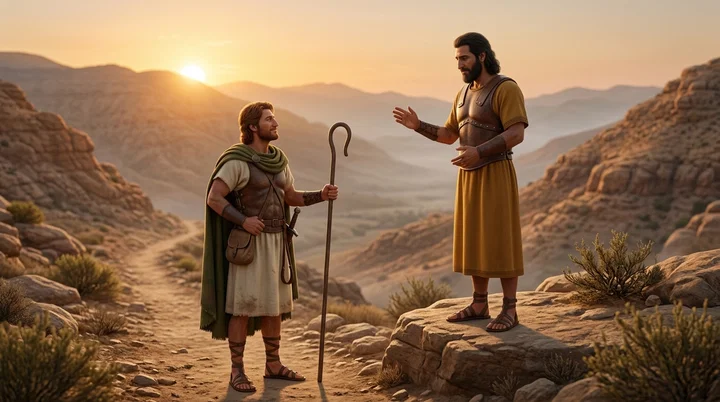
And it came to pass, when David had made an end of speaking these words unto Saul, that Saul said, Is this thy voice, my son David? And Saul lifted up his voice, and wept.
Translations
And it came to pass, when David had made an end of speaking these words to Saul, that Saul said, Is this your voice, my son David? And Saul lifted up his voice, and wept.
King James Version, Revised Version, American Standard Version
And it came to pass, when David had made an end of speaking these words unto Saul, that Saul said, Is this thy voice, my son David? And Saul lifted up his voice, and wept.
And it came to pass, when David had made an end of speaking these words unto Saul, that Saul said, Is this thy voice, my son David? And Saul lift up his voice, and wept.
And it came to pass when David had made an end of speaking these words to Saul, that Saul said, Is this thy voice, my son David? And Saul lifted up his voice, and wept.
And it cometh to pass, when David completeth to speak these words unto Saul, that Saul saith, 'Is this thy voice, my son David?' and Saul lifteth up his voice, and weepeth.
And as soon as David had ended speaking these words to Saul, Saul said, Is this thy voice, my son David? And Saul lifted up his voice and wept.
And it came to pass, when David had made an end of speaking these words unto Saul, that Saul said, Thy voice, is this, my son David? And Saul lifted up his voice, and wept.
Berean Standard Bible, Majority Standard Bible
When David had finished saying these things, Saul called back, “ Is that your voice, David my son?”Then Saul wept aloud
It came to pass, when David had finished speaking these words to Saul, that Saul said, “ Is that your voice, my son David?” Saul lifted up his voice and wept.
Now when David had said these words to Saul, Saul said, Is this your voice, David, my son? And Saul was overcome with weeping.
The Lord therfore be iudge, and iudge betweene thee and me, and see, and pleade my cause, and deliuer me out of thine hand.
Douay-Rheims (Challoner revision)
And when David had made an end of speaking these words to Saul, Saul said: Is this thy voice, my son David? And Saul lifted up his voice, and wept.
Pictures
Cross-references
- 1 Samuel 24:10-11
Behold, this day thine eyes have seen how that the LORD had delivered thee to day into mine hand in the cave: and some bade me kill thee: but mine eye spared thee; and I said, I will not put forth mine hand against my lord; for he is the LORD’s anointed.
David explains that he spared Saul when he had the chance to kill him.
- 1 Samuel 24:20-22
And now, behold, I know well that thou shalt surely be king, and that the kingdom of Israel shall be established in thine hand.
Saul recognizes David will be king, and David promises to spare Saul’s house.
- 1 Samuel 26:2
Then Saul arose, and went down to the wilderness of Ziph, having three thousand chosen men of Israel with him, to seek David in the wilderness of Ziph.
Soon after Saul’s tearful acknowledgment, he pursued David again.
- 1 Samuel 26:12
So David took the spear and the cruse of water from Saul’s bolster; and they gat them away, and no man saw it, nor knew it, neither awaked: for they were all asleep; because a deep sleep from the LORD was fallen upon them.
David again refrained from killing Saul.
- Romans 12:20-21
Therefore if thine enemy hunger, feed him; if he thirst, give him drink: for in so doing thou shalt heap coals of fire on his head.
David answers Saul’s hostility by sparing him.
Commentary
Each commentary is drawn from primary sources: the writings of Ellen G. White and Adventist pioneers and periodicals. Each commentary is separate. Its own words are not a quotation; follow the references to read the source passages.
Ellen G. White
2 sources
The scene is a confrontation between David, still a shepherd youth though already holding God's promise of the throne, and Saul, the established monarch determined to retain his power.ED 254.2–3
Saul was deeply moved as he heard David speak and recognized that David had spared his life when he had the opportunity to kill him.PP 662.1–2 His question about whether this was David's voice and his lifting up his voice in weeping were a humbled admission of David's innocence and restraint.PP 662.1–2
Sources
Pioneers and periodicals
19 sources
David had Saul wholly in his power in the cave at En-gedi and spared him, cutting only the skirt of his robe and then calling after him to prove he meant no harm, and when he finished speaking Saul recognized his voice, called him his son David, and wept aloud.ST Apr 11, 1911ST Feb 17, 1904ST Apr 7, 1909ST Sep 9, 1889ST Jun 15, 1904 Saul was then hunting David far and near with an army to kill him and keep him from the throne, making his death the settled policy of his later life at the cost of justice and truth.ST Sep 9, 1889ST Apr 22, 1903 David refused to retaliate or lift his hand against the anointed of the Lord even when urged and able to kill him, leaving his cause and the kingdom to God's timing and judgment.ST Feb 17, 1904ST Apr 9, 1912ST Apr 7, 1909ST Sep 9, 1889ST Jun 15, 1904 Moved by that mercy and gentle appeal, Saul's anger softened and he confessed that David was more righteous than he, having rewarded good for evil while Saul had returned evil for good.RH Sep 26, 1871ST Apr 11, 1911ST Jul 24, 1884ST Jun 15, 1904RH Dec 11, 1856 His tears and confession were only a temporary pang of sorrow soon overcome by stronger unholy passions, for outward sorrow and words do not prove lasting repentance or a changed life.ST Feb 19, 1885RH Nov 27, 1860ST Jul 17, 1884 The encounter shows the power of a soft, forgiving and meek answer to turn away wrath and conquer an enemy's heart, and that it is safe to entrust one's cause to God rather than take vengeance.ST Apr 9, 1912ST Apr 7, 1909ST Jun 15, 1904RH Dec 11, 1856
Setting and Response
The verse occurs while Saul is pursuing David with settled determination to have him killed and to prevent his succession to the throne.ST Sep 9, 1889ST Apr 22, 1903 Making David's death the controlling policy of his later life, Saul sacrificed justice, humanity and truth to unholy ambition and pride in self-idolatry, even though David's escapes were at times so clearly miraculous as to show God's direct providence.ST Sep 9, 1889 As an apostate king still holding the throne who had learned that David of another family and tribe would likely succeed him, he hunted David far and near year after year with an army, like hunting a flea or a partridge to take his life.ST Apr 22, 1903
Driven for protection into the fastnesses of the mountains, David spared Saul when his persecutor was wholly in his power, refusing to retaliate, take vengeance, destroy him, or harm the anointed of the Lord.ST Feb 17, 1904ST Apr 7, 1909ST Jun 15, 1904RH Dec 6, 1906ST Apr 22, 1903 He did so even when urged to kill him and when he had both the power and the opportunity on several occasions.ST Jun 15, 1904RH Dec 6, 1906ST Apr 22, 1903 With three thousand chosen men among the rocks of the wild goats at En-gedi, he guarded Saul asleep in a cave, cut off only the skirt of his robe, then called after him to show the skirt as proof that there was neither evil nor transgression in his hand and he had not sinned against Saul.ST Jun 15, 1904RH Dec 6, 1906 When David had made an end of speaking these words, Saul recognized David's voice, addressed him as his son David, and lifted up his voice and wept aloud.ST Apr 11, 1911ST Apr 7, 1909ST Sep 9, 1889ST Jul 24, 1884ST Jul 17, 1884
The meeting belongs to a turning point where David clearly understood his relations with Saul and clearly recognized his own ultimate right to the kingdom.ST Sep 9, 1889 Many in Israel had also reached that conclusion while a provisional court was already gathering about David, and the encounter between the two men displays the widely different principles on which they acted.ST Sep 9, 1889 In his tearful answer Saul went beyond formal acknowledgment and recognized that David would surely become king and that the kingdom of Israel would be established in his hand.RH May 3, 1870
Saul's Tears and Character
David's mercy and magnanimity toward his enemy affected Saul's heart and softened his anger until he was moved to tears.RH Sep 26, 1871ST Apr 11, 1911ST Jul 24, 1884 When David finished speaking after sparing his life, Saul recognized David's voice, addressed him as his son, and lifted up his voice and wept aloud.RH Sep 26, 1871ST Apr 11, 1911ST Jul 24, 1884 That gentle, pacific appeal came after David, himself anointed yet fleeing for his life with Saul pursuing him with three thousand chosen men among the rocks of the wild goats at En-gedi, guarded Saul as the anointed of the Lord, sparing him asleep in a cave when urged to kill him and cutting off only the skirt of his robe, then calling after him to show the skirt as proof that there was neither evil nor transgression in his hand and he had not sinned against him.ST Jun 15, 1904 Moved by such meekness, forgiveness, and gentle appeal, Saul confessed that David was more righteous than he and had acted righteously.ST Jul 24, 1884ST Jun 15, 1904RH Dec 11, 1856 For David had rewarded him good whereas he had rewarded David evil, repaying evil with good, which proves that a forgiving, meek temper can conquer an enemy's heart where revenge would only satisfy sinful passion and leave the avenger overcome by his own corruption, with the same grand results today.ST Jul 24, 1884ST Jun 15, 1904RH Dec 11, 1856
Despite envy, jealousy, and crimes, Saul had noble traits that could have been cultivated while his evil traits were overcome, but he persisted in self-will and was ruined.ST Feb 19, 1885 His weeping aloud even while still seeking David's life was only a temporary pang of sorrow, quickly overcome by stronger, unholy passions.RH Nov 27, 1860 His words, tears, and remorse, with repeated confessions of sin and outward sorrow and religious words, did not mean a changed course, for tears alone do not prove lasting repentance or a changed life.RH Nov 27, 1860ST Jul 17, 1884
David's Mercy and Trust
David had served Saul with humble obedience and a life above reproach, and his faithfulness to God stood in marked contrast to Saul's rebellious course as a constant rebuke to him.ST Sep 9, 1889 Saul had made David's death the controlling policy of his later life with settled determination to have him killed, sacrificing justice, humanity and truth to unholy ambition and pride in self-idolatry, even though David's escapes were at times so clearly miraculous as to show God's direct providence.ST Sep 9, 1889 Rather than seize the throne by force, David spared Saul and showed loyalty to God, leaving the outcome to God's timing and judgment.ST Sep 9, 1889
David never raised his hand against Saul but remained loyal to him while refusing to take vengeance and to harm his enemy, though Saul pursued him to kill him.ST Apr 9, 1912ST Apr 7, 1909 That refusal illustrates David's trust in God and that it is safe to entrust one's cause to God.ST Apr 9, 1912ST Apr 7, 1909 When David finished speaking, Saul recognized David's voice, addressed him as his son, and wept.ST Apr 7, 1909
The verse shows the power of a soft answer to turn away wrath, for David guarded Saul as the anointed of the Lord when Saul lay asleep in a cave in his power at En-gedi, though with three thousand chosen men among the rocks of the wild goats and though urged by others to kill him.ST Jun 15, 1904 He cut off only the skirt of Saul's robe, then called after him to show the skirt as proof that there was neither evil nor transgression in his hand and he had not sinned against Saul, and that gentle pacific appeal caused Saul to lift up his voice and weep and confess that David was more righteous than he, for David had rewarded good for evil whereas Saul had rewarded evil for good.ST Jun 15, 1904 David's meekness and forgiveness thus moved his persecutor to tears and to acknowledge David's greater righteousness, proving that a forgiving, meek temper can conquer an enemy's heart and brings the same grand results today, where revenge would only satisfy sinful passion and leave the avenger overcome by his own corruption.ST Jun 15, 1904RH Dec 11, 1856
David held steadily to his purpose through disheartening experiences with Saul, driven for protection into the fastnesses of the mountains with his persecutor at times wholly within his power yet refusing to harm him, until Saul's weeping answered David's restraint.RH Dec 6, 1906 He could form a purpose and hold to it, brave, determined and cool yet tender and kind as a young man.RH Dec 6, 1906 Those sterling qualities of heart that God saw in him as a boy and young man when He chose him king over His people stood him in good stead through forty long years of bringing a disorganized confederation of tribes into a strong united kingdom, making him one of the most eminent rulers of all time.RH Dec 6, 1906 Since the purpose and the mission are the same, holding such a worthy purpose makes a good and true missionary.RH Dec 6, 1906
Saul was an apostate king still holding the throne who learned that David of another family and tribe would likely succeed him, so he pursued David with an army far and near year after year to prevent his succession, hunting him like a flea or a partridge to take his life.ST Apr 22, 1903 David revealed noble character by refusing to harm the Lord's anointed even when he had both the power and the opportunity to do so on several occasions.ST Apr 22, 1903 Afterward Saul threw away his life in battle with the Philistines, and David was soon anointed and crowned king over part of Israel at Hebron for about seven years, then anointed a third time as king over all Israel with final coronation, reigning gloriously in Jerusalem and Mount Zion with all enemies subdued and the dominion enlarged tenfold.ST Apr 22, 1903
David's dealing with Saul was wise action, on the same level of wisdom as Noah at the flood, Abraham in Canaan, Moses in Egypt, John the Baptist at the annunciation, Paul before the Roman tribunal, and Elijah in opposing Jezebel.RH Dec 4, 1913 His forgiveness of Saul despite persecutions presents forgiveness of an offender as an example of the forgiving spirit.ST Dec 12, 1892
Sources