1 Samuel 25:19
And she said unto her servants, Go on before me; behold, I come after you. But she told not her husband Nabal.
Translations
American King James Version, Webster Bible
And she said to her servants, Go on before me; behold, I come after you. But she told not her husband Nabal.
King James Version, KJV Cambridge Paragraph Bible
And she said unto her servants, Go on before me; behold, I come after you. But she told not her husband Nabal.
Revised Version, American Standard Version
And she said unto her young men, Go on before me; behold, I come after you. But she told not her husband Nabal.
And she saith to her young men, 'Pass over before me; lo, after you I am coming;' and to her husband Nabal she hath not declared [it];
And she said to her young men, Go on before me; behold, I come after you. But she did not tell her husband Nabal.
And she said to her young men—Pass on before me, behold me coming after you; but, to her husband, Nabal, told she nothing.
Berean Standard Bible, Majority Standard Bible
and said to her young men, “ Go ahead of me. I will be right behind you.” But she did not tell her husband Nabal.
She said to her young men, “ Go on before me. Behold, I am coming after you.” But she didn’t tell her husband, Nabal.
And she said to her young men, Go on in front of me and I will come after you. But she said nothing to her husband Nabal.
Then she said vnto her seruants, Go ye before me: beholde, I will come after you: yet she tolde not her husband Nabal.
Douay-Rheims (Challoner revision)
And she said to her servants: Go before me: behold I will follow after you: but she told not her husband Nabal.
Pictures
Cross-references
- 1 Samuel 25:23-31
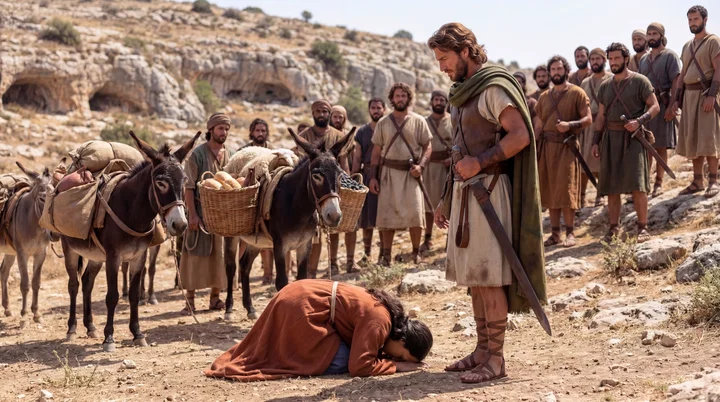
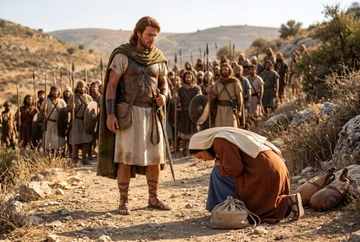
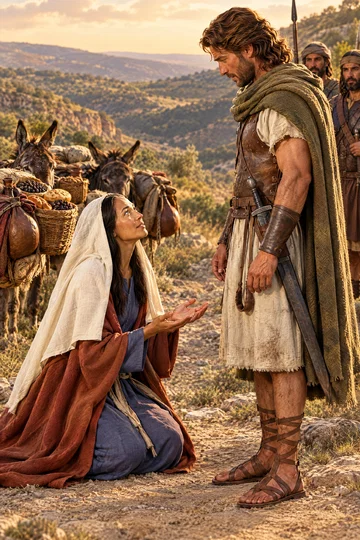
And when Abigail saw David, she hasted, and lighted off the ass, and fell before David on her face, and bowed herself to the ground,
Abigail appeals humbly to David and turns him from vengeance.
- 1 Samuel 25:32-35
And David said to Abigail, Blessed be the LORD God of Israel, which sent thee this day to meet me:
David recognizes Abigail’s intervention as from the Lord and refrains from revenge.
Commentary
Each commentary is drawn from primary sources: the writings of Ellen G. White and Adventist pioneers and periodicals. Each commentary is separate. Its own words are not a quotation; follow the references to read the source passages.
Ellen G. White
2 sources
Nabal's insolence had created a dangerous harm that needed to be averted.21MR 213.1–214.3 Abigail understood the urgency and acted promptly and independently to meet it.21MR 213.1–214.321MR 214.4 She sent her servants on ahead of her and then followed herself, going to meet David.21MR 213.1–214.321MR 214.4
She did this without first telling her husband Nabal or seeking his consent.21MR 213.1–214.321MR 214.4 She proceeded in this way because she knew Nabal would reject her counsel, and that any delay would be dangerous.21MR 213.1–214.3 She therefore prepared provisions and went herself to intercept David.21MR 213.1–214.3
Her course in acting without her husband's knowledge was approved by God.21MR 213.1–214.3 It revealed her discretion and her noble, godly character.21MR 213.1–214.3 Her example shows that a wife stands as her husband's equal, sharing life's responsibilities while giving him due respect.21MR 214.4 When she knows her husband will not accept her counsel, she may act decisively on her own in the way she knows is right before God to prevent harm.21MR 214.4
Sources
Pioneers and periodicals
5 sources
Abigail acted quickly and discreetly after Nabal's insulting reply to David's messengers, sending her servants on ahead with provisions and following behind them without telling her husband Nabal. ST Jun 15, 1904 Her tactful intervention brought her face to face with David, whose anger she answered with humility and a peace-making appeal that prevented harm. ST Jun 15, 1904 Her errand was the bringing of a generous gift to David that kept him from shedding blood. RH Sep 14, 1916
That gift belongs among the accounts showing that David did not seek harm against those who opposed him personally, even when he had opportunity to act against them. ST Feb 17, 1904 It is part of the story of Nabal in 1 Samuel 25, which exposes selfish covetousness and the folly of spending all energy accumulating possessions that last only for this short and uncertain life while making no effort to secure eternal life with all the happiness Heaven can bestow. ST Jun 9, 1890 Nabal's very name signifies fool. ST Jun 9, 1890
The verse belongs to 1 Samuel 25-27, assigned to be read April 20 in the course extending from 1 Samuel 15 to 2 Samuel 3. ST Apr 11, 1911 Its setting belongs to the contrast between Saul's rashness, weakness, failure, rejection, and ever-downward course and David's choosing and ever-rising career, throwing light on the habits and customs of the people, the influence of surrounding nations upon them, and God's providence shaping and molding national events while still remembering the promised Seed. ST Apr 11, 1911 That setting carries the lessons of Jonathan's unselfish friendship and David's mercy and magnanimity toward Saul his enemy, that it is safe to leave one's cause in God's hand. ST Apr 11, 1911 It shows that although the financial burdens of God's cause are laid upon men who are expected to lead out in building its enterprises, women come forward in time of crisis and render valuable assistance. RH Sep 14, 1916
Sources