1 Samuel 8:19
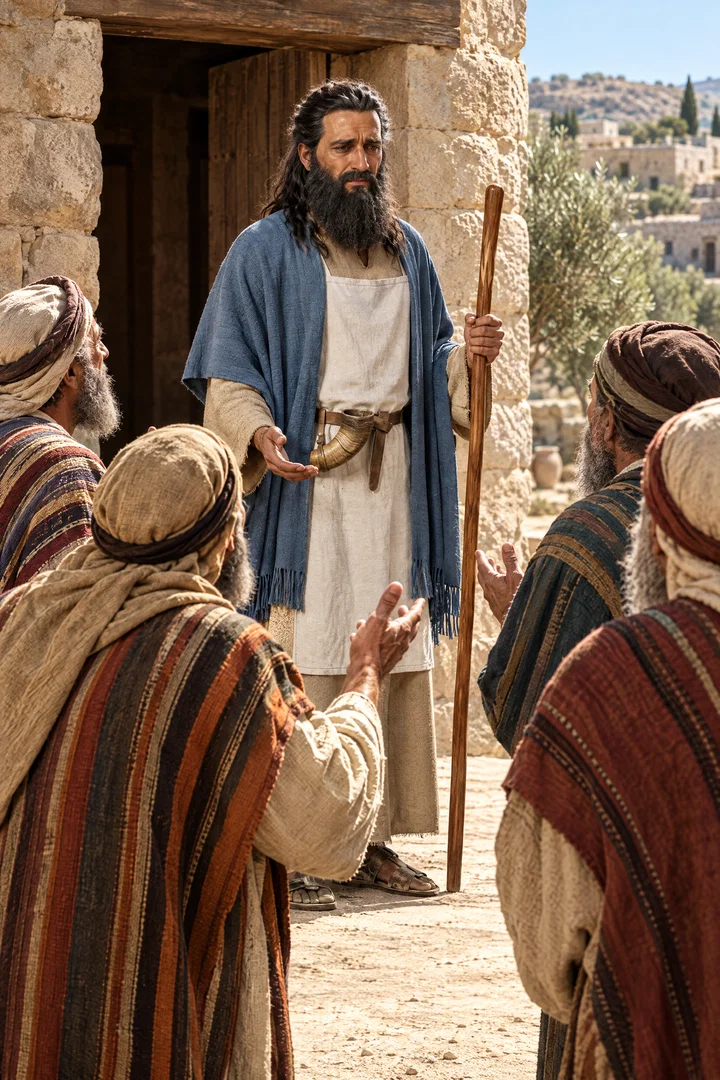
Nevertheless the people refused to obey the voice of Samuel; and they said, Nay; but we will have a king over us;
Translations
Nevertheless the people refused to obey the voice of Samuel; and they said, No; but we will have a king over us;
Nevertheless the people refused to obey the voice of Samuel; and they said, Nay; but we will have a king over us;
Nevertheless the people refused to obey the voice of Samuel; and they said, Nay, but we will have a king over us;
Nevertheless, the people refused to obey the voice of Samuel; and they said, No; but we will have a king over us;
But the people refused to hearken unto the voice of Samuel; and they said, Nay; but we will have a king over us;
But the people refused to hearken unto the voice of Samuel; and they said, Nay: but we will have a king over us,
And the people refuse to hearken to the voice of Samuel, and say, 'Nay, but a king is over us,
And the people refused to hearken to the voice of Samuel; and they said, No, but there shall be a king over us,
But the people refused to hearken unto the voice of Samuel,—and they said—Nay! but, a king, shall be over us:
Berean Standard Bible, Majority Standard Bible
Nevertheless, the people refused to listen to Samuel. “ No!” they said. “ We must have a king over us.
But the people refused to listen to the voice of Samuel; and they said, “ No, but we will have a king over us,
But the people gave no attention to the voice of Samuel; and they said, No, but we will have a king over us,
But the people would not heare the voyce of Samuel, but did say, Nay, but there shall be a King ouer vs.
Douay-Rheims (Challoner revision)
But the people would not hear the voice of Samuel, and they said: Nay: but there shall be a king over us.
Pictures
Cross-references 20 of 23
- 1 Samuel 8:7
And the LORD said unto Samuel, Hearken unto the voice of the people in all that they say unto thee: for they have not rejected thee, but they have rejected me, that I should not reign over them.
Israel’s demand for a king rejects God’s rule over them.
- 1 Samuel 8:5
And said unto him, Behold, thou art old, and thy sons walk not in thy ways: now make us a king to judge us like all the nations.
The people demand a king like the surrounding nations.
- Hosea 13:11
I gave thee a king in mine anger, and took him away in my wrath.
God gave Israel a king in anger after they rejected his rule.
- 1 Samuel 12:12-19
And when ye saw that Nahash the king of the children of Ammon came against you, ye said unto me, Nay; but a king shall reign over us: when the LORD your God was your king.
Israel confesses its sin in demanding a king instead of the LORD.
- 1 Samuel 8:9
Now therefore hearken unto their voice: howbeit yet protest solemnly unto them, and shew them the manner of the king that shall reign over them.
Samuel’s solemn warning was overruled by the people’s insistence on a king.
- John 19:15
But they cried out, Away with him, away with him, crucify him. Pilate saith unto them, Shall I crucify your King? The chief priests answered, We have no king but Cæsar.
Israel rejects its King, declaring allegiance to another king.
- Deuteronomy 17:14-20
When thou art come unto the land which the LORD thy God giveth thee, and shalt possess it, and shalt dwell therein, and shalt say, I will set a king over me, like as all the nations that are about me;
Israel’s kingship is permitted but bounded by obedience to God’s law.
- Jeremiah 11:4
Which I commanded your fathers in the day that I brought them forth out of the land of Egypt, from the iron furnace, saying, Obey my voice, and do them, according to all which I command you: so shall ye be my people, and I will be your God:
Israel is called to obey God's voice, but had refused it by demanding a king.
- 1 Samuel 12:13
Now therefore behold the king whom ye have chosen, and whom ye have desired! and, behold, the LORD hath set a king over you.
Identifies Saul as the king Israel chose and desired.
- 1 Samuel 12:17-18
Is it not wheat harvest to day? I will call unto the LORD, and he shall send thunder and rain; that ye may perceive and see that your wickedness is great, which ye have done in the sight of the LORD, in asking you a king.
thunder lightning hail showed displeasure
- 1 Samuel 10:1
Then Samuel took a vial of oil, and poured it upon his head, and kissed him, and said, Is it not because the LORD hath anointed thee to be captain over his inheritance?
Samuel anoints Saul as Israel’s king.
- 1 Samuel 8:3
And his sons walked not in his ways, but turned aside after lucre, and took bribes, and perverted judgment.
gives the sons' injustice prompting the demand
- 1 Samuel 12:14-15
If ye will fear the LORD, and serve him, and obey his voice, and not rebel against the commandment of the LORD, then shall both ye and also the king that reigneth over you continue following the LORD your God:
Samuel warns that blessing depends on obedience and judgment follows rebellion.
- Judges 8:23
And Gideon said unto them, I will not rule over you, neither shall my son rule over you: the LORD shall rule over you.
Gideon refuses to rule Israel, saying the Lord should rule.
- Judges 2:16
Nevertheless the LORD raised up judges, which delivered them out of the hand of those that spoiled them.
God raised up judges, contrasting with Israel’s demand for a king.
- Judges 17:6
In those days there was no king in Israel, but every man did that which was right in his own eyes.
Both describe Israel’s desire for a king amid people doing as they pleased.
- Psalms 106:15
And he gave them their request; but sent leanness into their soul.
God granted their persistent demand, but it brought harmful consequences.
- Acts 13:20
And after that he gave unto them judges about the space of four hundred and fifty years, until Samuel the prophet.
Recalls the period when judges ruled Israel.
- Judges 21:25
In those days there was no king in Israel: every man did that which was right in his own eyes.
Both describe Israel’s rejection of order without a king.
- Psalms 81:11-13
But my people would not hearken to my voice; and Israel would none of me.
Israel refuses to heed God and chooses its own way.
Commentary
Each commentary is drawn from primary sources: the writings of Ellen G. White and Adventist pioneers and periodicals. Each commentary is separate. Its own words are not a quotation; follow the references to read the source passages.
Ellen G. White
24 sources
After Samuel faithfully told the people all the words of the Lord about a king and solemnly warned them of the consequences, they refused to obey his voice and persisted in demanding a king over them.Ms 53, 1890, par. 26–31Ms 40a, 1890, par. 24–29Ms 40, 1890, par. 16–21 Their demand was a deliberate, long-desired choice driven by discontent and pride, wanting to be like the surrounding nations and to be esteemed great in the world, with outward prosperity, riches, and show.Ms 53, 1890, par. 26–31Ms 40, 1890, par. 16–21PP 604.2ST Jul 13, 1882 They wanted a visible human king of their own choosing to judge them, lead them, and fight their battles, wrongly believing their weakness came from lacking such a king rather than from their sins and departure from God.ST Jul 13, 1882EDFCP 23.1ST Jul 13, 1882 In refusing Samuel they did not merely reject Samuel but rejected God as King, throwing off His wise rule and management, showing spiritual blindness, ingratitude, and lack of faith in His power to guide, deliver, and give victory.Ms 53, 1890, par. 26–31Ms 40, 1890, par. 16–21ST Jul 13, 1882SG4 65.4EDFCP 23.1 The same folly rooted in self-confidence and lack of trust in the Lord as Ruler will be repeated among God's people today unless there is greater humility and more trust in God, for renouncing His rule for outward show takes a person out of His hands and imperils His work.Lt 9, 1901, par. 23–24Ms 61, 1890, par. 184MR 69.2
Israel's Demand for King
Samuel had faithfully laid before the people all the words of the Lord concerning a king in 1 Samuel 8:11-22 and solemnly warned them of the consequences, yet they refused to obey his voice and persisted in insisting, Nay, we will have a king over us.Ms 40a, 1890, par. 24–29Ms 40, 1890, par. 16–21Ms 40, 1890, par. 10–15 Their voice decided to discard Samuel before God had released him, choosing to be ruled by a king instead of being ruled by God.Ms 53, 1890, par. 26–31 The demand was not sudden but a deliberate, long-desired choice driven by discontent and pride, with the injustice of Samuel's sons serving only as a pretext for a change they had long wanted.PP 604.2 They had grown tired of pious rulers who kept God's purposes and will and honor before them.Ms 40, 1890, par. 16–21
What they wanted was to be like the surrounding nations and to be esteemed great and recognized by the world.Ms 53, 1890, par. 26–31Ms 40, 1890, par. 16–21 That meant a reformed religion with outward prosperity, riches, splendor, and show, hankering after these things as they had once hankered after the food of Egypt.Ms 40, 1890, par. 16–21 Their distinct standing as God's own people was a special privilege and blessing, but they ignored it and eagerly sought to imitate the heathen.ST Jul 13, 1882 Renouncing God's rule to keep up outward show and follow worldly fashion was leaving their first love and separating from His management, control, and jurisdiction.Ms 53, 1890, par. 26–31Lt 9, 1901, par. 23–24
They wanted a visible human king of their own choosing, one who pleased them, to judge them, lead them, command their armies, fight their battles, and restore harmony.ST Jul 13, 1882EDFCP 23.1ST Jul 13, 1882PP 607.1 They prized royal appearance, personal courage, and skill in leading armies, and wrongly believed their weakness against enemies came from lacking such a king rather than from their sins and departure from God.SG4 66.1 They distrusted God's care and mercy to raise up leaders, guide, and give victory, wanting divine power visibly embodied in a man they could see.SG4 66.1ST Jul 27, 1882 The Lord had plainly told them through Samuel that a king was not the right and best way, and that their own way was imagined to bring the most glory to themselves as a nation.Ms 40, 1890, par. 10–15
Still He directed Samuel to listen to the people's voice, not to oppose them, but to permit them to have their own way with all its consequences.Ms 53, 1890, par. 26–31EDFCP 23.1 Samuel was distressed by the decision and prayed unto the Lord.Ms 53, 1890, par. 26–31 God manifested His displeasure by thunder and lightning and hail, leaving them room to retract their decision, but they were too proud to do it.EDFCP 23.1
Rejecting God's Rule
In refusing Samuel they did not merely reject Samuel but rejected God's own divine authority as King who had appointed their judges.Ms 53, 1890, par. 26–31Ms 40, 1890, par. 16–21EDFCP 23.1 It was an insult to Him to His face in throwing off His wise rule, a leaving of their first love and a separating from His management, control, jurisdiction and leadership.Ms 53, 1890, par. 26–31Ms 40, 1890, par. 16–21 This was no new dissatisfaction with one man but a continuation of the rebellion that had left their fathers' dead bodies in the wilderness.Ms 40, 1890, par. 16–21
The choice showed spiritual blindness and ingratitude, ignoring their special privilege and blessing as God's own people in eagerness to imitate the heathen.ST Jul 13, 1882Lt 12a, 1888, par. 9–11 It showed lack of faith in His care, mercy and power to raise up leaders for them, to provide rulers, to guide and deliver and give victory, as He had made plain in Gideon's deliverance.SG4 65.41SP 353.2Lt 12a, 1888, par. 9–11SG4 66.1 They saw Samuel's solemn warning as his own judgment rather than God's word through him, and they wanted divine power visibly embodied in a man they could see.6T 249.4–250.2Lt 12a, 1888, par. 9–11 They wrongly believed their weakness against enemies came from lacking a king to command armies, rather than from their sins and departure from God, showing distrust of His care and mercy.SG4 66.1 Depending on people instead of God was their weakness, preferring human power to the divine power that had led them.6T 249.4–250.2
They followed their own mind and judgment, changeable human judgment, worldly policy and satanic counsel, rather than God's counsel and merciful guidance.Ms 53, 1890, par. 26–31Ms 40a, 1890, par. 24–29Ms 40, 1890, par. 16–21 They were bewitched to carry out their own purposes, choosing their own judgment and human leadership over Him.Ms 40a, 1890, par. 24–29Ms 40, 1890, par. 16–21 No confidence can be placed in finite beings whose hearts are not daily sanctified and controlled by the love and fear of God.Ms 40, 1890, par. 16–21 The course was rooted in self-confidence, lack of humility and lack of trust in the Lord as Ruler, which is leaning on men and on human judgment instead of making God the trust.Ms 61, 1890, par. 18
By choosing monarchy like the nations they gave up the form of government God had established, in which He chose their leaders and was to be consulted in difficulty, ruling through wise men who waited upon Him for counsel.1SP 353.2EDFCP 23.1 They risked giving to an earthly ruler honor due to God and being led away from obedience to Him.SG4 65.41SP 353.2 A king unguided by God's wisdom could exalt himself, judge wrongly, make the innocent suffer and reward the unworthy.1SP 353.2
God warned that their prosperity would still depend on obeying Him, though they wanted a human ruler to lead their armies instead of trusting Him as their divine helper.ST Jul 27, 1882 Distress would come through the rulers they trusted to manage the nation.Ms 40a, 1890, par. 24–29 They later learned to their sorrow that an earthly ruler was of little help when God did not go with their armies.ApRGC 26.1–4 Because they wanted their own way rather than God's and prized royal appearance, personal courage and skill in leading armies above character to govern justly and preserve their holy calling, they received a king whose character reflected their own, that under his rule they would learn their error and return to God.PP 636.1
As the people later compared Saul's course with Samuel's they recognized their desire for a king as a mistake, and Saul's example helped make society irreligious and godless.PP 663.1–2 Their demand was a sin against God, and their ingratitude had separated them from Him, so that before they found peace they had to confess it specifically as an added evil.SC 38.1–2 Their choice brought weakness by preferring visible human power to divine power, and its ultimate result was Jerusalem's destruction and the nation's dispersion.6T 249.4–250.2Ms 169, 1899, par. 24
Warning for Today
Israel's insistence on having an earthly king so as to be like the surrounding nations means renouncing God's rule in order to keep up outward show and follow worldly fashion.Lt 9, 1901, par. 23–24 Such a choice takes a person out of God's hands and puts him under worldly influence.Lt 9, 1901, par. 23–24 Though meant to raise himself, it lowers him, dulls his comprehension of spiritual things, lessens his influence, and imperils God's work.Lt 9, 1901, par. 23–24
The folly in Samuel's day in refusing warning and insisting on a king over them was rooted in self-confidence, lack of humility, and lack of trust in the Lord God of Israel as Ruler of the people, which is leaning on men and on human judgment instead of making God the trust.Ms 61, 1890, par. 184MR 69.2 The same folly will be repeated among God's people today unless there is greater humility, less confidence in self, and more trust in God.Ms 61, 1890, par. 184MR 69.2 Only as divine power is combined with human effort will the work abide the test.Ms 61, 1890, par. 18 The required change is to lean no longer on men or on human judgment but to make God the trust, resulting in less talking and much more praying, meekness of spirit, caution in plans and movements, revealed dependence on God, and the mind of Christ.Ms 61, 1890, par. 18
Persisting in demanding a king after being warned what a king would do, wanting to be like other nations, taught to sorrow that an earthly ruler is of little help when God does not go with the armies.ApRGC 26.1–4 God has not placed kingly power in human hands to control every branch of the work, and centralized restrictions can hinder workers from entering neglected fields.ApRGC 26.1–4 The desire for a king to lead and fight battles is a lesson about people wanting a central human leader to carry responsibilities they should share and meet themselves.Ms 106, 1899
Sources
Pioneers and periodicals
42 sources
The people refused to listen to Samuel's solemn warning about the manner of the king and insisted they would have a king over them to govern and protect them, to lead them and to fight their battles.ST Jul 13, 1882ST Jul 22, 1889GSAM 46.1RH Jan 28, 1902 In refusing Samuel's voice they refused the voice of God Himself, rejecting Him that He should not reign over them and breaking their covenant to be His people.GSAM 46.1RH Jan 28, 1902RH Mar 25, 1875ST May 31, 1899ST Sep 20, 1883 They did this in unbelief and inward apostasy, having grown tired of following a God they could not see and wanting a visible warrior ruler and strong central government so they could be like all the surrounding nations instead of dwelling alone with God as their King.RH Mar 16, 1916RH Dec 24, 1903ST Nov 9, 1882RH Oct 5, 1911ST Feb 27, 1901 God gave them a king in His anger as a concession apart from His original plan, and the king they expected to defend them brought oppression, taking their sons and daughters and goods for his service, with long and bloody wars that began their downfall.RH Mar 25, 1875ST May 31, 1899ST Apr 17, 1901RH Oct 5, 1911RH Jun 29, 1916 To be like the nations was to join religion to the State and shift trust from God to human rulers, showing loss of connection with the supreme power and warning against insisting on having what is against God's will.ST Aug 23, 1899ST Aug 23, 1899ST Jul 22, 1889ST Jul 29, 1897RH Jan 29, 1914
Words and Historical Setting
The people would not listen to Samuel's voice, turning aside his solemn protest and his warning about the manner of the king who would reign over them, and answering with fixed resolve that they would have a king over them.ST Jul 22, 1889GSAM 46.1RH Jan 28, 1902RH Mar 25, 1875ST May 31, 1899 They wanted a ruler who would judge them, go before them, lead them and fight their battles as the rulers of other nations did, looking especially for a warrior to lead them against the Canaanite nations oppressing them, since Samuel was a man of peace and not a warrior.ST Jul 13, 1882ST Jul 22, 1889RH Jan 28, 1902RH Jun 29, 1916ST Jul 29, 1889 A king might in time have been given with God's sanction, but their insistence demanded at once the kind of ruler other nations had.ST Jul 22, 1889 Their refusal set the voice of the people against the voice of God, for Samuel in protesting and showing them the manner of the king spoke the voice of God.ST May 31, 1899
The word judge in their demand means far more than one who tries cases, for they sought a ruling king who governs the people, protects them, enforces law and leads them.RH Jan 28, 1902RH Jun 29, 1916RH Apr 25, 1871 Up to that time God Himself was their leader, and it was not His will that they have such a ruler, since He intended to govern through judges chosen by Himself rather than through rulers of great power, appointing lieutenants such as Joshua and Samuel instead of choosing any man to be ruler.ST May 31, 1899ST Sep 20, 1883 He knew rulers with great power were in danger of pride and tyranny.ST Sep 20, 1883
When they would not turn back, God let them have their way and gave them their desire, pointing out Saul to be their king.ST May 31, 1899RH Mar 31, 1874ST Jul 29, 1889 Samuel anointed that once humble young man king by command of the Lord, and the Lord signally blessed and honored him, though Samuel was grieved afterward to see him recklessly throw away his own bright prospects and those of his family rather than rejoicing over the ruin of his own rejected administration as a mere politician seeking worldly honor would have done.ST Jun 13, 1906 God even permitted kings afterward and directed His prophets to anoint them, although many of those kings were very bad.ST Nov 29, 1883 Israel's prosperity under kings still depended on obeying Him, for they had asked for a human ruler to lead their armies instead of trusting God as their divine helper.ST Jul 27, 1882
Saul was suited to what the people wished, a strong and impressive leader of impressive stature of the sort human judgment favors, chosen because the people wanted a visible ruler they could see.ST Jul 29, 1889ST Oct 13, 1881 He was taken from Benjamin, a small and nearly extinct tribe, so that the larger tribes would have no ground for jealousy.ST Jul 29, 1889 He reigned over them forty years.RH Mar 31, 1874 Yet his leadership did not give the people the confidence they had enjoyed when they trusted God, and he proved a harsh ruler as God had warned.ST Jul 29, 1889ST Oct 13, 1881
Motives for Demanding King
The demand for a king was driven first by a desire to be like all the surrounding nations and to be reckoned among them, instead of dwelling alone with God as only King, Ruler, and Lawgiver.RH Mar 16, 1916RH Dec 24, 1903ST Nov 9, 1882ST Apr 2, 1902 In seeking equality with those nations instead of the exalted, distinct and holy position intended for them, the people rejected God as their King despite their covenant to obey Him and be His people.RH Mar 16, 1916RH Dec 24, 1903ST Nov 9, 1882ST May 14, 1902 They lost sight of their calling to live by faith, to receive God's life within, and to shine as a light revealing His goodness to the nations.RH Mar 16, 1916RH Dec 24, 1903ST Apr 2, 1902 Instead of becoming great like the nations they sank beneath them, became despised among them, and did worse than the heathen around them.RH Mar 16, 1916RH Dec 24, 1903 Their trust shifted from God to human rulers in whom there is no help, the light they were meant to reveal grew dim, and the choice that began with wanting a king like the nations led at last to rejecting their own Lord and King and declaring no king but Caesar, and to captivity in Babylon while the land lay desolate.ST Apr 2, 1902ST May 14, 1902
They had grown dissatisfied with government by judges, believing it had failed to restrain disorder and restore harmony, and they wanted a strong central human government to unite the tribes.ST Jul 13, 1882ST May 31, 1899RH May 26, 1904 They wanted a visible warrior ruler to judge them — to govern, protect, enforce law and lead — and to go out before them and fight their battles against the oppressing Canaanite nations, since Samuel was a man of peace rather than a warrior.ST Jul 13, 1882ST Jul 22, 1889ST May 31, 1899 A king could eventually have been given with God's sanction, but their insistence sought the kind of ruler other nations had.ST Jul 22, 1889 Samuel's protesting voice showing them the manner of the king was the voice of God, so that by refusing to obey it they set the voice of the people against the voice of God and rejected God Himself that He should not reign over them, not merely Samuel, and God let them have their way.ST May 31, 1899 The needed change was not from judges to kings as a better working system but a change in the people's own self-government under God, not in God's system.RH May 26, 1904
They had grown tired of following a God they could not see and wanted a visible ruler they could see.ST Jul 27, 1882RH Oct 5, 1911ST Feb 27, 1901ST Oct 13, 1881 They did not want to remain a peculiar people set as God's example to the world, but chose to pattern after nations that had long since lost the memory of God.ST Feb 27, 1901 They looked to a king instead of to God for protection, guidance, confidence, and help, wanting a human ruler to lead their armies instead of trusting God as their divine helper.ST Jul 27, 1882ST Feb 27, 1901ST Oct 13, 1881 Saul, chosen for his impressive stature, was the kind of strong, impressive leader human judgment favored, but his leadership did not give the confidence they had when they trusted God.ST Oct 13, 1881 Their demand marked rebellion though God granted it, the beginning of their downfall, and even under a king their prosperity would still depend on obeying Him.ST Jul 27, 1882RH Oct 5, 1911
The root of the demand was unbelief, inward apostasy, and failure to love God.ST Apr 17, 1901ST Feb 27, 1901 It was only the outward sign of inward apostasy, for the people had become like all the nations at heart and would not govern themselves by the law of God, so they demanded human authority to give them law and govern them, which was complete rejection of God, His law, and open rebellion against the God of heaven.ST Apr 17, 1901 After a generation arose that knew not the Lord nor His works and forsook Him for Baal and Ashtaroth, the raids and oppression that resulted from that forsaking were blamed on the failure of His government.ST Apr 17, 1901 They concluded that to keep standing among the nations the tribes must unite under a strong central government and be freed from their divine Sovereign.
Rejection of Divine Rule
By refusing to listen to Samuel's solemn protest and warning about the manner of the king, the people rejected God Himself that He should not reign over them, not merely Samuel.GSAM 46.1RH Jan 28, 1902RH Mar 25, 1875ST May 31, 1899 Their insistence on having a king to judge them, go out before them, lead them, and fight their battles like the rulers of other nations was a rejection of God's rule over Israel.GSAM 46.1RH Jan 28, 1902RH Mar 25, 1875ST May 31, 1899 Samuel's protesting voice was the voice of God, so setting the voice of the people against it and saying they would have a king over them was setting the people against God, whom God then let have their way by giving them a king in anger.RH Mar 25, 1875ST May 31, 1899 The demand grew from unbelief and inward apostasy after forsaking God for Baal and Ashtaroth, blaming the resulting raids and oppression on the failure of His government and concluding that to stand among the nations they must unite under strong central human government and be freed from their divine Sovereign.ST Apr 17, 1901 It broke their covenant to obey God and be His people when they insisted on a human king in order to be like other nations.RH Jan 28, 1902RH Mar 16, 1916ST Nov 9, 1882
The refusal was complete rejection of God and His law for an earthly king and an earthly law, which is open rebellion against the God of heaven.ST Jul 27, 1882ST Apr 17, 1901ST Apr 17, 1901 Having become like all the nations at heart and being unwilling to govern themselves by the law of God, they demanded human authority to give them law and govern them, making the outward demand only a sign of inward apostasy rooted in unbelief and failure to love God.ST Apr 17, 1901ST Apr 17, 1901 That apostasy against God's plan of government marked the end of a progression from doubt and unbelief to failure in self-government under God's law, to rejection of that law, and to idolatry.ST Apr 17, 1901ST Apr 17, 1901 Though God granted the demand for a human ruler to lead armies instead of trusting Him as divine helper, prosperity under kings still depended on obeying Him.ST Jul 27, 1882
In this they rejected God's purpose that they remain distinct, exalted, and holy rather than seek equality with the surrounding nations.ST Jul 13, 1882RH Mar 16, 1916ST Apr 2, 1902ST Aug 23, 1899 He had called them to dwell alone with Him as their only King, Ruler, and Lawgiver, to trust in Him alone as King, to live by faith and receive His life within, and to stand before the nations as a holy and happy people revealing His goodness and shining as a light to them.ST Jul 13, 1882RH Mar 16, 1916ST Mar 31, 1909ST Apr 2, 1902ST Aug 23, 1899 By choosing to be reckoned among the nations and to be like all the nations, they fell below those nations, lost the exalted position intended for them and the ability to shine, their trust shifted to human rulers in whom there is no help, and the light they were meant to reveal grew dim.ST Jul 13, 1882RH Mar 16, 1916ST Apr 2, 1902ST Aug 23, 1899 Their choice led them not only to resemble the heathen around them but to do worse than they did, until they were carried captive to Babylon while the land lay desolate.ST Jul 13, 1882RH Mar 16, 1916
Consequences and Fulfillment
Samuel had solemnly set before them beforehand what the manner of the king would be if they persisted in having one over them.RH Mar 25, 1875ST Apr 17, 1901RH Jul 20, 1911 He would take their sons for his chariots and armies, their daughters for service, their fields and vineyards, the tenths of their seed and vineyards and sheep, and their servants and cattle for his work.ST Apr 17, 1901 He would make the people his servants until they would cry out without answer.ST Apr 17, 1901
God let them have their way and gave them a king in His anger, as a concession apart from His original plan and will.RH Mar 25, 1875ST May 31, 1899ST Sep 20, 1883ST Feb 27, 1901ST Nov 29, 1883 He had intended to govern through judges chosen by Him, knowing rulers with great power were in danger of pride and tyranny, yet when they persisted He granted their request.ST Sep 20, 1883 In the same way He later permitted the eating of flesh apart from His original plan, and permission in both cases was followed by punishment, as seen when men's days gradually shortened after flesh-eating was allowed.RH Oct 28, 1873 He nevertheless permitted them to have kings and even directed His prophets to anoint them, though many of those kings were very bad.ST Nov 29, 1883
With their king came oppression and long and bloody wars.ST Feb 27, 1901 Their demand marked the beginning of their downfall, for they had grown tired of following a God they could not see and wanted a visible ruler like the surrounding nations.RH Oct 5, 1911 The king they expected to defend them and lead them in battle ultimately led them toward ruin rather than safety, because they had rejected God as their true King and put their trust in human strength.RH Jun 29, 1916 In exchanging the praying prophet Samuel for a king they exchanged blessing for a curse through blind zeal.ST Aug 17, 1882
Instead of becoming great like the nations, they sank beneath them and became despised among them.RH Dec 24, 1903 In seeking to resemble those nations they came not only to resemble them but to do worse than the heathen around them, and they were eventually carried captive to Babylon while the land lay desolate. Their demand for human rule led at last to rejecting their own Lord and King and declaring that they had no king but Caesar.ST May 14, 1902 That forsaking of God to become like the nations is fulfilled in the hopeless, hated, and persecuted condition of the Jews in Europe as scapegoats for national and other evils, and the movement for national restoration in Palestine will not succeed in a national way as its supporters view it, because their hope is return to the God of hosts, belief in the prophecies relating to Christ, and recognition of Him as their only means of salvation.ST Oct 31, 1900
Their choice deprived them of greater blessings than a king could bring, for seeking what God was not ready to give could shut them off from spiritual influences that would have brought greater benefit.ST Jul 22, 1889 Saul was suited to their wish for a strong, impressive leader and was chosen from Benjamin, a small and nearly extinct tribe, so that the larger tribes would have no ground for jealousy, but he would also be a harsh ruler, as God had warned.ST Jul 29, 1889 When Saul's rule was contrasted with Samuel's, society grew irreligious and godless and the people saw their mistake in wanting a king so they would be like the surrounding nations.ST Oct 19, 1888 Yet the kingdom given and organized under Saul and established under David became in some respects a type of the kingdom of God soon to be established under the seed of David, Jesus Christ.RH Mar 25, 1875
Church and State Principle
To be like all the nations was to refuse to dwell alone with God as only King, Ruler and Lawgiver and to stand as a holy and happy people revealing His goodness, choosing instead to be reckoned among the nations.ST Aug 23, 1899ST Aug 23, 1899 To be like all the nations is to join religion to the State, to make religion a part of the State and a matter of State and government, and to reject God that He should not reign.ST Aug 23, 1899ST Aug 23, 1899 That choice kept God from revealing Himself to the world as He really is, and the same willingness to be reckoned among the nations and to be like all the nations has continued in His professed church from that day to this, including young people's societies, leagues of Christian Endeavor, and all combined church elements in all the world today.ST Aug 23, 1899ST Aug 23, 1899
The demand for a king meant entering into national politics and departing from God's arrangement in which He directed the nation and the people obeyed His commands.ST Jul 29, 1897ST Jul 30, 1894ST Mar 13, 1901 It defines the true relation of God's people to the State and the proper relations of Church and State.ST Mar 13, 1901 It illustrates a church seeking civil government's aid, for turning to this lesser power shows loss of connection with the supreme power and departure from the church's calling.ST Jul 30, 1894 This choice led away from worship of the true God to false gods, so that God forsook them as both a church and a nation.ST Jul 29, 1897
Although God allowed Israel to have an earthly king, He would not allow that king to rule His chosen people according to the nations' ways.RH Jul 20, 1911 Samuel's prediction of the harm the change would bring was meant to turn the people from their error and lead them to rely on God's freely given grace.RH Jul 20, 1911 God permitted the change contrary to His will, but the people still allowed Him to choose their kings, and their demand did not change the principles of the theocracy.RH Jul 20, 1911ST Jun 30, 1909
God had intended to govern through judges chosen by Him rather than through rulers of great power, because He knew rulers with great power were in danger of pride and tyranny.ST Sep 20, 1883 The demand for a king marked the end of a progression from doubt and unbelief to failure to govern themselves by God's law, to rejection of that law, and to idolatry, with decisive rejection of God's rule and divine law in favor of human monarchy.ST Apr 17, 1901 Human government under human law then leads naturally to the use of force to compel people to do what rulers judge to be their duty, which can make even conscientious rulers persecutors.ST Apr 17, 1901
The people believed the rule of judges had failed to restrain disorder and restore harmony and that kingly government would work better, but the needed change was in the people's self-government under God, not in God's system.RH May 26, 1904 Their demand was an act of apostasy against God's plan of government, and the later perversion of God's idea of government stands in contrast to the liberty its principles were meant to provide. Their majority choice, persisting despite warning and contrary to God's will, shows that popular opinion can oppose God and be morally wrong.RH May 26, 1904ST Sep 9, 1889
Warning and Present Application
Insisting on having a king when counsel warned otherwise deprived Israel of greater blessings than a king could bring, for seeking what God was not yet ready to give can shut off spiritual influences that would have brought greater benefit.ST Jul 22, 1889 Persisting in a demand that God has denied brings disaster even when He permits it to be received, so the refusal to obey warns against insisting on having anything against His will.ST Jul 22, 1889RH Jan 29, 1914
In demanding a king to be like the other nations, Israel rejected God's purpose to live by faith, receive His life within, and stand distinct from surrounding peoples, shifting trust toward human rulers in whom there is no help until the light they were meant to reveal grew dim.ST Apr 2, 1902 That disloyalty forsook dependence on God as ruler and leader because they did not want to remain a peculiar people set as His example to the world, choosing instead to pattern after nations that had long since lost the memory of God and to look to a king rather than to God for protection and guidance.ST Feb 27, 1901 Yielding to their cries brought oppression and long and bloody wars, furnishing an example that death, the wages of sin, is the reward of disloyalty for all who follow the way of attempting to be greater than God.ST Feb 27, 1901
Forsaking God to become like the surrounding nations is literally fulfilled in the present hopeless, hated, and persecuted condition of the Jews in Europe who are made scapegoats for national and other evils.ST Oct 31, 1900 The movement for national restoration in Palestine will not succeed in a national way as its supporters view it, because the hope of the Jews is not return to Palestine but return to the God of hosts, belief in the prophecies relating to Christ, and recognition of Him as their only means of salvation.ST Oct 31, 1900
Refusing to dwell alone with God as only King, Ruler, and Lawgiver in order to be reckoned among the nations and be like all the nations kept God from revealing Himself to the world as He really is, and the same willingness has continued in His professed church from that day to this, including the church in all the world today.ST Aug 23, 1899 To be like all the nations is to join to the State in a union of religion and the State and to reject God that He should not reign, and the same course is followed when professed churches, young people's societies and leagues of Christian Endeavor and all the combined church elements will not dwell alone but will be reckoned among the nations and be like all the nations.ST Aug 23, 1899ST Aug 23, 1899
Israel's insistence on having a king to become like the nations around her was to her own undoing, and the same desire to become like the nations now brings undoing to America. In splendid providential isolation America was the wonder of the world, the cynosure of liberty to the oppressed, and a means in God's providence of influencing the nations of earth to higher, better thought and broader liberties, but by breaking her bonds of peace and descending from her elevation of strength and launching upon the troublous sea of international strife she repeats Israel's course toward the undoing of the Republic. The same rejecting of judges and rejoicing in making a ruler applies to a people who choose human political rule after a military victory, wanting a king like the surrounding nations.
Sources