2 Chronicles 20:5
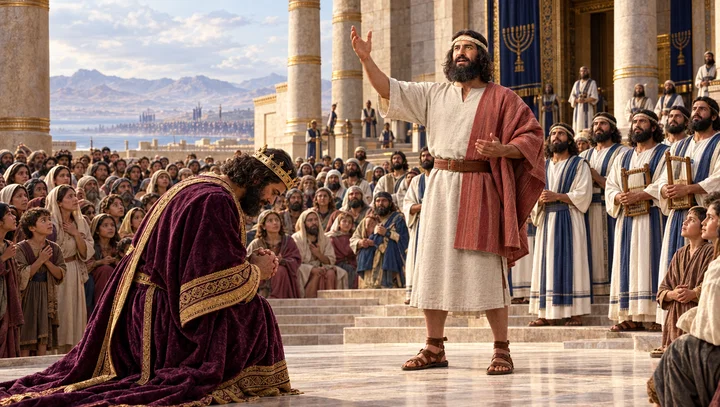
And Jehoshaphat stood in the congregation of Judah and Jerusalem, in the house of the LORD, before the new court,
Translations
American King James Version, King James Version, Webster Bible
And Jehoshaphat stood in the congregation of Judah and Jerusalem, in the house of the LORD, before the new court,
And Jehoshaphat stood in the congregation of Judah and Jerusalem, in the house of the Lord, before the new court,
And Jehoshaphat stood in the congregation of Judah and Jerusalem, in the house of the LORD, before the new court;
And Jehoshaphat stood in the assembly of Judah and Jerusalem, in the house of Jehovah, before the new court;
And Jehoshaphat standeth in the assembly of Judah and Jerusalem, in the house of Jehovah, at the front of the new court,
And Jehoshaphat stood in the congregation of Judah and Jerusalem, in the house of Jehovah, before the new court;
And Jehoshaphat stood, in the convocation of Judah and Jerusalem in the house of Yahweh,—before the new court;
Berean Standard Bible, Majority Standard Bible
Then Jehoshaphat stood in the assembly of Judah and Jerusalem in the house of the LORD in front of the new courtyard
Jehoshaphat stood in the assembly of Judah and Jerusalem, in the LORD’s house, before the new court;
And Jehoshaphat took his place in the meeting of Judah and Jerusalem, in the house of the Lord in front of the new open space,
And Iehoshaphat stoode in the Congregation of Iudah and Ierusalem in the house of the Lord before the new court,
Douay-Rheims (Challoner revision)
And Josaphat stood in the midst of the assembly of Juda, and Jerusalem, in the house of the Lord before the new court,
Pictures
Cross-references
- 2 Chronicles 20:15-17
And he said, Hearken ye, all Judah, and ye inhabitants of Jerusalem, and thou king Jehoshaphat, Thus saith the LORD unto you, Be not afraid nor dismayed by reason of this great multitude; for the battle is not yours, but God’s.
God assures Judah that the battle is his and promises to deliver them.
- 2 Chronicles 20:12
O our God, wilt thou not judge them? for we have no might against this great company that cometh against us; neither know we what to do: but our eyes are upon thee.
They confess their helplessness and fix their eyes on God.
- 1 Kings 8:44-45
If thy people go out to battle against their enemy, whithersoever thou shalt send them, and shall pray unto the LORD toward the city which thou hast chosen, and toward the house that I have built for thy name:
Israel prayed toward the temple when going to battle.
- 2 Chronicles 20:9
If, when evil cometh upon us, as the sword, judgment, or pestilence, or famine, we stand before this house, and in thy presence, (for thy name is in this house,) and cry unto thee in our affliction, then thou wilt hear and help.
The people promise to cry to God in affliction, trusting him to hear and help.
- 2 Chronicles 20:20
And they rose early in the morning, and went forth into the wilderness of Tekoa: and as they went forth, Jehoshaphat stood and said, Hear me, O Judah, and ye inhabitants of Jerusalem; Believe in the LORD your God, so shall ye be established; believe his prophets, so shall ye prosper.
Jehoshaphat urges the people to trust God and his prophets.
- Joel 3:2
I will also gather all nations, and will bring them down into the valley of Jehoshaphat, and will plead with them there for my people and for my heritage Israel, whom they have scattered among the nations, and parted my land.
Joel’s valley of Jehoshaphat is connected with Judah’s victory there.
- 2 Chronicles 20:13
And all Judah stood before the LORD, with their little ones, their wives, and their children.
All Judah stands before the Lord together with their families.
- 2 Chronicles 20:21-22
And when he had consulted with the people, he appointed singers unto the LORD, and that should praise the beauty of holiness, as they went out before the army, and to say, Praise the LORD; for his mercy endureth for ever.
The people praise God, who defeats their enemies.
- Joel 3:12
Let the heathen be wakened, and come up to the valley of Jehoshaphat: for there will I sit to judge all the heathen round about.
The nations gather at Jehoshaphat’s valley for judgment.
Commentary
Each commentary is drawn from primary sources: the writings of Ellen G. White and Adventist pioneers and periodicals. Each commentary is separate. Its own words are not a quotation; follow the references to read the source passages.
Ellen G. White
5 sources
Jehoshaphat stood in the congregation of Judah and Jerusalem in the house of the Lord before the new court to lead in prayer during a national crisis, when after he feared he proclaimed a fast throughout all Judah because a great multitude came against him from beyond the sea.PK 200.1Ms 80, 1904, par. 48–51 The people came from all their cities to ask help from the Lord, and Judah's families stood before the Lord with their king, joining together in fasting and prayer that their enemies would be confounded and His name glorified.PK 200.1Ms 80, 1904, par. 48–51 His standing there begins a united prayer that confesses that God in heaven rules over all the heathen kingdoms with power and might that none can withstand, recalls the possession He gave to inherit, admits having no might against the great company and no knowledge of what to do, and fixes the eyes upon Him.Ms 80, 1904, par. 48–51
His appeal to God in trouble is an example showing that God's ways toward His people are merciful and tender-hearted.SPBC 181.1Lt 54, 1895, par. 22–24Lt 55, 1895, par. 32–34 He does not dominate or oppress, show partiality, or control the minds of men, but deals in righteousness, equity, impartial judgment, sympathy, tender compassion, mercy and love, hearing and helping those who cry to Him.Lt 54, 1895, par. 22–24 He remembers His covenant gift to the seed of Abraham His friend, and hears and helps when they stand before His house and cry to Him in affliction.Lt 55, 1895, par. 32–34
For God's people today the verse means that in every emergency they are to seek God together rather than trust in princes or put men in God's place, looking not at supposed impossibilities but to Him who has all power and limitless resources as their strong tower of defense, knowing the battle is His and apparent impossibilities will make the victory greater.Ms 80, 1904, par. 48–51 God's workers must represent that character by manifesting the spirit of Christ, dealing as He would deal, and going weighted with the Holy Spirit with no spirit of domination, because position makes no one greater in His sight and character alone is valued.Lt 54, 1895, par. 22–24 God's workers must follow this rule by being tender-hearted and just instead of grasping wages and wresting advantage from their brethren.Lt 55, 1895, par. 32–34
Sources
Pioneers and periodicals
22 sources
Jehoshaphat stood in the house of the Lord before the new court at the head of the assembled congregation of Judah and Jerusalem to lead them in seeking God together in a time of mortal danger from a great invading multitude.RH Jul 14, 1903ST Oct 20, 1914RH Jan 19, 1911RH Nov 18, 1909RH Nov 10, 1904 Having proclaimed a fast, he and the people confessed that they had no power against the host and did not know what to do, fixing their eyes upon God alone for help.RH Jul 14, 1903ST Oct 20, 1914RH Jan 19, 1911RH Nov 18, 1909 Their victory was a victory by faith, assured beforehand by the word that they need not fear the multitude nor fight, but stand still and see God's salvation, for the battle was not theirs but God's.ST Jun 10, 1908ST Oct 20, 1914ST Dec 24, 1902 Going forth with singers praising God in front, they were saved without fighting when God set ambushments and threw the enemies into confusion so that they destroyed one another and Judah found them all dead bodies, turning prayer into praise.ST Oct 20, 1914ST Dec 24, 1902RH Oct 3, 1912 The standing together in God's house teaches that when His people unitedly seek Him wholeheartedly in fasting and prayer with trust and obedience, He hears prayer, undertakes their battles, and brings deliverance with courage and strength against obstacles that seem insurmountable.RH Jul 14, 1903RH Jan 19, 1911RH Nov 18, 1909ST Jun 13, 1916ST Sep 5, 1900
Context and Victory
Jehoshaphat stood before the assembled congregation of Judah and Jerusalem in the house of the Lord, in the temple, before the new court, leading them in seeking God.RH Jul 14, 1903RH Nov 18, 1909RH Nov 10, 1904RH Oct 3, 1912ST Apr 18, 1911 The setting was a crisis of a great invading multitude against Judah, identified as Moab and Ammon with others with them, including Edom and Mount Seir.ST Oct 20, 1914ST Dec 24, 1902RH Feb 2, 1905 They were met in a wilderness valley near Tekoah, for which Jehoshaphat proclaimed a fast and the people sought God together in fasting and prayer.ST Oct 20, 1914RH Jan 19, 1911RH Feb 2, 1905RH Aug 7, 1866 In that crisis the king and people acknowledged they had no power and no knowledge of what to do, fixing their hope on God and looking to him for help.RH Jul 14, 1903RH Nov 18, 1909
The sanctuary was God's dwelling place on earth built for his name, and the people looked toward it and directed their prayers toward it as they appealed to God for help.RH Sep 8, 1904RH Nov 10, 1904 The account is a victory by faith in the God of his fathers, assured before it was accomplished because the people believed and trusted in the Lord against greatly outnumbering enemies.ST Jun 10, 1908ST Jun 18, 1885 Word came by the prophet that they should not fear the great multitude, for the battle was not theirs but God's, and they had no need to fight but should stand still and see God's salvation.ST Oct 20, 1914ST Dec 24, 1902 They went forth with singers appointed in the forefront to praise God, and God set ambushments and threw the enemy ranks into confusion.ST Oct 20, 1914ST Dec 24, 1902ST Apr 18, 1911
Ammon and Moab stood up against Mount Seir to slay and destroy them and then turned upon each other, so when Judah came out they found them all dead bodies, saved without fighting, and their plea for help was turned into songs of praise.ST Oct 20, 1914ST Dec 24, 1902RH Oct 3, 1912ST Apr 18, 1911RH Nov 14, 1912 The name Jehoshaphat means Jehovah's judgment, and his leading of Judah to this remarkable victory over a great host provides the historical setting for Joel's valley of judgment.RH Feb 2, 1905
Prayer Prophecy and Application
The chapter shows united seeking of God in fasting and prayer bringing deliverance, for Jehoshaphat stood before the assembled people of Judah and Jerusalem in the house of the Lord as they faced a great invading force and proclaimed a fast to seek Him together.RH Jul 14, 1903RH Jan 19, 1911RH Nov 18, 1909RH Oct 3, 1912RH Nov 14, 1912 In that crisis the king and people acknowledged they had no power and no knowledge of what to do, fixing their hope on God, admitting lack of strength, looking to Him for help, and receiving assurance that He would be with them.RH Jul 14, 1903RH Jan 19, 1911RH Nov 18, 1909 Their dependence on God and later obedience to prophetic counsel led to deliverance, presenting united prayer and trust in God and His prophets as grounds for courage.RH Jul 14, 1903RH Nov 18, 1909 When Judah and Jerusalem sought God together wholeheartedly in His house, the threat from Moab and Ammon was overthrown and their plea for help was turned into songs of praise, illustrating the special blessing granted when His people seek Him together.RH Jan 19, 1911RH Nov 18, 1909RH Oct 3, 1912RH Nov 14, 1912
His example teaches that God hears prayer and undertakes the battles of those who trust Him, for Jehoshaphat called upon God standing before the assembled people in the house of the Lord when foes threatened Judah.ST Jun 13, 1916ST Sep 5, 1900ST Crying to God in that danger, Judah saw those foes turned away in answer to prayer.ST Jun 13, 1916ST Sep 5, 1900ST That prayer is an instance of prayer bringing divine intervention, through which God turned away His anger and showed favor.RH Aug 1, 1871RH Aug 7, 1855
The deliverance gives courage and shows God's power to help people in trouble, for the people looked toward the sanctuary and appealed to God for help in time of trouble, and He heard them and gave victory, showing that help and strength come from Him.RH Nov 10, 1904ST Jun 18, 1885 Because they believed and trusted in the Lord against greatly outnumbering enemies, God delivered them, and facing perplexity they succeeded through His strength, illustrating that His work can prevail despite obstacles that seem insurmountable to human understanding.RH Nov 10, 1904ST Jun 18, 1885RH Aug 26, 1902 God may permit such a crisis so that His intervention becomes clear, as seen when Jehoshaphat stood before the Lord in the temple with the people during crisis.ST Dec 4, 1901 That deliverance is not an example of physical warfare for believers to wage.ST Jun 18, 1885
The way God fought in that day of battle is the pattern for the final battle, for when Ammon, Moab, and Mount Seir came against Judah God told Judah the battle was not theirs but His and they would not need to fight.ST Dec 24, 1902 God set ambushments against the enemies, so Ammon and Moab stood up against Mount Seir to slay and destroy them and then turned upon each other, so that when Judah came out they found them all dead bodies.ST Dec 24, 1902 So in the final battle when the nations take Jerusalem they will quarrel over who shall possess it and stand at the head, and with the restraining Spirit of God withdrawn turn upon each other in anarchy, jealousy, and desire for self-advancement until the armies are cut to pieces.ST Dec 24, 1902 The prayer was one of the most remarkable instances of answered prayer because it was offered toward the sanctuary, turning to the Saviour who sits at the right hand of the Father by recognizing the sanctuary on earth, and it teaches that people with temptations too strong to withstand should go with them to the Lord and turn their faces to the Saviour in the same way.RH Dec 29, 1904
Sources