2 Chronicles 24:10
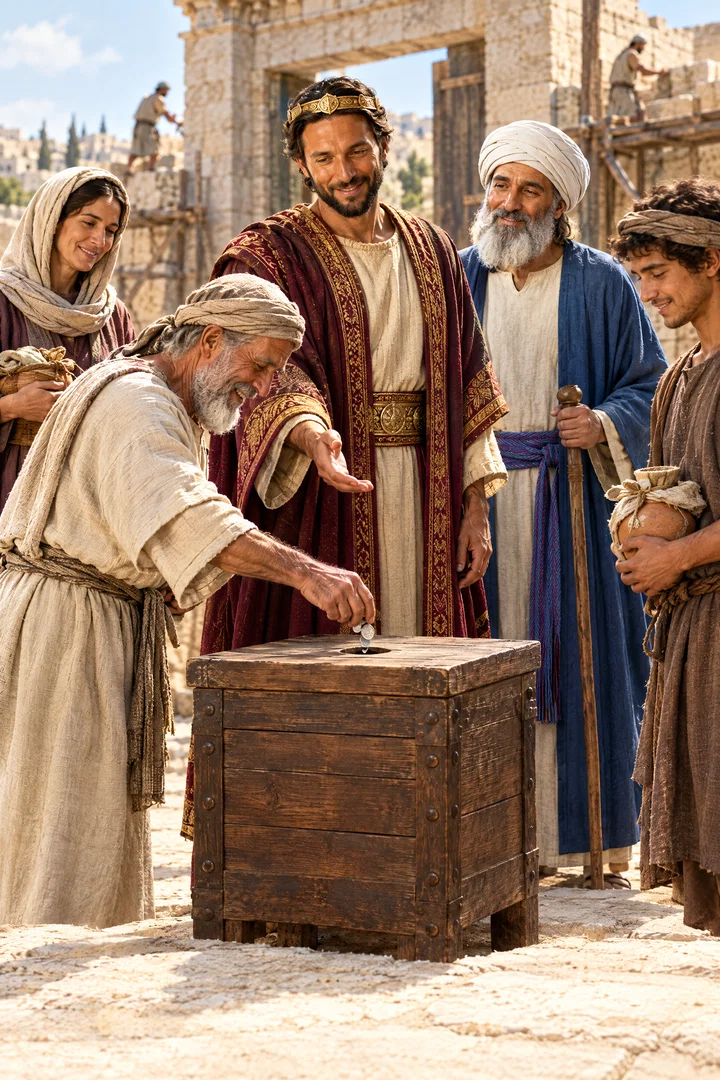
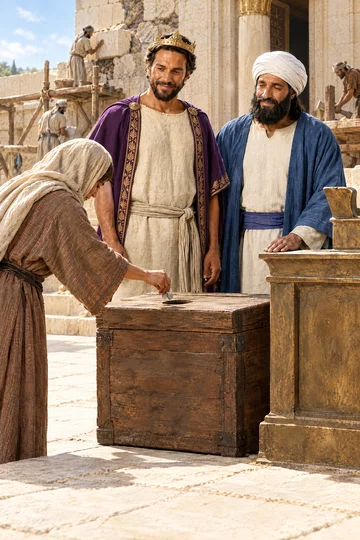
And all the princes and all the people rejoiced, and brought in, and cast into the chest, until they had made an end.
Translations
American King James Version, King James Version, KJV Cambridge Paragraph Bible, Webster Bible, Revised Version, American Standard Version
And all the princes and all the people rejoiced, and brought in, and cast into the chest, until they had made an end.
And all the heads, and all the people rejoice, and they bring in, and cast into the chest, unto completion.
And all the princes and all the people rejoiced, and brought in and cast into the chest, until they had finished.
And all the rulers and all the people rejoiced,—and brought in and cast into the chest, until they had finished.
Berean Standard Bible, Majority Standard Bible
All the officers and all the people rejoiced and brought their contributions, and they dropped them in the chest until it was full.
All the princes and all the people rejoiced, and brought in, and cast into the chest, until they had filled it.
And all the chiefs and all the people came gladly and put their money into the chest, till they had all given.
And all the princes and all the people reioyced, and brought in, and cast into the chest, vntill they had finished.
Douay-Rheims (Challoner revision)
And all the princes, and all the people rejoiced: and going In they contributed and cast so much into the chest of the Lord, that it was filled.
Pictures
Cross-references
- 2 Kings 12:4-5
And Jehoash said to the priests, All the money of the dedicated things that is brought into the house of the LORD, even the money of every one that passeth the account, the money that every man is set at, and all the money that cometh into any man’s heart to bring into the house of the LORD,
Another account of money brought for repairing the temple.
- Exodus 30:13-16
This they shall give, every one that passeth among them that are numbered, half a shekel after the shekel of the sanctuary: (a shekel is twenty gerahs:) an half shekel shall be the offering of the LORD.
Sets the half-shekel offering used for the collection.
- Nehemiah 10:32
Also we made ordinances for us, to charge ourselves yearly with the third part of a shekel for the service of the house of our God;
Both describe contributions for the service of the temple.
Commentary
Each commentary is drawn from primary sources: the writings of Ellen G. White and Adventist pioneers and periodicals. Each commentary is separate. Its own words are not a quotation; follow the references to read the source passages.
Ellen G. White
1 source
The tithe set apart for the Levites was not the limit of giving for religion.PP 526.1 Building the tabernacle and the temple by freewill offerings continued as the established practice, and meeting repairs and other expenses by extra contributions continued in the same way.PP 526.1 All the princes and all the people rejoiced as they brought in money and cast it into the chest until they had made an end and the required amount was complete.PP 526.1 Giving beyond the tithe to sustain worship and to repair God's house is therefore to be glad and liberal.PP 526.1
Sources
Pioneers and periodicals
12 sources
All the rulers and people gladly and willingly brought their money day by day and dropped it into the chest set at the gate until the full amount needed to repair the house of God was gathered.ST Sep 29, 1898RH Dec 16, 1915ST Dec 8, 1898 The repair was needed because the temple had been broken up and its sacred things given to idols, and the yearly half-shekel tax commanded through Moses for the service of the sanctuary had long been neglected.ST Sep 29, 1898ST Sep 29, 1898ST Sep 29, 1898 The joyful giving took place under the strong guiding influence of Jehoiada the priest, for the young king himself remained faithful only while Jehoiada lived.RH Dec 16, 1915ST Dec 8, 1898ST Jul 4, 1911 Giving was thus a regular part of worship, prompted by devotion and measured by ability, completed when the priests faithfully kept the Lord's requirements before the people.ST Sep 29, 1898ST Mar 4, 1886ST Sep 29, 1898 Faithful leaders who do the same still foster a working congregation and gather gifts into a common treasury for God's work, for God works mightily for His people when they seek Him with all the heart.ST May 7, 1912RH Mar 31, 1859ST Sep 29, 1898
History and Temple Repair
The verse stands in the record of the forty-year reign of Joash in Judah, which followed the seven-year reign of Athaliah within the succession of the kings of Judah from Rehoboam to Joash and within the sequence of reigns from Athaliah through Amaziah, Ahaz, Uzziah, Jotham and Hezekiah.ST May 7, 1912ST May 26, 1909 Joash was the grandson of Jehoram and Athaliah, hidden as an infant with his nurse in the temple by his aunt, the wife of Jehoiada the high priest, when Athaliah seized the throne after the death of Ahaziah and sought to destroy all her son's children.ST Dec 8, 1898 When Joash was seven years old, Athaliah's corrupt reign provoked revolt, Joash was brought out and proclaimed king, and Athaliah was slain.ST Dec 8, 1898
Joash was weak and good only as long as Jehoiada the priest lived, remaining while Jehoiada lived under his influence and strong guidance.RH Dec 16, 1915ST Dec 8, 1898ST Jul 4, 1911 The human credit for the good work of his early reign belongs not to Joash but to the faithful Jehoiada, under whose guiding hand the rejoicing and giving into the chest took place. The verse falls within the account of Joash's faithful service while Jehoiada was alive, recording the princes and people gladly bringing their contributions for the temple repair and putting them into the chest until the collection was complete.RH Dec 16, 1915 As soon as Jehoiada died and his restraining instruction was removed, Joash's own heart yielded to evil and went into the way of the house of Ahab, although some ancestral teachings had taken root in him. In this he differs from Josiah, who also began to reign when young but developed strength of character to stand for God by himself and to labor to reform the people.
The repair was needed because the house of God had been broken up by the sons of Athaliah and its dedicated things bestowed upon the Baalim, while collection of the yearly offering had been neglected and the Levites had failed to hasten it.ST Sep 29, 1898ST Sep 29, 1898 The collection took place in the twenty-third year of Joash, after he had grown to manhood in the king's office, when a chest was set without at the gate of the house and proclamation was made through Judah and Jerusalem to bring in for the Lord the tax laid by Moses upon Israel in the wilderness.ST Sep 29, 1898ST Sep 29, 1898ST Sep 29, 1898 That tax was the half shekel commanded through Moses to be collected yearly from every man twenty years old and upward for the service of the tabernacle and later the temple, and because of the backslidden condition of the people it was difficult and disagreeable to gather.ST Sep 29, 1898 The tent of the testimony receiving it was the tabernacle in Moses' time and later the temple containing God's holy law, bearing constant witness of Jehovah's presence and covenant with Israel.ST Sep 29, 1898
The verse records the joyful, willing, glad and complete response of all the princes and all the people, who brought in and cast into the chest until they had made an end and the needed amount was gathered.ST Sep 29, 1898RH Dec 16, 1915ST Nov 5, 1912ST Sep 29, 1898 They provided money in abundance day by day to hire masons and carpenters and workers in iron and brass to restore, perfect and strengthen the house of God.ST Sep 29, 1898 By these offerings the house was repaired and the worship of the true God established once more.ST Sep 29, 1898ST Dec 8, 1898
Joyful Giving and Application
The princes and the people gave willingly and gladly toward repairing the Lord's house, placing their contributions in the chest until the needed collection was complete.ST Mar 4, 1886 Giving was in this way a regular part of worship, prompted by devotion and measured by each person's ability, without public display of names or amounts.ST Mar 4, 1886
The verse shows the effect the proclamation to bring in the tax for the Lord had upon the princes and the people.ST Sep 29, 1898 When the priests earnestly carried out their duty to collect funds for repairing the temple, the princes and the people rejoiced and gave until the collection was complete.ST Sep 29, 1898 Their response shows that keeping the Lord's requirements before the people moves leaders and congregation to rejoice and give.ST Sep 29, 1898
Faithful church leaders who keep the Lord's requirements before the people can thus foster a working congregation and provide for the house of worship.ST Sep 29, 1898 The willing bringing of offerings and putting them into the chest for the repair of the temple supports gathering gifts into a common treasury for God's work.RH Mar 31, 1859
Doing duty brought blessing, while departing from God brought strife and captivity and great loss, and things would have been different if men had remembered God.ST May 7, 1912 God was willing to turn to help His people and wrought mightily for them when they sought Him with all the heart.ST May 7, 1912
Sources