2 Chronicles 33:11
Wherefore the LORD brought upon them the captains of the host of the king of Assyria, which took Manasseh among the thorns, and bound him with fetters, and carried him to Babylon.
Translations
Why the LORD brought on them the captains of the host of the king of Assyria, which took Manasseh among the thorns, and bound him with fetters, and carried him to Babylon.
Wherefore the LORD brought upon them the captains of the host of the king of Assyria, which took Manasseh among the thorns, and bound him with fetters, and carried him to Babylon.
Wherefore the Lord brought upon them the captains of the host of the king of Assyria, which took Manasseh among the thorns, and bound him with fetters, and carried him to Babylon.
Wherefore the LORD brought upon them the captains of the army of the king of Assyria, who took Manasseh among the thorns, and bound him with fetters, and carried him to Babylon.
Wherefore the LORD brought upon them the captains of the host of the king of Assyria, which took Manasseh in chains, and bound him with fetters, and carried him to Babylon.
Wherefore Jehovah brought upon them the captains of the host of the king of Assyria, who took Manasseh in chains, and bound him with fetters, and carried him to Babylon.
and Jehovah bringeth in against them the heads of the host that the king of Asshur hath, and they capture Manasseh among the thickets, and bind him with brazen fetters, and cause him to go to Babylon.
And Jehovah brought upon them the captains of the host of the king of Assyria, who took Manasseh with fetters, and bound him with chains of brass, and carried him to Babylon.
So Yahweh brought in upon them, the captains of the army that belonged to the king of Assyria, and they captured Manasseh with hooks,—and bound him captive with a pair of bronze fetters, and took him away to Babylon.
Berean Standard Bible, Majority Standard Bible
So the LORD brought against them the military commanders of the king of Assyria, who captured Manasseh, put a hook in his nose, bound him with bronze shackles, and took him to Babylon.
Therefore the LORD brought on them the captains of the army of the king of Assyria, who took Manasseh in chains, bound him with fetters, and carried him to Babylon.
So the Lord sent against them the captains of the army of Assyria, who made Manasseh a prisoner and took him away in chains to Babylon.
Wherefore the Lord brought vpon them the captaines of the hoste of the King of Asshur, which tooke Manasseh and put him in fetters, and bound him in chaines, and caryed him to Babel.
Douay-Rheims (Challoner revision)
Therefore he brought upon them the captains of the army of the king of the Assyrians: and they took Manasses, and carried him bound with chains and fetters to Babylon.
Pictures
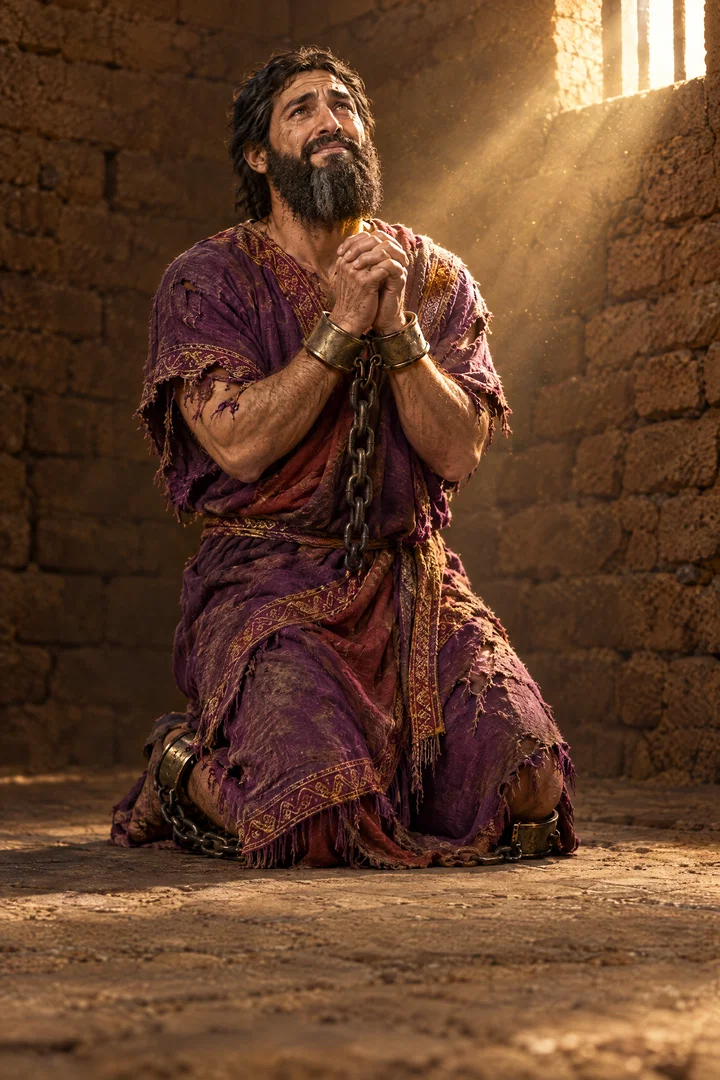
Cross-references
- 2 Kings 21:11-14
Because Manasseh king of Judah hath done these abominations, and hath done wickedly above all that the Amorites did, which were before him, and hath made Judah also to sin with his idols:
Judah’s wickedness and idolatry bring judgment and captivity.
- 2 Kings 21:2-3
And he did that which was evil in the sight of the LORD, after the abominations of the heathen, whom the LORD cast out before the children of Israel.
Both texts describe Manasseh’s evil and idolatry.
- 2 Chronicles 33:1
Manasseh was twelve years old when he began to reign, and he reigned fifty and five years in Jerusalem:
gives wickedness and 55-year length
- 2 Kings 21:4-7
And he built altars in the house of the LORD, of which the LORD said, In Jerusalem will I put my name.
Manasseh profaned the temple with idolatrous worship.
- 2 Chronicles 36:20
And them that had escaped from the sword carried he away to Babylon; where they were servants to him and his sons until the reign of the kingdom of Persia:
Records Judah’s people being carried captive to Babylon.
- 2 Kings 21:9
But they hearkened not: and Manasseh seduced them to do more evil than did the nations whom the LORD destroyed before the children of Israel.
Manasseh led Judah into greater evil.
- 2 Kings 21:16
Moreover Manasseh shed innocent blood very much, till he had filled Jerusalem from one end to another; beside his sin wherewith he made Judah to sin, in doing that which was evil in the sight of the LORD.
Reports Manasseh’s shedding of innocent blood.
- 2 Kings 24:3-4
Surely at the commandment of the LORD came this upon Judah, to remove them out of his sight, for the sins of Manasseh, according to all that he did;
Judah’s downfall is punishment for Manasseh’s sins and bloodshed.
- Isaiah 39:5-7
Then said Isaiah to Hezekiah, Hear the word of the LORD of hosts:
Manasseh’s capture begins the fulfillment of Isaiah’s prophecy of exile to Babylon.
Commentary
Each commentary is drawn from primary sources: the writings of Ellen G. White and Adventist pioneers and periodicals. Each commentary is separate. Its own words are not a quotation; follow the references to read the source passages.
Ellen G. White
5 sources
Manasseh and the people heard God's warnings yet refused to heed them, and after those appeals went unheeded God brought the Assyrian captains against him.Lt 94, 1899, par. 18–19Lt 94, 1899, par. 21–25 The Lord brought upon them the commanders of the Assyrian host, permitting them to seize Manasseh among the thorns, bind him with fetters, and carry him to Babylon.RH Jul 8, 1915Lt 94, 1899, par. 18–19PK 383.1PK 382.3 That captivity was punishment and consequence for Judah's apostasy, yet it was also compassionate correction, showing that God had long borne with His people and did not abandon them to the enemy's will.Lt 94, 1899, par. 18–19PK 383.1
The affliction served as a warning of what would happen to Judah if the people remained unrepentant.RH Jul 8, 1915PK 382.3 It brought Manasseh to his senses and humbled him, leading him to pray, and the Lord heard him and restored him to Jerusalem and his kingdom.RH Jul 8, 1915PK 383.1PK 382.3 But his repentance came too late to undo the damage of years of idolatry or to save the kingdom from its corrupting effects and consequences.RH Jul 8, 1915PK 383.1PK 382.3
Sources
Pioneers and periodicals
36 sources
The Lord brought the Assyrian commanders against Manasseh and his people after they ignored warning and reproof, and they seized him among the thorns, bound him with fetters, and carried him to Babylon.ST Jul 19, 1905ST Nov 3, 1898ST Dec 24, 1885 The captivity was the Lord's chastisement and judgment for his wicked course and evil, for Judah's failure to heed, and for his profanation of the temple with altars to the host of heaven.ST Sep 13, 1905ST Nov 3, 1898RH Sep 11, 1856 Affliction, humiliation and degradation humbled him where kingship had not, led him to pray and seek God, and opened the way for the Lord to hear and deliver him.ST Jun 25, 1902RH May 21, 1908ST Jun 25, 1902 After he humbled himself he was heard, released and restored to Jerusalem and his kingdom, where he labored to reform it and repair the damage he had done to the Lord's house.RH Jul 8, 1915ST May 7, 1912RH Sep 11, 1856 His conversion is a marvelous instance of God's wonderful mercy and long-suffering patience, proving that even Judah's most wicked king could turn back and that pardon is shown to the humble and repentant, though his repentance came too late to undo years of idolatry or save the kingdom from its corrupting effects.RH Jul 8, 1915ST Sep 13, 1905ST May 7, 1912ST Dec 8, 1898RH Dec 17, 1872 The capture of Judah's king marks the point when Babylon became connected with God's people and begins its prophetic role as the first kingdom, foreshadowing Judah's later defeat and captivity whose hold was not fully broken by his restoration.ST May 3, 1877RH May 21, 1908RH Aug 4, 1904RH Sep 15, 1863RH Apr 22, 1862
Capture and Historical Setting
Because Manasseh and his people ignored the Lord's warnings and rejected messages of reproof, the Lord brought the captains of the Assyrian host against them.ST Jul 19, 1905ST Nov 3, 1898ST Dec 24, 1885ST Jun 25, 1902ST Jul 19, 1905 They seized Manasseh among the thorns, bound him with fetters, and carried him to Babylon as chastisement for his wicked course.ST Jul 19, 1905ST Nov 3, 1898ST Dec 24, 1885ST Dec 8, 1898ST Jul 19, 1905 This use of foreign captors was the Lord's dealing with Manasseh and his people for evil and failure to heed warning.ST Nov 3, 1898ST Jun 25, 1902ST Dec 8, 1898
Manasseh was born during the fifteen years added to Hezekiah's life after Hezekiah prayed for an extension of life.ST May 7, 1912ST Sep 13, 1905 He became one of the wickedest kings Judah ever had, and his reign of fifty-five years was one of the longest.ST May 7, 1912 His wickedness brought great trouble upon the kingdom, and near the end of his wicked reign the Lord brought the Assyrians against Jerusalem, who captured Manasseh and carried him to Babylon.ST Nov 4, 1897ST Sep 13, 1905
Taking him to Babylon is no geographical mistake, for Esar-haddon, Manasseh's conqueror, lived and held his court at Babylon rather than Nineveh.ST Oct 19, 1882ST Nov 27, 1884 Babylon had been rebuilt as the empire's second capital, so it could serve as the place where the captive king was brought to his Assyrian ruler.ST Aug 13, 1885 Esar-haddon, who recorded Manasseh as a tributary ruler, is thus identified as the only Assyrian king to hold his court at Babylon.ST Nov 27, 1884 The capture is placed in the reign of Esar-haddon and dated to 677 B.C.ST Aug 13, 1885RH Sep 15, 1863RH Apr 22, 1862
Babylon's role as the place of captivity is further explained by Assyrian kings using the title king of Babylon from Sargon II onward.ST Jan 4, 1916ST Jan 4, 1916 Sennacherib partly destroyed the city, Esar-haddon repaired and rebuilt it and made it his capital for six months of the year, and Ashur-bani-pal also spent part of his time there.ST Jan 4, 1916ST Jan 4, 1916 On the other reckoning the verse itself names no responsible king and the historical record leaves it unclear which king took him, though the capture likely occurred under Ashur-bani-pal.ST Jan 4, 1916ST Jan 4, 1916
The verse confirms the Assyrian record that Manasseh king of Judah was under Assyrian power as a vassal. Its account of his capture is found only in Chronicles.ST Jan 4, 1916 His treatment and restoration with honors accorded with the customs of the time, by which even serious criminals could be treated royally and restored to their former positions with honors.ST Jan 4, 1916
Judgment, Repentance and Mercy
The captivity was the Lord's chastisement and judgment for Manasseh's wicked course and evil, brought upon him through Assyrian commanders who seized him, bound him in fetters, and carried him to Babylon because Judah failed to heed warning.ST Sep 13, 1905ST Nov 3, 1898ST Jul 19, 1905ST Jul 5, 1910 That judgment followed his profanation of the temple, and the forces of the king of Babylon captured him among the thorns and carried him beyond the Euphrates for setting up altars to the host of heaven.RH Sep 11, 1856RH May 18, 1876 In permitting Assyrian soldiers to bind and carry away a king of Judah, the Lord showed that transgression brings judgment through a permitted foreign power.RH Jul 8, 1915 The event warned of what would happen to Judah if the people remained unrepentant, and it belongs to the circumstances that led to the Babylonian captivity and foreshadowed Judah's later defeat.RH Jul 8, 1915RH May 28, 1908 Judah's downfall is thus explained as punishment for Manasseh's sins, especially the innocent blood he shed.RH May 28, 1908
The verse illustrates that God could bring a foreign nation against His disobedient people near the end of a wicked reign, and could deliver them when they repented.ST Nov 4, 1897 When His professed people oppose His law they cannot claim Him as their defense until they recognize their error and repent, and the chastening was intended to lead Manasseh to seek God.ST Nov 4, 1897ST Nov 3, 1898 The honor of kingship had not turned his heart to God, but affliction, humiliation, and degradation under a foreign captor did.ST Jun 25, 1902ST Jun 25, 1902ST Sep 10, 1902 After Manasseh and his people rejected messages of reproof, the Lord used Assyrian captivity to bring them to repentance, and that hardship had the desired effect.ST Jun 25, 1902ST Jun 25, 1902 Humiliation led him to pray and seek God, and his humbling opened the way for the Lord to hear and deliver him.ST Jun 25, 1902RH May 21, 1908ST Jun 25, 1902ST Sep 10, 1902
When he humbled himself he was heard, released, and restored to Jerusalem and his kingdom.RH Jul 8, 1915ST May 7, 1912ST Jun 2, 1909 There he worked to reform the kingdom and to repair the damage and profanations he had done to the Lord's house, seeking to undo the evil he had done.RH Sep 11, 1856ST Nov 4, 1897ST Jun 2, 1909RH May 18, 1876 His prayer is preserved in the Apocrypha.ST May 7, 1912 His conversion makes him a marvelous instance of God's wonderful mercy and long-suffering patience, demonstrating that even Judah's most wicked king could turn back to God after severe chastisement.ST Sep 13, 1905ST May 7, 1912 It proves that when kings humbled themselves the Lord was ready to meet them with mercy, that God is very near to the humble and revives the humble and contrite, that God is as merciful as just and wills that none should perish, and that pardon is shown to the repentant.RH Dec 17, 1872ST Jul 5, 1910
Yet his repentance came too late to undo the damage of years of idolatry or to save the kingdom from its corrupting effects.RH Jul 8, 1915 His later efforts at personal reformation and outward repair had only partial success, and the consequences of his sin remained to emerge later.RH Jul 8, 1915ST Dec 8, 1898 Those consequences, especially the innocent blood he shed, remained to emerge in Judah's downfall.ST Dec 8, 1898RH May 28, 1908
Babylon's Prophetic Beginning
The seizure of Judah's king Manasseh by Assyrian forces is the point when Babylon became connected with God's people and begins Babylon's prophetic chronology and role as the first kingdom represented by the head of gold, with the Jews becoming tributary, although the Babylonian empire existed earlier.ST May 3, 1877RH Sep 15, 1863RH Apr 22, 1862 This connection is dated to 677 B.C. under Esarhaddon, when Manasseh was taken bound to Babylon.ST May 3, 1877RH Jan 10, 1856RH Sep 15, 1863RH Jan 10, 1856RH Apr 22, 1862 A variant dates the same connection through Manasseh's capture to 667 B.C. as introducing Babylon into prophecy.ST Feb 15, 1877
On one reckoning, Manasseh's captivity supplies the historical starting point for the seven times, reckoned as 2,520 years from 677 B.C., which by subtraction gives 1843 but, because the period began after the start of 677 B.C., extends by the corresponding fraction into 1844.RH Dec 1850
On the opposite reckoning, Manasseh's temporary captivity in 677 B.C. is not the point from which to reckon the seven times of 2,520 years of captivity of the people of God, and the reckoning begins instead with the breaking of Ephraim from being a people or nation recorded in 2 Kings 17.RH Jan 10, 1856RH Jan 10, 1856 His captivity was temporary, for he humbled himself, returned to Jerusalem, and reigned over Judah until his death, after which his son succeeded him, so Judah was not then broken as a people when Israel fell and his capture was not the starting point.RH Jan 10, 1856RH Jan 10, 1856
The event forms part of the historical background to the book of Daniel and foreshadowed Judah's later defeat and captivity.RH May 21, 1908RH May 28, 1908 After Manasseh and the people ignored the Lord's warning and turned to evil, the Lord brought Assyrian commanders against them, who captured Manasseh among the thorns in chains, bound him in fetters, and carried him to Babylon.RH May 21, 1908RH Aug 4, 1904 When he humbled himself and prayed, the Lord heard him and restored him to Jerusalem and his kingdom, but Babylon's hold on Jerusalem was not fully or permanently broken.RH May 21, 1908RH Aug 4, 1904 His later repentance and restoration did not undo the significance of the event, which marked the beginning of a long period of Babylonian power over Jerusalem and is identified as the turning point explaining Judah's downfall as punishment for his sins, especially the innocent blood he shed.RH Aug 4, 1904RH May 28, 1908
Sources