2 Chronicles 36:20
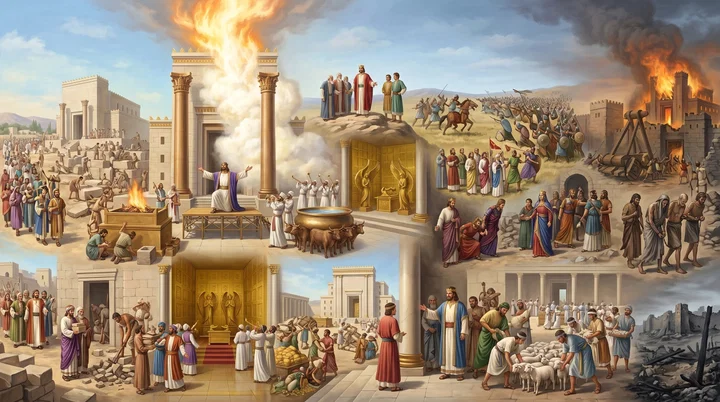
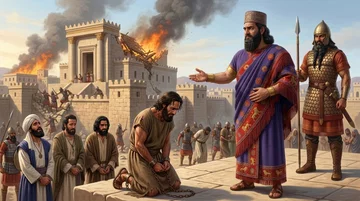
And them that had escaped from the sword carried he away to Babylon; where they were servants to him and his sons until the reign of the kingdom of Persia:
Translations
American King James Version, King James Version, KJV Cambridge Paragraph Bible
And them that had escaped from the sword carried he away to Babylon; where they were servants to him and his sons until the reign of the kingdom of Persia:
And them that had escaped from the sword he carried away to Babylon; where they were servants to him and his sons until the reign of the kingdom of Persia.
Revised Version, American Standard Version
And them that had escaped from the sword carried he away to Babylon; and they were servants to him and his sons until the reign of the kingdom of Persia:
And he removeth those left of the sword unto Babylon, and they are to him and to his sons for servants, till the reigning of the kingdom of Persia,
And them that had escaped from the sword he carried away to Babylon; and they became servants to him and his sons, until the reign of the kingdom of Persia;
and he exiled the remnant left from the sword, into Babylon,—where they became his and his sons, as servants, until the reign of the kingdom of Persia:
Berean Standard Bible, Majority Standard Bible
Those who escaped the sword were carried by Nebuchadnezzar into exile in Babylon, and they became servants to him and his sons until the kingdom of Persia came to power.
He carried those who had escaped from the sword away to Babylon, and they were servants to him and his sons until the reign of the kingdom of Persia,
And all who had not come to death by the sword he took away prisoners to Babylon; and they became servants to him and to his sons till the kingdom of Persia came to power:
And they that were left by the sworde, caryed he away to Babel, and they were seruants to him and to his sonnes, vntill the kingdome of the Persians had rule,
Douay-Rheims (Challoner revision)
Whosoever escaped the sword, was led into Babylon, and there served the king and his sons till the reign of the king of Persia.
Pictures
Cross-references 20 of 70
- Jeremiah 25:11-12
And this whole land shall be a desolation, and an astonishment; and these nations shall serve the king of Babylon seventy years.
Foretells Judah’s service to Babylon and the kingdom’s judgment after seventy years.
- Ezra 1:1-3
Now in the first year of Cyrus king of Persia, that the word of the LORD by the mouth of Jeremiah might be fulfilled, the LORD stirred up the spirit of Cyrus king of Persia, that he made a proclamation throughout all his kingdom, and put it also in writing, saying,
Cyrus’s decree ends Babylonian servitude and permits the exiles to return.
- Leviticus 26:34-35
Then shall the land enjoy her sabbaths, as long as it lieth desolate, and ye be in your enemies’ land; even then shall the land rest, and enjoy her sabbaths.
The desolate land receives the Sabbath rests Israel withheld during exile.
- Jeremiah 29:10
For thus saith the LORD, That after seventy years be accomplished at Babylon I will visit you, and perform my good word toward you, in causing you to return to this place.
Promises the exiles’ return after seventy years in Babylon.
- 2 Kings 24:10-16
At that time the servants of Nebuchadnezzar king of Babylon came up against Jerusalem, and the city was besieged.
Describes the capture of Jerusalem and deportation of its people.
- 2 Kings 25:11-12
Now the rest of the people that were left in the city, and the fugitives that fell away to the king of Babylon, with the remnant of the multitude, did Nebuzar-adan the captain of the guard carry away.
Some people were carried to Babylon while the poor were left in the land.
- Psalms 137:1-4
By the rivers of Babylon, there we sat down, yea, we wept, when we remembered Zion.
Voices the captives’ grief in Babylon as they remember Zion.
- Daniel 9:2
In the first year of his reign I Daniel understood by books the number of the years, whereof the word of the LORD came to Jeremiah the prophet, that he would accomplish seventy years in the desolations of Jerusalem.
Both describe the seventy years of Jerusalem’s desolation and captivity.
- Micah 4:10
Be in pain, and labour to bring forth, O daughter of Zion, like a woman in travail: for now shalt thou go forth out of the city, and thou shalt dwell in the field, and thou shalt go even to Babylon; there shalt thou be delivered; there the LORD shall redeem thee from the hand of thine enemies.
Zion goes into Babylonian captivity and is promised deliverance.
- Psalms 14:7
Oh that the salvation of Israel were come out of Zion! when the LORD bringeth back the captivity of his people, Jacob shall rejoice, and Israel shall be glad.
Longs for Israel’s salvation and return from captivity.
- Isaiah 63:18
The people of thy holiness have possessed it but a little while: our adversaries have trodden down thy sanctuary.
The sanctuary’s treading down is explained by Judah’s exile and the temple’s destruction.
- Ezra 5:12-13
But after that our fathers had provoked the God of heaven unto wrath, he gave them into the hand of Nebuchadnezzar the king of Babylon, the Chaldean, who destroyed this house, and carried the people away into Babylon.
It recounts the exile to Babylon and Cyrus’s decree permitting the return.
- Jeremiah 52:28-30
This is the people whom Nebuchadrezzar carried away captive: in the seventh year three thousand Jews and three and twenty:
Records the people carried into exile after Jerusalem fell, giving their numbers.
- Jeremiah 25:12
And it shall come to pass, when seventy years are accomplished, that I will punish the king of Babylon, and that nation, saith the LORD, for their iniquity, and the land of the Chaldeans, and will make it perpetual desolations.
Foretells the end of Babylon’s rule after the appointed period of captivity.
- 2 Kings 25:21
And the king of Babylon smote them, and slew them at Riblah in the land of Hamath. So Judah was carried away out of their land.
Judah was carried away from its land after Jerusalem fell.
- Jeremiah 27:7
And all nations shall serve him, and his son, and his son’s son, until the very time of his land come: and then many nations and great kings shall serve themselves of him.
Both describe service to Babylon’s king and descendants until Persian rule.
- Isaiah 44:28
That saith of Cyrus, He is my shepherd, and shall perform all my pleasure: even saying to Jerusalem, Thou shalt be built; and to the temple, Thy foundation shall be laid.
Names Cyrus and foretells Jerusalem’s rebuilding and the temple’s foundation.
- Isaiah 45:1
Thus saith the LORD to his anointed, to Cyrus, whose right hand I have holden, to subdue nations before him; and I will loose the loins of kings, to open before him the two leaved gates; and the gates shall not be shut;
Cyrus is identified as the ruler connected with Babylon’s fall.
- Jeremiah 25:1
The word that came to Jeremiah concerning all the people of Judah in the fourth year of Jehoiakim the son of Josiah king of Judah, that was the first year of Nebuchadrezzar king of Babylon;
Dates the beginning of the captivity to Jehoiakim’s fourth year.
- Ezekiel 11:16
Therefore say, Thus saith the Lord GOD; Although I have cast them far off among the heathen, and although I have scattered them among the countries, yet will I be to them as a little sanctuary in the countries where they shall come.
Israel is scattered among the nations, where God remains a sanctuary to them.
Commentary
Each commentary is drawn from primary sources: the writings of Ellen G. White and Adventist pioneers and periodicals. Each commentary is separate. Its own words are not a quotation; follow the references to read the source passages.
Ellen G. White
8 sources
The verse describes the final overthrow of Jerusalem by Nebuchadnezzar, when many who had escaped the horrors of the long siege perished by the sword.PK 460.1PK 459.1 Of those who still remained, the chief of the priests and the officers and the princes of the realm were taken to Babylon and executed as traitors.PK 460.1PK 459.1 Those who survived the sword were carried captive to Babylon to live in servitude to Nebuchadnezzar and to his sons, serving the Babylonian kings until the reign of the kingdom of Persia.PK 460.1PK 460.2PK 460.3PK 459.11SP 414.2–3 This servitude fulfilled the word of the Lord spoken by Jeremiah, fulfilling the warning of what would come when God's people departed from Him.PK 460.1PK 459.11SP 414.2–3
Only a feeble remnant of certain poor of the land was left to be vinedressers and husbandmen under Gedaliah, whom the Babylonians set over them as governor.PK 460.2 Jeremiah, when released from prison by the Babylonian officers, chose to stay with that remnant.PK 460.2 After Gedaliah was treacherously slain a few months later, the poor people went through many trials and were persuaded by their leaders to take refuge in Egypt.PK 460.2 Though Jeremiah pleaded with them not to go into Egypt, they disobeyed the voice of the Lord, and all the remnant of Judah, men and women and children, went to Tahpanhes in Egypt.PK 460.2
Alongside this Babylonian captivity stands the later flight to Egypt: those who rejected God's counsel there faced judgment, while a small number who escaped the sword would return from Egypt to Judah.PK 460.3 The destruction of Jerusalem and the captivity came because of Israel's transgression and wickedness.1SP 414.2–3 The exile followed their failure to serve as God's missionaries and their separation from the surrounding peoples.YGBCOEP 11.3RH Apr 14, 1903Ms 22, 1903, par. 3–4 God used their scattering to carry knowledge of His truth to the world and to other lands.YGBCOEP 11.3RH Apr 14, 1903Ms 22, 1903, par. 3–4
They remained under foreign rule until God brought them back to their own land when they were loyal, true, and submissive.YGBCOEP 11.3RH Apr 14, 1903Ms 22, 1903, par. 3–4 The captivity was connected with the destruction of the temple, and before the temple was destroyed the sacred ark containing the stone tables was hidden in a cave and was not restored to Israel.1SP 414.2–3
Sources
Pioneers and periodicals
62 sources
Those who escaped the sword were carried to Babylon and served the Babylonian king and his sons until the reign of the kingdom of Persia.ST Sep 13, 1905ST Dec 21, 1915RH Jul 11, 1912 The judgment came after persistent rebellion in mocking God's messengers, polluting His house with idolatry, and above all in refusing the Sabbath rest from work and tillage and turning to sun worship.ST Sep 13, 1905ST Dec 21, 1915RH Jul 11, 1912ST Sep 29, 1914RH Jul 14, 1903 Their removal let the desolate land keep its Sabbaths for seventy years, fulfilling the word spoken through Jeremiah and making up for sabbatical years long denied it.ST Dec 21, 1915ST Jul 26, 1910ST Sep 29, 1914 The captivity was long but not permanent, for at the end of the seventy years the Lord moved Cyrus in his first year to decree the restoration of the temple and the return.ST May 24, 1883ST Sep 24, 1902ST Apr 8, 1889 The land lying desolate seventy years to enjoy its Sabbaths is a pattern for the earth lying desolate one thousand years after the second coming, teaching that as Sabbath-breaking brought bondage in Babylon, so obedience brings God's children out of spiritual Babylon.ST Sep 29, 1914RH May 11, 1916ST Aug 12, 1889ST Feb 10, 1914
Historical Setting and Exile
Those who escaped the sword were carried away to Babylon, where they were servants to the Babylonian king and his sons until the reign of the kingdom of Persia.ST Sep 13, 1905ST Dec 21, 1915RH Jul 11, 1912ST Jul 26, 1910ST Feb 10, 1914 The captivity left the land desolate for seventy years so that it could enjoy the Sabbaths Israel had failed to keep, fulfilling Jeremiah's prophecy, and it was not permanent, for at the end of seventy years the ruler of Babylon would send them back, with Cyrus issuing the decree for return in his first year, dated to 536 B.C.ST Dec 21, 1915RH Jul 11, 1912ST Jul 26, 1910ST Feb 10, 1914ST May 24, 1883 Those taken included their descendants, and together with the following verses this shows the fire that consumed Jerusalem was not everlasting but completed its work of destruction.ST Jul 23, 1885 The verse marks the end of Judah's independence through the wickedness of its later kings, for though the people were eventually allowed to return they afterward remained subject to successive empires.ST Jul 23, 1885
Only a small remnant escaped the sword, a few thousand from a nation that had numbered millions, so the captives represented a greatly diminished Jewish nation.ST May 24, 1883ST Apr 26, 1883 This remnant is represented by the brand plucked from the burning, rescued from destruction so it could be preserved rather than cast back into the fire.ST May 24, 1883ST Apr 26, 1883 The verse stands at the end of Judah's rapid decline after Josiah under Jehoahaz, Jehoiakim, Jehoiachin and Zedekiah, when Jerusalem was utterly laid waste and its holy house was burned.ST May 7, 1912RH Jan 21, 1862ST Sep 24, 1902 After Judah rejected repeated warnings the Lord brought the king of the Chaldees against them, who slew without compassion in the house of the sanctuary, carried the vessels and treasures to Babylon, burnt the house of God and the palaces, broke down the wall of Jerusalem, broke down Jerusalem's wall, burned all the palaces and destroyed the goodly vessels, leaving Jerusalem in ruins.RH Jan 21, 1862ST Sep 24, 1902 The passage belongs to 2 Chronicles 29-36, which shows the condition of the Israelite nation during the period of the minor prophets and helps identify which of those prophets, such as Hosea, lived contemporaneously, and it gives a fuller account of the siege and invasion of Jerusalem that is also plainly specified in 2 Kings.ST Dec 1, 1914ST Jan 11, 1916
The exile came in stages through Nebuchadnezzar's three captivities of Judah, with the first captivity in B.C. 606 when Daniel and his companions were taken in Jehoiakim's reign, the second in B.C. 598 when Ezekiel and many others were taken with much treasure, and the third in B.C. 586 when Jerusalem was completely destroyed.ST Aug 9, 1899 The final chapter also recounts later Babylonian captures of Jerusalem in 599 and 588 B.C., when the remaining temple treasures were taken.ST Nov 28, 1911 The end of Judah's kingdom is placed in 586 B.C., while the first great captivity in B.C. 606 is where the seventy years' captivity began, reckoned as 602 years before Christ, who was born four years before the common era.ST Jul 26, 1910ST Jul 4, 1911ST Jan 4, 1905 The servitude in Babylon lasted seventy years until B.C. 536, in the first year of Cyrus in his rule over Medo-Persia entire including Babylon, when he decreed the return.ST Jul 26, 1910ST Aug 9, 1899
After Josiah, Jerusalem's last obedient king, the people and their land could no longer observe the release years and jubilees, and the land lay desolate while the people were in their enemies' country.SMV 22.1–24.1 The reference to the king and his sons means Nebuchadnezzar and his children, or offspring, reigned at Babylon until the reign of the kingdom of Persia.RH Mar 11, 1873 Thus the last king of Babylon was of the seed of Nebuchadnezzar, namely Belshazzar, who was the son of Evilmerodach and so the son's son of Nebuchadnezzar.RH Mar 11, 1873
Cause of the Judgment
The carrying to Babylon came after the people mocked divine messengers, despised divine words and misused prophets until wrath arose with no remedy, so God brought the king of the Chaldees against them, withdrew protection and gave all into his hand to slay without compassion and destroy the city.ST Sep 13, 1905ST Sep 29, 1914RH Jul 14, 1903RH Jan 21, 1862ST Sep 24, 1902 The Lord brought that king against them after repeated warnings were rejected, the survivors were carried to Babylon, and temple, walls, palaces and vessels were destroyed by fire in fulfillment of Jeremiah's warning of unquenchable fire.ST Sep 29, 1914RH Jan 21, 1862 That captivity followed refusal to heed prophetic warnings and turn from wicked ways, leaving Jerusalem in ruins with its holy house burned, walls broken, palaces burned and vessels destroyed.ST Sep 13, 1905RH Jul 14, 1903ST Sep 24, 1902
Chief priests and people transgressed greatly after heathen abominations, fell into persistent idolatry and polluted the house of the Lord.RH Jul 14, 1903ST Sep 24, 1902ST Sep 8, 1909 Abandoning the Sabbath was connected with turning from the true God to idolatry, and the exile illustrates that link.ST Sep 8, 1909
The exile was punishment for transgression, especially utter refusal to keep the Sabbath in memory of God's work of creation and to rest from work and tillage on the Sabbath day.ST Dec 21, 1915RH Jul 11, 1912ST Sep 29, 1914 The Lord allowed the people to be carried to Babylon and their city to be destroyed simply because they did not remember the Sabbath day to keep it holy, proving God is particular whether men keep His Sabbath and that the seventh day is that Sabbath.ST Feb 10, 1914ST Jun 17, 1886RH May 11, 1916 Israel after the flesh went into Babylon because of Sabbath-breaking, where those who escaped the sword were carried away and were servants in bondage seventy years until the reign of Persia, with conquest, bondage and deliverance covering only one generation.ST Dec 21, 1915RH Jul 11, 1912RH May 11, 1916 Their captivity left the land desolate for seventy years so it could enjoy the Sabbaths Israel had failed to keep, after Israel had lived in the land about 840 years and neglected the Sabbath about 420 years by this reckoning.ST Dec 21, 1915ST Sep 29, 1914ST Feb 10, 1914 The people turned from the Sabbath of the Lord to the sun festivals of Baal, chiefly the sun's day, and neglected to refrain from business on the holy day and to let the land enjoy its sabbatical rests.RH Jul 11, 1912ST Sep 29, 1914ST Feb 10, 1914 If they had hallowed the Sabbath Jerusalem would have stood forever, and its overthrow with the land's desolation formed part of the judgment for failure to heed God's instruction about the Sabbath.RH Jul 11, 1912ST Sep 8, 1909
Keeping the Sabbath kept Israel mindful of the Lord as Creator and Sanctifier, whose sign marked them as worshippers of the true God and the living God.ST May 21, 1896ST Dec 11, 1928 The carrying away was just punishment for apostasy from His service, most prominently failure to honor that sign, thereby casting off allegiance to God and heaping contempt upon the Sabbath.ST May 21, 1896ST Dec 11, 1928
The scattering began with Babylon's destruction of Jerusalem when survivors were taken captive to Babylon, fulfilling the Lord's warning that disobedience to His commandments would bring the curse of expulsion from the land, and the scattering may have continued through the later Roman destruction of Jerusalem.RH Apr 14, 1903RH Oct 22, 1861 Jerusalem was destroyed and its surviving people taken captive because they had failed to serve as missionaries and had separated themselves from surrounding peoples, yet their scattering carried knowledge of God's truth to other lands and they remained under foreign rule until God brought them back when loyal, true and submissive.RH Apr 14, 1903ST Apr 15, 1903 After a period of respite God permitted enemies to carry survivors into captivity where they served conquerors, in fulfillment of the warning given to Hezekiah, following failure to honor God including neglecting the Sabbath and withholding service, tithes and offerings.RH Oct 22, 1861ST Apr 15, 1903
The exile followed Judah's rejection of God's power in Christ, the promised Seed, and was the inevitable consequence of captivity to sin, showing that slavery of soul leads to slavery of body and that sin leads to death, with deliverance found only in the promised Seed.RH Jan 21, 1904 God used foreign rulers as instruments in punishing the Jews for idolatry and in restoring them afterward.ST Nov 7, 1906RH Dec 1, 1874 Babylon's success in overthrowing the kingdom and scattering and oppressing the people of promise was the culmination of repeated efforts by hostile nations acting as agents of the dragon.ST Nov 7, 1906RH Dec 1, 1874
Sabbath Rest of Land
The carrying away of those who escaped the sword to serve at Babylon until the reign of Persia left the land desolate for seventy years so that it could enjoy and keep the Sabbaths Israel had failed to keep.ST Dec 21, 1915ST Jul 26, 1910ST Sep 29, 1914ST Feb 10, 1914RH Feb 18, 1902 That desolation fulfilled the word spoken through Jeremiah that the waste would last threescore and ten years, ending with Cyrus's decree in his first year allowing return.ST Jul 26, 1910ST Sep 29, 1914 The removal was the making up of the sabbatical rests that had been denied the land, which then kept the rest it had missed.ST Feb 10, 1914ST Sep 26, 1911RH Feb 18, 1902
Israel had lived in the land about 840 years and by this reckoning had neglected the Sabbath for about 420 years.ST Dec 21, 1915 The seventy years of desolation answered 490 years of disregard for God's Sabbath law, during which the sabbath rests had been missed.ST Sep 26, 1911 Whether or not the people kept count, God did.ST Dec 21, 1915
The seventy-year captivity was a judgment and a lesson by which God taught Judah the consequences of disregarding the Sabbath.ST The land lying desolate and keeping sabbath to atone for ancient Israel's disobedience proves that God's commands will all be honored.ST Feb 10, 1914
Prophecy Fulfilled and Restoration
The destruction, the carrying away of those who escaped the sword to serve at Babylon until the rule of Persia, and the seventy years of desolation in which the land kept its Sabbaths fulfilled the word spoken through Jeremiah, both his warning of coming judgment and his word concerning rest for the land.ST Jul 26, 1910ST Sep 29, 1914ST Jun 28, 1877ST That desolation lasted threescore and ten years and ended when Cyrus in his first year decreed the return, dated to 536 B.C.ST Jul 26, 1910 The fire that consumed Jerusalem fulfilled Jeremiah's threat and warning, for it burned the house, broke down the wall, burned the palaces and destroyed the vessels until it had finished its work of complete destruction, proving unquenchable means not everlasting but not quenched until complete.ST Aug 3, 1915ST
The captivity was a long servitude under the king and his sons until Persia came to power, but it was not a permanent end, for at the end of seventy years the ruler of Babylon would send them back to their own land and the city and temple were to be restored as a lesson and not a final doom.ST May 24, 1883ST Apr 8, 1889ST Apr 15, 1903 The Lord moved Cyrus to decree restoration of the temple and return, after which only a few returned with little faith to lay an inferior foundation.ST Sep 24, 1902 They had been carried away for rebellion after God had patiently sent messengers and for failure to honor Him, and they were afterward brought back when loyal, true and submissive to represent God with hope of reform, their scattering meanwhile carrying knowledge of His truth to other lands.RH Apr 14, 1903ST Apr 8, 1889ST Nov 15, 1899ST Apr 15, 1903
That exile forms the prophetic setting for Jerusalem's later rebuilding, when God raised Haggai and Zechariah to encourage the returned remnant that despite failure He would fulfill His plan and the Desire of all nations would fill the house.ST Sep 24, 1902ST Nov 19, 1912 Through the dispersion the sanctuary lay desolate in the seventy years' captivity until the reign of Persia, near the close of which Daniel prayed for God to cause His face to shine upon His sanctuary that was desolate.RH Jan 20, 1853 The carrying of literal Israel to literal Babylon for seventy years while the land enjoyed her Sabbaths was the literal captivity in which they were continually rebelling, distinct from the antitypical rebellious house shown from Ezekiel 12:21 onward.RH Dec 1850
Judah's wickedness led God to withdraw His protection and give the people to be carried captive to Babylon, and this Babylonian humiliation began the church's long anguish and longing for the Deliverer.ST Apr 29, 1903ST Oct 8, 1896ST May 16, 1911 That period of anguish ended with Jesus' birth in Bethlehem, the promised Shiloh.ST May 16, 1911
Doctrines Proved by Passage
The burning of Jerusalem fulfilled Jeremiah's warning of a fire that would not be quenched.ST Aug 22, 1911ST Jan 6, 1904ST Aug 3, 1915 Unquenched does not mean burning forever, but burning that no human power can stop before it finishes consuming what is doomed to destruction.ST Aug 22, 1911ST Jan 6, 1904ST Nov 5, 1912 The fire kindled against the city therefore completed its work of utter and certain destruction and then ceased, and the carrying of the survivors with their descendants to serve Babylon until Persia belongs to that same judgment and exile.ST Nov 5, 1912ST Sep 4, 1907ST Feb 20, 1907 Unquenchable means fire that ordinary means cannot stop until it has consumed and destroyed all it preys upon.ST Jan 6, 1904
That fire was kindled in the gates for profaning the Sabbath and devoured the palaces of Jerusalem.ST Jan 6, 1904ST Aug 3, 1915 The Chaldeans burned the house of God, broke down the wall of Jerusalem, burned all the palaces with fire, and destroyed all the goodly vessels, to fulfill the word of the Lord by Jeremiah, and then the fire went out.ST Jan 6, 1904ST Aug 3, 1915 The surrounding account shows the fire was not quenched until it had completed its work and the land was left to enjoy its Sabbaths.ST Nov 5, 1912ST Sep 4, 1907ST Feb 20, 1907 The same unquenchable fire will burn up the wicked like chaff.ST Jan 6, 1904
When the people of God's holiness were driven out of Canaan they were dispossessed of their inheritance, and the sanctuary of that time, Solomon's typical sanctuary built in that land, was laid in ruins and trodden down by adversaries.RH Jan 6, 1853RH Aug 11, 1863RH Feb 18, 1858ST May 27, 1880RH Apr 4, 1854 The land of Canaan itself is not the sanctuary but only the border or place where the house built for God's name stood, so land and sanctuary must be distinguished.RH Jan 6, 1853RH Feb 18, 1858ST May 27, 1880RH Apr 4, 1854 After Babylon destroyed the house of God the sanctuary lay desolate through the dispersion and seventy years captivity in Babylon until the reign of the kingdom of Persia.RH Aug 11, 1863RH Jan 20, 1853RH Apr 4, 1854 It was rebuilt after the captivity, near the close of which Daniel prayed for God to cause His face to shine upon His sanctuary that was desolate.RH Jan 20, 1853
The captivity proves God is particular whether men keep His Sabbath.ST Jun 17, 1886ST Oct 29, 1902 The city was destroyed and the people allowed to be carried to Babylon simply because they did not remember the Sabbath day to keep it holy.ST Jun 17, 1886 The seventh day is that Sabbath, and the Sabbath was thus a test for Israel in judgment.ST Jun 17, 1886ST Oct 29, 1902
Types and Final Application
The carrying away of those who escaped the sword to serve at Babylon until the reign of Persia left the land deprived of the Jewish nation for seventy years so that the desolate land could enjoy and keep its Sabbaths to atone for disobedience.ST Sep 29, 1914ST Aug 12, 1889ST Feb 10, 1914 That seventy-year rest from tillage, when sin and Sabbath-breaking had brought desolation and removal, is a pattern for the time after the second coming when the earth itself will lie desolate one thousand years and keep Sabbath.ST Sep 29, 1914ST Aug 12, 1889ST Feb 10, 1914 In that coming rest its inhabitants will be gone, sinners will be destroyed out of it, tillage will cease, and Sabbath-breaking will end.ST Sep 29, 1914ST Aug 12, 1889ST Feb 10, 1914 As the desolation fulfilled the word spoken through Jeremiah that it would last threescore and ten years, so the longer desolation will prove that all of God's commands will be honored.ST Sep 29, 1914ST Feb 10, 1914
The conquest, the bondage, and the deliverance covered only one generation, with God's prophetic word and God's prophet prominent in deliverance, and the history was written for learning for those upon whom the ends of the world are come.RH May 11, 1916 As Sabbath-breaking after the flesh brought bondage in Babylon for seventy years, so obedience to God's Sabbath brings God's children out of spiritual Babylon.RH May 11, 1916 Those who come out will live in the generation that witnesses Babylon's doom at Christ's second advent.RH May 11, 1916 The seventy-year captivity was a judgment and a reforming lesson about Sabbath neglect, withholding service, tithes and offerings, and failure to honor God, and it taught the Jews to rely on God and to turn away from idolatry.STST May 24, 1910ST Apr 15, 1903 It was meant as a lesson and not as a permanent end, since the city and temple were to be restored.ST Apr 15, 1903
Their scattering under foreign rule carried knowledge of God's truth to other lands, for they had failed to serve as missionaries and had separated themselves from the surrounding peoples.RH Apr 14, 1903 They remained servants to their conquerors until God brought them back to their own land when they were loyal, true, and submissive.RH Apr 14, 1903ST Apr 15, 1903 Jerusalem could be a city of truth and holiness only if the people turned from the iniquity that had brought judgment through destruction and captivity.ST Jun 21, 1883
Sources