2 Kings 16:14
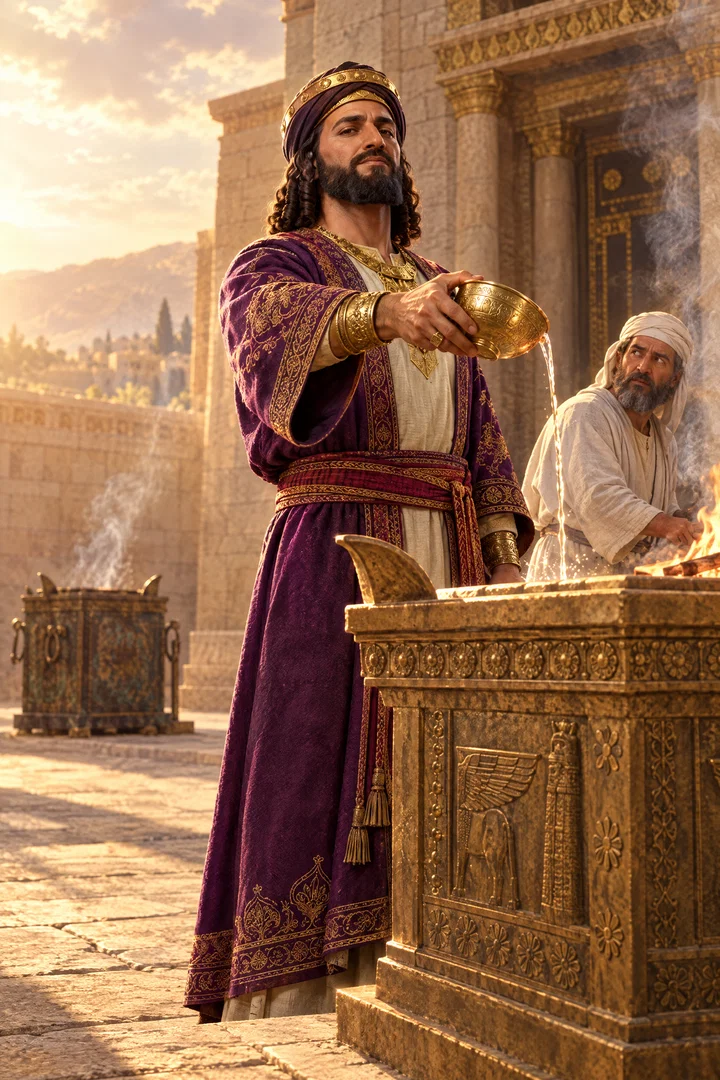
And he brought also the brasen altar, which was before the LORD, from the forefront of the house, from between the altar and the house of the LORD, and put it on the north side of the altar.
Translations
And he brought also the brazen altar, which was before the LORD, from the forefront of the house, from between the altar and the house of the LORD, and put it on the north side of the altar.
And he brought also the brasen altar, which was before the LORD, from the forefront of the house, from between the altar and the house of the LORD, and put it on the north side of the altar.
And he brought also the brasen altar, which was before the Lord, from the forefront of the house, from between the altar and the house of the Lord, and put it on the north side of the altar.
And he brought also the brazen altar, which was before the LORD, from the front of the house, from between the altar and the house of the LORD, and put it on the north side of the altar.
And the brasen altar, which was before the LORD, he brought from the forefront of the house, from between his altar and the house of the LORD, and put it on the north side of his altar.
And the brazen altar, which was before Jehovah, he brought from the forefront of the house, from between his altar and the house of Jehovah, and put it on the north side of his altar.
As to the altar of brass that [is] before Jehovah — he bringeth [it] near from the front of the house, from between the altar and the house of Jehovah, and putteth it on the side of the altar, northward.
And the brazen altar which was before Jehovah, he brought forward from the forefront of the house, from between [ his] altar and the house of Jehovah, and put it by the side of [ his] altar on the north.
And, the altar of bronze which was before Yahweh, he brought away from the forefront of the house, from between the altar, and the house of Yahweh,—and put it at the side of the altar northward.
Berean Standard Bible, Majority Standard Bible
He also took the bronze altar that stood before the LORD from the front of the temple ( between the new altar and the house of the LORD) and he put it on the north side of the new altar.
The bronze altar, which was before the LORD, he brought from the front of the house, from between his altar and the LORD’s house, and put it on the north side of his altar.
And the brass altar, which was before the Lord, he took from the front of the house, from between his altar and the house of the Lord, and put it on the north side of his altar.
And set it by the brasen altar which was before the Lord, and brought it in farther before the house betweene the altar and the house of the Lord, and set it on the North side of the altar.
Douay-Rheims (Challoner revision)
But the altar of brass that was before the Lord, he removed from the face of the temple, and from the place of the altar, and from the place of the temple of the Lord: and he set it at the side of the altar toward the north.
Pictures
Cross-references
- 2 Chronicles 28:24-25
And Ahaz gathered together the vessels of the house of God, and cut in pieces the vessels of the house of God, and shut up the doors of the house of the LORD, and he made him altars in every corner of Jerusalem.
Ahaz desecrates the temple and promotes idolatry throughout Judah.
- 2 Chronicles 28:21
For Ahaz took away a portion out of the house of the LORD, and out of the house of the king, and of the princes, and gave it unto the king of Assyria: but he helped him not.
Both describe Ahaz’s treatment of the temple.
- Joshua 22:26-28
Therefore we said, Let us now prepare to build us an altar, not for burnt offering, nor for sacrifice:
An altar patterned after the Lord’s altar served as a witness, not for sacrifice.
- 2 Kings 18:4
He removed the high places, and brake the images, and cut down the groves, and brake in pieces the brasen serpent that Moses had made: for unto those days the children of Israel did burn incense to it: and he called it Nehushtan.
Hezekiah broke the bronze serpent because Israelites had begun worshiping it.
Commentary
Each commentary is drawn from primary sources: the writings of Ellen G. White and Adventist pioneers and periodicals. Each commentary is separate. Its own words are not a quotation; follow the references to read the source passages.
Pioneers and periodicals
6 sources
2 Kings 16:14 belongs to 2 Kings 15-16, the history of the kings of Israel and Judah including Ahaz of Judah, within 2 Kings 7-23 covering nearly 300 years from Joram of Israel to Hoshea when Israel was ended by Assyria and carried into captivity, with the contemporary kings of Judah running from Ahaziah to Jehoahaz.ST May 5, 1909
While in Damascus Ahaz saw an altar that pleased him and sent its pattern to Urijah the priest with orders to duplicate it, and Urijah obeyed and built it, and on his return Ahaz offered sacrifices upon the new altar.RH Jan 19, 1911 He then moved the brazen altar appointed under David, which was before the Lord between the altar place and the house of the Lord, to an obscure place on the north side of the new altar to make room for the Damascus altar.RH Jan 19, 1911ST May 18, 1904ST Nov 7, 1906 In the same rearrangement of the temple furniture he removed a Sabbath booth and sent it to the king of Assyria.RH Jan 19, 1911
The background is that Ahaz acknowledged Tiglath-pileser king of Assyria as his sovereign and paid him tribute, in connection with Tiglath-pileser's overthrow of Damascus in 740 B.C.ST Jul 30, 1885 The inscriptions of Tiglath-pileser list Ahaz of Judah among those who acknowledged his sovereignty and paid tribute, confirming the Bible record.ST Jul 30, 1885
The act robbed the temple of its treasures and defiled its holy precincts.RH Jan 19, 1911ST Nov 5, 1912 It was part of paganizing the religion of Judah and corrupting the temple service.RH Jan 19, 1911 It led soon after to closing the great doors of the temple, leaving the lamps unlighted with no incense offered, neglecting the temple, and erecting high places in all the cities of Judah for burning incense to false gods.RH Jan 19, 1911
Making the Damascus altar was sinful because Ahaz made it for worship, showing that an image or object becomes idolatrous when it is used as an object of worship.ST May 18, 1904 The verse applies to God's people looking upon worldly plans and copying them into God's work, following custom and what has gone before and duplicating extravagant methods and expense from older institution to younger without due thought.ST Nov 7, 1906 Seeking and doing the world's work leads to copying worldly methods and taking in a worldly spirit, marring God's work and awakening enmity with worldly concerns with whom they come in competition.ST Nov 7, 1906
Sources