2 Kings 4:7
Then she came and told the man of God. And he said, Go, sell the oil, and pay thy debt, and live thou and thy children of the rest.
Translations
Then she came and told the man of God. And he said, Go, sell the oil, and pay your debt, and live you and your children of the rest.
King James Version, KJV Cambridge Paragraph Bible
Then she came and told the man of God. And he said, Go, sell the oil, and pay thy debt, and live thou and thy children of the rest.
Then she came and told the man of God. And he said, Go, sell the oil, and pay thy debt, and live thou and thy children on the remainder.
Revised Version, American Standard Version
Then she came and told the man of God. And he said, Go, sell the oil, and pay thy debt, and live thou and thy sons of the rest.
And she cometh and declareth to the man of God, and he saith, 'Go, sell the oil, and repay thy loan; and thou [and] thy sons do live of the rest.'
And she came and told the man of God; and he said, Go, sell the oil, and pay thy debt, and live thou [ and] thy sons on the rest.
Then came she in, and told the man of God, and he said—Go, sell the oil, and pay thy creditor,—and, thou and thy sons, shall live of the rest.
Berean Standard Bible, Majority Standard Bible
She went and told the man of God, and he said, “ Go, sell the oil, and pay your debt. Then you and your sons can live on the remainder.”
Then she came and told the man of God. He said, “ Go, sell the oil, and pay your debt; and you and your sons live on the rest.”
So she came to the man of God and gave him word of what she had done. And he said, Go and get money for the oil and make payment of your debt, and let the rest be for the needs of yourself and your sons.
Then shee came and tolde the man of God. And he saide, Goe, and sell the oyle, and pay them that thou art in debt vnto, and liue thou and thy children of the rest.
Douay-Rheims (Challoner revision)
And she came, and told the man of God. And he said: Go, sell the oil, and pay thy creditor: and thou and thy sons live of the rest.
Pictures
Cross-references
- John 6:11-13
And Jesus took the loaves; and when he had given thanks, he distributed to the disciples, and the disciples to them that were set down; and likewise of the fishes as much as they would.
Both texts show God multiplying provisions to meet needs, with abundance remaining.
Commentary
Each commentary is drawn from primary sources: the writings of Ellen G. White and Adventist pioneers and periodicals. Each commentary is separate. Its own words are not a quotation; follow the references to read the source passages.
Ellen G. White
1 source
When the vessels were filled the need was met by turning the miraculous supply into provision through sale.PK 235.1 The oil was to be sold and the proceeds first applied to discharge the outstanding debt in full.PK 235.1 What was left after payment was to sustain the widow together with her children as their means of living.PK 235.1
Sources
Pioneers and periodicals
17 sources
The verse tells of a poor widow who feared the Lord, left after her husband's death with his unpaid debt, with a creditor coming to take her two sons as bondmen under the law, and with nothing in the house but a single pot of oil.RH Apr 14, 1904RH Sep 25, 1856 At Elisha's word she borrowed empty vessels from all her neighbors and poured from that one pot until they were full, then she was to sell the oil, pay the debt, and live with her children on what remained.ST Dec 7, 1904RH Sep 25, 1856 The sale cleared what she owed and left a surplus for future support, so she could keep her children with her and begin again without further debt.RH Apr 14, 1904ST Apr 8, 1889 The increase came as the reward of faith tested by the work set her to do, showing that God works with feeble human effort and can multiply what is already in hand when it is used in faith, even giving more than is asked.ST Dec 7, 1904RH Apr 24, 1900RH Aug 26, 1915RH Jul 20, 1916ST Apr 8, 1889 It therefore teaches that honest debts must be paid, for paying the creditor is loving one's neighbor and keeping what belongs to him is coveting his property.RH Sep 25, 1856RH Jul 7, 1903
Widow's Story and Setting
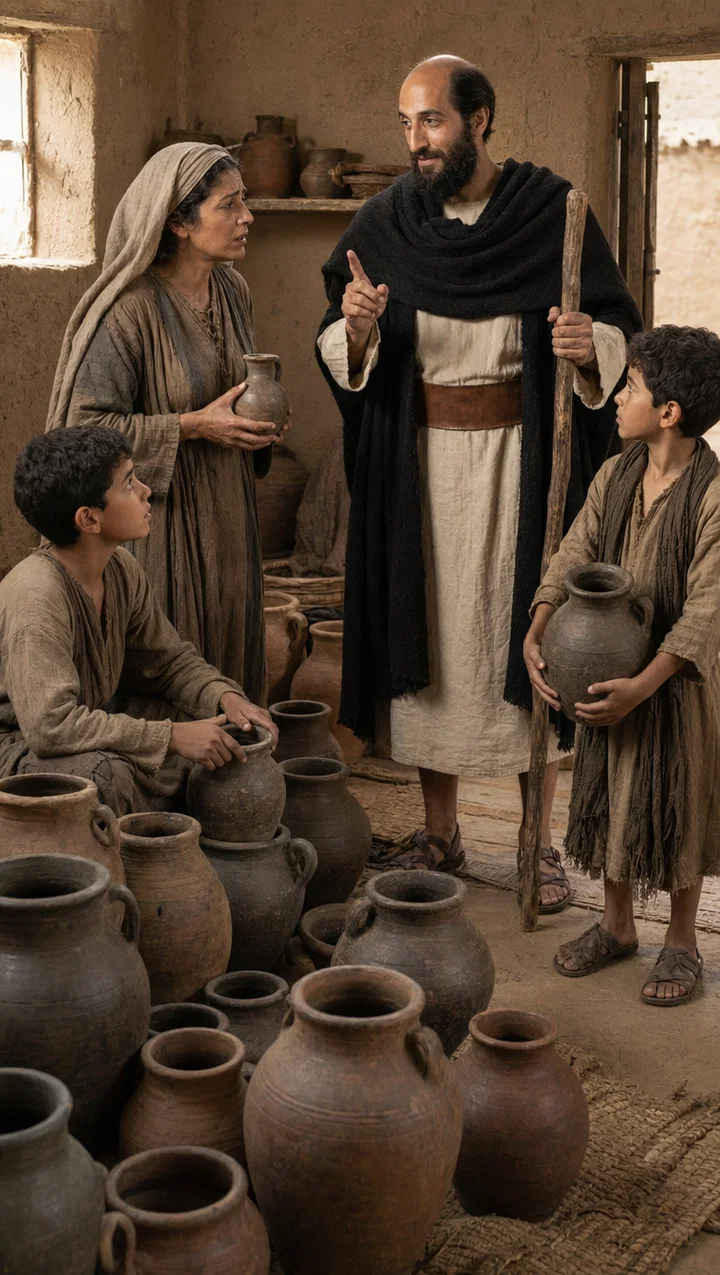
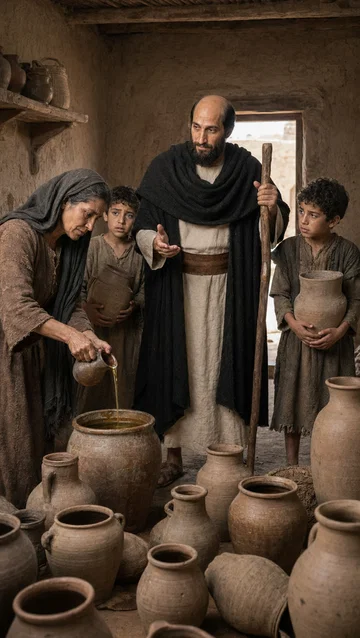
The verse concerns a poor widow whose husband died in debt that he himself had incurred, leaving her with nothing but a single pot of oil.RH Sep 25, 1856RH Jun 9, 1903 The creditor was coming to take her two sons as bondmen to pay it, as the law allowed, and she and her family feared the Lord.RH Sep 25, 1856RH Jun 9, 1903 Elisha told her to borrow empty vessels from all her neighbors and pour from her one pot into them until they were all full.ST Dec 7, 1904RH Sep 25, 1856 Then she was to sell the oil, pay the debt, and live with her children and sons on what remained.ST Dec 7, 1904RH Sep 25, 1856
The oil when sold was enough to clear the debt and leave a surplus for future support.RH Apr 14, 1904ST Apr 8, 1889 She was thus able to begin again without further debt and to keep her children with her, willingly repaying what was owed.RH Apr 14, 1904ST Apr 8, 1889 The account of Elisha's miracles to which the verse belongs is a true historical event and a real miracle, not a pious legend or myth, allegory, or fancy.ST Jan 24, 1906
The same chapter also points to the raising of the Shunammite woman's son from the dead.ST Oct 12, 1876 His resurrection was made possible by the sacrifice of the Son of God, established in God's purpose before it was accomplished.ST Oct 12, 1876
Faith and God's Provision
God has special regard for His people even when they are poor in worldly goods, and faith matters more than wealth.RH Sep 25, 1856 God worked a miracle to multiply the widow's oil and worked with her feeble efforts, so that even a humble home with only a pot of oil could be supplied by divine increase to meet temporal needs.RH Jul 7, 1903RH Jun 9, 1903ST Jul 13, 1904 The family's blessing came as the reward of faith, tested through the work set for them to do in borrowing and filling vessels.ST Dec 7, 1904 The results of exercising faith in God's work may be without limit.RH Jul 20, 1916
God can multiply what a person already has when it is used in faith, so that the small supply of oil became enough to fill many vessels.RH Apr 24, 1900RH Aug 26, 1915 The oil multiplied as she poured it into the vessels and its flow stopped when no vessels were left, and had she prepared more vessels she would have received more oil, showing the measure of blessing received was limited by the vessels she brought.ST Nov 19, 1885 The provision met both the immediate need and gave something for future use, illustrating that God can provide more than a person asks for.ST Apr 8, 1889 His gifts continue to supply good purposes while they are received and put to use.ST Jan 14, 1886
The oil also pictures how God can work through a person who yields to Him, so that by His Spirit even what seems small can become a means of blessing.RH Apr 24, 1900 The oil increasing as it was poured out illustrates that spiritual gifts are best used by sharing them rather than keeping them to oneself.ST Jun 6, 1900 The multiplication of the oil applies to mothers' work, which can bless their own children and their neighbors' children and help deliver children from the bondage of sin.RH Aug 26, 1915 All power, all wisdom, and all the resources of the universe are His to give food, drink, and clothing to those who seek first the kingdom of God and His righteousness and walk uprightly. Even when it cannot be seen how He will do it, He will do all things well and withhold no good thing, so His obedient children need take no anxious thought for the morrow but can trust Him who gave His only-begotten Son for sinners to supply what they need.
Duty to Pay Debts
The command to sell the oil and pay what was owed and live with the children on what remained means that a debt should be paid and that honest debts must be paid, and it shows that God approves honest dealing.RH Sep 25, 1856RH Jul 7, 1903 He worked a miracle to multiply the widow's oil to provide both for settlement of what she owed and for support for her and her children afterward.RH Jul 7, 1903 Paying the creditor is loving one's neighbor as oneself.RH Sep 25, 1856 Refusing or neglecting to pay does not cancel the creditor's claim, and keeping what belongs to the creditor is coveting a neighbor's property and shows a carnal mind that is hostile to God and not subject to His law.RH Sep 25, 1856
The debt had been incurred by her deceased husband, yet she willingly sought to repay it and keep her children with her.RH Apr 14, 1904RH Sep 25, 1856 The creditor had threatened to take her two sons as bondmen, as the law allowed, while she and her family feared the Lord who cared for them.RH Sep 25, 1856 After the oil was sold she was to pay her debt and live with her children on what remained, with enough to clear the debt and leave a surplus for future support so she could begin again without further debt.RH Apr 14, 1904 Present prosperous times should be used to cut expenses, work harder, and clear financial obligations before troublous times come.RH Jul 7, 1903 This cultivates honesty and strengthens character, so that those who suffer imprisonment or other affliction for faith will not also face taunts over unpaid bills.RH Jul 7, 1903
As the widow used the oil God provided to pay her debt and support herself and her children from what remained, so the account gives a practical example of how a small resource can be used and passed on to provide further means.RH Sep 9, 1902 Poor believers sold a few chickens, geese, or feathers to buy a book, then sold it and used the proceeds to obtain another.RH Sep 9, 1902
Sources