2 Kings 4:6
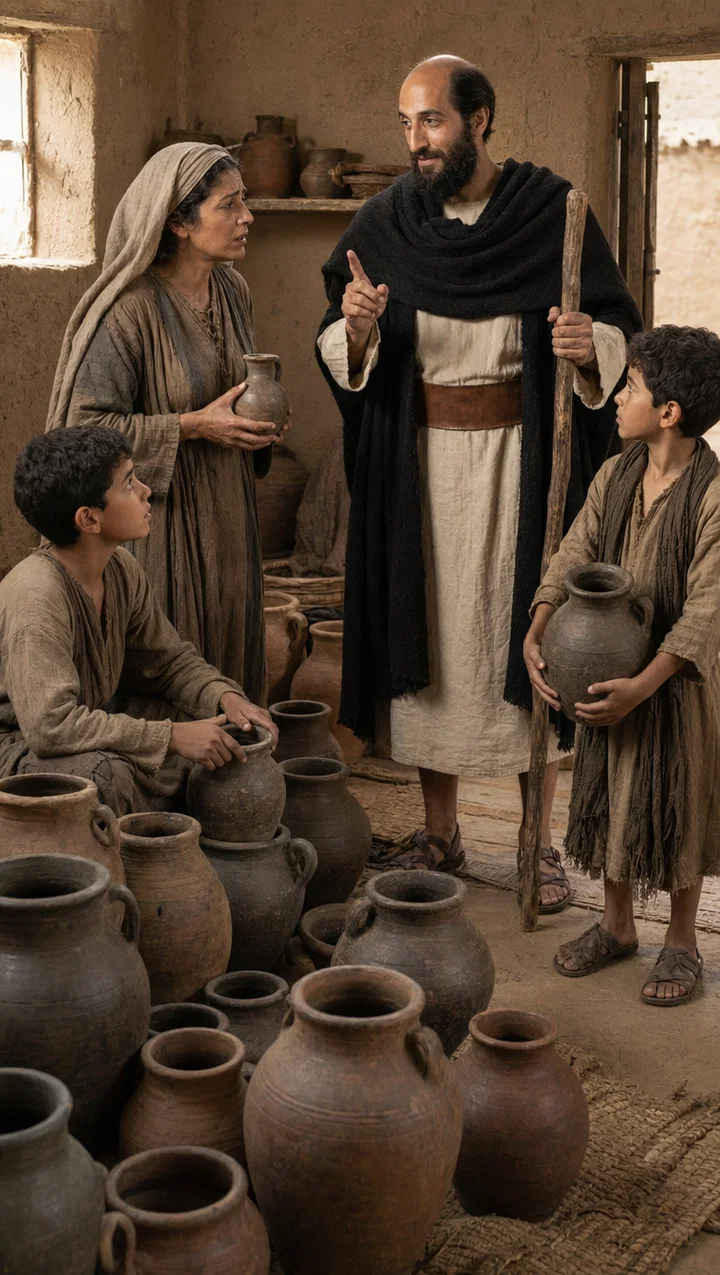
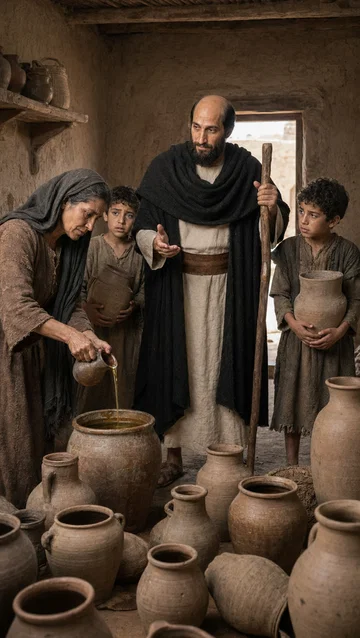
And it came to pass, when the vessels were full, that she said unto her son, Bring me yet a vessel. And he said unto her, There is not a vessel more. And the oil stayed.
Translations
American King James Version, Webster Bible
And it came to pass, when the vessels were full, that she said to her son, Bring me yet a vessel. And he said to her, There is not a vessel more. And the oil stayed.
King James Version, KJV Cambridge Paragraph Bible, Revised Version, American Standard Version
And it came to pass, when the vessels were full, that she said unto her son, Bring me yet a vessel. And he said unto her, There is not a vessel more. And the oil stayed.
and it cometh to pass, at the filling of the vessels, that she saith unto her son, 'Bring nigh unto me a vessel more,' and he saith unto her, 'There is not a vessel more;' and the oil stayeth.
And it came to pass when the vessels were full, that she said to her son, Bring me yet a vessel. And he said to her, There is not a vessel more. And the oil stayed.
And it came to pass, when the vessels were full, that she said unto her son—Bring me a vessel more. And he said unto her—There is not a vessel more. And the oil stayed.
Berean Standard Bible, Majority Standard Bible
When all the jars were full, she said to her son, “ Bring me another.”But he replied, “ There are no more jars.” Then the oil stopped flowing.
When the containers were full, she said to her son, “ Bring me another container.”He said to her, “ There isn’t another container.” Then the oil stopped flowing.
And when all the vessels were full, she said to her son, Get me another vessel. And he said, There are no more. And the flow of oil was stopped.
And when the vessels were full, shee sayde vnto her sonne, Bring mee yet a vessel. And hee said vnto her, There is no moe vessels. And the oyle ceased.
Douay-Rheims (Challoner revision)
And when the vessels were full, she said to her son: Bring me yet a vessel. And he answered: I have no more. And the oil stood.
Pictures
Cross-references
- 1 Kings 17:14-16
For thus saith the LORD God of Israel, The barrel of meal shall not waste, neither shall the cruse of oil fail, until the day that the LORD sendeth rain upon the earth.
In both accounts, a widow’s oil is miraculously multiplied and does not run out.
- John 6:11-13
And Jesus took the loaves; and when he had given thanks, he distributed to the disciples, and the disciples to them that were set down; and likewise of the fishes as much as they would.
Bread multiplied as it was broken and distributed.
- Matthew 14:19-20
And he commanded the multitude to sit down on the grass, and took the five loaves, and the two fishes, and looking up to heaven, he blessed, and brake, and gave the loaves to his disciples, and the disciples to the multitude.
God multiplies a small supply to provide abundantly.
Commentary
Each commentary is drawn from primary sources: the writings of Ellen G. White and Adventist pioneers and periodicals. Each commentary is separate. Its own words are not a quotation; follow the references to read the source passages.
Ellen G. White
1 source
The widow's scant supply of oil kept flowing without failing while empty vessels were still being brought to be filled.PK 235 It filled vessel after vessel until every one she had collected held oil.PK 235 When her son answered that there was not another vessel left, the oil stopped at once.PK 235
Sources
Pioneers and periodicals
19 sources
The verse closes a true miracle in which a debt-threatened widow poured from her single pot into borrowed vessels until every one was full, and the flow stopped only when no empty vessel remained.ST May 13, 1908ST Dec 7, 1904RH Apr 14, 1904 What she gathered set what she received, for had she prepared more vessels there would have been more oil, since God's blessings are limited only by the capacity to receive them and by acting fully on His promise.ST Dec 7, 1904ST Jan 20, 1904ST Nov 19, 1885 The supply was the reward of faith and shows the Lord's care and power to meet the needs of His poor, God-fearing people even when they cannot see how He will do it.ST Dec 7, 1904RH Sep 25, 1856 She asked help for her immediate need and received enough to pay the whole debt with a surplus left for her family to live on, showing that God can provide beyond what is asked.RH Apr 14, 1904ST Apr 8, 1889 The miracle was performed to show God's approval of honest dealing, that honest debts must be paid and character is strengthened by paying them.RH Jul 7, 1903
Miracle and Its Setting
The verse closes Elisha's miracle for a widow whose husband had died in debt, leaving a creditor coming to take her two sons as bondmen to pay it, with only a single pot of oil left to her. At Elisha's word she had borrowed empty vessels from all her neighbors and poured from her one pot till they were all full, and the filled oil was then to be sold to pay the debt, with she and her sons to live on the rest.
The oil kept flowing while there were empty vessels to fill and filled every vessel she had gathered.ST May 13, 1908ST Dec 7, 1904RH Apr 14, 1904RH Sep 9, 1902ST Jan 20, 1904 It continued until every available vessel was full and stopped only when the vessels were full and there was not a vessel more left to receive it.ST May 13, 1908ST Dec 7, 1904RH Jul 7, 1903RH Sep 9, 1902ST Jan 20, 1904 When no vessel remained the oil stayed, and the miracle continued until no more vessels were available to fill.ST May 13, 1908ST Dec 7, 1904RH Apr 14, 1904RH Jul 7, 1903RH Sep 9, 1902
The event belongs to the true events of Israel's history, not to pious legend or myth.ST Jan 24, 1906 It was an actual miraculous multiplication of oil to supply need, the oil supplying her need until no vessels remained to fill.ST Jan 24, 1906
The same chapter also records a resurrection from the dead before Christ's resurrection in the raising of the Shunammite woman's son.RH May 28, 1861 He was raised to life even though he was not raised to immortality.RH May 28, 1861 That raising was by virtue of Christ's sacrifice, though that sacrifice had not yet taken place and was already established in God's purpose.ST Oct 12, 1876
God's Provision and Faith
The oil kept flowing until every vessel she had gathered was full and stopped only when there was no vessel left, and that provision met the widow's need and was the reward of faith, while the work of gathering the vessels tested her faith.ST Dec 7, 1904 The account shows the Lord's care for His poor, God-fearing people, for the oil could then be sold so she could pay her debt and live with her children on what remained.RH Sep 25, 1856 It is an example of His power and resources to meet His children's needs even when they cannot see how He will do so, for God can multiply oil to provide for those who trust Him.RH Sep 25, 1856 The oil continued until every available vessel was full and stopped when there was no vessel left to receive it, which illustrates that God's blessings are limited only by the capacity to receive them.ST Jan 20, 1904 The number of vessels the woman had gathered determined how much oil she received, so that had she prepared more vessels there would have been more oil, which illustrates that the measure of blessing received can be limited by how fully people act on God's promise.ST Jan 20, 1904ST Nov 19, 1885
The widow's oil multiplied until all the available vessels were full, which illustrates using what is at hand and receiving God's blessing, with the oil continuing to multiply until the vessels were full.RH Aug 26, 1915 The same stopping only when no empty vessel remained shows that God works with people's feeble efforts.RH Aug 26, 1915ST Jul 13, 1904 The filling of every borrowed vessel, stopping only when no vessel remained, illustrates that faith exercised in God's work can yield results without a set limit.RH Jul 20, 1916 God supplies His gifts as they are put to use in channels of good, for the widow's oil continued to flow until every vessel she had gathered was full and stopped only when there were no more vessels to receive it.ST Jan 14, 1886 The oil increased as she poured it into vessels and the supply stopped when there were no more vessels, which illustrates that spiritual gifts are best put to use by sharing them rather than keeping them to oneself.ST Jan 14, 1886ST Jun 6, 1900
She asked for help with her immediate need and received enough to pay her debt with some remaining for future use, showing that God can provide beyond what is asked, for God supplied her need through the oil until every borrowed vessel was full and the oil stopped when there was no vessel left to receive it.ST Apr 8, 1889 God's plan to relieve the poor widow of debt was that the oil filled every vessel she had gathered and stopped only when there were no vessels left, and she gathered enough to pay the whole debt and still have a surplus for future support, so she and her children could begin again without further debt.RH Apr 14, 1904ST Apr 8, 1889 Her small supply of oil became enough through God's miraculous power to fill every vessel she gathered, the oil stopping only when no vessel remained, which illustrates the value of trusting in God's power and blessing rather than preferring visible abundance and riches.RH Jun 9, 1903 The oil continuing to flow until every available vessel was full also illustrates how God can work through a small, yielded person, so that through that person His Spirit can fill others with power and help bring them to Christ.RH Apr 24, 1900
Debt, Giving, and Mission
The oil kept pouring into the borrowed vessels until every vessel was full, and when there was not a vessel more left to receive it the oil stayed, and that filled oil was then to be sold to pay the debt, with the widow and her sons to live on what remained.RH Sep 25, 1856 The miracle was performed to show approval of honest dealing in the case of a widow whose husband had died in debt and left a creditor coming to take her two sons as bondmen to pay it, when only a single pot of oil was left to her.RH Jul 7, 1903 Honest debts must be paid, honesty is a principle to be cultivated, and character is strengthened by paying honest debts.RH Jul 7, 1903 Comparatively prosperous times are the favorable opportunity to curtail expenses, put forth stronger effort, refuse deeper debt, and round up financial matters before troublous times come, so that suffering for faith, even being taken to prison, will not be joined with harassment and taunts over unpaid bills.RH Jul 7, 1903
The same relieving of the poor widow of debt applies to willingness to help pay school debts not personally incurred, as partners in the work and guardians of its educational institutions, since she gathered enough to pay the whole debt and still have a surplus for future support, so she and her children could begin again without further debt.RH Apr 14, 1904 The continuing supply while there were empty vessels to fill also suggested a plan by which people with little money could make a small sacrifice to buy a book, sell it, and use the proceeds to buy another, and their efforts to supply need were blessed.RH Sep 9, 1902
Sources