2 Kings 8:12
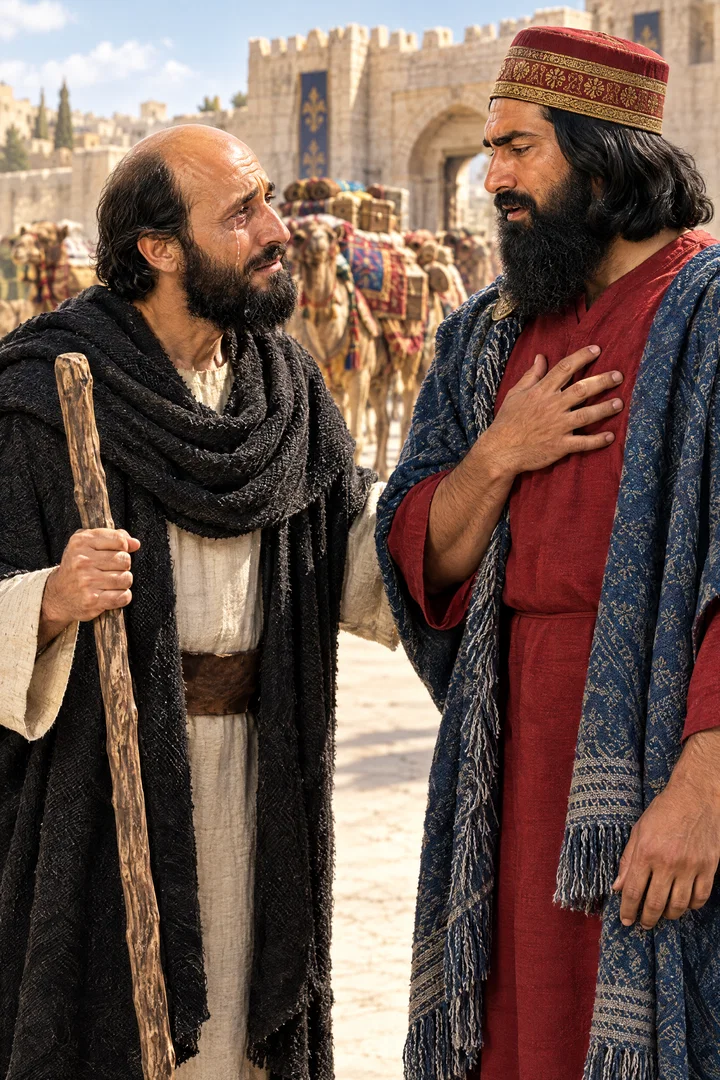
And Hazael said, Why weepeth my lord? And he answered, Because I know the evil that thou wilt do unto the children of Israel: their strong holds wilt thou set on fire, and their young men wilt thou slay with the sword, and wilt dash their children, and rip up their women with child.
Translations
And Hazael said, Why weeps my lord? And he answered, Because I know the evil that you will do to the children of Israel: their strong holds will you set on fire, and their young men will you slay with the sword, and will dash their children, and rip up their women with child.
King James Version, KJV Cambridge Paragraph Bible
And Hazael said, Why weepeth my lord? And he answered, Because I know the evil that thou wilt do unto the children of Israel: their strong holds wilt thou set on fire, and their young men wilt thou slay with the sword, and wilt dash their children, and rip up their women with child.
And Hazael said, Why weepeth my lord? And he answered, Because I know the evil that thou wilt do to the children of Israel: their strong holds wilt thou set on fire, and their young men wilt thou slay with the sword, and wilt dash their children, and rip up their women with child.
And Hazael said, Why weepeth my lord? And he answered, Because I know the evil that thou wilt do unto the children of Israel: their strong holds wilt thou set on fire, and their young men wilt thou slay with the sword, and wilt dash in pieces their little ones, and rip up their women with child.
And Hazael said, Why weepeth my lord? And he answered, Because I know the evil that thou wilt do unto the children of Israel: their strongholds wilt thou set on fire, and their young men wilt thou slay with the sword, and wilt dash in pieces their little ones, and rip up their women with child.
And Hazael saith, 'Wherefore is my lord weeping?' and he saith, 'Because I have known the evil that thou dost to the sons of Israel — their fenced places thou dost send into fire, and their young men with sword thou dost slay, and their sucklings thou dost dash to pieces, and their pregnant women thou dost rip up.'
And Hazael said, Why does my lord weep? And he said, Because I know the evil that thou wilt do to the children of Israel: their strongholds wilt thou set on fire, and their young men wilt thou kill with the sword, and wilt dash in pieces their children, and rip up their women with child.
Then said Hazael, Why, is my lord, weeping? And he said—Because I know what thou wilt do to the sons of Israel, by way of harm—Their fortresses, thou wilt set on fire, and, their choice young men, with the sword, thou wilt slay, and, their children, thou wilt dash in pieces, and, their women with child, thou wilt rip up.
Berean Standard Bible, Majority Standard Bible
“ Why is my lord weeping?” asked Hazael.“ Because I know the evil you will do to the Israelites,” Elisha replied. “ You will set fire to their fortresses, kill their young men with the sword, dash their little ones to pieces, and rip open their pregnant women.”
Hazael said, “ Why do you weep, my lord?”He answered, “ Because I know the evil that you will do to the children of Israel. You will set their strongholds on fire, and you will kill their young men with the sword, and will dash their little ones in pieces, and rip up their pregnant women.”
And Hazael said, Why is my lord weeping? Then he said in answer, Because I see the evil which you will do to the children of Israel: burning down their strong towns, putting their young men to death with the sword, smashing their little ones against the stones, and cutting open the women who are with child.
And Hazael sayde, Why weepeth my lord? And he answered, Because I knowe the euill that thou shalt do vnto the children of Israel: for their strong cities shalt thou set on fire, and their yong men shalt thou slay with the sworde, and shalt dash their infantes against the stones, and rent in pieces their women with child.
Douay-Rheims (Challoner revision)
And Hazael said to him: Why doth my lord weep? And he said: Because I know the evil that thou wilt do to the children of Israel. Their strong cities then wilt burn with fire, and their young men thou wilt kill with the sword, and thou wilt dash their children, and rip up their pregnant women.
Pictures
Cross-references
- 1 Kings 19:15-17
And the LORD said unto him, Go, return on thy way to the wilderness of Damascus: and when thou comest, anoint Hazael to be king over Syria:
Hazael was appointed to bring judgment on Israel.
- 2 Kings 13:3-5
And the anger of the LORD was kindled against Israel, and he delivered them into the hand of Hazael king of Syria, and into the hand of Ben-hadad the son of Hazael, all their days.
Israel suffered under Syrian oppression during Jehoahaz’s reign.
- 2 Kings 13:17-19
And he said, Open the window eastward. And he opened it. Then Elisha said, Shoot. And he shot. And he said, The arrow of the LORD’s deliverance, and the arrow of deliverance from Syria: for thou shalt smite the Syrians in Aphek, till thou have consumed them.
Elisha’s arrows signify the Lord’s promised deliverance from Hazael’s oppression.
Commentary
Each commentary is drawn from primary sources: the writings of Ellen G. White and Adventist pioneers and periodicals. Each commentary is separate. Its own words are not a quotation; follow the references to read the source passages.
Ellen G. White
7 sources
The words were spoken when Elisha bore faithful testimony to the messengers sent by Ben-hadad, king of Syria, to ask whether the king's sickness would end in death, at a time when truth was being perverted and most of the people stood in open rebellion against God.PK 255.1 Elisha wept as he spoke because he knew the evil Hazael would do to the children of Israel.Lt 15, 1898, par. 13–16 Hazael would become an instrument and a scourge bringing destruction and suffering upon them.5T 79.3Lt 15, 1898, par. 13–16
The foretold evil was specific and severe: he would set Israel's strongholds on fire, slay its young men with the sword, and violently destroy its children and pregnant women.PK 254.1Lt 15, 1898, par. 1–5Lt 15, 1898, par. 17–19 This was fulfilled in the judgments that fell on Israel during Hazael's reign and in the losses Israel suffered in its wars with Syria.PK 254.1 Hazael was told in advance of the cruel acts he would later commit, and his astonishment at the prediction shows how people can be unaware of the evil they will do when under Satan's influence.MYP 278.1–2
His history is a memorable illustration of the solemn truth that the heart is deceitful above all things and desperately wicked, showing the depths to which men sink when under the control of satanic agencies, when evil tendencies are allowed to rule and character is shaped by satanic influence.Lt 15, 1898, par. 13–16Lt 15, 1898, par. 17–19 Satan takes advantage of circumstances to arouse every evil tendency of the unconsecrated, unsubdued natural heart and to set on fire every evil propensity.Lt 15, 1898, par. 13–16 A person who had every opportunity for obtaining a rich experience in spiritual things but did not appreciate his advantages becomes the dupe of the father of deception and falsehood.Lt 15, 1898, par. 13–16 A mere spark is enough to turn his unsanctified temper into a seething cauldron that he cannot control, so that he is not master of himself but Satan speaks through him as a channel for the power of darkness, under the molding hand of Satan with no power left to go from the snare.Lt 15, 1898, par. 13–16
Being confronted beforehand with this evil was Hazael's test.Lt 15, 1898, par. 1–5 His test warns anyone later tempted to betray sacred trusts for financial advantage to stop before choosing a course that brings lasting spiritual ruin.Lt 15, 1898, par. 1–5
Sources
Pioneers and periodicals
13 sources
Elisha wept as Hazael stood before him because he foresaw the burning of strongholds, the slaughter of young men, and the cruel destruction of children and pregnant women that Hazael would bring upon Israel.PGGC 68.2–69.1ST Nov 19, 1902ST Jul 7, 1898 What he knew had been shown to him by the Lord, and he named Hazael to his face as the man who would do it.PGGC 68.2–69.1RH Nov 5, 1914GSAM 379.2–3 Hazael was appointed as an agent to punish Ahab and Israel, a scourging oppressor whose war and affliction upon God's people would be followed by God's vengeance and deliverance.ST Jul 7, 1898RH Jun 29, 1911RH Mar 4, 1909 Those who oppose the plain Word of God and exalt human reason above His revealed wisdom become like Hazael, a scourge to God's people.RH Mar 4, 1909
Meaning and Historical Setting
Elisha wept because he knew the evil Hazael would do to the children of Israel, that he would set their strongholds on fire, slay their young men with the sword, dash their children, and rip open their pregnant women.PGGC 68.2–69.1ST Nov 19, 1902ST Jul 7, 1898RH Dec 24, 1861 He knew this future cruelty through what the Lord had shown him, and his answer identified Hazael himself as the man who would bring it about.PGGC 68.2–69.1RH Nov 5, 1914 As Hazael stood before him the matter became vivid to him, making it an example of a prophet telling a man he had never met what had been revealed in vision.PGGC 68.2–69.1RH Nov 5, 1914GSAM 379.2–3
The verse belongs to the historical record in which Ben-hadad reigned in Damascus while Ahab reigned in Israel, and Hazael succeeded Ben-hadad as king of Damascus at the same time Jehu succeeded Ahab as king of Israel.ST Jul 30, 1885ST Nov 20, 1884 Hazael obtained the Syrian throne through treachery and murder.RH Jun 1, 1916ST Nov 20, 1884 Assyrian records confirm the chronology, for in Shalmaneser's sixth year Ben-hadad was still king of Damascus and Ahab was king of Israel and sent two thousand chariots and ten thousand infantry to help Ben-hadad, and twelve years later Hazael was king of Damascus when Shalmaneser attacked him.ST Nov 20, 1884 Omri was not Jehu's father but the founder of Ahab's dynasty, which explains why Shalmaneser calls Jehu son of Omri.ST Nov 20, 1884
Hazael was later in conflict with Assyria, which eventually subdued him, while Israel under Jehu submitted and paid tribute to Shalmaneser. The verse falls within the prophetic ministry of Elijah and Elisha and the history of Israel's kings, whose later events include Joash of Judah submitting to Hazael.ST May 13, 1908 The account also illustrates that the Syrian king's death would result from harmful treatment rather than from his illness.ST Nov 19, 1902
Judgment and Present Warning
Hazael's coming cruelty was known beforehand because he had been appointed as an agent to punish Ahab and Israel.ST Jul 7, 1898 He would act as a scourging oppressor bringing violent suffering and terrible violence upon Israel, burning its strongholds, killing its young men with the sword, and destroying children and pregnant women.ST Jul 7, 1898RH Jun 29, 1911RH Mar 4, 1909 That cruelty belongs to war and affliction brought upon God's people, which is followed by God's vengeance and deliverance.RH Jun 29, 1911 The setting is a time of violence, with strongholds burned and people killed, when the seven thousand faithful in Israel were made manifest.RH Dec 24, 1861 Those who oppose the plain Word of God and the testimonies of the Holy Spirit and exalt human reason above God's revealed wisdom are like Hazael, for they too will prove a scourge to God's people.RH Mar 4, 1909 Elisha's telling Hazael to his face of the harm he would bring to Israel provides the pattern for a prophetic testimony that accurately foretells how a person will respond when reproved.PGGC 73.1
Sources