2 Samuel 1:10
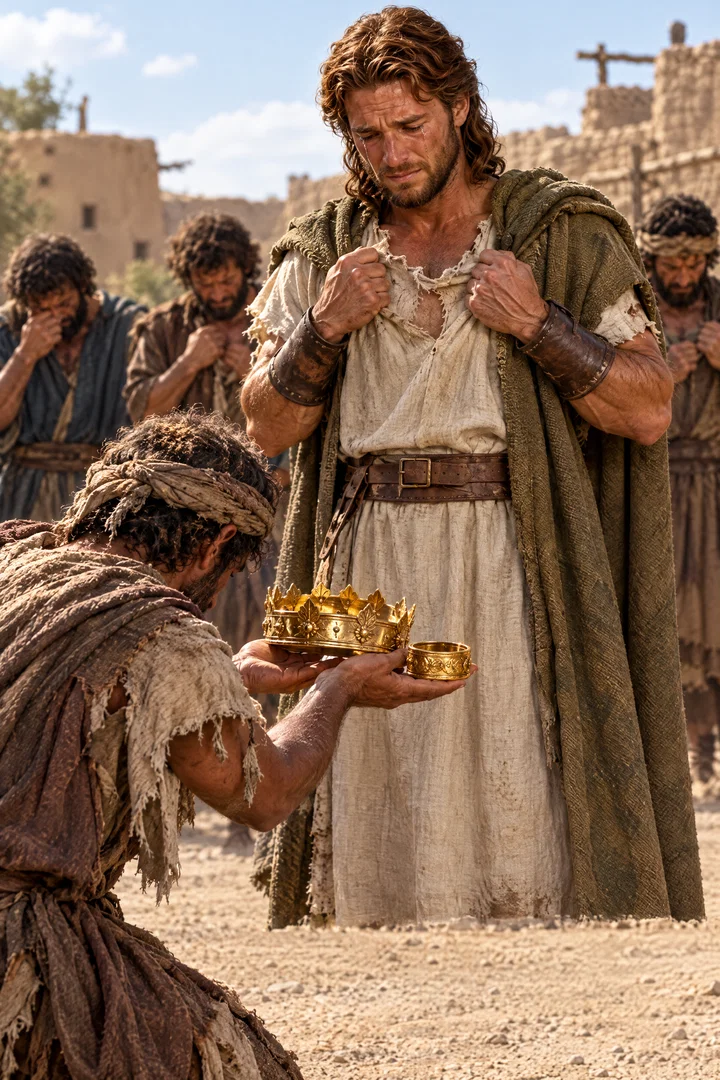
So I stood upon him, and slew him, because I was sure that he could not live after that he was fallen: and I took the crown that was upon his head, and the bracelet that was on his arm, and have brought them hither unto my lord.
Translations
So I stood on him, and slew him, because I was sure that he could not live after that he was fallen: and I took the crown that was on his head, and the bracelet that was on his arm, and have brought them here to my lord.
King James Version, KJV Cambridge Paragraph Bible
So I stood upon him, and slew him, because I was sure that he could not live after that he was fallen: and I took the crown that was upon his head, and the bracelet that was on his arm, and have brought them hither unto my lord.
So I stood upon him, and slew him, because I was sure that he could not live after that he had fallen: and I took the crown that was upon his head, and the bracelet that was on his arm, and have brought them hither to my lord.
Revised Version, American Standard Version
So I stood beside him, and slew him, because I was sure that he could not live after that he was fallen: and I took the crown that was upon his head, and the bracelet that was on his arm, and have brought them hither unto my lord.
And I stand over him, and put him to death, for I knew that he doth not live after his falling, and I take the crown which [is] on his head, and the bracelet which [is] on his arm, and bring them in unto my lord hither.'
So I stood over him, and put him to death, for I knew that he would not live after his fall; and I took the crown that was upon his head, and the bracelet that was on his arm, and have brought them hither to my lord.
So I took my stand by him, and put him to death, for I perceived that he could not survive his fall,—so I took the crown that was on his head, and the bracelet that was on his arm, and have brought them in unto my lord, here.
Berean Standard Bible, Majority Standard Bible
So I stood over him and killed him, because I knew that after he had fallen he could not survive. And I took the crown that was on his head and the band that was on his arm, and I have brought them here to my lord.”
So I stood beside him and killed him, because I was sure that he could not live after he had fallen. I took the crown that was on his head and the bracelet that was on his arm, and have brought them here to my lord.”
So I put my foot on him and gave him his death-blow, because I was certain that he would not go on living after his fall: and I took the crown from his head and the band from his arm, and I have them here for my lord.
So I came vpon him, and slewe him, and because I was sure that hee coulde not liue, after that hee had fallen, I tooke the crowne that was vpon his head, and the bracelet that was on his arme, and brought them hither vnto my lord.
Douay-Rheims (Challoner revision)
So standing over him, I killed him: for I knew that he could not live after the fall: and I took the diadem that was on his head, and the bracelet that was on his arm and have brought them hither to thee, my lord.
Pictures
Cross-references
- 1 Samuel 24:6
And he said unto his men, The LORD forbid that I should do this thing unto my master, the LORD’s anointed, to stretch forth mine hand against him, seeing he is the anointed of the LORD.
David refuses to kill Saul, whom the Lord had anointed.
- 1 Samuel 26:9-11
And David said to Abishai, Destroy him not: for who can stretch forth his hand against the LORD’s anointed, and be guiltless?
David refuses to harm Saul, the Lord’s anointed, and leaves judgment to God.
- 1 Samuel 31:1-6
Now the Philistines fought against Israel: and the men of Israel fled from before the Philistines, and fell down slain in mount Gilboa.
Records Saul’s death, later reported to David in 2 Samuel 1.
Commentary
Each commentary is drawn from primary sources: the writings of Ellen G. White and Adventist pioneers and periodicals. Each commentary is separate. Its own words are not a quotation; follow the references to read the source passages.
Ellen G. White
1 source
The verse preserves the Amalekite's report that he came upon Saul after his fall, judged him unable to live, stood over him and put him to death, then removed the crown from his head and the bracelet from his arm and carried them to David.PP 694.3–695.2 He offered this story as a boast, expecting it to secure David's favor.PP 694.3–695.2 By his own confession that he had killed the Lord's anointed, he established his guilt of a crime deserving death, and David commanded his execution.PP 694.3–695.2
Sources
Pioneers and periodicals
3 sources
A fugitive Amalekite came to David claiming to have found Saul fallen and certain that he could not live after his fall.ST Apr 7, 1909ST He claimed to have stood upon the fallen king and slain him.ST He then took the crown that had been upon Saul's head and the bracelet that had been upon his arm and brought them to David.ST Apr 7, 1909ST
He brought them expecting David to rejoice at Saul's death.ST Instead David had him put to death for his part in it.ST Apr 7, 1909ST That dealing with the man sheds light on David's character.ST Apr 7, 1909ST
The claim belongs to the account of David receiving the news of the deaths of Saul and Jonathan.ST Upon that news he grieved for them.ST He remembered the fallen warriors in the memorial called the Song of the Bow.ST
Sources