2 Samuel 10:12
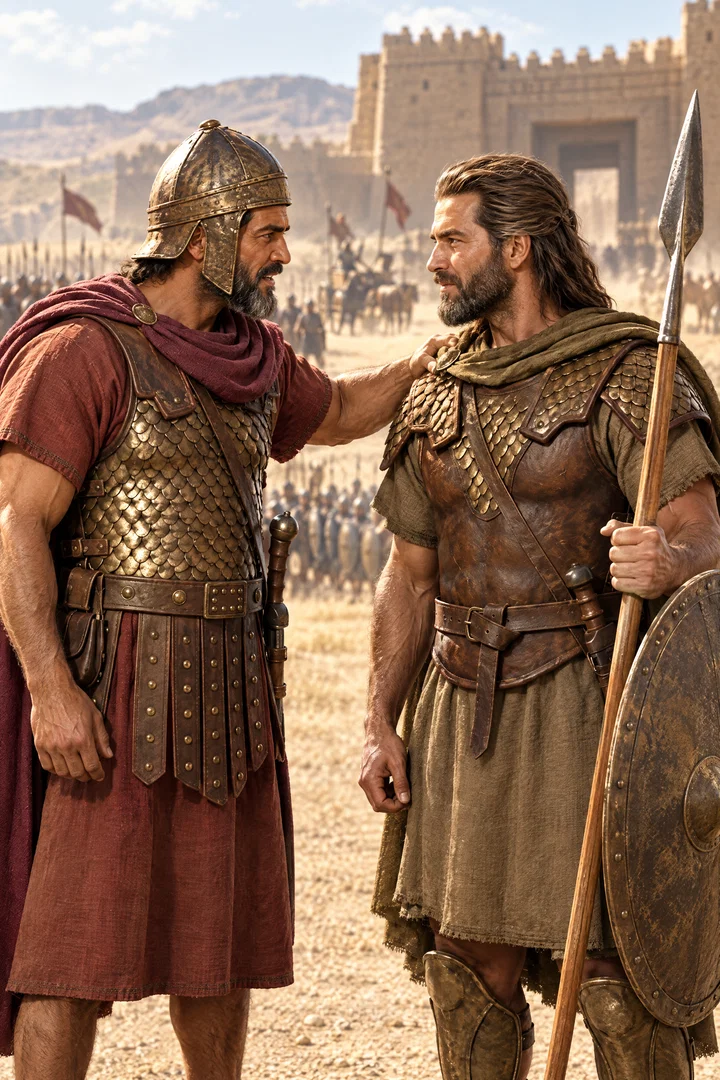
Be of good courage, and let us play the men for our people, and for the cities of our God: and the LORD do that which seemeth him good.
Translations
Be of good courage, and let us play the men for our people, and for the cities of our God: and the LORD do that which seems him good.
King James Version, Webster Bible, Revised Version
Be of good courage, and let us play the men for our people, and for the cities of our God: and the LORD do that which seemeth him good.
Be of good courage, and let us play the men for our people, and for the cities of our God: and the Lord do that which seemeth him good.
Be of good courage, and let us play the man for our people, and for the cities of our God: and Jehovah do that which seemeth him good.
be strong and strengthen thyself for our people, and for the cities of our God, and Jehovah doth that which is good in His eyes.'
Be strong, and let us shew ourselves valiant for our people and for the cities of our God; and Jehovah do what is good in his sight.
Be strong, and let us put forth our strength, for the sake of our people, and for the sake of the cities of our God,—and, Yahweh, do what is good in his own eyes.
Berean Standard Bible, Majority Standard Bible
Be strong and let us fight bravely for our people and for the cities of our God. May the LORD do what is good in His sight.”
Be courageous, and let’s be strong for our people and for the cities of our God; and may the LORD do what seems good to him.”
Take heart, and let us be strong for our people and for the towns of our God, and may the Lord do what seems good to him.
Be strong and let vs be valiant for our people, and for the cities of our God, and let the Lord do that which is good in his eyes.
Douay-Rheims (Challoner revision)
Be of good courage, and let us fight for our people, and for the city of our God: and the Lord will do what is good in his sight.
Pictures
Cross-references
- 1 Chronicles 19:6-7
And when the children of Ammon saw that they had made themselves odious to David, Hanun and the children of Ammon sent a thousand talents of silver to hire them chariots and horsemen out of Mesopotamia, and out of Syria-maachah, and out of Zobah.
Both describe the Ammonites hiring Syrian chariots for war.
- 2 Samuel 10:3
And the princes of the children of Ammon said unto Hanun their lord, Thinkest thou that David doth honour thy father, that he hath sent comforters unto thee? hath not David rather sent his servants unto thee, to search the city, and to spy it out, and to overthrow it?
The Ammonite princes accuse David’s men of spying before the war.
Commentary
Each commentary is drawn from primary sources: the writings of Ellen G. White and Adventist pioneers and periodicals. Each commentary is separate. Its own words are not a quotation; follow the references to read the source passages.
Ellen G. White
2 sources
This belongs to the greatest wars and victories of David's reign, which brought the most extensive additions to his power.PP 713.3–715.1 The war grew from a vast coalition of surrounding nations against David, springing from jealousy of his increasing power, and was wholly unprovoked by him.PP 713.3–715.1 The conflict began when news of the death of Nahash king of the Ammonites came to Jerusalem, and David sent ambassadors with sympathy to Hanun his son and successor to repay kindness shown when David was a fugitive from Saul.PP 713.3–715.1 Hanun's counselors misconstrued the message as sent to search the city and spy it out and overthrow it, and Hanun treated the messengers as spies with scorn and insult, violating the sacred office of ambassador which by universal law of nations ensured protection and demanded prompt retaliation for indignity.PP 713.3–715.1
The Ammonites hated the true God and were bitter enemies of Israel, and Nahash's apparent kindness to David was prompted only by hostility to Saul.PP 713.3–715.1 They still remembered how half a century before Nahash had demanded the right eyes of Jabesh-gilead when it was besieged and suing for peace, and how the king of Israel had foiled that cruel design and rescued them.PP 713.3–715.1 Having made themselves odious to David, Hanun and the Ammonites sent a thousand talents of silver to hire thirty-two thousand chariots and horsemen from Mesopotamia and Syria-maachah and Zobah, and gathered forces from their cities to battle with allies from between the Euphrates and the Mediterranean.PP 713.3–715.1 In this way the north and east of Canaan was encircled with armed foes banded together to crush Israel.PP 713.3–715.1
The verse is the charge of Joab as captain leading Israel's army across the Jordan toward the Ammonite capital against the allied Ammonites and Syrians, spoken to inspire the troops for the conflict.PP 715.2 It calls them to take good courage and fight valiantly for the people and for the cities of God while trusting the Lord to do what is good in His sight.PP 715.2 The charge was followed in the first battle by defeat of the united allied forces, and after they renewed the war the next year with an immense Syrian army, David took the field in person and by God's blessing inflicted a disastrous defeat.PP 715.2 As a result the Syrians from Lebanon to the Euphrates gave up the war and became tributary to Israel, while David pressed the war against the Ammonites until their strongholds fell and the whole region came under Israel's dominion.PP 715.2
Sources
Pioneers and periodicals
10 sources
The verse stands in the record of David's victories over his enemies while his reign was being established and his throne was set in Jerusalem, among internal troubles and internecine strifes, evidences of his generous disposition, his plan to build a temple for God, and his kindness to the house of Saul for Jonathan's sake.ST It stands in the account of his war with Ammon and Syria, among his victories over various kingdoms after his kindness to Mephibosheth and before his sin against Uriah, within the history that runs from the long war between the house of Saul and the house of David in 2 Samuel 3 through 2 Samuel 20.ST Apr 14, 1909 It belongs to the battle against the combined forces of the Ammonites and Syrians, with Joab's men set against the Syrians and Abishai's army set against the Ammonites.RH Apr 21, 1868 The Syrians fled before Joab's men and the Ammonites fled before Abishai's army, and the successful battles ended with the Syrian kings becoming subjects of Israel's ruler.ST Sep 10, 1896RH Apr 21, 1868
The verse is Joab's call, with Joab and Abishai encouraging one another, to be of good courage and fight bravely and manfully for their people and for the cities of God, while entrusting the outcome to the Lord to do what seems good to him, which expresses faith and trust in God.ST Jul 23, 1896ST Jul 23, 1896RH Apr 21, 1868ST Jul 23, 1896 The stated objects of fighting for the people and the cities of God render the war justifiable as brave defense rather than conquest, even though it was carried into the enemy's country, because success by Ammon and Syria would have meant subjection of Israel to the rule of idolatrous kings and the wanton slaughter of thousands of the people.ST Jul 23, 1896ST Jul 23, 1896 The verse calls God's people to courage and steadfast effort and resolve for their people and for God's cause while leaving the outcome to the Lord, which strengthens believers to return prepared for spiritual struggle and determined to serve.RH Oct 10, 1912RH Dec 22, 1863
In the verse, to play the man means ministers should bravely oppose intemperance and stand for temperance during a grave national crisis.RH Dec 22, 1863 The verse is a charge to be of good courage and play the man for God's people and the cities of God by looking well to weapons and being earnest to defend the truth of God, each one doing his part.ST Dec 30, 1889 It applies in an evil day when the spirit of hearing departs from cities, cavilers and questioners multiply, infidelity is found among Christian professors, and ministers sow doubt, undermine the gospel, and neglect the conversion of souls.ST Dec 30, 1889
Sources