2 Samuel 12:29
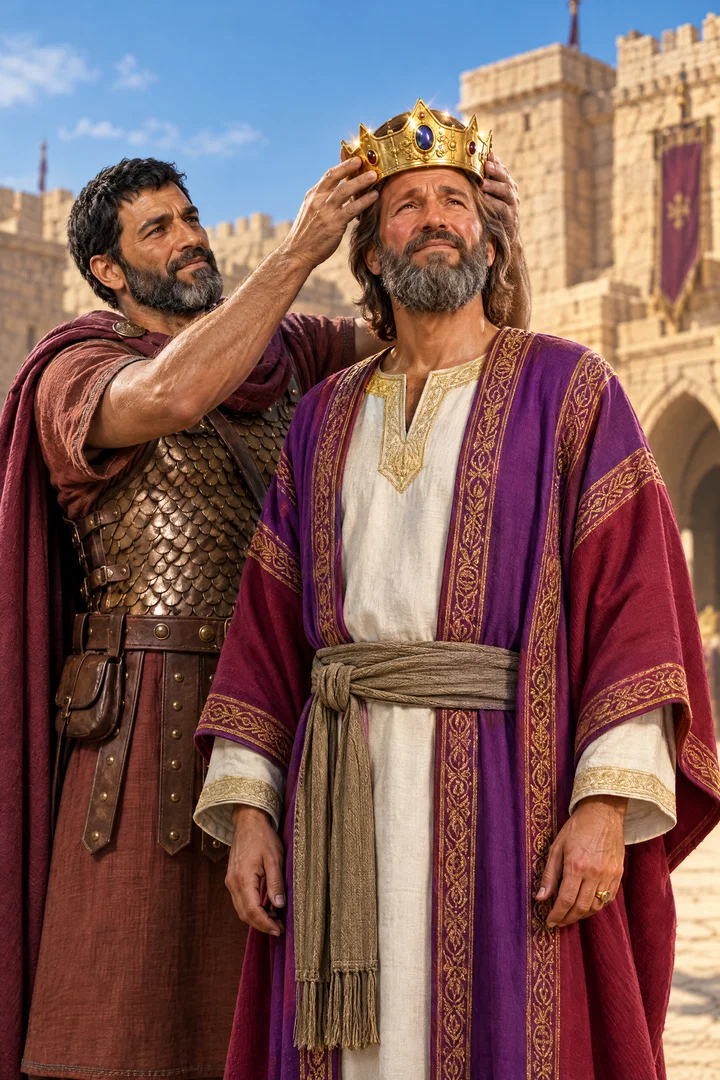
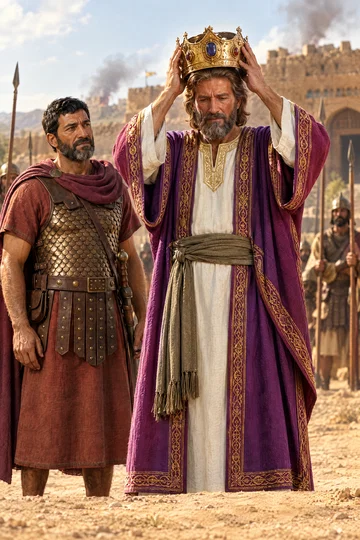
And David gathered all the people together, and went to Rabbah, and fought against it, and took it.
Translations
American King James Version, King James Version, KJV Cambridge Paragraph Bible, Revised Version, American Standard Version
And David gathered all the people together, and went to Rabbah, and fought against it, and took it.
And David collected all the people, and went to Rabbah, and fought against it, and took it.
And David gathereth all the people, and goeth to Rabbah, and fighteth against it, and captureth it;
And David gathered all the people, and went to Rabbah, and fought against it and took it.
So David gathered together all the people, and went to Rabbah,—and fought against it, and captured it.
Berean Standard Bible, Majority Standard Bible
So David assembled all the troops and went to Rabbah; and he fought against it and captured it.
David gathered all the people together and went to Rabbah, and fought against it and took it.
Then David got all the people together and went to Rabbah and made war on it and took it.
So Dauid gathered al the people together, and went against Rabbah, and besieged it, and tooke it.
Douay-Rheims (Challoner revision)
Then David gathered all the people together, and went out against Rabbath: and after fighting, he took it.
Pictures
Cross-references
- 2 Samuel 11
And it came to pass, after the year was expired, at the time when kings go forth to battle, that David sent Joab, and his servants with him, and all Israel; and they destroyed the children of Ammon, and besieged Rabbah. But David tarried still at Jerusalem.
The account of the war against Ammon leads into David’s capture of Rabbah.
- 1 Chronicles 20:3
And he brought out the people that were in it, and cut them with saws, and with harrows of iron, and with axes. Even so dealt David with all the cities of the children of Ammon. And David and all the people returned to Jerusalem.
Both describe David’s capture of Rabbah and the treatment of its people.
Commentary
Each commentary is drawn from primary sources: the writings of Ellen G. White and Adventist pioneers and periodicals. Each commentary is separate. Its own words are not a quotation; follow the references to read the source passages.
Ellen G. White
3 sources
The verse stands in the account of David's murder of Uriah by the hand of Joab.PP 719.1PP 719.2–3PP 719.4–720.1 David made Uriah the bearer of his own death-warrant, sending by his hand a letter commanding Joab to set Uriah in the forefront of the hottest battle and retire from him so that he would be smitten and die.PP 719.1 Joab, already stained with the guilt of one wanton murder, obeyed without hesitation, and Uriah fell by the sword of the children of Ammon.PP 719.1
At this time David had departed from God and yielded himself to the wicked one, becoming for the time the agent of Satan while still holding the position and authority God had given him.PP 719.2–3 His power as ruler was given by God to be exercised only in harmony with divine law, but he used it to command what was contrary to God's law and to claim an obedience that would imperil the soul of him who yielded it, so that it became sin to obey.PP 719.2–3 Joab obeyed because his allegiance was given to the king rather than to God, and so he transgressed God's law because the king had commanded it.PP 719.2–3
Joab then sent a report in words carefully chosen not to implicate himself or the king.PP 719.4–720.1 The messenger told David all that Joab had sent him, including that Uriah the Hittite was dead also.PP 719.4–720.1 David answered that the sword devours one as well as another, and commanded that Joab be told to make the battle stronger against the city and overthrow it, and to be encouraged.PP 719.4–720.1
Sources
Pioneers and periodicals
10 sources
David gathered all the people together, went to Rabbah, fought against it, and took or captured the city.ST Dec 12, 1911ST Mar 31, 1881ST Apr 14, 1909ST Oct 29, 1912 The action belongs to his war against Ammon and Syria.ST Dec 12, 1911ST Apr 14, 1909 That war was regular civil warfare against an enemy and cruel nation of Israel, not a war against people for religious beliefs or religious persecution.ST Dec 12, 1911ST Oct 29, 1912
The verse stands in the detailed account in 2 Samuel 11 and 12 of a year of idleness and luxury leading to temptation, adultery, plotting to take the life of brave and loyal Uriah to hide sin and carrying out the plot, warning and reproof by Nathan as the Lord's prophet, humble repentance, the Lord's forgiveness, and the death of Bathsheba's child.ST Sep 10, 1896ST Jul 29, 1889 It belongs to the history of David's reign and conquest of Rabbah and to the wider history in 2 Samuel 11-24 and 1 Kings 1-2 in which Nathan's denunciation was completely accomplished in the judgments that came upon David and his family after wickedness in the case of Uriah; it is part of that subsequent history of judgments but does not itself describe the later retribution.ST Mar 31, 1881RH Oct 12, 1869 That transgression gave great occasion to the enemies of the Lord to blaspheme, and it is not covered up or excused in Scripture, while David himself placed on record for all future time a most humble confession of his great transgression.RH Oct 12, 1869
Nathan reproved David as God's instrument first by parable and then plainly saying Thou art the man, and David with quick perception understood the ministry, received the rebuke as excellent oil, said I have sinned against the Lord, and bowed to the earth in broken-hearted confession with self-abasement and earnest supplication because he had violated God's holy, just, good and perfect law.RH Sep 7, 1869 His repentance shows what conversion is: brought to repentance, he prayed for mercy and to blot out transgressions, to be washed and cleansed from sin and iniquity, not to be cast away from God's presence nor to have His Holy Spirit taken, to restore the joy of salvation and uphold him, to create a clean heart and renew a right spirit, connected with restored joy in God's salvation and a willing spirit and with desire that sinners be converted to God.ST Jul 29, 1889ST Aug 19, 1886 He confessed his sin to God and published it to the world, and notwithstanding his punishment praised God for the forgiveness he received; Psalm 32:1-11 has reference to that sin and forgiveness, and the account forms the background to Psalm 32 and is to be read with profit together with Psalm 51.ST Sep 10, 1896
The verse shows David prospering after his great sin was forgiven, for when reproved he believed the prophet's word, confessed his sin and humbly repented and was forgiven, and afterward gathered the people and took Rabbah; this teaches to tremble when God speaks and, when reproved, to do more than say the reproof is true, but to heartily repent by confession and putting away the evil as far as possible.RH Sep 14, 1869 The record of his wars does not by itself excuse or condemn his conduct toward the Ammonites; his treatment reflected the customs of his time, and his rule took place under the theocracy with God as ruler.ST Dec 12, 1911 His treatment of the Ammonites is described as kind despite their wickedness.ST Oct 29, 1912 His course sets what God requires of sinners in Zion in the hour of judgment, instead of joining affinity with the reprover's open enemies and aiding circulation of false reports to injure or destroy his influence, whose sympathies are always on the wrong side.RH Sep 7, 1869
Sources