2 Samuel 19:3
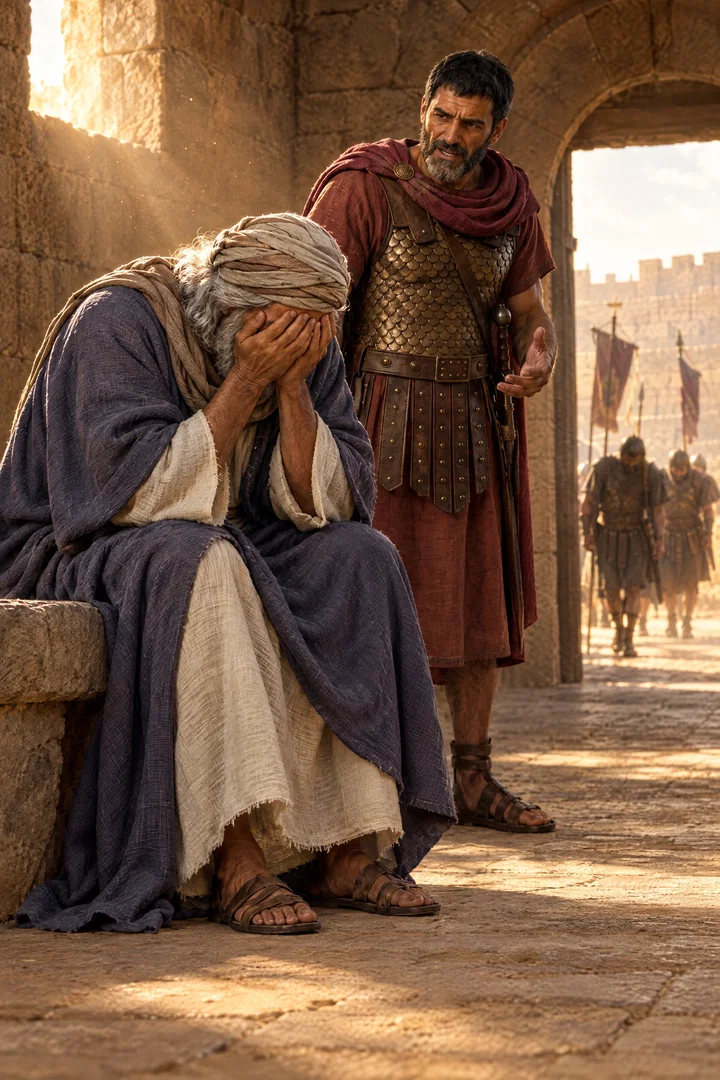
And the people gat them by stealth that day into the city, as people being ashamed steal away when they flee in battle.
Translations
And the people got them by stealth that day into the city, as people being ashamed steal away when they flee in battle.
King James Version, KJV Cambridge Paragraph Bible
And the people gat them by stealth that day into the city, as people being ashamed steal away when they flee in battle.
And the people withdrew by stealth that day into the city, as people being ashamed steal away when they flee in battle.
Revised Version, American Standard Version
And the people gat them by stealth that day into the city, as people that are ashamed steal away when they flee in battle.
And the people stealeth away, on that day, to go in to the city, as the people steal away, who are ashamed, in their fleeing in battle;
And the people stole away that day into the city, as people steal away when ashamed of fleeing in battle.
And the people stole away, on that day, to go into the city,—as people steal away who are put to shame, when they flee in battle.
Berean Standard Bible, Majority Standard Bible
So they returned to the city quietly that day, as people steal away in humiliation after fleeing a battle.
The people sneaked into the city that day, as people who are ashamed steal away when they flee in battle.
And the people made their way back to the town quietly and secretly, as those who are shamed go secretly when they go in flight from the war.
And the people went that day into the citie secretly, as people confounded hide them selues when they flee in battell.
Douay-Rheims (Challoner revision)
And the people shunned the going into the city that day as a people would do that hath turned their backs, and fled away from the battle.
Pictures
Cross-references
- 2 Samuel 18:6-8
So the people went out into the field against Israel: and the battle was in the wood of Ephraim;
The battle against Absalom’s forces leads into the people’s shameful return.
- 2 Samuel 18:33
And the king was much moved, and went up to the chamber over the gate, and wept: and as he went, thus he said, O my son Absalom, my son, my son Absalom! would God I had died for thee, O Absalom, my son, my son!
David’s lament for Absalom caused the people’s shameful, subdued return.
- 2 Samuel 15:1-12
And it came to pass after this, that Absalom prepared him chariots and horses, and fifty men to run before him.
Absalom’s rebellion is part of the family calamities linked to David’s retribution.
Commentary
Each commentary is drawn from primary sources: the writings of Ellen G. White and Adventist pioneers and periodicals. Each commentary is separate. Its own words are not a quotation; follow the references to read the source passages.
Ellen G. White
1 source
The troops came back into the capital that day hushed and furtive, slipping in by stealth instead of marching in as conquerors.PP 745.1–2 Their bearing was that of beaten men slinking from a rout, ashamed at having fled the field, though in fact they had carried the day.PP 745.1–2 No shout of triumph marked their return, only the quiet, downcast movement of soldiers who felt disgraced rather than victorious.PP 745.1–2 That gloom was cast over them by David's open lament for Absalom, whose death the king mourned aloud while his loyal men looked on.PP 745.1–2 His public grief turned the deliverance they had fought to secure into a day of mourning, so the joy of victory was swallowed up in sorrow for the rebel son.PP 745.1–2
Sources
Pioneers and periodicals
6 sources
The verse pictures the aftermath of Absalom's rebellion, defeat, and death, when David's loyal people slipped secretly and shamefacedly into the city like soldiers stealing away after fleeing a lost battle, while David himself lamented Absalom and made his return to Jerusalem after having fled from it during the war.ST May 6, 1913ST Mar 31, 1881RH Apr 26, 1870ST Apr 14, 1909 It belongs to the history of David's reign that tells of his lament over Absalom the petted idol of the kingdom, his return to Jerusalem after the rebellion, the difficulties he encountered, his troubles with Joab and in numbering the people, and the sad consequences of sons he could not control.ST May 6, 1913ST Apr 14, 1909
That history is the story of 2 Samuel 13 to 20, centering on Absalom the handsome, indulged and beautiful prince whose ambition was stirred by lavish and fulsome flattery poured out upon him.ST May 6, 1913ST Apr 29, 1908 It tells of his base conduct and rebellion, the treachery of Ahithophel, the cursing of Shimei, the fearful flight of the king and his affecting and pathetic journey that moved and touched the hearts of his old friends, the defeat of Absalom and the father's grief and sorrow over his wicked son's fate, along with David's further difficulties, yet with David's kindness to the house of Saul still evident.ST May 6, 1913ST Apr 29, 1908 The heavy disgrace and sorrow surrounding this moment are traced largely to the awful evil of David multiplying wives to himself, producing a large family of children by different mothers and wives in which idleness, luxury, and jealousy bred flawed and unenviable character, leaving sons such as Amnon and Absalom beyond his control.ST May 6, 1913ST Apr 29, 1908ST Apr 14, 1909
The shame and sorrow in the verse belong to the retribution and judgments that came upon David's later and subsequent history in fulfillment of Nathan's denunciation after David's wrong against and toward Uriah.ST Mar 31, 1881RH Apr 26, 1870RH Oct 12, 1869 The detailed faithfulness with which this history records such failures stamps the whole account with inspiration and shows that God does not hide the sins even of the greatest of kings.ST May 6, 1913 The great lesson is that no one can walk contrary to God's laws and not suffer, for even when God does not openly reprove, every transgression of divine law carries its inherent curse.ST Apr 29, 1908
Sources