2 Samuel 18:33
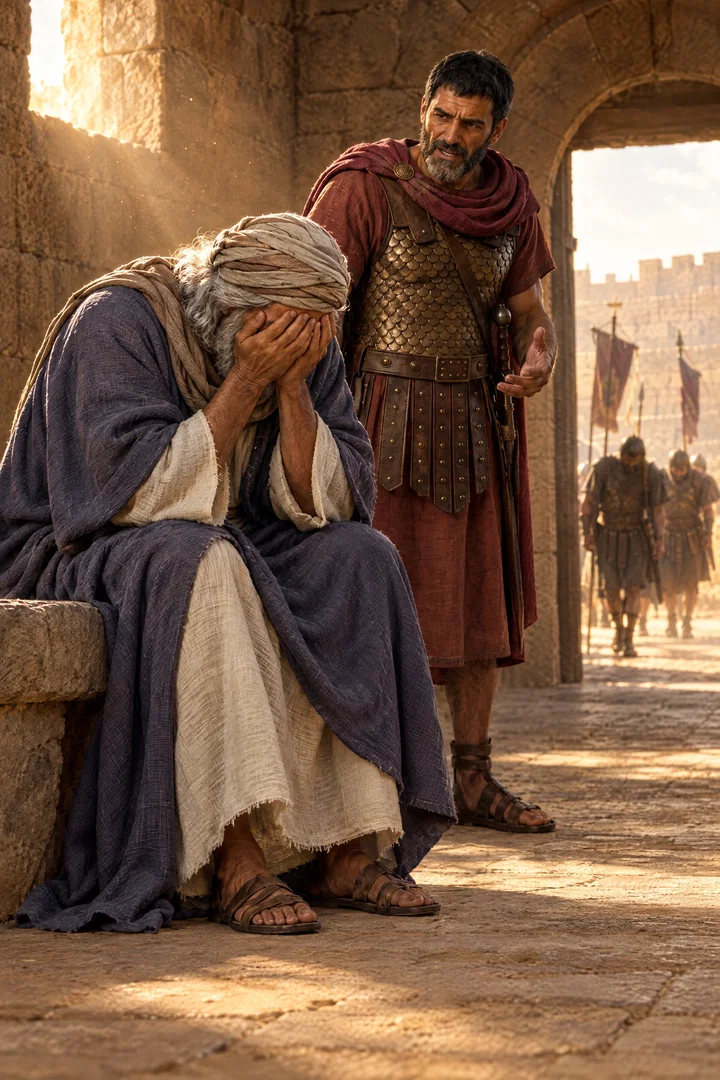
And the king was much moved, and went up to the chamber over the gate, and wept: and as he went, thus he said, O my son Absalom, my son, my son Absalom! would God I had died for thee, O Absalom, my son, my son!
Translations
And the king was much moved, and went up to the chamber over the gate, and wept: and as he went, thus he said, O my son Absalom, my son, my son Absalom! would God I had died for you, O Absalom, my son, my son!
King James Version, Revised Version
And the king was much moved, and went up to the chamber over the gate, and wept: and as he went, thus he said, O my son Absalom, my son, my son Absalom! would God I had died for thee, O Absalom, my son, my son!
And the king was much moved, and went up to the chamber over the gate, and wept: and as he went, thus he said, O my son Absalom, my son, my son Absalom: would God I had died for thee, O Absalom, my son, my son.
And the king was much moved, and went up to the chamber over the gate, and wept: and as he went, thus he said, O my son Absalom, my son, my son Absalom! O that I had died for thee, O Absalom, my son, my son!
And the king was much moved, and went up to the chamber over the gate, and wept: and as he went, thus he said, O my son Absalom, my son, my son Absalom! would I had died for thee, O Absalom, my son, my son!
And the king trembleth, and goeth up on the upper chamber of the gate, and weepeth, and thus he hath said in his going, 'My son! Absalom my son; my son Absalom; oh that I had died for thee, Absalom, my son, my son.'
And the king was much moved, and went up to the upper chamber of the gate, and wept; and as he went, he said thus: O my son Absalom, my son, my son Absalom! would God I had died in thy stead, O Absalom, my son, my son!
Then was the king deeply moved, and went up to the chamber over the gate, and wept,—and, thus, he said as he went—O my son Absolom, my son—my son—Absolom! could, I, but have died in thy stead, O Absolom, my son—my son!
The king was shaken and went up to the gate chamber and wept. And as he walked, he cried out, “ O my son Absalom! My son, my son Absalom! If only I had died instead of you, O Absalom, my son, my son!”
The king was shaken and went up to the chamber over the gate and wept. And as he walked, he cried out, “ O my son Absalom! My son, my son Absalom! If only I had died instead of you, O Absalom, my son, my son!”
The king was much moved, and went up to the room over the gate and wept. As he went, he said, “My son Absalom! My son, my son Absalom! I wish I had died instead of you, Absalom, my son, my son!”
Then the king was much moved, and went up into the room over the door, weeping, and saying, O my son Absalom, my son, my son Absalom! if only my life might have been given for yours, O Absalom, my son, my son!
And the King was mooued, and went vp to the chamber ouer the gate, and wept: and as he went, thus he said, O my sonne Absalom, my sonne, my sonne Absalom: woulde God I had dyed for thee, O Absalom, my sonne, my sonne.
Douay-Rheims (Challoner revision)
The king therefore being much moved, went up to the high chamber over the gate, and wept. And as he went he spoke in this manner: My son Absalom, Absalom my son: would to God that I might die for thee, Absalom my son, my son Absalom.
Pictures

Cross-references
- 2 Samuel 12:11-12
Thus saith the LORD, Behold, I will raise up evil against thee out of thine own house, and I will take thy wives before thine eyes, and give them unto thy neighbour, and he shall lie with thy wives in the sight of this sun.
The rebellion in David’s household fulfills the judgment announced after his sin.
- 2 Samuel 19:4
But the king covered his face, and the king cried with a loud voice, O my son Absalom, O Absalom, my son, my son!
David continues mourning Absalom with the same cry.
- 2 Samuel 15:1-14
And it came to pass after this, that Absalom prepared him chariots and horses, and fifty men to run before him.
Absalom’s rebellion culminates in the grief David expresses.
- 2 Samuel 13:1-22
And it came to pass after this, that Absalom the son of David had a fair sister, whose name was Tamar; and Amnon the son of David loved her.
Amnon and Tamar’s story forms part of David’s later family sorrow.
- 2 Samuel 12:23
But now he is dead, wherefore should I fast? can I bring him back again? I shall go to him, but he shall not return to me.
David accepts his infant son’s death with hope, contrasting with his grief for Absalom.
- 2 Samuel 11
And it came to pass, after the year was expired, at the time when kings go forth to battle, that David sent Joab, and his servants with him, and all Israel; and they destroyed the children of Ammon, and besieged Rabbah. But David tarried still at Jerusalem.
David’s wrong against Uriah precedes the family sorrows that followed.
- 2 Samuel 18:14-15
Then said Joab, I may not tarry thus with thee. And he took three darts in his hand, and thrust them through the heart of Absalom, while he was yet alive in the midst of the oak.
Recounts Absalom’s death, the cause of David’s lament.
- 2 Samuel 18:5
And the king commanded Joab and Abishai and Ittai, saying, Deal gently for my sake with the young man, even with Absalom. And all the people heard when the king gave all the captains charge concerning Absalom.
David had told his captains to spare Absalom.
- 2 Samuel 18:17
And they took Absalom, and cast him into a great pit in the wood, and laid a very great heap of stones upon him: and all Israel fled every one to his tent.
Records Absalom’s burial after the battle.
- 2 Samuel 18:29
And the king said, Is the young man Absalom safe? And Ahimaaz answered, When Joab sent the king’s servant, and me thy servant, I saw a great tumult, but I knew not what it was.
Ahimaaz reports seeing a great tumult but brings no clear message.
- 2 Samuel 16:21-22
And Ahithophel said unto Absalom, Go in unto thy father’s concubines, which he hath left to keep the house; and all Israel shall hear that thou art abhorred of thy father: then shall the hands of all that are with thee be strong.
Absalom’s public outrage against David requites David’s sin.
- Luke 19:41
And when he was come near, he beheld the city, and wept over it,
Christ wept over Jerusalem’s coming fate, echoing David’s grief for Absalom.
Commentary
Each commentary is drawn from primary sources: the writings of Ellen G. White and Adventist pioneers and periodicals. Each commentary is separate. Its own words are not a quotation; follow the references to read the source passages.
Ellen G. White
2 sources
David was deeply grieved when he learned that Absalom had been killed.PP 744.2–4PP 745.1–2 His repeated calling of Absalom his son expressed a father's anguish.PP 744.2–4 He wished that he himself had died in Absalom's place.PP 744.2–4PP 745.1–2 That wish showed the depth of his love and sorrow.PP 744.2–4 His public mourning turned the people's victory over the rebellion into sorrow, so the victorious soldiers entered the city ashamed and subdued.PP 745.1–2
Sources
Pioneers and periodicals
28 sources
The verse shows a king overwhelmed with grief, withdrawing alone to weep as he goes and crying out again and again over his son with the wish that he himself had died in his place.ST Jul 31, 1884ST Aug 13, 1896RH Nov 7, 1854 He mourns as a tender and forgiving father over a beloved but rebellious and wicked son, not as a king rejoicing that an enemy who sought his throne has been defeated.ST Aug 13, 1896ST Sep 10, 1896ST Nov 11, 1880RH Sep 30, 1909ST Jul 31, 1884 His sorrow belongs to the family calamities that followed his wrong against Uriah after Nathan's denunciation, showing judgment coming upon him for his great transgression.ST Mar 31, 1881RH Apr 26, 1870RH Oct 12, 1869 He felt his own sin, indulgence, and failure to discipline his family had helped bring the rebellion and death, with Absalom becoming an instrument of the punishment foretold.ST Jul 31, 1884ST Jul 31, 1884ST Jul 31, 1884ST Jul 31, 1884RH Jul 27, 1869 His anguish was made more bitter by knowing his son had acted wickedly and died impenitent without opportunity to repent, leaving no hope of reunion.ST Aug 13, 1896RH Jul 27, 1869ST Nov 11, 1889
David's Grief and Setting
The king was much moved when he learned Absalom was dead, and he went up to the chamber over the gate and wept as he went.ST Jul 31, 1884ST Aug 13, 1896ST Sep 10, 1896ST Nov 11, 1880 His repeated cry, O my son Absalom, my son, my son Absalom, with the wish that he himself had died in his son's place, expresses deep grief and a father's anguished love and lament for his lost child.ST Aug 13, 1896ST Sep 10, 1896ST Nov 11, 1880RH Sep 30, 1909 Though Absalom had rebelled against him, David mourned him as his son, as a beloved son, and as a rebellious and undeserving child, with a tender heart and forgiving spirit.ST Aug 13, 1896ST Nov 11, 1880RH Sep 30, 1909 He received the news as a grieving father, not simply as a king whose enemy had been defeated.RH Sep 30, 1909
The words would God I had died for thee mean dying in another person's place, that David's own life had been given instead of Absalom's.RH Nov 7, 1854 The verse belongs to David waiting for news of the battle, with his son's welfare the matter he most wanted the messengers to report.ST Nov 11, 1889 Cushi delivered the tidings of Absalom's death tactfully and with mourning effect, and the message moved the father to tears and mourning.ST Jul 18, 1916 Ahimaaz greatly outran Cushi but had no message, having only heard a great tumult he did not understand, so the king told him to stand aside, while Cushi received his tidings, bowed, and then ran with a definite message.ST Jul 18, 1916
Ahimaaz brought David the good news of victory but withheld the news of Absalom's death.ST Jul 31, 1884 David was overwhelmed with grief at Absalom's death even though his enemies had been scattered and his throne restored.ST Jul 31, 1884 He grieved deeply over Absalom although Absalom had sought to take his kingship from him, showing that he did not seek the destruction of those who personally persecuted him.RH Sep 30, 1909ST Feb 17, 1904
The verse is an example of pathos, touching sorrow spoken with great sublimity. It is an anguished lament and a dirge spoken from a broken heart, voicing the profound grief of the aged king of Israel over his lost and misguided son.ST Jul 31, 1884 His repeated cries and wish that he had died in Absalom's place express the depth of his love and the sublimity of his sorrow.ST Jul 31, 1884
Sin and Family Judgment
The weeping over Absalom belongs to the sorrow and family calamities of 2 Samuel 13-20 that followed the wrong against Uriah, showing the judgments that followed the great transgression after Nathan's denunciation.ST Mar 31, 1881RH Apr 26, 1870RH Oct 12, 1869 The grief is part of retribution coming upon David through his own family, for he received sorrow within his own family for the wrong he had done, since sin brings consequences of its own kind.ST Mar 31, 1881RH Apr 26, 1870 Those troubles revolve around Absalom the beautiful, whose ambitions were roused by fulsome flattery poured out upon a shrewd and handsome prince.ST Apr 29, 1908ST Apr 19, 1910 They include Absalom's base conduct, the treachery of Ahithophel, the cursing of Shimei, and the fear and flight of the king, together with jealousy and wickedness among the sons, a living account that stirs sympathy and regret.ST Apr 29, 1908ST Apr 19, 1910
Those troubles grew out of multiplying wives to himself, resulting in a large family of children by different wives in which idleness, luxury, and jealousy developed unenviable characters.ST Apr 29, 1908ST Apr 19, 1910 David recognized that his own sin had contributed to Absalom's death, and was moved by the sense that his own sins had brought about the rebellion.ST Jul 31, 1884ST Jul 31, 1884RH Jul 27, 1869 His bad example had helped bring the suffering, and his indulgence left him feeling partly responsible for Absalom's course, though he had given orders that Absalom be spared and had often spared deserved punishment.ST Jul 31, 1884ST Jul 31, 1884ST Nov 11, 1889 Absalom had thus become an instrument of the punishment foretold by Nathan.RH Jul 27, 1869ST Nov 11, 1889
He had failed to discipline his family, and unchecked passion and ambition in his children brought him sorrow.ST Jul 31, 1884ST Jul 31, 1884 Absalom had been unsafe for years when allowed to follow his passions, denied his father's care, and exposed to temptation without protection.ST Jul 31, 1884ST Jul 31, 1884 A father's anxiety after the fact cannot save a son when duty was neglected, and parental tenderness can blind a father to his obligations as king.ST Jul 31, 1884ST Jul 31, 1884 No one can walk contrary to God's laws without suffering, for in every transgression lies the inherent curse even when God does not openly reprove and may seem to wink at blindness.ST Apr 29, 1908 Sin, though pardoned, can set consequences in motion that cause harm years later.ST Apr 29, 1908ST Jul 31, 1884
The anguish was sharpened by knowing Absalom had acted wickedly and remained unrepentant, facing the terrible consequence of his course which nothing could avert while defying God's law and dying impenitent.ST Aug 13, 1896RH Jul 27, 1869ST Nov 11, 1889 The cry to have died in his place expresses the wish that his own death might have left Absalom able to repent and find favor with God, joined with concern for Absalom's lost condition.ST Aug 13, 1896RH Jul 27, 1869 This grief was greater than for Bathsheba's son, because there was hope of reunion with that child, while Absalom's end was without hope.ST Aug 13, 1896 The tears were made more bitter because David saw his own sins stereotyped and reproduced in his sensual, licentious offspring.RH May 24, 1864
Fatherly Love and Lessons
The cry over Absalom is a father's anguished love for a wayward son who had rebelled against him and brought trouble upon him and the kingdom.ST Aug 13, 1896ST Sep 10, 1896RH Sep 30, 1909RH Jul 27, 1869 The repeated naming of the son and the wish to have died in his place lay bare a tender heart and forgiving spirit toward an undeserving and rebellious child, mourned still as son and beloved son even though he became a traitor and died in rebellion.ST Sep 10, 1896ST Nov 11, 1880RH Sep 30, 1909RH Jul 27, 1869ST Mar 18, 1897 That love does not set aside correction, for firm authority and discipline can themselves express parental affection, while affection that honors what it ought to condemn is inexcusable.ST Jul 31, 1884 Genuine natural affection therefore belongs together with justice, and unchecked passion and ambition left without discipline bring sorrow upon the house.ST Jul 31, 1884
The mourning also displays patience and meekness under wrong suffered from his own son.RH Oct 24, 1854 That son had sat in the gate and with fair speeches and enticing words stolen the hearts of the people in seeking human honor, yet the father meekly yielded the throne to the usurper without defending his course or character and without revenge.RH Oct 24, 1854 When just retribution fell upon the rebel, there was no joining in the song of triumph, but clothing in sackcloth and weeping, a forbearance that suffers in patience and leaves the cause to God, who raises to honor and turns hostile counsel such as Ahithophel's into foolishness.RH Oct 24, 1854ST Feb 17, 1904 In this way grief over one who sought to take the kingship shows no desire for the destruction of personal persecutors.ST Feb 17, 1904
The wish to have died instead expresses the pain of loving one whose own choices bring ruin, the anguish of a parent longing to spare a child from suffering and to suffer in the child's stead.ST Mar 18, 1897ST Jun 5, 1884 The same anguish appears in a father's wish that his daughter had died so he could mourn her openly rather than bear shame and fear over her ruined reputation.ST Jun 5, 1884 Read in the home at family prayer with the Bible opened, followed by touching and fervent prayer, this picture of a broken-hearted father mourning a wicked and lost child can convict sinners and lead to conversion, bringing penitents to the church altar.RH Mar 31, 1904
The coming of the runners teaches that the race is not always to the swift.ST Jul 18, 1916 One runner greatly outran the other yet had no message, having heard only a great tumult he did not understand, so he was told to stand aside, while the other received his tidings, bowed, and ran with a definite message that mightily stirred the mourning father.ST Jul 18, 1916 The lesson is to run with patience, to tarry with God in secret prayer and humility for power before running for God, to speak to God for the people before speaking to the people for God, so as both to go where God wills and to stay where God wills.ST Jul 18, 1916 Running without a truthful message ready, able to report only excitement and tumult, is zeal without knowledge, and zeal ought to carry truth rather than mere excitement.ST Jun 10, 1886 So strong is this language of a father's yearning that it serves as the measure of pity and heartfelt concern shown toward Elder Hull.RH Jan 5, 1864
Sources