Acts 13:7
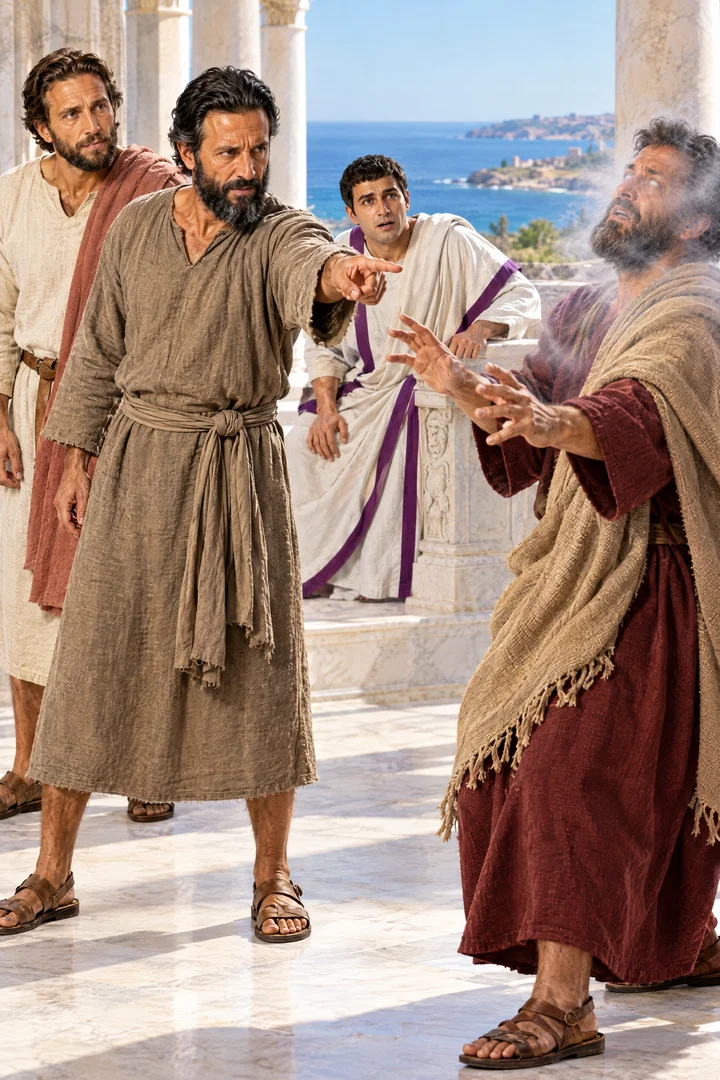
Which was with the deputy of the country, Sergius Paulus, a prudent man; who called for Barnabas and Saul, and desired to hear the word of God.
Translations
American King James Version, King James Version
Which was with the deputy of the country, Sergius Paulus, a prudent man; who called for Barnabas and Saul, and desired to hear the word of God.
which was with the deputy of the country, Sergius Paulus, a prudent man; who called for Barnabas and Saul, and desired to hear the word of God.
Who was with the deputy of the country, Sergius Paulus, a prudent man; who called for Barnabas and Saul, and desired to hear the word of God.
which was with the proconsul, Sergius Paulus, a man of understanding. The same called unto him Barnabas and Saul, and sought to hear the word of God.
who was with the proconsul, Sergius Paulus, a man of understanding. The same called unto him Barnabas and Saul, and sought to hear the word of God.
who was with the proconsul Sergius Paulus, an intelligent man; this one having called for Barnabas and Saul, did desire to hear the word of God,
who was with the proconsul Sergius Paulus, an intelligent man. He, having called Barnabas and Saul to [ him], desired to hear the word of God.
Who was with the proconsul, Sergius Paulus, an intelligent man. The same, calling for Barnabas and Saul, sought to hear the word of God.
Berean Standard Bible, Majority Standard Bible
an attendant of the proconsul, Sergius Paulus. The proconsul, a man of intelligence, summoned Barnabas and Saul because he wanted to hear the word of God.
who was with the proconsul, Sergius Paulus, a man of understanding. This man summoned Barnabas and Saul, and sought to hear the word of God.
Who was with the ruler, Sergius Paulus, an able man. This man sent for Barnabas and Saul, desiring to have knowledge of the word of God.
Which was with the Deputie Sergius Paulus, a prudent man. He called vnto him Barnabas and Saul, and desired to heare the woorde of God.
Douay-Rheims (Challoner revision)
Who was with the proconsul Sergius Paulus, a prudent man. He sending for Barnabas and Saul, desired to hear the word of God.
Pictures
Cross-references
- Acts 13:12
Then the deputy, when he saw what was done, believed, being astonished at the doctrine of the Lord.
The deputy believes after seeing the sign and hearing the apostles’ teaching.
- Acts 13:2-3
As they ministered to the Lord, and fasted, the Holy Ghost said, Separate me Barnabas and Saul for the work whereunto I have called them.
The church fasts and prays before the Holy Ghost sends Barnabas and Saul on missionary work.
- Acts 13:13
Now when Paul and his company loosed from Paphos, they came to Perga in Pamphylia: and John departing from them returned to Jerusalem.
same journey from Cyprus to Perga
- Acts 4:36
And Joses, who by the apostles was surnamed Barnabas, ( which is, being interpreted, The son of consolation,) a Levite, and of the country of Cyprus,
Barnabas, a Cypriot, gave the proceeds of his land to God’s cause.
- Acts 15:39
And the contention was so sharp between them, that they departed asunder one from the other: and so Barnabas took Mark, and sailed unto Cyprus;
Barnabas and Mark returned to Cyprus after separating from Paul.
- Acts 11:19
Now they which were scattered abroad upon the persecution that arose about Stephen travelled as far as Phenice, and Cyprus, and Antioch, preaching the word to none but unto the Jews only.
The gospel was preached in Cyprus.
Commentary
Each commentary is drawn from primary sources: the writings of Ellen G. White and Adventist pioneers and periodicals. Each commentary is separate. Its own words are not a quotation; follow the references to read the source passages.
Ellen G. White
13 sources
Barnabas and Saul took Mark with them to Seleucia and sailed to Cyprus, preaching in the synagogues at Salamis and then going through the isle to Paphos.SLP 44.2 At Paphos was Sergius Paulus, the Roman deputy of Cyprus, a prudent man of repute and influence.ST Jun 12, 1879RH May 18, 19113SP 349.3 He sent for Barnabas and Saul because he desired to hear the word of God and be instructed in the gospel message.ST Jun 12, 1879RH May 18, 19113SP 349.3 With him was Bar-Jesus called Elymas, a Jewish sorcerer and false prophet under Satan's control, who withstood the apostles as the magicians withstood Moses and Aaron, seeking by deception to turn the deputy from the faith and keep the gospel from a man of influence whom Satan specially sought to hinder from embracing Christ.SLP 44.2ST Apr 23, 18858RED 7.2–8.33SP 350.1SLP 44.3 When Paul rebuked Elymas and he was struck blind for a season, the deputy was convinced of the truth, believed and embraced the gospel, being astonished at the doctrine of the Lord.ST Apr 23, 18858RED 7.2–8.3
Setting and Summons
Barnabas and Saul took Mark with them, went down to Seleucia and sailed to Cyprus, preached in the synagogues of the Jews at Salamis, and then went through the isle to Paphos.SLP 44.2 Sergius Paulus was the Roman deputy of Cyprus, stationed at Paphos.ST Jun 12, 1879RH May 18, 19113SP 349.3ST Jun 12, 1879AA 166.3 He was a prudent man of repute and influence.ST Jun 12, 1879RH May 18, 19113SP 349.3ST Jun 12, 1879ST Apr 23, 1885
He called for and sent for Barnabas and Saul because he desired to hear the word of God and be instructed in the truth and learn the gospel message.ST Jun 12, 1879RH May 18, 19113SP 349.3ST Jun 12, 1879SLP 44.2
With him was Bar-Jesus, also called Elymas, a Jewish sorcerer and false prophet and servant under Satan's control.SLP 44.2ST Apr 23, 18858RED 7.2–8.33SP 350.1AA 167.1 Elymas possessed the spirit of divination, and because he welcomed Satanic influence in order to obtain supernatural power he had no conflict with the demons, making him an exception to the usual condition of great suffering among those possessed with devils.GC88 516.1
Opposition and Belief
Sergius Paulus desired to learn the truth, and because he was a man of repute and influence who could be of great service to the cause if he embraced the faith of Christ, he became a special target.ST Jun 12, 1879RH May 18, 19113SP 349.38RED 7.2–8.33SP 350.1 Satan was on hand to thwart the purpose of God and prevent this influential man from embracing the faith of Christ.8RED 7.2–8.33SP 350.1 He worked through his servant Elymas to obstruct the apostles and keep the gospel from reaching a person of influence.ST Jun 12, 1879ST Jun 12, 18798RED 7.2–8.3 While the deputy listened to Barnabas and Saul, Elymas opposed them and tried to turn him away from the faith, to hinder their work.ST Jun 12, 1879RH May 18, 19113SP 349.3ST Jun 12, 1879ST Apr 23, 1885
Elymas sought by false reports and specious deceptions and deceptive arguments to turn the deputy against the apostles and destroy their influence over him.8RED 7.2–8.33SP 350.1SLP 44.3 He thereby greatly hindered their work.3SP 350.1SLP 44.3 As the magicians in Pharaoh's court withstood Moses and Aaron, so Elymas withstood the apostles.3SP 350.1 Thus the fallen foe ever works in a special manner to prevent persons of influence who could be of great service to the cause from embracing the truth of God.3SP 350.1
After Paul rebuked Elymas and he was struck blind for a season, the deputy was convinced of the truth of the doctrine taught by the apostles.ST Apr 23, 18858RED 7.2–8.3 He believed, being astonished at the doctrine of the Lord, and embraced the gospel of Christ.ST Apr 23, 18858RED 7.2–8.3
Sources
Pioneers and periodicals
44 sources
Sergius Paulus was the Roman deputy of Cyprus at Paphos, a prudent and influential man who sent for Barnabas and Saul because he wanted to hear the word of God from them.ST Jun 12, 1879RH May 18, 1911ST Jun 17, 1897 With him was Bar-Jesus called Elymas, a Jewish sorcerer and false prophet who had gained a place with the deputy and opposed the apostles to turn him away from the faith.ST Jun 12, 1879RH May 18, 1911ST Jun 12, 1879ST Apr 15, 1897ST Apr 15, 1897 Paul rebuked Elymas and a misty blindness fell on him for a season, which astonished Sergius Paulus and convinced him that the apostles' teaching was from God.ST Apr 23, 1885ST May 7, 1902ST Nov 21, 1892 He embraced the gospel and believed, the first ruler to embrace the doctrine of Christ.ST Apr 23, 1885ST Dec 19, 1878RH Sep 2, 1902 The visit belongs to the sending of the first foreign missionaries, when the Holy Spirit called Barnabas and Saul and the church at Antioch set them apart to carry the gospel to the Gentiles.RH Mar 24, 1904ST Mar 20, 1893ST Jan 9, 1912
Persons, Place, and Terms
Sergius Paulus was the Roman deputy, proconsul, or governor of the country, of Cyprus and the island, stationed at Paphos.ST Jun 12, 1879RH May 18, 1911ST Jun 17, 1897ST Apr 15, 1897ST Apr 15, 1897 That Paphos station was on the extreme western end of Cyprus.ST May 7, 1902 He is described as a prudent man, a man of understanding, and an influential man.ST Jun 12, 1879RH May 18, 1911ST Jun 12, 1879ST May 7, 1902ST May 7, 1902
The title proconsul means one who acts in the place of a consul, the Greek prefix carrying the sense of anti as in the place of, and denotes a governor appointed by the state.RH Oct 28, 1902ST Apr 15, 1897 With Sergius Paulus was Bar-Jesus, also called Elymas, a Jewish false prophet and sorcerer.ST Apr 23, 1885ST Apr 15, 1897ST Apr 15, 1897ST Mar 6, 1884 He was a knowing and self-assertive man who had gained a place with the deputy by false predictions, and he stood as one of his train, a friend or associate holding an important position of influence with him.ST Apr 15, 1897ST May 7, 1902ST Mar 6, 1884ST Apr 15, 1897
That place with the governor was honorable but tested character, because in the east the governor's friend was believed able to influence his judgment, so every suppliant, litigant, and criminal tried to propitiate or bribe him.ST Apr 15, 1897 Elymas stood where he might have done much good, but the glitter of gold was brighter to him than the purity of a spotless character.ST Apr 15, 1897 The setting follows proclaiming the Word in Salamis and travel through the whole island of Cyprus to Paphos.ST Apr 15, 1897 John Mark was present with Paul and Barnabas to minister to their temporal needs, and the event belongs to the beginning of Paul's travels and places of labor recorded in order in Acts 13, before landing at Perga to penetrate the interior and then traveling north on foot to Antioch in Pisidia.ST Mar 10, 1898ST May 14, 1902
Seeking and Believing
Sergius Paulus himself sent for and called for Barnabas and Saul, having heard of their presence on Cyprus, because he desired and sought to hear the word of God from them.ST Jun 12, 1879RH May 18, 1911ST Jun 17, 1897ST Apr 15, 1897ST May 7, 1902 He was the prudent Roman deputy, proconsul and governor at Paphos, a man of understanding and influence, and his summons came after they had proclaimed the word in Salamis and gone through the whole island to Paphos.ST Jun 12, 1879ST Jun 17, 1897ST Apr 15, 1897ST May 7, 1902ST Apr 15, 1897 His desire to learn the truth made his call the occasion for opposition aimed at keeping him from the faith.ST Jun 12, 1879RH May 18, 1911
He favorably received their preaching, and his place as Roman governor and civil leader gave opportunity for the gospel to be preached to a ruler.ST Dec 20, 1905RH Jun 15, 1911ST Nov 18, 1897 His example shows a ruler and a man of influence seeking to listen to the gospel, who if converted could serve the cause of God.RH May 18, 1911ST Dec 20, 1905RH Jun 15, 1911 After witnessing the temporary, misty blindness that fell upon the sorcerer for a season, he was greatly astonished at the power accompanying the Lord's doctrine.ST Apr 23, 1885ST May 7, 1902ST Nov 21, 1892 Convinced of the apostles' teaching and seeing their words sealed as from God in heaven, he could do no less than believe.ST Apr 23, 1885ST May 7, 1902
He embraced the gospel of Christ and joined himself to those who chose the Lord Jesus for their portion.ST Apr 23, 1885ST May 7, 1902 He became at last a true believer, the first ruler to embrace the doctrine of Christ.ST Apr 23, 1885ST Dec 19, 1878RH Sep 2, 1902ST Jul 16, 1902 His calling for the missionaries because he desired to hear the word, followed by believing, gives the pattern of visiting one who desires to see the missionary and hear the teaching, leading to belief and baptism.RH Sep 2, 1902 That conversion of Sergius Paulus was the sole object of the Spirit in leading the apostles across Cyprus to Paphos.ST May 7, 1902
Opposition and Divine Judgment
Elymas withstood the apostles in the deputy's presence and resisted the truth, laboring by deception to turn Sergius Paulus away from the faith.ST Jun 12, 1879RH May 18, 1911ST Jun 12, 1879ST Jul 17, 1879RH Dec 3, 1857 Because the deputy was a prudent man of influence who had sent for Barnabas and Saul from a desire to hear the word of God, his interest made him a target for obstruction lest the gospel reach a person of influence.ST Jun 12, 1879RH May 18, 1911ST Jun 12, 1879ST May 7, 1902 Bar-Jesus, a knowing and self-assertive sorcerer who had gained his place with the deputy by false predictions, opposed them for that reason, scenting that knowledge of the Lord's word would end the deputy's use for his services.ST May 7, 1902
The encounter reveals Satan attempting to attach his work to God's work and to hitch his work onto it, working in opposition through Elymas in the setting of the deputy's desire to hear God's word.ST Dec 20, 1899ST Apr 21, 1898 In that opposition Elymas acted as the one whom Paul called a child of the devil.ST Apr 21, 1898
Paul's rebuke brought a misty blindness upon the sorcerer for a season, exposing his folly and sealing the apostles' words as from God in heaven.ST May 7, 1902RH Jan 26, 1869RH Jan 8, 1861 Saul was then filled with divine power when he struck Elymas blind for a time, after the Holy Spirit had directed the church at Antioch in fasting and prayer to set apart Barnabas and Saul for gospel work.ST Jan 9, 1912 The stroke shows Christ's presence with the church in judgment when Elymas tried to mislead and turn the Roman deputy away from the faith.
Elymas stands as a deliberate enemy who seeks to hinder others from receiving the word of God.RH Jan 26, 1869 Sorcerers work to lead people away from faith and are enemies of righteousness, and Elymas is numbered among impostors claiming miraculous powers.RH Dec 3, 1857ST Jan 15, 1885 Paul's rebuke of him applies to sorcerers and their co-workers generally.ST Jul 17, 1879
False teachers who pervert the Scriptures are one reason men are ignorant of the truth.RH Mar 19, 1857
Missionary Sending and Preaching
The sending behind the meeting at Paphos began when the Holy Spirit called Barnabas and Saul to their work, and the church at Antioch, while fasting and praying, set them apart and sent them after prayer and fasting.RH Mar 24, 1904ST Jan 9, 1912ST Apr 1, 1875 This was the ordination of the first two foreign missionaries, and, after about sixteen years of growth, the sending of the church's first missionaries to the Gentiles to labor among different peoples.ST Mar 20, 1893ST Apr 15, 1897 Saul was then filled with divine power and struck Elymas the sorcerer with blindness for a time.ST Jan 9, 1912 Those acts of guidance in directing Paul and Barnabas to their work and of reproof in exposing and rebuking Elymas served the ministry without adding to the Scriptures.ST Apr 1, 1875
Barnabas and Saul carried the gospel to the nations, preaching the word of God to Sergius Paulus who desired and sought to hear it, in fulfillment of the command to teach all nations.ST Jun 18, 1902 The journey from Antioch into Asia Minor and onward toward Europe shows Paul going beyond the Christian community to seek people who had not received the gospel.ST Apr 10, 1884 What Paul preached was the word of the Scriptures, showing that the apostles and inspired teachers depended upon and taught the word, the Scriptures, and did not carry the faith without the aid of the Scriptures.ST Apr 16, 1896 To the inquiring official at Paphos who summoned Barnabas and Saul because he wanted to hear the word of God, Paul adapted his approach to the occasion.
God uses human agents to bring people to hear His word, as seen when Sergius Paulus, a prudent official, called for Barnabas and Saul because he wanted to hear it.ST Sep 30, 1908 Their going to Sergius Paulus when he called for them, a Roman governor who at last became a true believer, gives the pattern for going to visit a person who desires to see the missionary and hear the teaching, leading to belief and baptism.RH Sep 2, 1902 On this first journey among the Gentiles Paul preached the gospel in the synagogues on the Sabbath to Jews with Gentiles also present.ST Jan 30, 1896 When the Gentiles asked for a meeting expressly for themselves he appointed no special day but met with them the next Sabbath, so the seventh-day Sabbath is regularly introduced as the meeting day for Gentile believers, laying the foundation for the great Gentile work that followed, with no mention of any other day.ST Jan 30, 1896
The same chapter records Paul's labors at Antioch in Pisidia in the west part of Asia Minor called Lud or Lydia, where nearly the whole city came out one Sabbath to hear Paul preach.ST Dec 3, 1896 That sermon in Antioch gave the listeners a good opportunity to learn of God and to gain a knowledge of His fame and character as well as of the power of the resurrection.ST Dec 3, 1896 With the seven churches and other advantages in their midst, the people of Lud had a most glorious opportunity to hear of God in the days of the first churches, so they cannot now be counted as those who have never heard of God.ST Dec 3, 1896
Time, Prophecy, and Names
The visit to Sergius Paulus marked the end of the seventieth week, dated to A.D. 45.RH Jan 10, 1854 It took place while Claudius Caesar was ruling in Rome and Cuspius was governor of Judea.ST Apr 15, 1897 It is to be followed on the map, with Saul's conversion in Acts 9:1-30 and Galatians 1:13-24 as background.ST Apr 15, 1897
The interview in Cyprus coincides with the change in Acts from calling him Saul to calling him Paul.ST Mar 29, 1883 Saul and Paul were most probably both names he had from childhood, Saul being his Hebrew name and Paul the Roman name by which he was known among Gentiles and which he used in his letters.ST Mar 29, 1883 The name Paulus itself is Roman, not Greek, and may reflect the family's Roman connections and inherited citizenship.ST Mar 29, 1883 By the other account, after the notable conversion of Sergius Paulus Saul took the new name Paul, meaning little, and from that time on is known by his Roman name of Paul, illustrating the New Testament practice of giving new titles when they were needed.ST Apr 15, 1897ST Jul 16, 1902
Sources