Acts 17:34
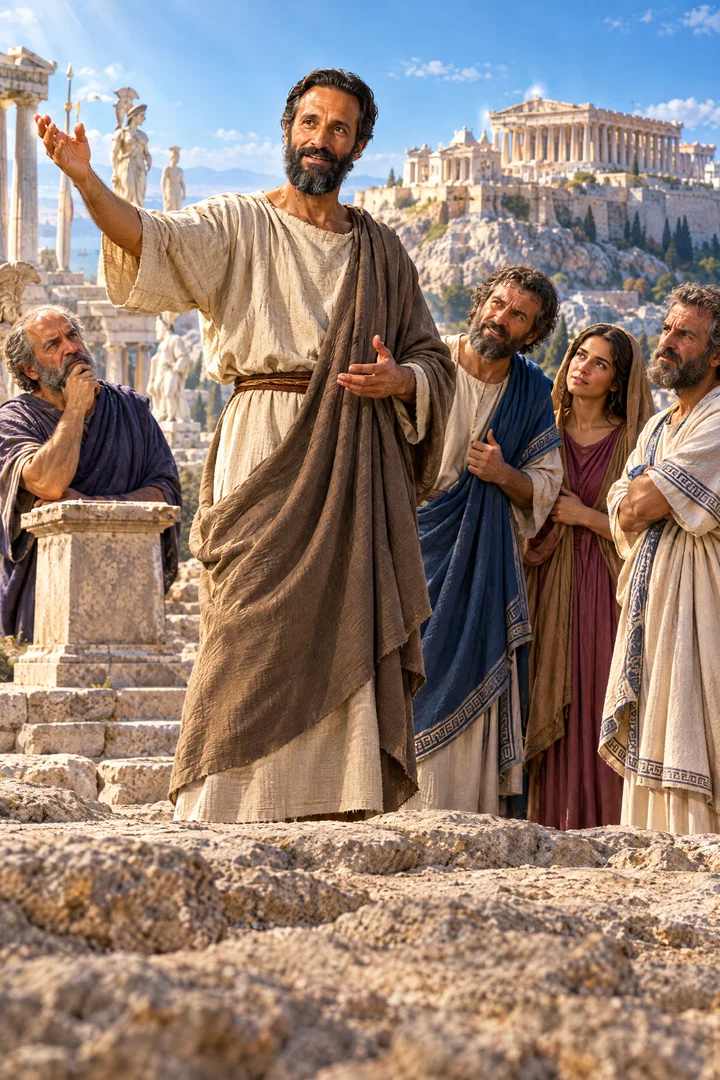
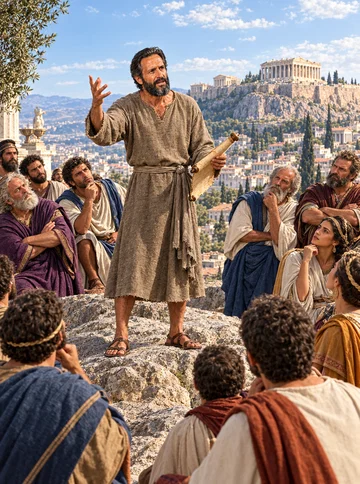
Howbeit certain men clave unto him, and believed: among the which was Dionysius the Areopagite, and a woman named Damaris, and others with them.
Translations
However, certain men joined to him, and believed: among the which was Dionysius the Areopagite, and a woman named Damaris, and others with them.
King James Version, KJV Cambridge Paragraph Bible
Howbeit certain men clave unto him, and believed: among the which was Dionysius the Areopagite, and a woman named Damaris, and others with them.
But certain men adhered to him, and believed: among whom was Dionysius the Areopagite, and a woman named Damaris, and others with them.
Revised Version, American Standard Version
But certain men clave unto him, and believed: among whom also was Dionysius the Areopagite, and a woman named Damaris, and others with them.
and certain men having cleaved to him, did believe, among whom [is] also Dionysius the Areopagite, and a woman, by name Damaris, and others with them.
But some men joining themselves to him believed; among whom also was Dionysius the Areopagite, and a woman by name Damaris, and others with them.
But, certain persons, joining themselves unto him, believed; among whom were even Dionysius the Mars-hill judge, and a woman by name Damaris, and others with them.
Berean Standard Bible, Majority Standard Bible
But some joined him and believed, including Dionysius the Areopagite, a woman named Damaris, and others who were with them.
But certain men joined with him and believed, including Dionysius the Areopagite, and a woman named Damaris, and others with them.
But some men gave him their support: among whom was Dionysius the Areopagite, and a woman named Damaris, and others with them.
Howbeit certaine men claue vnto Paul, and beleeued: among whome was also Denys Areopagita, and a woman named Damaris, and other with them.
Douay-Rheims (Challoner revision)
But certain men adhering to him, did believe; among whom was also Dionysius, the Areopagite, and a woman named Damaris, and others with them.
Pictures
Cross-references
- Acts 17:23
For as I passed by, and beheld your devotions, I found an altar with this inscription, TO THE UNKNOWN GOD. Whom therefore ye ignorantly worship, him declare I unto you.
Paul points to Athens’ altar to an unknown God.
- Acts 17:18
Then certain philosophers of the Epicureans, and of the Stoicks, encountered him. And some said, What will this babbler say? other some, He seemeth to be a setter forth of strange gods: because he preached unto them Jesus, and the resurrection.
Paul preached Jesus and the resurrection, and some Athenians believed.
- Acts 18:1
After these things Paul departed from Athens, and came to Corinth;
Paul went from Athens to Corinth after his Athenian effort.
- Acts 17:15-16
And they that conducted Paul brought him unto Athens: and receiving a commandment unto Silas and Timotheus for to come to him with all speed, they departed.
Paul arrives in Athens and waits there before some Athenians believe.
- 1 Thessalonians 3
Wherefore when we could no longer forbear, we thought it good to be left at Athens alone;
Acts 17 gives background to the epistles.
Commentary
Each commentary is drawn from primary sources: the writings of Ellen G. White and Adventist pioneers and periodicals. Each commentary is separate. Its own words are not a quotation; follow the references to read the source passages.
Ellen G. White
14 sources
Acts 17:34 closes Paul's public work in Greece with his preaching to the philosophers and learned men in the very heart of pagan Athens.AA 231.1–232.2RH Dec 21, 1911Ms 114, 1898, par. 17–19 His labor there was not wholly in vain but gained a measure of success, as certain men believed and joined themselves fully to the believers, including Dionysius the Areopagite, one of the most prominent citizens of Athens, and Damaris, and others with them.SLP 96.3–97.1AA 240.2–241.18RED 59.1 Yet only a few received the gospel, so the effort bore little fruit and left Paul disappointed in the success he had hoped for.ST Sep 22, 1914Ms 114, 1898, par. 17–196T 141.3 This happened because the Athenians cherished pride of intellect and counted the gospel foolishness, showing that human wisdom and eloquence cannot convict and convert sinners without divine wisdom and power from a higher source.Ms 114, 1898, par. 17–196T 141.3 The disappointing outcome led Paul to preach in Corinth in plain simplicity, determining to know nothing but Jesus Christ and Him crucified rather than relying on worldly wisdom and display of ability.SLP 120.1–29MR 69.38RED 67.1–2
Context and Result at Athens
This closing line ends the record of public labor at Berea and in Greece, centered on the preaching at Athens.AA 231.1–232.2RH Dec 21, 1911SLP 304.1–2 The audience there was the philosophers, the great and learned men, the sages, and the art-worshipers in the very heart of a pagan city.Ms 114, 1898, par. 17–19AA 462.1–2SLP 304.1–2 There faith in Christ was proclaimed with power and with winning power, with noble firmness before the sages of Greece.RH Dec 21, 1911AA 462.1–2 In his accustomed oratorical style and intellectual ability, false philosophy was met with true philosophy, eloquence with eloquence, logic with logic, and oratory with oratory.Ms 114, 1898, par. 17–199MR 69.3
By knowledge and eloquence the arguments of proud philosophy were silenced, and the hearers were astonished, as by one fitted to speak before kings and scholars.ST Sep 22, 1914RH Dec 21, 1911Ms 114, 1898, par. 17–19AA 462.1–2 Signs and miracles gave unmistakable evidence of the divine character of the message.AA 462.1–2 The labor there was not wholly in vain or fruitless, but gained a measure of Christian victory and success in gaining converts.SLP 96.3–97.1AA 240.2–241.18RED 59.1 Certain men and several people believed, became Christians, joined him, and united themselves fully with the believers.SLP 96.3–97.1AA 240.2–241.18RED 59.1SLP 291.1–2
Among them was Dionysius the Areopagite, one of the most prominent citizens of Athens, and a woman named Damaris, and others with them.SLP 96.3–97.1AA 240.2–241.1SLP 291.1–2 Their conversion was a victory for Christianity gained in the very heart of paganism.AA 240.2–241.18RED 59.1 Yet only a few people accepted the gospel, so the effort bore little fruit and fell short of the success hoped for, leaving him disappointed.ST Sep 22, 1914Ms 114, 1898, par. 17–19SLP 120.1–28RED 67.1–2
Lessons for Gospel Work
Comparatively few in Athens received the gospel because the people cherished pride of intellect and worldly wisdom and counted the gospel of Christ as foolishness.6T 141.3 At Athens Paul had preached to the great and learned men in his accustomed oratorical style, using his intellectual acquirements to meet false philosophy with true philosophy, eloquence with eloquence, and logic with logic.Ms 114, 1898, par. 17–19 Though he was fitted to speak before kings and scholars, he failed to meet with the success he had hoped for, with only a few believing.Ms 114, 1898, par. 17–19
The meager result taught that human wisdom, even that of learned men, cannot convict and convert sinners, and that something above the wisdom of the world must come into the work.Ms 114, 1898, par. 17–19 Workers need wisdom that is divine and power from a higher source, with the Spirit sanctifying every intellectual development.Ms 114, 1898, par. 17–19 They must feed on the flesh and blood of the Son of God as the mystery of godliness and eternal life.Ms 114, 1898, par. 17–19
The disappointing outcome at Athens led Paul to take a different approach in Corinth, preaching Christ in plain and deliberate simplicity and focusing on Christ rather than relying on worldly wisdom and eloquence.SLP 120.1–28RED 67.1–2 There he no longer met eloquence with eloquence, logic with logic, and oratory with oratory, laying aside the display of ability and smartness that had had so little effect.SLP 120.1–29MR 69.3 He determined to know nothing but Jesus Christ and Him crucified, because in this short lifetime there is no time for anything else.SLP 120.1–29MR 69.38RED 67.1–2
Sources
Pioneers and periodicals
41 sources
The verse records the immediate outcome of Paul's first preaching of the gospel in Athens that certain hearers joined him and believed, among them Dionysius the Areopagite and a woman named Damaris, with others besides them.ST Jan 21, 1903ST Jan 27, 1898ST Feb 3, 1898 It belongs to his address on Mars Hill to Epicureans, Stoics and other philosophers, where he declared the ignorantly worshiped Unknown God as the Creator who gives life to all and commands repentance toward the coming judgment by the risen Christ.ST Jun 9, 1898ST Jan 27, 1898RH Feb 27, 1908 Dionysius was a prominent citizen and member of the Areopagus who became an illustrious convert.ST May 21, 1885RH Dec 19, 1907RH Feb 26, 1861 The hearers were divided, for some mocked when they heard of the resurrection of the dead and others postponed hearing more, because the resurrection was the testing truth that challenged philosophical teaching.ST Jul 8, 1897RH Mar 13, 1879ST Nov 13, 1879RH Jul 13, 1869 Paul's reasoning silenced and astonished them, yet the effort bore little fruit with only a few accepting the gospel and no church in Athens recorded as established.ST Sep 22, 1914RH May 19, 1904RH Oct 3, 1907
Athens Visit and Sermon
Acts 17:34 belongs to Paul's first preaching of the gospel in Athens, believed to have taken place around A.D. 52 when Paul was alone.ST Jul 8, 1897 He had spoken at Mars' Hill after his attendants had returned to Berea, about twenty years after Christ's death.ST Apr 19, 1877 The verse is part of the experience at Athens within the work in Acts 17 through 20 at Thessalonica, Berea, Athens, Corinth, Ephesus, Troas, and the farewell to the Ephesian elders, in which God worked wonderfully with the word triumphing despite persecution.ST Jul 7, 1909 The account of the visit and preaching is a record of events rather than a precept re-affirming the second commandment.ST Apr 19, 1877
On Mars Hill, the Areopagus, Paul addressed Epicureans, Stoics, and other philosophers, where the gospel was presented in the city.RH Feb 27, 1908 He adapted his approach to his audience by beginning with an altar inscription and reasoning from the Creator, humanity's common origin, and the coming judgment to the need for repentance, then presenting Jesus and the resurrection. The account of his method centers on this address and does not add details about the named converts.
Their believing followed preaching about the true God, repentance, and the coming judgment. The most prominent event of the labor in chapter 17 is the noted sermon at Athens, which teaches that in God men live and move and have their being, declares judgment, stresses the resurrection, and shows the burden of Paul's preaching.ST Jun 9, 1898 On the Areopagus he preached about the unknown God, the God who made the world and all things, who gives life to all, who commands repentance and will judge the world by the risen Christ, while some mocked the resurrection and others delayed hearing more before certain men joined him and believed, among them Dionysius the Areopagite and a woman named Damaris and others with them.ST Jan 27, 1898
Athens was a great city full of temples, idols, and altars, wholly given to idolatry. The Athenians worshiped many gods and, uncertain whether they had found the true God, dedicated an altar to an unknown God, illustrating humanity's need for revelation to know whom to worship.RH Dec 10, 1861 As Paul passed through and saw the city his spirit was stirred with grief and compassion. The same sight is seen where a large heathen city packs two and one-half million people together with temples everywhere and five hundred gods set on shelves in one temple, yet multiplied gods do not help the people but leave them in wretchedness and far behind the present, even while they seem satisfied.
Those Who Believed
The verse records the immediate result of the discourse on the Areopagus that certain men joined Paul and believed.ST Jan 21, 1903ST Jan 27, 1898ST Feb 3, 1898ST Jul 10, 1893 Among them were Dionysius the Areopagite and a woman named Damaris, along with others with them besides them.ST Jan 21, 1903ST Jan 27, 1898ST Feb 3, 1898ST Jul 10, 1893 This gathering came despite a mixed response in which some mocked when they heard of the resurrection of the dead and others postponed hearing more.ST Jan 21, 1903ST Feb 3, 1898ST Jul 10, 1893
Dionysius the Areopagite became an illustrious convert at Athens.ST May 21, 1885RH Dec 19, 1907RH Feb 26, 1861 He was a prominent citizen and a member of the Areopagus.ST May 21, 1885RH Feb 26, 1861 His conversion with Damaris and others showed that even among the city's learned and influential people the gospel found believers, though the response was limited to only a few people.ST May 21, 1885RH Feb 26, 1861
This Dionysius who believed in Paul's time is not the Dionysius from about A.D. 170 mentioned by Eusebius.RH Jan 23, 1866RH Jan 30, 1866 He is distinct from Dionysius of Soter's time.RH Jan 23, 1866RH Jan 30, 1866 Before his conversion he was at Heliopolis in Egypt with his companion the sophist Apollophanes when the preternatural darkness over all the earth at the crucifixion occurred.RH Dec 19, 1907 They watched in astonishment as darkness began at the eastern brink of the sun and moved westward till the whole sun was eclipsed, then moved back from west to east till its light was fully restored, which they attributed to a miraculous passage of the moon across the sun's disk.RH Dec 19, 1907 When Apollophanes exclaimed that these were the vicissitudes of divine events, Dionysius answered that either the Deity suffers or sympathizes with the sufferer, and that sufferer was the Unknowable God for whose sufferings all nature was darkened and convulsed.RH Dec 19, 1907
Mixed Response, Limited Fruit
The hearing divided three ways, for some jeered when the resurrection of the dead was mentioned, others put off hearing more until another time, while certain hearers attached themselves to Paul and believed, among them Dionysius the Areopagite and Damaris and others with them.ST Jul 8, 1897 His reasoning left the philosophers silenced and astonished, yet the effort yielded little fruit, with only a few receiving the gospel.ST Sep 22, 1914 No church at Athens is recorded as established, and though some believed the work produced no remarkable result, a limited outcome that teaches weaknesses in the work should be strengthened.RH May 19, 1904RH Oct 3, 1907
The labor was not wholly fruitless, for Dionysius, a prominent citizen, with others became Christians and joined Paul.ST May 21, 1885 In this God was working wonderfully, with His word triumphing even where persecution opposed it, and a victory for Christianity was gained in the very heart of paganism.ST May 21, 1885ST Jul 7, 1909 The gathering of only some who believed and joined him illustrates the gathering of believers as Christ's church rather than the conversion of the whole world.ST Aug 7, 1901
The same gospel could meet very different responses in different hearers, since almost all at Athens rejected the message while some believed and joined him.RH Apr 2, 1861 Paul therefore stood in the minority, but being in the minority did not make him sectarian.ST Dec 6, 1883 His duty was to preach faithfully rather than to produce or measure the increase, so the same labor was acceptable whether it yielded an evident and numerous gathering of converts as elsewhere or only certain believers as at Athens.ST Oct 25, 1877
Doctrine and Witness
The resurrection was the testing truth at Athens because it challenged the teaching of the soul's immortality, and though many turned away from that teaching, some joined Paul and believed, among them Dionysius the Areopagite and Damaris.RH Mar 13, 1879RH Jan 7, 1862 The heathen philosophers mocked the hope of the resurrection of the dead as unreasonable and unphilosophical.RH Mar 13, 1879ST Nov 13, 1879 They did so because they did not accept the Bible as authority.RH Mar 13, 1879 The Christian hope of future life rests on the promised resurrection of the dead, in contrast to philosophical arguments for future life.RH Mar 13, 1879ST Nov 13, 1879 The few who believed — Dionysius, Damaris, and others with them — support that belief in the soul's immortality was not widely held.RH Jul 13, 1869RH Jan 7, 1862
At Athens Paul distinguished the true God from the multitude of false gods by declaring the ignorantly worshiped Unknown God as the God who made the world and all things therein and who gives life to all.RH Sep 10, 1872ST Dec 3, 1896 His appeal to creation and the power to create identifies the Creator and makes the creation Sabbath His sign or memorial.RH Sep 10, 1872 Despite its ignorance and worship of many false gods, Athens received the truth through that preaching, as shown when Dionysius, Damaris, and others believed.RH Sep 10, 1872ST Dec 3, 1896
Greeks were among those who received the gospel, for some in Athens believed Paul and joined him, including Dionysius the Areopagite, Damaris, and others.ST Sep 27, 1883RH Apr 29, 1909 He thus gained converts at Athens before leaving for Corinth.ST Sep 27, 1883RH Apr 29, 1909 This is included among the evidence that he had already labored for Gentiles before his statement in Acts 18:6, so his work among Gentiles was underway before the supposed transition at Corinth.RH Dec 19, 1871 Gentiles coming into the church at Athens, together with those at Antioch, Corinth, and Rome as fruit of foreign missionary work, requires increased effort and skilled, even apostolic, direction in the home church at Jerusalem to care for the growing church.ST Jun 16, 1898
Method and Mission Lessons
The conversions in Athens followed a Spirit-guided presentation skillfully adapted to the hearers, setting forth the true God to those who did not know Him.RH Dec 14, 1916 Paul met Greek philosophers on their own ground with knowledge and eloquence, confronting their arguments while proclaiming Christ.ST Feb 14, 1884
His course was to exalt Christ alone rather than compromise the gospel to win the approval of philosophers and their religious ideas.ST Nov 13, 1893 Even among inquisitive, philosophically minded Athenians he proclaimed the gospel as the only true religion and called for belief in Christ, and some joined him and believed while others mocked.ST Nov 13, 1893RH Mar 5, 1857 In that public preaching in Greece he proclaimed faith in Christ with power, silencing the arguments of proud philosophy.RH Dec 21, 1911
Athens was a place of cultivation and learning, and together with Lystra it shows that God cares for cultivated people as well as for uncultivated and semibarbarous people, and that the gospel is to be preached in both kinds of places.ST Sep 10, 1896 Even among the city's scoffers some became believers and followed Paul.RH Oct 16, 1860 Even among its learned and influential people the gospel found believers, though the response was limited to Dionysius, a member of the Areopagus, and Damaris, and others with them.RH Oct 16, 1860RH Feb 26, 1861
Sources