Acts 20:2
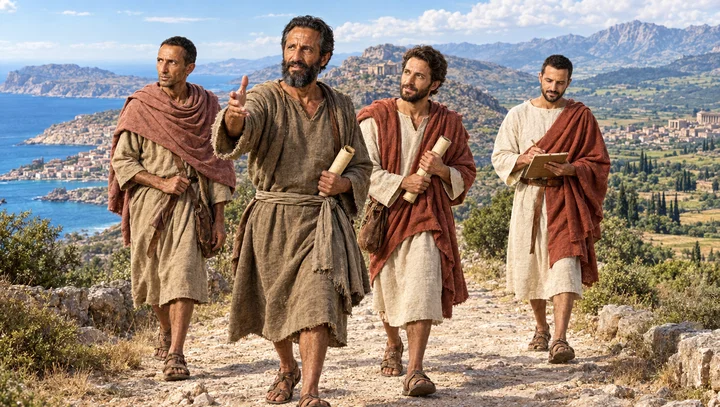
And when he had gone over those parts, and had given them much exhortation, he came into Greece,
Translations
American King James Version, King James Version, KJV Cambridge Paragraph Bible, Webster Bible
And when he had gone over those parts, and had given them much exhortation, he came into Greece,
Revised Version, American Standard Version
And when he had gone through those parts, and had given them much exhortation, he came into Greece.
and having gone through those parts, and having exhorted them with many words, he came to Greece;
And having passed through those parts, and having exhorted them with much discourse, he came to Greece.
Passing through those parts, however, and exhorting them with much discourse, he came into Greece;
Berean Standard Bible, Majority Standard Bible
After traveling through that area and speaking many words of encouragement, he arrived in Greece,
When he had gone through those parts and had encouraged them with many words, he came into Greece.
And when he had gone through those parts and given them much teaching, he came into Greece.
And when hee had gone through those parts, and had exhorted them with many words, he came into Grecia.
Douay-Rheims (Challoner revision)
And when he had gone over those parts, and had exhorted them with many words, he came into Greece;
Pictures
Cross-references
- 2 Corinthians 1:16
And to pass by you into Macedonia, and to come again out of Macedonia unto you, and of you to be brought on my way toward Judaea.
Explains Paul's intended route through Macedonia and back.
- Acts 19:22
So he sent into Macedonia two of them that ministered unto him, Timotheus and Erastus; but he himself stayed in Asia for a season.
Records Timothy and Erastus being sent ahead to Macedonia.
- 2 Corinthians 2:12-13
Furthermore, when I came to Troas to preach Christ’s gospel, and a door was opened unto me of the Lord,
Paul leaves Troas and travels through Macedonia, paralleling his journey toward Greece.
Commentary
Each commentary is drawn from primary sources: the writings of Ellen G. White and Adventist pioneers and periodicals. Each commentary is separate. Its own words are not a quotation; follow the references to read the source passages.
Pioneers and periodicals
14 sources
After the uproar at Ephesus ended Paul traveled through Macedonia giving much encouragement to the believers on his way into Greece, to Corinth and Achaia, where he remained three months.ST Apr 10, 1884ST Jun 9, 1898ST Apr 10, 1884ST Jul 24, 1893RH Jul 6, 1868 That encouragement was given especially because he did not expect to see those churches again, and the journey belonged to his last trip to Jerusalem carrying contributions from Gentile Christians for the poor believers there, while from Corinth about 58 A.D. he wrote the Epistle to the Romans.ST Apr 10, 1884ST Dec 28, 1888RH Nov 4, 1873ST Apr 10, 1884 When about to sail from Greece to Syria a Jewish plot against his life forced him to return through Macedonia and Troas, showing both continued Jewish opposition and his patient continuance despite hindrances.ST Apr 10, 1884ST Jul 7, 1909RH Jul 6, 1868 The farewell meeting on the first day of the week at Troas took place at the close of the Sabbath on Saturday evening when Paul preached till midnight because he was to depart on the morrow, and the verse and its context contain nothing about Sabbath-keeping or Sunday sacredness and establish no change of the Sabbath.RH Jan 23, 1866AUST Jun 21, 1920ST Aug 17, 1882ST Jan 20, 1909
Journey Through Macedonia to Greece
After the uproar at Ephesus ended Paul journeyed onward, and the twentieth chapter of Acts is chiefly occupied with that one account whose principal events occurred at two places, as he went over those parts giving much exhortation on his way into Greece.ST Jun 9, 1898RH Jul 6, 1868 The journey was from Ephesus toward Macedonia, and more probably by way of passing through Troas, a route to be distinguished from his earlier brief visit to Troas.RH Mar 25, 1873 Those parts were Macedonia, and the destination was Greece, probably to visit the churches at Corinth and in Achaia, where he stayed three months.ST Apr 10, 1884ST Apr 10, 1884ST Jul 24, 1893
The much exhortation was much encouragement given to the believers in Macedonia as he traveled through those regions.ST Apr 10, 1884ST Dec 28, 1888ST Jul 24, 1893 It was given especially because he did not expect to see those churches again, even as he had preached and labored among the church at Ephesus before calling its elders together for farewell because he knew he would not see them again.ST Apr 10, 1884RH Nov 4, 1873
The journey belonged to his last trip to Jerusalem, when he carried contributions from Gentile Christians for the poor believers there, and this setting helps date the letter to the Romans, written from Corinth about 58 A.D. while he was in Greece.ST Dec 28, 1888 While in Greece he wrote the Epistle to the Romans during that three months' stay.ST Apr 10, 1884ST Apr 10, 1884 When he was about to sail from Greece to Syria, Jews laid a plot against his life, so his plan was thwarted and he returned through Macedonia and Troas, showing both that Jewish opposition continued to threaten him during his journeys and his patient continuance in ministry despite repeated hindrances to his plans.ST Apr 10, 1884RH Jul 6, 1868 His experience at Thessalonica, at Berea, at Athens, at Corinth, at Ephesus, at Troas, and his farewell talk to the elders of Ephesus show how wonderfully God wrought in all these places and how the word triumphed in every case notwithstanding all persecutions.ST Jul 7, 1909
First Day and Faithful Ministry
Acts 20 holds the only meeting on the first day of the week found in Paul's travels, and verse 2 belongs to the six verses that record his journeys and much exhortation on the way to Troas, where he stayed seven days before holding a farewell meeting as he was about to leave.RH Jan 23, 1866AUST Jun 21, 1920ST Jan 20, 1909 That first-day meeting was an accommodation meeting held because Paul was to depart on the morrow and they were to see his face no more, not proof of Sunday sacredness.RH Jan 23, 1866 Paul preached to the Gentiles as well as to the Jews.RH Jan 23, 1866
That meeting took place at the close of the Sabbath on Saturday evening when the disciples came together to break bread.AUST Jun 21, 1920 Paul preached to the believers till midnight because he intended to leave on Sunday morning and take a long walk to meet the other disciples at Assos.AUST Jun 21, 1920 That departure on the morrow, with no expectation of seeing them again, is why the gathering was an accommodation and not proof of Sunday sacredness.RH Jan 23, 1866
The verse and its context contain nothing about Sabbath-keeping or Sunday sacredness.ST Jan 20, 1909 The account of the journey through the regions to Greece does not establish a recurring sacred Sunday meeting or a change in the Sabbath.ST Jan 20, 1909 Paul did not regard the first day of the week as a day sanctified to God.ST Aug 17, 1882
Luke says nothing about his preaching even once during the three months Paul abode in Greece after coming into it.ST Aug 8, 1878 That silence proves Luke records only a small part of Paul's doings.ST Aug 8, 1878 Lack of any account of preaching during the first six days at Troas is therefore no evidence he did not preach then.ST Aug 8, 1878
His preaching and laboring were among both Gentiles and Jews, including his preaching and laboring among the church at Ephesus before calling its elders together to say farewell because he knew he would not see them again.RH Jan 23, 1866RH Nov 4, 1873 His ministry was marked by freedom from covetousness.RH Nov 4, 1873 Though he had known hunger, cold, and poverty, he had not desired anyone's silver, gold, or clothing, but worked with his own hands to provide for himself and his companions.RH Nov 4, 1873
Sources