Acts 23:31
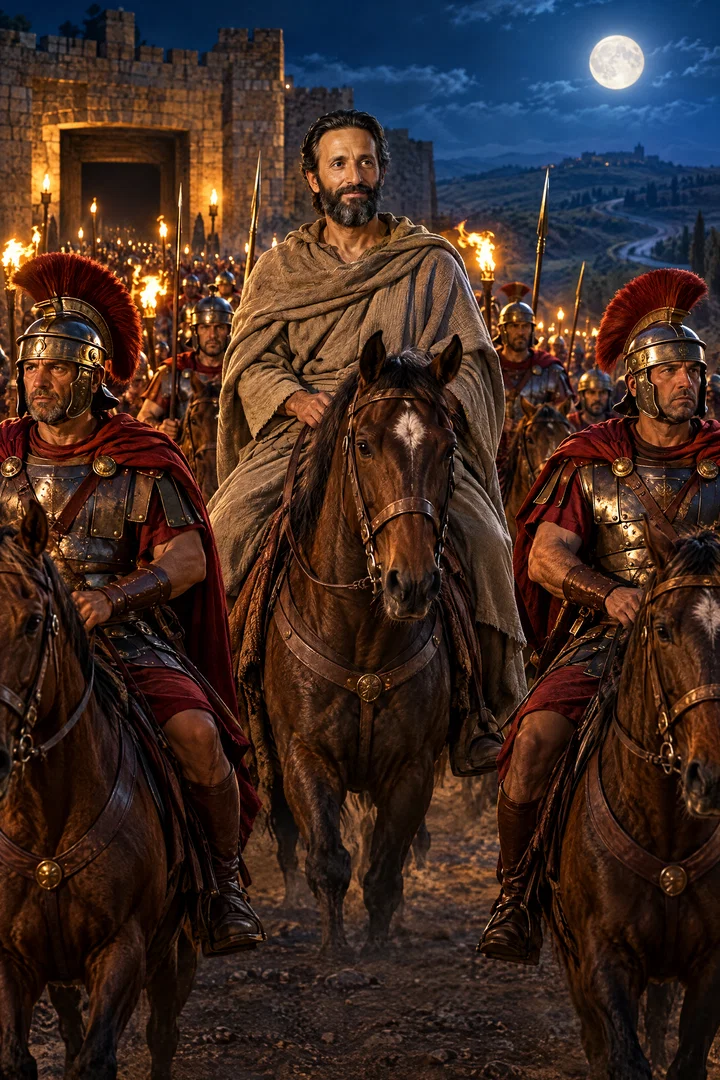
Then the soldiers, as it was commanded them, took Paul, and brought him by night to Antipatris.
Translations
American King James Version, King James Version, KJV Cambridge Paragraph Bible, Webster Bible
Then the soldiers, as it was commanded them, took Paul, and brought him by night to Antipatris.
So the soldiers, as it was commanded them, took Paul, and brought him by night to Antipatris.
So the soldiers, as it was commanded them, took Paul and brought him by night to Antipatris.
Then, indeed, the soldiers according to that directed them, having taken up Paul, brought him through the night to Antipatris,
The soldiers therefore, according to what was ordered them, took Paul and brought him by night to Antipatris,
So the soldiers, according to their orders, taking up Paul, brought him by night unto Antipatris;
Berean Standard Bible, Majority Standard Bible
So the soldiers followed their orders and brought Paul by night to Antipatris.
So the soldiers, carrying out their orders, took Paul and brought him by night to Antipatris.
So the armed men, as they were ordered, took Paul and came by night to Antipatris.
Then the souldiers as it was commanded them, tooke Paul, and brought him by night to Antipatris.
Douay-Rheims (Challoner revision)
Then the soldiers, according as it was commanded them, taking Paul, brought him by night to Antipatris.
Pictures
Cross-references
- Acts 23:12-14
And when it was day, certain of the Jews banded together, and bound themselves under a curse, saying that they would neither eat nor drink till they had killed Paul.
Describes the enemies’ oath to kill Paul.
Commentary
Each commentary is drawn from primary sources: the writings of Ellen G. White and Adventist pioneers and periodicals. Each commentary is separate. Its own words are not a quotation; follow the references to read the source passages.
Ellen G. White
2 sources
The soldiers acted exactly as commanded, taking Paul by night as far as Antipatris on the way to Caesarea.AA 415.1–416.1SLP 227.1–228.1 That night escort shielded him from the plot laid against his life.AA 415.1–416.1 They halted at Antipatris because the danger of an attack had lessened.SLP 227.1–228.1 From there the foot soldiers returned to Jerusalem while the horsemen went on with Paul to Caesarea.AA 415.1–416.1SLP 227.1–228.1
Sources
Pioneers and periodicals
12 sources
As commanded, the soldiers took Paul by night from Jerusalem to Antipatris as the first stage of a guarded transfer to bring him safe to Felix the governor at Caesarea.RH Oct 14, 1862ST Apr 14, 1898ST Apr 14, 1898 The removal was a rescue from a murderous plot by more than forty men bound under a curse to kill him, and he was conveyed under a large armed escort on horseback through unsettled country.RH Oct 14, 1862ST Apr 14, 1898ST Apr 14, 1898ST Aug 7, 1901ST Feb 12, 1885 After about thirty-five miles the party reached Antipatris and rested for the rest of the night, then the foot soldiers returned to Jerusalem while seventy horsemen continued twenty-five more miles to Caesarea in daylight to present Paul and the captain's letter to the governor.ST Apr 14, 1898ST May 8, 1884ST Feb 12, 1885 The guarded journey toward trial before the Roman governor advanced the fulfillment of God's promise that Paul would preach in Rome, showing that hard circumstances work toward good for those who love God. The word translated morrow means the next period of daylight rather than another day of the week, so that a night journey could have its morning called the morrow within the same sunset-to-sunset day, and by the same use Paul's evening meeting at Troas and his nineteen-and-a-half-mile daytime journey afterward both fell on the first day, giving apostolic example for travel on that day.ST Jul 13, 1882RH Mar 11, 1862RH Dec 12, 1871
Night Journey to Antipatris
As commanded, the soldiers took Paul by night from Jerusalem to Antipatris as the first stage of a guarded transfer under Lysias's direction to bring him safe to Felix the governor at Caesarea.RH Oct 14, 1862ST Apr 14, 1898ST Apr 14, 1898ST Aug 7, 1893ST May 8, 1884 The transfer was a rescue to protect him from a murderous plot by more than forty men bound under a curse to kill him.RH Oct 14, 1862ST Apr 14, 1898ST Aug 7, 1901ST Aug 7, 1893 In its setting, Paul had already been arrested in the temple and made defenses before the Jews and before the Sanhedrin, and the journey led toward his defense before Felix. His nephew acted with excellent discretion during the dangerous episode that caused the nighttime journey from Jerusalem toward Caesarea.ST Mar 29, 1883
He was conveyed under a strong, large armed escort and rode on a horse through unsettled country.ST Apr 14, 1898ST Feb 12, 1885 After about thirty-five miles the party reached Antipatris and halted to rest for the rest of the night.ST May 8, 1884ST Feb 12, 1885 At Antipatris the full escort went no farther, for once the danger of attack had lessened the foot soldiers returned to the castle at Jerusalem.ST Apr 14, 1898ST May 8, 1884 The horsemen, seventy in number, continued with Paul twenty-five more miles to Caesarea, entering in daylight.ST Apr 14, 1898ST May 8, 1884ST May 8, 1884 There they delivered the captain's letter to the governor and presented Paul before him for trial.ST Apr 14, 1898
Teaching and Application
The guarded removal toward Caesarea and trial before the Roman governor advanced the fulfillment of God's promise that Paul would preach in Rome, and circumstances difficult to understand at the time worked toward good for those who love God.
Paul having to be taken by soldiers by night to save him from a murderous plot shows the hatred and opposition of the world to Christ and His true church, which continues to the very end of the age.ST Aug 7, 1901 That continuing opposition shows that God's method is supernatural new birth rather than natural evolution, and that this dispensation results in the out-gathering of a people for His name rather than the conversion of the world.ST Aug 7, 1901 The church therefore witnesses by separation rather than assimilation, with accommodation as its danger and apostasy as its final state as a whole, while formalists and hypocrites with undetectable counterfeit piety remain in it to the end.ST Aug 7, 1901 The coming of the Lord is the hope of church and world when worldwide triumphs begin, and believers must continually watch against worldliness and heresy while waiting for the Son of man.ST Aug 7, 1901
Receiving military protection against violent attackers is right, as shown when soldiers carried out their commander's order by taking Paul by night as part of the military escort protecting him from a plot to kill him and conveying him safely to Felix.RH Oct 14, 1862
The word translated morrow, the Greek epaurion, does not necessarily mean another day of the week but means the next period of daylight, so that a journey begun at night could have its morning called the morrow while belonging to the same twenty-four-hour day reckoned from sunset to sunset.RH Mar 11, 1862RH Dec 12, 1871 The soldiers took Paul by night to Antipatris and on the morrow the foot soldiers returned to the castle while the horsemen went on with Paul, yet the night journey and the daylight return belonged to the same day, supporting reckoning the biblical day from evening to evening.RH Mar 11, 1862RH Dec 12, 1871 By the same use Paul could meet with the disciples at Troas in the evening with which the first day of the week commenced and still depart on the morrow in the daylight morning of that same first day.RH Dec 12, 1871 This proves that both the night meeting and his nineteen-and-a-half-mile daytime journey afterward fell on the first day and gives apostolic example for travel on that day, while the chapter otherwise contains no reference to sanctifying the first day of the week.ST Jul 13, 1882
Sources