Acts 27:4
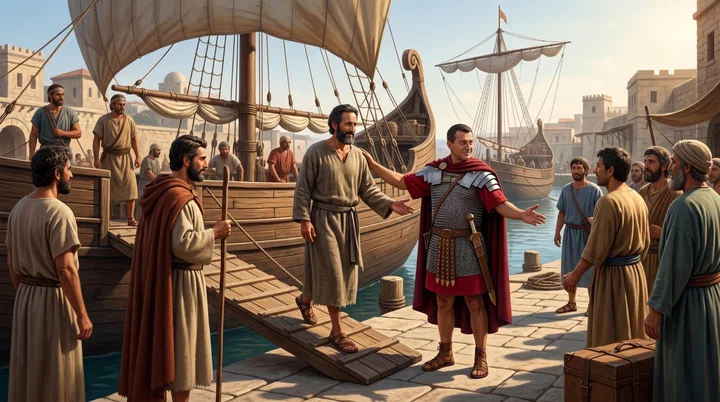
And when we had launched from thence, we sailed under Cyprus, because the winds were contrary.
Translations
And when we had launched from there, we sailed under Cyprus, because the winds were contrary.
King James Version, KJV Cambridge Paragraph Bible, Douay-Rheims (Challoner revision)
And when we had launched from thence, we sailed under Cyprus, because the winds were contrary.
And when we had lanched from thence, we sailed under Cyprus, because the winds were contrary.
Revised Version, American Standard Version
And putting to sea from thence, we sailed under the lee of Cyprus, because the winds were contrary.
And thence, having set sail, we sailed under Cyprus, because of the winds being contrary,
And setting sail thence we sailed under the lee of Cyprus, because the winds were contrary.
and, from thence putting out to sea, we sailed under the lee of Cyprus, because the winds were contrary;
Berean Standard Bible, Majority Standard Bible
After putting out from there, we sailed to the lee of Cyprus because the winds were against us.
Putting to sea from there, we sailed under the lee of Cyprus, because the winds were contrary.
And sailing again from there, we went on under cover of Cyprus, because the wind was against us.
And from thence we launched, and sayled hard by Cyprus, because ye windes were contrarie.
Pictures
Cross-references
- Acts 28:1-10
And when they were escaped, then they knew that the island was called Melita.
Continues the Mediterranean voyage and shipwreck account.
Commentary
Each commentary is drawn from primary sources: the writings of Ellen G. White and Adventist pioneers and periodicals. Each commentary is separate. Its own words are not a quotation; follow the references to read the source passages.
Ellen G. White
6 sources
After leaving Sidon, the ship encountered winds that were contrary.SLP 263.2RH Nov 23, 1911AA 440.2 Because those winds were contrary, it sailed under Cyprus for shelter instead of keeping a direct course.AA 439.2SLP 263.2RH Nov 23, 1911AA 440.2 Driven from its direct course, it made only slow progress.SLP 263.2RH Nov 23, 1911AA 440.2
The detour reflects the hardship and danger of first-century sea travel, when sailors depended largely on the sun and stars, dreaded storms, and faced times when safe navigation was nearly impossible.AA 439.2 The verse belongs to Paul's long and tedious voyage to Italy, which he endured as a prisoner in chains amid trying experiences.AA 439.3 The hardship of his lot was greatly lightened by being allowed the companionship of Luke and Aristarchus, with Aristarchus voluntarily sharing his bondage to minister to him in his afflictions and afterward called his fellow prisoner.AA 439.3
The sea journey of which the verse is part served God's purpose, as the ship's crew witnessed God's power through Paul and others heard about Jesus, and his teaching and miracles led many to believe.EW 172.3
Sources
Pioneers and periodicals
14 sources
Paul was sailing to Rome as a prisoner after appealing to Caesar, in the custody of Julius of the Augustan band with other prisoners under Roman soldiers, accompanied by Luke and Aristarchus, having been kindly allowed at Sidon to visit friends.ST Mar 30, 1904ST May 12, 1898ST Jun 19, 1884 On leaving Sidon contrary winds blocked a direct course to Italy and forced the ship to sail under the lee of Cyprus, keeping to the south and near it, making progress slow and difficult on toward Myra in Lycia.RH Nov 23, 1911ST May 12, 1898RH Apr 21, 1903ST Mar 18, 1889ST May 12, 1898 It was his last, terrifying and dangerous winter voyage, patiently endured through great hardships until shipwreck left soldiers and prisoners together three months on an island.ST Jun 19, 1884ST Feb 25, 1889 That hard sailing was God's prosperous answer to his earnest prayer for a prosperous journey to Rome by the will of God, truly prosperous though it looked anything but, since all things work together for good to them that love God.ST Oct 24, 1895 The prisoner journey fulfilled his long desire to reach Rome and opened missionary work and testimony for Christ along the way, and the whole shipload of reckless and wicked men escaped death at sea because a servant of God was aboard.ST Mar 30, 1904ST Jul 23, 1885ST Mar 18, 1889
Voyage Course and Hardship
The verse belongs to Paul's voyage to Rome as a prisoner after appealing his case to Caesar, traveling in chains with other prisoners delivered to Julius of the Augustan band for sailing to Italy.ST Mar 30, 1904ST May 12, 1898ST Feb 25, 1889 He was guarded by Roman soldiers, and Luke and Aristarchus were with him on that voyage.ST May 12, 1898ST Jun 19, 1884ST Feb 16, 1915 After touching at Sidon, Julius treated Paul kindly and let him visit friends before they put to sea again from Sidon toward Italy.ST May 12, 1898
After putting to sea from Sidon toward Italy the ship sailed under the lee of Cyprus because the winds were contrary.ST May 12, 1898ST May 12, 1898 It passed Cyprus on the south and sailed near it, prevented from a direct course.ST Aug 21, 1893ST Dec 19, 1878 From there the course lay across the sea off Cilicia and Pamphylia to Myra in Lycia, before touching at Lasea on the island of Crete.ST May 12, 1898ST Aug 21, 1893
Upon leaving Sidon the ship met contrary winds that drove it from a direct course and made its progress slow.RH Nov 23, 1911 Those contrary winds prevented a direct course and made the direct course difficult.RH Apr 21, 1903ST Dec 19, 1878 They forced the ship to sail under Cyprus and made the voyage toward Rome difficult.RH Apr 21, 1903ST Mar 18, 1889
It was Paul's last perilous voyage to Rome, a terrifying sea journey attended by great dangers.ST Jun 19, 1884ST Feb 25, 1889 It was a dangerous winter voyage and one of the hardships he patiently endured while carrying the gospel and testifying about Christ.ST Feb 16, 1915 It ended in shipwreck, after which the soldiers and prisoners spent three months together on an island.ST Feb 16, 1915
Providence and Witness
The contrary sailing on the way to Rome was the prosperous answer to earnest prayer for a prosperous journey by the will of God to visit Rome.ST Oct 24, 1895 To most observers the hard sailing and troubles look like anything but a prosperous journey, yet no complaint was made because the voyage was truly prosperous, since all things work together for good to them that love God.ST Oct 24, 1895 What men regard as disastrous is prosperous when seen as God sees it, and this teaches trust that God knows far better than men how prayers should be answered, a trust that would save much mourning.ST Oct 24, 1895
The prisoner voyage after appeal to Caesar fulfilled a long-standing desire to visit Rome and gave opportunities for missionary work along the way.ST Mar 30, 1904 It was endured while carrying the gospel and testifying about Christ, one of the hardships patiently borne. The contrary winds that made the course toward Rome difficult and forced sailing under Cyprus show that course to have been labor and sacrifice, not a holiday.ST Mar 18, 1889
A whole shipload of reckless and wicked men escaped death at sea because a servant of God was aboard.ST Jul 23, 1885 The tedious and perilous journey by sea illustrates the difficulties of travel in Paul's time.ST Dec 8, 1887 Such exposure may have contributed to the near-fatal illness of Epaphroditus while carrying the Philippians' gift to Paul in Rome.ST Dec 8, 1887
Sources