Acts 27:5
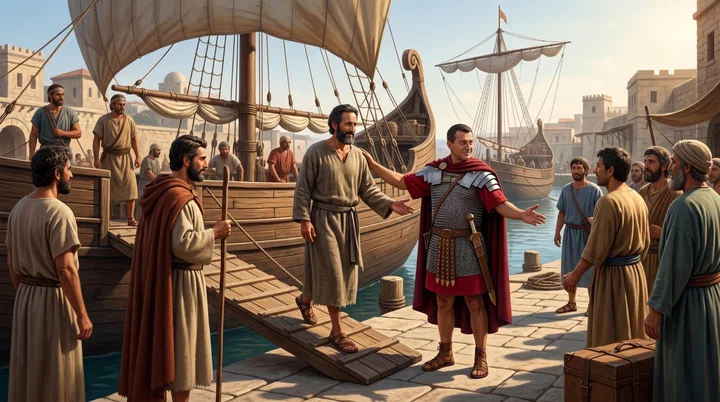
And when we had sailed over the sea of Cilicia and Pamphylia, we came to Myra, a city of Lycia.
Translations
American King James Version, King James Version, KJV Cambridge Paragraph Bible
And when we had sailed over the sea of Cilicia and Pamphylia, we came to Myra, a city of Lycia.
And when we had sailed over the sea of Cilicia and Pamphylia, we came to Mira, a city of Lycia.
Revised Version, American Standard Version
And when we had sailed across the sea which is off Cilicia and Pamphylia, we came to Myra, a city of Lycia.
and having sailed over the sea over-against Cilicia and Pamphylia, we came to Myria of Lycia,
And having sailed over the waters of Cilicia and Pamphylia we came to Myra in Lycia:
and, sailing across the sea which is off Cilicia and Pamphylia, we came down to Myra, a city of Lycia.
Berean Standard Bible, Majority Standard Bible
And when we had sailed across the open sea off the coast of Cilicia and Pamphylia, we came to Myra in Lycia.
When we had sailed across the sea which is off Cilicia and Pamphylia, we came to Myra, a city of Lycia.
And having gone across the sea off Cilicia and Pamphylia we came to Myra, in Lycia.
Then sayled we ouer the sea by Cilicia, and Pamphilia, and came to Myra, a citie in Lycia.
Douay-Rheims (Challoner revision)
And sailing over the sea of Cilicia, and Pamphylia, we came to Lystra, which is in Lycia:
Pictures
Cross-references
- Acts 27:12
And because the haven was not commodious to winter in, the more part advised to depart thence also, if by any means they might attain to Phenice, and there to winter; which is an haven of Crete, and lieth toward the south west and north west.
decision to sail on to Phenice to winter
Commentary
Each commentary is drawn from primary sources: the writings of Ellen G. White and Adventist pioneers and periodicals. Each commentary is separate. Its own words are not a quotation; follow the references to read the source passages.
Ellen G. White
7 sources
This stage records Paul's voyage toward Rome in Italy, when after leaving Sidon the ship sailed over the sea of Cilicia and Pamphylia and came to Myra, a city in Lycia.AA 439.1AA 439.2SLP 263.2RH Nov 23, 1911AA 440.2 It was part of a long and tedious voyage endured by Paul as a prisoner in chains amid trying experiences.AA 439.3EW 172.3 The voyage took place when sea travel was especially difficult and dangerous, since sailors navigated largely by the sun and stars, storms made shipowners wary of open water, and safe sailing was nearly impossible for part of the year.AA 439.2
The hardship was greatly lightened because Paul was allowed the companionship of Luke and Aristarchus, with Aristarchus voluntarily sharing Paul's bondage to minister to him in affliction and later called his fellow prisoner.AA 439.3 Contrary winds drove the ship from its direct course and made this leg slow and difficult.SLP 263.2RH Nov 23, 1911 At Myra the centurion transferred the prisoners to a large ship from Alexandria bound for Italy.SLP 263.2RH Nov 23, 1911AA 440.2
God fulfilled His special purpose through Paul's long bondage and sea journey: his bonds spread the knowledge of Christ and glorified God, his testimony from city to city left kings and governors without excuse, and thousands believed and rejoiced.EW 172.3 The crew and heathen peoples were to witness God's power through Paul, hear the name of Jesus, and many be converted through his teaching and miracles.EW 172.3
Sources
Pioneers and periodicals
14 sources
Acts 27:5 places Paul on the government-arranged voyage to Rome and Italy as a prisoner in the charge of the centurion Julius after his appeal to Caesar, with Luke accompanying and assisting him on that last perilous voyage.ST Mar 30, 1904ST May 12, 1898ST Aug 21, 1893ST Jun 19, 1884 After leaving Sidon the ship sailed northward up the coast under the lee of Cyprus with contrary winds slowing it from its direct course until it crossed the sea off Cilicia and Pamphylia to Myra in Lycia, where the centurion found a large Alexandrian ship sailing for Italy and transferred the prisoners into it.RH Nov 23, 1911ST May 12, 1898ST May 12, 1898 The voyage was dangerous and terrifying and ended in shipwreck, showing the Lord's marvelous working with Paul, who had already suffered shipwreck three times before this voyage.RH Apr 21, 1903ST Jul 21, 1909 The journey fulfilled Paul's long-standing and prayed-for desire for a prosperous journey by the will of God to visit Rome, and although most would call such a journey disastrous rather than prosperous, it was in fact prosperous because all things work together for good to those who love God.ST Mar 30, 1904ST Oct 24, 1895ST Feb 25, 1889 It gave Paul opportunities for missionary work along the way and displayed patient toil and suffering in carrying the gospel before years of imprisonment in Rome, showing his sacrifices and labors rather than a pleasant vacation and calling ministers to make much of the sacrifice of Christ and his apostles so that souls are saved.ST Mar 30, 1904RH Jul 25, 1907ST Mar 18, 1889ST Jul 21, 1909
Paul's Voyage to Rome
Acts 27:5 places Paul on the government-arranged voyage to Rome and Italy as a prisoner in charge of the centurion Julius, after his appeal to Caesar.ST Mar 30, 1904ST May 12, 1898ST Aug 21, 1893ST Feb 25, 1889 Luke accompanied and assisted him on this last perilous voyage.ST Jun 19, 1884 After leaving Sidon the ship sailed northward up the Mediterranean coast, under the lee of Cyprus and passing Cyprus on the south because the winds were contrary, and crossed the sea off Cilicia and Pamphylia to come to Myra in Lycia.RH Nov 23, 1911ST May 12, 1898ST May 12, 1898ST Aug 21, 1893 Contrary winds drove it from its direct course, slowing its progress and causing trouble on that leg.RH Nov 23, 1911ST May 12, 1898ST May 12, 1898
At Myra in Lycia the centurion found a large ship from Alexandria sailing for Italy and transferred the prisoners into it.RH Nov 23, 1911ST May 12, 1898 The voyage was dangerous and terrifying.ST Feb 25, 1889ST Feb 16, 1915 It later ended in shipwreck, showing the Lord's marvelous working with Paul.RH Apr 21, 1903ST Jul 21, 1909ST Feb 16, 1915 After the shipwreck the soldiers guarding the prisoners stayed with Paul on an island for three months.ST Feb 16, 1915 When Paul later wrote of his earlier experiences, he had already suffered shipwreck three times before this voyage to Rome.RH Apr 21, 1903
Cilicia, Pamphylia, Myra, and Lycia were real locations that travelers could still see, giving a vivid sense of the events.RH Jul 25, 1907 The historical reliability of the voyage and shipwreck account is supported by historical investigation.ST Jul 5, 1910
Providence and Ministerial Example
The sailing past Cilicia and Pamphylia to Myra belongs to the government-arranged voyage to Rome that Paul made as a prisoner after his appeal to Caesar, and it fulfilled his long-standing and prayed-for desire for a prosperous journey by the will of God to visit Rome, though it did not unfold as he had hoped and God's purpose was fulfilled through it.ST Mar 30, 1904ST Oct 24, 1895ST Feb 25, 1889 Most would call such a journey disastrous rather than prosperous, yet it was in fact prosperous because all things work together for good to those who love God, and it teaches to look at matters as God looks at them, to see seeming disasters as prosperous, to make no complaint, and to remember that God knows far better than men how prayers should be answered.ST Oct 24, 1895
The voyage gave Paul opportunities for missionary work along the way and displayed patient toil and suffering in carrying the gospel before years of imprisonment in Rome, and it was terrifying and ended in shipwreck, showing the Lord's marvelous working with him.ST Mar 30, 1904ST Jul 21, 1909 Cilicia, Pamphylia, Myra in Lycia, and the other places crossed on that Mediterranean passage were real locations that travelers could still see, and recalling them gives a vivid sense of the events.RH Jul 25, 1907 The account of those places points to the need to carry the third angel's message to the people there.RH Jul 25, 1907
The account of the trip to Rome, together with Paul's labor at Corinth and his night and day in the deep, shows his sacrifices and labors rather than a pleasant vacation or holiday rest.ST Mar 18, 1889 It gives no justification for clerical holidays and calls ministers to make much of the sacrifice of Christ and His apostles so that souls are saved.ST Mar 18, 1889
Sources