Acts 27:6
And there the centurion found a ship of Alexandria sailing into Italy; and he put us therein.
Translations
American King James Version, King James Version, KJV Cambridge Paragraph Bible, Webster Bible
And there the centurion found a ship of Alexandria sailing into Italy; and he put us therein.
Revised Version, American Standard Version
And there the centurion found a ship of Alexandria sailing for Italy; and he put us therein.
and there the centurion having found a ship of Alexandria, sailing to Italy, did put us into it,
and there the centurion having found a ship of Alexandria sailing to Italy, he made us go on board her.
And the centurion, there, finding a ship of Alexandria sailing for Italy, put us therein.
Berean Standard Bible, Majority Standard Bible
There the centurion found an Alexandrian ship sailing for Italy and put us on board.
There the centurion found a ship of Alexandria sailing for Italy, and he put us on board.
And there the captain came across a ship of Alexandria, sailing for Italy, and put us in it.
And there the Centurion found a ship of Alexandria, sayling into Italie, and put vs therein.
Douay-Rheims (Challoner revision)
And there the centurion finding a ship of Alexandria sailing into Italy, removed us into it.
Pictures
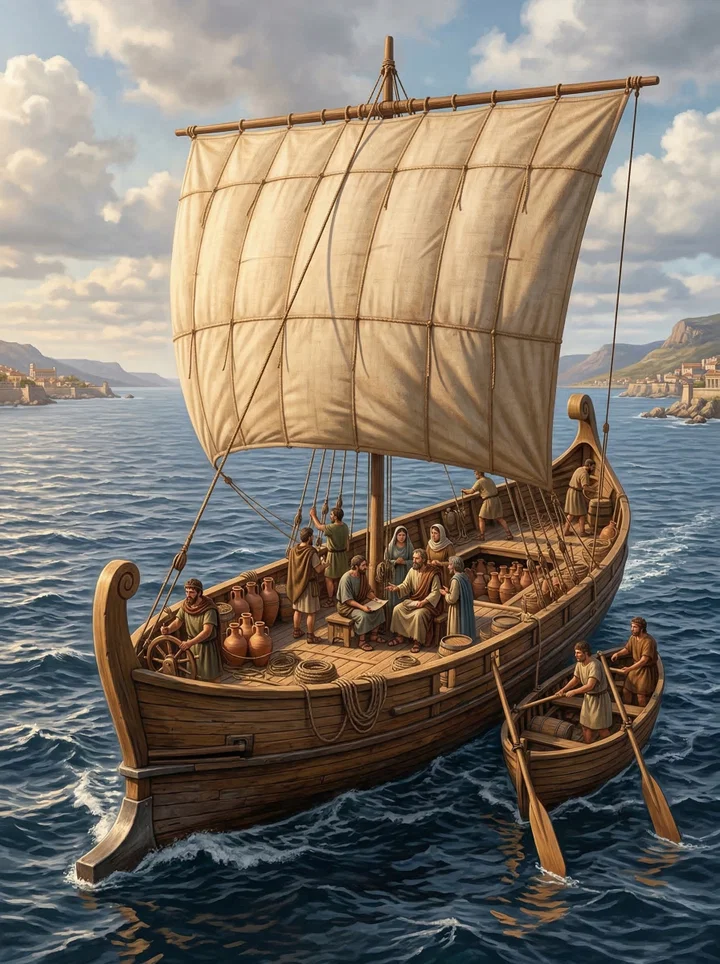
Cross-references
- Acts 28:1-10
And when they were escaped, then they knew that the island was called Melita.
Continues the voyage account after the shipwreck.
- Acts 27:1-2
And when it was determined that we should sail into Italy, they delivered Paul and certain other prisoners unto one named Julius, a centurion of Augustus’ band.
Begins the same journey under Julius’s custody.
- Acts 28:16
And when we came to Rome, the centurion delivered the prisoners to the captain of the guard: but Paul was suffered to dwell by himself with a soldier that kept him.
Records Paul’s arrival in Rome, which the passage identifies as the conclusion of Acts.
Commentary
Each commentary is drawn from primary sources: the writings of Ellen G. White and Adventist pioneers and periodicals. Each commentary is separate. Its own words are not a quotation; follow the references to read the source passages.
Ellen G. White
7 sources
Paul was on a long voyage to Italy as a prisoner in chains, accompanied by Luke and Aristarchus, Aristarchus sharing his bondage by choice so that he could minister to and help him.AA 439.3 The first vessel, bound for Adramyttium, a city on the west coast of Asia, could carry the travelers only part of the way, so they had to look at one of its larger ports of call for another vessel to complete the voyage to Rome.SLP 261.2 After leaving Sidon that first ship made only slow progress, for contrary winds forced it off a direct course.AA 440.2
At Myra in the province of Lycia the centurion found a large ship from Alexandria bound for the coast of Italy and immediately transferred his prisoners to it.EW 172.3SLP 263.2RH Nov 23, 1911AA 440.2SLP 261.2 That change of ships took place within a sea voyage made perilous by the limits of ancient navigation, when sailors guided themselves largely by sun and stars, storms made shipowners fearful of the open sea, and during part of the year safe sailing was almost impossible.AA 439.2 Even after the transfer contrary winds continued, making progress difficult and slow.RH Nov 23, 1911AA 440.2
The voyage aboard the Alexandrian ship served God's purpose, for the crew were to witness God's power and Gentiles were to hear of Jesus, and through Paul's teaching and miracles many came to believe.EW 172.3
Sources
Pioneers and periodicals
14 sources
On the way to Rome the company changed ships at Myra in Lycia, after sailing from Sidon under the lee of Cyprus and across the sea off Cilicia and Pamphylia to Myra.RH Nov 23, 1911ST May 12, 1898ST May 12, 1898 There Julius, the centurion in charge of Paul and the other prisoners, found a large ship of Alexandria sailing for Italy and put Paul, Luke, the other prisoners, and the company therein to continue toward Italy and Rome.RH Nov 23, 1911RH Apr 21, 1903ST May 12, 1898 The voyage, including being put aboard the Alexandrian ship for Italy, was God's answer to prayer for a prosperous journey to visit Rome, and though most would call it disastrous it was truly prosperous because God knows far better than men how prayers should be answered.ST Oct 24, 1895 The government-arranged journey gave opportunities for missionary work along the way, and amid hardship and imprisonment Paul continued to testify about Christ, so that a whole shipload of reckless and wicked men escaped death at sea because a servant of God was on board.ST Mar 30, 1904ST Jul 23, 1885ST Jul 21, 1909
Voyage Setting and Details
On the way to Rome the company changed ships at Myra in Lycia.ST May 12, 1898ST May 12, 1898 They had sailed from Sidon under the lee of Cyprus and across the sea off Cilicia and Pamphylia to Myra in Lycia.ST May 12, 1898 There Julius, the centurion in charge of Paul and the other prisoners, found a ship of Alexandria sailing for Italy.RH Nov 23, 1911ST May 12, 1898ST Aug 21, 1893 It was a large ship from Alexandria bound for Italy, and he put Paul, Luke, the other prisoners, and the company therein to continue toward Italy and Rome.RH Nov 23, 1911RH Apr 21, 1903ST May 12, 1898ST Aug 21, 1893ST Jun 19, 1884 The transfer at Myra put them aboard the Alexandrian ship for the prisoner voyage to Rome, arranged by the centurion for the prisoners under his charge.RH Apr 21, 1903ST Aug 21, 1893ST Feb 16, 1915
Paul traveled as a prisoner after appealing to Caesar, sent at government expense under soldiers' guard.ST Mar 30, 1904 He journeyed by way of Jerusalem and reached Rome despite hardships.ST Mar 30, 1904 The voyage was long and dangerous, perilous and terrifying, made difficult and slow by contrary winds.RH Nov 23, 1911RH Apr 21, 1903ST Dec 8, 1887ST Jul 21, 1909 It ended in shipwreck, followed by three months together on an island where Paul and the soldiers who guarded the prisoners remained together.RH Apr 21, 1903ST Jul 21, 1909ST Feb 16, 1915
The account of the voyage and shipwreck is history whose factual reliability is strengthened by study of the voyage and shipwreck.ST Jul 5, 1910
Providence and Faithful Witness
The putting aboard the Alexandrian ship for Italy was God's answer to prayer for a prosperous journey by the will of God to visit Rome.ST Oct 24, 1895 Most men would call that voyage not prosperous but disastrous, yet it was truly prosperous because God knows far better than men how prayers should be answered.ST Oct 24, 1895 All things work together for good to them that love God, so the trip must have been prosperous, and there is no complaint about it, for prosperity is judged as God sees things and not as men see them, and remembering this saves mourning over what looks like disaster.ST Oct 24, 1895 After appeal to Caesar the journey to Rome was arranged by the government and made at government expense, and it gave opportunities for missionary work along the way.ST Mar 30, 1904 Amid hardship and imprisonment and a terrifying sea journey and shipwreck, the testimony about Christ continued, showing the Lord's marvelous working with His servant.ST Mar 30, 1904ST Jul 21, 1909
A whole shipload of reckless and wicked men escaped death at sea because a servant of God was on board.ST Jul 23, 1885 The journey to Rome was long and dangerous, and that helps explain the difficulty Epaphroditus faced in carrying the Philippians' gift.ST Dec 8, 1887 The transfer at Myra, when the centurion put Paul and the others aboard a ship of Alexandria sailing to Italy, belongs to the prisoner voyage of Acts 27 and 28.ST Mar 18, 1889 For ministers that transfer means hardship and sacrificial labor, not a holiday rest or vacation.ST Mar 18, 1889
The centurion arranged passage for the prisoners on the ship from Alexandria, and the voyage was dangerous.ST Feb 16, 1915 The soldiers who guarded the prisoners became companions for months, and after the shipwreck they spent three months together on an island.ST Feb 16, 1915 Some of those soldiers proved to be better friends than the Jewish religious leaders.ST Feb 16, 1915
Sources