Acts 4:11
This is the stone which was set at nought of you builders, which is become the head of the corner.
Translations
This is the stone which was set at nothing of you builders, which is become the head of the corner.
King James Version, KJV Cambridge Paragraph Bible
This is the stone which was set at nought of you builders, which is become the head of the corner.
This is the stone which was set at naught by you builders, which is become the head of the corner.
Revised Version, American Standard Version
He is the stone which was set at nought of you the builders, which was made the head of the corner.
'This is the stone that was set at nought by you — the builders, that became head of a corner;
He is the stone which has been set at nought by you the builders, which is become the corner stone.
This, is the stone, set at nought by you the builders, which became the head of the corner;
Berean Standard Bible, Majority Standard Bible
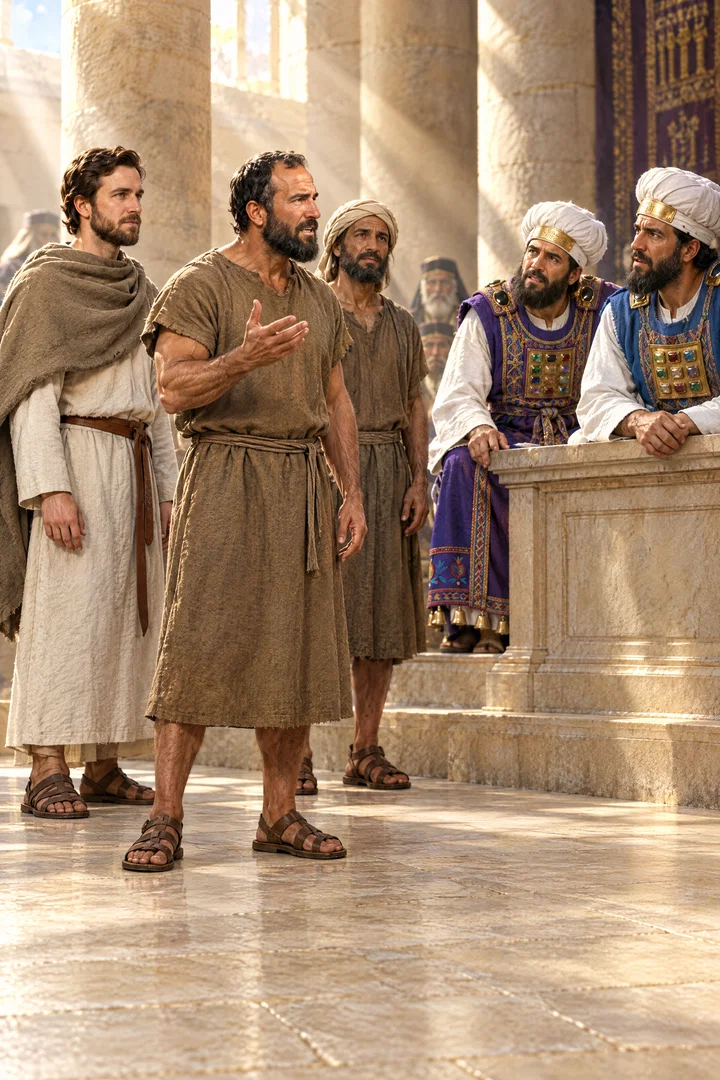
This Jesus is
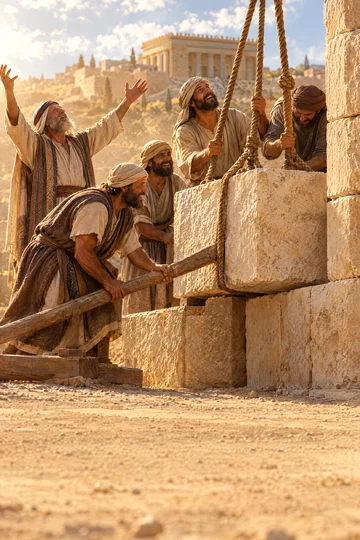
‘ the stone you builders rejected,
which has become the cornerstone.’He is ‘ the stone which was regarded as worthless by you, the builders, which has become the head of the corner.’
He is the stone which you builders had no use for, but which has been made the chief stone of the building.
This is the stone cast aside of you builders which is become the head of the corner.
Douay-Rheims (Challoner revision)
This is the stone which was rejected by you the builders, which is become the head of the corner.
Pictures
Cross-references 20 of 36
- Psalms 118:22
The stone which the builders refused is become the head stone of the corner.
The rejected stone becomes the cornerstone, a prophecy Peter applies to Jesus.
- Matthew 21:42
Jesus saith unto them, Did ye never read in the scriptures, The stone which the builders rejected, the same is become the head of the corner: this is the Lord’s doing, and it is marvellous in our eyes?
Jesus applies the rejected-stone saying to himself.
- 1 Peter 2:7
Unto you therefore which believe he is precious: but unto them which be disobedient, the stone which the builders disallowed, the same is made the head of the corner,
Christ is the rejected stone made the head of the corner.
- Ephesians 2:20
And are built upon the foundation of the apostles and prophets, Jesus Christ himself being the chief corner stone;
Both identify Christ as the chief cornerstone on which the church is built.
- 1 Corinthians 3:11
For other foundation can no man lay than that is laid, which is Jesus Christ.
Both identify Christ as the foundation, the stone laid by God.
- Isaiah 28:16
Therefore thus saith the Lord GOD, Behold, I lay in Zion for a foundation a stone, a tried stone, a precious corner stone, a sure foundation: he that believeth shall not make haste.
God’s precious foundation stone is identified with Christ, the cornerstone.
- Matthew 16:18
And I say also unto thee, That thou art Peter, and upon this rock I will build my church; and the gates of hell shall not prevail against it.
Christ is the Rock and foundation on which he builds his church.
- Luke 20:17
And he beheld them, and said, What is this then that is written, The stone which the builders rejected, the same is become the head of the corner?
Jesus applies the rejected-stone prophecy to himself as the cornerstone.
- Ephesians 1:20-22
Which he wrought in Christ, when he raised him from the dead, and set him at his own right hand in the heavenly places,
Christ is exalted to God’s right hand and made head over all things to the church.
- Acts 3:13-15
The God of Abraham, and of Isaac, and of Jacob, the God of our fathers, hath glorified his Son Jesus; whom ye delivered up, and denied him in the presence of Pilate, when he was determined to let him go.
Peter describes Jesus’ rejection and death, followed by God raising him from the dead.
- Mark 12:10
And have ye not read this scripture; The stone which the builders rejected is become the head of the corner:
Both identify Christ as the rejected stone made the cornerstone.
- Matthew 21:44
And whosoever shall fall on this stone shall be broken: but on whomsoever it shall fall, it will grind him to powder.
Jesus describes the consequences of falling on the stone or being crushed by it.
- Daniel 2:34-35
Thou sawest till that a stone was cut out without hands, which smote the image upon his feet that were of iron and clay, and brake them to pieces.
The stone represents Christ and his everlasting kingdom, overcoming earthly powers.
- Matthew 21:4-5
All this was done, that it might be fulfilled which was spoken by the prophet, saying,
Jesus’ entry fulfills the prophecy of the rejected stone becoming the cornerstone.
- Acts 4:7
And when they had set them in the midst, they asked, By what power, or by what name, have ye done this?
Council questioned the apostles about the power behind the healing
- 1 Peter 2:6
Wherefore also it is contained in the scripture, Behold, I lay in Sion a chief corner stone, elect, precious: and he that believeth on him shall not be confounded.
stone laid as chief cornerstone in Sion
- 1 Peter 2:4
To whom coming, as unto a living stone, disallowed indeed of men, but chosen of God, and precious,
Jesus is the living stone rejected by people and chosen by God.
- Romans 9:33
As it is written, Behold, I lay in Sion a stumblingstone and rock of offence: and whosoever believeth on him shall not be ashamed.
The stone prophecy is applied to the Saviour.
- Isaiah 8:14
And he shall be for a sanctuary; but for a stone of stumbling and for a rock of offence to both the houses of Israel, for a gin and for a snare to the inhabitants of Jerusalem.
Both describe Christ as a stone.
- Luke 20:18
Whosoever shall fall upon that stone shall be broken; but on whomsoever it shall fall, it will grind him to powder.
Both describe Christ as the stone, warning of the judgment that comes from rejecting him.
Commentary
Each commentary is drawn from primary sources: the writings of Ellen G. White and Adventist pioneers and periodicals. Each commentary is separate. Its own words are not a quotation; follow the references to read the source passages.
Ellen G. White
23 sources
The stone is Jesus Christ of Nazareth, whom the Jewish priests, rulers and authorities at Jerusalem delivered up and crucified, but whom God raised from the dead and made the cornerstone and foundation-stone of the church.7RED 16.2–17.1AC1 16.2–17.1EW 160.2–3Ms 22, 1900, par. 11–16Ms 47, 1886, par. 5–9 Peter spoke this filled with the Holy Ghost when brought as a prisoner before Annas and Caiaphas and the Sanhedrin on the day after the healing of the lame man, boldly declaring that the man stood whole before them by the name of Jesus.7RED 16.2–17.1AC1 16.2–17.15MR 264.1–3Ms 47, 1886, par. 5–9 Those builders should have recognized his worth, yet they set him at nought, and God overruled their rejection and gave the rejected one the foundational place through his resurrection.AC1 16.2–17.1EW 160.2–35MR 264.1–3AA 57.2–58.2AA 70.1–71.1 Its saving importance lies in that salvation is found in no other name, to which the apostles bore witness as the Son of God even when commanded not to speak or teach in his name.Ms 22, 1900, par. 11–16Ms 47, 1886, par. 5–9Ms 160a, 1898, par. 26–28Ms 160, 1898, par. 23–26 The verse therefore calls for persisting in declaring what God says whether it pleases hearers or not and obeying God rather than human rulers, as the apostles testified boldly to the resurrection despite threats and many believed.5MR 264.1–3Ms 47, 1886, par. 5–9SLP 11.1
Stone, Builders, and Setting
The stone is Jesus Christ of Nazareth, whom the Jewish leaders delivered up, crucified and put to death, but whom God raised from the dead.7RED 16.2–17.1AC1 16.2–17.1EW 160.2–3Ms 160, 1898, par. 23–26RH Feb 2, 1911 The builders who set him at nought are the priests, high priest, elders, rulers and authorities of the Jewish church at Jerusalem, including Annas and Caiaphas and the other temple dignitaries and Sanhedrin before whom Peter was tried.AC1 16.2–17.15MR 264.1–3Ms 47, 1886, par. 5–9AC1 17.2–37RED 15.3 Those authorities should have perceived his value and recognized his worth, yet they rejected him.AC1 16.2–17.13SP 279.3–281.17RED 17.2–3AC1 17.2–3 Becoming the head of the corner means God made him the cornerstone, the foundation-stone of the church, the one essential foundation and most important stone in God's work and central to his saving work.AC1 16.2–17.1Ms 22, 1900, par. 11–16Ms 47, 1886, par. 5–9Ms 160a, 1898, par. 26–28AA 70.1–71.1 The stone image was already familiar to the priests from the prophets and from Jesus' own teaching as a familiar prophetic figure.AA 63.2–64.2RH Feb 2, 1911
Peter spoke the verse in his defense at his trial on the day after the healing of the impotent lame man, when brought as a prisoner and demanded by what power the man was made whole, declaring the man stood whole before them by the name of Jesus.7RED 16.2–17.1AC1 16.2–17.1Ms 47, 1886, par. 5–9AC1 17.2–37RED 15.3 Peter spoke filled with the Holy Ghost, respectfully yet boldly declaring where his strength came from, with the seal of Christ on his words and his countenance illuminated, as present truth after the resurrection.7RED 16.2–17.1AC1 16.2–17.1Ms 47, 1886, par. 5–9 Though unlearned and ignorant men, he and John showed they had been with Jesus.5MR 264.1–3 It was spoken in that very room and before those very men before whom Peter had shamefully denied his Lord, which Peter distinctly remembered.7RED 15.3 His bold confession after once denying him showed he now acknowledged his Lord and was approved and blessed by Jesus, with being filled with the Spirit as a token of that approval, and gave him opportunity to redeem his former wicked cowardice.SG1 82.17RED 15.3
The miraculously cured man standing whole beside Peter added weight as a convincing witness that Jesus is alive and at work, confirming his resurrection, exaltation, and power in heaven to perform miracles on earth through his apostles.7RED 16.2–17.1AC1 16.2–17.1Ms 22, 1900, par. 11–16ST Nov 14, 1878SG1 81.1 Priests, rulers and people were left silent with no power to refute.7RED 16.2–17.1
Rejection Overruled for Salvation
The leaders who rejected and crucified Jesus could not prevent God from giving Him the foundational place, for God made the rejected one the cornerstone, the essential foundation of His work and of His people and their work.AA 57.2–58.2AA 70.1–71.1AA 57.1AA 63.2–64.2 The stone was a familiar prophetic figure, already known from the prophets and from Jesus' own teaching, and their rejection did not undo God's purpose.AA 63.2–64.2RH Feb 2, 1911 His exaltation to that place was the Lord's doing.RH Feb 2, 1911
He was made the head of the corner through His resurrection from the dead, when God raised Jesus whom the leaders had opposed, rejected and crucified and made Him the foundation stone and chief cornerstone.EW 160.2–35MR 264.1–3RH Feb 2, 1911 His rejection and death did not end the miracles performed in His name or the spread of His teaching.7RED 17.2–3 His power to heal the impotent lame man stood as present evidence that He is alive and at work.Ms 22, 1900, par. 11–165MR 264.1–3
The saving importance of this claim is that salvation is found in no other name, for the one rejected by the religious leaders became central to God's saving work as the one essential foundation.Ms 22, 1900, par. 11–16Ms 160a, 1898, par. 26–28Ms 160, 1898, par. 23–26 To Him the apostles bore witness as the Son of God, whom the people delivered up and killed but whom God raised from the dead.Ms 160, 1898, par. 23–26 They proclaimed Him boldly as truth for that time before the council, testifying to His resurrection despite the rulers' threats and commands not to speak or teach in His name.5MR 264.1–3SLP 11.1 That preaching was opposed especially by the Sadducees and leaders who denied the resurrection, yet many people believed their message.5MR 264.1–3SLP 11.1
Boldness and Grace in Witness
The rejected building stone is Jesus of Nazareth, who was made the most important stone in God's work, and those who threw Him aside were the Jewish high priest, rulers and elders at Jerusalem.Ms 47, 1886, par. 5–9 At their trial Peter and John told those rulers to their faces that the healing of the lame man had been done through Jesus, and that Jesus was the One they themselves had rejected.Ms 47, 1886, par. 5–9 That declaration was present truth after the resurrection, spoken by men moved by the Holy Ghost.Ms 47, 1886, par. 5–9 It establishes the duty to keep declaring what God says whether it pleases the hearers or not, and to obey God rather than human rulers when commanded to stop speaking in the name of Jesus.Ms 47, 1886, par. 5–9
Peter, who gave that testimony, was by nature impetuous, hasty and self-confident, often appearing to greater disadvantage than Judas and oftener reproved by Christ.MH 493.3–4 Yet his later life of service and sacrifice bears testimony to the power of God's grace.MH 493.3–4 As Christ, who reads the heart, bore patiently with Peter in his faults and even with Judas whom He knew would betray Him, so those at fault are to be borne with in patience, and others are to be treated as Jesus treated His disciples when He walked and talked with them on the earth.MH 493.3–4
Sources
Pioneers and periodicals
63 sources
The stone is Jesus Christ of Nazareth, whom men crucified and God raised from the dead, and the builders who set him at nought are the Jewish rulers, elders and priests in Jerusalem who rejected him, whom God made the head of the corner as the central and essential foundation for salvation.RH Feb 18, 1915ST Jan 21, 1897ST Jan 14, 1897ST Jan 29, 1902ST Jan 14, 1897 It was spoken in Peter's Spirit-empowered testimony before the Sanhedrin, the same council that judged Jesus, after Peter and John healed the lame man in Jesus' name, with the healed man standing whole beside them as proof the rulers could not deny.ST Feb 24, 1914RH Jun 11, 1901RH Feb 12, 1861 Salvation and complete wholeness are found in no other name under heaven, for he is the only way to come to God, the one remedy for sin in every age established before the world began.RH Oct 5, 1916RH Feb 18, 1915ST Sep 20, 1905ST Aug 8, 1900 Christ himself, not Peter, is the Rock, foundation and chief cornerstone on which the church is built, and those who come to him in repentance are joined to him as living stones in God's spiritual temple that will stand when tested.ST Jan 22, 1894RH Jun 2, 1904ST Aug 13, 1894ST Jan 7, 1889ST Jan 7, 1889 He became the head of the corner when he ascended and sat at God's right hand in the heavenly places, crowned with glory and honor as head over all things to the church and as High Priest and Mediator forever interceding.ST Jun 1, 1882ST Aug 8, 1878RH Jul 21, 1874 It applies the rejected-stone prophecy of Psalm 118:22 to Jesus and gives no proof that the resurrection day, the first day of the week, is made the Sabbath, saying nothing about a change of the Sabbath or honoring one day above others.ST Jun 1, 1882RH Nov 29, 1853RH Oct 2, 1900ST Feb 23, 1882RH May 10, 1860
Stone, Builders, and Setting
The stone is Jesus Christ of Nazareth, whom men crucified and God raised from the dead, made the head of the corner and chief cornerstone.ST Feb 7, 1884RH Feb 18, 1915ST Jan 21, 1897ST Jan 29, 1902ST Sep 15, 1887 His identification as that stone belongs to Peter's testimony that the healing was done through Jesus' name and that salvation is found in no other name, for Christ alone is the source of help, healing and salvation.ST Feb 7, 1884RH Feb 18, 1915ST Sep 15, 1887 The one rejected by the leaders is thus the essential foundation, and the leaders who rejected and crucified him could not prevent God from raising and exalting him.ST Feb 7, 1884ST Jan 29, 1902 The builders who set him at nought are the Jewish rulers, elders, priests and religious leaders in Jerusalem who were responsible for building, who rejected and crucified him while only a few received him.ST Feb 24, 1914RH Feb 2, 1911ST Jan 14, 1897ST Mar 11, 1897ST Jan 14, 1897 They are pictured as builders with authority in the church, and their rejection and crucifixion of Christ, followed by condemnation and persecution of his apostles and people, filled Jerusalem's measure of guilt.RH Feb 2, 1911ST Jan 14, 1897RH May 10, 1915 His becoming the head of the corner means God made the rejected one central, exalted and of highest importance as the essential foundation for salvation.ST Jan 14, 1897ST Jan 14, 1897 The Jewish rulers like builders rejecting a stone rejected him, but God made him the cornerstone and the foundation and chief support of God's work, so that the power of his word continued through his disciples.RH Feb 2, 1911ST Mar 15, 1905ST Jan 29, 1902 Their rejection did not undo God's purpose, and his exaltation was the Lord's doing.RH Feb 2, 1911ST Jan 29, 1902 The verse was spoken in Peter's Spirit-empowered testimony before the rulers and elders, the Sanhedrin, the same council that judged Jesus, after Peter and John healed the lame and impotent man in Jesus' name.ST Feb 24, 1914RH Jun 11, 1901RH Feb 12, 1861ST Mar 9, 1882 The Holy Spirit gave Peter boldness to face opposition and to challenge the authorities, changing him from one frightened by a servant-girl to one receiving power from on high to face the Sanhedrin.RH Jun 11, 1901ST Mar 9, 1882 The healed man stood whole beside Peter as proof, confirming Jesus' resurrection and power, and the rulers acknowledged that a notable miracle had occurred which they could not deny.ST Feb 24, 1914ST Nov 14, 1878ST Feb 24, 1914RH Feb 12, 1861 The word for stone is lithos, the word for stones in general used of both Christ and his children in their vital union, not petros, which means a single stone as Peter is distinguished from petra the rock.ST Jan 7, 1889 Peter thus applies Psalm 118:22 to Jesus Christ as the foundation rock and cornerstone on which the church is built, distinct from Peter and all believers who are only stones built upon him into a spiritual temple.ST Jan 7, 1889
Exalted at God's Right Hand
The stone did not become the head of the corner on the same day he rose, for the verse proves only that he became so at some time since his resurrection, whether days or weeks after.ST Jun 1, 1882RH Nov 29, 1853ST Aug 8, 1878 It does not specify when afterward, whether two or ten or forty days after, and it does not say on what day he became the head.RH Nov 29, 1853ST Aug 8, 1878RH Nov 29, 1853 He became the head of the corner when he ascended and sat down at the right hand of God.ST Jun 1, 1882RH Nov 29, 1853ST Aug 8, 1878
There in the heavenly places he was crowned with glory and honor, exalted far above all principality and power, with all things put under his feet as head over all things to the church.ST Jun 1, 1882RH Jul 21, 1874RH Nov 29, 1853 The Father constituted him such in the heavenly Sion after his ascension, giving him to be High Priest and Mediator forever interceding for the church.ST Aug 8, 1878RH Jul 21, 1874RH Nov 29, 1853 The glorious building of grace is therefore founded not on earth but in heaven, where Jesus as the elect precious cornerstone sits and gathers the living stones of the edifice from afar.ST Aug 8, 1878RH Jul 21, 1874RH Nov 29, 1853
The related day is not one day of the week but the whole gospel day which Abraham saw, the gospel dispensation in which the gospel work opened.ST Jun 1, 1882ST May 14, 1896RH May 12, 1863 It is the time of Christ's eternal triumph over Satan, sin and death.ST Jun 1, 1882ST May 14, 1896RH May 12, 1863 In that day Christians rejoice always.ST Jun 1, 1882
Salvation in Christ Alone
Salvation and complete wholeness are found in no other name under heaven given among men, for Jesus is the stone rejected by the builders who became the cornerstone and head of the corner.ST Feb 7, 1884RH Oct 5, 1916RH Feb 18, 1915ST Feb 25, 1913 The healing of the cripple and impotent man in Jesus' name proves this, showing that he takes what is unsound and makes it whole, and that men are saved through one name only.ST Feb 7, 1884RH Feb 18, 1915ST Feb 25, 1913 He is the only source of help, healing and salvation, the only way to communicate with heaven and to come to God.RH Feb 18, 1915RH Oct 15, 1857
This one plan of salvation by believing in the Lord Jesus was established before the world began and was trusted by those who looked forward to the coming Saviour.RH Oct 5, 1916 It is the one remedy for sin and the one way sinners are saved in every age.ST Sep 20, 1905 It cannot be produced by law or imposed by compulsion, for laws that create only outward profession make a hypocrite rather than a saved disciple, and a person who does not believe remains condemned.ST Sep 20, 1905 Human effort cannot save or raise people from sin, faith in his name is sufficient, and teaching that something else is necessary denies Christ.ST Aug 8, 1900ST Oct 1, 1902
Salvation through him alone rescues from the hopeless death and condemnation that came upon all Adam's posterity through Adam's fall.ST Dec 13, 1905 Those who come to God through the crucified and risen Jesus, whom God raised from the dead to live forever, receive his victory over sin and death.RH Oct 15, 1857 Those who reject him or seek another way perish, those on whom the rejected Stone falls face destruction, and there is no special offer of salvation apart from Christ.RH Oct 15, 1857RH May 8, 1856 His triumph over Satan, sin and death is bound up with his rejection and exaltation as head of the corner.ST May 14, 1896
His death was necessary as the only means of human redemption, as necessary as the death of the corn of wheat to the harvest.RH Oct 17, 1854 Without it he would have remained alone, with no resurrection as the firstfruits of them that slept and no harvest of the resurrection.RH Oct 17, 1854 He alone of all in heaven, on earth and under the earth was worthy and able to open the sealed book of eternal life.RH Oct 17, 1854 He abolished death and brought life and immortality to light through the gospel, turned back the flaming sword guarding the tree of life, and gives eternal life, for this life is in his Son.RH Oct 17, 1854 Hence he is the way, the only way, the truth and the life, and no other foundation can be laid than that which is laid, which is Jesus Christ.RH Oct 17, 1854
Foundation of the Church
Christ himself, and not Peter, is the Rock and foundation and chief cornerstone on which the church is built.ST Jan 22, 1894RH Jun 2, 1904ST Aug 13, 1894ST Apr 16, 1896 He is Jesus Christ, crucified and raised from the dead, the stone rejected by the builders and made the head of the corner, and in no other is salvation found.ST Jan 22, 1894RH Jun 2, 1904 Peter himself was not the rock but one stone among the apostles and prophets built upon Christ, while Christ is the cornerstone distinct from Peter and all believers who are only stones built upon him into a spiritual temple.ST Aug 13, 1894ST Jan 7, 1889ST Apr 16, 1896 The stone is lithos, the word for stones in general used of both Christ and his children in their vital union, not petros, which means a single stone as Peter is distinguished from petra the rock.ST Jan 7, 1889
Those who come to him in repentance are healed and joined to him and made living stones in God's spiritual temple.ST Jan 7, 1889ST Jan 7, 1889 The church is founded on Jesus whom the rulers rejected, as the living Rock and the foundation no other can replace, and it is built as people receive his life and hear and do his words and are formed into a living spiritual house.RH Jul 8, 1902 Builders are responsible for how they build on him, and only a life built on Christ will stand when tested, while those who reject every offer of mercy face judgment.ST Jan 7, 1889RH Jul 8, 1902
As foundation and chief support of God's work, the power of his word continued through his disciples.ST Mar 15, 1905 Their preaching was thereby enabled to bear witness with power and influence.ST Mar 15, 1905
Prophecy Fulfilled in Christ
Peter before the Sanhedrin identifies Jesus Christ of Nazareth, crucified and raised from the dead, as the stone rejected by the builders which God made the head of the corner, and thereby gives the inspired meaning of Psalm 118:22 and removes all doubt that the stone the builders refused means Christ.ST Jun 1, 1882RH Oct 2, 1900ST Feb 23, 1882ST Jan 29, 1902ST Jan 7, 1889 The healing of the lame and impotent man standing whole beside the apostles in his name proves the identification, for his resurrection and power were evident in the healed man whom the rulers saw but could not deny.RH Oct 2, 1900ST Jan 29, 1902RH Nov 21, 1871 The builders are the rulers, elders, priests and Jewish leaders in Jerusalem who had authority and rejected him, and the stone is the foundation rock and cornerstone on which the church is built, distinct from Peter and all believers who are only stones built upon him into a spiritual temple.RH Oct 2, 1900ST Jan 29, 1902ST Jan 7, 1889 The word for stone is lithos, the word for stones in general used of both Christ and his children in their vital union, not petros, which means a single stone as Peter is distinguished from petra the rock.ST Jan 7, 1889
His becoming head of the corner did not take place on the day of his resurrection but when he ascended and was made head over all things to the church.ST Jun 1, 1882 The related day of rejoicing in Psalm 118:24 is not the first day of the week but the whole gospel day and gospel dispensation which Abraham saw, in which Christians rejoice always.ST Jun 1, 1882 Peter preached crucifixion, resurrection and exaltation within one verse of that saying yet said not one word about sanctification of the first day in honor of the resurrection or a change of the seventh-day Sabbath, though he would have had an excellent opportunity and obligation to announce it if the resurrection or the psalm had made such a change.ST Jun 1, 1882ST Feb 23, 1882RH Nov 21, 1871
The Jewish rulers, like builders rejecting a stone, and the religious leaders who had authority in the church rejected him and failed to recognize his divine character and worth.RH Feb 2, 1911ST Jan 22, 1885ST Jan 29, 1902 The stone is a familiar prophetic figure for the Messiah, the desire of all nations, and God made the rejected one the foundation and chief stone and cornerstone.RH Feb 2, 1911ST Jan 22, 1885RH Jul 16, 1908 Their rejection did not undo God's purpose and did not prevent God from making him central and essential, and his exaltation by resurrection and by the healing of the disabled man in his name was the Lord's doing.RH Feb 2, 1911ST Jan 29, 1902RH Jul 16, 1908 The stone laid before Joshua in Zechariah's vision is this same stone made the chief corner stone, representing Christ whose taking human nature, death and priestly intercession remove iniquity and fulfill the sign shown in Joshua's service on the Day of Atonement.ST Apr 26, 1883
No Proof for Sunday
The rejected stone that became the head of the corner is Jesus Christ of Nazareth, whom the builders crucified and set at nought and whom God raised from the dead.RH Nov 29, 1853ST Aug 8, 1878RH May 10, 1860 The verse does not say He became the head on the same day He rose, but proves only that He became so at some time since His resurrection, whether two or ten or forty days after.RH Nov 29, 1853ST Aug 8, 1878 He became the head of the corner when He ascended and sat down on the right hand of God, where He was made head over all things to the church as High Priest and Mediator, so that the foundation of the building of grace is in heaven where He as the precious cornerstone gathers the living stones from afar.RH Nov 29, 1853ST Aug 8, 1878RH Jul 21, 1874 Therefore the verse gives no proof that the day of the resurrection, the first day of the week, is made the Sabbath.RH Nov 29, 1853ST Aug 8, 1878RH May 10, 1860
Though cited as a fulfillment of Psalm 118:22-24 and connected by others with the resurrection as the day the Lord made, the cited verses mention neither the Sabbath nor a change of the Sabbath.RH May 10, 1860RH Dec 4, 1860RH May 10, 1860 The New Testament applies the stone saying to Christ but never applies the day saying to the first day of the week.RH Jan 13, 1874RH Dec 4, 1860 The inspired meaning given by this and the other New Testament fulfillments says nothing about the day in Psalm 118 being the resurrection day, the first day of the week, a new Sabbath, or a day to be honored above other secular days.RH Jan 13, 1874RH Dec 4, 1860RH May 10, 1860 The verse says nothing about the resurrection day, the seventh day, or a change of the Sabbath.RH May 10, 1860RH Dec 4, 1860RH May 10, 1860
Peter before the Sanhedrin identified Christ as the stone rejected by the builders which God made the head of the corner, preaching His crucifixion, resurrection and exaltation to the people.ST Jun 1, 1882RH Nov 21, 1871RH Jul 21, 1874 That quotation stands within one verse of Psalm 118:24, which is said to predict the change of the Sabbath in honor of the resurrection, giving Peter the very opportunity to announce a new Sabbath in fulfillment of that prophecy.ST Feb 23, 1882RH Nov 21, 1871RH Jul 21, 1874 He did not become the head of the corner by rising from the dead, but only after His ascension when the Father constituted Him such in the heavenly Sion by exalting Him to His own right hand far above all principality and power and putting all things under His feet.ST Jun 1, 1882RH Jul 21, 1874 The day of rejoicing in Psalm 118:24 is the whole gospel day and gospel dispensation which Abraham saw, in which Christians rejoice always, not the first day of the week.ST Jun 1, 1882
Peter said not one word about sanctification of the first day in honor of the resurrection or about the first day being chosen in place of the seventh, though if Christ's resurrection had changed the Sabbath and if the psalm taught that change he would have had an excellent opportunity and been under obligation to set it forth.ST Jun 1, 1882ST Feb 23, 1882RH Nov 21, 1871RH Jul 21, 1874 His silence proves he had no idea it was sacred and that no such duty existed, and proves that up to that point no change had taken place and the apostles and the eight thousand believers remained seventh-day observers.ST Jun 1, 1882ST Feb 23, 1882RH Nov 21, 1871 The silence of the enemies of the apostles throughout Acts likewise proves the apostles never made such a change either by precept or example.RH Jul 21, 1874
Courage and Faithful Witness
The power of God rested on the apostolic church from Acts 2 to 8 through consecration and simple trust in the power of God's word, and that trust gave boldness despite threatened persecution, so that such preaching brings both persecution and saved souls into the church of God to serve.ST Sep 23, 1908 Human authorities must not usurp the place of conscience or of God.ST Apr 23, 1912 The account is of Christ's murderers persecuting the apostles for preaching Christ.RH Jun 8, 1916 The rejection and crucifixion of Christ, followed by the condemnation and persecution of his apostles and people, filled Jerusalem's measure of guilt.RH May 10, 1915 The witness before the Sanhedrin sets the apostles' apparent weakness against the eventual establishment of Christianity despite powerful opposition.RH Jun 27, 1865
That rejection of Christ and his apostles by the religious leaders of the first century is echoed when church leaders oppose those appointed to carry forward God's work.RH Apr 7, 1863 As those leaders opposed Christ and his apostles, the priesthood of the sixteenth century opposed Luther, the Reformation, and its ministers.RH Apr 7, 1863 Luther's appearance before the authorities at Worms parallels Peter and John before the Sanhedrin, showing the same pattern of rejection and persecution recurs in later reformations.RH Apr 7, 1863 Because rulers and powerful people rejected the stone and made him unpopular, his followers should not shrink from an unpopular hope or teaching simply because others oppose it.RH Dec 1, 1859
Jesus was rejected by the religious and influential leaders though God had made him central, with the high priest, Pharisees, and most learned and respected people opposing him, calling him an impostor, and putting him to death, while only a few received him.RH Sep 15, 1868 Their authority and reputation did not make their rejection proof against his claims, and the question whether any rulers believed in him continued after his death and resurrection.RH Sep 15, 1868 With its context about salvation in no other name, the declaration of Christ rejected by leaders yet made the chief cornerstone stands as one of the wells of salvation among the books of Scripture.RH Dec 7, 1916 Searching this testimony with faith draws forth the water of life in copious streams to quench the thirst of perishing souls, without creeds and traditions, and committing it to memory transfers the well from the printed page to the heart as a source of ever-flowing streams of salvation.RH Dec 7, 1916 Merely calling Christ the cornerstone without making him essential leaves a system standing just as securely without him as with him.ST Aug 14, 1884
Sources