Matthew 21:42
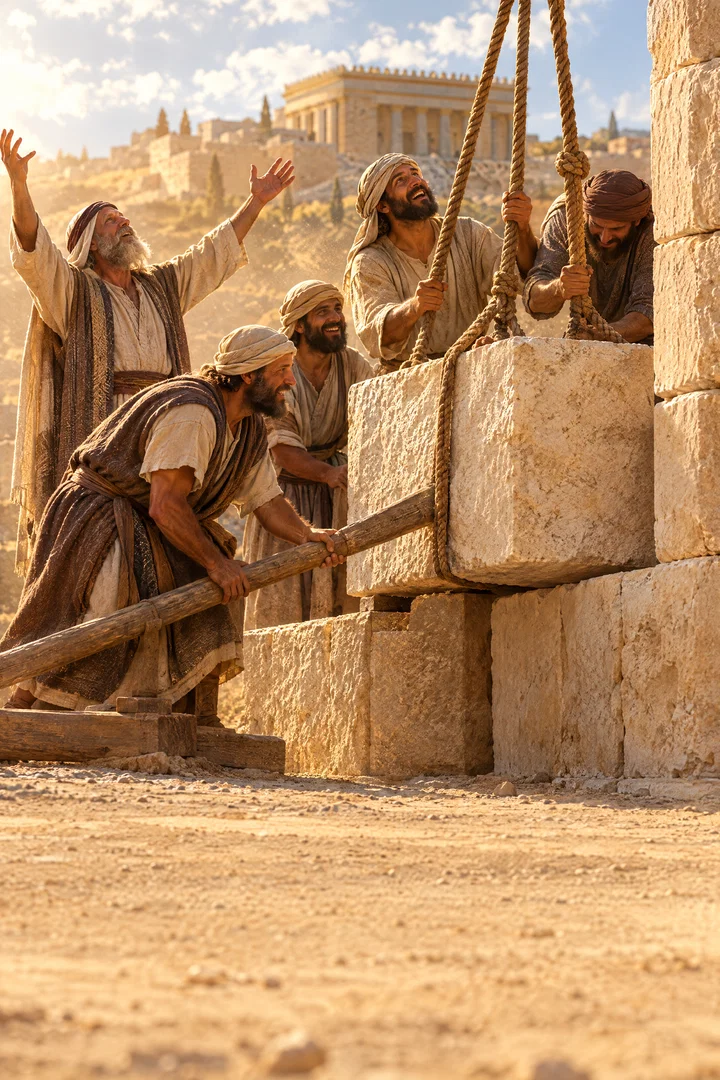
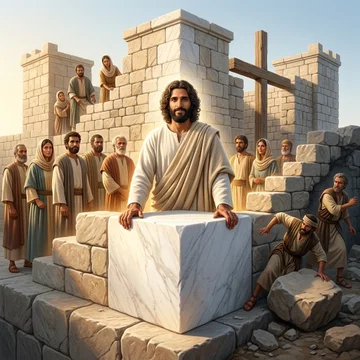
Jesus saith unto them, Did ye never read in the scriptures, The stone which the builders rejected, the same is become the head of the corner: this is the Lord’s doing, and it is marvellous in our eyes?
Translations
Jesus says to them, Did you never read in the scriptures, The stone which the builders rejected, the same is become the head of the corner: this is the Lord’s doing, and it is marvelous in our eyes?
King James Version, KJV Cambridge Paragraph Bible
Jesus saith unto them, Did ye never read in the scriptures, The stone which the builders rejected, the same is become the head of the corner: this is the Lord’s doing, and it is marvellous in our eyes?
Jesus saith to them, Did ye never read in the scriptures, The stone which the builders rejected, the same is become the head of the corner: this is the Lord's doing, and it is marvelous in our eyes?
Jesus saith unto them, Did ye never read in the scriptures, The stone which the builders rejected, The same was made the head of the corner: This was from the Lord, And it is marvelous in our eyes?
Jesus saith unto them, Did ye never read in the scriptures,
The stone which the builders rejected,
The same was made the head of the corner;
This was from the Lord,
And it is marvellous in our eyes?Jesus saith to them, 'Did ye never read in the Writings, A stone that the builders disallowed, it became head of a corner; from the Lord hath this come to pass, and it is wonderful in our eyes.
Jesus says to them, Have ye never read in the scriptures, The stone which they that builded rejected, this has become the corner-stone: this is of [ the] Lord, and it is wonderful in our eyes?
Jesus saith unto them—Have ye, never, read in the Scriptures, A stone which the builders rejected, the same, hath become, head of the corner: From the Lord, hath this come to pass, and is marvellous in our eyes.
Berean Standard Bible, Majority Standard Bible
Jesus said to them, “ Have you never read in the Scriptures:
‘ The stone the builders rejected
has become the cornerstone.
This is from the Lord,
and it is marvelous in our eyes’?Jesus said to them, “ Did you never read in the Scriptures,
‘ The stone which the builders rejected
was made the head of the corner.
This was from the Lord.
It is marvelous in our eyes’?Jesus says to them, Did you never see in the Writings, The stone which the builders put on one side, the same has been made the chief stone of the building: this was the Lord's doing, and it is a wonder in our eyes?
Iesus saide vnto them, Read ye neuer in the Scriptures, The stone which the builders refused, the same is made the head of the corner? This was the Lordes doing, and it is marueilous in our eyes.
Douay-Rheims (Challoner revision)
Jesus saith to them: Have you never read in the Scriptures: The stone which the builders rejected, the same is become the head of the corner? By the Lord this has been done; and it is wonderful in our eyes.
Pictures
Cross-references 20 of 24
- Psalms 118:22-23
The stone which the builders refused is become the head stone of the corner.
The stone prophecy quoted by Jesus comes from this psalm.
- Acts 4:11
This is the stone which was set at nought of you builders, which is become the head of the corner.
Peter identifies Jesus as the rejected stone made the cornerstone.
- 1 Peter 2:7
Unto you therefore which believe he is precious: but unto them which be disobedient, the stone which the builders disallowed, the same is made the head of the corner,
Christ is the rejected stone made the head of the corner.
- Luke 20:17
And he beheld them, and said, What is this then that is written, The stone which the builders rejected, the same is become the head of the corner?
Jesus applies the rejected-stone saying to the leaders who reject the beloved son.
- Isaiah 28:16
Therefore thus saith the Lord GOD, Behold, I lay in Zion for a foundation a stone, a tried stone, a precious corner stone, a sure foundation: he that believeth shall not make haste.
Foretells the precious cornerstone laid in Zion as a sure foundation.
- Ephesians 2:20
And are built upon the foundation of the apostles and prophets, Jesus Christ himself being the chief corner stone;
Christ is the cornerstone of God’s household and its foundation.
- Mark 12:10-11
And have ye not read this scripture; The stone which the builders rejected is become the head of the corner:
The tenants’ parable joins the rejected stone to its becoming the cornerstone.
- Isaiah 8:14-15
And he shall be for a sanctuary; but for a stone of stumbling and for a rock of offence to both the houses of Israel, for a gin and for a snare to the inhabitants of Jerusalem.
Christ is the stone of stumbling whose rejection brings judgment.
- Romans 9:33
As it is written, Behold, I lay in Sion a stumblingstone and rock of offence: and whosoever believeth on him shall not be ashamed.
Christ is the stone that causes unbelievers to stumble.
- Daniel 2:34-35
Thou sawest till that a stone was cut out without hands, which smote the image upon his feet that were of iron and clay, and brake them to pieces.
The stone crushes opposing kingdoms and becomes a mountain filling the earth.
- 1 Peter 2:4
To whom coming, as unto a living stone, disallowed indeed of men, but chosen of God, and precious,
Christ is the stone rejected by men yet chosen and precious to God.
- Luke 20:16
He shall come and destroy these husbandmen, and shall give the vineyard to others. And when they heard it, they said, God forbid.
The hearers recognize the parable’s sentence against them and cry, “God forbid.”
- Isaiah 53:3
He is despised and rejected of men; a man of sorrows, and acquainted with grief: and we hid as it were our faces from him; he was despised, and we esteemed him not.
The rejected Messiah is later crowned and enthroned.
- Psalms 118:26
Blessed be he that cometh in the name of the LORD: we have blessed you out of the house of the LORD.
The rulers could have welcomed Christ as the one coming in the Lord’s name.
- 1 Corinthians 3:11
For other foundation can no man lay than that is laid, which is Jesus Christ.
Christ is the only foundation of salvation.
- Matthew 16:18
And I say also unto thee, That thou art Peter, and upon this rock I will build my church; and the gates of hell shall not prevail against it.
Christ distinguishes Peter, the little stone, from himself, the great Rock on which the church is built.
- Luke 20:18
Whosoever shall fall upon that stone shall be broken; but on whomsoever it shall fall, it will grind him to powder.
The stone crushes those on whom it falls.
- 1 Corinthians 10:4
And did all drink the same spiritual drink: for they drank of that spiritual Rock that followed them: and that Rock was Christ.
Both identify Christ with the spiritual Rock.
- Zechariah 3:9
For behold the stone that I have laid before Joshua; upon one stone shall be seven eyes: behold, I will engrave the graving thereof, saith the LORD of hosts, and I will remove the iniquity of that land in one day.
identifies it as the same stone laid before Joshua
- Ephesians 1:20-22
Which he wrought in Christ, when he raised him from the dead, and set him at his own right hand in the heavenly places,
Christ is exalted after his resurrection and made head over all things.
Commentary
Each commentary is drawn from primary sources: the writings of Ellen G. White and Adventist pioneers and periodicals. Each commentary is separate. Its own words are not a quotation; follow the references to read the source passages.
Ellen G. White
37 sources
The stone is Christ, rejected by Israel's priests, rulers and builders yet made by God the foundation and head of the whole building of salvation.ST Apr 11, 1878PK 711.4–712.23SP 34.2–35.2 Spoken right after the parable of the vineyard, it exposed those unfaithful stewards who beat God's messengers and killed His Son, and they knew it condemned themselves.ST Feb 17, 1898Ms 110, 1899, par. 26–32Ms 149, 1898, par. 4–5 Because of that rejection the kingdom with its blessings and work would be taken from unfruitful Israel and given to another people bringing forth its fruits.PK 711.4–712.2Ms 149, 1898, par. 21ST Feb 17, 1898 Whoever falls on the stone in impenitence will be broken, and on whom it falls in judgment will be crushed to powder, yet those broken by it in repentance find mercy and cleansing.Ms 149, 1898, par. 21AA 63.2–64.2Ms 149, 1898, par. 4–5ST Oct 31, 1900 The warning reaches beyond that generation to the church today, which has received great light and must bear corresponding fruit lest its trust also be removed and given to others.COL 296.2Ms 110, 1899, par. 33–35Ms 126, 1899, par. 9
Stone, Builders, and Cornerstone
The stone is Christ Himself, rejected by men yet made by God the chief stone of the building, the head of the corner, the cornerstone and foundation of the whole building on which builders must build.ST Apr 11, 1878PK 711.4–712.23SP 34.2–35.2AA 63.2–64.2Ms 138, 1899, par. 40–42 His rejection and exaltation fulfill prophecy, for the slain heir is Christ and the stone points to Him as the One foretold by the prophets to come as Messiah.ST Apr 11, 1878PK 711.4–712.23SP 34.2–35.2DA 596.1–597.4 Those who reject Him cannot prevent God from making Him central, for alongside the unfaithful husbandmen the rejected stone stands to show two responses to truth, with some receiving it and working with God while others resist Christ and face judgment.Ms 138, 1899, par. 40–42Ms 166, 1898, par. 34–37
The builders are Israel's leaders — the chief priests, Pharisees, scribes, rulers and elders, the proud religious leaders entrusted with God's vineyard.ST Apr 11, 1878PK 711.4–712.2Ms 23, 1900, par. 10–12Ms 109, 1902, par. 11–13Ms 166, 1898, par. 34–37 They are the Jewish leaders who rejected Him as Messiah and Saviour and Light of the world and truth, rejected His authority, turned the people from Him, and through envy and jealousy plotted His death.Ms 23, 1900, par. 10–12Ms 109, 1902, par. 11–13Ms 166, 1898, par. 34–37 Jesus fastened guilt for rejecting Him upon them as a vivid picture of their condition and peril, yet they hardened their hearts against conviction and determined to carry out their purpose to kill the heir.Ms 23, 1900, par. 10–12Ms 166, 1898, par. 34–37
His becoming the cornerstone is the Lord's doing and is marvelous in its working, fulfilling God's purpose despite rejection and exposing the leaders' rejection while leading into judgment.ST Apr 11, 1878PK 711.4–712.23SP 34.2–35.2Ms 23, 1900, par. 10–12AA 63.2–64.2 Rejection did not and cannot defeat God, but His purpose is fulfilled in exalting the One rejected, so that their rejection does not defeat Him but exalts Him.ST Apr 11, 1878PK 711.4–712.23SP 34.2–35.2Ms 109, 1902, par. 11–13Ms 166, 1898, par. 34–37 His exaltation is marvelous to behold, and it warns that pride and hypocritical self-importance can lead people to reject Christ.3SP 34.2–35.2AA 63.2–64.2Ms 109, 1902, par. 11–13
As cornerstone He is the originator and foundation of the Jewish system, economy and temple and of the whole plan of salvation, the one to whom its sacrificial services pointed.ST Apr 11, 18783SP 34.2–35.2DA 596.1–597.4 He is the foundation of the Jewish system and temple, and the cornerstone of the Jewish economy and of the whole plan of salvation.ST Apr 11, 18783SP 34.2–35.2DA 596.1–597.4 The stone rejected by the builders represents Jesus, whom Israel's priests and rulers were about to reject and kill, and the prophecy warns the leaders of the danger of rejecting Him.3SP 34.2–35.2DA 596.1–597.4
Parable Setting and Confrontation
Jesus asked the question about the rejected stone immediately after telling the parable of the vineyard, in which husbandmen entrusted with the vineyard beat the servants sent for fruit and killed the beloved son and heir to seize the inheritance for themselves.ST Feb 17, 1898Ms 149, 1898, par. 4–5COL 293.1–3 The hearers themselves gave the sentence on that story, answering that the lord of the vineyard would miserably destroy those wicked men and let out the vineyard to other husbandmen who would render him the fruits in their season.Ms 149, 1898, par. 4–5Ms 78, 1897, par. 12 That self-pronounced verdict set the ground for the verse, which identifies Jesus as the stone and the son rejected by the husbandmen, yet made living power and foundation by God, so that rejection does not undo His purpose.Ms 110, 1899, par. 26–32Ms 149, 1898, par. 4–5COL 293.1–3
In that setting the verse applies the prophecy of the rejected stone, long declared by the prophets of how the Messiah would come, directly to the priests and elders.Lt 114, 1895, par. 11–15DA 596.1–597.4RH Feb 2, 1911 It exposes their true religious character and their past and future history as unfaithful stewards who sought their own glory instead of serving God and advancing His work, who occupied the vineyard without returning fruit, shamefully treated God's messengers with contempt, injustice and cruelty, appropriated entrusted goods and resources, and were about to reject and kill the Son after refusing His authority despite His teaching and example.ST Feb 17, 1898ST Oct 31, 1900COL 292.1–3RH Feb 2, 1911Ms 78, 1897, par. 12 The parable thus lays open the chosen people's breach of trust, and the verse warns that God will not continue to bless those who persist in sin, exalt themselves, and misrepresent Him.ST Oct 31, 1900DA 596.1–597.4
The application was so plain that the leaders perceived He spoke of them and knew the parable pointed them out as the very ones whose sentence they themselves had pronounced.ST Feb 17, 1898Ms 78, 1897, par. 12Ms 28, 1897, par. 5–6 Jesus fastened guilt upon them for rejecting Him and plotting His death, drew from them their own condemnation, and carried them along with striking figures and questions for decision until they condemned the very course they were pursuing.ST Feb 17, 1898Ms 166, 1898, par. 34–37Ms 28, 1897, par. 5–6 He spoke solemnly and regretfully after they had unwittingly pronounced their own doom, showing that receiving Him as God's Sent One would have changed their future and averted their doom.Ms 23, 1900, par. 10–12Ms 110, 1899, par. 26–32ST Oct 31, 1900 Rejecting Him was the decisive choice between obedience leading to life and disobedience leading to death, bringing condemnation and separation from God.Ms 23, 1900, par. 10–12COL 293.1–3
Instead of repenting they hardened their hearts against conviction, understanding the vivid picture of their condition and peril yet determining to carry out their purpose to kill the heir.ST Feb 17, 1898Ms 166, 1898, par. 34–37 They were filled with hatred, anger, mortification and madness, and would without further delay have laid hands on Him to silence His voice so He would no longer annoy them, even taking up stones to cast at Him.ST Feb 17, 1898Ms 78, 1897, par. 12Ms 28, 1897, par. 5–6 They were restrained only because they feared the people, and again and again He would have been killed, but heavenly angels attended Him and guarded His human life by the power of God until His day of work was ended and the case of the Jews as a nation was decided.Ms 78, 1897, par. 12Ms 28, 1897, par. 5–6 The verse stands in a chapter that tells of the triumphal entry journey to Jerusalem and is powerful to study and understand.Lt 82, 1907, par. 9 In it the barren fig tree warns those who profess to serve God and have their names on the church books yet bear no fruit to the glory of God, while the despised and rejected Christ will be crowned and seated upon His throne.Lt 82, 1907, par. 9
Kingdom Taken and Given
The verse pronounces God's sentence that the kingdom of God with its entrusted work, blessings, privileges and national advantages would be taken from unbelieving, unfaithful and unfruitful Israel and its leaders and given to another nation, to other husbandmen, to a people bringing forth its fruits.PK 711.4–712.2Ms 149, 1898, par. 21ST Feb 17, 1898Ms 23, 1900, par. 10–12AA 63.2–64.2 It identifies the rejected stone made head of the corner by the Lord's doing as Christ, and joins that exaltation to the judgment on those who rejected Him, showing that their rejection cannot prevent God from making Him central.PK 711.4–712.2Ms 149, 1898, par. 21ST Feb 17, 1898AA 63.2–64.2Ms 138, 1899, par. 40–42 In the parable's application the unfaithful husbandmen are the Jewish people as a whole and their leaders, who had received God's word and blessings but failed in duty, and the verse sets beside them the two responses to truth, some receiving it and working with God while others resist Christ and face judgment.ST Feb 17, 1898Ms 23, 1900, par. 10–12Ms 138, 1899, par. 40–42
Israel had been richly blessed and entrusted with a purpose requiring obedience and fruit, but forfeited blessing and brought ruin on itself by failing to fulfill that purpose.COL 284.1Ms 138, 1899, par. 40–42PK 710.2 The people treated His messengers cruelly and the rulers refused His authority, rejecting the Son despite His teaching, example, and life of truth and piety, determining to kill Him and thereby making themselves responsible for His crucifixion.Ms 138, 1899, par. 40–42Ms 110, 1899, par. 26–32ST Oct 31, 1900COL 293.1–3PK 710.2 Receiving Him as God's Sent One would have changed their future, but rejecting Him was the decisive choice between obedience leading to life and disobedience leading to death, leading to judgment.Ms 110, 1899, par. 26–32ST Oct 31, 1900COL 293.1–3
That rejection came after marvelous, long, patient forbearance reached its limit.Ms 149, 1898, par. 21 They were lifted up in selfish pride, exalted self and misrepresented Him, provoked Him by dishonesty, intrigue, theft and robbery, mingled His precepts with their prayers and teachings, put the knowledge of God from them, persisted in sin, and broke trust as those entrusted with light.Ms 149, 1898, par. 21ST Oct 31, 1900Ms 110, 1899, par. 33–35 God will not continue to bless or sustain those who so persist, but forgives the repentant and removes favor from those who continue in wrongdoing.ST Oct 31, 1900Ms 110, 1899, par. 33–35
The taking away had already commenced and would end in fearful severity.ST Feb 17, 1898Ms 78, 1897, par. 12 Darkness would come upon them, with condemnation and separation from God, and the glory of the Jewish city and temple would be broken and scattered in destruction of their temple and city and dispersion of the nation.ST Feb 17, 1898Ms 23, 1900, par. 10–12ST Apr 18, 18783SP 39.2–3Ms 78, 1897, par. 12 In the destruction of Jerusalem more than one million perished, following the rejection and crucifixion of Christ, and the stone that secures those who build on Him becomes ruin to those who reject Him, falling upon them in judgment at last.Ms 23, 1900, par. 10–12ST Apr 18, 1878DA 600.1–23SP 39.2–3
What Israel rejected was not destroyed, for God preserved it and established it beyond human power to harm.PK 17.3 He carries out His purpose through a faithful remnant, to whom the covenant promises are fulfilled.PK 22.1 The rejected vine represents Christ and the work God continued after Israel cast Him away, its branches remaining within reach where new grafts could be joined to it.PK 17.3
Broken and Crushed by Stone
Whoever in unbelief falls against the stone will be broken and bruised, and whomever the stone falls upon in judgment will be ground to powder and crushed.Ms 149, 1898, par. 21AA 63.2–64.2Ms 149, 1898, par. 4–5RH Feb 2, 1911 The stone is Christ, rejected by the builders, and the warning stands as God's sentence after marvelous, long, patient forbearance reached its limit.Ms 149, 1898, par. 21AA 63.2–64.2Ms 149, 1898, par. 4–5 That forbearance was provoked by selfish pride, dishonesty, intrigue, theft, robbery, mingling His precepts with prayers and teachings, and putting the knowledge of God from them, and by abuse of God's servants and murder of His Son, the abuse and condemnation of Him by the leaders entrusted with the vineyard.Ms 149, 1898, par. 21Ms 149, 1898, par. 4–5 With that rejection the kingdom with its work is taken from the unfaithful and given to another nation, to other husbandmen, to a people bringing forth its fruits, and the rejection and exaltation fulfill the prophets' words of a work marvelous in its working.Ms 149, 1898, par. 21AA 63.2–64.2Ms 149, 1898, par. 4–5RH Feb 2, 1911 The image was familiar to the priests from the prophets, and its application exposes their guilt and makes their judgment more severe because of failure to return fruit for mercy and entrusted privilege.RH Feb 2, 1911
For a time the Stone remains passive under contempt, then becomes a living power.ST Oct 31, 1900 Those who fall upon it are broken, their hearts cleansed by God's mercy and forgiveness from inherited and cultivated wrong.ST Oct 31, 1900 Those who refuse this brokenness face judgment when the Stone falls upon them.ST Oct 31, 1900 Had the rulers received Him as God's Sent One their future would have been different, but their rejection of the Son fixed their course.ST Oct 31, 1900
Though He humbly endured abuse and rejection during His earthly mission and patiently bore sinners' abuse, He will rise in life and power above those who despised Him.ST Apr 18, 1878DA 600.1–2ST Apr 18, 1878 His resurrection declares Him the Son of God with power, and at His second coming His greatness will be recognized before the universe.DA 600.1–2 The stone that secures those who build on Him becomes a cause of ruin to those who reject Him, falling upon them in punishment.ST Apr 18, 1878DA 600.1–2 That judgment fell in the breaking and scattering of the glory of the Jewish city and temple in their destruction following the rejection and crucifixion of Christ, and in the final judgment He will likewise bring destruction to those who reject God's grace, not to the Jews only but to all who refuse it.ST Apr 18, 1878DA 600.1–2ST Apr 18, 1878
Christ is the only safe foundation securing those who build on Him, and the only safety is to build on the right foundation.DA 600.1–2ST Apr 18, 18783SP 39.2–3 Rejecting the Son makes Him a stumbling block and rock of offense.ST Apr 18, 1878ST Apr 18, 1878 Hopes and plans resting on untested foundations will soon collapse, hopes built on anything else will fail, and bring doom and ruin.ST Apr 18, 18783SP 39.2–3 The fate of the unbelieving Jews, including the destruction of their city and temple, thus warns and awaits all who remain impenitent and refuse Him as Redeemer.ST Apr 18, 18783SP 39.2–3
Warning to Church Today
The parable of the vineyard and the rejected stone apply not only to the Jewish nation but also to the church in the present generation.COL 296.2 The church has received great privileges, blessings and light from God and is expected to give corresponding returns.COL 296.2 Responsibility for His work is not limited to priests and rulers, for God gives talents to each person, great or small, and their faithful use brings the fruit He expects from His vineyard.Ms 126, 1899, par. 9
God will not continue to bless or sustain those who persist in sin, exalt themselves and misrepresent Him while withholding the service and fruit He claims.ST Oct 31, 1900Ms 110, 1899, par. 33–35 The church is beloved, but it cannot claim His favor while persisting in sin, exalting self or misleading others.Ms 110, 1899, par. 33–35 He forgives the repentant, yet He removes responsibility and favor from unfaithful leaders and people who misuse what He entrusted and gives it to others who will represent Him faithfully.Ms 110, 1899, par. 33–35ST Oct 31, 1900 That rejection of His instruction brings judgment in proportion to the light received and refused.ST Oct 31, 1900
The church today is warned not to follow the steps of the wicked husbandmen by separating from God in the same way.Ms 23, 1900, par. 13–14 Professing Christians who are stirred to anger when the claims of the law of God are kept before them, who hate the light of the pure doctrines Christ enforced and continue warfare against God and His truth, reject God by rejecting His truth.Ms 23, 1900, par. 13–14 The sacred trust committed to them will then be taken from them and given to others, as the blessings and privileges abused by the former husbandmen were taken from them and given to the Gentiles.Ms 23, 1900, par. 13–14 Pride and hypocritical self-importance can lead people to reject Christ in this way.Ms 109, 1902, par. 11–13 The same warning applies to those who misuse entrusted means for self-gratification, whose self-exalting course hinders God's work rather than following Christ's example.RH Oct 8, 1901
The fate of the unbelieving Jews, including the destruction of their city and temple, warns all impenitent people who refuse Christ as Redeemer.3SP 39.2–3 That judgment will fall not only on the Jews but on all who refuse God's grace, Jews and all others alike.ST Apr 18, 1878ST Apr 18, 1878 To them Christ becomes a stumbling block and rock of offense, bringing doom and ruin and crushing judgment.ST Apr 18, 1878ST Apr 18, 1878 The only safety is to build on the right foundation, for hopes and plans resting on untested foundations will soon collapse.ST Apr 18, 18783SP 39.2–3 The rejected stone thus sets two responses to truth: some receive it and work with God, while others resist Christ and face judgment.Ms 138, 1899, par. 40–42
Sources
Pioneers and periodicals
55 sources
The stone the builders threw aside is Christ Himself, thrown aside by the Jewish leaders yet raised by the Lord to become the chief cornerstone, and that reversal is the Lord's doing and wonderful to behold.ST Apr 11, 1878ST Oct 11, 1899ST Apr 18, 1878 He spoke this after the parable of the vineyard, where the entrusted husbandmen beat and killed the owner's servants and at last cast out and killed his son, and after His hearers themselves declared that the lord would destroy those men and let the vineyard to others who would render its fruit in season.ST Feb 5, 1902RH Feb 18, 1875RH Nov 8, 1853 The kingdom is therefore taken from unbelieving Israel for failing to render its fruit and given to another nation that will bring forth its fruits, while the vineyard itself continues under new husbandmen.ST Feb 17, 1898ST Jun 24, 1875ST Apr 18, 1878ST May 1, 1901 He is the Rock and foundation on which the church and every hope of salvation rest, not Peter, who is only a stone built upon Him.ST Apr 11, 1878RH Jun 2, 1904ST Oct 17, 1878ST Oct 18, 1905 All must meet this Stone: those who fall upon Him in repentance and surrender are broken and made new as living stones in God's temple, but those who refuse Him will be crushed to dust when the Stone falls upon them.ST Oct 31, 1900RH Feb 2, 1911ST May 26, 1914ST Jan 7, 1889
Parable Setting and Sequence
Jesus puts the question in the form of whether the hearers had never read in the Scriptures, holding up before them the rejected stone made head of the corner, which was the Lord's doing and marvelous in the eyes.ST Feb 5, 1902 It is spoken after the parable of the householder's vineyard in which servants are beaten and killed and stoned and the son is cast out and killed.ST Feb 5, 1902 It comes after the hearers themselves answer that the lord will miserably destroy those men and let the vineyard to other husbandmen who will render fruit in season.ST Feb 5, 1902 It comes before the declaration that the kingdom of God will be taken away and given to a nation bringing forth its fruits, and before the warning that whoever falls on the stone will be broken while the one on whom it falls will be scattered as dust.ST Feb 5, 1902
The vineyard parable behind it is of husbandmen entrusted with the vineyard who would not render its fruits to the householder.RH Feb 18, 1875RH Nov 8, 1853ST Nov 20, 1884 They beat and stoned his messengers and finally killed his son the heir in order to seize the inheritance.RH Feb 18, 1875RH Nov 8, 1853 The Father entrusted the vineyard to the husbandmen, and the Son came to deal with the matter.ST Nov 20, 1884 The fruit required of the Jews was keeping the commandments of God set before them and their fathers, and the same fruit, keeping the same law, is required of the Gentile nation receiving the kingdom, since love to God and obedience to His law are the fruits of the kingdom.RH Feb 18, 1875RH Nov 8, 1853
The verse stands in the Matthew 21 account of Jesus coming to Jerusalem amid hallelujah cries and weeping over the city and foretelling its destruction.ST The same coming is also given in Mark 11 and John 12, with the fullest account in Luke 19.ST It shows Christ longing for fruit from His own people.ST Jul 15, 1908
The application was so plain that the leaders perceived the parables were spoken against them.ST Feb 17, 1898ST Oct 11, 1899RH Jun 1, 1916 Their own answer drew their own condemnation from their lips, exposing the true religious character of the Jews and their past and future history.ST Feb 17, 1898ST Oct 11, 1899 Yet instead of heeding the warning and repenting they were filled with hatred and continued toward rejecting Him and killing the heir.ST Feb 17, 1898RH Jun 1, 1916 The taking away of national privileges had already commenced and would end in destruction of their temple and city and dispersion of the nation.ST Feb 17, 1898
The word for reject is the Greek verb apodokimazo, meaning to reject or disapprove, where the apo- prefix negates the sense of dokimazo, to approve.RH Feb 10, 1910
Stone and Builders Identified
The stone the builders rejected which became the head of the corner, the chief cornerstone, is Christ Jesus, and His rejection and exaltation were the Lord's doing and marvelous in the eyes of beholders.ST Apr 11, 1878ST Oct 11, 1899RH Jun 2, 1904ST May 26, 1914ST Dec 23, 1886 He is the Son whom the husbandmen of the vineyard rejected and killed, and the marvel is that the very One cast out is set by God as the chief stone of the building.ST Apr 11, 1878ST Oct 11, 1899ST Apr 18, 1878 His rejection by the Jewish leaders fulfilled Scripture, and His lifting up as cornerstone was God's act and a cause for wonder.ST Apr 11, 1878ST Oct 11, 1899ST Dec 23, 1886 The builders are the Jewish leaders, the chief priests and Pharisees, the priests, rabbis and church authorities who were even then rejecting Him.ST Apr 11, 1878ST Feb 17, 1898RH Oct 15, 1872ST Jan 29, 1902ST Feb 5, 1902 They are the ones confronted directly after the parable of the vineyard and the murder of the heir, whose own condemnation was drawn from their lips.ST Feb 17, 1898ST Oct 11, 1899RH Oct 15, 1872
The rejected heir in the vineyard parable and the rejected stone are one and the same, Christ the Son sent by God whom the keepers rejected and killed.ST May 8, 1884ST Jun 15, 1882 Though mocked in His claim to kingship, His rejection becomes part of His final triumph when He returns to claim what is His.ST May 8, 1884ST Jun 15, 1882 As the Stone He is the Rock and foundation Stone on which the church and kingdom rest.RH Jun 2, 1904ST May 26, 1914ST Oct 18, 1905 He is the foundation of the Christian church as the precious living stone chosen by God, the foundation Stone of the church and of God's whole work.ST May 26, 1914ST Jan 29, 1902ST Jun 15, 1882 He is likewise the foundation of the temple and of the Jewish system, the reality to which its sacrificial services pointed.ST Apr 11, 1878ST Jun 15, 1882 He is the cornerstone and foundation of every well-grounded hope of salvation.RH Jun 2, 1904ST Oct 17, 1878ST Oct 18, 1905 Peter is a stone built upon Christ, not the Rock himself.ST Oct 18, 1905
Rejection Turned to Exaltation
The rejection of Jesus by the Jewish leaders fulfilled Scripture, for the one they cast aside became the chief cornerstone, and His exaltation to that place was the Lord's doing and a cause for wonder.RH Feb 2, 1911ST Dec 23, 1886 The image was familiar to the priests, having been spoken by the prophets, and when applied to the priests and elders it exposed their course and warned of its consequences.RH Feb 2, 1911ST Jun 15, 1882 That prophecy had been taught among the Jews themselves as referring to the coming Messiah, so its fulfillment in Him left their rejection without excuse.ST Jun 15, 1882
God's purpose triumphs despite human rejection, so that rejected truth and God's chosen instrument still fulfill the intended place in the plan of salvation.ST Oct 17, 1878 Rejection does not prevent Him from becoming the chief cornerstone, and though mocked in His claim to kingship His rejection becomes part of His final triumph.ST May 8, 1884RH May 8, 1856 As the heir rejected and killed by the vineyard keepers, He will return to claim what is His while those who rejected Him are destroyed.ST May 8, 1884 Made the cornerstone and foundation of every well-grounded hope of salvation, He alone is the one in whom salvation is found, while those on whom He falls face destruction and condemnation.ST Oct 17, 1878RH May 8, 1856
Though He humbly and patiently endured abuse and rejection, He will rise in life and power above those who despised Him.ST Apr 18, 1878ST Apr 18, 1878 His rejecters would later face punishment when the stone fell on them, with the glory of the Jewish city and temple broken and scattered in their destruction.ST Apr 18, 1878 That judgment will fall not only on the Jews but on all who refuse God's grace, to whom Christ becomes a rock of offense and a crushing judgment.ST Apr 18, 1878 He did not become the head-stone of the corner until after His ascension, when the Father set Him at His own right hand in the heavenly Sion as High Priest and mediator and head over all things to the church.RH Jul 21, 1874 As the stone who becomes the chief foundation of God's work, He was the foundation of the temple and the reality to which its sacrificial services pointed, and the rejected heir in the vineyard parable and the rejected stone are both Christ.ST Jun 15, 1882
Kingdom Transfer and Fruit
The kingdom of God was to be taken from unbelieving Israel and given to a nation bringing forth its fruits, the Gentiles, the Christians, because those first entrusted failed to render its fruits.ST Feb 17, 1898ST Jun 24, 1875ST Apr 18, 1878ST Aug 12, 1875RH Aug 20, 1872 That transfer was announced immediately after the parable of the vineyard and the murder of the heir, exposing past and future history and drawing condemnation from the hearers' own lips.ST Feb 17, 1898ST Apr 18, 1878ST Aug 12, 1875 The rejected stone becoming head of the corner points to that transfer at the close of the Jewish dispensation.RH Aug 20, 1872RH Oct 15, 1872RH Aug 20, 1872RH Aug 20, 1872
The taking away of national privileges had already commenced and would end in destruction of temple and city and dispersion of the nation.ST Feb 17, 1898 That close of the Jewish dispensation is called the end of that dispensation or world and coincided with the overthrow of Judaism.RH Aug 20, 1872RH Aug 20, 1872RH Aug 20, 1872 Christ's coming in His kingdom began at that time, though He did not come personally.RH Aug 20, 1872
The vineyard represents God's church, which was not destroyed or replaced; its wicked husbandmen were destroyed.ST May 1, 1901 Spiritual dominion was taken from the priests and rabbis and the vineyard entrusted to other hands.ST May 1, 1901 The vineyard taken from wicked men and given to others is the church reorganized by Christ during His ministry and at Pentecost.ST May 1, 1901 That church is separated from civil authority and is a purely spiritual, self-governing democracy under Christ.ST May 1, 1901
The fruit required for inheriting the kingdom is love to God and obedience to His commandments.ST Jun 24, 1875ST Aug 12, 1875RH Feb 18, 1875RH Nov 8, 1853 It was keeping the commandments of God set before the Jews and before their fathers, and the same fruit, the keeping of the same law, is required of the Gentile nation to whom the kingdom is given.ST Jun 24, 1875ST Aug 12, 1875RH Feb 18, 1875RH Nov 8, 1853 The fruit He has a right to expect and should receive is the fruit of the Spirit — love, joy, peace, long-suffering, gentleness, goodness, faith, meekness, temperance.ST Feb 5, 1902 Christ's longing for fruit from His own people, John's image of the unfruitful tree, and the transfer of the kingdom give the same warning that those failing to bear good fruit face judgment, with the kingdom taken from them and given to a people who produce its fruits.ST Jul 15, 1908ST Jan 18, 1899ST Feb 5, 1902
The kingdom once entrusted to Israel was taken away because the nation perverted it.ST Oct 10, 1895 It was taken because the nation filled up its measure of iniquity by rejecting and crucifying the Messiah, thereby ceasing to be God's people or host.RH Jan 20, 1853RH Mar 1, 1870ST Oct 10, 1895 The Jews therefore have no peculiar blessings reserved for them.RH Sep 9, 1858 Out of that transferred kingdom the tares are gathered during the succeeding Christian dispensation while the righteous shine forth in the kingdom of their Father.RH Oct 15, 1872 God will rule no more over an earthly kingdom in a true theocracy until Jesus Christ comes to reign as King of kings, the crown having passed to Babylon and then been overturned by Medo-Persia, Greece, and Rome and remaining in earthly governments today.ST Oct 10, 1895
Falling on the Stone
Everyone will meet this Stone, for those who fall upon Christ are broken while those who reject Him will finally be destroyed when the Stone falls upon them.RH Feb 2, 1911ST May 26, 1914 He is the stone rejected by the builders, the Jewish leaders, whom God made the chief cornerstone, and this becoming was the Lord's doing and marvelous, an image familiar to the priests and spoken by the prophets.RH Feb 2, 1911ST May 26, 1914 His rejection and condemnation by the leaders exposed their guilt and prepared for the kingdom to be taken from them and given to a people bringing forth its fruits, with the impenitent stumbling against Him and the defiant crushed by Him, made more severe by failure to return fruit for mercy and entrusted privilege.RH Feb 2, 1911 Making Him the cornerstone of daily life is blessed, bringing brokenness and newness in Him.ST May 26, 1914
To fall upon Him voluntarily is to repent with sorrow for sin and separation from worldly desires.ST Oct 31, 1900ST Jan 7, 1889 It is to surrender self so that Jesus lives through the believer.ST Jan 7, 1889 Those who do so are joined to Him by His healing power and become living stones in God's spiritual temple, with hearts cleansed by mercy and forgiveness from inherited and cultivated wrong.ST Oct 31, 1900ST Jan 7, 1889
The Stone remains passive under contempt for a time but becomes a living power.ST Oct 31, 1900 Its rejection does not prevent it from becoming the chief cornerstone, while those on whom it falls face destruction and condemnation, and those who refuse this brokenness face judgment when the Stone falls upon them.ST Oct 31, 1900RH May 8, 1856 Salvation is found in no one else.RH May 8, 1856
Rejecting the Son makes Him a stumbling block and brings doom.ST Apr 18, 1878ST Jul 10, 1893 He came to help the Jews, but disobedient hearts made Him a stumbling block instead, rejected after trial as recorded in the Gospel accounts, with Romans 9:31-33 and John 5:44 explaining why He was rejected.ST Jul 10, 1893 Those who disbelieve and consequently disobey are appointed to stumble.ST Apr 18, 1878ST Jul 10, 1893
His rejecters would later face punishment when the stone fell on them, and the glory of the Jewish city and temple would be broken and scattered in their destruction.ST Apr 18, 1878 That judgment of Jerusalem had been foretold in Scripture, so the people could have known the danger.RH Jan 24, 1856 Their lack of knowledge did not excuse them, for they had received warnings, and those who rejected His offers of mercy remained responsible for the coming judgment.RH Jan 24, 1856
His judgment will fall not only on the Jews but on all who refuse God's grace and remain impenitent and refuse Him as Redeemer, to whom Christ becomes a rock of offense and crushing judgment.ST Apr 18, 1878ST Apr 18, 1878 Though He humbly and patiently endured abuse and rejection, He will rise in life and power above those who despised Him.ST Apr 18, 1878 The only safety is to build on the right foundation, since hopes and plans resting on untested foundations will soon collapse.ST Apr 18, 1878
Prophecy and Scripture Links
Jesus spoke these words only a few days before His death, quoting Psalm 118 concerning the stone which the builders refused being made the head of the corner.ST Feb 23, 1882RH Jul 21, 1874 The quotation applies David's prophecy directly to Jesus as the rejected stone that becomes the cornerstone.ST Feb 23, 1882RH Jul 21, 1874 Paired with Psalm 118:10-24, it stands as evidence that Christ is the central figure of the Psalms and of Scripture, and that this is the Lord's doing.
Its meaning is that the Gentiles would be chosen in the place of the Jews, not that the first day would be chosen in the place of the seventh day.ST Feb 23, 1882RH Jul 21, 1874 In quoting the psalm Jesus gave no teaching of a change of the Sabbath and said nothing about changing the Sabbath or releasing men from the fourth commandment.ST Feb 23, 1882RH Jul 21, 1874 The occasion itself would have called for such a statement if the psalm taught it.ST Feb 23, 1882RH Jul 21, 1874 Identifying Christ as the stone therefore does not establish that the day spoken of in the psalm means Sunday or that it is a Christian Sabbath.RH Dec 4, 1860
The prophetic title of the rejected Stone become head of the corner supports identifying Christ with the Stone in Daniel's vision of the kingdom which God sets up.RH Oct 27, 1863 He is also the stone laid before Joshua in Zechariah 3:9.ST Apr 26, 1883 The seven eyes upon that stone are the seven spirits of God which belong to Christ, and the engraving of the stone took place when the Word was made flesh.ST Apr 26, 1883 The removal of the iniquity of the land in one day is wrought by Christ through taking human nature and dying and then interceding as high priest.ST Apr 26, 1883 Joshua's work on the Day of Atonement was a sign of Christ's final work in blotting out the sins of His people at the end of His service as high priest, after which the kingdom of God will be established in the new earth where the saints sit each under his own vine and fig tree.ST Apr 26, 1883
Warning and Present Application
The parable lays bare the chosen people's breach of trust and warns that God will not keep blessing those who persist in sin, exalt themselves, and misrepresent Him.ST Oct 31, 1900 He takes responsibility away from unfaithful leaders who misuse what He has entrusted to them and gives it to others who will represent Him faithfully, and their rejection of His instruction brings judgment measured by the light they received and refused.ST Oct 31, 1900 Its lesson still binds spiritual Israel today, for the vineyard of the Lord is the house of Israel, the spiritual seed.ST Feb 5, 1902 After going into a far country to prepare mansions for His people, the Lord planted the Holy Spirit as permanent Comforter and Guide into truth, and the fruit He has a right to expect and should receive is the fruit of the Spirit — love, joy, peace, long-suffering, gentleness, goodness, faith, meekness, temperance.ST Feb 5, 1902 Grieving the Spirit that actuated the prophets and neglecting the lessons given through them for learning makes people partakers with Israel of old in the blood of the prophets and causes failure to bring forth the required fruit, and those who have tasted the good Word of God and the powers of the world to come, if they fall away, crucify the Son of God afresh and put Him to open shame.ST Feb 5, 1902
Rejecting Christ leaves even the builders without hope, because salvation is found in no other name or way.ST Jan 29, 1902RH May 8, 1856 His rejection does not keep Him from becoming the chief cornerstone, while those on whom He falls face destruction and condemnation.RH May 8, 1856 Yet the description of the Stone holds out an invitation of mercy to all who would still escape the doom of the unfaithful husbandmen.ST Feb 5, 1902 Had the rulers received Him their future would have been different, for Christ rejected by the Jewish rulers became the cornerstone by God's doing.ST Oct 31, 1900 The Stone remains passive under contempt for a time but becomes a living power: those who fall upon it are broken, with hearts cleansed by God's mercy and forgiveness from inherited and cultivated wrong, while those who refuse this brokenness face judgment when the Stone falls upon them.ST Oct 31, 1900
What people reject God can make the chief and honored part, and this history can repeat itself so that someone or something rejected may later become foundational in His work.RH Jan 1, 1901ST Jun 23, 1898 Applied to the church's organization, it warns against overlooking members or gifts that seem less important.RH Jan 1, 1901 Applied to small efforts others count worthless, it teaches that Jesus may count them worthy of recognition.ST Jun 23, 1898 The same stone rejected by the builders and made cornerstone through the Lord's doing rebukes those who misuse entrusted means for self-gratification, whose self-exalting course hinders God's work instead of following Christ's example.RH Oct 8, 1901 Calling that change the Lord's doing and marvelous is applied to God's varied acts in the events at hand, each being the Lord's work and marvelous to human observers.ST Jan 9, 1912
Sources