Matthew 21:4
All this was done, that it might be fulfilled which was spoken by the prophet, saying,
Translations
American King James Version, King James Version, KJV Cambridge Paragraph Bible, Webster Bible
All this was done, that it might be fulfilled which was spoken by the prophet, saying,
Now this is come to pass, that it might be fulfilled which was spoken by the prophet, saying,
Now this is come to pass, that it might be fulfilled which was spoken through the prophet, saying,
And all this came to pass, that it might be fulfilled that was spoken through the prophet, saying,
But all this came to pass, that that might be fulfilled which was spoken through the prophet, saying,
But, this, hath come to pass, that it might be fulfilled, which was spoken through the prophet, saying:
This took place to fulfill what was spoken through the prophet:
All this took place to fulfill what was spoken through the prophet:
All this was done that it might be fulfilled which was spoken through the prophet, saying,
Now this took place so that these words of the prophet might come true,
All this was done that it might be fulfilled, which was spoken by the Prophet, saying,
Douay-Rheims (Challoner revision)
Now all this was done that it might be fulfilled which was spoken by the prophet, saying:
Pictures
Cross-references
- Zechariah 9:9
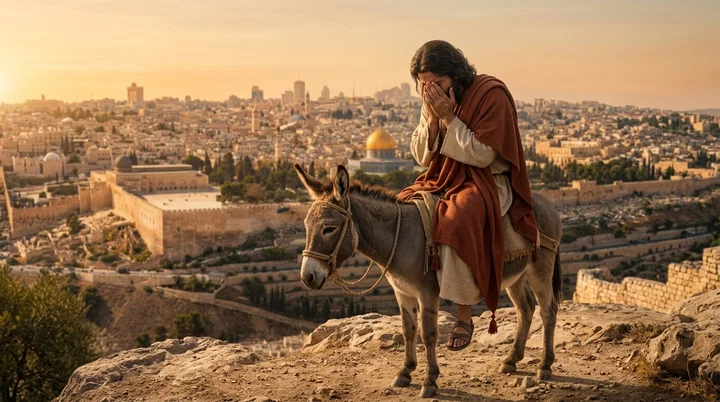
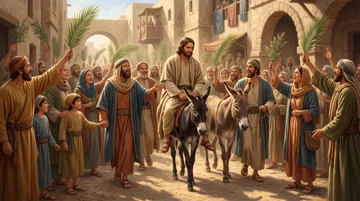
Rejoice greatly, O daughter of Zion; shout, O daughter of Jerusalem: behold, thy King cometh unto thee: he is just, and having salvation; lowly, and riding upon an ass, and upon a colt the foal of an ass.
Foretells the Messiah’s humble entry into Jerusalem, fulfilled by Jesus riding on a donkey.
- John 12:12-16
On the next day much people that were come to the feast, when they heard that Jesus was coming to Jerusalem,
Jesus’ entry into Jerusalem fulfills prophecy and receives a royal acclamation.
- Luke 19:29-40
And it came to pass, when he was come nigh to Bethphage and Bethany, at the mount called the mount of Olives, he sent two of his disciples,
A parallel account of Jesus’ entry into Jerusalem and the disciples’ acclamations.
- Mark 11:1-10
And when they came nigh to Jerusalem, unto Bethphage and Bethany, at the mount of Olives, he sendeth forth two of his disciples,
Records Jesus’ entry into Jerusalem and the people’s welcome.
- Psalms 118:26
Blessed be he that cometh in the name of the LORD: we have blessed you out of the house of the LORD.
The crowd’s hosannas echo the welcome and blessing of the one who comes in the Lord’s name.
- Matthew 21:9
And the multitudes that went before, and that followed, cried, saying, Hosanna to the Son of David: Blessed is he that cometh in the name of the Lord; Hosanna in the highest.
The people praise Christ as he enters Jerusalem, fulfilling the prophetic scene.
- Psalms 118:22
The stone which the builders refused is become the head stone of the corner.
The rejected stone becoming the cornerstone is fulfilled in Christ.
- 1 Peter 2:6
Wherefore also it is contained in the scripture, Behold, I lay in Sion a chief corner stone, elect, precious: and he that believeth on him shall not be confounded.
Both identify the chief cornerstone prophecy as fulfilled.
- Luke 19:29-35
And it came to pass, when he was come nigh to Bethphage and Bethany, at the mount called the mount of Olives, he sent two of his disciples,
Jesus obtains the colt and rides it in his entry into Jerusalem.
- Matthew 13:35
That it might be fulfilled which was spoken by the prophet, saying, I will open my mouth in parables; I will utter things which have been kept secret from the foundation of the world.
listed together as unnamed quotation
- Matthew 1:22
Now all this was done, that it might be fulfilled which was spoken of the Lord by the prophet, saying,
listed together as unnamed quotation
- Acts 4:11
This is the stone which was set at nought of you builders, which is become the head of the corner.
records same prophecy fulfillment
- Isaiah 53:5-7
But he was wounded for our transgressions, he was bruised for our iniquities: the chastisement of our peace was upon him; and with his stripes we are healed.
The Messiah suffers silently and bears the people’s sins.
- Matthew 2:15
And was there until the death of Herod: that it might be fulfilled which was spoken of the Lord by the prophet, saying, Out of Egypt have I called my son.
listed together as unnamed quotation
- Matthew 21:33-41
Hear another parable: There was a certain householder, which planted a vineyard, and hedged it round about, and digged a winepress in it, and built a tower, and let it out to husbandmen, and went into a far country:
The unfaithful husbandmen illustrate the Father’s business.
- Daniel 9:25
Know therefore and understand, that from the going forth of the commandment to restore and to build Jerusalem unto the Messiah the Prince shall be seven weeks, and threescore and two weeks: the street shall be built again, and the wall, even in troublous times.
Its sixty-nine weeks are compared with the prophetic period ending at Christ’s first advent.
- Matthew 21:12-13
And Jesus went into the temple of God, and cast out all them that sold and bought in the temple, and overthrew the tables of the moneychangers, and the seats of them that sold doves,
Christ cleansed the temple shortly after entering Jerusalem.
- Isaiah 40:9-11
O Zion, that bringest good tidings, get thee up into the high mountain; O Jerusalem, that bringest good tidings, lift up thy voice with strength; lift it up, be not afraid; say unto the cities of Judah, Behold your God!
Isaiah portrays Christ’s entry as the coming of a ruler and shepherd.
- Isaiah 62:11
Behold, the LORD hath proclaimed unto the end of the world, Say ye to the daughter of Zion, Behold, thy salvation cometh; behold, his reward is with him, and his work before him.
Cited alongside the prophecy of the King coming to Zion.
- Zechariah 12:10
And I will pour upon the house of David, and upon the inhabitants of Jerusalem, the spirit of grace and of supplications: and they shall look upon me whom they have pierced, and they shall mourn for him, as one mourneth for his only son, and shall be in bitterness for him, as one that is in bitterness for his firstborn.
Those who rejected Christ look upon him and mourn.
Commentary
Each commentary is drawn from primary sources: the writings of Ellen G. White and Adventist pioneers and periodicals. Each commentary is separate. Its own words are not a quotation; follow the references to read the source passages.
Ellen G. White
30 sources
All this was done because Jesus riding into Jerusalem fulfilled what the prophet spoke of the coming of Israel's King, the promised Messiah and heir to David's throne.DA 569.3–4DA 569DA 569.1–2 The prophecy was spoken by Zechariah five hundred years before Christ's birth, and to fulfill it Jesus sent two disciples to bring a colt and rode it into Jerusalem as the Passover crowds gathered.DA 569.1–2ST Jun 8, 18824RED 115.3ST Jul 22, 1886 He came lowly and humbly without royal splendor or earthly conquest, yet riding as Israel's kings rode he accepted royal homage and public welcome as King.DA 569.1–24RED 120.2ST Jun 8, 1882DA 570.1–571.12SP 384.1–385.1 By entering publicly as King while remaining humble he presented himself as Messiah, Redeemer and Son of God come to draw all men to him, and as the antitypical Passover Lamb set himself apart as an offering for the sins of the world.4RED 116.1–117.2DA 571.2–4Ms 5, 1882, par. 11 The disciples and crowds misunderstood this to mean he would then be crowned as an earthly king to free Israel, and within days that hope broke at the cross, yet the fulfillment did not depend on their understanding, and after he suffered and rose they could see prophecy had also foretold his suffering and resurrection.ST Jun 8, 1882EW 206.41T 57.3–58.14SP 253.2
Prophecy Fulfilled in Entry
All this was done because the prophet's word about the coming of Israel's King had to be fulfilled in Jesus' ride into Jerusalem.DA 569.3–4DA 569COS 91.1–54RED 115.3DA 570.1–571.1 By choosing to ride the colt into the city He came as the promised Messiah and heir to David's throne.DA 569.3–4DA 569DA 569.1–2COS 91.1–5DA 570.1–571.1 The prophecy so fulfilled was spoken by Zechariah five hundred years before Christ's birth.DA 569.1–2 To fulfill it He sent two disciples to bring the colt for the journey into Jerusalem as the Passover crowds gathered to accompany Him.4RED 115.3ST Jul 22, 1886 That colt is described as one that had never been ridden, and as an ass.ST Jun 8, 1882
The entry took place in the beautiful season of the feast, when many visitors had come hoping to see Jesus.Ms 128, 1899, par. 1 The raising of Lazarus had drawn an enthusiastic crowd.Ms 128, 1899, par. 1 As He rode in on the donkey the Mount of Olives echoed with the joyous shouts of the triumphant multitude.3SP 250.3 The crowd welcomed Him with garments spread in the path, palm branches waved, and cries of triumph.ST Jun 8, 1882COS 90
He came lowly and humbly on the donkey, without royal splendor and without heavenly pageantry, and without taking royal honors by force.DA 569.1–2COS 91.1–5DA 571.2–4 His triumph was unlike the triumphs of earthly conquerors, whose honors come from conquest, for His honors came from people He had delivered and healed, including those rescued from death.4RED 120.2 Riding the animal used by Israel's kings followed the custom of a royal entry.DA 570.1–571.1 He accepted this royal homage and public welcome as King, entering with the honors and acclaim given to a king and hailed as Messiah.ST Jun 8, 1882DA 570.1–571.12SP 384.1–385.1
All this was done deliberately, publicly, and exactly according to God's purpose, which men could not prevent.4RED 120.2DA 571.2–4ST Dec 10, 1894 Because prophecy had to be fulfilled the shouting could not be stopped, and even the stones would have cried out if the people had held their peace.1T 57.3–58.1 So fulfilled publicly and exactly, it gave unmistakable evidence that He was sent by God and revealed His character and mission.ST Dec 10, 1894 Isaiah also foresaw this coming amid the people's praise and rejoicing.Ms 151, 1899, par. 5 Isaiah's words present Him as God coming to rule, bringing His reward and His work, and shepherding His flock with tender care by gathering the lambs and carrying them close.Ms 151, 1899, par. 5
By entering publicly as King while remaining humble He presented Himself as Messiah, Redeemer, and Son of God come to draw all men to Him.4RED 116.1–117.2DA 571.2–4Ms 5, 1882, par. 11 As the antitypical Passover Lamb He set Himself apart as an offering for the sins of the world, directing attention to His coming sacrifice.DA 571.2–4 The entry and the events surrounding the ride would be remembered alongside His trial, death, and resurrection to prompt searching of the prophecies and confirm His identity.ST Jun 8, 1882DA 571.2–4 It was also a dim foreshadowing of His future glory and coming in glory, when He will be welcomed with the words about being blessed as the one who comes in the Lord's name.4RED 116.1–117.23SP 9.1
King Misunderstood and Applied
The fulfillment was mistaken to mean that he would then be acknowledged and crowned as Israel's earthly king in Jerusalem, take David's throne, and free Israel from its oppressors. ST Jun 8, 1882EW 206.41T 57.3–58.14SP 253.22SP 383.2 The crowds flocking and crying Hosanna to the Son of David fed that hope, while garments spread in the path, palm branches, and cries of triumph welcomed him riding a colt that had never been ridden. ST Jun 8, 18821T 57.3–58.12SP 383.2 He accepted this royal homage and public welcome as King, carrying out God's purpose even though his followers misunderstood what would follow and mistakenly expected him to claim earthly royal power. ST Jun 8, 18824SP 253.22SP 383.2 Because prophecy had to be fulfilled the shouting could not be stopped, and even the stones would have cried out if the people held their peace. 1T 57.3–58.1
Within days that hope broke when he suffered and was stretched on the cruel cross above mocking Pharisees, and the disciples believed their hopes had ended. EW 206.41T 57.3–58.1 They were left in disappointed darkness of death far deeper than later disappointment, yet the fulfillment of prophecy did not depend on their understanding of what his kingship meant. EW 206.41T 57.3–58.1 After he suffered and rose from the dead they could see that prophecy had also foretold his suffering and resurrection. 4SP 253.2 Christ stayed true to his promises with sweet consolation and rich reward for the true and faithful. 1T 57.3–58.1
The triumphal entrance, along with the cleansing of the temple and the cursing of the barren fig tree, pointed to Jerusalem's doom. 3SP 20.1ST Jan 10, 1878 His tears over the city were a final plea of love and compassion. ST Jan 10, 1878 The barren fig tree used shortly after the entry was a symbol of the Jewish nation, whose showy leaves without fruit represented a people whose pride and apostasy had separated them from God and blinded them to their Redeemer. Lt 82, 1907, par. 9ST Feb 15, 1899 Its blighting represented God's righteous anger and Jerusalem's destruction, warning against profession of service to God without a life bearing fruit to his glory. Lt 82, 1907, par. 9ST Feb 15, 1899
The chapter containing the journey to Jerusalem for the triumphal entry calls for careful study. Lt 82, 1907, par. 9 Its account of riding into Jerusalem exalts and lifts up Jesus, showing his centrality against the charge of being saved by law. Lt 27, 1880, par. 8 Speaking on it brings conviction of Christ's exaltation and leads to baptism and uniting with the church. Lt 27, 1880, par. 8 The entry gives his followers a glorious example to walk in, calling each one to maintain the truth in its purity and to push the triumphs of his cross and extend his kingdom without questioning the cost in labor and trial and suffering. Ms 5, 1882, par. 11 Hearers are called to let the word take hold upon souls and to do their part well so as to stand acquitted in the day of final accounts when judgment shall sit and the books shall be opened and everyone's account is balanced. 7MR 32.2
Sources
Pioneers and periodicals
59 sources
Matthew 21:4 introduces the triumphal entry into Jerusalem as done to fulfill what the prophet had spoken in Zechariah 9:9 more than four hundred years before.RH May 10, 1915RH Jun 24, 1858ST Dec 23, 1886ST Nov 28, 1878 It shows the promised King coming to the daughter of Zion meek and lowly on a colt, the ancient emblem of peace and Jewish royalty rather than the horse of war.ST Sep 27, 1899ST Oct 5, 1904ST Sep 27, 1899ST Mar 27, 1901 The public demonstration was permitted to display His Messiahship and draw attention to His coming sacrifice, for He entered not then to take an earthly throne and reign but to die, so that the cross became His real coronation and triumph.ST Jun 8, 1882ST Sep 27, 1899ST Sep 27, 1899ST Apr 8, 1903ST It was fulfilled publicly and exactly in its details when the disciples brought the colt and the multitude spread garments and branches and shouted, proving the prophecy was to be understood literally and that Jesus of Nazareth is the One foretold.ST Jun 8, 1882ST Oct 5, 1904RH Nov 18, 1862RH Jul 4, 1871ST Nov 8, 1883 Though the disciples and crowds hailed Him expecting Him to take David's throne immediately and were disappointed when He was crucified a few days later, their timing and message were right, and their experience of right time but mistaken event is the same pattern fulfilled by those who proclaimed the end of the prophetic periods and were disappointed in 1844.RH May 5, 1874RH Jul 4, 1871ST Apr 8, 1903
Entry Setting and Details
Matthew 21:4 belongs to and introduces the account of Christ's triumphal entry into Jerusalem, presenting the events of Matthew 21:1-5 as fulfilling what the prophet had spoken.RH Jun 24, 1858ST Dec 23, 1886ST Nov 28, 1878
The entry took place near the end of His ministry, in the last week of His earthly life at Passover time, only a few days before His suffering, crucifixion, betrayal, trial and resurrection.ST Nov 8, 1883RH Mar 17, 1859ST Aug 13, 1902ST Apr 14, 1898 It closed His first-advent life-work of miracles and teaching, and came the day after many people gathered around Him because He had raised Lazarus from the dead.ST Dec 16, 1886ST Nov 8, 1883 Crowds rejoiced and praised God for the mighty works they had seen, hailing Him as the promised Messiah and King of Israel, heir to David's throne.ST Nov 8, 1883
Apart from travel by boat it was the only recorded time He rode, identified as Palm Sunday.ST Oct 5, 1904ST Apr 12, 1905 He rode a colt, an ass that had never been ridden, after sending two disciples to procure it.ST Jun 8, 1882ST Jul 22, 1886ST Oct 5, 1904ST Apr 12, 1905 They brought it, put their garments on it, and He rode upon it into Jerusalem in order to fulfill what was spoken by the prophet.ST Jul 22, 1886ST Oct 5, 1904
He rode from the Mount of Olives into the city and into the temple, where He drove out the money changers and merchants.ST Oct 5, 1904ST Feb 14, 1878 The disciples put garments on the animal and the multitude spread garments and branches in the way and cried Hosanna, welcoming Him with palm branches and cries of triumph.ST Jun 8, 1882ST Oct 5, 1904 It was the one time in His life when He allowed such public honor without restraint, accepting royal homage and letting the demonstration have full sway.ST Jun 8, 1882ST Jul 22, 1886
The joyful acclamation quickly turned to rejection, when the hallelujah cry turned to rejection.STST The whole procession over Olivet moved toward Jerusalem while the whole city was moved asking Who is this.RH Nov 25, 1873 He nevertheless saw Jerusalem's coming destruction and knew that many who acclaimed Him would soon call for His death.ST His triumphal entrance, along with the cleansing of the temple and the cursing of the barren fig tree, pointed to Jerusalem's doom as a final plea of love and compassion, the blighting of showy leaves without fruit representing pride and apostasy separated from God and righteous anger upon Jerusalem's destruction.ST Jan 10, 1878ST Feb 15, 1899
Humble Peaceful King
The verse shows the promised King came to the daughter of Zion meekly, lowly and humbly, riding upon an ass and upon a colt the foal of an ass.ST Sep 27, 1899ST Oct 5, 1904RH Nov 18, 1862ST Mar 27, 1901 The prophecy had been written more than 400 years earlier and had to be fulfilled, and it was fulfilled in its details when two disciples were sent to procure the colt, brought it, put their garments on it, and Jesus rode upon it into Jerusalem while the multitude spread garments and branches in the way and cried Hosanna with shouts of rejoicing.ST Oct 5, 1904RH Nov 18, 1862 Apart from travel by boat it was the only recorded time He rode during His travels.ST Oct 5, 1904ST Apr 12, 1905 The public demonstration was permitted so the promised King's arrival could be displayed.ST Sep 27, 1899 The people's actions accorded with the prophecy, though the rulers rejected Jesus and the multitude's faith weakened when He did not meet their further expectations.ST Mar 27, 1901
The ass was an ancient emblem of peace and Jewish royalty, unlike the horse associated especially with war.ST Sep 27, 1899ST Apr 12, 1905 He rode as Israel's kings did, on an ass that had never been ridden, and riding on an ass was customary for a Jewish king about to be crowned, so His approach declared His Messiahship.ST Apr 12, 1905ST Sep 13, 1910 His choice of an ass marked Him as the Prince of Peace, not a hero of war and display.ST Sep 27, 1899ST Mar 27, 1901 Those who understood the sign gave Him the allegiance due a king, but the rulers who rejected Him brought destruction upon themselves.ST Sep 13, 1910
Coming in humility on the colt of an ass in everyday clothes, not carried on the shoulders of men in gorgeous robes, He showed self-denying love in contrast with the force displayed by worldly rulers.ST Feb 6, 1901ST Mar 25, 1903 He was the burden-bearer for the people rather than one who laid burdens on the people to exalt Himself.ST Mar 25, 1903 The entry drew attention to Him as Messiah and to His coming sacrifice, so that after His death the events surrounding the ride would be considered alongside His trial and death and the prophecies would confirm His identity.ST Jun 8, 1882 He accepted this royal homage, honor and adoration, allowing the multitudes to show Him honor without restraint, the one time in His life when He allowed such demonstrations to have full sway.ST Jun 8, 1882STST Jul 22, 1886 Even a humble colt could serve Him by carrying Him, which encourages boys to recognize that they too can be useful to the Lord.ST His entry strengthened the disciples' expectation that He would soon be acknowledged as Israel's king in Jerusalem and establish an earthly kingdom and reign as a temporal king, though they did not understand that He would be betrayed, condemned and crucified.ST Jun 8, 1882RH Aug 26, 1915
He knowingly carried out the act even though it would hasten His death, for He did not enter Jerusalem to take a throne and reign but to die.ST Sep 27, 1899ST Apr 8, 1903 The only throne He then went to was the cross, and instead of being hailed as king in a royal palace He was laid as a lifeless form in Joseph's new sepulcher, so the disciples who thought He would redeem Israel were disappointed in tenfold degree.ST Apr 8, 1903ST Jul 27, 1882 If the disciples had held their peace the very stones would have cried out, for the prophecy had to be fulfilled.ST Apr 8, 1903 The shout of the people was no empty sound but a genuine exclamation of praise commanded by God for a great victory achieved or about to be achieved.ST Feb 4, 1903 The entry looked like signal defeat because He was not made King then but was crucified by His bitterest enemies, yet His crucifixion was His real coronation and triumph over the powers of darkness.ST Feb 4, 1903 The entry is connected with His final glorious triumph when He enters His kingdom to reign.ST Apr 14, 1898
Prophecy Exactly Fulfilled
The ride fulfilled the prophecy in Zechariah 9:9, spoken long before by the Spirit of prophecy and written more than 400 years earlier, saying Shout, O daughter of Jerusalem, behold thy King cometh unto thee.RH May 10, 1915ST May 9, 1878RH Mar 17, 1859ST Feb 4, 1903 It presented Him as Messiah, heir to David's throne and King of Israel, coming humbly to Jerusalem riding on a donkey and its colt, and it took place near the end of His ministry only a few days before His crucifixion.RH May 10, 1915ST Nov 8, 1883ST Apr 12, 1905 It was especially significant because apart from travel by boat it was the only recorded time He rode during His travels, and He rode as Israel's kings did, on an ass that had never been ridden, the ass unlike the horse associated especially with war symbolizing peace and declaring Him the Prince of Peace.ST Oct 5, 1904ST Apr 12, 1905 The people hailed Him as king but expected Him to take David's throne immediately, and their hopes were not fulfilled when He was crucified a few days later.RH Mar 17, 1859
Though worded as a command for the people to rejoice and shout, the prophecy was a prediction that had to be fulfilled with certainty.ST May 9, 1878RH Jul 4, 1871 It illustrates that a prophetic command or announcement may describe a future event and does not mean the event was already near when the prophecy was written.ST May 9, 1878 The disciples' shouts of honor had been foretold, showing the certainty of prophecy and God's regard for its fulfillment.
It was fulfilled publicly and exactly in its details when two disciples were sent to procure the colt, brought it, put their garments on it, and Jesus rode upon it into Jerusalem while the vast multitude followed with garments, branches and shouts of rejoicing.ST Oct 5, 1904RH Nov 18, 1862 The fulfillment came when Christ rode into Jerusalem and the people welcomed Him with joyful shouts, the Spirit moving them to welcome Him at the time though some did not fully understand the meaning of their actions until after Jesus was glorified.RH Jul 4, 1871ST Feb 4, 1903 The event came at its appointed place in a chain of events, and people recognized and proclaimed its prophetic meaning.ST Aug 1, 1916 Prophecy was to be fulfilled publicly and exactly during Jesus' final journey toward Jerusalem, giving unmistakable evidence that He was sent by God and revealing His character and mission.ST Dec 10, 1894 The shout of the people was no empty sound but a genuine exclamation of praise commanded by God for a great victory achieved or about to be achieved, and though the entry looked like signal defeat because Christ was not made King then but was crucified by His bitterest enemies, His crucifixion was His real coronation and triumph over the powers of darkness.ST Feb 4, 1903
God's people had the privilege of helping fulfill His word and do His will, but if they failed or held their peace even the stones would give the message, do the work and give voice to God's word.ST Apr 8, 1903 The event fulfilled God's word even though people opposed the praise and asked Jesus to silence it, for Jesus declared that if the people were silent the stones would cry out, showing God's purpose and the truth of His word do not depend on the approval or cooperation of the majority.RH Feb 28, 1854 The prophecy had to be fulfilled, so that if the disciples had held their peace the very stones would have cried out.ST Apr 8, 1903
The manner of fulfillment proves the Holy Spirit intended what Zechariah foretold to be understood literally.RH Nov 25, 1873 It means Jesus of Nazareth is the one foretold by prophets, worshiped by angels, and anointed by God, as seen when the procession over Olivet toward Jerusalem with Jesus seated on an ass moved the whole city to say Who is this.RH Nov 25, 1873 His fulfilled prophecies, miracles, pure life and teaching, and recent raising of Lazarus gave ample proof of His identity.ST Nov 8, 1883 After His death the events surrounding the ride would be considered alongside His trial and death, and the prophecies would confirm His identity and draw attention to Him as Messiah and to His coming sacrifice.ST Jun 8, 1882
God's word in this fulfillment brings salvation to those who receive it and destruction to those who reject it.RH Oct 9, 1900 Riding on an ass was customary for a Jewish king about to be crowned, so Christ's approach declared His Messiahship, and those who understood the sign gave Him the allegiance due a king, but the rulers who rejected Him brought destruction upon themselves.ST Sep 13, 1910
Mistaken Hopes Still Fulfilled
The crowds joyfully hailed Him as King, Messiah, Son of David and King of Israel, rejoicing and praising God for the mighty works they had seen.RH Sep 18, 1855ST Dec 3, 1874 They welcomed Him with garments, branches and cries of triumph, expecting Him to be acknowledged in Jerusalem, to take David's throne immediately and establish an earthly kingdom.ST Jun 8, 1882RH Mar 17, 1859RH Sep 18, 1855ST Dec 3, 1874 Their enthusiasm was moved by sight rather than faith, mistaking His royal homage for a sign that God's kingdom would appear at once.ST Jun 8, 1882RH May 5, 1874ST Nov 20, 1884 Yet their proclamation came at the appointed time with the right timing and message, and their praise was still fitting.RH Sep 18, 1855ST Nov 20, 1884
Their hope was disappointed a few days later when instead of being crowned and ruling from Israel's throne in a royal palace He was crucified and laid lifeless in Joseph's sepulcher.RH Mar 17, 1859ST Aug 13, 1902RH Jul 25, 1865ST Jul 27, 1882 The only throne He then went to was the cross, and their grief shows how deeply the entry had raised their hopes.ST Jul 27, 1882 Some lost hope that He was the Messiah, the multitude's faith weakened when He did not meet their further expectations, and the rulers rejected Him.ST Mar 27, 1901RH Jul 25, 1865 People opposed the praise and asked Him to silence it, and public goodwill quickly turned.RH Feb 28, 1854
Their mistaken expectation concerned the event they expected, not the fulfillment itself. They proclaimed Him in the words of prophecy at the appointed time, though misunderstanding what would follow, and some did not fully understand the meaning of their own actions until after He was glorified.RH Jul 4, 1871ST Nov 20, 1884RH Jun 29, 1911 Their mistaken expectations did not prevent them from fulfilling the prophecy.RH Jun 29, 1911
Prophecy included the church's actions, mistakes and disappointments, so their error did not make the divine work accompanying it false.RH Feb 28, 1854 Disappointment does not prove a doctrine or prophecy false, and the first-advent believers' experience stands as precedent for second-advent disappointment.RH Jul 25, 1865 Disappointment does not remove blessing, for they were blessed in receiving the truths they had heard even while disappointed tenfold in their expectations.ST Jul 27, 1882 Their being mistaken in some views did not justify rejecting the gospel they preached.RH Feb 28, 1854RH Feb 14, 1871
Pattern for Advent Disappointment
Matthew 21:4 introduces the setting in which the disciples joyfully hailed Jesus as king on His entry into Jerusalem though they misunderstood what was about to happen, and their mistaken expectation is the counterpart of William Miller's mistake about the event to occur at the end of the prophetic periods.RH May 5, 1874 The prophecy had to be fulfilled with certainty, so that if those proclaiming Him had held their peace the very stones would have cried out.ST Apr 8, 1903 Jesus did not enter Jerusalem to take a throne and reign but to die, and the disciples who thought He would redeem Israel were disappointed and became a reproach to scoffers.ST Apr 8, 1903 Right in proclaiming the time of prophecy but wrong about the event to take place, with sweetness turning to bitter disappointment, their experience is the same pattern fulfilled by those expecting Christ in 1844.ST Apr 8, 1903 Though His followers expected Him to establish His kingdom and their hopes were soon shattered by His death, their disappointment was nevertheless part of God's plan, so disappointment does not prove a doctrine or prophecy false, and the experience of first-advent believers stands as precedent for the disappointment of those expecting Christ's second advent.RH Jul 25, 1865
As the disciples rejoiced yet their mistaken ideas about the event were followed by sadness when their expectations failed, so Advent people proclaimed the end of the prophetic periods and the coming of God's judgment at the appointed time but were disappointed because they expected Christ to come then.RH Aug 24, 1869 Their experience illustrates how Scripture could be fulfilled even when those involved misunderstood what was to happen.RH Aug 24, 1869 Their message was right in its fundamental features and brought God's people to the beginning of the judgment of the righteous dead, which takes place before Christ's actual coming.RH Aug 24, 1869
The loyalty of the disciples in escorting Him in triumph in His riding into Jerusalem is the pattern of the loyalty of believers who continued to expect Christ's coming despite disappointment.RH Feb 26, 1867 The Palm Sunday welcome given to Christ at His first advent is the counterpart of the people raised up to announce His second coming.ST Aug 1, 1916
Doctrine and Life Application
The account to which the verse belongs is numbered among those fulfilling the prophecy of the rejected stone becoming the head stone of the corner, whose day is identified with the resurrection day, yet it says nothing about the Sabbath, the seventh day, a resurrection day, or any change of the Sabbath.RH May 10, 1860RH May 10, 1860 Matthew 21:1-12 records that fulfillment, but establishes no Sabbath doctrine from it.RH May 10, 1860
Matthew 21 shows the Son coming to attend to His Father's business, pictured as a vineyard entrusted to husbandmen who failed to render its owner His due.ST Nov 20, 1884 The triumphal entry introduced by the verse belongs to the Gospel testimony about His life and work shared by the Gospels, so that to reject that account is to reject their united witness.RH Mar 8, 1906
The prophecy had stood written more than 400 years and had to be fulfilled, and it was fulfilled when the King came meekly riding on an ass and its colt. God's people were given the privilege of helping fulfill His word and doing His will, and if they failed even the stones would give the message and do the work. The verse therefore calls for following Jesus closely in every circumstance, in triumphal entry and suffering and moments of glory.ST Mar 14, 1906 That entry was an occasion when public goodwill toward Him could quickly turn.ST Jul 30, 1894
The directions for finding the animal He rode, and the honor and adoration given Him at His entry, show that even a humble colt could serve Him by carrying Him, which encourages boys that they too can be useful to the Lord.ST The crowds hoped He would then assume the position of King, an enthusiasm moved by sight rather than faith.ST Mar 27, 1901 His action in the temple after receiving public royal honors shows that God's temple must be cleansed before He takes up His abode in it, a lesson applying to each person as God's temple.ST Mar 27, 1901
The triumphal entry supplies the image by which an emperor's passage through the colonies in Palestine is compared to Jesus' entry into Jerusalem.ST Jan 18, 1899 The Palm Sunday account of Christ's entry opens a week of observances commemorated as the Fiesta of Ramos, including Holy Thursday, Holy Friday, Holy Saturday, and Easter Sunday.ST Feb 11, 1903
Sources